Welcome to National Accounts Weekly!
I am very humbled by the success of this newsletter. We now have over 8,000 subscribers. Frankly, I didn't know there were 8,000 National Accounts Executives in Healthcare in the U.S.
We cover everything you need to know about GPOs, IDNs and RPCs.
Enjoy back issues of National Accounts weekly by clicking
here!
Please share with your colleagues!
|
|
Reactions to Amazon, JP Morgan and Berkshire Announcement
|
Call me naïve but when I read about this trilogy's announcement of going into healthcare I thought it was nothing more than a pooling of risk wider than any one company could enjoy on its own.
Simply put, I thought they were making their pool wider to enjoy economies to lower their cost to cover employees. I didn't think Supply Chain was on their radar as an opportunity to find these cost savings. But people wiser than I are suggesting Supply Chain is right in the group's cross hairs.
A quote from the
Wall Street Journal on February 5, 2018 titled:
JPMorgan to Banking Clients: Joint Health-Care Venture Is No Threat
JPMorgan reassured banking clients by likening its venture with Amazon.com and Berkshire Hathaway to a group purchasing organization for employees.
"The bankers reiterated Mr. Dimon’s message to clients. They explained that the initiative is akin to a
group-purchasing organization,
a type of setup used by hospitals to buy supplies, so the companies can get better deals for their employees...."
As a loyal reader of National Accounts Weekly, you know how much I enjoy Paul Keckley's weekly report. His February 5, 2018 edition quotes 5 strategies the trifecta will deploy to attack healthcare. Guess which tactic is No. 3? Supply Chain.
Coincidentally, this past weekend, Keckley moderated the Vizient Leadership Summit and gave a fascinating overview of what their members think of this new initiative. Well worth 3 or 4 minutes of your time to read.
I know it sounds simple, but this initiative and any other transformative platform will only work if the buyer (in this case the payer for healthcare coverage) wants it. It is very clear to me that AMZN, JPM and BRK want to buy healthcare for their employers differently.
|
|
|
|
|
Owens & Minor L
aunches Point of Care Logistics Solution for the Orthopedic Industry
|
Much has been made about Providers moving closer to the patient and seeking lower cost entry points. Here is a great example of a Supplier doing just that.
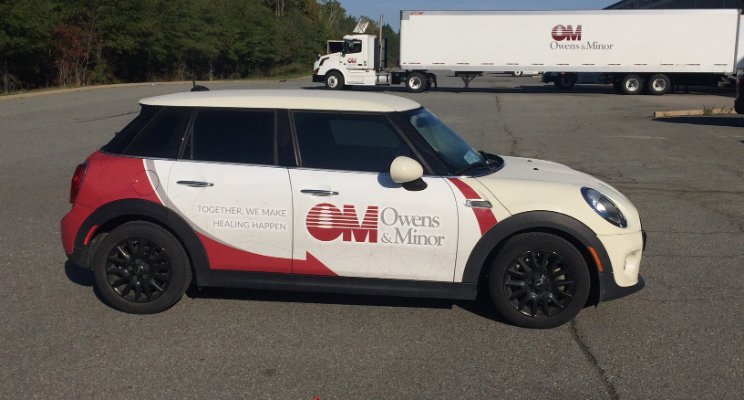
Owens and Minor has launched a new service for the Orthopedic and Spine markets:
A broad network of service centers located within 4 hours of 90% of the Healthcare spend in the United States. Leveraging our multi client history we have opened our doors to all manufacturers big and small to leverage our investments in logistics to allow them to focus their investments on outcomes.
What a great idea, I'll be fascinated to see how it goes!
|
|
Mike Alkire, Premier COO on M&A
|
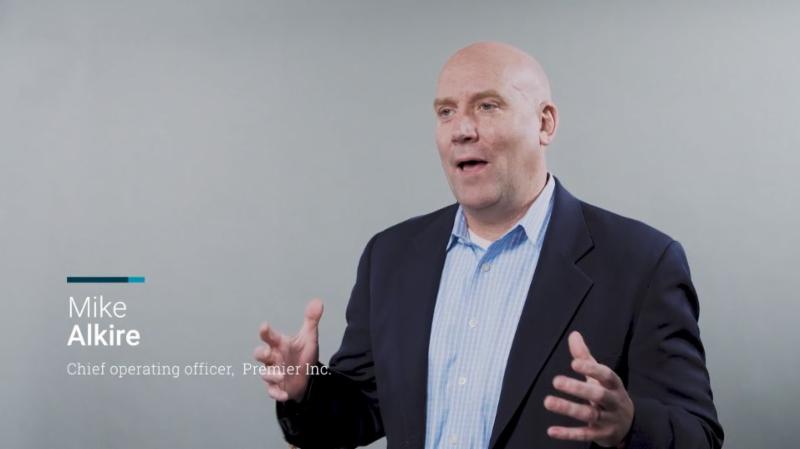
Mike Alkire, COO of Premier, gives us 2 minutes on M&A. It is time well spent.
He discusses the pursuit of horizontal and vertical integration, usually in the never-ending search of scale.
He does a great job explaining the use of capital to better serve their communities.
Alkire ends with a challenge by asking "Who is going to care for the patients most effectively?"
|
|
|
|
|
Donna Van Vlerah Named to Women Leaders in Healthcare Supply Chain
|
Donna Van Vlerah
Senior Vice President, Support Division
Parkview Health
Fort Wayne, Indiana
Nomination submitted by Bobbie Smith, Account Manager, Intalere, St. Louis, Missouri.
Donna Van Vlerah joined Parkview Health in 2010 from ITT, for whom she served as Chief Compliance and Ethics Officer in the Space Systems Division. Prior to this, Donna served a 20-year career in the U.S. Marine Corps, retiring in 2005.
She served in various positions within the logistics and acquisition community, specializing in supply chain, facility maintenance and change management. She served as the deputy director for the Maritime Supply Chain for the Defense Logistics Agency, serving worldwide customers.
Her supply chain strategies at Parkview have included: collaboration with suppliers to manage flow of goods and achieve cost reduction, deployment of Parkview Health’s Distribution Center (PDC), enabling centralized purchasing activities.....
|
|
|
|
The 8 Healthcare Trends that will Impact your Sales in 2018
|
Last week, Jason Krantz, CEO of Definitive Healthcare, held a webinar detailing 8 trends in 2018 that will impact supplier sales to the healthcare market. I thought he did a nice job detailing what today’s hospital operator is focused on.
Click here
to listen to a recording of the entire webinar.
As a National Accounts Executive, I think it is worth your time to understand these trends for three reasons:
- You will be more understanding of the challenging job your customers and prospects have.
- It will make you more conversational with executives on topics they are worried about.
- If you can help your prospects better understand or navigate any of these trends, you will be valuable to them (i.e. craft a value proposition around these trends).
|
|
A Reader's Response to Last Week's Article on Hospital M&A
|
John, saw the article and that you were looking for input. I will give my perspective from having worked in an IDN from the mid 1990s to 2004.
I agree that desperation is forcing some M&As, and the ultimate goal is to gain strength with payers and possibly industry, to negotiate with pharma, bio, and device companies, in order to increase the bottom line. Desperation has caused Tenet, CHS, and others to sell hospitals, because they can't make it financially.
Healthcare is too big a business, and new leadership in an M&A may believe that they can run the hospitals better, financially and clinically. In smaller regional IDNs, this is possible, with the focus on improving the health of communities they provide service to and with the local payers. Some larger IDNs have even broken down into regions, to manage the regional IDN better.
But as I realized in the 1990s while creating and working in a regional IDN with 11 other hospitals, healthcare is local, and the more you spread it out, the more complex it becomes. You can attempt to standardize care across 10, 20, or more hospitals by establishing evidence-based guidelines, measuring outcomes, etc. You can standardize to a Drug Formulary and even Supplies, but, you have at least 51 State Medicaids, and over 40 BCBS Regions, to negotiate with and other payers. I am not aware of anyone that has a national BCBS contract for all their hospitals in every state they have one. Kaiser is the closest to being able to expand outside California and into other states, but it is the health plan and not the M&A of bricks and mortars, although I believe they acquired a hospital in Virginia.
Another non M&A model that has popped up as an example is the AllSPIRE Model in NJ and Pa. You have 5 IDNs working together, to learn best practice models from each other and share ideas to control cost and improve patient outcomes. Maybe that is a model to pursue?
As Dr. Edward Murphy said when he was President and CEO of Carilion Clinic in Roanoke, Va.: "We are accountable to our patients and our community and our community from the perspective that they pay for our services. We are accountable for outcomes. We are accountable for service and we are also accountable for cost and making them lower."
Are the M&As going to achieve these accountability goals?
Thanks
Fred J. Pane
704-564-1409
|
|
|
|
|
Thanks for reading this issue of National Accounts Weekly! Let me know what you think!
You are now in the know!
John Pritchard
P.S. You can follow us on twitter @NatAcctWeekly
P.S.S.: Please forward this to your friends and colleagues. They can receive their own free subscription to National Accounts Weekly by
clicking here
.
|
|
|
|
|
|
|