Infant & Toddler

Connection of Virginia


August 2026 Part C Updates

Celebrating the Creating Connections to Shining Stars

'26 Conference!


Join us as we celebrate incredible moments, inspiring stories, and fun highlights from Creating Connections to Shining Stars 2026! 💫


While we cannot show all the wonderful moments of learning and connection we recorded, this recap video captures the spirit of the conference and seeks to honor everyone who made it so meaningful. Whether you missed it or just want to relive the magic, hit play and celebrate with us!


Watch the recap video here: https://www.youtube.com/watch?v=gSs8KBmro8U

A Mother and Daughter Inspiring the Next Generation of

Early Intervention Professionals

Speech-Language Pathologist and Graduate Student Present Together at Virginia's Premier Early Childhood Conference


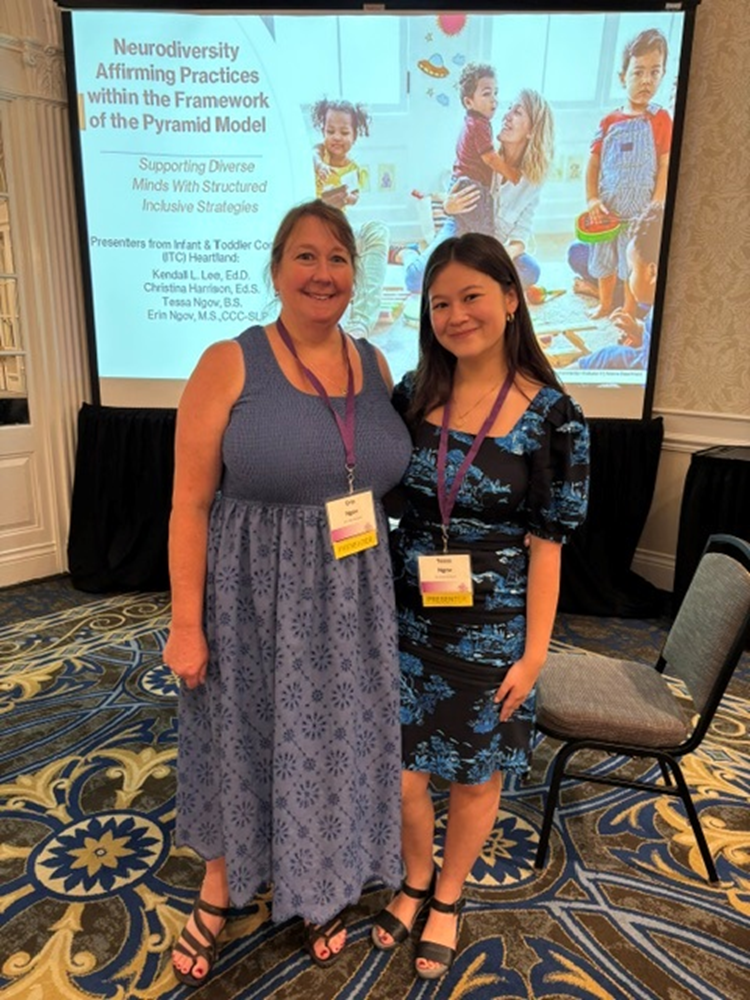
For most parents, watching a child pursue the same passion is incredibly rewarding. For Erin Ngov, M.S., CCC-SLP, that pride reached a new level when she had the opportunity to present alongside her daughter, Tessa Ngov, at the Creating Connections to Shining Stars 2026 statewide conference in Roanoke, Virginia.


Creating Connections to Shining Stars is Virginia's premier conference for Part-C Early Intervention and Part-B Early Childhood Special Education professionals. The annual conference brings together educators, therapists, administrators, and family leaders from across the Commonwealth to share innovative, evidence-based practices that improve outcomes for infants, toddlers, and young children with disabilities.


Erin, a speech-language pathologist with Aveanna Healthcare, contracts with Longwood University’s Infant & Toddler Connection of the Heartland (ITC) to provide early intervention speech-language services to children and families throughout the region. Joining her as a co-presenter was her daughter, Tessa Ngov, a second-year Communication Sciences and Disorders graduate student at Longwood University and a Service Coordinator with ITC. Tessa is currently preparing to become a speech-language pathologist, following in her mother's footsteps while already making meaningful contributions to Virginia's early intervention system.


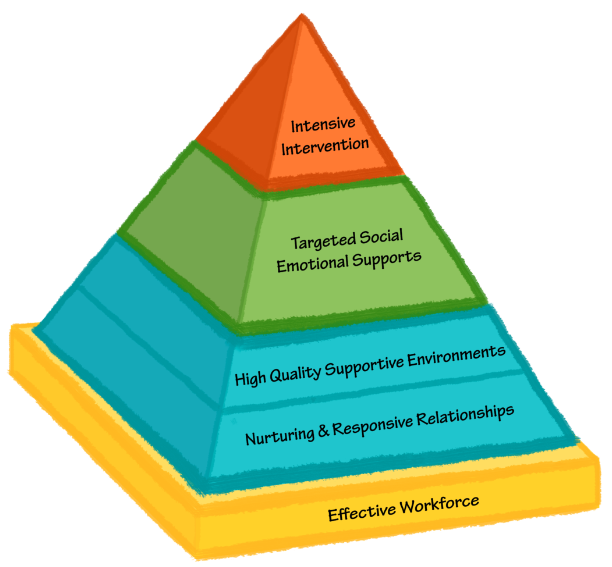
Together, they co-presented "Neurodiversity Affirming Practices within the Framework of the Pyramid Model." The session explored how early intervention providers can support the social-emotional development of neurodivergent children by integrating neurodiversity-affirming practices within the Pyramid Model Framework. Participants learned practical strategies for embedding inclusive practices throughout the early intervention process while emphasizing collaboration among members of the Individualized Family Service Plan (IFSP) team.


The presentation represented much more than a conference session. It showcased the power of mentorship, family, and a shared commitment to serving young children and their families. As an experienced clinician, Erin has devoted her career to helping children develop communication skills and empowering caregivers through evidence-based, family-centered practices. Presenting alongside her daughter demonstrated how passion for the profession can be passed from one generation to the next.


For Tessa, the opportunity was especially significant. As she continues her graduate education and clinical training, presenting at Virginia's leading early intervention conference offered a chance to share her knowledge with professionals from across the Commonwealth while learning from experienced leaders in the field. It also marked an exciting milestone on her journey toward becoming a speech-language pathologist.


The Infant & Toddler Connection of the Heartland is proud to celebrate both Erin and Tessa for representing the program and contributing to the advancement of early intervention practice in Virginia. Their story is a reminder that the strongest professional partnerships are often rooted in mentorship, encouragement, and a shared desire to make a difference in the lives of children and families.


Congratulations to Erin and Tessa on this remarkable accomplishment. Their presentation not only highlighted innovative practices in early intervention but also demonstrated the lasting impact of family, mentorship, and a shared commitment to improving the lives of young children across the Commonwealth.

Infant & Toddler Connection of Hampton/Newport News


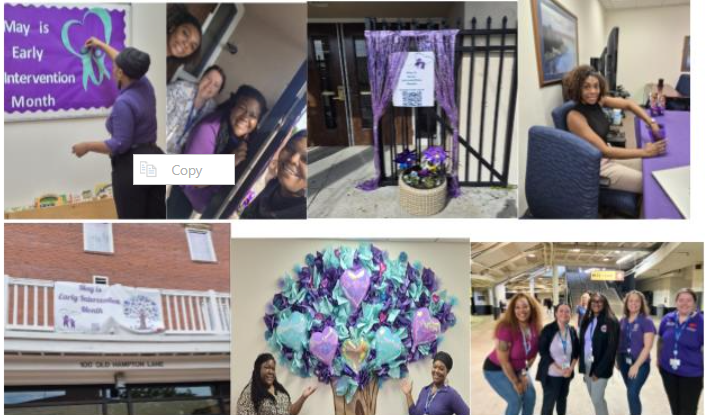
Infant & Toddler Connection of Hampton/Newport News celebrated Early Intervention month with events in the community, bringing awareness to families and colleagues. The goal was to inform people about the program, how children learn, making referrals, and to have fun while sharing our mission to support families and children. Some of the activities for the month included weekly social media posts, raffle give aways at play groups, baby bingo, early intervention trivia, make it and play, wear purple in solidarity and name that baby song. The Program Manager, Cindy Burgess, continues to lead and encourage our ITC Team to provide high-quality services to the families and children of Hampton and Newport News.

Monitoring Community of Practice (MCoP) Road Trip!

The MCoP scheduled for August 5th, 2026 has been cancelled The 2026 Office of Special Education Programs (OSEP) Leadership and Project Directors' Conference is being held August 4-5, 2026 in Arlington, VA with mandatory in person attendance required by several of the ITCVA Part C state staff.


As a reminder, online MCoP sessions are held on the first Wednesday of each month beginning at 3:00PM. Our next call will be held September 3nd at 3:00pm.


ITCVA MCoP sessions are open to anyone who is interested in the topic(s) being covered. Sessions are recorded for those who are unable to attend.


See you again online in September!

Test Your Knowledge

Test your Knowledge with our Poll Feature

Pick your answer and scroll below to find the correct answer and explanation!


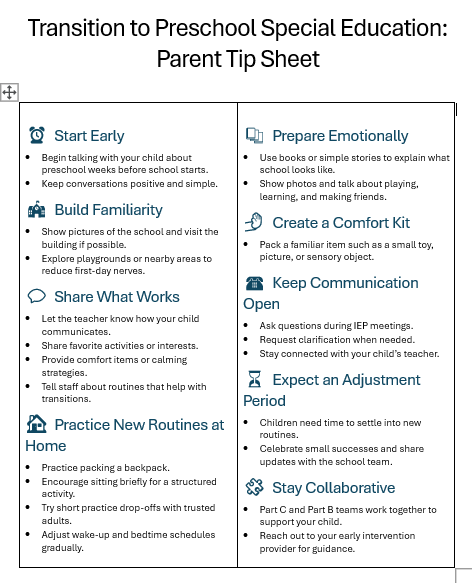
Transition notification is a critical part of ensuring a smooth and timely handoff from early intervention services to the local school division. In TRAC‑IT, users must complete specific steps so the system can accurately identify children who may be eligible for Part B services and send the required notification to the Virginia Department of Education. Understanding these steps helps prevent delays, supports compliance, and ensures families receive uninterrupted support during the transition process.


What are the required steps in TRAC-IT for transition notification to occur?

POLL ANSWER AND EXPLANATION


The correct answer is “e”.


Check “Potentially eligible for Special Ed”

In the child’s IFSP transition task, make sure to check the “Potentially eligible for Special Ed” box. This flag indicates that the child may qualify for Part B services and is a prerequisite for sending the notification. [itcva.online]


Enter the “No Earlier Than” date

Only once the eligibility box is checked can you input the “No Earlier Than” date—the earliest date you wish the notification to be sent. TRAC‑IT enforces this data dependency to prevent premature notifications.


Enter the Name of the School System

Enter the name of the local school system. This lets the family know where the local ITC program will send the referral.


Transition Plan Saved

Confirm that the transition plan has been saved in TRAC‑IT. Saving the plan records the team’s decisions, activates required timelines, and ensures the system recognizes that transition procedures are underway.


If you have questions or want help reviewing your local processes, please reach out to your Technical Assistance Consultant. We are here to support strong compliance and smooth transitions for every child and family in the Commonwealth of Virginia.

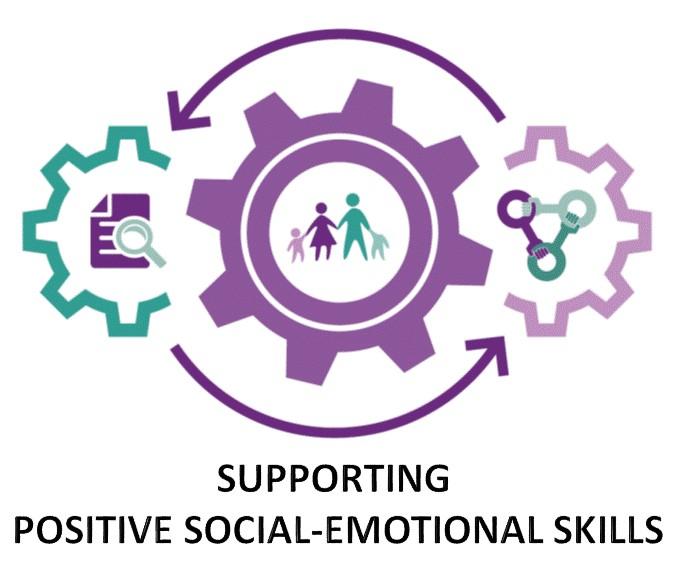
SUPPORTING SOCIAL-EMOTIONAL DEVELOPMENT

Building Strong Social–Emotional Foundations in Early Childhood


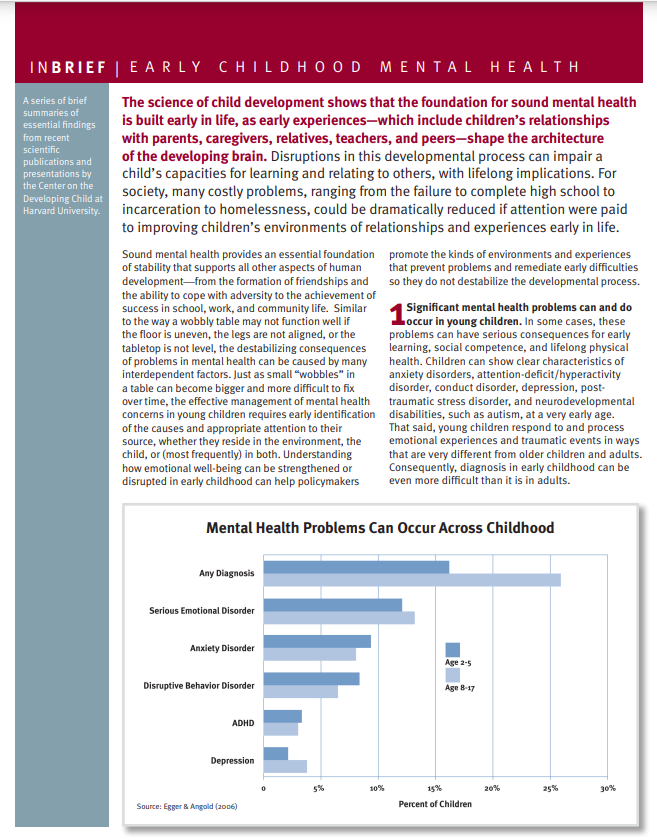
Early experiences shape the architecture of a child’s developing brain, and supportive relationships with caregivers play a powerful role in fostering healthy social–emotional growth.


The Center on the Developing Child at Harvard University offers an excellent brief resource, InBrief: Early Childhood Mental Health, which explains how early relationships, nurturing environments, and timely support can strengthen emotional well‑being and buffer young children from adversity. This resource highlights why early identification and responsive caregiving are essential for lifelong mental health. [[developing...arvard.edu]]


You can read or share the full resource here:

https://developingchild.harvard.edu/wp-content/uploads/2024/10/InBrief-Early-Childhood-Mental-Health-1.pdf

Pyramid Model Framework


The Canary in the Coalmine: Looking Within to Address Common Challenges with Coaching


Why do coaching challenges recur? Often, the “canary in the coalmine” is the coach. This webinar explores how a coach’s internal struggles, and discomforts mirror their coachee’s hurdles. Through honest introspection, participants learn to transform roadblocks into opportunities for growth and move beyond “fixing” to authentic partnership. Participants walk away with practical self-reflection tools to address your own internal “canaries”, leading to more impactful and transformative coaching sessions.


PROFESSIONAL DEVELOPMENT


A GEM YOU MIGHT HAVE FORGOTTEN?

For the LSM+1 Meeting last April, VEIPD created a handout that compiled professional development resources focused on social-emotional development. This handout also includes a padlet with direct links to each type of PD resource and we suggest that you bookmark the handout and the padlet.


Find the Social Emotional Statewide PD Resources handout here.


WHAT YOU MIGHT HAVE MISSED?

CCSS2026 is in the books, and what a success it was!


A total of 226 early interventionists attended this year's conference. The preconference session, HUGS: Coaching Caregivers to Support Social-Emotional Competence, was presented by Dr. Sarah Sexton to 94 early interventionists. Attendees also had access to 21 EI-specific concurrent sessions. In addition, we had the privilege of hearing from David and Jacob Raphael, a father-and-son duo, who shared their personal autism journey and the insights they have gained along the way. 


If you haven't already, don't forget to complete your session evaluations to receive your certificate of attendance.


WHAT'S COMING

UP NEXT?

Service Coordinators, this one's for you!


Is the SC Chat for August 20th at noon on your calendar yet? If not, take the time now to register for part one of a two-part series on trauma-informed practices in the SC role. We originally planned this topic as a one-time Chat, but we realized that there was just so much to talk about that we needed two sessions. The second session will be September 10th at 3pm.


Register for the August 20th SC Chat here

RESOURCES

Determining the frequency and Length of IFSP Services


If you missed the live ElevatED EI: Child and Family Outcomes workshop, you can still access the full recording and valuable resources through the Virginia Early Intervention Professional Development (VEIPD) platform. This 3-hour professional development session is designed for early intervention practitioners and covers evidence-based practices for developing individualized IFSP outcomes.


When determining the frequency and length of IFSP services, it's essential to use evidence based resources to guide your decisions. The following resources provide valuable insights into best practices, ensuring that the services are tailored to support the child's unique needs and family circumstances effectively.

The ITCVA Practice Manual, Chapter 7 –

IFSP Development


  • Frequency and Period (p. 117, online PDF): Enter the number of visits per week/month/etc. that each service is to be provided (e.g., 1x/wk.). Ranges such as 1–2x/week are not acceptable. If a service will be provided only once, record the frequency as 1 and the period as "only."


  • Length (p. 119, online PDF): Enter, in 15-minute increments, the length of time the service is to be provided during each visit (e.g., 60 min/visit). Ranges such as 30–45 min/visit are not acceptable.


ITCVA Practice Manual

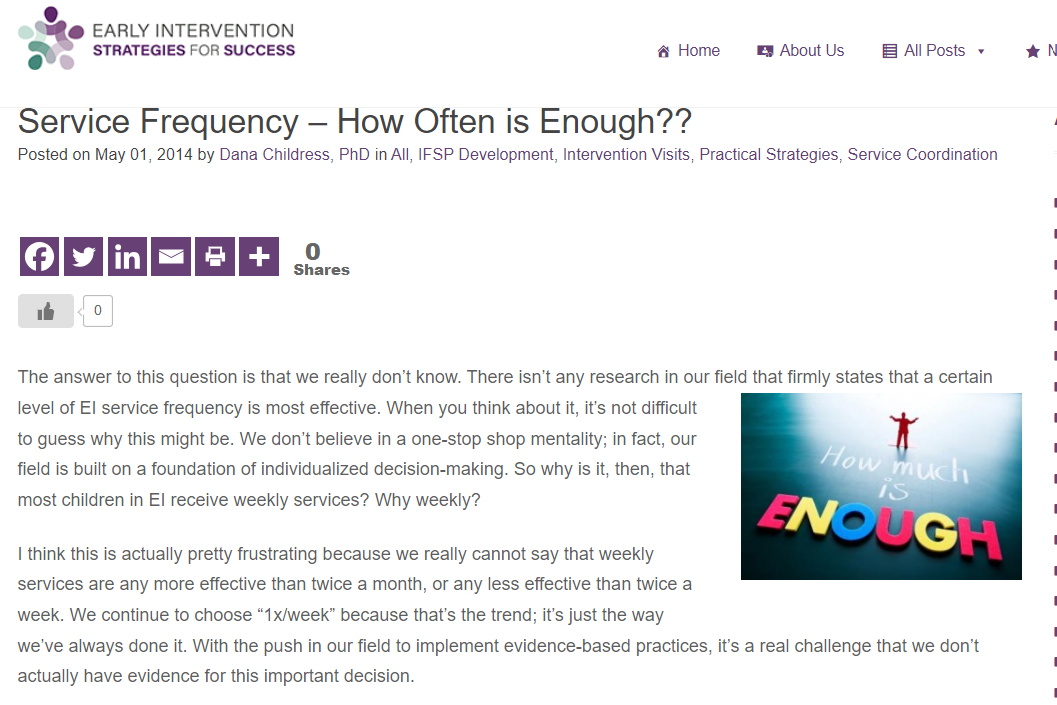
Service Frequency –

How Often is Enough??


When it comes to this decision, until we have evidence to guide the process, we do our best to consider all of these unique variables, mixed with our professional experience and the family’s preferences. Here are a few ideas about deciding on service frequency.


Revisit this archived Strategies for Success Blog facilitated by Dana Childress.


Service Frequency- How Often is Enough

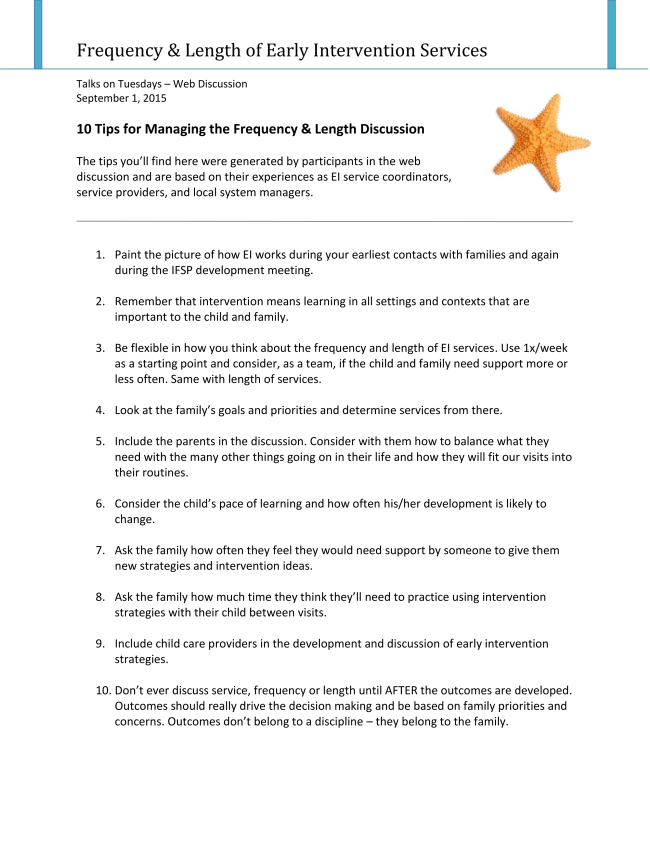
10 Tips for Managing the Frequency &

Length Discussion


The tips you’ll find here were generated by participants in the web discussion and are based on their experiences as EI service coordinators, service providers, and local system managers.


10 Tips for Managing Frequency and Length

EMPLOYMENT OPPORTUNITIES

JOIN US IN MAKING A DIFFERENCE!


Virginia’s Part C early intervention system is built on the dedication and talent of professionals who believe in the potential of every child. If you’re passionate about supporting infants, toddlers, and their families, we invite you to bring your skills, your curiosity, and your commitment to a team that truly values your contribution. Together, we can help Virginia’s youngest learners thrive!


Join thousands of others and visit the ITCVA Employment Opportunities page today!


Click here to view current job vacanciesLet us help find you that perfect position!


Click here to request an online postingLet us help connect you to qualified applicants!


DMAS Early Intervention Support


For specific Medicaid questions related to billing and supports for Early Intervention, please use the following email:

EarlyIntervention@dmas.virginia.gov

ITCVA DIRECT ACCESS

INFANT & TODDLER CONNECTION OF VIRGINIA

Looking for the most up-to-date version of the Part C Practice Manual...upcoming meeting dates...or even a new career opportunity? You'll find plenty of helpful information on the Infant & Toddler Connection of Virginia's early intervention website! Be sure to visit and bookmark itcva.online.

MEDICAID ENROLLMENTS

If you have questions about enrollments for children with Medicaid please

contact Brenda Ayala.

EARLY INTERVENTION CERTIFICATION


For questions about certification of practitioners, contact Anne Brager- 804-664-2462.


For questions related to completing the online application, contact VATRACITsupport@ssg-llc.com or from 8AM-5PM ET by calling 804-508-7229.

Infant & Toddler Connection of Virginia is part of the Department of Behavioral Health and Developmental Services

ITCVA Staff

1220 Bank Street, 9th Floor, P.O. Box 1797, Richmond, Virginia 23219-1797

Main Office: (804) 786-3710 • Main Fax: (804) 371-7959

Do you have colleagues who aren’t getting the Monthly Part C Update? Ask them to check their spam folder. If they're still not receiving it, have them email anne.brager@dbhds.virginia.gov.