Infant & Toddler

Connection of Virginia

March 2026


PART C UPDATES


Creating Connections to Shining Stars

Limited Capacity! Secure your spots ASAP!

July 14th - 16th


Here's the link to learn more about lodging and registration.

https://conta.cc/3MRfKXt

Test your Knowledge with our Poll Feature

Pick your answer and scroll below to find the correct answer and explanation!

Which 3 letter acronym represents Virginia’s guidance for writing outcomes and goals?

Why Strong Oversight in Part C Early Intervention Matters to Families


When families first access the Infant & Toddler Connection of Virginia, they’re often stepping into unfamiliar territory. They’re learning new terms, meeting new professionals, and trying to understand what supports will help their child develop and grow. And throughout their time with us, one thing matters more than anything else: trust. Families need to know that Virginia’s early intervention system is reliable, responsive, and working as it should.

That’s where strong general supervision and oversight come in… not as bureaucratic requirements, but as the backbone of a system families can depend on.


From a family’s perspective, effective oversight ensures that:

  • Plans reflect real needs. Families want their IFSP to be meaningful, individualized, and grounded in their daily routines. Oversight helps ensure that teams are using best practices and truly listening to families.
  • Services begin on time and are provided as expected. When children and families need our help, every day and every interaction matters. Strong monitoring helps prevent delays and keeps services moving.
  • Providers are well‑supported. When local programs receive clear guidance, training, and feedback, families benefit from more consistent, high‑quality services.
  • Communication is clear and coordinated. Families understand and feel confident in the process.


Families rarely think about federal, DBHDS or local monitoring activities. What they do notice is whether the system feels dependable. General supervision is the behind‑the‑scenes work that makes that dependability possible. It’s how we all ensure that every child and family in

Virginia has access to the same high standard of early intervention.


When families feel confident in the system, they can focus on what truly matters: celebrating their child’s growth, learning new strategies, and partnering with providers to support their child’s development.


Strong oversight makes this possible.


*****


ITCVA Monitoring Community of Practice (MCoP)


The next ITCVA monthly monitoring community of practice (MCoP) call will be held on March 4, 2026, at 3PM. Thank you to all who have been able to join us for our monthly monitoring calls and for the positive feedback shared!


ITCVA MCoP calls are held on the first Wednesday of each month beginning at 3:00PM. These calls are open to anyone who may be interested in the topic(s) being discussed. Calls are recorded for those who are unable to attend. Please visit the Monitoring Community of Practice page of the ITCVA website for a list of upcoming topics, the Microsoft Teams meeting link and session resources.

March 2026

TRAC-IT Reports for Local Monitoring

April 2026

CIMV; Structured and Supervised Local Monitoring

Family Survey and Family Outcomes

May 2026

Part C Dispute Resolution


Transition Season

April 1 is Coming!


The April 1 deadline is crucial for families with a child who will turn 2 years old by September 30 of that school year and who want their child to start Part B special education services at the beginning of the next school year.


Referral Process Requirements

  • The service coordinator must notify the local school division and the Virginia Department of Education at least 90 days before the anticipated transition date.
  • This notification must also happen by April 1 for children turning 2 by September 30, to align with the start of school 


Resources:

Upcoming Annual Transition Webinar for New LSMs,

Service Coordinators

(and Providers wanting to learn more about transition)


Considerations for a Smooth and Timely Transition from Part C to Part B Webinar


Date: 3/3/2026 11:00 AM ET - 12:00 PM ET


Registration link: Considerations for a Smooth and Timely Transition from

Part C to Part B 


This webinar, presented by the Virginia Department of Behavioral Health and Developmental Services and the Department of Education, will provide information about the transition from Early Intervention Services (Part C) to Early Childhood Special Education (Part B).


The webinar will discuss regulations, decisions that are to be determined locally, program eligibility criteria, as well as tips for how the two systems can collaborate to support families. The webinar will be recorded.  


Presenters:

  • Dawn Hendricks (Early Childhood Special Education Coordinator, Virginia Department of Education) and
  • Sarah Moore (Monitoring Consultant Infant and Toddler Connection of Virginia, DBHDS) 


*Click here for the TTAC region map to help answer this question on the registration. 


April 1 is Coming!

The April 1 deadline is crucial for families with a child who will turn 2 years old by September 30 of that school year and who want their child to start Part B special education services at the beginning of the next school year.


  • Referral Process Requirements
  • The service coordinator must notify the local school division and the Virginia Department of Education at least 90 days before the anticipated transition date.
  • This notification must also happen by April 1 for children turning 2 by September 30, to align with the start of school 


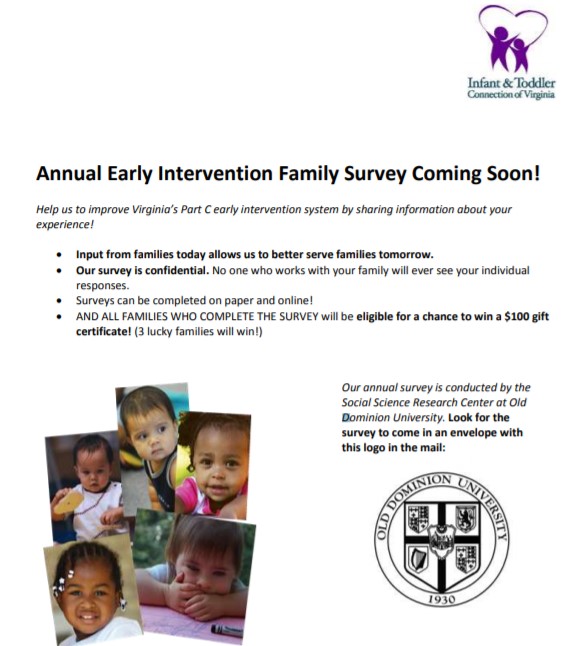
Schedule for the 2026 Family Survey


  • Flyers begin mailing - 3/2
  • Wave 1 begin mailing (those without email addresses). Families with email addresses will be sent an email invitation. - 3/20-4/3
  • Wave 2 begin mailing (all non-responding families) - 4/20-5/4
  • Calls begin to localities with less than 15 completes - 5/18-5/29


Strategies for Increasing Survey Response Rates:


  • Integrate purpose of survey with other program materials so that families know about it and see value in participating
  • Share results of survey with families
  • Use the data to make changes. This shows families the importance and value of their input. 
  • Inform parents about who will have access to the results and how the information will be used; ensure confidentiality


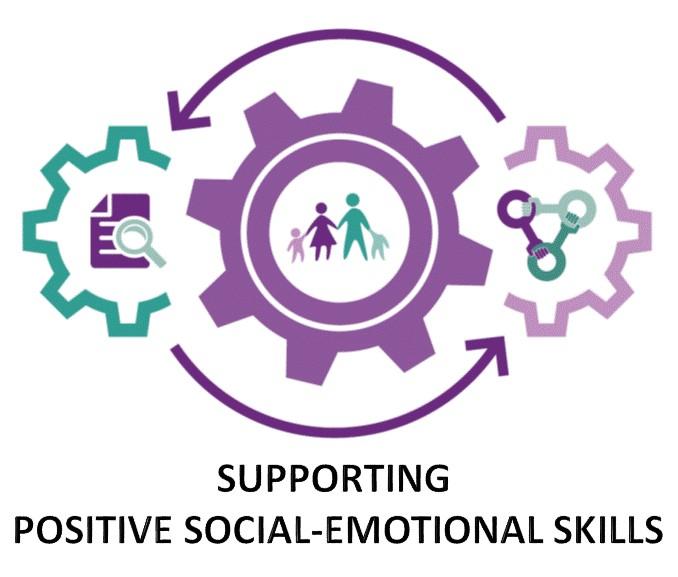
Social and emotional development in infancy and early childhood forms the foundation for lifelong learning, healthy relationships, and mental well-being. It includes skills such as forming secure attachments, managing emotions, engaging with others, and responding to the social world around us. Early intervention professionals, caregivers, and families play a critical role in nurturing these skills, especially for children with developmental delays or disabilities. The Virginia Early Intervention Professional Development Center (VEIPD) offers a range of targeted resources designed to support understanding, assessment, and practical strategies that promote positive social-emotional growth in young children and strengthen family-provider partnerships. This month's resource is:

Learning Path #3: Understanding Behavior

This learning path provides a context for how social emotional development can influence behavior. Topics include understanding child behaviors, how challenging behaviors may manifest themselves in daily routines, and how to implement behavior management tools that are effective and supportive of the child.


👉 Includes video presentations on behavior influences and tools for effective behavior support.

📍 Link: https://veipd.vcu.edu/professional-development/learning-paths/social-emotional-learning-path-3/


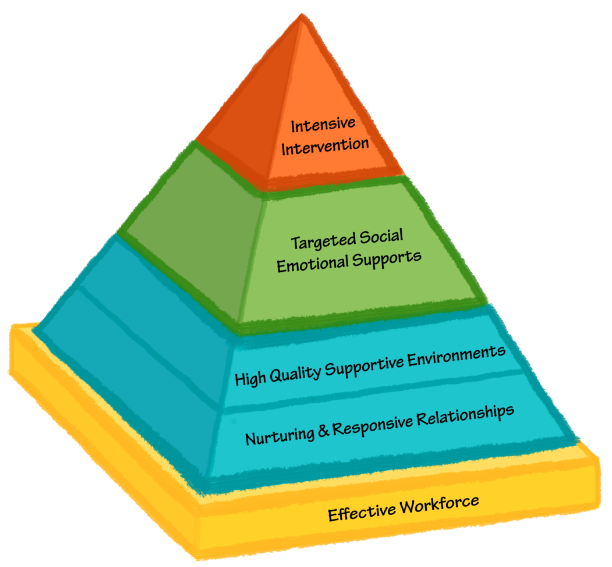
Pyramid Model Framework

Are you looking to add to your Pyramid Model Framework toolbox of Evidenced Based Practices? Check out Prevent-Teach-Reinforce for Families (PTR-F)


What is PTR-F?


PTR-F is a research-based approach that has helped families and shown positive results across multiple intervention studies. It is a team-based process that helps us understand why your child’s behaviors occur, so we can plan practical ways to help your child learn new skills to communicate their experiences, emotions, wants, and needs, participate in family routines and interactions, and make daily life easier for everyone.

  • Prevent refers to identifying and using strategies that reduce the chances of challenging behavior happening in the first place. This includes making changes to routines, environments, expectations, and interactions so situations are less likely to be difficult for the child.
  • Teach refers to identifying the specific skills you want to teach the child to use instead of challenging behavior. These skills give a child another way to communicate, participate, or respond when something feels hard.
  • Reinforce involves developing a plan to encourage the behaviors and skills you want the child to continue using. What works best will depend on your child and what they like.


To learn more:

Prevent-Teach-Reinforce for Families: A Model of Individualized Positive Behavior Support for Home and Community


PROFESSIONAL DEVELOPMENT


A GEM YOU MIGHT HAVE FORGOTTEN?

WHAT YOU MIGHT HAVE MISSED?

WHAT'S COMING

UP NEXT?

Are you looking for a training plan already developed? We have a solution! Check out all of the topics under our Learning Bytes section. 

The Heartwired series is pumping out excellent videos centered on social-emotional development in EI. Make sure you have seen this one on functional behavior assessment and also this one on informed clinical opinion.

Don't miss the chance to register for the next The Growing Brain: Supporting the Emotional Well-Being of All Families! This short course will run on the following Tuesdays from 12-1:15 pm: April 14, April 28, May 12, May 26. Be sure you are registered for communications from VEIPD to get the registration announcement. This course fills fast!

Kaleidoscope Training

March 24th - 25th, 2026

8:30 am - 12:00 pm EST

Registration is open!


Kaleidoscope, New Perspectives in Service Coordination is an introductory level training program for new early intervention (EI) service coordinators. The training program includes the completion of three components:


  1. The Many Facets of Service Coordination online module (available here)
  2. Kaleidoscope Training - two virtual training days
  3. Kaleidoscope Community of Practice - three monthly web-based meetings with the cohort who attended the training day to support implementation of the concepts learned from the module and training


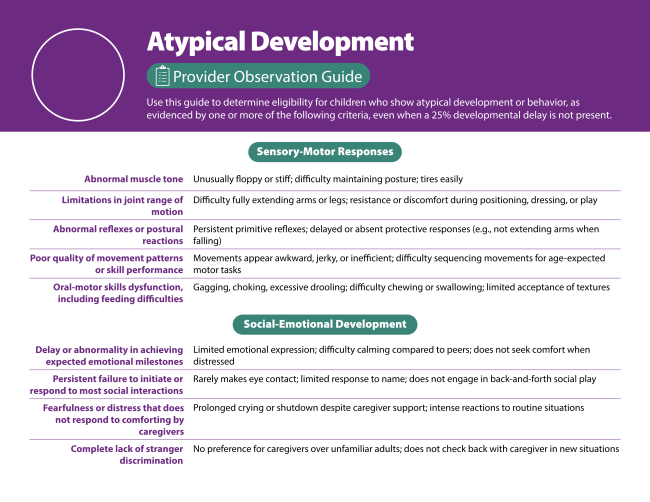
Updated Resource Quick Reference Card Available!

Atypical Development: Provider Observation Guide


Use this guide to determine eligibility for children who show atypical development or behavior, as evidenced by one or more of the following criteria, even when a 25% developmental delay is not present.

Sample provided below. For full resource click the link.

Prevent Blindness Resources: Retinopathy of Prematurity 


Retinopathy of Prematurity (ROP) is a condition caused by abnormal development of retinal blood vessels, occurring as a complication of preterm birth and/or low birth weight. ROP may lead to partial or complete vision loss if the condition is severe and the retina detaches. Effective screening, timely treatment, and ongoing eye care are essential for preventing ROP- associated vision loss. ROP is a leading cause of lifelong visual impairment.


Prevent Blindness offers a library of FREE resources on Retinopathy of Prematurity. These resources, part of the Prevent Blindness ROP Education and Support Program, were created to educate and support families of children with ROP and increase awareness about ROP in the general public. Click here to see the list of free resources.


 For more information on ROP, contact Prevent Blindness at info@PreventBlindness.org.


This information was developed in partnership with Hand to Hold, National Coalition for Infant Health, and the SPAN Parent Advocacy Network. This material was made possible by funding from Regeneron.


RESOURCES FOR FAMILIES


Developing resources for communicating with parents is essential to the smooth and efficient administration of a screening and monitoring program, such as ASQ-3 and/or ASQ:SE-2. Age and Stages Questionaires allow full access to add your program’s logo and contact information to any of the items below.

Parent Resources in English

Parent Resources in Spanish


POLL ANSWER AND EXPLANATION


Which 3 letter acronym represents Virginia’s guidance for writing outcomes and goals?


The correct answer is “c” – ACC (Acquisition, Context, Criterion)


Developing strong Individualized Family Service Plan (IFSP) outcomes and goals is essential for supporting infants and toddlers with developmental needs and their families. In Virginia, IFSP outcomes are designed to be functional, family-centered, and measurable, ensuring that they reflect what is most important to the child and family in their everyday routines. High-quality outcomes help teams focus on meaningful progress, promote collaboration, and provide clear direction for intervention strategies.


Virginia’s 3-Part Outcome Format

  • Acquisition: What the child will do (e.g., “use 15 words”)
  • Context: Where and when this behavior occurs (“during mealtimes at home”)
  • Criterion: How often or by what measure it will be considered achieved (“5x/day over one week”)


Core Principles for Effective IFSP Outcomes

Individualized & Measurable

Tailor to the child and clearly define how progress is tracked.

Poor: “Jason will use words.”

Better: “Jason will use 15 words to request items (blanket, juice, ball) at least 5 times per day for one week.”

Routine-Based & Functional

Embed goals in daily contexts and meaningful activities. Avoid test-like, isolated skills—emphasize real-life participation.

Better: “Jason will walk 5 ft across the living room to join family playtime when the dog is present, every morning for seven days.”

Concrete, Positive Language

Use active verbs, jargon-free phrasing, and focus on strengths.

Family-Centered & Contextual

Reflect family routines, priorities, cultural values, and the natural environment


Writing Your Own Outcomes: Step-by-Step

Engage the Family: Use open-ended questions to learn:

  • What routines are important for your child?
  • What changes would you like to see in your child’s daily life?

Identify Priorities:

Choose a few meaningful routines or family-valued skills.

Create Family-Centered, Functional Outcomes:

  • Acquisition (behavior)
  • Context (routine/environment)
  • Criterion (how measured)

Write Active, Measurable Statements:

  • Include objective measures (frequency, duration, distance).

Example: “Ella will point to 8 familiar pictures (dog, cup, ball) during Storytime at home, 4 out of 5 days for two weeks.”

Options & Strategies:

  • List what supports and strategies (e.g., modeling, prompts, AAC) will help the child and family meet the outcome.

Monitor Progress:

  • Document ongoing assessment in contact notes.


These strategies ensure that IFSP outcomes are:

  • Measurable, so progress is visible
  • Grounded in daily life, aligning with routines
  • Family-driven and culturally sensitive
  • Action-oriented and written in plain language


Resources & Tools

Our quick reference cards have a new look! Here are some that you may find useful for outcome and goal writing:


EMPLOYMENT OPPORTUNITIES


JOIN US IN MAKING A DIFFERENCE!


Virginia’s Part C early intervention system is built on the dedication and talent of professionals who believe in the potential of every child. If you’re passionate about supporting infants, toddlers, and their families, we invite you to bring your skills, your curiosity, and your commitment to a team that truly values your contribution. Together, we can help Virginia’s youngest learners thrive!


Join thousands of others and visit the ITCVA Employment Opportunities page today!


Click here to view current job vacancies. Let us help find you that perfect position!


Click here to request an online posting. Let us help connect you to qualified applicants!


ITCVA DIRECT ACCESS

 
INFANT & TODDLER CONNECTION OF VIRGINIA

Looking for the most up-to-date version of the Part C Practice Manual...upcoming meeting dates...or even a new career opportunity? You'll find plenty of helpful information on the Infant & Toddler Connection of Virginia's early intervention website! Be sure to visit and bookmark itcva.online.

MEDICAID ENROLLMENTS

If you have questions about enrollments for children with Medicaid please

contact Brenda Ayala.


EARLY INTERVENTION CERTIFICATION


For questions about certification of practitioners, contact Anne Brager- 804-664-2462.


For questions related to completing the online application, contact VATRACITsupport@ssg-llc.com or from 8AM-5PM ET by calling 804-508-7229.

Infant & Toddler Connection of Virginia is part of the Department of Behavioral Health and Developmental Services

ITCVA Staff

1220 Bank Street, 9th Floor, P.O. Box 1797, Richmond, Virginia 23219-1797

Main Office: (804) 786-3710 • Main Fax: (804) 371-7959

Do you have colleagues who aren’t getting the Monthly Part C Update? Ask them to check their spam folder. If they're still not receiving it, have them email anne.brager@dbhds.virginia.gov.

DMAS RESOURCES

DMAS Early Intervention Support


For specific Medicaid questions related to billing and supports for Early Intervention, please use these emails:

M4EarlyIntervention@dmas.virginia.gov:

CCCPlusEarlyIntervention@dmas.virginia.gov

 
1220 Bank Street
Richmond, VA 23219
(804) 664-2462