INFECTION CONTROL/FLU
2022 ANNUAL REVIEW
SELF STUDY & EXAM
|
|
DEADLINE IS OCTOBER 15TH, 2022.
Failure to comply may result in mandatory classroom attendance.
|
|
HERE IS WHAT YOU NEED TO KNOW: |
|
The Chain of Infection is a model used to understand the infection process. Each link in the chain represents a component in the cycle.
Each link must be present and in sequential order for an infection to occur.
|
|
DEFINITIONS:
-
Infectious Agent: Any microorganism that can cause a disease such as a bacterium, virus, parasite, or fungus. Reasons that the organism will cause an infection are virulence (ability to multiply and grow), invasiveness (ability to enter tissue), and pathogenicity (ability to cause disease).
-
Reservoir: The place where the microorganism resides, thrives, and reproduces, i.e., food, water, toilet seat, elevator buttons, human feces, respiratory secretions.
-
Portal of Exit: The place where the organism leaves the reservoir, such as the respiratory tract (nose, mouth), intestinal tract (rectum), urinary tract, or blood and other body fluids.
-
Mode of Transmission: The means by which an organism transfers from one carrier to another by either direct transmission (direct contact between infectious host and susceptible host) or indirect transmission (which involves an intermediate carrier like an environmental surface).
-
Portal of Entry: The opening where an infectious disease enters the host’s body such as mucus membranes or open wounds.
-
Susceptible Host: The person who is at risk for developing an infection from the disease. Several factors make a person more susceptible to disease including age (young people and elderly people generally are more at risk), underlying chronic diseases such as diabetes or asthma, conditions that weaken the immune system like HIV, certain types of medications, and malnutrition.
|
|
IMPORTANT!
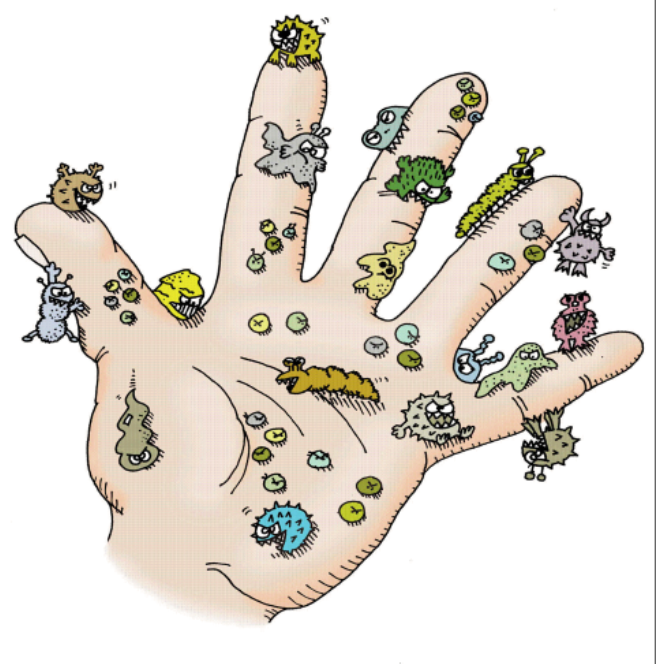
HAND WASHING is the SINGLE most important thing you can do to PREVENT SPREADING INFECTION and STAYING WELL
|
|
WHY IT MATTERS…
Cross-Contamination
-
From you to client
-
From client to you
-
From client to you to another client
-
From you to a co- worker
-
From you to your family
|
|
|
WHY IT MATTERS…
- Risk for infection
- Weakened Immune System
-
Sepsis (the presence of disease causing organisms or their toxins in the blood or tissues)
|
|
WHEN DO WE WASH OUR HANDS:
- Before, during and after preparing food
- Before eating food
- Before and after caring for someone who is sick
- Before and after treating a cut or wound
- Before leaving work
- When your hands are visibly soiled
- After blowing your nose, coughing, or sneezing
|
|
- After cleaning up a child who has used the toilet
- After care of a client
- After using the toilet
- After touching garbage
- After cleaning up dirty dishes
- After outdoor activities
|
|
|
Hand Hygiene
Technique
(Hand rubs)
- Apply the product to the palm of one hand
- Rub the product over all surfaces of your hands and fingers until hands are dry
|
|
|
|
|
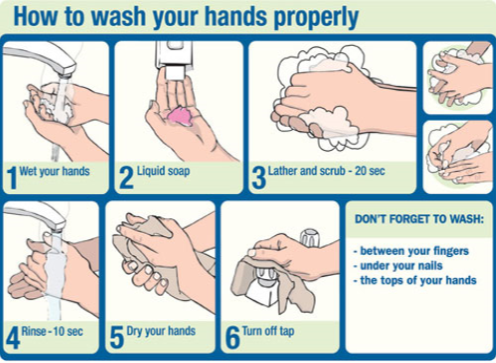
IMPORTANT !! IT IS VITAL WE COMPLETE EVERY STEP OF THE PROCESS OF WASHING OUR HANDS AS SEEN ON THE PREVIOUS PAGE. IF WE ARE NOT TAKING THE TIME TO BE THOROUGH — WE RISK THE SPREAD OF INFECTION
|
|
|
|
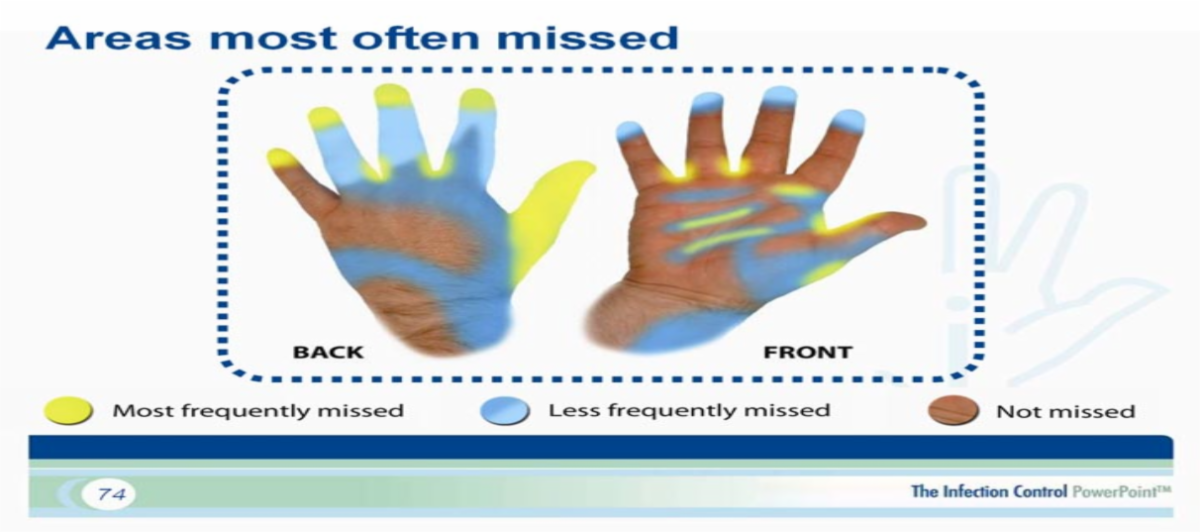
INTERESTING!!
TAKE NOTE OF THE AREAS ON THE FRONT AND BACK OF HANDS THAT ARE MOST OFTEN MISSED WITH CARELESS WASHING.
|
|
What if Soap and Water are not Available?
- SOAP AND WATER ARE THE BEST TOOLS FOR REDUCING GERMS. However If soap and water is not available, use an alcohol based sanitizer with at least 60% alcohol.
Soap or Alcohol Based Hand Rub?
- Alcohol based hand sanitizers can quickly reduce the number of germs on hands in some situations, but sanitizers do not eliminate all types of germs.
- Hand sanitizers are not as effective when hands are visibly dirty
|
|
STANDARD (UNIVERSAL) PRECAUTIONS
STANDARD (Universal) precautions are actions that you take to place a barrier Between yourself and potentially infected body fluids. There are many easy ways to protect yourself and others.
-
TREAT ALL HUMAN BLOOD AND CERTAIN BODY FLUIDS AS IF THEY ARE INFECTIOUS- IF IT’S WET AND NOT YOURS THEN PROTECT!!
-
OBSERVE PRECAUTIONS IN ALL SITUATIONS WHERE THERE IS A POTENTIAL FOR CONTACT WITH BLOOD OR OTHER POTENTIALLY INFECTIOUS MATERIAL.
-
RECOMMENDS EMPLOYEES TO ALWAYS USE PERSONAL PROTECTIVE EQUIPMENT (PPE) AND OTHER INFECTION CONTROL PRACTICES TO PREVENT TRANSMISSION IN ANY SETTING. EYE GLASSES ARE NOT EFFECTIVE IN PROTECTING YOUR EYES.
- APPROPRIATE RESPIRATORY HYGIENE (IE: COUGH OR SNEEZE IN ARM).
- SAFE HANDLING AND DISPOSAL OF NEEDLES AND OTHER SHARP DEVICES.
- CLEANING AND DISINFECTING CONTAMINATED SURFACES, EQUIPMENT, AND OTHER OBJECTS.
|
|
Influenza (Flu)
Flu is a serious contagious disease that can lead to hospitalization and sometimes death.
How does flu spread?
Most experts think that flu viruses are spread mainly by droplets made when people with the flu cough, sneeze or talk. These droplets can land in the mouths or noses of people who are nearby or possibly be inhaled into the lungs. A person might also get flu by touching a surface or object that has flu virus on it and then touching their own eyes, mouth or nose.
How long can a sick person spread flu to others?
People infected with flu shed virus and may be able to infect others from 1 day prior to getting sick to about 5-7 days after getting sick. This can be longer in some people, especially children and people with weakened immune systems. This means that you may be able to pass on the flu to someone else before you know you are sick, as well as while you are sick.
How severe is illness associated with flu?
Each flu season, different flu viruses spread and affect people differently based on their body’s ability to fight infection. Even healthy children and adults can get very sick from the flu and spread it to friends, co-workers, and family. In the United States, millions of people have to visit the doctor because of flu and hundreds of thousands are hospitalized from flu complications each year.
While the flu can make anyone sick, certain people are at greater risk for severe illness resulting in hospitalization or death. This includes older adults, young children, people with certain long term health conditions such as asthma, diabetes, heart disease and women who are pregnant. (See “What should I do if I get sick?” for the full list of high risk factors.)
What can I do to protect myself from getting sick from flu?
CDC recommends a three-step approach to fighting flu: vaccination, everyday preventive actions, and the correct use of antiviral drugs, if your doctor recommends them.
|
You can make an appointment for a FREE FLU SHOT on Campus or Herkimer Road?
DETAILS WILL FOLLOW. WATCH FOR AN EMAIL WITH DATES AND TIMEs OFFERED.
|
|
Prevention
#1 A flu vaccine is the first and most important step in protecting against flu viruses.
■ While there are many different flu viruses, the flu vaccine protects against the viruses that research indicates will be most common.
■ Flu vaccines protect against three or four viruses; an H1N1, an H3N2, and one or two influenza B viruses, depending on the vaccine.
■ Everyone 6 months of age and older should get vaccinated against the flu each year.
■ Vaccination of high risk persons is especially important to decrease their risk of severe flu illness. Vaccination also is important for health care workers, and those who live with or care for high risk people to keep from spreading flu to high risk people.
■ Children younger than 6 months are at high risk of serious flu illness, but are too young to be vaccinated. People who care for or live with them should be vaccinated to protect these babies.
#2 Take everyday actions to help prevent the spread of germs that cause respiratory illnesses.
■ Try to avoid close contact with sick people.
■ If you are sick with flu-like illness, CDC recommends that you stay home for at least 24 hours after your fever is gone except to get medical care or for other necessities. Your fever should be gone without the use of a fever-reducing medicine.
■ While sick, limit contact with others as much as possible to keep from infecting them.
■ Cover your nose and mouth with a tissue when you cough or sneeze. Throw the tissue in the trash after you use it.
■ Wash your hands often with soap and water. If soap and water are not available, use an alcohol-based hand rub.
■ Avoid touching your eyes, nose and mouth. Germs spread this way.
■ Clean and disinfect surfaces and objects that may be contaminated with germs like the flu.
#3 Take flu antiviral drugs if your doctor prescribes them.
■ If you get the flu, antiviral drugs can treat your illness. These drugs can make illness milder and shorten the time you are sick.
■ Antiviral drugs work best when started in the first 2 days of symptoms to treat people who are very sick (such as those who are hospitalized) or people who are sick with flu symptoms and who are at increased risk of severe flu illness.
|
|
|
What should I do if I get sick?
If you become ill with influenza symptoms you should stay home and avoid contact with other people except to seek medical care. Most people are able to recover at home from flu without medical care. However, some people are at greater risk of serious flu-related complications. They are:
■ Children younger than 5, but especially children younger than 2 years old
■ People 65 and older
■ Pregnant women (and women up to two weeks postpartum)
■ People who have:
• Asthma • Chronic lung disease (such as chronic obstructive pulmonary disease [COPD] and cystic fibrosis) • Kidney disorders • Neurological and neurodevelopmental conditions [including disorders of the brain, spinal cord, peripheral nerve, and muscle such as cerebral palsy, epilepsy (seizure disorders), stroke, intellectual disability (mental retardation), moderate to severe developmental delay, muscular dystrophy, or spinal cord injury]. • Blood disorders (such as sickle cell disease). • Endocrine disorders (such as diabetes mellitus) • Heart disease (such as congenital heart disease, congestive heart failure and coronary artery disease) • Liver disorders • Metabolic disorders (such as inherited metabolic disorders and mitochondrial disorders) • Weakened immune system due to disease or medication (such as people with HIV or AIDS, or cancer, or those on chronic steroids) • People younger than 19 years of age who are receiving long-term aspirin therapy • People who have extreme obesity.(Body Mass Index, or BMI, of 40 or greater) If you (or your child) are in one of the groups above and develop flu-like. symptoms, consult a health care provider to get advice about seeking medical care. Also, it’s possible for otherwise healthy people to develop severe illness, so any one concerned about their symptoms should consult their doctor.
There are “emergency warning signs” that should signal anyone to seek medical care urgently.
|
|
Emergency Warning Signs in Children:
• Fast breathing or trouble breathing
• Bluish skin color
• Not drinking enough fluids
• Not waking up or not interacting
• Being so irritable that the child does not want
to be held
• Flu-like symptoms improve but then return with fever and worsening cough
• Fever with a rash
In Adults:
• Difficulty breathing or shortness of breath
• Pain or pressure in the chest or abdomen
• Sudden dizziness
• Confusion
• Severe or persistent vomiting
|
|
Symptoms can include:
• fever *
• cough
• sore throat
• runny or stuffy nose
• body aches
• headache
• chills
• fatigue
• sometimes diarrhea and vomiting
*It’s important to note that not everyone with the flu will have a fever.
|
All information has been provided by the CDC.
For more information, visit
or call
800-CDC-INFO.
|
|
|
CLICK THE BUTTON TO THE RIGHT TO DO QUIZ |
|
|
|
|
|
|
|