|
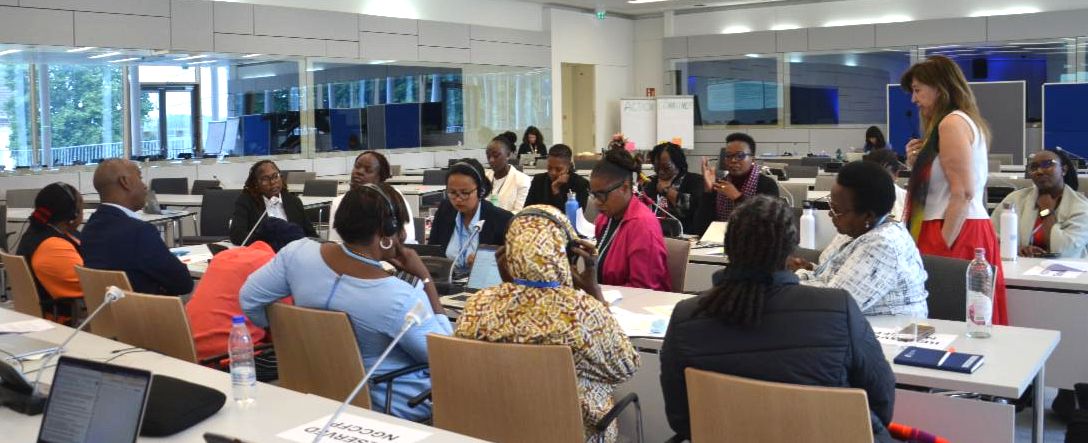
Image: UNFCCC. Picture of the In-session workshop on best practices and tools for strengthening the role of national gender and climate change focal points, at SB 64, in Bonn.
At COP 31, Parties will consider:
-
Experience in implementing gender-responsive financial instruments and methodologies, and available capacity-building in this regard. Synthesis report by the secretariat (FCCC/CP/2026/6)
This report synthesizes submissions from Parties and relevant organizations on experience in implementing gender-responsive financial instruments and methodologies, and available capacity-building in this regard. The report identifies the increasing integration of gender-responsive climate finance approaches into and application of approaches within public financial management systems, national budgeting processes, and public and private financing frameworks, and the importance of gender-responsive climate finance in direct access modalities for national climate funds and for decentralized grants and highly concessional financing. It outlines the operational challenges that restrict the equitable flow of climate finance towards addressing the needs of women and girls and people and communities in vulnerable situations; highlights the integral role of capacity-building in the design, implementation and monitoring of gender-responsive climate finance; and presents opportunities identified by stakeholders for strengthening gender-responsive climate finance, including the flow thereof, its impact and relevant capacity-building.
The report presents a breakdown of the gender composition of constituted bodies established under the Convention, the Kyoto Protocol and the Paris Agreement, and of the gender and age composition of Party delegations to sessions held under these instruments, including comparison with data for previous years. In addition, information is provided on the secretariat’s implementation of decisions that include a gender approach. This report also includes information related to several mandated deliverables under the Belém gender action plan for 2026–2034, such as on the gender composition of Party delegates having received funding through the trust fund for participation in the UNFCCC process for in-person participation in United Nations climate change conferences.
-
In-session workshop on best practices and tools for strengthening the role of national gender and climate change focal points. Report by the secretariat (FCCC/CP/2026/3)
The in-session workshop on best practices and tools for strengthening the role of national gender and climate change focal points was held from 12 to 13 June 2026 during the sixty-fourth sessions of the subsidiary bodies. This report provides an overview of the workshop proceedings and summarizes the presentations, interactive sessions, peer exchanges and discussions at the workshop as well as participants’ reflections, including on the role and activities of national gender and climate change focal points and good practices.
The reports are available in the 6 UN languages. All UNFCCC documents related to the gender and climate change agenda item can be accessed through this website.
|