|
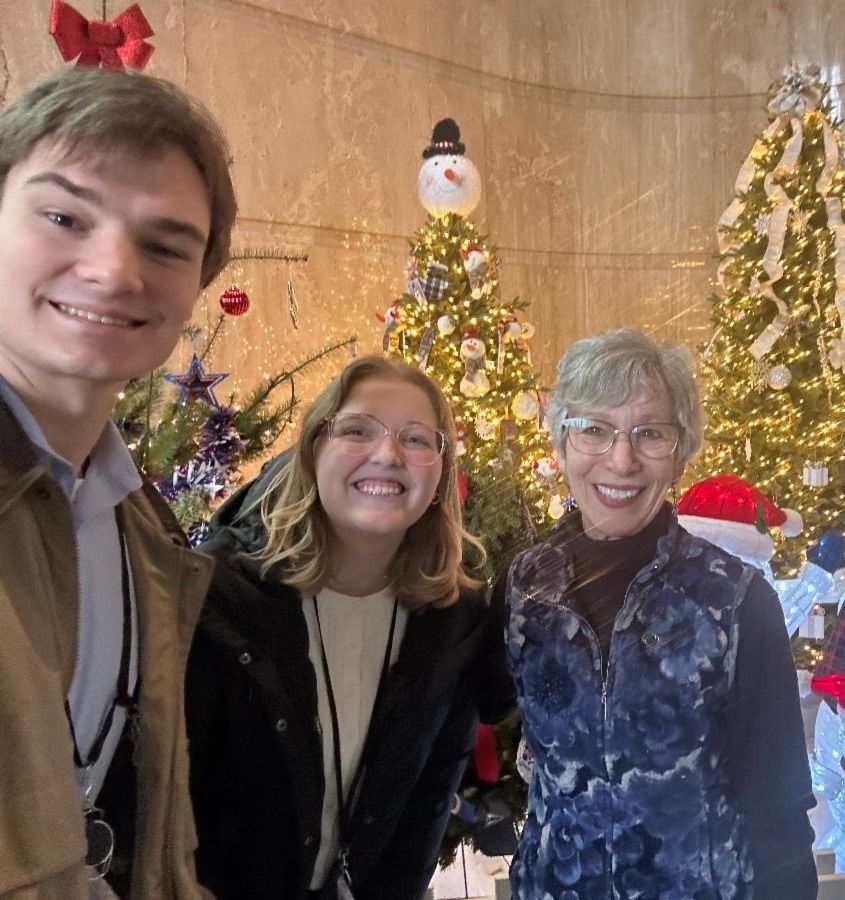
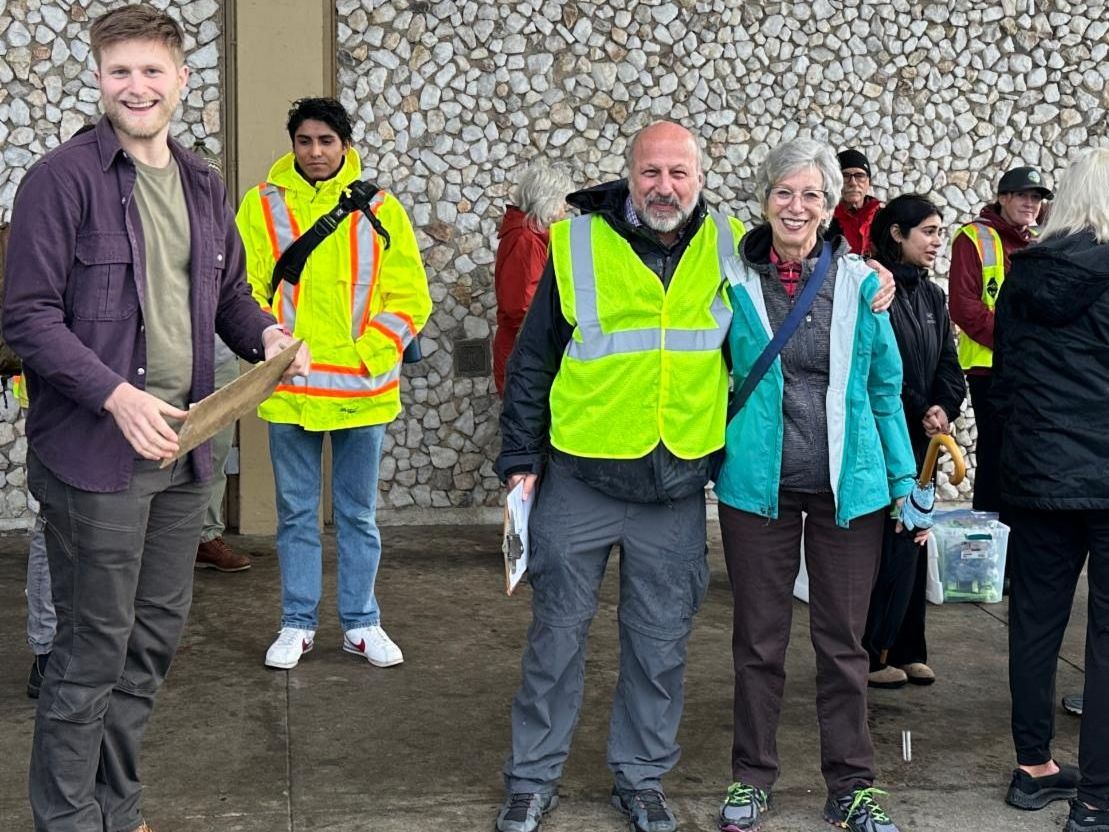
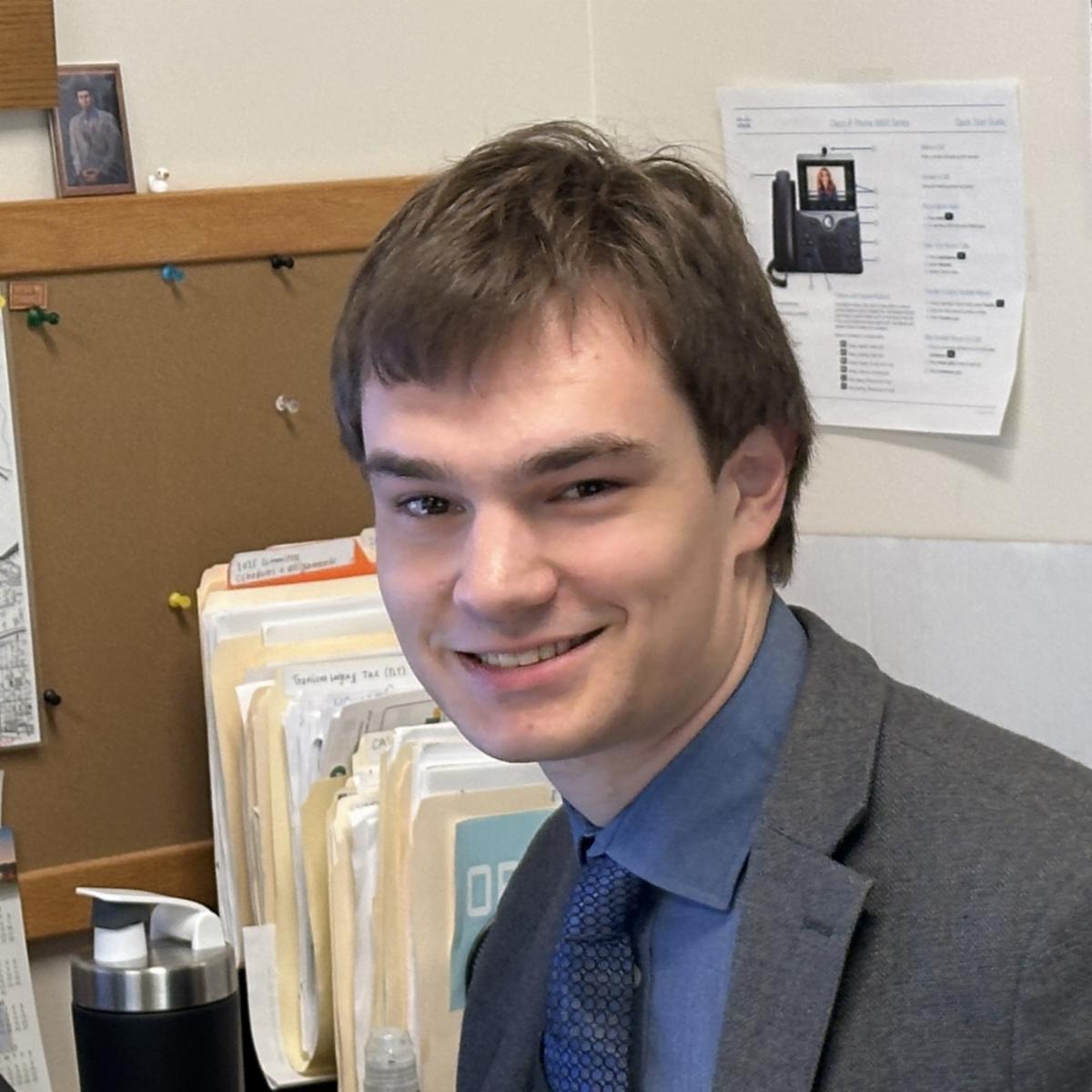
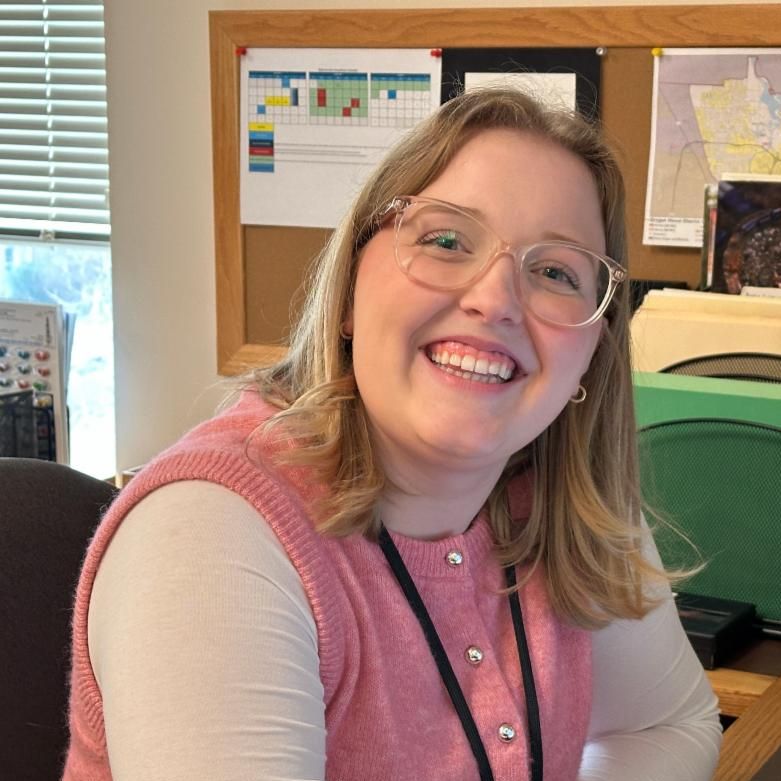
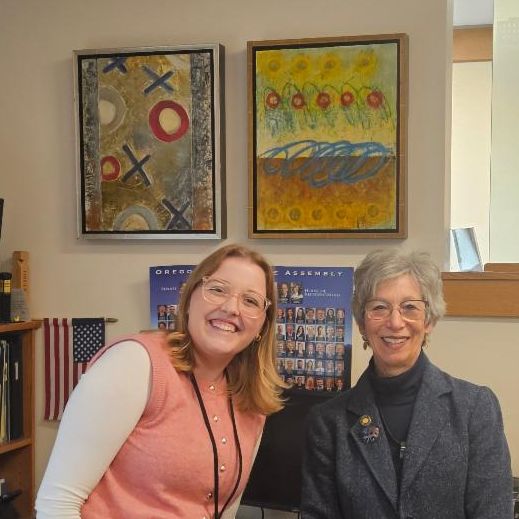
We're in high gear preparing for the short legislative session that begins February 2. Here's the team, as we were working at the Capitol in December. A little bit more about Chris (a Grinnell grad) and Maddux (WOU) below.
This week I was in Salem for committee hearings and working on a few bills including the two bills I will introduce, scaled-back versions of two ideas that passed out of committee in the last session but stalled (i.e. no funding) in Joint Ways and Means. Those two are: defining urgent care clinics, which are currently unlicensed and unregulated, and reducing some of the red tape and delay in getting care workers licensed and working. Over many months spanning a couple of years I've received help from key stakeholders in the community and around the state representing health care and human service programs. I thought you might be interested to see a partial list of those connections: Pearl Buck Center, Oregon Association of Relief Nurseries, Looking Glass, Arc of Lane County, Options Counseling, Oregon Community Programs, Lane County Health and Human Services, Oregon Council for Behavioral Health, Oregon Health Care Association, Oregon Medical Association, practicing and retired physicians, Oregon Academy of Family Physicians, and more.
| | If you missed my latest e-news, here's the link to December 2025. | | |
In the sections below you'll find
- Federal actions: asking for state voter info
- UO, Universities, Innovation Corridor, and the economy
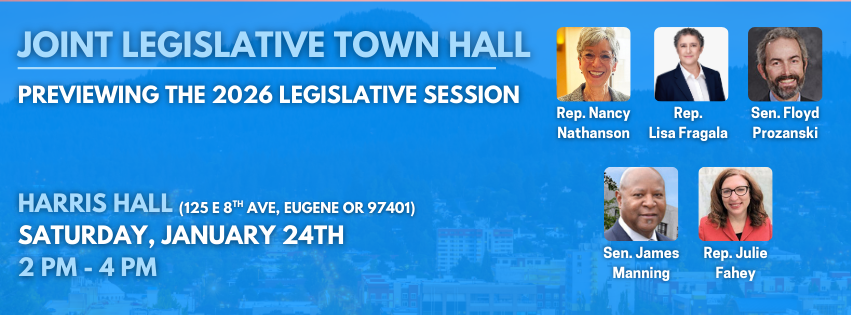
- Town Hall set for January 24
- Around the state: West Coast Health Alliance on vaccines for children; Cybersecurity Center
- Local area: a walking tour - River Road traffic and transportation options
- Meet the new staff
| | |
The federal administration is seeking to get access to Oregon voter registration information, including driver's license info, Social Security numbers, etc. U.S. District Court Judge Mustafa Kasubhai issued a tentative ruling from the bench granting Oregon’s motion to dismiss the administration's lawsuit demanding the information.
Earlier in 2025 the federal administration demanded Oregon and other states hand over voter registration information, including full name, date of birth, residential address and driver’s license number or partial Social Security number. Secretary of State Tobias Read refused, as did Maine, and the federal government then sued. The US District Court in Eugene heard the lawsuit that alleged Oregon had violated the National Voter Registration Act, the Help America Vote Act, and Title III of the Civil Rights Act of 1960 by not turning over voter data. There are lawsuits in other states, including Arizona and Connecticut.
On Jan. 15 Secretary Read said about the court ruling, “This is a big win for Oregonians’ privacy and the rule of law. The federal government tried to abuse their power to force me to break my oath of office and hand over your private data. I stood up to them and said no. Now, the court sided with us. Tonight, we proved, once again, we have the power to push back and win."
A Jan. 14 article in the Capital Chronicle provides more detail about the situation, Oregon's voting system and voter turnout, and a possible explanation for federal interest in demanding comprehensive information on individual voters.
| | |
Vaccinations: Oregon and the West Coast Health Alliance
The Centers for Disease Control and Prevention (CDC) changed its longstanding pediatric vaccination recommendations to limit the number of children advised to receive vaccines for hepatitis A and B, meningococcal disease, influenza, and COVID-19.
Oregon has entered into a partnership with Washington, Hawaii, and California to form the West Coast Health Alliance (WCHA) in response to arbitrary changes to vaccine recommendations and continued politicization of health care by the CDC and Food and Drug Administration (FDA). Oregon, alongside the other members of the WCHA continue to endorse the list of recommended vaccines put out by the American Academy of Pediatrics (AAP). The AAP's recommended immunization schedule serves as a starting point for discussions between families and their providers, as it always has. Parents should continue to make informed decisions about the vaccines that their children receive based on discussions with their child’s health care provider.
Oregon’s state epidemiologist, Dean Sidelinger, had this to say about these federal changes: “The CDC changes to its vaccine recommendations increase the risk of vaccine preventable diseases amongst children ... When children get sick, it leads to missed school, missed work for parents and most importantly, increased hospitalizations and tragically in some cases even death.” According to OHA, “The changes are not expected to affect insurance coverage for vaccines for this plan year. All child and adolescent immunizations recommended as of Dec. 31, 2025, will remain available and covered by public and private insurers.”
For reference: Capital Chronicle article. OHA vaccine recommendations for people of all ages. West Coast Health Alliance and its recommendations.
| |
Cybersecurity Center of Excellence
A special focus area for me has been cybersecurity, and establishing a state Cybersecurity Center of Excellence. The leading universities (OSU, PSU, UO) have moved with great focus and speed, training university students, hosting summer cyber camps for high school students, and providing services to schools and local governments. With bare-bones funding from the state, the Center has leveraged private investment and until recently federal grant support as well.
The University of Oregon is a founding member of the Center and plays a key role in the Center's work including workforce development, cybersecurity services, risk assessments, public awareness campaigns, and outreach activities. UO launched its first B.S. degree in Cybersecurity in Fall 2023, and a new Masters degree and graduate certificate will begin in Fall 2026. The "foundation of computer security" course has reached 770+ students from all majors. Oregon State University offers Cybersecurity Options with the Computer Science Bachelor's degree, and various graduate degrees offer a cybersecurity focus. PSU offers a Graduate certificate in Cybersecurity and a Security Track in the Computer Science Masters program.
Read the Oregon Cybersecurity Center of Excellence 2024-25 Report.
| |
New Laws Taking Effect
Here's a brief mention of just a few of the new laws passed in 2025 that went into place as of Jan. 1 this year, highlighting consumer protection, health care, and rental housing.
- The Fan Fairness and Transparency Act bans use of software "bots" to get around a ticket seller's limits and bans the resale of tickets obtained using those bots. It also prohibits look-alike websites that confuse buyers trying to purchase tickets directly from an entertainment venue's website.
- More about doing business online: extra costs like "convenience charges" or "service fees" are now prohibited from being tacked on to online purchases without warning. Under SB 430, anyone selling goods or services online to Oregonians must include required fees and charges in the price they advertise or display on a website, and taxes or actual shipping costs must be disclosed to the purchaser.
- The Telemarketing Modernization Act expands the definition of "telephone solicitation" to include texting, prohibits solicitations after 8 p.m., and limits allowable solicitations to no more than three times a day.
- Wage theft: Developers and contractors will be held accountable when construction workers serve on a project but don’t get paid. Civil action is now available for workers to sue to recover wages, benefits, and penalties. Subcontractors must provide payroll and worker information on request.
- Rental housing: landlords must return a rental deposit if the potential tenant finds serious problems that make the home not habitable. Those could be things like a leaky roof or window, inadequate heat, unsafe drinking water, accumulated trash, or nonworking locks. Where door locks operate with an “app” on a personal mobile phone, landlords must give tenants options for safely locking and unlocking a rental home's doors without relying only on a phone app, such as an access code, fob, key card, or physical key
- Medical debt: medical service providers, like hospitals and clinics, are prohibited from notifying consumer reporting agencies that you owe money. The reporting agencies also are banned from including in your credit report any amounts they know or should know are medical debts.
- Health insurance coverage: Health plans regulated by the state must now cover treatment of perimenopause, menopause, and post menopause, including hormone therapies and osteoporosis prevention and treatment. Health insurance plans must cover breast reconstruction surgery using a patient's own tissue for reconstruction, instead of implants. The plans must pay for this form of breast reconstruction under the same or better terms and conditions they have for reconstruction procedures with implants.
| |
|
A walk along the River Road corridor
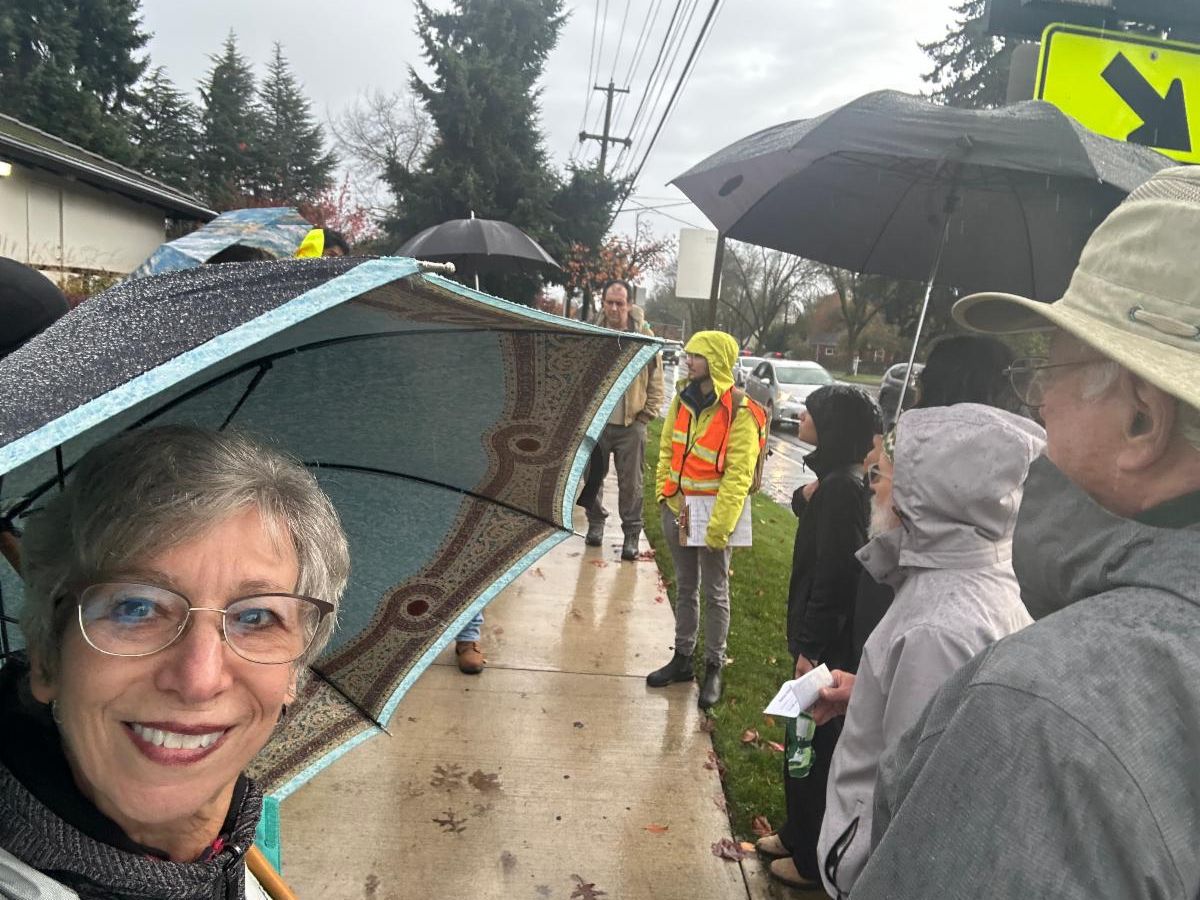
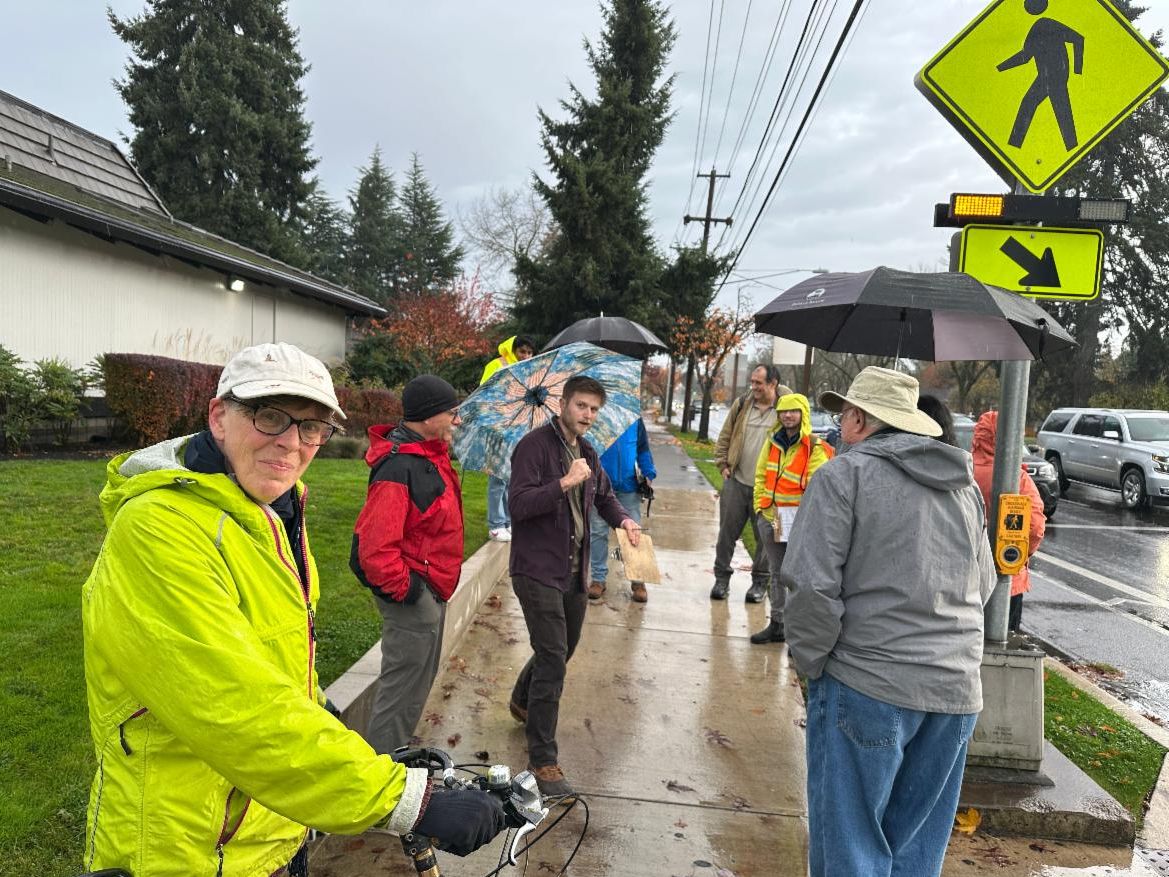
In November I joined BEST (Better Eugene-Springfield Transportation) for a "walk audit" along River Road. BEST and AARP Oregon hosted experts from Smart Growth America that are advocating for Complete Streets for everyone. Separately for Highway 99 and for River Road, participants joined a walk audit to see firsthand what is working today and what needs improvement and then a town hall to learn what approaches have worked in other communities. BEST will share community feedback with the City of Eugene and Lane Transit District to inform future planning for Highway 99 and River Road. More info: The Smart Growth America assessment and BEST’s work advocating for community safety and transportation infrastructure.
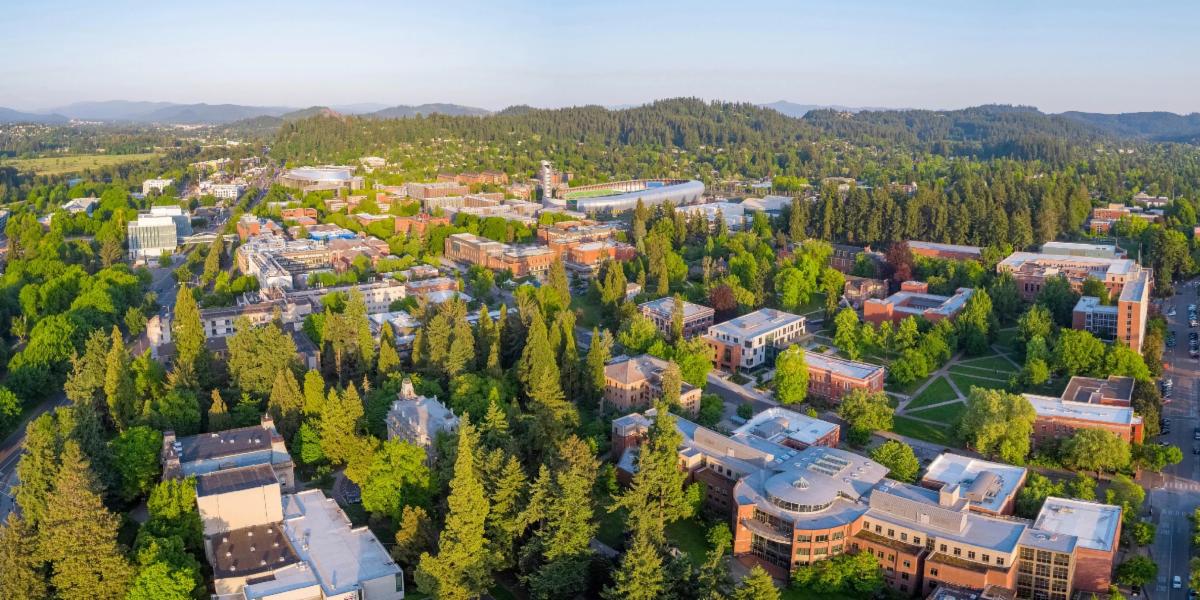
| | UO, Universities, and the Economy | | University of Oregon President Karl Scholz recently spoke at the Eugene Chamber of Commerce Economic Summit, and then at the 23rd annual Oregon Business Plan Leadership Summit where several hundred business, community, and elected leaders gather. I requested a copy of his remarks in Eugene and have selected excerpts to share with you here. | |
"Before coming to Oregon, I spent more than three decades teaching economics. I also had the opportunity to serve in two presidential administrations, working on economic policy issues from tax analysis to household saving and financial access to higher education ...
We’ve challenged long-standing assumptions about free trade. We’ve tested the independence of the Federal Reserve. We’ve seen policies that add friction for research universities and uncertainty for businesses. And some would even say we’ve thrown a wrench into the rule of law.
By those measures, you might expect the U.S. economy to be in rough shape. Yet somehow, it’s been remarkably resilient. The U.S. has in recent decades, been exceptional in how we allocate capital and distribute entrepreneurial talent. In addition, in recent years artificial intelligence is reshaping industries, driving productivity, and fueling investment in ways we are still only beginning to understand."
The AI boom and economic resilience
more from Karl Scholz: " ... Innovation makes the U.S. exceptional. The conditions for exceptionalism are broad and deep capital markets, a stable currency, the rule of law, competition, an entrepreneurial culture, management talent, and dominance in higher education.
The dynamism of the U.S. economy, that willingness to take risks and embrace change, has been at the heart of the AI boom. Analysts at JP Morgan suggest that in the last 3 years, 41 AI-related companies (direct, utilities and capital) have accounted for 75% of the S&P 500 returns, 80% of the earnings growth, and 90% of the capital expenditure growth.
If there is one thing the last few years have taught us, it is that headwinds do not have to stop progress. Even when policy is messy, even when global competition is fierce, strong communities with talent, focus and smart investments can keep an economy thriving.
Could our 'AI moment' come not only AI and in semiconductors, but in human performance, biotechnology, sustainable materials, or environmental resilience? Those are all areas where Oregon, and particularly the UO, has great strengths."
| |
The role of higher education
Higher education is not just about awarding degrees. It is about building human capital, the foundation of every successful economy.
Our universities educate the workforce, conduct the research, and attract the people who start companies, create jobs, and strengthen communities.
At the UO, we recently commissioned an economic impact report to measure our contribution to the state’s prosperity. The results were striking.
- We support more than 21,500 jobs across Oregon and generate $238 million in annual tax revenue, funds that help support schools, health care, and infrastructure in communities large and small.
- Our research enterprise alone accounts for nearly $500 million in annual impact, sustaining thousands of jobs and attracting talent from around the world.
- And yes, Duck athletics, from Hayward Field to Autzen Stadium, is an economic engine of its own, generating more than $600 million in activity and showcasing our state on a global stage.
That is why we are partnering with the Oregon Business Council, Oregon State University, and regional business leaders to launch the Southern Willamette Valley Innovation Corridor, a new initiative designed to connect academic innovation directly with industry and community momentum. Together, we are developing a regional economic vision, one that integrates research, workforce, land use, and quality of life into a cohesive strategy for growth. Our goal is simple: to make this region a place where innovation thrives and opportunity flourishes.
We want Oregon students to see a future for themselves right here at home, not feel they have to move to California or Texas or Idaho to find a good job. And we want students from across the country and around the world who fall in love with the Pacific Northwest, and there are many, to have the opportunity to stay and build their lives here.
That kind of prosperity multiplies. It means better-paying jobs, stronger benefits, more investment in the arts, culture, parks, and libraries, all the things that make communities vibrant and livable. We will have more to invest in our schools, to tackle challenges of the unhoused. We can do all of this while honoring what makes Oregon special: our natural beauty, our sense of stewardship, and our commitment to sustainability.
By working together, universities, businesses, and government can make the southern Willamette Valley a hub of innovation and economic strength that reflects our shared values.
First, we are working to become a national leader in career preparation. That means ensuring every student who graduates from the University of Oregon is ready to thrive in the modern workforce through internships, mentorships, and real-world learning. Second, we are accelerating our research and creative impact in four signature areas where we are already international leaders: Scientific innovation, Child and adolescent behavioral health, Sport and human performance, and Environmental resilience.
These are not abstract priorities. They are areas where Oregon’s people, businesses, and communities will benefit directly, from improved health and environmental sustainability to technological innovation and economic growth. Let us harness the power of technology and talent. Let us connect our universities and industries. And let us do it all while preserving what makes this place so special."
| | |
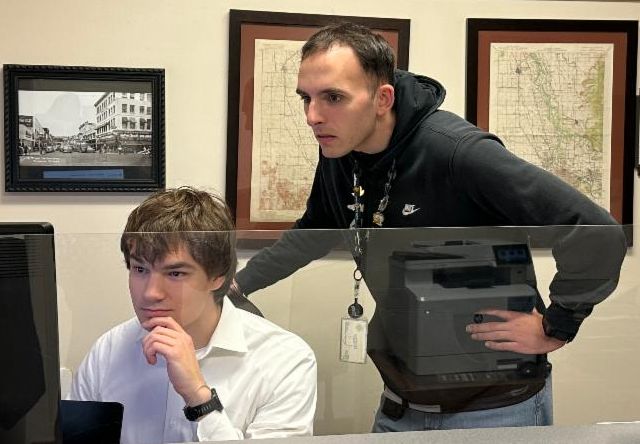
Andrew kept the wheels in motion and juggled emails, constituent inquiries, meetings, hearings, and bill drafting - and everything else - this past fall. Thanks to Andrew for the smooth transition as Chris joined the office in November, and Maddux in December.
My office in Salem: behind Chris and Andrew you'll see two historic maps of Eugene and an historic photo of Willamette Street downtown. On the opposite wall are two paintings on loan by local artist Robert Canaga.
| | Chris graduated from Grinnell College (in Iowa). He interned twice in Senator Ron Wyden’s office, and worked at the Capitol in the 2025 session. Champoeg State Park is a favorite. | | Maddux recently graduated summa cum laude from Western Oregon U, BS in Political Science and BA in Communications. Special talent: performing in musical theater! | | | | | |