March 2026

Greetings!


Moving money is only part of the story. From donor organizing and participatory approaches, to sector-wide efforts to reimagine philanthropy, to reparative frameworks that reckon with historical harm, funders are experimenting with deeper changes in how power is held and shared. This month, we’re sharing resources that look at how (some) funders are bending towards justice (and what evaluators can learn from them).

 
Meeting the Moment

To balance a newsletter with timeless resources you can refer back to, and resources that feel alive with the rapid changes we're seeing in our world, our first resource now features an article or link that is for RIGHT NOW. We want you to have the best and most current information about what's going on in the world that could affect your work.

Equality at Survivors' Expense

[Please skip this resource to avoid discussion of sexual assault.]

Like many of you, we are grappling with the reality that civil rights leader Cesar Chavez sexually abused young girls and raped his farmworkers labor movement co-leader Dolores Huerta. We love the analysis by our friends Equity in the Center: "[Women, especially women of color] are often expected to navigate a false dichotomy between advancing the work and protecting their own safety - asked to push movements forward while absorbing harm and remaining accessible at all costs."


The 19th explores this question of equality at survivors' expense. A must-read for our time.

Money_in_Movements-1024x683 image

Money in Movements

The role of donor organizing

Co-produced with Solidaire Network, this NPQ series offers firsthand narratives from donor organizers deeply embedded in justice struggles to illuminate how individuals with wealth can authentically align with grassroots movements. The authors’ contributions highlight how donor organizing not only is a part of movement building, but serves as a strategic practice for mobilizing wealth, challenging power dynamics within philanthropy, and building the broadest base possible for collective liberation.


This resource pushes us to look beyond dollars moved and ask bigger questions: What does it look like to evaluate philanthropy as part of movement-building, rather than separate from it?

+ READ MORE

Growing-Map-of-Resources-to-Reimagine-Philanthropy-1536x658 image

Mapping a Sector's Reimagination

Pathways for change in Philanthropy

How and who is reimagining philanthropy? In this resource, Vanessa Stevens maps a range of approaches funders are using to shift power across multiple dimensions: evaluation, participation, funding, and more. It also highlights concrete field resources like the Trust-Based Philanthropy Project, participatory grantmaking frameworks.


We like this as a go-to list for practical frameworks for change (and measuring change). The map is easy to navigate and surfaces helpful tools to help funders reflect on and track changes in power and decision-making.

+ READ MORE

Philanthropy's Role in Reparations

Zine and research report

What does reparations look like? This collection from iF brings together a community-centered zine and a research-backed report to explore that question from multiple angles. The Reparations Daily (ish) zine invites artists, scholars, and community members to imagine what true repair could look like for Black residents in Washington, D.C., while Cracks in the Foundation examines how philanthropic wealth has been built through harm and offers a reparative framework across sectors.


We loved this pairing as an example of holding both lived experience and structural analysis together—combining narrative, history, and data to understand what meaningful repair requires, and how philanthropy might be held accountable for advancing it.

+ READ MORE

New at Innonet

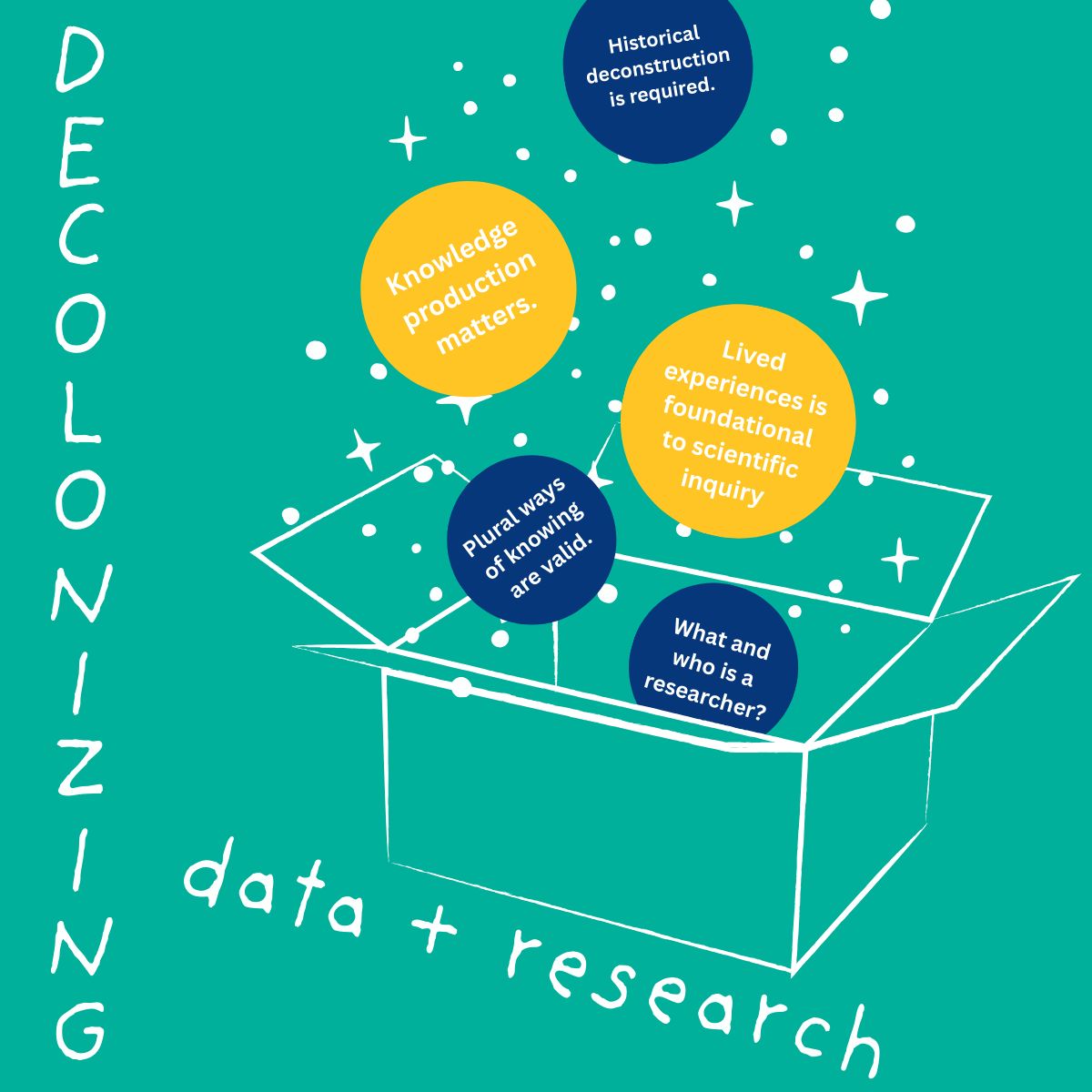
Decolonizing Data Workshop

Our Innovation Network team members Linda Lu and Cory Georgopoulos are feeling grateful to have had the opportunity to facilitate a decolonizing data workshop with the California AfterSchool Network and CDE Expanded Learning Division Ecosystem Design + Advisory Team as part of their groundbreaking, statewide participatory and emergent learning strategic design process.


This work embodies interdependence, decentralization, and adaptation, treating power, knowledge, and decision-making as shared, relational, and responsive rather than fixed. We are feeling especially lucky to support adjusting the research and evaluation lens as practice—sharing decolonized research tenets, real-world examples, and learning alongside the thoughtful questions people are carrying forward.


Interested in a similar workshop for your team? Contact Linda to get started!

 
From the Innovation Network Team


Follow us for more free resources!

If you aren't already, follow us on LinkedIn @Innovation-Network. We'll keep you up to date on the latest trends, articles and comical musings coming out of the field of evaluation, and our annual conference.