Newsletter | October 26, 2026 | | |
IN THIS ISSUE
POLITICAL NEWS
ON THE LOCAL FRONT
IN THE NEWS
POLICY
RETAIL THEFT & PUBLIC SAFETY
ECONOMY
| | |
With the November 3 general election approaching, Washington Retail (WR) encourages members to review the 2026 endorsements from its Retail Action Council Political Action Committee (RAC PAC).
RAC PAC endorses candidates who champion issues important to Washington’s retailers, as well as causes that directly affect retail businesses. As you prepare to vote, visit WR's website to view the full list of endorsed candidates and causes.
Ballots must be postmarked by Tuesday, November 3, or returned to an official ballot drop box by 8 p.m. that day. Be sure to sign your ballot return envelope before submitting it.
| | |
Supreme Court sends Washington redistricting case back to lower court
The U.S. Supreme Court has returned a legal challenge involving Washington’s legislative district boundaries to a lower court for further review, potentially reopening the state’s political maps before the next scheduled redistricting in 2031. The court’s October 5 action will not affect the November 2026 election.
The case centers on the 15th Legislative District in the Yakima Valley and whether its boundaries weaken Latino voters’ ability to participate equally in elections. Latino voters challenged the map approved by Washington’s redistricting commission and Legislature in 2022, arguing that the district’s boundaries included areas with historically lower Latino voter turnout while excluding communities with stronger political participation.
In 2024, U.S. District Court Judge Robert Lasnik agreed with the plaintiffs and established new boundaries intended to strengthen Latino voters’ electoral influence. The revised map shifted more than 300,000 people across 13 legislative districts in eastern and western Washington. The 9th U.S. Circuit Court of Appeals upheld the decision in 2025.
State Rep. Alex Ybarra, R-Quincy, and Jose Trevino subsequently challenged the revised boundaries, asking the Supreme Court to review the case. Their appeal gained significance following the court’s April 2026 ruling in Louisiana v. Callais, which changed how the federal Voting Rights Act applies to redistricting and limited the circumstances in which race can be considered when drawing district boundaries.
The Supreme Court has now directed the lower court to determine whether Lasnik’s 2024 decision complies with the updated legal standards. Washington Attorney General Nick Brown had also asked the justices to return the case to the lower court for that assessment.
Attorneys representing the original Latino voters said they intend to defend the revised map, arguing that it has provided Yakima Valley voters with a more equal voice in state legislative elections.
The outcome could affect the boundaries of multiple legislative districts and influence future elections. However, the timing and scope of any potential changes remain uncertain and will depend on the lower court’s review.
| | |
Seattle Times Editorial: Voters beware: Candidate for state Supreme Court heads to the gutter
Sep. 20, 2026
By The Seattle Times editorial board
When a candidate for the state Supreme Court appears to violate judicial conduct rules during the campaign, voters ought to take notice.
That’s the case with Ian S. Birk, a state Appeals Court judge running for Position 4. His opponent is Sean P. O’Donnell, a King County Superior Court judge. The Times endorsed O’Donnell, citing his breadth of experience and wide range of endorsements.
Last month, Birk sent out a fundraising email intended to stoke outrage, tar his opponent and rake in the money. The missive led with: “We’ve said it for months: Ian’s opponent, Sean O’Donnell, is a Republican-affiliated judge with a deep history of support for and from his party.”
It goes on to allege that O’Donnell is a closet Republican who can no longer hide. “This past weekend the proverbial veil was lifted.” The hook? O’Donnell was among candidates recommended by the Washington State Republican Party.
Of course, Birk’s claims are balderdash. O’Donnell has the support of Democrats, Republicans and independents. He is running for a nonpartisan position.
What’s worse, this type of sleazy campaigning is expressly forbidden in Washington State Court Rules. Canon 4: “A judge or candidate for judicial office shall not engage in political or campaign activity that is inconsistent with the independence, integrity, or impartiality of the judiciary.”
Another Birk campaign email breathlessly states: “If the far right captures Washington’s Supreme Court, they don’t need to win in the legislature — they can undo decades of progress from the bench.”
The court rule states that a judge or judicial candidate shall not “publicly self-identify as a member or a candidate of a political organization …”
Seems like Birk has all but stamped a blue “D” on his forehead.
| | |
Seattle mayor signs grocery fair pricing law despite retail industry concerns
Seattle Mayor Katie Wilson signed legislation prohibiting large grocery retailers and delivery services from using customers’ personal information to set individualized prices, making Seattle the first U.S. city to enact such a ban. The Seattle City Council approved the measure 7-2 following debate and opposition from grocery industry representatives.
The law targets “surveillance pricing,” in which businesses use information such as online search activity, social media history, demographics, and other personal data to determine prices. It applies to large grocery retailers and delivery services, with exemptions for smaller grocery chains, convenience stores, and farmers' markets. The law takes effect September 1, 2027.
The Washington Retail Association (WR) worked with grocers and delivery companies for several months to seek changes to the proposal, meeting with the mayor’s office and City Council members. WR supports prohibiting businesses from using personal information to charge consumers higher prices but raised concerns that the ordinance’s broad language could threaten discounts, coupons, and loyalty programs that help shoppers save money.
WR representatives urged city leaders to amend the legislation to clearly protect these programs, which the association says save Seattle consumers tens of millions of dollars annually. WR also advocated for preserving retailers’ ability to use security cameras and other technology to address organized retail crime and workplace violence.
John Engber, director of the Retail Industry Coalition of Seattle, presented WR’s concerns during public hearings and called for amendments to protect consumer savings and retail security measures. The association warned that uncertainty around compliance could lead retailers to scale back targeted promotions and increase operating costs.
City officials have said traditional coupons and certain discounts, including offers for qualifying groups, remain permissible under the law. However, WR maintained that the rules could still create legal risks for some existing loyalty and discount programs.
The ordinance gives the Seattle City Attorney’s Office enforcement authority, including the ability to subpoena records, and allows individuals to bring lawsuits over alleged violations.
Although WR advocated for changes, the legislation passed and was signed into law. WR will now work with other business and industry groups to pursue legislation at the state level that provides clearer and stronger protections for coupons, discounts, loyalty programs, and other legitimate consumer savings programs. The goal will be to ensure efforts to address discriminatory or improper pricing practices do not unintentionally limit the promotions and benefits Washington consumers rely on to save money.
As Seattle moves toward implementation, WR will continue monitoring the ordinance and advocating for policies that protect consumers from inappropriate uses of personal information while preserving access to discounts, loyalty programs, and other savings opportunities.
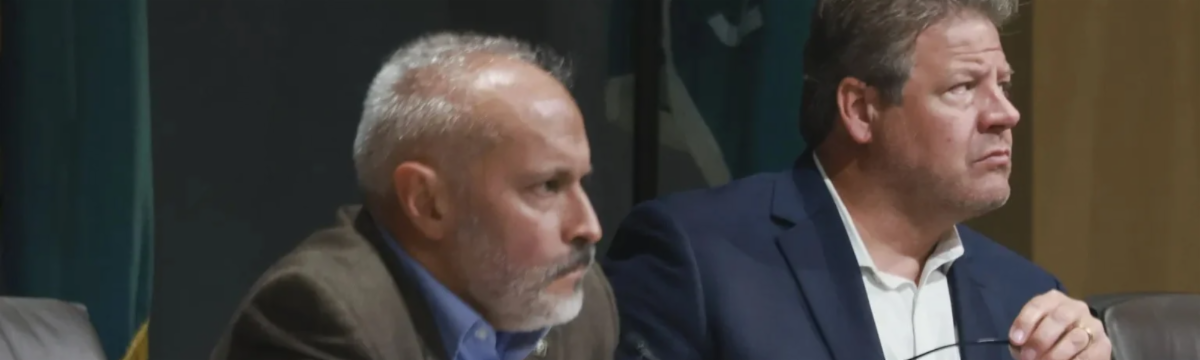
| | King County Councilmembers Jorge Barón, left, and Reagan Dunn, right, listen to public commentary at the King County Courthouse. The County Council passed another new tax Tuesday with no clear spending plan. Barón... (Ivy Ceballo / The Seattle Times, file) | | |
King County approves sales tax increase for youth and family services
The King County Council approved a 0.01% sales tax increase on October 6 to fund services for children and families experiencing homelessness, including emergency shelter, rental assistance, childcare, and youth programs. The ordinance passed 6-3 and is expected to generate up to $10 million annually for three years, beginning January 1, 2027.
The increase adds one cent to a $100 retail purchase and is estimated to cost the median taxpayer about $4 annually. In Seattle, the sales tax rate will rise to 10.56%. State legislation enacted earlier this year authorized counties and cities to adopt the tax without a public vote. If individual cities impose the same tax, their collections will be deducted from the county’s share to prevent duplicate taxation.
Supporters say the funding is needed to address a shortage of shelter beds for children and families. Councilmember Jorge Barón, who sponsored the measure, said he hopes most of the revenue will support youth shelter and related services. County Executive Girmay Zahilay has also proposed using some of the funding for a tiny home village and additional youth shelter beds. Specific allocations will be determined through a future budget process.
The broad spending authority has drawn criticism from some council members and concerns from county staff. A staff analysis noted that the ordinance gives the executive significant discretion without establishing a detailed spending plan or specific allocation requirements. Opponents questioned whether additional taxes should be approved before stronger accountability measures are in place.
Those concerns follow scrutiny of other county-funded programs. A recent investigation into the Best Starts for Kids program identified improper payments and possible fraud. The county also suspended a contract with Urban Family over allegations of duplicate billing totaling $261,000. The allegations are separate from the newly approved tax program.
Supporters argue that the immediate needs of unsheltered children and families warrant action, while critics emphasize the importance of clear spending priorities and oversight. The debate highlights continuing questions about how local governments balance urgent social service needs, taxpayer costs, and accountability for public funds.
| | |
Rising costs and changing consumer habits challenge Seattle restaurants
Seattle’s restaurant industry is navigating rising operating costs, regulatory changes, and reduced downtown foot traffic, prompting some businesses to close locations, relocate, or adjust their operating models. The challenges extend statewide. According to the Washington Hospitality Association, more than 2,000 Washington restaurants closed during the first half of 2025, exceeding closures during the first year of the pandemic.
The association estimates Washington restaurants average a profit margin of approximately 1.5%, compared with 4% nationally. Labor expenses and customers’ resistance to higher menu prices are contributing pressures. Seattle’s minimum wage reached $21.30 per hour in 2026, nearly 64% higher than in 2016. Other local regulations have addressed scheduling, paid sick leave, payroll taxes, and delivery driver compensation.
Retail and restaurant businesses face changing downtown demand. Worker foot traffic in downtown Seattle remains below 65% of pre-pandemic levels, according to the Downtown Seattle Association. Reduced lunchtime demand has led some restaurants to shorten operating hours or eliminate lunch service. Multiple retailers have vacated the Colman Building over the past six years, illustrating broader changes in downtown business activity.
Some restaurant operators are expanding beyond Washington. Fire & Vine Hospitality, which operates El Gaucho, is pursuing growth in Boise, while Ethan Stowell Restaurants reports that its Boise Tavolàta location outperforms its Seattle locations. Operators cite differences in labor requirements, operating costs, and regulatory environments. Menu prices at the Boise locations are also lower than in Seattle.
Other businesses are adapting locally by changing their concepts, adding events, consolidating operations or pursuing wholesale distribution. Restaurant owners say smaller operations and multiple revenue streams can help manage costs and respond to changing customer demand.
Despite the challenges, new businesses continue to enter the Seattle market. Recent openings and expansions include national restaurant brands, cocktail bars, and local restaurant groups. However, industry participants say adapting to current market conditions is increasingly important to long-term sustainability.
Seattle’s Office of Economic Development recommended increasing demand through economic growth and additional housing near business corridors. The industry’s outlook remains shaped by the interaction of operating expenses, consumer spending, regulatory requirements, and downtown activity.
| | |
Seattle Times Op-Ed: Seattle’s progressive values need businesses to succeed
Sep. 19, 2026
By Joe Nguyễn
Special to The Seattle Times
You can support affordable housing, strong public services and a safety net, and still want Seattle’s businesses to succeed.
In fact, you should.
As Mayor Katie Wilson releases her proposed budget and the City Council begins deliberations, Seattle needs to move past the idea that progressive values and economic growth are opposing goals. We need both.
That means caring about how we pay for them.
Before we get lost in arguments about what to fund, what to cut and which taxes to raise, we need to remember where the revenue comes from.
A 2023 ECONorthwest analysis of city and state data estimated that businesses paid roughly two-thirds of Seattle’s city taxes. That includes business taxes and their share of property, sales and other taxes. The employer community already helps pay for much of the city we depend on.
Since then, we have asked fewer companies to shoulder more of that responsibility.
When city forecasters evaluated last year’s business and occupation tax changes, they projected the number of businesses paying would fall from more than 22,000 to about 5,400. The independent economic report released by Mayor Wilson’s office this month puts the expected number below 5,000.
Meanwhile, just 10 companies paid nearly three-quarters of Seattle’s payroll expense tax in 2025. The report warns that the social housing tax is likely even more concentrated.
We have put more of Seattle’s promises on fewer shoulders. The more we depend on a handful of employers to fund our future, the more keeping them here and helping them grow becomes everyone’s business.
Their jobs help families pay rent, buy groceries, and build a future. Their workers support neighborhood restaurants, shops, and services. Even if you never work for one of these organizations, the taxes they pay help fund the city we live in.
When jobs go elsewhere, Seattle loses more than paychecks. It loses customers, investment, and money for public services.
Keeping that opportunity here takes more than asking companies to stay. It takes making Seattle a place where their employees and customers want to be.
That is where public safety, affordability, and economic development meet.
A worker should feel safe walking to the bus after a late shift. A shop owner should be able to welcome customers without worrying about repeated break-ins. A family should be able to afford a home near work and childcare.
Those are basic expectations for a good life. They are also conditions for a thriving economy. Meeting them helps keep people and businesses here; their success, in turn, helps fund the services that make Seattle work.
I believe residents understand this better than our political debates suggest. Wanting effective government, safe neighborhoods, and successful businesses does not make someone less progressive. It makes them practical.
The city budget should reflect that common sense. Protect public safety, help build more housing, make it easier to open and grow a business, and demand results from the money we already spend.
I appreciate Mayor Wilson’s focus on economic development and public safety. The budget is where those priorities become real.
Businesses have a responsibility to contribute, and they are. City leaders now have a responsibility to make Seattle a place where businesses and workers can succeed.
Wherever you stand on taxes or economic development, we cannot fund progressive values from an empty treasury. If we want Seattle to keep its promises, we have to help its economy thrive.
Joe Nguyễn: is president and CEO of the Seattle Metro Chamber of Commerce, leads the region’s largest business advocacy organization with 2,600 members representing 750,000 employees.
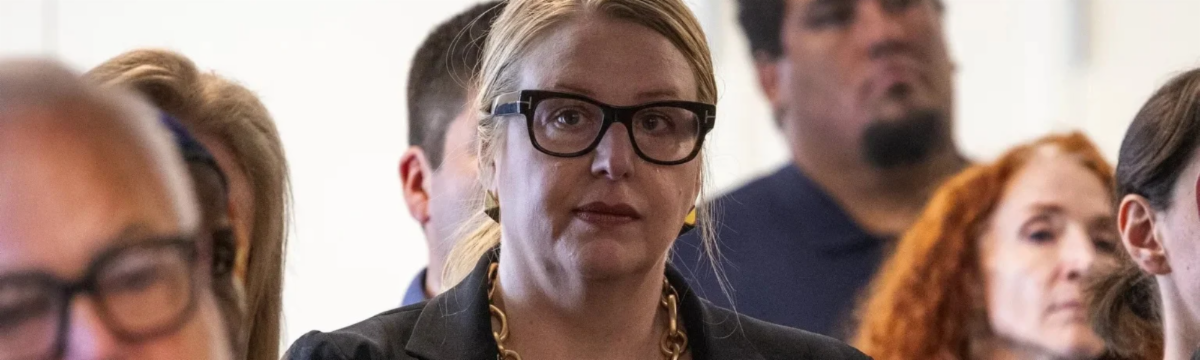
| | Image: Kelly Kinnison, center, CEO of the King County Regional Homelessness Authority, stands in the back of the room during a news conference July 1 in Seattle announcing changes to the organization. (Ken Lambert / The Seattle Times) | | |
Homelessness authority faces new allegations over public records
The King County Regional Homelessness Authority is facing new allegations that its leadership interfered with public records requests, raising concerns about compliance with Washington’s transparency laws.
Brianne Bagby, the agency’s former public records officer, recently resigned, saying executive staff prevented her from independently reviewing records for nearly a year. Bagby said she lost access to the email search system after reviewing records related to agency layoffs in fall 2025. She later regained limited access, but only after the CEO’s chief of staff and communications director reviewed emails first.
Bagby alleged that this process restricted her ability to determine which records were responsive to public requests and whether legal exemptions applied. She said the practices violated the state Public Records Act. The agency’s spokesperson, Lisa Edge, declined to address the specific allegations because of pending litigation and personnel matters. She said the authority supports public access to records and does not automatically limit disclosures through labels or other means.
Government transparency advocates questioned why the agency would restrict its public records officer’s access and independence. Colette Weeks, executive director of the Washington Coalition for Open Government, said public records laws are intended to strengthen public trust and provide insight into how taxpayer funds are used.
The authority already faces a separate lawsuit filed by a former employee alleging violations of state transparency requirements. The state attorney general’s office also received a complaint from Bagby earlier this year, but its status remains unclear.
The controversy comes as the agency undergoes a significant restructuring following years of leadership turnover, budget concerns and a critical financial audit. Seattle and King County are taking back approximately $160 million in contracts and responsibilities, including oversight of homelessness services and funding priorities. The authority is expected to continue administering state and federal grants.
Under Washington law, agencies can face financial penalties for improperly withholding public records. The allegations add to questions about oversight and accountability as local governments reconsider how homelessness services are managed across the region.
| | |
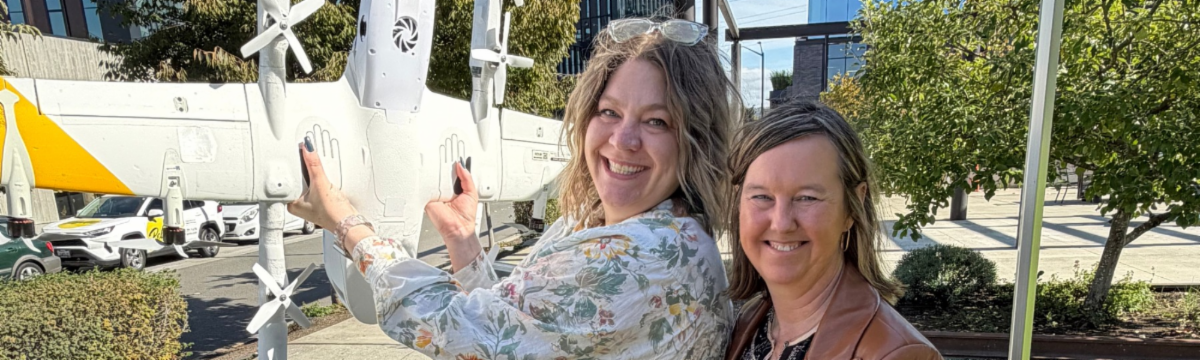
Washington Retail attends Walmart’s Seattle drone delivery demonstration
Walmart and Wing, the drone delivery company owned by Alphabet, plan to expand their delivery partnership to the Seattle and Denver metropolitan areas in 2027. The expansion will bring the service to nearly 20 major U.S. markets and advance the companies’ goal of offering drone delivery from more than 270 Walmart stores nationwide.
The Seattle expansion highlights the growing role of technology in retail fulfillment and efforts to provide customers with faster, more convenient access to everyday products.
Washington Retail Association President & CEO Jan Himebaugh and John Engber, director of the Retail Industry Coalition of Seattle, attended a drone delivery demonstration on Tuesday, October 6, highlighting local retail industry engagement as the technology moves toward the Seattle market.
The partnership currently serves more than 3 million customers across markets including Dallas-Fort Worth, Atlanta, Houston, and Orlando. According to Wing, expanding into Seattle and Denver will introduce the service to different weather conditions, including Pacific Northwest rain and Colorado winters.
Walmart said the partnership is designed to help customers receive everyday necessities quickly by using stores located close to the communities they serve. Greg Cathey, Walmart’s senior vice president of eCommerce Transformation, said the service can bring products to customers’ homes within minutes.
Wing’s drones can travel up to 60 miles per hour and carry packages weighing as much as five pounds. Eligible orders include tens of thousands of Walmart products, such as groceries, electronics, and over-the-counter medications.
The expansion comes as retailers increasingly explore drone delivery as an additional fulfillment option. Lowe’s announced a drone delivery pilot with Wing in North Carolina in September, while Amazon has outlined plans to expand its Prime Air network.
For Seattle retailers and consumers, Walmart’s planned expansion signals continued investment in alternative delivery methods. The service’s rollout will provide an opportunity to assess how drone delivery performs in the region’s weather conditions and how customers use the technology to receive purchases.
| | |
Washington Retail Association advocates for retailers statewide
Washington Retail Association’s (WR) team continues to advocate for retailers across Washington State.
Keeping the lights on: WR submitted comments to Washington’s Utilities and Transportation Commission (UTC) opposing Puget Sound Energy’s request to increase electricity and natural gas rates by 15% overall, and nearly 30% for many of our members. WR told the UTC:
Energy is an essential and largely fixed cost for retailers, who operate lighting, heating, and cooling seven days a week. Grocers also operate refrigeration around the clock. With margins often in the low single digits, retailers cannot absorb increases of this size. They are left to raise prices, cut hours or staff, defer investment, or close locations. For smaller retailers, the question is survival. Independent and family-owned businesses lack the scale to spread costs across multiple locations, and an increase approaching 30% could determine whether some stay open.
Consumers would pay twice. PSE estimates a typical household would pay approximately $28 more per month for electricity in 2027. That same household would then face higher prices for groceries and everyday goods as retailers pass along costs they cannot absorb. The result is higher prices, lost jobs, and fewer local businesses in the communities retailers serve.
The issue is also drawing attention from Washington Attorney General Nick Brown, who has identified utility affordability as a potential priority for the 2027 legislative session.
Brown said his office’s Public Counsel Unit, which represents customers of regulated investor-owned utilities, can have a direct influence on utility costs. His office is already challenging PSE’s proposed rate increases and is considering potential legislative proposals related to its work in utility proceedings.
WR knows our members need reliable, affordable energy so they can continue to provide the goods and products their communities need and want. We will continue to make sure the retail voice is part of these policy decisions.
Tax relief: The City of Everett is considering a reduction in its local B&O tax rate for retailers. Washington Retail Association communicated its support for reducing the rate from $1.00 per $1,000 to $0.75 per $1,000.
Retailers always welcome tax relief. WR also supports raising the exemption threshold from $20,000 to $250,000 in annual gross receipts. This would free approximately 6,500 of Everett’s small businesses from city B&O tax. For small retailers and emerging businesses, that would make Everett a more attractive place to start and grow a business.
Tax relief is always welcome, and these two parts of the proposal before the Everett City Council are positive steps for retailers.
WR also communicated its support for the City’s outreach efforts around public safety.
Retailers see firsthand how retail theft, organized retail crime, and repeat offenders drive up costs, drive away shoppers, and put workers at risk. WR urged the Council to:
- Set aside a share of the commercial district grants for safety, including retail theft prevention.
- Make public safety a core duty of the Business Support Team, with a direct line to the Everett Police Department.
- Consider directing part of the new revenue toward additional patrols in commercial districts.
WR continues to provide value to retailers of all sizes by advocating for tax and regulatory relief and an increased focus on public safety.
Sleep easy: Bills that died in the last session do not mean the issue is dead forever. WR knows that, which is why the team continues to work with other stakeholders on issues that matter to our retail members, including mattress extended producer responsibility (EPR).
While no bill addressing mattress EPR has passed the state Legislature, the issue continues to be discussed. This week, WR joined other stakeholders, legislators, and organizations engaged on this issue to make sure those conversations include the retail perspective.
| | |
New I-9 inspection notice requirements took effect October 1
Washington’s new Immigrant Worker Protection Act requirements for I-9 inspections took effect on October 1, 2026, creating new notification and posting requirements for employers.
Under the new law, employers must notify workers within five business days of receiving a federal Notice of Inspection (NOI) for Form I-9 and related worker records. The notice must be posted in a conspicuous workplace location and provided directly to workers using the employer’s primary method of communication. Employers must also provide the notice to an employee’s authorized representative, if applicable.
What the notice must include
The notice must include a copy of the federal Notice of Inspection and the following information in English and the five most commonly used non-English languages in Washington:
- The name of the federal agency conducting the inspection
- The date the employer received the inspection notice
- The types of records being requested and other identified purposes of the inspection, to the extent known
- Contact information for a statewide organization that provides information and advocacy related to immigrant and refugee rights
The Washington Attorney General’s Office has published a model notice and required workplace poster for employers, along with additional guidance. The materials are available in English, Spanish, Russian, Vietnamese, Ukrainian, and Chinese-Mandarin. Employers that use the Attorney General’s model notice can satisfy the required notice elements without arranging their own translations.
Don't forget the inspection results
The new requirements also apply after an I-9 inspection. Within five business days of receiving written inspection results, employers must notify affected workers and their authorized representatives, if applicable. This applies to workers identified as lacking federal work authorization or whose Form I-9 has deficiencies. The notice must include a copy of the federal results notice and information about any deficiencies, the time period for correcting them, scheduling options for a meeting to address corrections, and the worker’s right to representation.
Compliance reminder
Employers should document both the workplace posting and individual notifications and retain proof of transmission. The law allows direct notification through methods including hand delivery, mail with proof of delivery, email with proof of transmission, or text message with proof of transmission.
Federal and state deadlines are different: Federal law generally gives an employer at least three business days to produce I-9 forms after receiving a Notice of Inspection, while Washington’s new law gives employers five business days to notify workers.
The new law also addresses employer I-9 self-audits and limits employers from imposing work authorization verification or reverification requirements beyond those required by federal law. Employers are not required by Washington law to conduct I-9 self-audits.
Resources: The Washington Attorney General’s Office has posted the required poster, model notices, and employer guidance at atg.wa.gov/IWPA.
This article is provided for general information and is not legal advice. Employers should consult legal counsel with specific questions about how these requirements apply to their business.
| | |
What Washington retailers need to know about the new battery recycling program
Washington's new battery stewardship law (SB 5144) is bringing new requirements for retailers that sell covered batteries and battery-containing products in the state. The goal of the law is to ensure batteries are responsibly managed at end of life through a producer-funded recycling program.
Key retailer obligations include:
- Sell only compliant brands. Beginning July 1, 2027, retailers may only sell covered portable batteries and battery-containing products from producers that participate in an approved battery stewardship plan. Beginning July 1, 2029, the same requirement applies to covered medium-format batteries and battery-containing products. Retailers can use the state's list of participating producers and brands to verify compliance.
- Verify battery marking requirements. Beginning January 1, 2028, covered batteries and battery-containing products sold in Washington must meet state battery marking requirements. These markings identify the battery brand, chemistry, and indicate that the battery should not be disposed of in household trash.
- Private label brands require special attention. If a retailer owns or sells a private label covered battery brand or battery-containing product brand, that brand is considered a producer brand under the program and must be included in an approved stewardship plan before it can continue to be sold in Washington. Retailers with private label brands should confirm those brands are registered and participating in the program.
- No point-of-sale stewardship fee. Retailers may not charge customers a separate fee to recover battery stewardship program costs.
The Battery Network will provide retailers with educational materials, compliance resources, and a list of participating brands and producers to help prepare for implementation and ongoing compliance.
Bottom line: Retailers should begin reviewing their product portfolios now, especially any private label battery or battery-powered product brands, to ensure they will be included in an approved stewardship plan before the program requirements take effect. The Battery Network maintains a list of compliant producers and brands on our website to assist retailers with portfolio review.
| | |
Seattle retail theft proposal draws criticism over enforcement approach
Seattle Mayor Katie Wilson’s proposal to allocate $1.7 million for additional security at private grocery stores has drawn criticism from those who argue that security staffing alone will not adequately address retail theft.
In a September 28 opinion piece, The Washington Times editorial board questioned whether the proposed funding would meaningfully reduce shoplifting without broader efforts to address property crime and strengthen law enforcement. The editorial argued that private security guards have limited authority compared with police, particularly when it comes to making arrests.
The article cited Seattle’s property crime rate, reporting that it was approximately 184% above the national average. It also pointed to changes in police staffing, which declined from 1,424 officers in 2019 to 1,054 in 2024 before partially recovering.
The editorial connected retail theft to broader public safety challenges, including drug use, addiction and homelessness. It argued that addressing these issues, alongside enforcement, should be part of a comprehensive strategy to reduce theft and improve conditions for businesses and residents.
The proposal comes amid continuing debate over how cities should respond to retail crime while balancing public safety, social services and the needs of vulnerable populations. Approaches to theft prevention can include private security, improved store surveillance, police response and programs addressing underlying causes of criminal behavior.
The opinion piece criticized Wilson’s approach as insufficient, contending that additional store security would not resolve the broader conditions contributing to retail theft. However, the article did not provide details about the proposal’s implementation, anticipated outcomes, or how the funding would be evaluated.
The debate highlights a broader policy question for local governments and retailers: how to allocate resources among store-level security, law enforcement, and social services to reduce theft and improve public safety.
This article summarizes an opinion piece published by The Washington Times. Its characterizations of the mayor’s policies and political ideology reflect the editorial board’s views.
| | |
Gift card fraud evolves into organized retail theft
Gift card fraud is becoming an increasingly sophisticated form of organized retail theft, with criminals using methods that can leave both retailers and customers with significant losses.
During a recent Washington Senate Law & Justice Committee work session in Auburn, representatives from the Washington Retail Association and the state Attorney General’s Office discussed how gift card theft is evolving. Criminals may remove gift cards from store packaging, copy barcodes, or tamper with PIN covers before returning cards to store displays. Counterfeit barcodes can also redirect funds to accounts controlled by thieves.
Another emerging method, known as “ghost tapping,” uses contactless payment technology to purchase gift cards in bulk without taking cards from store shelves.
Once stolen card information is obtained, criminals can monitor balances online and quickly drain funds after cards are loaded. In one recent Washington case, two Snohomish County sisters were indicted in connection with schemes that allegedly generated more than $80,000 in gift cards.
Prosecuting these cases can be challenging. Investigators may need records from gift card issuers to establish when cards were loaded or used, and those records are not always readily available. Authorities also face difficulties identifying individuals who move stolen card information or money online.
The Washington Retail Association is developing legislation that would make tampering with gift cards chargeable regardless of whether a card has been activated. The association also supports expanding the Organized Retail Crime Association statewide and restoring $500,000 in funding that was vetoed during the previous legislative session.
The broader scale of retail theft underscores the issue. Statewide retail theft totaled an estimated $2.7 billion in 2024, according to the article.
| | |
Judge permanently blocks Washington sheriff standards law
A Thurston County Superior Court judge has permanently blocked key provisions of a Washington law establishing new eligibility requirements for county sheriffs, ruling the measures unconstitutional. The state attorney general’s office plans to appeal.
Judge Christine Schaller issued the ruling on October 2 in response to lawsuits filed by sheriffs challenging SB 5974, which lawmakers passed in 2026 and Gov. Bob Ferguson signed into law. Schaller had temporarily blocked much of the legislation in April, allowing sheriff elections to proceed without the new requirements.
The law sought to establish minimum qualifications for sheriffs, who are generally elected, similar to those required of appointed police chiefs. Blocked provisions included requirements that sheriffs have at least five years of law enforcement experience, be at least 25 years old, have no felony or gross misdemeanor convictions, and have no history of conduct that could result in the loss of state law enforcement certification. The law also required background checks and allowed for the appointment of replacements if sheriffs were removed from office.
Supporters argued the standards would strengthen public trust, accountability, and professional qualifications among law enforcement leaders. Assistant Attorney General Kristen Valore said the Legislature intended to ensure sheriffs met basic qualifications comparable to those of other law enforcement officials.
Opponents, including the Washington State Sheriffs’ Association and individual county sheriffs, argued the law represented state overreach and could undermine voters’ authority to elect their preferred candidates. Walla Walla County Sheriff Mark Crider said the ruling addressed concerns that the requirements would interfere with voters’ choices.
Anne Levinson, a retired judge who helped draft the legislation, expressed concern that blocking the standards could allow law enforcement leaders who committed serious misconduct to remain in office, potentially harming the public and vulnerable individuals.
The ruling does not appear to affect other provisions concerning police chief standards and the use of law enforcement volunteers. The state’s appeal could determine whether the blocked sheriff requirements are ultimately reinstated.
| | Image: Seattle City Attorney Erika Evans speaks at a news conference at City Hall about the gun violence related to sex trafficking on Aurora Avenue North in June. She announced a new strategy Thursday that will allow people... (Erika Schultz / The Seattle Times) | | |
Seattle launches new approach to misdemeanor crimes
Seattle City Attorney Erika Evans has introduced two initiatives that combine services and accountability for people accused of misdemeanor crimes. Connection Court offers eligible defendants 90 days of support services instead of traditional prosecution, while a separate program targets repeat offenders for stricter consequences.
Connection Court held its first session October 7. Participants accused of low-level, nonviolent offenses can access substance use treatment, employment assistance, health benefits, and peer support. Some eligible cases involve low-value theft. To complete the program, participants must demonstrate law-abiding behavior for 90 days. Those who fail to meet the requirements may face traditional prosecution.
Certain offenses and criminal histories disqualify people from participating, including domestic violence, driving under the influence and gun-related misdemeanors. People with serious felony records are also excluded.
The program has drawn criticism from the King County Department of Public Defense, which raised concerns that eligibility restrictions and the 90-day requirement could disproportionately affect people experiencing poverty, homelessness and other challenges. The department also questioned excluding people in custody who cannot afford bail. Evans said the program is designed to address underlying problems and reduce repeat offenses. Mayor Katie Wilson expressed support for the approach.
Connection Court follows several changes in Seattle's misdemeanor enforcement policies. A previous community court program, launched in 2020, was discontinued in 2023 and replaced with a different approach under former City Attorney Ann Davison.
The second initiative, called High-Priority Repeat Offenses, or HiPRO, focuses on people accused of three offenses within three months or six within six months. It also targets individuals accused of returning to businesses after being trespassed and allegedly stealing. Prosecutors will seek aggravated jail sentences for qualifying cases, and those individuals are generally presumed ineligible for diversion programs.
The two initiatives reflect Seattle's effort to distinguish between defendants who may benefit from services and those prosecutors consider repeat offenders. Their implementation will help determine how the city balances rehabilitation, public safety and accountability, including concerns raised by defense advocates about access to diversion programs.
| | |
Report finds Seattle taxes outpace population growth
Seattle’s tax collections have increased substantially over the past decade, with businesses shouldering a growing share of the city’s tax burden, according to a September 2026 analysis prepared by ECONorthwest for the Downtown Seattle Association and Seattle Metropolitan Chamber of Commerce.
The report found that Seattle’s total tax collections rose from approximately $900 million in 2013 to $2.8 billion in 2026. Between 2013 and 2025, tax collections increased 172%, compared with 31% population growth, 23% employment growth, and 50% inflation. After adjusting for inflation, taxes still increased 81%.
Businesses accounted for an estimated 68% of Seattle’s tax revenue in 2026, or approximately $1.65 billion, up from about 55% in 2016. Of the $1.08 billion increase in tax collections since 2018, the report estimates that $892 million, or 83%, came from businesses.
The analysis identifies three policy changes contributing to the shift: the payroll expense tax introduced in 2021, the social housing tax approved in 2025, and an increase in the business and occupation tax under Seattle’s 2026 Seattle Shield legislation.
The report also found that the newest taxes rely heavily on a relatively small number of companies. Fewer than 500 businesses pay the payroll expense tax, while approximately 220 taxpayers reported a social housing tax obligation in 2025. The analysis estimates that fewer than 20 companies collectively account for roughly $356 million in annual revenue from these taxes.
Seattle’s employment trends have also diverged from those elsewhere in King County. The report estimates that the city lost approximately 24,000 jobs between March 2020 and March 2025, while the remainder of King County gained about 21,000 jobs.
The Downtown Seattle Association argues that the city’s growing reliance on a limited number of large businesses could create long-term risks for public revenue and economic competitiveness. However, the report does not establish that tax policies caused Seattle’s job losses. It presents the employment and tax trends as related developments rather than demonstrating a direct causal relationship.
| | |
Washington’s minimum wage rises to $17.73 in 2027
Washington’s minimum wage will increase 3.5% to $17.73 per hour on Jan. 1, 2027, according to the Washington State Department of Labor & Industries (L&I). The new rate raises the current minimum of $17.13 and is calculated using changes in the federal Consumer Price Index for Urban Wage Earners and Clerical Workers.
The increase also affects overtime exemptions, youth wages, and other workplace requirements. Local governments may set higher minimum wages, and several jurisdictions, including Seattle, SeaTac, Tukwila, Renton, Bellingham, Everett, Burien, and unincorporated King County, currently have rates above the state minimum. The federal minimum wage remains $7.25 per hour.
Beginning in 2027, large employers with 51 or more employees must pay qualifying executive, administrative, professional, and certain computer employees at least $1,773 per week, or $92,196 annually, to classify them as exempt from overtime. This reflects an increase in the salary multiplier from 2.25 to 2.5 times the state minimum wage. For employers with 50 or fewer workers, the multiplier remains 2.25, setting the annual salary threshold at $82,976. The small-business multiplier is scheduled to increase in 2028. Qualifying exempt computer professionals paid hourly must receive at least $62.06 per hour, regardless of employer size.
Employers may pay workers ages 14 and 15 at 85% of the state minimum wage. Their minimum rate will rise to $15.07 per hour in 2027.
Minimum pay requirements for rideshare drivers will also change Jan. 1. For trips within Seattle, the minimum will be 72 cents per passenger platform minute and $1.69 per passenger platform mile, or $6.34 per trip, whichever is greater. Outside Seattle, the rates will be 41 cents per minute and $1.43 per mile, or $3.68 per trip, whichever is greater.
Separately, Washington will prohibit non-compete clauses beginning in July 2027. During the first half of the year, salary thresholds for enforcing such agreements will be $131,326 for employees and $328,316 for independent contractors.
| | Image: Fans in Seattle cheer as Team USA makes their first goal of the match against the Australians in the World Cup on June 19, 2026 (Fox 13 Seattle) | | |
FIFA World Cup generated $889 million economic boost for Seattle region
The FIFA Men’s World Cup generated an estimated $889 million in total economic impact for Seattle and King County this summer, including $109 million in state and local tax revenue, according to a report released by Visit Seattle.
The tournament’s economic impact exceeded Visit Seattle’s most recent projection of $846 million, which had been revised downward earlier this year to account for expectations of fewer international visitors and reduced capital spending. The final estimate was higher than anticipated, in part because more international fans attended matches, overnight visitation increased around watch parties, and Seattle hosted a second match featuring the U.S. men’s national team.
The report, prepared by Tourism Economics, found that the tournament produced mixed results across the hospitality industry. Restaurants and bars near Lumen Field experienced some of the strongest benefits, with businesses reporting exceptionally busy days during matches and related events.
Hotels also saw a complicated picture. Occupancy declined compared with the previous year, partly because World Cup activity displaced some cruise passengers and convention visitors. However, higher room rates contributed to increased hotel revenue compared with the same period in 2025.
The tournament did not produce a significant increase in overall passenger traffic at Seattle-Tacoma International Airport. International passenger numbers increased only slightly in June and July, while domestic passenger numbers declined slightly. Total passenger volume was essentially flat compared with the previous year.
Visit Seattle initially projected a $929 million economic impact in late 2024. The organization said the final results demonstrate the potential for major sporting events to generate economic activity while increasing a destination’s visibility among future visitors.
The World Cup matches were part of a broader summer of soccer-related activity throughout the Seattle region, bringing visitors, events, and increased spending to businesses across the area.
| | |
Washington budget outlook remains challenging despite revenue increase
Washington’s latest state revenue forecast shows modestly higher tax collections, but lawmakers are still facing significant budget challenges heading into the 2027 legislative session.
The Economic and Revenue Forecast Council’s September forecast projects tax receipts will be $22 million higher for the current two-year budget and $430 million higher for the 2027-29 budget cycle than estimates released in June. The increases are not enough to eliminate a projected shortfall in the 2028 fiscal year or address a multibillion-dollar gap expected in the following budget cycle.
The forecast also projects substantially higher revenue from a new tax on high-income earners. The 9.9% tax on individual and household wage income above $1 million was approved by lawmakers and signed into law by Gov. Bob Ferguson in March. It is scheduled to take effect Jan. 1, 2028, with payments beginning the following year.
The state’s chief economist now projects the tax could generate $3.5 billion during the 2027-29 biennium and $9.4 billion during the 2029-31 biennium. Those estimates are higher than previous projections, but the tax faces legal challenges and could be repealed by voters. Initiative 645, which would repeal the tax, is on the November ballot.
State officials and lawmakers continue to debate how to address the projected budget gaps. Some have pointed to spending reductions, while others have emphasized the potential loss of revenue if the new tax is repealed.
Washington’s economy is currently projected to generate $76.3 billion in revenue during the current budget cycle and $82.6 billion during the 2027-29 biennium.
The next revenue forecast is expected in November and will inform the governor’s budget proposal, which is scheduled for release in December. Lawmakers will begin the 105-day legislative session in January.
| | |
Minimum wage discussions continue across Washington
Minimum wage policies continue to evolve across Washington, with cities considering different approaches to wages while employers and workers weigh the potential effects on local economies.
Seattle will raise its minimum wage from $21.30 to $22.14 per hour on Jan. 1, 2027. The 84-cent increase is required under the city’s Minimum Wage Ordinance and is tied to inflation. Washington’s statewide minimum wage is $17.13 per hour in 2026. Renton, Burien and Tukwila also have local minimum wages above the state rate, with some requirements varying by employer size.
Tacoma is considering a different change. Deputy Mayor Joe Bushnell is developing an ordinance that would increase the city’s minimum wage to $20 per hour. The proposal is expected to come before the Tacoma City Council in the fall. Earlier community engagement included input from labor representatives, local businesses, nonprofits, healthcare organizations, childcare providers, and students.
Seattle’s upcoming increase has also prompted renewed discussion about the broader costs of operating a business, particularly in the restaurant industry. Anthony Anton, president and CEO of the Washington Hospitality Association, said during a Sept. 30 interview on KIRO Newsradio that labor now accounts for more than 40% of what customers pay at restaurants. He also pointed to rising food costs and consumers’ resistance to higher menu prices.
“I think the workers and the owners are in this together,” Anton said, arguing that reduced operating hours can mean fewer hours for employees. He estimated that Washington could be on track to lose about 9% of its restaurants without significant changes.
Meanwhile, local officials continue to gather input on how wage policies should be structured and what effects they may have on workers, businesses and consumers.
Seattle’s $22.14 rate takes effect Jan. 1, while Tacoma’s proposed $20 rate remains under consideration.
This version keeps the story centered on the statewide discussion, rather than making Seattle or the restaurant industry the entire focus.
| |
WR diversity statement
WR is committed to the principles of justice, equity, diversity, and inclusion. We strive to create a safe, welcoming environment in which these principles can thrive.
We value all people regardless of race, ethnicity, gender, religion, age, identity, sexual orientation, nationality, or disability, and that is the foundation of our commitment to those we serve.
| | |
Jan Himebaugh
President & CEO
360.200.6450
Email
| |
John Engber
Director, Retail Industry
Coalition of Seattle
206.850.5517
| | | | |