Newsletter | September 17, 2026 | | |
IN THIS ISSUE
POLITICAL NEWS
ON THE LOCAL FRONT
IN THE NEWS
POLICY
RETAIL THEFT & PUBLIC SAFETY
ECONOMY
| | |
Washington Retail adds to 2026 endorsement list
The Retail Action Council Political Action Committee (RAC PAC) has announced new endorsements for the November general election. Endorsements are given to candidates who stand with Washington's retailers and champion the issues that matter most to our industry. The RAC PAC also endorses causes that have a direct impact on retail businesses.
New Endorsements
In this round, the RAC PAC is endorsing the following candidates and causes:
- Lawmakers
- Rep. Kristine Reeves (D-30)
- Rep. Osman Salahuddin (D-48)
-
Rep. Mari Leavitt's Courage PAC: Rep. Leavitt (D-28) is one of the Legislature's leading voices on retail theft and organized retail crime, and WR recognized her earlier this year as a Champion of Public Safety. Her newly launched Courage PAC will back principled candidates and policies that will grow the economy and keep communities safe. Click here to contribute to the Courage PAC.
-
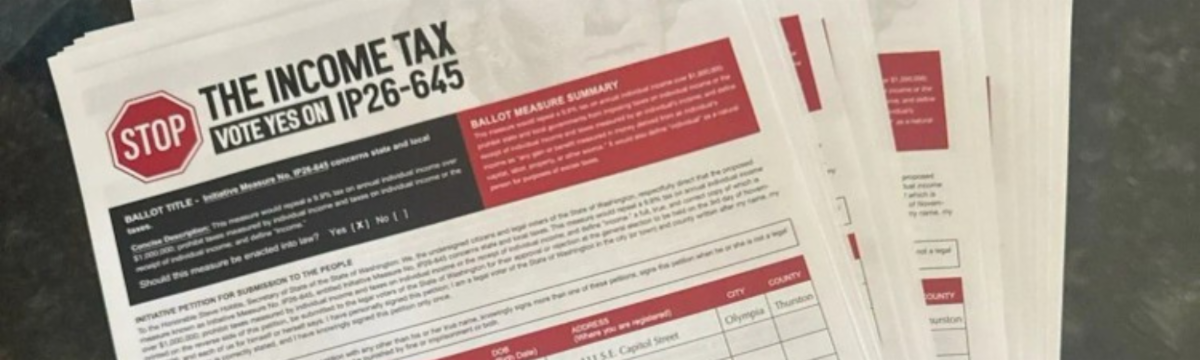
Yes on I-645: This initiative would repeal the state's new 9.9% tax on income over $1 million before it takes effect in January 2028. Though it was billed as a tax on millionaires, profits from LLCs, S corporations, partnerships, and sole proprietorships count as the owner's personal income, which means family-owned retailers structured this way can owe the tax. And because the tax was created in statute, a future Legislature could lower the $1 million threshold. Click here to learn more.
The full list of Washington Retail endorsed candidates and causes can be found by clicking here.
Open seats are next
WR's Government Affairs team is now evaluating candidates running for open seats, which are races with no incumbent on the ballot, usually because the current lawmaker is retiring or running for another office. We expect to announce another round of endorsements in the coming weeks.
Candidates who would like to be considered should contact Crystal Leatherman at cleatherman@washingtonretail.org.
Key dates
County elections offices will mail ballots by October 16. The deadline to register or update an address online or by mail is October 26. The general election is Tuesday, November 3, and ballots must be postmarked or placed in a drop box by 8 p.m. that day.
| | |
Courage PAC launches to support community and economic priorities
Representative Mari Leavitt (D-28) has announced the launch of Courage PAC, a political action committee focused on supporting candidates and policies that its organizers say will strengthen the economy, improve community safety, and support the well-being of Washington communities.
According to the PAC, its early priorities include expanding housing options and supporting responsible development; reducing regulatory barriers and improving access to capital for small businesses; and investing in workforce development, apprenticeships, education pathways, childcare, and early learning.
Courage PAC also plans to focus on public safety, including support for law enforcement, first responders, community-based safety programs, violence prevention, and coordination among public safety and health care providers. Other priorities include expanding access to behavioral health and substance-use treatment and strengthening services for military members, veterans, and military families.
The PAC says it intends to build political capacity to support candidates, conduct grassroots campaigns, and elevate community perspectives. Its organizers describe the effort as supporting leaders who are willing to take positions on issues they believe are important to their communities.
Courage PAC is seeking financial contributions to support its activities. Donations can be made online or by check payable to Courage PAC and mailed to PO Box 64128, University Place, WA 98464. The organization can be contacted at couragepacwa@gmail.com for additional information or opportunities to participate.
| | |
Washington income tax revenue estimate rises
The Washington Department of Revenue has increased its estimate for revenue from the state’s new tax on high earners, projecting $3.1 billion in the initial fiscal year and approximately $8.3 billion for the 2029-31 biennium. The earlier estimates were $2.7 billion and $6.9 billion, respectively.
The 9.9% tax, established by legislation passed in 2026, applies beginning Jan. 1, 2028, to individuals and married couples filing jointly with annual adjusted gross income exceeding $1 million. First tax returns will be due in April 2029.
The Department of Revenue estimates that about 25,000 households could be subject to the tax, up from the 21,000 assumed during the legislative session. The agency attributed the higher projection to improved economic forecasts between November 2025 and June 2026, including increases in projected dividend income, stock income, personal income, and wages. Analysts estimate that about 4,000 households previously near the $1 million threshold could exceed it by the time the tax takes effect.
The updated figures are estimates and have not yet been incorporated into the state’s official revenue forecast. Chief economist Dave Reich said the September forecast will be the first opportunity to evaluate whether the higher figures should be included.
Initiative 645, which will appear on the Nov. 3 statewide ballot, would repeal the tax. If approved, the projected revenue would not be available to the state. The tax could also face a constitutional legal challenge if it remains in effect.
| | Image: Ivy Ceballo / The Seattle Times, 2025 | | |
Seattle’s Fair Pricing and Transparency legislation advances to full Council
On Friday, September 11, the Seattle City Council’s Human Services, Labor, and Economic Development Committee approved legislation to regulate medium and large grocers in the city. The full Council will consider the legislation on September 22.
Washington Retail Association (WR), grocers, and others have expressed concerns about the breadth of the legislation. For the past three months, WR, grocers, and delivery companies have met with the Mayor’s office, Councilmember Alexis Mercedes Rinck, and other Councilmembers to make improvements in the legislation.
In its current form, the legislation could force grocers to stop offering discounts, coupons, and loyalty programs in the city because those savings are based on the customer’s purchase history. In other words, people who buy cat litter are offered coupons and discounts for litter, and people who purchase baby formula receive savings for those products. Coupons and discounts are targeted promotions.
At the Friday committee meeting, John Engber, Director of the Retail Industry Coalition of Seattle, offered public comments urging the Council to protect coupons, discounts, and loyalty programs and the ability of retailers to use cameras and other technology designed to combat violence and organized retail crime. WR continues to meet with Councilmembers to advocate for these priorities.
WR strongly supports banning the use of personal and purchase information to increase prices on consumers. But WR also strongly supports amending the legislation to protect programs that save consumers money. These programs save Seattle consumers tens of millions of dollars annually.
| | |
Seattle business leaders press city on public safety
Thirty-five Seattle business leaders have called on Mayor Katie Wilson and the Seattle City Council to take additional action on public safety, citing concerns about crime, emergency response, and conditions affecting employees, customers, and visitors.
The letter, posted by the Seattle Metropolitan Chamber of Commerce, asks the city to develop a comprehensive public safety action plan, increase public safety investments, activate the city’s CCTV system, improve 911 response times and address public drug use and encampments near parks and playgrounds. The business leaders also urged the mayor and council to support these priorities through the city budget.
Signatories include executives from Microsoft, Costco, Alaska Air Group, Starbucks, Nordstrom, Zillow Group, T-Mobile, Weyerhaeuser, Puget Sound Energy and other major employers and business organizations.
The letter referenced an Aug. 17 poll of registered Seattle voters that found 34% were confident the city had an effective public safety plan. The business leaders said residents are seeking clear actions, timelines, and measurable results.
Wilson responded that several of the requested actions are already underway. She pointed to increased police presence in several neighborhoods, street-level investments in the Chinatown-International District and Little Saigon, changes to the built environment, additional crisis responder hours and continued police recruitment. Wilson also said the city is recruiting a new police chief.
Wilson said Seattle Police Department data show shootings and homicides at their lowest levels in a decade, while acknowledging continued concerns about crime and public disorder. She said she plans to announce a gun violence reduction strategy and provide an update on shelter expansion efforts.
Read the full Public Safety Business Letter
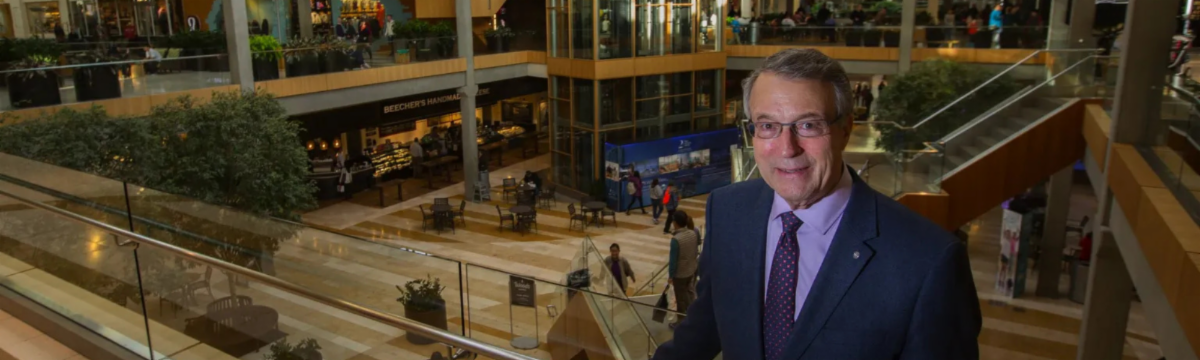
| | Image: Kemper Freeman, Jr., then chair and CEO of Kemper Development Co. in Bellevue, stands on a balcony in Bellevue Square. Ellen M. Banner / The Seattle Times, 2016 | |
Bellevue Collection owner explores sale after 80 years
The Freeman family is exploring the sale of the Bellevue Collection, a 5.5 million-square-foot mixed-use complex in downtown Bellevue that has been under family ownership for 80 years.
The family’s Kemper Development Co. announced Friday that it will begin the process of seeking a potential buyer. The decision follows the retirement last year of Kemper Freeman Jr., who led the company for more than five decades, along with other factors. The family said it is seeking a buyer who values the property’s role in the community and can continue to enhance it.
A broker will be selected to begin the sale exploration process. No buyer has been identified, and the company has not indicated whether a sale is imminent.
Established in 1946, Kemper Development Co. developed what became Bellevue Square. The Bellevue Collection has since expanded to include Bellevue Square, Bellevue Place, Lincoln Square North and Lincoln Square South.
Today, the complex includes more than 200 shops, over 50 restaurants and entertainment venues, 1,100 hotel rooms and 12,500 parking spaces. Tenants include national and international brands as well as local businesses.
Company CEO Jim Melby credited Freeman with developing the property into a major retail and mixed-use destination that has contributed jobs, tax revenue, and community support for arts, health, education, and family-focused organizations.
Kemper Development Co. said operations at the Bellevue Collection will continue as usual during the sale exploration process, with scheduled events continuing through the end of 2026.
| | |
Seattle mayor outlines plan to diversify economy
Seattle Mayor Katie Wilson has announced a series of initiatives aimed at strengthening and diversifying the city’s economy amid concerns about Seattle’s reliance on the technology sector.
A 129-page economic analysis commissioned by former Mayor Bruce Harrell and released by Wilson warns that Seattle’s concentration of technology employment leaves the city particularly exposed to changes in the industry, including the effects of artificial intelligence. The report states that Seattle’s economy is 42% more exposed to AI disruption than the national average.
The city also faces challenges, including high downtown office vacancy rates, competition from neighboring communities, and concerns about taxes, public safety, and the business climate. The report notes that 75% of Seattle’s JumpStart tax revenue comes from 10 large employers, creating potential revenue risks if major technology companies reduce their local employment.
Wilson plans to establish a Resilient Seattle Economy Task Force composed of business, labor, and other community leaders. Her administration also plans to create a strategic initiatives fund to support innovation in sectors such as clean energy and advanced manufacturing and to streamline permitting for businesses seeking to start or expand in Seattle. Details about the task force membership, funding sources, and investment levels have not yet been finalized.
Business leaders have expressed interest in the initiatives while emphasizing the importance of the city’s tax and spending decisions. Wilson has defended taxes that support housing and social services while acknowledging that differences in local tax structures can influence where companies locate jobs.
The mayor’s economic strategy is expected to receive additional attention as Seattle begins work on its 2027 city budget.
| | |
Amazon plans to vacate another Seattle office
Amazon is reportedly planning to leave an 81,000-square-foot office building at 428 Westlake Ave. N. in Seattle’s South Lake Union neighborhood when its lease expires in 2027, according to a report from commercial real estate firm Cushman & Wakefield.
Amazon leased the building in 2016 during a period of rapid expansion in Seattle. The company has since been reducing its office footprint as its workforce and workplace needs have changed. An Amazon spokesperson said the company regularly evaluates its office space to ensure it serves its business, employees, and customers.
Amazon’s Seattle workforce has declined from a peak of about 60,000 employees in 2020 to fewer than 50,000 recently. At the same time, its presence in Bellevue has grown, with approximately 14,300 employees there in 2024, up from 11,000 in 2023, according to city data.
The company has also vacated several other Seattle properties in recent years, including portions of office towers in the Denny Triangle. Amazon has generally reduced space as leases expire, although it has renewed or expanded some locations.
The changes are contributing to elevated office vacancies in Seattle’s downtown neighborhoods, which Cushman & Wakefield estimates at 35%. Bellevue’s downtown vacancy rate is about 25%.
Seattle’s office market has seen some new leasing activity. General Motors and Databricks have taken space in a building previously occupied by Amazon, while Apple and Anthropic are expanding in South Lake Union. However, new leases have not fully offset the space being vacated by Amazon and other companies.
| | |
Governor Ferguson proclaims September 2026 Careers in Retail Month
Governor Bob Ferguson has proclaimed September 2026 as Careers in Retail Month, recognizing retail’s important role in Washington’s economy, workforce, and communities.
Retail is Washington’s second-largest private-sector employer, employing more than 330,000 people across the state. The industry is also fundamentally driven by small businesses, with 93% of retailers employing fewer than 50 people.
The proclamation highlights retail as an important entry point to economic opportunity for young workers, immigrants, veterans, and career changers. It also recognizes the importance of stackable credentials and career pathways, from high school and community college certificates to associate degrees, as outlined in the 2025 Retail Workforce Report to the Legislature.
Physical stores continue to play a central role in communities throughout Washington, accounting for 84% of retail sales. Retailers also support their communities through local chambers, school programs, youth sports, food banks, and hunger relief organizations.
The proclamation recognizes the industry’s ongoing commitment to employee and customer safety, including partnerships with local jurisdictions, law enforcement, and community organizations to create safe and welcoming retail environments.
Retail is also evolving as technology becomes increasingly integrated into customer experiences, supply chain management, and business operations. These innovations are creating new career opportunities that combine technical skills with traditional retail expertise.
Washington Retail Association thanks Governor Ferguson for recognizing the people, businesses, and career opportunities that make retail an essential part of Washington’s economy and communities.
| | |
Washington Retail Association’s retro program returns more than $772,000 to members
Washington Retail Association (WR) members participating in the Retail Services Retro program are seeing a significant financial benefit, with more than $772,000 returned to members through the first adjustment for the 2024-2025 plan year.
The Retro program is a safety incentive program designed to help Washington businesses reduce workers’ compensation costs through proactive risk management, safety, and claims strategies. For the first adjustment of the 2024-2025 plan year, participating retail businesses received a 12% adjustment, while participating auto businesses received a 25% adjustment.
In total, $772,325 is being returned to participating members, demonstrating the potential financial value of combining strong workplace safety practices with Retro participation.
Administered by Brown & Brown, a leading global insurance and risk management firm, the program provides participating businesses with personalized risk management services. These include proactive claims management, early return-to-work programs, loss analysis, risk assessments, and safety training.
The program is available exclusively to eligible WR members through Retail Services. By participating, businesses have access to risk professionals and data-driven strategies designed to help reduce workplace injuries, manage claims, and control operational costs.
For Washington retailers operating in a competitive environment, opportunities to improve safety while potentially reducing workers’ compensation costs can have a direct impact on the bottom line.
The latest Retro adjustment is welcome news for participating members and a tangible example of the value available through WR membership.
Interested in learning more about the Retro program or other membership benefits? Contact WR at info@washingtonretail.org or 360-943-9198.
| | |
The retail advantage: membership that delivers results
The Washington Retail Association (WR) helps retailers protect their businesses, reduce costs, strengthen their teams, and navigate a changing business environment.
Representing more than 2,500 retail storefronts, WR focuses on championing retail and driving results through advocacy, practical resources, and industry collaboration.
At the center of membership is advocacy that protects your business. WR gives retailers a strong voice in Olympia by opposing costly proposals and advancing practical policies. The association also provides knowledge that simplifies compliance, with timely updates and guidance explaining how changes to gift card requirements, workplace regulations, and other laws may affect business operations.
Members have access to training that strengthens your team, including workshops and workforce resources that support talent development and help employers address workforce challenges. WR also builds partnerships that amplify your voice by bringing retailers, industry leaders, and statewide associations together to address shared priorities.
Through solutions that save you money, members can access workers’ compensation savings, 401(k) solutions, and discounts designed to reduce costs and strengthen the bottom line. WR reports that its workers’ compensation retrospective rating program has returned millions of dollars to participating members.
Membership also provides visibility that elevates your reputation through features, events, speaking opportunities, and recognition. Public safety resources offer strategies that prevent loss, including organized retail crime intelligence and practical ways to protect employees, customers, merchandise, and operations.
Discover the retail advantage and the value of WR membership.
| | |
Mary Kay launches new global brand platform
Mary Kay Inc. has introduced Beauty Is More Beautiful Shared™, its largest consumer-facing campaign to date and a new global brand platform intended to support the company’s next phase of growth.
The campaign is launching across 40 markets and focuses on beauty as a shared experience, emphasizing connection, community, and relationships. The company says the platform is designed to introduce Mary Kay to a new generation of consumers while connecting its current customer base with the brand’s longstanding focus on relationships and entrepreneurship.
Developed in partnership with global advertising agency Grey, an all-women team created the campaign. The rollout includes digital and social media, influencer partnerships, out-of-home advertising, and in-person events. Consumer events aimed in part at engaging Gen Z will begin in New York before expanding to markets around the world.
The campaign also is intended to support Mary Kay Independent Beauty Consultants by increasing brand awareness and encouraging consumers to purchase products and connect with consultants through their digital storefronts.
Mary Kay reported several recent industry rankings alongside the campaign launch. Forbes ranked the company No. 8 among 5,500 brands on its 2026 Best Brands for Social Impact list, up from No. 9 in 2025. Mary Kay also ranked No. 2 on Forbes’ 2026 Best Customer Service list, compared with No. 93 in 2025. The company was additionally included in Happi’s 2026 Top 50 U.S. Companies report.
Founded by Mary Kay Ash in 1963, Mary Kay operates in 40 markets and offers skincare, cosmetics, fragrances, and wellness products through its direct-selling business model.
| | |
New I-9 inspection notice requirements take effect October 1
Beginning October 1, 2026, all employers must notify employees within five business days of receiving a Notice of Inspection (NOI) of Form I-9 from a federal agency. The notice must be both posted and distributed to workers and any exclusive collective bargaining representative.
What the Notice Must Include: The notice needs to be in English AND the five most used non-English languages in Washington. And it must include:
- The Federal Agency
- Date of the NOI
- Types of records sought
- Contact information for a statewide organization providing advocacy related to immigration and refugee rights
- A copy of the NOI
Attorney General Guidance: On September 1, the Washington State Attorney General’s office announced they have published materials for employers to reference including required workplace poster, a model notice, and guidance on employer rights and responsibilities when immigration officials come to a workplace or ask for worker records. All of it is available in English, Spanish, Russian, Vietnamese, Ukrainian, and Chinese (Simplified Mandarin), so employers using the model notice do not have to arrange their own translations. An employer using this model notice is considered to have satisfied the notice requirements. All required materials can be found at https://www.atg.wa.gov/IWPA.
This notice must be put in a conspicuous place – where worker notices are customarily posted. The employer must also transmit the notice to workers directly using the primary method of communication that includes at least one of the following:
- Hand delivery
- Mail with proof of delivery
- Email with proof of transmission
- Text message sent telephonically which may include a link to the notice maintained on a webpage, with proof of transmission
Compliance Key: document public the posting and the individual notices, save the transmission proof, and if hand delivering ensure you have a signed record of receipt.
Once the inspection is complete, you will also have to provide notice within 5 business days of the results to affected workers and their representative – this means any workers where I-9 deficiencies have been found. The same rules apply on language, primary method of communications, etc., and must include a description of the deficiencies in the I-9 and scheduling options for correction.
If any one of these steps are missed – even if there is not material damage and there were no issues with the audit/inspection you may be subject to the Washington Attorney General enforcement of $500 for each instance where the employer failed to provide notice to a worker, courts can double the statutory damages if the violation is willful.
A private right of action also exists for violations with required damages of up to and including an amount equal to the actual damages or statutory damages equivalent to 40 times the hourly state minimum wage per plaintiff per violation, whichever is greater.
The guidance covers more than the notice requirements. It also walks employers through the workplace poster requirements, self-audits, warrants, worker records, and what to do if agents show up at your door. The full guidance is at atg.wa.gov/IWPA.
Federal Deadline Reminder: Two clocks start the moment you receive the Notice of Inspection. Federal law gives you three business days to produce the I-9s. State law gives you five business days to notify your workers.
This article is general information and not legal advice. Consult your legal counsel with direct questions about how these requirements apply to your business.
Review the bill as passed by the Legislature and signed into law or the bill summary.
| | |
Seattle Times Opinion: Seattle fair pricing ordinance could have unintended consequences
Aug. 28, 2026
By Ilona Lohrey and Marcos Wanless
Special to The Seattle Times
On Aug. 7, the Seattle City Council’s Human Services, Labor, and Economic Development Committee convened to discuss a new policy they call the Fair Pricing and Transparency Ordinance. The chair of the committee claimed the legislation would be a big win for consumers and a local solution to high grocery prices.
Unfortunately, the policy may drive prices even higher for consumers and could end the loyalty and discount programs consumers rely on to balance their family budget and make ends meet.
The legislation would ban “surveillance pricing,” also called algorithmic pricing. It’s a complicated way to say you get discounts based on your personal data — factors such as your income, demographic and shopping history, sometimes with help of AI and sometimes purchased from third-party brokers.
We agree that no retailer should use personal information to charge someone more. But Seattle’s retailers and grocers have told city leaders repeatedly over the past month that they are not using surveillance pricing. Even during the presentation in committee last week, the experts gave no examples of surveillance pricing happening in Seattle.
This legislation was put forward despite clear and consistent warnings from retailers and grocers that requirements in the current version of the legislation would still result in the inability of these businesses to continue offering loyalty programs and other discounts. Mayor Katie Wilson and Councilmember Alexis Mercedes Rinck’s staff have indeed made some changes to the proposal, exempting small grocers and adding carve-outs for some discounts. But flaws remain in the underlying bill.
If passed as is, the ordinance would require grocery retailers and online delivery companies to adopt technical requirements that create high legal risk if they continue to offer discounts and loyalty programs. This will impact those who rely on these programs the most during an affordability crisis — how is that fair?
There are better ways to help consumers through opt-in and opt-out options that allow individuals to choose how and if they want their purchasing data used by supermarkets and retailers.
With a growing number of family budgets stretched by the rising costs for everyday essentials, this policy further escalates the affordability gap for middle- and low-income families.
It’s not just about discounts in stores. Many grocers have fuel savings programs that offer relief to Seattle families paying some of the highest gas prices in the country.
We need legislation that incentivizes new grocers and retailers to invest in areas with growing food and pharmacy deserts, like those in Lake City and parts of South Seattle. Instead, this policy will create more barriers.
In fact, the best way to protect small businesses and consumers is to address pressing problems such as public safety, taxes and regulatory structures.
If the goal of this bill truly is to protect consumers, we are asking city leaders to put a pause on this, do additional research, and work with the grocers and retailers in good faith. A good example of a pricing ordinance is the Consumers Opposed to Surveillance Technology Ordinance, put forward by Portland City Councilmember Eric Zimmerman. (Read it here: st.news/cost)
While it’s unclear whether the legislation moves forward as-is or if the city will make changes, the compliance costs if this policy measure moves forward are guaranteed.
Trying to control prices through an experimental regulatory policy has never worked. The reality is that the implementation of the ordinance will only make an already-expensive city even more unaffordable.
Those costs ultimately mean fewer discounts, higher grocery prices and another reason for grocers and retailers not to invest in Seattle communities that already lack access to grocery stores.
Being the first to implement something should not override having the best policy that is workable and balances all interests.
Ilona Lohrey: is president and CEO of GSBA - Washington state’s LGBTQ+ and Allied Chamber of Commerce.
Marcos Wanless: is the founder and president of the Seattle Latino Metropolitan Chamber of Commerce.
| | |
Seattle Latino Chamber raises concerns over proposed pricing ordinance
The Seattle Latino Metropolitan Chamber of Commerce is raising concerns about a proposed Seattle ordinance that chamber leaders say could increase costs for consumers and businesses.
During an Aug. 7 hearing before the Seattle City Council’s Human Services, Labor & Economic Development Committee, chamber Founder and CEO Marcos Wanless said the proposal could affect grocery, delivery and fuel costs. The chamber represents more than 2,000 organizations and professionals and is the largest Latino-Hispanic chamber of commerce in Washington.
Wanless argued that the proposed pricing ordinance could limit discounts, rewards programs and other cost-saving measures that consumers use to manage grocery expenses. He also said the proposal could create additional costs and legal risks for businesses, particularly low-margin retailers such as grocery stores.
“The affordability crisis is real,” Wanless told council members, emphasizing that Seattle is already expensive for families and individuals. He questioned whether the proposal would achieve its intended goal of controlling prices in a free-market economy.
Wanless also expressed concern about provisions he said could expose businesses to increased civil litigation and called for greater certainty for employers and retailers.
The chamber urged council members to consider the potential economic impact on both consumers and businesses as they evaluate the proposed ordinance.
Full press release
| | |
Washington senators take up gift card fraud & tampering
On Tuesday, September 15, the Senate Law & Justice Committee held a work session on gift card fraud and tampering. Washington Retail Association (WR) led the work session alongside the Washington Organized Retail Crime Association (WAORCA), the Gift Card Fraud Prevention Alliance (supported by RILA), The Home Depot, and the Washington Attorney General’s Office to walk senators through how this crime works, what it costs, and what the state can do about it.
Click here to watch the full work session.
What gift card tampering actually looks like
Most people hear "gift card fraud" and picture the phone scam. Someone calls pretending to be the IRS or a utility company and talks a victim into buying gift cards and reading off the numbers. That crime is real, and it does terrible damage, particularly to older adults.
Tampering is something else, and it happens before anyone has bought anything. A crew takes gift cards off the display rack, opens the packaging carefully, records the card number and redemption code, reseals the package so it looks untouched, and puts the cards back where they found them. Then they wait. A shopper picks up one of those cards, loads a hundred dollars onto it at the register, and the money is drained within minutes. Nobody finds out until the card is given as a gift and comes back empty.
An evolving form of organized retail crime
This is the same booster-and-fence structure behind merchandise theft, adapted to a product that moves fast and is far harder to trace than cash. These are not individuals committing petty theft. They are organized crews working from shopping lists, moving between stores and across state lines at high volume.
It is not just happening in Washington. In Kentucky, a grocery store loss prevention officer watched a man returning gift cards to a rack and called it in. Officers stopped the car and found thousands of tampered cards, along with a glue gun, tubs of glue, heating pads, knives, and scales. Four men who had traveled from New York and California were arrested on charges including engaging in organized crime, with the cards valued at more than a million dollars.
The proceeds do not stay in retail. Drained cards are used to buy high-value merchandise in bulk, which move through rented warehouses and are exported overseas. That supply chain turns violent at the far end. In May 2025, a 41-year-old warehouse worker was stabbed to death in a Derry, New Hampshire parking lot in the middle of the day while unloading boxes. Three men had driven up from New York to steal the devices inside. This is a public safety issue, not just a customer service problem.
Federal investigators see the same pattern nationally. Homeland Security Investigations runs an operation focused on card tampering that has seized more than 45,000 compromised cards across at least twelve states and made more than 150 arrests in its first year.
The retail industry takes action
Customers take the hardest hit. These rings found a loophole in existing statutes. A gift card has no value until it is loaded, which means someone caught with thousands of tampered cards has not yet stolen anything the law recognizes as having value. The theft lands later, on a shopper who did nothing wrong and usually finds out at the worst possible moment, when a gift is opened, and the balance reads zero. Roughly one in four American consumers say they have given or received a card that had already been drained.
Retailers have not waited for laws to catch up. The industry has spent years educating lawmakers, training employees to spot tampered packaging, and partnering with state attorneys general to reach shoppers before the holidays, when tampering peaks. Last holiday season, Washington Attorney General Nick Brown filmed a public service announcement with the Gift Card Fraud Prevention Alliance warning consumers what to look for.
That advocacy has moved more than 20 states to introduce gift card legislation, and 12 have enacted laws as of 2026. WR and our partners introduced companion bills during the 2025-26 biennium to close the activation gap and give law enforcement a workable tool. Senator Keith Wagoner, a member of the Law & Justice committee, sponsored the Senate version. Washington has not passed a law yet, but we are hoping that changes in 2027.
Momentum heading into 2027
The senators asked great questions during the presentation and showed a strong desire to get ahead of this emerging crime trend rather than react to it years from now. Several committed on the dais to working together on the issue heading into the next session, and other members signaled they want to help address retail theft more broadly.
Thank you
Our thanks to Senator Manka Dhingra, chair of the Senate Law & Justice Committee, Ranking Member Jeff Holy, and the full committee for making time for this issue. We also want to thank the committee staff who organized the session. They do not sit on the dais, and they rarely get named, but they keep the process running for everyone who engages in legislative advocacy. This work does not happen without them.
Get involved
WR is developing legislative solutions to combat retail theft and organized retail crime. If you want to be part of that work, share what you are seeing in your stores, or help shape our 2027 legislative agenda, we would like to hear from you. Email Crystal Leatherman at cleatherman@washingtonretail.org.
| | |
Public safety funding reaches agencies as impact remains uncertain
A Washington state law designed to increase local law enforcement funding has begun directing money to agencies, but its impact on officer numbers remains uncertain.
HB 2015, which took effect in July 2025, created a $100 million public safety grant program administered by the Washington State Criminal Justice Training Commission (CJTC). The law also authorized cities and counties to impose a 0.1% local sales tax for public safety without voter approval. Both funding options require agencies to meet eligibility requirements that include additional training, policy changes, data collection, and reporting.
CJTC’s first grant round awarded $46.6 million to 19 agencies, supporting 74 officer positions. However, some funding is being used for purposes beyond hiring. Auburn received nearly $3.9 million but reported no officers funded through the program. Renton and Colfax also received funding without reporting officer positions. CJTC said eligible uses include co-responder programs, retention efforts, equipment, training, officer wellness and other public safety activities.
The King County Sheriff’s Office received $15 million and funded three officer positions. CJTC said most of the county’s award is supporting co-responder programs, behavioral health crisis response and community-based gun violence prevention efforts.
Local implementation varies. Centralia recently became the first agency in Lewis County to approve the new public safety tax, with officials saying the revenue will support police and public defender services. Police Chief Andy Caldwell said smaller agencies may face challenges meeting application and compliance requirements.
Thurston County has approved the tax to support its sheriff’s office but does not plan to pursue the state grant because it cannot afford the required 25% local match. Statewide, 61 jurisdictions have sought approval for the tax, while 34 have applied for grant funding. Officials say the law’s effect on staffing may take several years to assess.
| | |
Washington's new battery recycling program is coming
A new battery recycling program is coming to Washington. Created through SB 5144, the law is designed to make battery recycling easier and more convenient for residents across the state. The program will provide a network of collection sites, educational resources, and outreach to help keep batteries out of the trash and ensure they are recycled safely.
The Battery Network will share a series of updates to help Washington retailers understand the new program, what it means for their businesses, and how to prepare for 2027. We will also present at a webinar hosted by the Washington Retail Association to provide additional information and answer questions prior to 2027.
Beginning in 2027, battery producers will be responsible for funding the program and participating in an approved stewardship plan to sell covered batteries and battery-powered products in Washington. Retailers will play an important role in helping ensure compliant products are available to consumers and may also have opportunities to support battery recycling efforts in their communities.
What is a covered battery and battery-powered product?
A covered battery is a battery that falls within the scope of Washington's battery stewardship program and must be managed through an approved battery recycling program. Generally, this includes:
-
Portable batteries* (beginning January 1, 2027)
-
Primary battery examples include AA, AAA, C, D, and 9-volt batteries and any product sold with these battery types inside
-
Rechargeable battery examples include batteries found in cordless drills, cordless vacuums, and portable chargers
-
Medium-format batteries* (beginning January 1, 2029)
- Examples include e-bike batteries and lawn mower batteries
*All batteries inside a product must be removable by consumers with common household tools.
| | |
Federal Medicaid changes prompt state funding discussions
Federal changes under H.R. 1 are reshaping how Medicaid works in Washington. State lawmakers have begun examining funding options in response.
Coverage Losses
Apple Health, Washington's Medicaid program, covers close to 2 million Washingtonians. The Health Care Authority projects 200,000 to 320,000 of them will lose coverage as the federal changes take hold. About 20,000 lose eligibility on October 1 under a narrower federal definition of who qualifies. Starting January 1, 2027, adults in the expansion population must document 80 hours a month of work to keep coverage, even though roughly 70 percent of Washington adults on Medicaid already work.
Financial Impacts
Medicaid payments to Washington hospitals are projected to fall by $6.2 billion through 2035. In the individual market, enhanced premium tax credits expired at the end of 2025, premiums rose 21 percent this year, and insurers have requested another 22 percent for 2027. All of it lands on a budget that was already short. Lawmakers closed a $2.3 billion gap in 2026 and expect another next session.
Legislative Response
On September 1, 2026, Sen. Marcus Riccelli (D-Spokane), Sen. June Robinson (D-Everett), and other Democratic lawmakers convened the FA2IR Health Summit to discuss health care access and affordability following federal changes under H.R. 1. Washington Retail attended alongside other industry associations, agencies, hospitals, insurers, labor, advocacy groups, and select employers. Organizers indicated the effort will continue through the fall and inform legislation in the 2027 session.
Implications For Retailers
Employer health benefit costs are projected to rise about 9 percent in 2027, the fourth consecutive year of near double-digit growth, and small group renewal rates requested for 2027 range from 8 to 20 percent. Beginning in 2027, employers should also anticipate employment verification requests tied to Medicaid work requirement compliance, which will fall to payroll and store management. Part-time and seasonal positions carry the highest risk of verification problems because of variable scheduling. Rising household spending on premiums and out-of-pocket costs may also affect discretionary income.
Washington Retail Association will continue to monitor this issue and provide updates to members.
| | Image: Hallie Balch/Let’s Go Washington | | |
DOR anticipates challenges enforcing new income tax residency rules
Even if Washington voters reject an initiative seeking to repeal the state’s new income tax, the Department of Revenue expects significant work to determine how the tax will be implemented and enforced.
At an Aug. 24 meeting, DOR’s income tax advisory group discussed the challenge of defining who qualifies as a Washington resident and therefore is subject to the tax. Senior Assistant Director of Tax Policy Tim Jennrich said the department has identified numerous issues requiring further discussion and must develop recommendations on a relatively short timeline.
The 9.9% income tax applies to certain income above $1 million annually. Under Senate Bill 6346, residency generally is based on where an individual is domiciled during the tax year, with exceptions for people who maintain no permanent home in Washington, maintain a permanent home elsewhere, and spend no more than 30 days in the state.
Tax attorneys told the advisory group that determining domicile involves weighing multiple factors and can be difficult to apply consistently. Those factors can include an individual’s homes, time spent in different states, family connections, and charitable activity.
Experts also noted that Washington’s approach could create particular enforcement challenges for high-income individuals who maintain homes in multiple states and may not spend six months of the year in any one location.
The advisory group is required to submit two reports with recommendations to the Legislature’s fiscal committees in December.
| | The flagship Nordstrom store on Pine Street. (Jennifer Buchanan / The Seattle Times, 2025) | | |
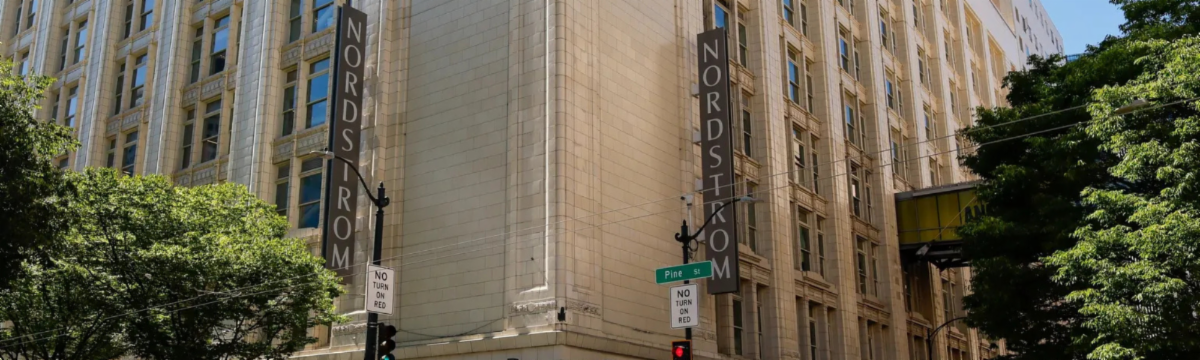
Seattle Times: Even Nordstrom now says it has trouble getting Seattle cops to show up
Sep. 12, 2026
By Danny Westneat , Seattle Times columnist
Over the years I’ve found that one thing that really hacks off Seattleites is when they call the cops and no one shows up.
I’ve written about it periodically. There was the time a man crashed a truck into a row of parked cars in Maple Leaf, then abandoned it. Police didn’t respond to repeated 911 calls, even when the perpetrator came back later to retrieve the truck. (He got away.)
There was another time a thief took some laptops and cellphones from backpacks at a soccer practice. After a citizen tracked the devices, he couldn’t get the cops to respond — even after he ended up squared off against the perpetrator on a crowded Metro bus.
Then there was that episode involving me calling for help, after my then 14-year-old daughter had tracked our stolen phone and wallet from a smash and grab. Those thieves turned out to be “Washington’s most wanted” car prowlers. Seattle police did apologize for not showing up on that one, though it was the tiny Sammamish police force that eventually caught the perps and got them jailed.
It turns out the big dogs in town get the same cold shoulder.
This past week, 35 big business execs, from Microsoft, Costco, Alaska Airlines and others, called on the city to get its act together on public safety. They asked for an action plan to boost police patrols in certain neighborhoods and to get tougher on drug markets, such as in beleaguered Little Saigon.
In the letter, Nordstrom CEO Erik Nordstrom revealed an astonishing figure. The letter said that when Nordstrom employees at the flagship downtown Seattle store call police, “only 29% of their 911 calls yield a police officer response.”
At the company’s Southcenter mall location — which also has some history of retail theft and other crime problems — 911 calls get a 100% police response, Nordstrom said.
I followed up with the company and it said this represents 70 calls to 911 from the downtown store between January and July of this year. Most of the problems involved shoplifting and disruptive customers, though a search of the city’s 911 database for that block also includes crimes like check fraud, assault and public drug use, as well as noncriminal matters such as “person down” reports. According to Nordstrom, police came just 20 times.
At the Southcenter store, police came 47 out of 47 times, according to Nordstrom.
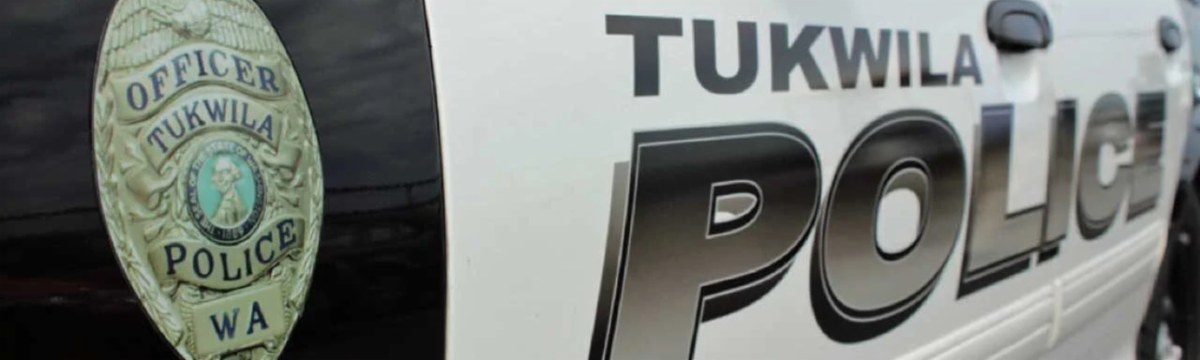
The Tukwila police have a budget of around $22 million. Seattle police have a budget of $488 million.
| | |
Tukwila police target suspect in organized retail theft case
Tukwila police are asking for the public’s help identifying a suspect accused of stealing multiple coats from a department store. Detective Mosley, the department’s Retail Emphasis Detective, is investigating the case as part of the city’s broader effort to address organized retail crime.
The Tukwila Police Department created the dedicated detective position earlier this year to work with retailers and loss prevention personnel and pursue organized retail theft cases. Police say these offenses can involve thefts across multiple jurisdictions and may be connected to other crimes, including vehicle theft, robbery and narcotics offenses.
The department has investigated similar cases this year. In June, two suspects allegedly stole about $4,000 in merchandise from a department store before fleeing to a waiting vehicle. Police pursued the case as organized retail theft.
Tukwila’s retail activity, including the Westfield Southcenter area, draws shoppers from throughout the region and contributes to the city’s high volume of reported property crime.
Washington has taken several steps to address organized retail crime, including the Attorney General’s Organized Retail Crime Task Force, established in 2022 to support coordination among law enforcement and prosecutors across jurisdictions.
Police are asking anyone who recognizes the suspect in the coat theft to contact the Tukwila Police Department’s non-emergency line at (206) 241-2121 or email tips@tukwilawa.gov.
| | |
Questions raised over data behind Seattle diversion program
A Seattle-created program that diverts people accused of low-level drug offenses away from jail and into community-based services is facing renewed scrutiny over how its outcomes have been measured and reported.
Eric Zimmerman of the Washington Policy Center argues that a widely cited statistic from an early evaluation of Law Enforcement Assisted Diversion (LEAD) incorrectly described a 58% reduction in arrests. Zimmerman contends the original University of Washington research measured reduced odds of arrest and did not establish a 58% decrease in arrests. He is calling for independent reviews and more consistent, transparent reporting by jurisdictions that fund LEAD.
Zimmerman also questions claims related to employment, housing and recidivism, citing differences between LEAD’s reported outcomes and results from some subsequent evaluations.
LEAD founder Lisa Daugaard acknowledged that the 58% figure was misstated but said the underlying finding remains meaningful. She said LEAD has continued to expand because law enforcement agencies, prosecutors, community partners and participants have found the program effective. Daugaard also disputed some of Zimmerman’s findings, including his characterization of housing outcomes.
The University of Washington said an early report incorrectly used the term “likelihood” instead of “odds” when describing the statistical findings. The university said those errors are being corrected and defended its broader evaluation of the program, while offering to help ensure the research is accurately represented.
The dispute highlights broader questions about how diversion programs measure effectiveness and communicate results to policymakers, communities and the public.
| | |
The Elephant in the Dome podcast examines Washington’s organized retail crime crisis
Organized retail crime is the focus of a recent episode of The Elephant in the Dome, hosted by Senator Chris Gildon.
The episode features Washington Retail Association guests Jan Himebaugh and Crystal Leatherman, who discuss the growing challenges retailers face from organized retail theft. The conversation examines how organized retail crime can extend beyond individual theft incidents and connect to broader criminal networks.
Himebaugh and Leatherman also discuss the impact of organized retail crime on businesses and communities and explore potential policy and enforcement approaches aimed at strengthening accountability and addressing the underlying networks involved.
The 24-minute episode, titled The Cost of Crime: Unpacking Washington State’s Organized Retail Theft Crisis, provides an opportunity to hear directly from retail industry representatives about the issue and the challenges facing retailers across the state.
Watch: YouTube
Listen: Podcast episode
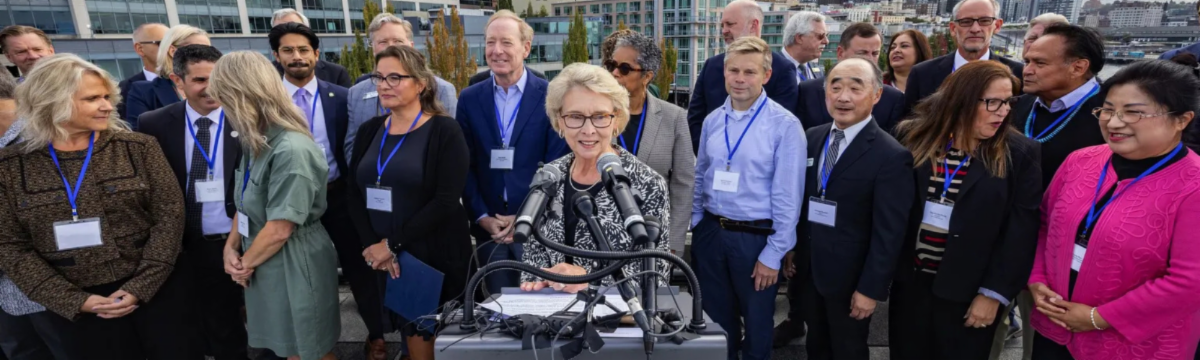
| | Image: Former Gov. Chris Gregoire, at podium, gathers politicians, business leaders, and others for comments and a press conference announcing the launch of a new economic task force. (Ken Lambert / The Seattle Times) | | |
Puget Sound leaders launch new effort to address economic challenges
A new regional economic initiative is calling for coordinated action as the Puget Sound economy faces slower job growth, rising costs, and increased competition from other regions.
Challenge Seattle recently released Keeping Puget Sound Strong: A Regional Plan for Jobs and Opportunity and helped launch the Partnership for a Competitive Puget Sound. The effort focuses on King, Pierce, Snohomish, and Kitsap counties, which lost nearly 7,000 jobs in 2025. The decline marked the region’s first annual employment loss in more than two decades outside a major recession or pandemic, according to the initiative.
The report identifies several factors affecting the regional business climate, including regulatory requirements, permitting processes, housing and childcare costs, and coordination among governments and businesses. It also points to slower business creation, reduced venture capital investment, and employment declines in downtown Seattle.
At the same time, the region retains significant economic assets, including technology and manufacturing industries, a major port, research institutions, and a large workforce.
The new partnership is proposing 20 recommendations focused on improving the predictability of the business environment, streamlining permitting, reviewing regulations, strengthening workforce partnerships, and supporting key industries. It is also encouraging local governments, businesses, and other stakeholders to approach economic development as a regional effort rather than as separate jurisdictions.
Challenge Seattle and its members plan to contribute $1 million to Greater Seattle Partners to support implementation and publicly track progress. The initiative joins other economic development efforts launched this year by state and local leaders.
| | Image: Nick Wagner / The Seattle Times | | |
Seattle Times Editorial: Lawsuit payouts are shortchanging state’s budget. WA needs tort reform
Aug. 9, 2026
By The Seattle Times editorial board
Washington state ended its fiscal year June 30 on the hook for a record-setting $614 million to cover legal fees, jury awards and settlements for its lawsuits and tort claims. As a self-insured state, the bigger those costs grow, the more they cut into budgets for services state government provides. The skyrocketing costs are unsustainable.
House lawmakers in Olympia had a chance to pass modest reforms to the state’s country-leading tort liability exposure; instead, they chose at their peril to ignore a Senate-passed bill that could have stemmed at least some of the bleeding. The House’s Civil Rights and Judiciary Committee, led by Rep. Jamila Taylor, D-Federal Way, didn’t even give the bill a hearing.
The ability of Washingtonians to seek redress for government wrongdoing can and should be preserved. But it also cannot be a blank check that shortchanges state and local governments from providing services that communities around the state depend on. And that’s where the state is headed without legislative action.
Here’s how the state got here: Washington’s waiver of sovereign immunity — which allowed it to be sued for damages — is broader than any other state, according to a recent report by the Washington State Association of Counties. And since 1967, when the immunity was waived, the state’s courts have continued to make it easier to bring claims against the government.
Fast forward to this past decade, when court rulings also eliminated the statute of limitations on childhood sexual abuse cases, often involving those in the foster system. Claims have ballooned against the state Department of Children, Youth and Families — from four in 2018 to 1,110 in 2025 — with nearly three in four of cases filed in 2025 for alleged misconduct before 2010. One recent Pierce County case resulted in a jury verdict totaling $117 million.
| | |
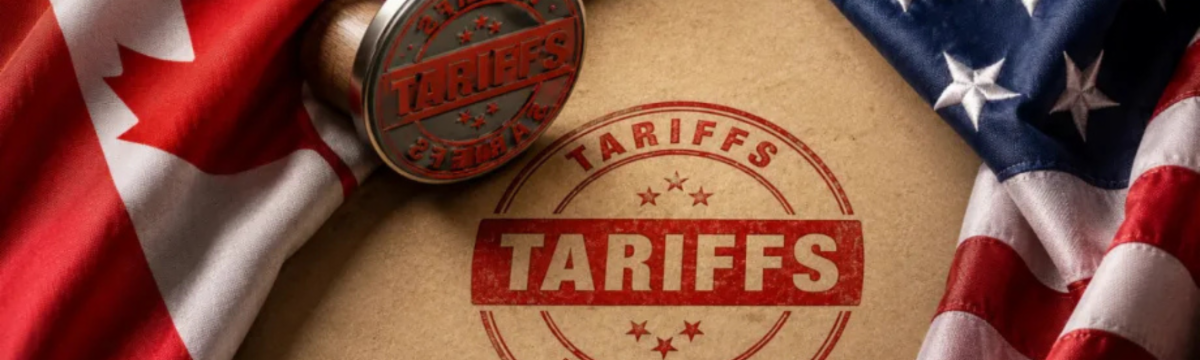
New U.S. tariffs renew trade concerns between Washington and Canada
New U.S. tariffs on Canadian imports took effect Aug. 22 after trade talks between the two countries broke down, raising concerns for Washington businesses that rely on cross-border trade.
The tariffs could reach 50% on about $20 billion worth of Canadian products, including alcohol, dairy, and other goods, in addition to existing tariffs. Canada has announced plans to respond with tariffs on U.S. products beginning Sept. 8, including steel, dairy, appliances, electronics, pulp and paper, and farm machinery.
Washington is particularly exposed to changes in U.S.-Canada trade. The state imported about $8.5 billion in Canadian goods during the first half of 2026 and exported roughly $4 billion in goods to Canada during the same period. However, the immediate economic impact may be limited because the new U.S. tariffs affect only about 5% of Canadian exports to the United States. Energy products, which account for more than half of Washington's Canadian imports this year, are not affected by the new tariffs.
Trade experts say businesses may also be better positioned to absorb disruptions than during previous trade disputes. Many companies have diversified suppliers and markets after earlier tariff battles, making supply chains more resilient.
Still, uncertainty remains a concern for businesses as tariffs and potential retaliatory measures evolve. The extent of the impact on Washington will depend on which products are ultimately affected and how businesses respond to changing costs and supply conditions.
| | |
Employer health costs expected to rise
Employer-sponsored health care costs are expected to increase as insurers and employers face rising medical expenses and greater use of health services, according to a recently released study from health care research and policy firm KFF.
The study identifies several factors contributing to higher costs. Prices for medications, physician services, testing, and other medical care continue to rise, while increased utilization is also putting pressure on health plans. Insurers have also reported greater use of behavioral health services compared with previous years.
The study points to changes in enrollment patterns as another factor. Some smaller employers are moving toward lower-cost plans, particularly when they have younger workforces. As enrollment shifts, the cost of coverage can increase for groups that continue to offer more comprehensive plans.
Specialty drugs and biologics are also contributing to higher spending. Many newer treatments have limited or no generic alternatives, keeping costs elevated as their use expands.
Weight-loss medications, including GLP-1 drugs, are another area of increased attention. While many health plans limit coverage of these medications to conditions such as diabetes, their growing use and relatively high prices continue to affect health care spending.
Approximately 165 million Americans receive health coverage through an employer, although costs and coverage vary significantly among employers and plans. The study indicates that workers and employers across the country, including in Washington, should expect noticeable increases in health plan costs in the coming year.
Washington Retail Association (WR) is closely watching these trends and looking for practical solutions to help members manage rising health care costs. As health care remains a significant expense for employers, WR will continue exploring ways to support retailers and advocate for policies that help make coverage more affordable and sustainable for businesses and their employees.
| |
WR diversity statement
WR is committed to the principles of justice, equity, diversity, and inclusion. We strive to create a safe, welcoming environment in which these principles can thrive.
We value all people regardless of race, ethnicity, gender, religion, age, identity, sexual orientation, nationality, or disability, and that is the foundation of our commitment to those we serve.
| | |
Jan Himebaugh
President & CEO
360.200.6450
Email
| |
John Engber
Director, Retail Industry
Coalition of Seattle
206.850.5517
| | | | |