Newsletter | August 10, 2026 | | |
IN THIS ISSUE
POLITICAL NEWS
ON THE LOCAL FRONT
IN THE NEWS
POLICY
RETAIL THEFT & PUBLIC SAFETY
ECONOMY
| | |
2026 Primary Election: Awaiting Final Results
Washington's primary election was held on Tuesday, August 4. While Election Day has passed, the results are not yet final. As a vote-by-mail state, Washington counts all ballots postmarked by Election Day, so vote tallies will continue to update in the days ahead as county elections offices process outstanding ballots. Counties certify their results by August 18, and the Secretary of State will certify the statewide totals by August 21.
Turnout is also running behind the last midterm, which means the picture could shift as later ballots are counted. A few races are already giving a sense of who is likely to advance to the general:
-
3rd Congressional District — State Senate Republican Leader John Braun (R) leads Incumbent Rep. Marie Gluesenkamp Perez (D) 39.55% to 36.51%
-
48th LD, House Pos. 2 — Rep. Amy Walen (D) leads Redmond City Councilmember Jessica Forsythe 49% to 48.42%
-
42nd LD, Senate — Four candidates filed for this open seat. Erika Creydt (R) currently leads with 44.6%, while second place remains a toss-up between Michael Alvarez Shephard (D) at 26.42% and Eamonn Collins (D) at 26.4%.
Please note: these are early, unofficial results as of August 7, 2026, and remain subject to change until certification is complete.
WR is monitoring results closely and will provide an update once the election is certified. WR will also announce a second round of endorsements ahead of the November general election.
For a full list of the candidates WR endorsed in the 2026 primary is available here.
| | Image: Spokane Valley Fire Department | | |
Retail community supports Spokane wildfire recovery efforts
Wildfires continue to impact communities across the Spokane area in what officials have described as the largest natural disaster in the city’s history. The Spokane Complex Fire, which includes the Old Trails, Fairview, and Autumn Lane fires, has forced the evacuation of more than 60,000 residents, destroyed an estimated 600 structures, and burned more than 5,000 acres.
Many businesses, employees, and families have been directly affected, with thousands of residents facing immediate needs for shelter, food, clothing, and other essential resources. Recovery efforts are expected to continue long after the fires are contained.
Several organizations and businesses across the Inland Northwest have stepped forward to support residents impacted by the fires. Available resources include food, clothing, emergency supplies, temporary assistance, and other services:
-
Lowe’s has deployed disaster relief support to Washington following the wildfires. An emergency distribution event will be held Wednesday, August 5, at 2 p.m. at the Lowe’s of Spokane Valley store, located at E. 5204 Sprague Avenue. Free totes containing clean-up and recovery supplies will be available while supplies last, with a limit of one tote per vehicle.
-
Gap Inc. is supporting families impacted by the Spokane fires by offering a 50% discount at participating Spokane-area stores through August 16:
- Old Navy 5468 — Spokane Valley Mall
- Old Navy 1823 — Franklin Park (currently closed due to air quality issues)
- Gap 7501 — River Park Square
- Athleta 7084 — River Park Square
In addition, the Gap Foundation is donating $50,000 to the American Red Cross to support relief efforts.
-
Partners Inland Northwest is providing food, clothing, and diaper assistance at its Spokane Valley location. The organization is open Monday through Friday from 9 a.m. to 3 p.m., and no appointment is required.
-
GoFundMe has established a centralized hub featuring verified fundraisers and nonprofit organizations supporting those impacted by Washington wildfires. GoFundMe.org’s Wildfire Relief Fund is also providing emergency cash grants to verified individuals who have lost homes, property, or been displaced.
-
Airbnb.org is offering free emergency housing support for eligible residents displaced by wildfires in Spokane and Stevens counties through referrals from 211.
-
Flatstick Pub in downtown Spokane is offering free pizza, mini golf, and Duffleboard for displaced residents needing a place to gather and recharge.
-
The Garland Theater is providing donated items, including diapers, food, toiletries, blankets, clothing, and pet supplies.
-
Diverse Roots, Plato’s Closet, and Global Neighborhood Thrift are providing free diapers, clothing, or vouchers for impacted residents.
-
YMCA of the Inland Northwest is opening Spokane-area locations for showers and other temporary needs Monday through Friday from 5 a.m. to 9 p.m.
-
City of Spokane has launched a wildfire relief effort through its H.O.M.E. Starts Here Fund to help individuals and families affected by the Spokane Area Fires.
Retailers and organizations offering support, as well as those seeking assistance, are encouraged to share their information with WR, info@washingtonretail.org, so resources can be connected with those who need them most.
The retail community has a long history of supporting neighbors during times of crisis. Through collaboration and shared resources, businesses and community partners can help Spokane residents recover and rebuild.
Spokane Wildfire Resource List
| | |
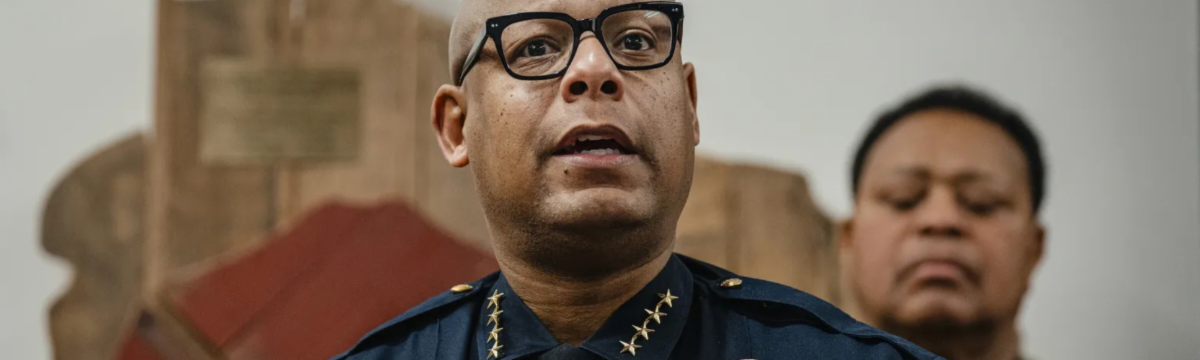
Mayor Wilson faces pushback after firing Police Chief Shon Barnes
Within a few days of the tragic mass shooting at the Bite of Seattle festival on the Seattle Center campus, Mayor Katie Wilson gave Seattle Police Chief Shon Barnes a choice – quit or be terminated. Upon receiving his resignation, the Mayor named Deputy Chief Andre Sayles as the interim Police Chief.
Immediately after the shooting, Chief Barnes faced stiff scrutiny for being out of town, and those questions grew louder over the next four days before he was pushed to resign by the Mayor. However, the Mayor’s action to terminate the Chief triggered loud questions and criticism from the Seattle City Council and others.
Councilmember Debora Juarez, a former Council President, had sharp words for the Mayor, saying “what we’re seeing under Mayor Wilson are more than just gaffes or missteps. I see a complete lack of leadership.” Councilmember Maritza Rivera called Wilson’s decision to fire Barnes “reckless and impulsive . . . Her lack of experience and her incompetence have led to poor decision-making and put the safety of our communities at risk.”
Leaders of the city’s Black community quickly urged the Mayor to reverse course and keep Chief Barnes. As Michelle Merriweather, president and CEO of the Urban League of Metropolitan Seattle, pointed out “how often have you seen the Black community stand up for a police officer? . . . That should resonate.”
Bishop Reggie Witherspoon of the Mount Calvary Christian Center praised progress made under Chief Barnes by observing “Seattle’s Police Department has been notorious for just not understanding the Black community, and I’m saying with Chief Barnes, we were moving in the right direction,”
The editorial board of The Seattle Times called for greater openness by the Mayor.
Every statement, every news conference she held in the last week — beginning with her being accompanied by Barnes on Monday and ending with Friday’s introduction of an interim chief — left more confusion, innuendo and mystery.
To regain public trust, Wilson must immediately release the after-action review of the city’s communications with the public and news media during the mass shooting. Such a report exists, and it “revealed real gaps,” she said in a social media post on Thursday.
Mayor Wilson shared what she is looking for in a new chief. Specifically, the Mayor wants a chief who builds strong relationships within the department, communicates calmly and accurately in crises, and handles criticism well. She added that she is launching the search for a new chief “with urgency,” starting with the creation of a search committee.
The Mayor also accepted criticism by stating “there were gaps in communication all around, and I definitely want to own my part in that. . . Part of this is communication failures within SPD and part of that is communication failures between SPD and my office.”
| | |
Seattle business leaders and event organizers urge reactivation of police cameras
A coalition of 11 organizations that operate or host major public events in Seattle is urging Mayor Katie Wilson to reactivate police surveillance cameras in the stadium district and expand their use to Seattle Center following recent shootings in the city.
In a letter sent Aug. 3, the group said Seattle's FIFA World Cup events were successful but warned that recent incidents of gun violence demonstrate that large public gatherings remain vulnerable to public safety threats. The organizations include Seafair, Climate Pledge Arena, Capitol Hill Block Party, Seattle Storm, Downtown Seattle Association, Visit Seattle, Washington State Ballpark, Seattle Convention Center, Space Needle, Seattle Sports Commission and Chihuly Garden and Glass.
Seattle currently has about 60 police cameras operating on Aurora Avenue, downtown and in the Chinatown International District. Temporary cameras in the stadium district were activated during the World Cup because of a credible threat and were turned off afterward, consistent with the city's plan.
Mayor Wilson has said she supports a careful review of the camera program, citing concerns about privacy, civil rights and the potential misuse of footage by other government agencies. Her office said the city will continue evaluating the program while increasing visible police presence at upcoming summer events.
The city has commissioned independent reviews by New York University and the University of Pennsylvania to examine the program's effects on public safety, policing practices, privacy and civil liberties. Both evaluations are expected to be completed in September.
Supporters of the cameras argue they can help deter crime, aid investigations and improve public safety around major event venues while the city continues its review of the program.
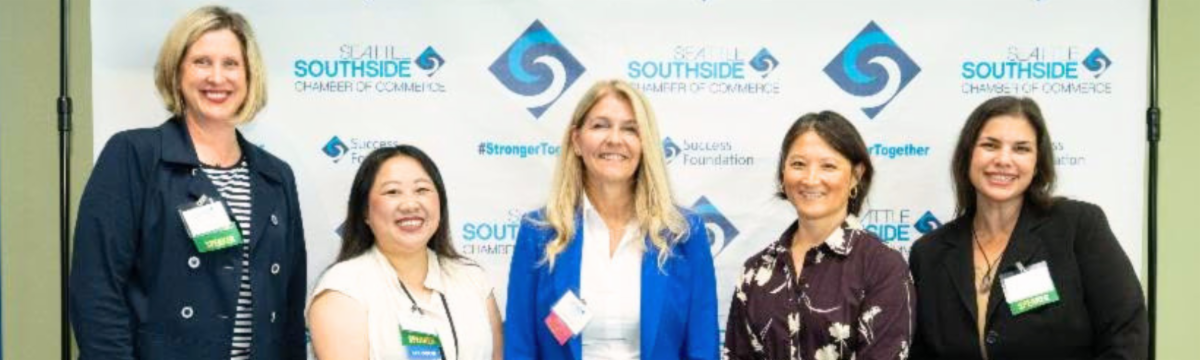
| | Image (from left): Des Moines City Manager Katherine Caffrey, Cathy Vue of the Port of Seattle, Senator Tina Orwall (D-33), Representative Mia Gregerson (D-33), Crystal Leatherman | |
Southside Leadership Conference highlights business challenges and regional opportunities
Business, civic, and nonprofit leaders gathered July 10 at Highline College in Des Moines for the Seattle Southside Chamber and Success Foundation’s 2026 Leadership Conference, bringing together approximately 250 attendees to discuss economic trends, workforce needs, policy issues and the future of South King County.
Crystal Leatherman, director of policy and government affairs for the Washington Retail Association, participated as a panelist during the conference’s economic outlook discussion, joining regional leaders in examining the challenges and opportunities impacting businesses.
Leatherman highlighted the pressures facing customer-facing industries, including retailers, restaurants, and hospitality businesses, as they navigate rising operating costs, workforce challenges, regulatory uncertainty, and changing consumer behavior. She noted that many businesses are closely monitoring the gap between the increasing costs of operating and cautious consumer spending.
“This is one of the most diverse, both economically and industry, as well as demographically regions in our state,” Leatherman said, emphasizing the importance of immigrant and refugee-owned businesses and their contributions to Washington’s economy.
The panel also discussed the region’s economic strengths, including its diverse workforce, proximity to Sea-Tac Airport, transportation and distribution networks, and industries such as aerospace, construction, maritime and green jobs.
Additional conference sessions focused on small business and nonprofit cash flow challenges, leadership strategies and navigating uncertainty. Speakers emphasized the importance of collaboration among businesses, community organizations, educators and public agencies to address shared regional challenges.
The event concluded with a fireside chat featuring King County Executive Girmay Zahilay and Tukwila Mayor Thomas McLeod. Zahilay reflected on his experiences growing up in South Seattle and how they shaped his approach to leadership and public service.
“I think leadership is finding what your gift is and then finding a problem to solve with that gift,” Zahilay said. “To me, when a gift finds a problem to solve, that’s when you find purpose.”
View the full panel discussion
| | |
Walgreens opens new Kent micro-fulfillment center
On July 22, Walgreens opened a new 45,000-square-foot micro-fulfillment center (MFC) in Kent, Washington. This new facility brings 85 new jobs to the greater Seattle community and will support nearly 196 Walgreens stores across the Mountain West region, including 122 in Washington alone. Washington Retail Association President & CEO Jan Himebaugh was on hand to welcome the state-of-the-art facility to Washington; the opening was also attended by multiple state legislators, locally elected officials, and pharmacy school representatives, demonstrating that WRA's retail members are driving technological solutions that better serve our communities.
Walgreens’ MFCs use innovative robotic technology in a centralized pharmacy environment to dispense and ship prescriptions to its retail stores. This helps improve efficiency, stabilize staffing and pharmacy hours, reduce workflow pain points, and free up pharmacy team members’ capacity to spend more time with patients.
The Kent MFC joins 13 other facilities supporting 5,400 stores across the country. These centers fulfill anywhere from four to five million prescriptions weekly, handling over 40 percent of Walgreens’ total prescription volume.
| | |
Small business confidence trails national outlook in Washington
A new report from the National Federation of Independent Business (NFIB) finds that small business owners in Washington are less optimistic about current business conditions than their counterparts nationwide, with labor costs, taxes, and regulations ranking among their top concerns.
According to the 2026 NFIB Washington Small Business Economic Trends report, the state's Small Business Optimism Index stands at 94.5, compared with the national reading of 98.5. The report also found Washington businesses are less likely to plan for new hiring, with 5.3 percent expecting to increase employment compared with 15.4 percent nationally. Current job openings also trail the national average.
Labor costs emerged as one of the report's most significant findings. Nineteen percent of Washington respondents identified labor costs as their single greatest challenge, more than double the national rate of 8.5 percent. Business owners in the state also reported greater concern about government regulations and taxes than respondents across the country.
The report noted that only 6 percent of Washington small business owners rated their business as "excellent," compared with 12 percent nationally. Earnings trends also remained weaker than the national average.
Washington's unemployment rate of 5.1 percent and Employment Index of 99.8 both lag national figures, according to the report. While Washington continues to rank among the nation's strongest economies in overall gross domestic product and per capita income, the report suggests many small businesses continue to face challenges related to hiring, operating costs, and business growth.
The report concludes that small businesses, which employ about half of the state's private sector workforce, continue to face economic pressures that may affect expansion plans and future investment. It also notes that policymakers may look to the findings as they consider future decisions related to taxes, labor policies, and regulatory requirements that influence the state's business climate.
| | |
Registration open for 44th annual labor and employment seminar
Employers are invited to attend the 44th Annual “Best Practices for Best Employers™” Labor & Employment Seminar hosted by Ballard Spahr and Lane Powell. The seminar will provide updates and practical guidance on key workplace and employment law issues affecting organizations.
The event will take place in two locations: September 23, 2026, at the Marriott Portland Downtown Waterfront and October 6, 2026, at the Hyatt at Olive 8. Both sessions will run from 9 a.m. to 4:30 p.m., with registration beginning at 8:15 a.m.
Topics will include recent legal developments, the impact of artificial intelligence in the workplace, employment class action trends, executive coaching strategies, leave and accommodation challenges, immigration compliance, and other issues facing employers.
The seminar is designed for employers seeking to better understand evolving workplace requirements and reduce legal risks through informed policies and practices. Continuing education credits are approved for several professional organizations, including 5.5 HRCI and SHRM credits. Washington and Oregon CLE credits are pending approval.
Registration is $265 per attendee. Washington Retail Association members can receive a $50 discount by using the code WRA50 at registration.
For more information and to register, visit the event page.
| | |
Business groups to host legislative tax briefing
The Washington Retail Association (WR) is pleased to partner with the Association of Washington Business, Washington Beverage Association, and Washington Hospitality Association to co-host a virtual business briefing on the potential tax issues expected to be considered during the 2027 legislative session.
The webinar, titled 2027 Tax Threats & the Legislative Outlook: A Business Community Briefing, will be held at 11 a.m. PT on Tuesday, Aug. 25. The event will provide an overview of potential tax proposals that could emerge as lawmakers work to address the state's projected budget shortfall. Presenters will discuss what those proposals could mean for employers and how the business community can engage as the legislative session approaches.
The briefing will also feature State Representative April Berg (D 44), who will share insights on Washington's fiscal outlook and expectations for the 2027 legislative session.
The webinar is open to interested participants. Those wishing to attend should RSVP by email to reserve a spot. Registered attendees will receive the webinar link approximately 24 hours before the event.
| | Image: Andrew Burke-Stevenson / The Seattle Times | | |
State lawsuit costs reach record $614 million
Washington state's legal costs reached a record nearly $614 million during the fiscal year that ended June 30, 2026, according to new figures from the state's risk management office. The total includes more than $537 million in lawsuit settlements and tort claim payments, along with approximately $76 million in legal defense costs.
The increase continues a multi-year trend driven largely by claims involving alleged abuse and neglect within Washington's foster care system. Claims involving the Department of Children, Youth and Families accounted for nearly 80 percent of the state's settlement costs during the past fiscal year. The agency received more than 1,100 claims in 2025, compared with just 13 in 2020.
Because Washington is self-insured, settlement payments and legal expenses are funded with state resources that could otherwise support public services such as education, health care, and child welfare programs.
State leaders continue to examine potential solutions. A proposal that would have required many lawsuits against the state to go through arbitration before reaching court did not advance during the 2026 legislative session. Instead, a 14-member Tort Study Committee representing state agencies, local governments, attorneys, school districts, and victim advocates is expected to provide recommendations later this year.
The increase in claims follows court rulings that significantly expanded the time frame for filing childhood sexual abuse lawsuits, allowing cases involving decades-old allegations to proceed. At the same time, state officials have pointed to recent high-profile settlements involving current child welfare cases as evidence that the issue extends beyond historical claims.
Local governments are also reporting rising liability costs and are urging lawmakers to consider reforms to address growing financial pressures.
| | |
Washington Retail Association at NCSL Legislative Summit in Chicago
Crystal Leatherman, Washington Retail Association’s (WR) Director of Policy and Government Affairs, traveled to Chicago this summer for the National Conference of State Legislatures (NCSL) Legislative Summit, representing Washington retailers at the country's largest bipartisan gathering of state policymakers.
NCSL brings together legislators and legislative staff from all 50 states and U.S. territories for several days of policy sessions, idea-swapping, and cross-state collaboration. The Summit reaches well beyond elected officials, too, drawing organizations and companies from a wide range of industries. With more than 100 breakout sessions and a full expo hall, there's no shortage of ideas to explore or people to meet.
Washington was well represented, with lawmakers from both chambers and both parties making the trip. For WR, it was a valuable time to connect with legislators and retail members alike, and to take the pulse of the issues likely to shape the following year for our state and our industry.
| | |
Initiative to repeal WA ‘millionaires tax’ qualifies for November ballot
Initiative 645, a measure seeking to repeal Washington’s new high-earners income tax, has qualified for the Nov. 3 statewide ballot after receiving enough valid voter signatures, according to the Secretary of State’s Office.
Supporters of the initiative submitted more than 500,000 signatures earlier this month, exceeding the 308,911 signatures required for a measure to qualify. A random sampling review of petitions confirmed enough valid signatures, allowing the measure to move forward to voters this fall.
The initiative would repeal the 9.9% tax on annual household incomes exceeding $1 million that was approved by the Legislature and signed into law by Gov. Bob Ferguson. The tax is scheduled to apply to income earned beginning in 2028, with the first payments due in 2029. State officials estimate the tax could generate $3 billion or more annually, with most of the revenue supporting the state's operating budget, including K-12 education and other public services.
Supporters of I-645, including the Let’s Go Washington campaign, argue the measure would protect families and businesses from an expansion of the state income tax. Opponents contend that repealing the tax could reduce funding available for health care, childcare, education, and other state priorities.
Gov. Ferguson has stated he would oppose any future expansion of the tax to individuals earning less than $1 million and noted that the income threshold is adjusted annually for inflation.
The ballot measure is also being challenged separately in court, with opponents arguing that the tax violates the state's constitution. That case remains pending and could eventually be considered by the Washington Supreme Court.
| | |
U.S. House passes Common Cents Act
The U.S. House of Representatives has passed the Common Cents Act (H.R. 3074), legislation that would establish a federal standard for rounding cash transactions if the penny is no longer in circulation.
The bill would create a consistent nationwide policy for rounding cash purchases to the nearest five cents, providing uniform rules for consumers and businesses. Electronic payments would not be affected under the proposal.
Supporters of the legislation say a standardized approach would help simplify cash transactions should penny production end while ensuring customers and businesses follow the same rounding practices across the country.
With House approval secured on July 14, the legislation now moves to the U.S. Senate for consideration. If the Senate also passes the bill, it would then be sent to the president for signature before becoming law.
The Common Cents Act is part of broader discussions about the future of the one-cent coin and efforts to reduce the costs associated with producing pennies while creating a clear and consistent framework for cash transactions.
| | |
What CEMA means for businesses
Recent litigation involving Washington's Commercial Electronic Mail Act (CEMA) is a reminder that the state's commercial email law has broad implications for businesses that rely on digital marketing. While the lawsuit focused on promotional email subject lines, the larger issue extends well beyond any single company.
Enacted to protect consumers from deceptive commercial email practices, CEMA allows recipients to seek statutory damages when qualifying emails contain false or misleading subject lines. Following a 2025 Washington Supreme Court decision, businesses across a wide range of industries experienced a sharp increase in litigation over routine marketing language, even in cases where the content of the email accurately reflected the promotion.
Recognizing the growing uncertainty for employers, the Washington Retail Association (WR) led a broad coalition advocating for legislative reforms that would preserve consumer protections while providing clearer standards for compliance. Those efforts resulted in the passage of HB 2274, which Governor Bob Ferguson signed into law earlier this year. The legislation clarifies the standard for determining when a subject line is misleading, introduces a knowledge standard for liability, and reduces statutory damages, while maintaining protections against deceptive commercial email practices.
Recent CEMA litigation serves as a timely reminder that Washington's commercial email law has far reaching implications for businesses of all sizes. As digital communication continues to be a critical tool for engaging customers, it is important that state law strikes an appropriate balance by protecting consumers from deceptive practices while providing businesses with clear, practical standards that encourage compliance rather than litigation.
Cases like this underscore why WR continues to advocate for policies that strengthen consumer confidence while supporting a healthy business climate.
| | |
Cosmetic formaldehyde releaser restrictions begin Jan. 1, 2027
Washington state is continuing implementation of its Toxic-Free Cosmetics Act (TFCA), which establishes restrictions on certain chemicals in beauty and personal care products to reduce exposure to toxic substances.
The state’s restrictions on formaldehyde and methylene glycol in cosmetics took effect Jan. 1, 2025, under Chapter 173-339 WAC. Products containing these chemicals were subject to a sell-through period that ended Dec. 31, 2025, meaning cosmetics currently sold or used in Washington cannot contain formaldehyde or methylene glycol. These chemicals are commonly found in some hair straightening and smoothing treatments.
Additional restrictions on formaldehyde releasers will begin Jan. 1, 2027. Washington became the first state to adopt a comprehensive ban on intentionally added formaldehyde-releasing chemicals in cosmetics. The requirements apply to manufacturers, distributors, retailers, and cosmetology businesses, including products sold online, in stores, or used in professional services.
The upcoming restrictions cover 25 intentionally added formaldehyde-releasing chemicals. Retailers and other businesses are encouraged to review product labels, research ingredients that may not be clearly identified on packaging, and evaluate their supply chains to determine whether affected products are present.
The Washington Department of Ecology has updated its TFCA guidance materials to help businesses understand restricted chemicals, compliance timelines, and steps needed to prepare. The updated guide provides information for companies that manufacture, distribute, sell, or use cosmetic products in Washington.
Businesses can review the Toxic-Free Cosmetics Act resources and compliance guidance through the Department of Ecology to prepare for the 2027 requirements and ensure affected products are addressed before the restrictions take effect.
TFCA compliance webpage
| | |
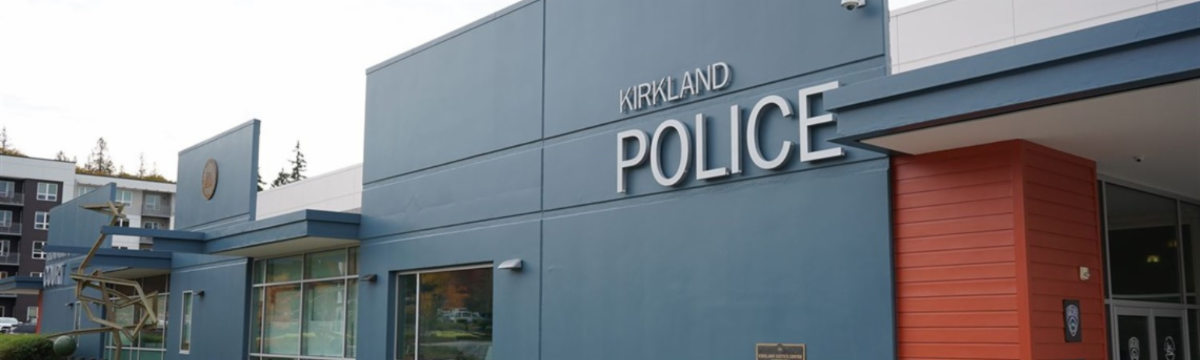
Kirkland police arrest suspect in organized retail theft investigation
A months-long investigation into organized retail theft across the Puget Sound region has led to the arrest of a suspect accused of stealing an estimated $500,000 in fragrance products and other merchandise from stores in multiple jurisdictions.
The investigation was led by the Kirkland Police Department's ProAct Unit in partnership with regional law enforcement agencies and loss prevention professionals. According to police, the collaborative effort focused on thefts affecting businesses throughout the region, including stores in Kirkland.
On July 16, detectives served a search warrant at the suspect's residence in Kent. Police said the suspect attempted to flee through a second-story window as officers moved in to make the arrest but was quickly taken into custody. Detectives also recovered additional evidence during the search that they believe is connected to the investigation.
The Kirkland Police Department is forwarding a charge of Organized Retail Theft in the First Degree to the King County Prosecuting Attorney's Office for review. The suspect remains in custody at the King County Jail with bail set at $255,000.
Kirkland Police Chief Mike St. Jean said organized retail theft affects businesses, employees, customers, and the broader community. He also credited the successful investigation to the strong collaboration between law enforcement agencies and retail loss prevention professionals, emphasizing the value of information sharing in identifying prolific offenders.
The department also recognized its regional partners for their role in the investigation, noting that cooperation across agencies and the private sector was instrumental in bringing the case forward.
| | |
Six organized retail theft cases move forward in King County court
Six defendants accused of organized retail theft appeared in King County court for arraignment as prosecutors continue to address a steady stream of cases involving repeated theft from major retailers across the region.
The cases involve allegations connected to Lululemon, Nordstrom, Target, Safeway, Ross Dress for Less, and Ulta Beauty locations. Prosecutors emphasized that these cases are different from typical shoplifting charges because they involve allegations of repeated theft or losses significant enough to rise to felony-level offenses. All defendants are presumed innocent unless proven guilty.
King County Prosecuting Attorney’s Office spokesperson Casey McNerthney said organized retail theft cases have a broader impact beyond individual businesses. He noted that retailers may respond to ongoing losses through increased security costs, higher prices, or, in some cases, store closures.
The cases come as Washington continues to face elevated concerns around retail crime. A Forbes Advisor study ranked Washington as the state most impacted by retail crime, citing high rates of theft compared with population share and significant losses tied to stolen goods.
The Washington Retail Association has estimated retail theft cost businesses approximately $2.7 billion in stolen merchandise in 2021, along with substantial impacts to state and local tax revenue. WR has supported efforts to strengthen tools available to law enforcement and prosecutors to address organized retail crime.
State lawmakers are also continuing discussions on potential reforms. Previous legislative proposals have focused on stronger penalties for coordinated theft operations and ensuring prosecutors have the resources needed to pursue these cases.
The King County cases will now move through the standard court process following the initial arraignments.
| | |
Digital fraud rings target retailers through tap-to-pay schemes
Organized retail crime is increasingly moving beyond traditional theft, with criminal networks using digital tools, stolen payment information and retail platforms to commit large-scale fraud, according to a recent CNBC investigation.
Law enforcement officials say some organized groups are using stolen credit card information and digital wallets to purchase gift cards at retailers, which can then be resold or used to purchase high-value goods for resale overseas. Investigators have linked some of these operations to Chinese organized crime networks, with officials estimating certain groups may generate significant profits through these schemes.
Unlike traditional retail theft, these crimes can occur through self-checkout kiosks, retail apps and online accounts, making them more difficult to identify. Fraudsters often obtain consumer information through phishing messages, fake payment notices and other scams designed to steal account credentials and credit card details.
Retail security experts say the growth of tap-to-pay technology and stored payment information in retail apps has created new opportunities for criminals. While convenience features improve customer experiences, they can also become targets when accounts are compromised.
Cases investigated across the country have involved a variety of retailers, including home improvement, apparel and general merchandise companies. Law enforcement agencies say these investigations can be complex because they often involve networks operating across jurisdictions.
Federal efforts, including Homeland Security Investigations’ Project Red Hook, are targeting gift card fraud and other digital retail crimes. Since 2024, the initiative has resulted in hundreds of arrests, according to officials.
Retail industry groups and law enforcement organizations continue to advocate for stronger collaboration and information sharing to address organized retail crime. A proposed federal measure, the Combating Organized Retail Crime Act, aims to improve coordination between retailers and law enforcement agencies.
CNBC.com
| | |
SPD operation leads to 13 arrests at Capitol Hill Walgreens
The Seattle Police Department (SPD) reported 13 arrests following a retail theft operation at the Walgreens location on 15th Avenue East in Capitol Hill.
The operation, conducted in July, involved undercover SPD officers working with store loss prevention staff to identify individuals suspected of theft. According to SPD, arrests were made for a combination of theft-related offenses and outstanding warrants. Approximately $600 in stolen merchandise was recovered during the operation.
SPD said the effort is part of ongoing work with retailers to address theft and property crime concerns. In addition to arrests, officers may issue trespass notices that prevent individuals from returning to a business location, allowing for future enforcement if they violate the restriction.
Retailers across Seattle and other communities have continued to report challenges related to theft, safety, and disruptions affecting employees and customers. Law enforcement agencies have increased collaboration with businesses through targeted operations aimed at addressing repeat theft activity and improving safety in commercial areas.
The Capitol Hill Walgreens has been identified by local officials and community members as one of several businesses experiencing elevated theft and disorder concerns. The operation follows other recent SPD efforts in the East Precinct focused on addressing retail theft at high-impact locations.
Separately, Walgreens announced plans to reduce its store footprint nationwide, including the closure of its Central District location. The company continues to operate pharmacy locations on Broadway and 15th Avenue East in Capitol Hill.
| | |
State budget outlook faces renewed scrutiny
Washington’s latest revenue forecast shows the state’s current budget remains balanced, but it also highlights growing concerns about future budget pressures as economic growth slows and spending commitments continue to increase.
The June revenue forecast raised projected collections for the current 2025–27 biennium by about $554 million compared with the enacted budget, while lowering projected revenue for the 2027–29 biennium by approximately $461 million. The two adjustments largely offset each other, maintaining balance in the current budget. However, the forecast points to challenges ahead, including slower personal income growth, limited employment growth, and weaker-than-expected collections from sales, use, and business taxes.
The updated outlook also relies in part on one-time revenue sources, including higher-than-expected capital gains collections. Looking ahead, projected revenue for the 2027–29 biennium provides only limited capacity before expected spending exceeds available funds, raising questions about future budget decisions.
The forecast has renewed discussion among policymakers and business leaders about state spending priorities. Former Democratic Governors Christine Gregoire and Gary Locke recently raised concerns about the pace of budget growth and the need for greater fiscal discipline. Gregoire noted that the state budget has grown substantially since she left office, while Locke emphasized the importance of setting priorities and ensuring ongoing programs have sustainable funding sources.
State leaders have said recent tax increases were necessary to address long-term budget needs. However, the latest projections indicate that lawmakers will likely face difficult choices in future budget cycles, including evaluating spending commitments, revenue sources, and the sustainability of current programs.
| | Image: Jennifer Buchanan / The Seattle Times | | |
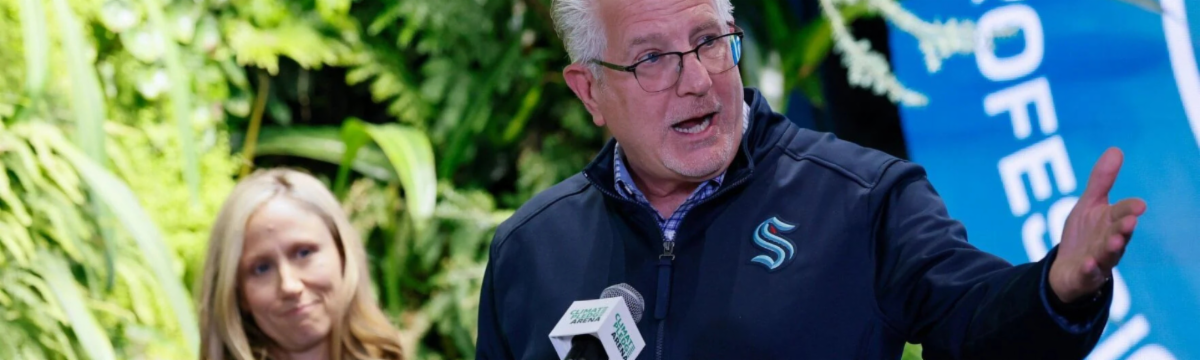
Kraken CEO raises concerns about Washington's business climate
Seattle Kraken President and CEO Tod Leiweke expressed concerns about Washington's fiscal direction during the Economic Future Solutions Summit hosted by the Association of Washington Business Institute and the Washington Roundtable.
Speaking on a panel with business leaders Denise Moriguchi of Uwajimaya and Kerri Schroeder of JPMorgan Chase, Leiweke said he believes many business leaders are increasingly concerned about the state's financial management and long-term economic outlook.
Leiweke emphasized that his concerns are not centered on the state's new tax on high-income earners, noting that he expects to pay the tax himself. Instead, he said he is worried about state spending, recent budget decisions, and what he described as growing uncertainty within the business community.
He pointed to recent reports from credit rating agencies that indicated Washington's financial outlook has weakened. Leiweke also questioned lawmakers' decision to use funding from an overfunded pension plan to help balance other areas of the state budget.
According to Leiweke, some business leaders are evaluating whether to expand or remain in Washington. He cited Starbucks' decision to expand operations in Nashville as one example of companies investing outside the state and suggested other businesses are having similar discussions.
Leiweke called on state leaders to adopt a long-term fiscal strategy that supports economic stability while maintaining Washington's values. His remarks contributed to a broader discussion at the summit about the state's competitiveness, fiscal outlook, and the factors influencing business investment decisions.
| | Image: Washington Policy Center | | |
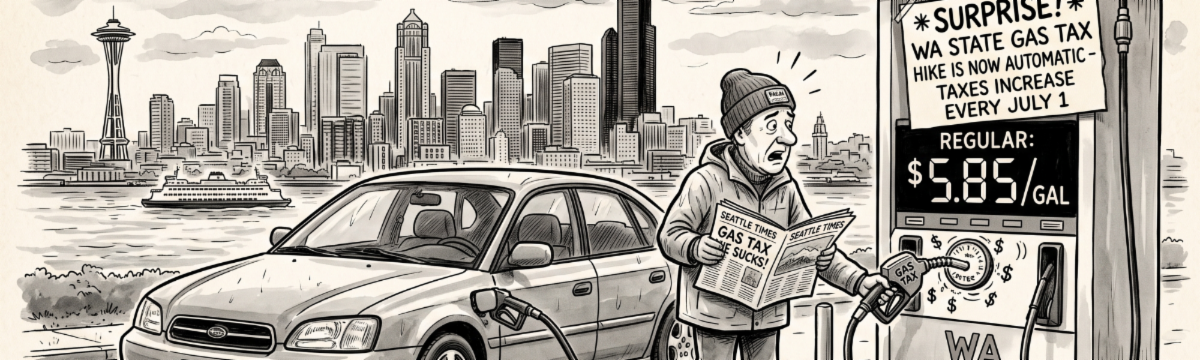
Automatic gas tax increase takes effect in Washington
Washington drivers are paying more at the pump following the state's first automatic fuel tax increase, which took effect July 1. The increase stems from legislation approved in 2025 that indexes the state gas tax to inflation, allowing it to rise by 2 percent annually without additional legislative action.
The automatic adjustment was established under HB 2711, which was signed into law in March 2025. Beginning this year, the state gas tax will increase each July 1 based on the formula outlined in the law. Previous fuel tax increases required approval by the Legislature. Under the new system, future increases occur automatically without additional votes.
The state gas tax was previously increased by 6 cents per gallon in 2025, bringing the rate to 55.4 cents per gallon before this year's adjustment. Motorists also pay the federal gas tax of 18.4 cents per gallon, along with fuel cost impacts associated with the state's Climate Commitment Act. Together, these factors contribute to Washington having some of the highest gasoline prices in the nation.
Supporters of indexing the gas tax have said the approach provides a more predictable source of revenue for transportation projects and helps address long-term maintenance needs for roads and bridges as construction costs rise over time.
Critics argue that automatic increases reduce legislative oversight by eliminating the need for future votes on fuel tax adjustments. They also contend the process limits opportunities for public input on transportation funding decisions and places additional financial pressure on households already facing higher living costs.
The policy reflects an ongoing debate over how Washington should fund transportation infrastructure while balancing affordability concerns. As the annual adjustments continue, discussions are expected to focus on transportation investment priorities, the condition of the state's road system, and the long-term impact of higher fuel costs on residents and businesses.
| | |
Report highlights Washington’s changing business climate
The 2026 Competitiveness Redbook from the Washington Alliance for a Competitive Economy provides a data-driven look at the state’s economic performance, highlighting areas of strength while identifying challenges affecting Washington’s competitiveness.
The report points to continued strength in areas such as the state’s high-tech sector and export activity, but also notes slowing job growth and rising costs that may affect employers. Washington added 19,800 non-agricultural jobs last year, representing 0.5% growth and ranking 35th nationally. This compares with 56,100 jobs added the previous year and 109,000 jobs added a decade ago.
The report also examines Washington’s tax structure and business costs. According to the Tax Foundation, Washington ranks 45th nationally for overall tax competitiveness, with corporate taxes, sales taxes, and unemployment taxes among the least competitive in the country. CNBC’s rankings similarly place Washington near the bottom nationally for cost of doing business and business friendliness.
Additional cost pressures identified in the report include unemployment insurance costs, workers’ compensation expenses, minimum wage levels, and fuel taxes. Washington’s minimum wage remains the highest in the nation, while gasoline and diesel taxes rank among the highest nationally.
The report also highlights changes in one of Washington’s longstanding economic advantages: affordable electricity. While rates remain relatively competitive, industrial electricity costs have increased compared with previous years, moving Washington from the top-ranked state five years ago to seventh for industrial customers.
The report notes that these economic factors have broader implications because businesses contribute significantly to funding state and local services. According to the data, employers account for 49.6% of state and local tax collections, contributing approximately $10,100 per employee.
The 2026 Competitiveness Redbook is produced by the Washington Alliance for a Competitive Economy, a nonprofit research institute focused on improving the state’s economy and business climate. The full report is available here.
| | |
Coalition of 25 states challenge latest Trump tariffs in court
A coalition of 25 states, including Washington, has filed a lawsuit challenging the Trump administration's latest tariffs on imports from 60 trading partners. The case, filed in the U.S. Court of International Trade in New York, argues that the administration exceeded its legal authority by imposing broad tariffs under Section 301 of the Trade Act of 1974.
The tariffs, which took effect July 24, impose rates of 10% and 12.5% on imports from countries and regions including the European Union. The administration said the action is intended to address concerns that trading partners have not done enough to prevent the export of goods produced with forced labor.
The lawsuit follows similar legal challenges filed by small businesses. Earlier tariff actions during President Donald Trump's second term have also faced successful court challenges, although some tariffs have remained in effect during the appeals process.
The states argue that Section 301 has historically been used to target specific countries or industries in response to particular trade practices, rather than imposing broad tariffs affecting nearly all U.S. imports. They also contend that the administration's reliance on forced labor concerns is an improper basis for reinstating tariffs that courts previously ruled unlawful.
The White House defended the policy, saying the tariffs are a lawful response to unfair trade practices and are intended to protect U.S. commerce and American workers from the effects of goods produced with forced labor.
The latest case adds to a growing series of legal disputes over the administration's trade policies and could further shape the scope of presidential authority to impose tariffs without congressional approval.
| |
WR diversity statement
WR is committed to the principles of justice, equity, diversity, and inclusion. We strive to create a safe, welcoming environment in which these principles can thrive.
We value all people regardless of race, ethnicity, gender, religion, age, identity, sexual orientation, nationality, or disability, and that is the foundation of our commitment to those we serve.
| | |
Jan Himebaugh
President & CEO
360.200.6450
Email
| |
John Engber
Director, Retail Industry
Coalition of Seattle
206.850.5517
| | | | |