Newsletter | October 9, 2025 | | |
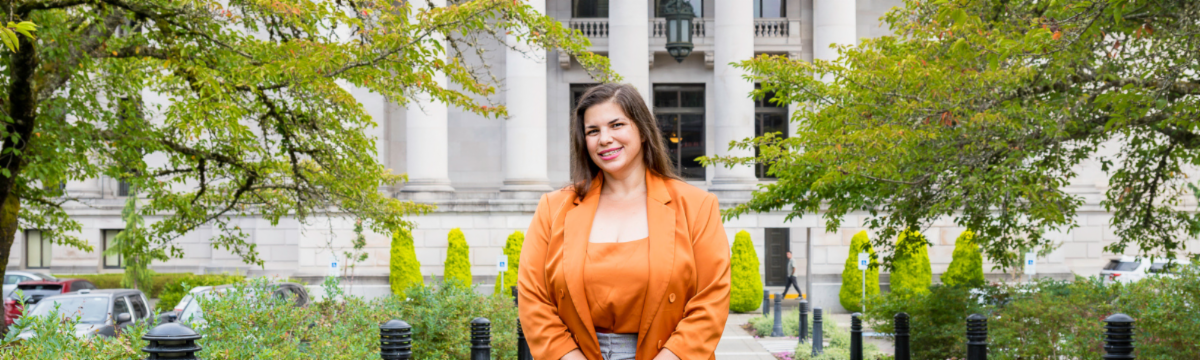
Crystal Leatherman promoted to Director of Policy and Government Affairs
The Washington Retail Association (WR) is pleased to announce the promotion of Crystal Leatherman to Director of Policy and Government Affairs, effective September 2025.
Since joining the association in 2023, Crystal has played a key role in shaping the association’s advocacy strategy and expanding its presence at both the state and local levels. Her leadership has strengthened bipartisan relationships, built new industry coalitions, and positioned WR as a leading voice on critical issues such as extended producer responsibility, organized retail crime, artificial intelligence, and emerging technologies.
Crystal has led numerous initiatives to increase member engagement and improve communications, including the association’s grassroots strategy and launching updated legislative resources for association member companies. Her proactive, collaborative, can-do approach has helped expand WR’s advocacy network, engaging public/private stakeholders from across the state of Washington.
In her new role, Crystal will oversee WR’s Policy and Government Affairs Division, guide legislative strategy, and continue to build strong relationships with policymakers, industry leaders, and local communities. Her promotion reflects WR’s ongoing commitment to strong, effective advocacy on behalf of Washington’s retail industry.
| | |
IN THIS ISSUE
ON THE LOCAL FRONT
POLICY
ECONOMY
POLITICAL NEWS
RETAIL THEFT & PUBLIC SAFETY
| | Image: King County Councilmember Claudia Balducci speaks at a press conference Thursday, Aug. 21 in Kent about starting up a new retail crime task force as former King County Sheriff Sue Rahr, center, and Kent Mayor Dana Ralph look on. STEVE HUNTER, Kent Reporter | | |
King County candidate proposes funding for retail theft prosecutions
King County Councilmember and County Executive candidate Claudia Balducci has announced a proposal to direct a portion of the recently approved 0.1 cent countywide sales tax increase toward addressing retail crime. The plan would dedicate about $600,000 annually to fund two detectives in the King County Sheriff’s Office and one prosecuting attorney.
Balducci outlined the measure alongside former Sheriff Sue Rahr and Kent Mayor Dana Ralph, who noted that organized retail theft has affected both large retailers and small businesses. The funding would help restore a prosecuting attorney position that was previously eliminated when grant support expired.
Supporters of the proposal emphasized the impact retail theft has on grocery and neighborhood stores, pointing to recent closures in the region. Balducci described the measure as a way to improve safety for customers, workers, and local communities.
Her opponent in the County Executive race, Councilmember Girmay Zahilay, also acknowledged retail theft as a serious concern but cautioned against earmarking specific sales tax revenues before broader consultation with law enforcement, prosecutors, retailers, and community members.
The King County Council is expected to review how best to allocate the new public safety sales tax revenue in the months ahead.
| | Image: Experience Olympia | | |
Olympia’s Proposition 1: Outsized workplace mandates beyond Seattle
This November, Olympia voters will decide the fate of Proposition 1 (Prop 1), a sweeping workplace mandate that goes far beyond Seattle’s labor standards. Originally filed in both Tacoma and Olympia, only Olympia’s version remains after a judge denied unions’ lawsuit to force the measure on Tacoma’s November ballot. As of September 9, the judge ordered the county election office to hold a special election for the initiative in February 2026.
Supporters insist Prop 1 follows Seattle’s example. The truth is, it expands much further and carries unintended consequences for families, seniors, and small businesses. For example:
-
Predictive scheduling rules would apply to every industry, not just retail and hospitality.
-
Premium pay requirements would force employers to pay extra for schedule changes within two weeks and time-and-a-half for shifts less than 10 hours apart.
These mandates mean less flexibility for workers. Students who balance classes with split shifts on the same day or parents who adjust schedules for family needs could lose those opportunities entirely. Employers simply cannot absorb the penalties. Seniors who rely on in-home caregivers for multiple short shifts a day could see skyrocketing costs as “premium pay” becomes the norm.
Local small businesses, nonprofits, healthcare providers, and housing advocates are alarmed. They warn that Prop 1 threatens higher costs, fewer jobs, and disruptions across the community. In response, community leaders have come together to form Olympia Together, a coalition urging a “No” vote. Their message is simple: the more voters understand Prop 1’s far-reaching consequences, the more they see it as the wrong policy at the wrong time.
| | |
Seattle voters to decide on business tax restructure
Seattle City Council has approved a proposal to overhaul the city’s business and occupation tax system, sending the measure to voters for a decision in November.
The “Seattle Shield Initiative” would exempt businesses earning up to $2 million annually from paying the B&O tax, up from the current $100,000 threshold. Companies exceeding the exemption would not pay tax on the first $2 million of gross revenue. City officials estimate that 76 percent of small- and medium-sized businesses would no longer owe the tax, while about 90 percent of all businesses would pay less than they do now.
Larger businesses would see higher rates. Retail, wholesale, and manufacturing companies above the threshold would pay 34 cents per $100 in revenue, up from 22 cents. Service companies would see an increase from 43 cents to 65 cents per $100.
The proposal is projected to generate an additional $80 million annually, with funds dedicated to human services, including programs addressing food insecurity, immigrant support, and substance abuse.
City leaders noted the measure would reduce the B&O tax base from about 21,000 taxpayers to 5,000, potentially affecting revenue predictability. If approved by voters, the changes would take effect in 2026.
| | |
Washington businesses prepare for new retail sales taxes
Beginning October 1, 2025, Washington businesses will begin collecting new retail sales taxes under Engrossed Substitute SB 5814, passed during the 2025 legislative session. The law expands the definition of retail sales to include a range of professional services such as advertising, live presentations, information technology services, custom website development, and others.
The Washington Department of Revenue (DOR) is preparing to issue interim guidance to help businesses understand how to comply with the new requirements. According to DOR, these guidance statements will be published in September and cover areas including advertising services, custom software, and temporary staffing. Businesses are encouraged to review this information carefully to ensure proper collection and reporting.
State leaders have said the changes are intended to keep up with rising costs and to maintain government services. Some lawmakers and business groups, however, have expressed concerns about how the expanded taxes could affect consumers and business operations.
The Department of Revenue is continuing to provide updates and resources as the October 1 effective date approaches. For more details and the latest information, visit the Washington Department of Revenue.
| | |
Washington State to tax advertising services starting October 1, 2025
Starting October 1, 2025, Washington businesses providing advertising services must collect retail sales tax and report income under the Retailing B&O tax classification. This change comes from ESSB 5814, Chapter 422, Laws of 2025, modernizing how services are taxed.
Advertising services include both digital and nondigital activities related to creating, preparing, producing, or disseminating ads. Examples include graphic design, layout, production supervision, placement, web campaign planning, online referrals, search engine marketing, and traffic monitoring.
Some services are excluded, such as web hosting, domain registration, newspaper publishing, radio and TV broadcasting, and out-of-home advertising like billboards, transit ads, and in-store signage. Advertising sold to members of an affiliated group is also exempt.
Businesses must report income from advertising services on their excise tax returns under Retailing B&O, retail sales, and local sales tax classifications. The tax rate depends on where the customer receives the service. New tax classifications can be added via My DOR at dor.wa.gov/Login.
For guidance, visit dor.wa.gov/NewRetailServices or call 360-705-6705.
| | |
Washington Supreme Court clarifies salary posting requirement
The Washington Supreme Court recently issued a decision interpreting the state’s Equal Pay and Opportunities Act (EPOA), which requires employers with 15 or more employees to include salary ranges and wage scales in job postings. The Court ruled that individuals do not need to prove they are applying in “good faith” to bring a claim if a posting does not comply with the law. Applicants may pursue statutory damages between $100 and $5,000 per violation, along with attorneys’ fees and costs. (RCW 49.58.110).
The ruling means that anyone submitting an application in response to a job posting without the required wage information may be entitled to damages, regardless of their intent to seek employment.
Earlier this year, lawmakers amended the EPOA to provide businesses with a limited correction period. From July 27, 2025 through July 27, 2027, employers notified of a missing salary range in a posting have five business days to correct the issue. If addressed within that timeframe, penalties and damages cannot be awarded.
This decision reinforces the importance of reviewing all job postings to ensure they meet EPOA requirements.
| | |
Retailers on alert: WA Supreme Court expands email marketing liability
A recent ruling by the Washington Supreme Court has significantly heightened the legal risks for retailers who rely on email marketing to reach Washington consumers. In the closely watched case, Brown v. Old Navy (2025), the Court held that any false or misleading information in the subject line of a commercial email, even if minor, violates the Commercial Electronic Mail Act (CEMA). Each violation carries a $500 statutory penalty per email recipient, regardless of whether the consumer suffered any actual harm.
This means that commonly used marketing tactics, such as subject lines promising “Today Only” deals that later get extended, could expose businesses to massive liability. For example, if a retailer sends one violative email per week to 100,000 recipients over the course of a year, the total exposure could exceed $2.6 billion in penalties.
The ruling imposes what amounts to strict liability: retailers can be penalized even if the subject line wasn’t intentionally deceptive, and even if consumers weren’t actually misled. The court emphasized that simply receiving the email is enough to support a claim under CEMA.
Since the decision, at least eight lawsuits have been filed in state and federal courts, targeting both large national brands and smaller local retailers. Legal experts warn this is just the beginning of what may become a wave of class action litigation focused on email marketing practices.
What Retailers Should Do Now
In light of this decision, retailers are urged to take immediate steps to protect themselves:
- Carefully review all email subject lines to ensure they are factually accurate and not misleading.
- Avoid time-sensitive language (e.g., “Today Only” or “Last Chance”) unless the statement is strictly true.
- Train marketing teams on compliance to reduce the risk of violations.
- Join Washington Retail’s advocacy efforts to push for sensible reforms to CEMA that protect consumers without enabling abusive litigation.
With enforcement ramping up and penalties escalating, it's time for retailers to RE-view, RE-train, and RE-act.
| | |
Washington gas prices rise above national average
Washington residents are paying more at the pump compared to last year, even as national prices have declined. According to AAA, the state average for a gallon of regular gas is $4.41, nearly 5 percent higher than in summer 2024. Nationally, the average stands at $3.14, reflecting a 9.6 percent drop year over year.
This difference means Washington drivers are paying about $1.27 more per gallon than the national average, placing the state among the highest in the country. Washington has the third-highest gas tax in the nation and currently ranks behind only California and Hawaii for average gas prices.
Gas costs also vary significantly by county. San Juan County reports the highest average at $5.23 per gallon, followed by Wahkiakum at $4.90 and Pacific at $4.77. The lowest prices are found in Asotin County at $3.78, with Spokane and several northeastern counties averaging just above $4.
The current statewide average remains below the record high of $5.56 per gallon set in June 2022. AAA continues to track daily price updates, providing insight into trends that affect both consumers and businesses across Washington.
| | |
Report projects economic impacts from federal tariffs
A new analysis from the Washington State Office of Financial Management (OFM) projects that recently announced federal tariffs could cost Washington’s economy $2.2 billion and more than 30,000 jobs over the next four years if fully implemented.
The report highlights the potential ripple effects for a state that is among the most trade-dependent in the nation, with $58 billion in exports and $62 billion in imports recorded last year. Sectors including aerospace, agriculture, food processing, and retail could be particularly affected. Higher costs are projected across a range of goods such as food, automobiles, clothing, and shoes. For example, OFM estimates food prices could rise 16% over the next several years and used car prices by as much as 25%.
Business and community leaders voiced concern about how these changes could influence household budgets and local operations. Nonprofits also noted increased demand for services, as families are already feeling the impact of rising costs.
While tariffs are a central factor in OFM’s forecast, other economic pressures such as recent state tax increases, household expenses, and global market fluctuations are also shaping the outlook. The state’s next official revenue forecast is expected later this month.
| | |
Teen unemployment rates climb in high wage states
National unemployment has remained relatively low over the past year, yet recent data shows teen joblessness is rising. According to the Bureau of Labor Statistics, unemployment among 16 to 19-year-olds reached 15.2 percent in July, up from 11.8 percent in January. This marks the highest rate since the early months of the pandemic.
Economic shifts are part of the story, but state wage requirements also appear to play a role. States with higher minimum wages often show above average teen unemployment rates. For example, California reported a 21.2 percent average teen unemployment rate last year, compared to the national average of 12.7 percent. Washington recorded 14.8 percent and Illinois 14.2 percent, both above the national average and both with higher minimum wages than many states.
Not all states follow the same trend. Kentucky, with a minimum wage of $7.25, posted the nation’s second highest teen unemployment rate at 17.4 percent, but more of its teens are participating in the labor force compared to other states.
The data highlights the complex balance between wage policies, economic conditions, and opportunities for young workers entering the job market.
| | |
New U.S. Chamber resource helps small businesses navigate recent tax changes
The U.S. Chamber of Commerce has released a new resource to help small businesses understand and benefit from provisions in the recently enacted One Big Beautiful Bill Act. The legislation includes several tax measures designed to support small business growth and operations.
To make these changes easier to navigate, the U.S. Chamber has created a concise one-page guide outlining key provisions and how they may apply to small businesses. This resource is intended to provide business owners with straightforward information on available opportunities and potential savings, helping them make informed decisions for their operations.
The guide offers an accessible overview of the tax provisions and aims to reduce the complexity often associated with new legislation. Small business owners are encouraged to review the resource to identify ways they can make the most of the updates.
The U.S. Chamber’s Small Business Guide to the New Tax Law is available online for free. Business owners can access the guide here: Small Business Guide to New Tax Law.
This practical tool underscores the Chamber’s ongoing commitment to supporting small businesses by providing timely and relevant resources.
| | |
Court ruling prompts review of debit card swipe fee regulations
A federal judge has ruled that the Federal Reserve’s 2011 cap on debit card “swipe” fees was set higher than intended by Congress, prompting calls for updated regulations. The decision came in a case brought by the Corner Post, a North Dakota convenience store, which argued that the rate exceeded what a 2010 law considered “reasonable” and “proportional” to banks’ costs.
Judge Daniel Traynor vacated the existing rules but placed the decision on hold during any appeal to avoid leaving the market unregulated. The ruling does not prevent the Fed from moving forward with its 2023 proposal to adjust the rate. That proposal would lower the base fee from 21 cents to 14.4 cents per transaction, adjust fraud loss and fraud prevention allowances, and is currently under consideration.
The Merchants Payments Coalition welcomed the decision, citing the potential to ease cost pressures for businesses and consumers. While merchants have saved an estimated $9 billion annually since the 2011 cap was introduced, swipe fees still totaled $38.7 billion in 2024. Industry leaders will be watching closely as the Federal Reserve considers next steps that could impact transaction costs nationwide.
| | |
Washington ranks lowest in police staffing nationwide
Washington continues to face significant challenges in law enforcement staffing, ranking last in the nation for the 15th consecutive year, according to FBI data analyzed by the Washington Association of Sheriffs and Police Chiefs (WASPC). The organization’s Crime in Washington report, released July 28, provides a statewide overview of crime trends and staffing levels in 2024.
The report shows Washington gained 292 officers last year, bringing the number of officers per capita from 1.34 to 1.36. While this marks a small improvement, the state remains behind all 50 states and the District of Columbia. Staffing shortages can strain departments, increase response times, and affect officer wellness and retention.
Seattle is beginning to see progress, with more than 100 recruits hired this year and a goal of 150 by December. The department is working to rebuild its workforce after several years of losses.
According to WASPC, raising staffing levels to the national average would require more than $1 billion annually, while leading the nation would cost nearly $5 billion. Public safety leaders emphasize the need for continued investment in both prevention programs and accountability measures to strengthen safety in Washington communities.
| | |
Brazen jewelry store robbery in West Seattle
Seattle Police are investigating a high-value robbery that occurred at a family-owned jewelry store in West Seattle. Authorities report that four suspects forced entry into Menashe and Sons Jewelry by smashing the locked front glass door with hammers.
Once inside, the group broke several display cases and stole jewelry and watches valued at an estimated $2 million dollars. Among the stolen items were Rolex watches worth more than $700,000, an emerald necklace valued at $125,000, and a significant amount of gold jewelry.
The suspects reportedly threatened employees with bear spray and a taser, but no injuries were reported. Police say the individuals were inside the store for only a few minutes before fleeing in a getaway vehicle.
The Menashe family, who have operated the store for generations, expressed gratitude that their employees were unharmed despite the frightening incident. Investigators continue to search for the suspects and encourage anyone with information to contact the Seattle Police Department Violent Crimes Tip Line at (206) 233-5000.
King5.com
| | |
Strengthening supply chains: CORCA explained
By: Nate Kaplan, State Director
GORAIL
America’s supply chain delivers nearly 59 tons of freight for each American every year, much of it moving in intermodal containers from ship to train to truck and carrying everything from electronics to food. But shipments have become a growing target of organized retail theft, with Class I railroads reporting a 40% jump in thefts from 2023 to 2024 and more than 65,000 incidents last year.
These are no longer crimes of opportunity. Theft rings are highly organized, using sophisticated tactics and often tied to transnational networks. Cargo theft losses are huge—with an estimated half a billion dollars stolen in 2024 alone—while arrests remain rare and repeat offenses are common.
The Combating Organized Retail Crime Act (CORCA), introduced with bipartisan support, aims to strengthen the federal response by improving cross-agency coordination, expanding data sharing, and giving law enforcement stronger legal tools. With backing from railroads, retailers, and ports, the legislation underscores the need to secure the entire supply chain.
For freight railroads, which move 40% of the nation’s intercity freight, CORCA is a critical step to reduce theft, protect network integrity, and ensure the efficient movement of goods that Americans depend on every day.
Help secure our supply chain by sharing your CORCA support with policymakers via email at GoRail’s Action Center here.
| | |
Kroger to close six Western Washington stores this Fall, citing rising theft
Kroger, the parent company of Fred Meyer and QFC, has announced the closure of two additional Fred Meyer locations in Lake City and Redmond this October. These closures follow earlier announcements regarding stores in Kent, Everett, Tacoma, and Mill Creek, bringing the total number of affected locations in Western Washington to six.
The Lake City store at 13000 Lake City Way NE will close on October 17, while the Redmond store at 17667 NE 76th St will close on October 18. A total of 343 employees are impacted, though Kroger has stated that all affected staff will be offered opportunities at other stores.
According to Kroger, the decision was influenced by rising theft and what the company described as a challenging regulatory environment. The closures are part of a broader national plan to close 60 stores over the next 18 months.
Local lawmakers have been pressing Kroger to reconsider its decision, particularly in Lake City, where residents have limited access to full-service grocery options. Seattle-area legislators, including state Rep. Darya Farivar and City Councilmember Debora Juarez, met with Kroger officials last week to explore alternatives such as maintaining only the grocery section of the store. While Kroger has agreed to continue discussions, it has offered no assurances and has also signaled interest in redeveloping or selling the Lake City property, assessed at $25 million.
Despite the closures, Kroger reported $45.1 billion in Q1 2025 sales, with notable growth in e-commerce. More details can be found in the company’s Q1 2025 earnings report.
| | |
The misperception of shrink and its impact on organized retail crime
It’s time to set the record straight — claims that ORC losses are inflated due to inventory shrink are inaccurate
David Johnston
Vice President, Asset Protection & Retail Operations
NRF.com
August 19, 2025
As communities and retailers grapple with escalating theft and violence, some continue to falsely suggest that organized retail crime losses are overstated due to a retailer’s reported inventory shrink.
Shrink, or shrinkage, measures inventory loss by comparing a retailer’s book inventory to the physical inventory on hand. Calculated as a percentage to sales, shrink is a metric used by a retailer to understand their current state of inventory loss. However, those who understand shrink know it is not a direct or sole indicator of theft.
Retail shrink is too broad to be directly correlated with theft
Shrink calculation encompasses diverse types of losses, not just theft. While it does include external theft (like shoplifting), employee theft and vendor fraud, shrink also accounts for non-theft-related losses such as administrative errors, damages, expired goods or spoilage.
Usually calculated at the store level, shrink helps retailers identify high-loss locations to further investigate how losses occurred. Also calculated at a corporate level, that number helps gauge loss as part of their profit and loss statements. A shrink percentage, either at an individual store or at the corporate level, does not identify the amount of specific category of loss, including theft.
Shrink calculation methods vary significantly between retailers
Various retailers employ different approaches to determine shrinkage, depending on their accounting practices, merchandise mix, and how losses are reported in their profit and loss statements. Some calculate at cost, others at retail. Some include non-theft items like damages or promotional adjustments, while others do not. Inventory counts can occur annually, quarterly or more frequently, leading to different posting times for shrink.
These differences in calculation highlight the unique and complex inventory environments of modern retail. NRF recognized that reporting an average annual inventory shrink percentage was no longer an accurate benchmark for retailers and ceased publishing an industry figure in 2023.
| |
WR diversity statement
WR is committed to the principles of justice, equity, diversity, and inclusion. We strive to create a safe, welcoming environment in which these principles can thrive.
We value all people regardless of race, ethnicity, gender, religion, age, identity, sexual orientation, nationality, or disability, and that is the foundation of our commitment to those we serve.
| |
Renée Sunde
President/CEO
360.200.6450
| |
John Engber
Director, Retail Industry
Coalition of Seattle
206.850.5517
| | | | |