Newsletter — October 29, 2026 | | |
IN THE NEWS
POLICY
ECONOMY
ON THE LOCAL FRONT
POLITICAL NEWS
RETAIL THEFT & PUBLIC SAFETY
| | |
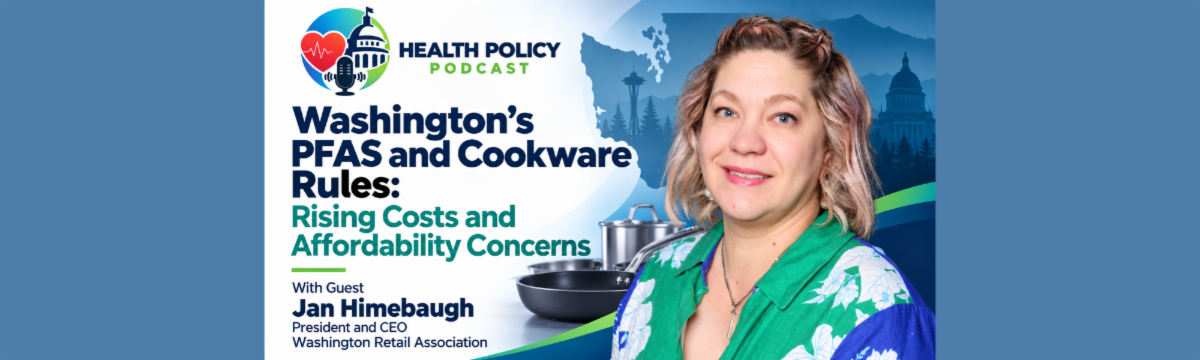
Jan Himebaugh discusses Washington’s PFAS rules and cookware costs
Jan Himebaugh, president and CEO of the Washington Retail Association (WR), discussed proposed restrictions on nonstick cookware and other products containing per- and polyfluoroalkyl substances (PFAS) during a recent episode of the Health Policy Podcast. The conversation focused on potential effects on retailers, product availability, and consumer affordability.
PFAS are a group of chemicals used in various products. Some are commonly called “forever chemicals” because they can persist in the environment. Himebaugh raised concerns about expanding state restrictions, arguing that regulations should consider scientific evidence, product safety, and economic consequences.
Himebaugh said restrictions on cookware could reduce the range of products available to consumers and increase costs if retailers and manufacturers have fewer options for sourcing or selling products. She also noted that businesses could face additional compliance responsibilities and potential penalties for selling products that do not meet state requirements.
The effects could extend beyond retailers, she said. Higher prices and fewer choices for cookware may make it more difficult for some households to afford the tools needed to prepare meals at home. Himebaugh argued that these added costs could disproportionately affect lower-income consumers.
She also raised concerns about state-specific requirements for products distributed nationally. Different rules across states can complicate manufacturing, inventory management, and sales, particularly for businesses that operate across multiple markets or sell online.
Himebaugh called for policymakers to evaluate the measurable risks associated with chemicals and consider the economic impact of proposed restrictions. She also advocated aligning state requirements with established national product-safety standards where appropriate.
The discussion reflected the association’s position on the proposed rules. The podcast did not establish a scientific consensus on the safety of PFAS in cookware, and Himebaugh acknowledged that her background is in policy and economics rather than science.
The full episode, “Washington’s PFAS and Cookware Rules: Rising Costs and Affordability Concerns,” is available through Apple Podcasts and Spotify.
| | |
Washington Retail supports Everett B&O tax reforms and calls for public safety investments
The Washington Retail Association (WR) has urged the Everett City Council to support provisions in Mayor Cassie Franklin’s proposed 2026 Business and Occupation (B&O) tax reform and economic investment package while strengthening public safety in commercial districts.
In a letter to Councilmembers, Crystal Leatherman, vice president of government affairs for WR, expressed support for raising the city’s annual gross receipts exemption threshold from $20,000 to $250,000. According to the letter, the change would exempt approximately 6,500 of Everett’s smallest businesses from the city B&O tax, reducing financial and administrative burdens for small retailers and emerging businesses.
WR also supported lowering the retail B&O tax rate from $1.00 to $0.75 per $1,000 in gross receipts. The letter noted that businesses pay B&O taxes regardless of profitability, making the tax particularly challenging for retailers operating on thin margins.
WR also highlighted public safety concerns, including retail theft, organized retail crime, and repeat offenders, which can increase business costs, discourage shoppers, and put employees at risk.
The letter encouraged the city to incorporate safety measures into its economic investment plans through three recommendations: dedicating a portion of commercial district grants to safety initiatives, including retail theft prevention; making public safety a core responsibility of the Business Support Team with a direct connection to the Everett Police Department; and considering the use of some new revenue to fund additional patrols in commercial districts.
WR is grateful that the Everett City Council approved this B&O tax reform package on October 14. These changes to the city’s tax system will strengthen the ability of retailers of all sizes to serve their customers in Snohomish County.
| | |
Washington Retail joins panel on AI and public safety
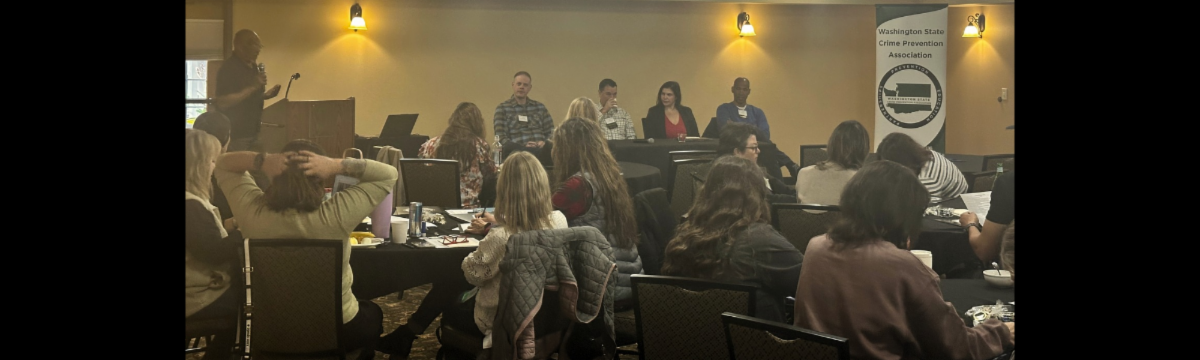
Washington Retail Association (WR) Vice President of Government Affairs Crystal Leatherman represented Washington’s retail industry on a panel hosted by the Washington State Crime Prevention Association (WSCPA) exploring how artificial intelligence is reshaping public safety.
Crystal was joined by Detective Matt Torok of the Lynden Police Department; Derek Lidell, Principal Product Manager at Microsoft; and Captain Dan Nelson of the Seattle Police Department. Mark Solomon, Crime Prevention Coordinator for the Seattle Police Department and WSCPA President, moderated the discussion.
The panel explored both the opportunities and risks associated with emerging technologies, including license plate readers, AI-assisted evidence analysis, and agentic AI.
Crystal highlighted how AI can help retailers and investigators connect incidents across jurisdictions, identify repeat offenders, and keep frontline employees out of harm’s way during theft incidents. She also emphasized that strong guardrails are essential to the responsible use of these tools, including clear limits on data use, trained human oversight, rigorous testing, and transparency with the community.
Ultimately, she noted, AI provides the greatest value when it helps make stores, workers, and communities safer while preserving the public trust needed for these technologies to be effective.
WR will continue working with lawmakers, law enforcement, and technology partners as AI policy develops ahead of the 2027 legislative session.
| | |
Drees celebrates 50 years with Ruthann Goularte
Drees, a longtime independent gift and home furnishings store in downtown Olympia, is celebrating a milestone for owner Ruthann Goularte: 50 years at Drees. Located at 524 Washington St. SE, the store is known for its distinctive gifts, home décor, seasonal merchandise, and personal service.
For five decades, Goularte has helped make Drees a downtown destination and a part of Olympia’s holiday traditions. Her commitment to the community extends beyond her business. She has been a longtime board member of the Washington Retail Association, contributing her time and leadership to an organization that represents and advocates for retailers across Washington.
Drees will celebrate Goularte’s 50th anniversary during its Holiday Open House on Thursday, Nov. 5, from 4 to 7 p.m. Guests are invited to raise a glass to mark the occasion, enjoy traditional holiday refreshments, and experience the store decked out in holiday splendor.
The open house continues Friday and Saturday from 10 a.m. to 6 p.m. and Sunday from 11 a.m. to 5 p.m.
Congratulations to Ruthann on 50 years at Drees and on her longstanding commitment to Washington’s retail community!
| | |
U.S. Small Business Administration recognizes veteran-owned businesses Nov. 9–13
National Veterans Small Business Week runs Nov. 9–13, with this year’s theme, “Honoring Veteran-Owned, American Made.” The U.S. Small Business Administration (SBA) is recognizing the nation’s 1.6 million veteran-owned small businesses and highlighting topics including manufacturing, government contracting, and access to capital.
Online and in-person events are planned nationwide. The SBA encourages business associations and community organizations to recognize veteran and military spouse business owners and share their stories. Organizations can also recommend veteran-owned businesses for potential visits and share information about local events.
Learn more about events and resources through the SBA’s National Veterans Small Business Week website.
| | |
Small Business Saturday returns Nov. 28
Small Business Saturday takes place Nov. 28, encouraging consumers to shop at small businesses during the holiday season. The U.S. Small Business Administration (SBA) has co-sponsored the annual observance with American Express since 2011.
The SBA offers resources to help businesses and community organizations participate, including links to free American Express marketing materials such as posters and social media graphics. Consumers can also use online resources to find participating small businesses in their area.
The SBA encourages business associations and community organizations to promote Small Business Saturday through newsletters and member communications. Organizations planning related events are also invited to share their activities with the SBA and recommend local small businesses for potential visits, particularly those with compelling stories, experiencing growth, or seeking additional visibility during the holiday season.
Explore resources through the SBA’s Small Business Saturday website.
| | |
Myth vs. fact: Surveillance pricing and digital shelf labels
The National Retail Federation (NRF) is responding to concerns about surveillance pricing and digital shelf labels, distinguishing between hypothetical uses of technology and documented retail practices.
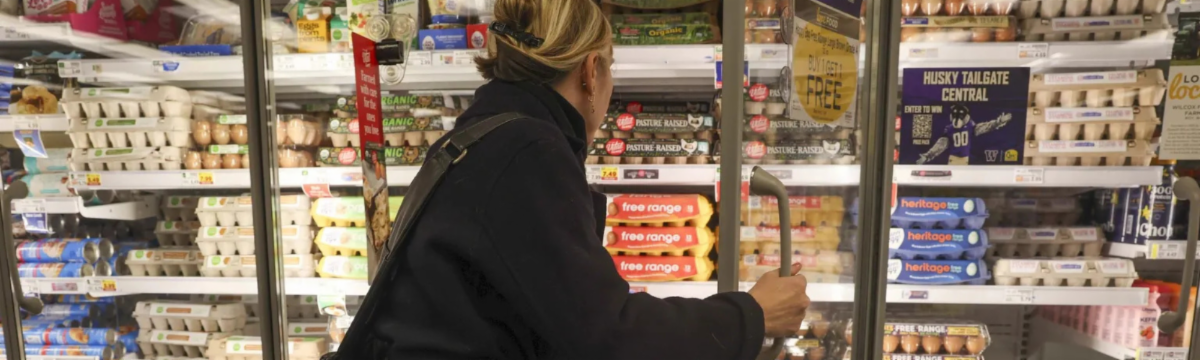
In an October 8 article, NRF said there is no evidence that U.S. retailers are broadly using surveillance pricing to analyze individual shoppers’ personal data and charge them different prices based on how much they are willing to pay. The organization said retail prices continue to reflect factors such as operating costs, inventory, competition, seasonality, geography, and consumer demand.
The discussion has gained attention amid public claims that retailers could use artificial intelligence, consumer data, and digital tools to determine individual shoppers’ willingness to pay. NRF argues that these scenarios should be evaluated based on evidence of actual practices rather than technological possibilities alone.
The article also addresses concerns about digital shelf labels (DSLs), which replace traditional paper price tags with electronic displays. NRF said these labels display retailers’ posted prices and do not themselves determine prices, collect customer data, track shoppers, or show different prices to individual customers.
According to NRF, retailers primarily use digital shelf labels to improve price accuracy, streamline promotional changes, reduce labor associated with replacing paper tags, and maintain consistency between shelf and checkout prices.
The organization also cited academic research examining more than 180 million transactions at a major U.S. grocery retailer. According to NRF’s summary, the study found no meaningful increase in temporary price increases following the retailer’s adoption of digital shelf labels.
NRF supports responsible pricing technology and policies that allow retailers to respond to market conditions while protecting consumers and supporting competition.
The debate over surveillance pricing raises questions about how retailers may use customer data and emerging technology in the future. NRF maintains that digital shelf labels are primarily operational tools, and that claims about their use for individualized or real-time surveillance pricing should be supported by evidence of actual conduct.
YouTube: How retailers compete to make prices more affordable video
YouTube: Digital shelf labels explainer video
| | |
National Retail Federation forecasts holiday sales growth as shoppers prioritize affordability
The National Retail Federation (NRF) forecasts that retail sales during November and December 2026 will grow 4.2% over 2025, reaching $1.013 trillion. However, new consumer survey results show that affordability will influence how shoppers approach the holiday season.
According to NRF’s annual survey, conducted by Prosper Insights & Analytics, 56% of holiday shoppers say the economy will affect their spending plans. Among those consumers, 43% plan to shop sales more often, 31% expect to comparison shop online more frequently, and 29% intend to use coupons more often.
Despite budget concerns, 91% of U.S. adults plan to celebrate winter holidays, including Christmas, Hanukkah or Kwanzaa. Forty-three percent of shoppers plan to begin browsing or buying before November, similar to last year. Among early shoppers, half say they want to spread purchases across their budgets, while 37% are motivated by attractive prices and promotions. Those waiting until November or December also cite deals, with 46% saying that is when they expect to find the best prices.
Thanksgiving weekend remains a major shopping period. Nearly two-thirds of consumers, 64%, say they are likely to wait until that weekend to complete most of their holiday shopping.
Online shopping remains the leading destination, with 53% planning to make purchases online. Grocery stores and discount stores each appeal to 43% of shoppers, followed by department stores at 42%. Gift cards top consumers’ wish lists at 47%, followed by clothing at 44%.
NRF expects retailers to hire between 325,000 and 375,000 seasonal workers, comparable to the estimated 356,000 seasonal jobs added during the 2025 holiday season. Inflation, higher fuel prices, interest rates, and consumer debt continue to contribute to a cautious hiring outlook.
The survey included 8,094 adults and was conducted Oct. 1 through 7, with a margin of error of plus or minus 1.1 percentage points. NRF’s sales forecast excludes automobile dealers, gasoline stations, and restaurants.
| | |
Washington tax debate raises questions about business retention and job growth
Recent business and sports developments have renewed debate over whether Washington’s changing tax environment could affect its ability to attract and retain employers, executives, and high-income workers. However, the distinction between confirmed relocations and potential future impacts is important.
In October, Columbia Banking System announced plans to open a 13,500-square-foot executive office near Scottsdale, Arizona, and relocate most executive roles there. CEO Clint Stein attributed the decision to Washington tax increases, which the company estimates will add approximately $8 million to its annual costs. Stein has also relocated to Arizona. The company has said its headquarters will remain in the Pacific Northwest for now, and Washington remains its largest market by branch count, with 109 locations. The reported move involves executive functions, not a confirmed departure of the bank’s entire Washington operation.
The state’s new 9.9% income tax on Washington taxable income above $1 million, scheduled to take effect in January 2028, has also prompted discussion about professional sports. Seattle Seahawks General Manager John Schneider said the change could make recruiting free agents more difficult because the team can no longer promote Washington’s lack of an individual income tax as a financial advantage. However, a Seattle University sports and marketing expert said the tax is unlikely to drive athletes away on its own. Team culture, contract value, and competitive opportunities also influence player decisions.
The potential return of the NBA to Seattle has generated similar questions, but there is no evidence that the tax has caused the league to abandon Seattle expansion plans. In fact, the NBA’s board of governors voted to explore expansion in Seattle and Las Vegas after the tax passed the Legislature.
Advocacy website LeftWashington.org tracks businesses it says have left the state, contributing to the broader debate over competitiveness. Such lists provide context, but individual business decisions require scrutiny to determine their reasons and economic effects.
For employers and retailers, the broader question is how tax policy affects operating costs, executive location decisions, workforce investment, and Washington’s long-term business climate.
| | |
Seattle councilmember raises concerns about public safety funding
Seattle City Councilmember Bob Kettle is raising concerns about proposed public safety funding in Mayor Katie Wilson’s 2027-2028 city budget, arguing that reductions could affect emergency response, neighborhood conditions, and efforts to address crime.
In a statement released Oct. 15 following City Council briefings, Kettle, who chairs the Public Safety Committee and represents District 7, described the proposal as an “Unfund” budget for public safety. He said the plan does not adequately address challenges facing several Seattle neighborhoods, including Little Saigon, North Aurora Avenue, Belltown and Uptown/Queen Anne.
Kettle specifically criticized proposed Seattle Fire Department overtime cuts and changes affecting the city’s Unified Care Team, which conducts outreach and helps address trash and other conditions at encampment sites. He argued that the budget needs to support a coordinated public safety strategy addressing gun violence, public drug use, copper wire theft and other concerns.
The statement followed briefings that provided additional details and analysis from city departments and City Council Central Staff policy experts. Kettle said he plans to work with fellow councilmembers to address the issues raised during the budget review and urged the mayor’s administration to develop a more comprehensive public safety plan.
The proposed budget remains subject to the city’s budget process, which includes opportunities for public input. Kettle encouraged residents to contact the mayor and City Council and participate in the next public hearing, scheduled for Nov. 5.
The debate highlights questions facing city officials as they weigh public safety priorities against competing budget demands. Decisions about staffing, emergency response resources, and encampment outreach may affect how businesses, employees, and residents experience public safety in Seattle.
Kettle’s statement reflects his assessment of the proposed budget. The final funding decisions will be determined through the city’s budget deliberations.
| | |
Proposed King County organics ordinance could affect businesses and nonprofits
A proposed King County ordinance would require certain businesses and organizations in unincorporated areas of the county to separate organic waste on site and arrange for its collection, raising potential operational and compliance concerns for affected organizations.
The proposal applies to locations within the state’s designated organics management area that generate at least 96 gallons of organic material per week. The definition of “business” includes retailers, restaurants, hotels, schools, hospitals, churches, nonprofits, and other organizations.
Covered locations would need to separate organic materials before they leave the property, subscribe to an organics collection service, keep food packaging and packaged food out of organics containers, and maintain contamination levels at or below 5% by volume. Covered materials include food scraps, spoiled and prepared food, food-soiled paper, and yard, plant, and wood waste. The ordinance’s definitions could also encompass cardboard, paper, and wood pallets.
The requirements could mean additional collection containers, storage constraints, employee training, and measures to manage odors and pests. Food retailers could face additional handling requirements for expired or damaged packaged products.
Under the proposal, containers exceeding the contamination threshold could trigger violations, including when contamination results from customers, the public or neighboring tenants. County staff could inspect following complaints and assess contamination visually. After a notice letter and notice of violation, penalties could range from $500 to $1,000 per day. Annual penalties would be capped at $10,000 for small businesses, while larger or multi-location operators would not have that cap.
The ordinance passed the King County Council’s Transportation, Economy, and Environment Committee in late August. The full Council has yet to vote, leaving an opportunity for affected organizations to provide input.
As written, the ordinance would take effect Jan. 1, 2027, coinciding with the deadline for the county’s rules. Businesses can check whether an address falls within the designated area using the Washington State Department of Ecology’s Business Organics Management Areas map and review the proposed ordinance.
| | |
Review Washington Retail’s endorsements for the November 3 election
With the November 3 general election approaching, Washington Retail (WR) encourages members to review the 2026 endorsements from its Retail Action Council Political Action Committee (RAC PAC).
RAC PAC endorses candidates who champion issues important to Washington’s retailers, as well as causes that directly affect retail businesses. As you prepare to vote, visit WR’s website to view the full list of endorsed candidates and causes.
Ballots must be postmarked by Tuesday, November 3, or returned to an official ballot drop box by 8 p.m. that day. Be sure to sign your ballot return envelope before submitting it.
| | |
Former FTC economist questions proposed rules for personalized pricing
The Federal Trade Commission is considering a proposal that would require businesses to disclose when prices are personalized using consumer data, the basis for the personalization, and the types of data involved. In an Oct. 11 Wall Street Journal opinion article, Mary Sullivan, a former FTC economist and visiting scholar at George Washington University’s Regulatory Studies Center, argues the proposal may be premature given limited evidence about the practice.
Personalized pricing, sometimes called surveillance pricing, uses personal information to offer different prices to individual consumers. The FTC has suggested the practice could qualify as unfair or deceptive unless businesses provide disclosures. However, the agency has acknowledged that the extent of personalized pricing and its effects on consumers are not well understood, Sullivan writes.
Sullivan argues the FTC’s proposal relies on hypothetical examples rather than documented cases of companies using personalized pricing. She contends that regulators should first establish how widespread the practice is and examine its real-world effects before developing enforcement policies.
The impact on consumers may vary. While personalized pricing could result in higher prices for some shoppers, others could receive discounts below a standard price. Sullivan cites a 2022 University of Chicago field experiment that found 60% of participants benefited from personalized offers, paying less than the previous uniform price. The study also found that some participants paid more.
The overall effect on consumer welfare remains an empirical question, according to Sullivan. She argues that regulators should consider potential benefits as well as risks and gather stronger evidence before moving forward with policies that could effectively prohibit the practice.
The article presents Sullivan’s opinion on the proposal and does not establish a consensus on personalized pricing’s prevalence or consumer impact. The debate raises questions for retailers and regulators about transparency, consumer data use, and how pricing practices should be evaluated.
| | |
Retail group asks Supreme Court to review class action rules
The Retail Litigation Center (RLC) is asking the U.S. Supreme Court to review a federal court ruling that allows damages class actions to include individuals who may not have suffered an injury.
In an amicus brief filed in The Kroger Co. v. Solano, the RLC argues that including uninjured individuals in certified damages classes conflicts with Article III of the U.S. Constitution and Federal Rule of Civil Procedure 23. The organization is seeking review of a Ninth Circuit Court of Appeals decision and resolution of differing approaches among federal appeals courts.
The issue has significant implications for retailers, according to the RLC, because class actions can involve thousands or millions of consumers and expose businesses to substantial litigation costs and potential liability. The size of a certified class can influence whether a company chooses to settle a case or continue defending it.
RLC President Monica Welt said including individuals who cannot demonstrate an injury may increase the size of a class beyond the actual harm involved. The organization argues that determining which individuals experienced an injury before class certification would help ensure that the scope of a case reflects the claims being pursued.
Retailers frequently face class action lawsuits involving antitrust, product liability, consumer protection, and data privacy. These cases can raise questions about individual customer experiences, including what consumers purchased, saw, understood, or experienced. Businesses may also lack detailed records of every customer transaction or refund, potentially complicating efforts to determine who qualifies as an injured class member.
The RLC contends that including uninjured individuals can increase litigation expenses and create additional settlement pressure for defendants. It argues that Supreme Court review could provide greater consistency and clarity for courts and businesses nationwide.
The Supreme Court has been asked to take up the case. The RLC’s filing presents the organization’s position on class certification and does not establish a final ruling on the issue. The Court’s consideration would determine whether it reviews the dispute and potentially addresses the disagreement among federal courts.
| | |
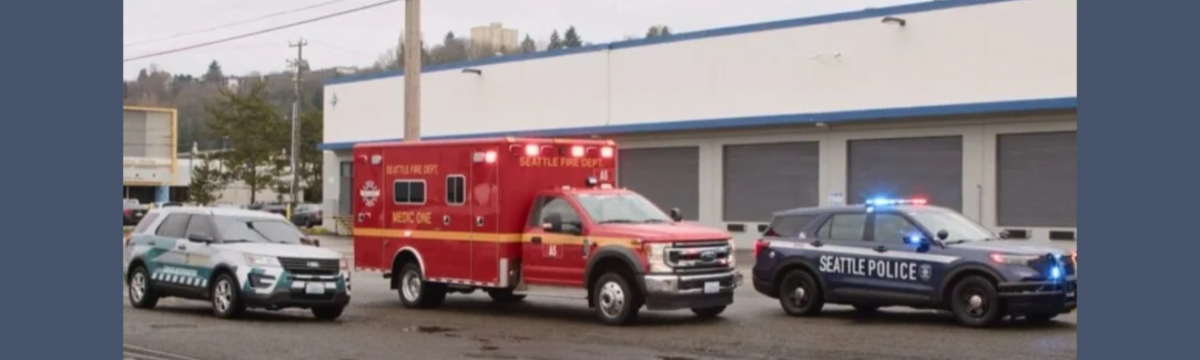
Seattle police staffing projected to remain below pre-pandemic levels
Seattle’s police department is projected to have 1,102 deployable officers by the end of 2028, below the 1,281 deployable officers recorded in 2019, according to budget analysts who briefed the City Council on Oct. 15.
Mayor Katie Wilson’s proposed 2027 and 2028 budgets would increase funding for the Seattle Police Department (SPD) to support 1,250 funded positions. However, the plan projects no net staffing growth in 2028 as new hires are expected to equal departures. The department had approximately 971 deployable officers at the time of the report.
SPD lost 326 officers on a net basis between 2020 and 2022, when 516 officers left and 190 were hired. Officials cite recruitment, training delays, and retention as continuing challenges. The department’s training process can take more than a year, and approximately 20 officers were awaiting trainers, according to budget staff.
The proposed 2027 budget would increase SPD funding by $68 million to $556.5 million. About $56 million of the increase would cover contractual salary obligations, while $12 million would support the planned net addition of 43 officers over two years. The proposal anticipates 128 hires and 85 departures in 2027, followed by 79 hires and 79 departures in 2028.
The plan has prompted differing views among council members. Some have called for a larger police force, while others note that the proposed budget increases department funding and that staffing could continue to grow as recruits complete training. Police union representatives have said the city should aim for at least 1,400 full-time officers.
SPD also recently eliminated hiring incentives that had offered recruits up to $75,000 and experienced lateral hires up to $50,000, along with potential moving expense reimbursements.
Public safety remains a concern for Seattle businesses and residents. A Seattle Metro Chamber report cited in the article found that 75% of surveyed respondents lacked confidence in the city’s public safety plan.
The city is conducting a staffing analysis expected to be completed by the end of 2026. Its findings could inform future staffing and budget decisions.
| | |
Secret Service warns retailers and consumers about card skimming
The U.S. Secret Service has found more than 700 illegal card-skimming devices through operations in the Pacific Northwest and other locations since 2023, as nationwide losses associated with skimming exceed $1 billion annually.
According to an Oct. 21 report by KIRO Newsradio, the agency is working with local law enforcement and retailers through Joint Operation Pacific Northwest to identify and remove devices from payment terminals, ATMs, and gas pumps. The effort focuses on fraud targeting recipients of government benefits, including Electronic Benefit Transfer (EBT) cards, but the threat extends to anyone using a payment terminal.
Skimming devices capture card information when customers swipe their cards. Criminals can use the stolen data to access funds or make unauthorized purchases. Because the devices can be installed quickly and may be difficult to spot, investigators are also helping retail managers learn how to inspect payment terminals.
During a recent two-day operation in Seattle, investigators visited more than 200 businesses and checked more than 100 ATMs, 300 gas pumps and 400 points of sale. Although no skimmers were found during that operation, officials said the inspections and retailer education were valuable preventive steps.
The Secret Service reported no evidence that retailers knowingly participated in the schemes. Businesses can nevertheless face customer concerns and operational disruptions when compromised devices are discovered.
Officials recommend that consumers use contactless payments whenever possible or insert a chip-enabled card instead of swiping its magnetic stripe. Customers should also look for signs of tampering, including loose or crooked components, unusual protrusions, scratches, or glue and tape residue. When using a PIN, covering the keypad can help prevent hidden cameras from recording the entry.
Michael Peck, an assistant special agent in charge with the Secret Service, emphasized the value of contactless payments: “Tap to pay. That is your number one mechanism of safety.”
Retailers can help reduce risk by routinely inspecting payment equipment and training employees to report suspicious devices promptly.
| | |
Redmond police connect retail theft cases across jurisdictions
The Redmond Police Department is using real-time intelligence and information sharing to help connect retail theft incidents across businesses and jurisdictions, according to an October 13 article published by Police1. The approach has helped investigators link individual theft reports to broader investigations involving multiple retailers and counties.
Redmond’s Real-Time Information Center (RTIC) combines digital evidence, retailer reports, and information from other law enforcement agencies. The department focuses on property crimes, including shoplifting and organized retail theft, which can involve suspects operating across multiple cities.
A key resource is the Retail Crime Hub, a platform developed by Auror that allows participating retailers and law enforcement agencies to share incident reports, surveillance footage, suspect descriptions, and vehicle information. Investigators can search submitted reports for connections that might otherwise go unnoticed when incidents are handled separately.
Jason Fisher, innovation manager for the Redmond Police Department, described a case in which a suspect identified through the platform was connected to 20 fraud and forgery cases across four counties. The investigation began with a shoplifting incident at a Redmond grocery store and expanded to include cases involving several retailers.
In another investigation, information shared between agencies helped identify suspects linked to thefts at Ulta stores and other locations across the Puget Sound region. Fisher said the combined value of the thefts in that case exceeded $20,000, allowing investigators to pursue multiple charges related to organized retail theft.
The department also encourages retailers to report incidents after they occur when doing so during a theft could put employees at risk. Reports and supporting evidence can be submitted for follow-up and searched to identify potential patterns.
Fisher said timely, accessible information helps investigators identify suspects, connect cases and demonstrate to retailers that their reports are being acted upon.
The article highlights how cooperation between retailers and law enforcement can help investigations extend beyond individual incidents. Searchable reports and cross-jurisdictional information sharing can provide investigators with additional leads when suspects and theft activity span multiple locations.
| | Image: Tukwila Police Department | | |
Tukwila police seek public help identifying department store robbery suspect
The Tukwila Police Department is asking for the public’s assistance in identifying a man who allegedly took cash from a department store register after implying he had a firearm, according to an Oct. 17 report by Hoodline.
Police have not publicly identified the suspect and are seeking information that could help investigators move the case forward. The department’s Retail Emphasis Detective, Mosley, is handling retail crime investigations and has previously asked the public to help identify suspects in theft cases.
In June, Tukwila police released surveillance images of two people suspected of stealing approximately $4,000 in merchandise from a local department store before leaving in a getaway vehicle. The latest incident adds to law enforcement’s ongoing efforts to investigate retail theft and robbery in the area.
Tukwila includes major commercial destinations such as Westfield Southcenter, where retailers draw shoppers from across the region. Theft and robbery incidents can create safety concerns for employees and customers, as well as financial losses for businesses.
The Hoodline report also referenced broader concerns about retail crime in Washington, citing estimated annual retail theft losses approaching $3 billion and associated lost tax revenue of $603 million. Those figures were presented in the report and were not independently verified for this summary.
Police are encouraging anyone with information about the department store incident to contact investigators. Public tips can help law enforcement identify suspects and gather evidence in cases where the person responsible has not yet been identified.
Retailers are encouraged to report suspected crimes promptly and preserve relevant surveillance footage and other evidence for investigators. Employees should follow established safety procedures during suspected robberies and avoid actions that could put themselves or customers at risk.
The case remains under investigation, and the suspect’s identity has not been publicly confirmed.
| | |
Undelivered ballots found in Seattle park dumpster
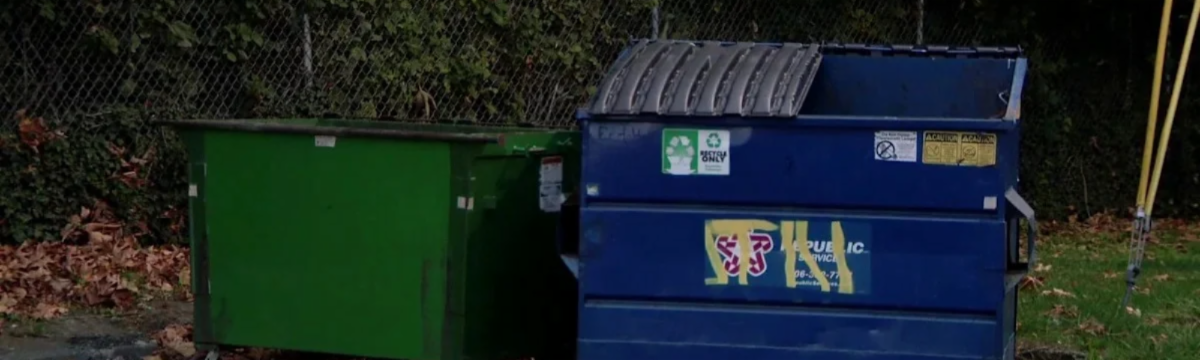
King County Elections reported that 92 ballots for the upcoming midterm election were found among discarded mail in a dumpster at Golden Gardens Park in Seattle.
After a voter reported the discovery, election staff found two bins of mail containing the ballots. The incident was reported to the U.S. Postal Service for investigation, and replacement ballots have been issued to all affected voters.
King County Elections Chief of Staff Kendall Hodson said mail theft occurs throughout the year and that ballots are typically not the target. She also noted that election officials verify voter signatures and check that a ballot has not already been returned before accepting it.
Voters who have not received their ballots can contact King County Elections at 206-296-8683 for assistance. Anyone who finds improperly discarded ballots is encouraged to report the discovery by emailing elections@kingcounty.gov or calling 206-296-VOTE.
| | |
Retail losses extend beyond shoplifting, study finds
External theft and organized retail crime account for 25% of retail losses, making them the largest single source of loss, according to a new study by IHL Group and Sensormatic Solutions. However, the Beyond Shrink: 2026 Global Total Retail Loss Study finds that supply chain issues, return fraud, employee theft and administrative errors also contribute significantly.
Based on responses from 915 retail decision-makers, the study found that 71% of the largest retailers reported increased shoplifting, compared with 28% of the smallest retailers. Return fraud also increased, with 68% of respondents reporting a rise.
Supply chain losses, including supplier fraud, warehouse and sales-area shrink, and goods-receiving losses, account for 33% of reported losses. Administrative process errors cost an average of $103.40 per incident, nearly matching the $107 average cost of employee theft.
Organized retail crime is also growing internationally. Eighty percent of Australian respondents reported increases, compared with 71% in the United States and 67% in Spain.
Retailers reported spending an average of 1.2% of sales on loss prevention. Those spending more than 2% were the only group to report more declines than increases across loss categories. The findings underscore the importance of examining losses across the entire business, including supply chains, returns, and internal processes, rather than focusing primarily on shoplifting.
| |
Washington Retail Association diversity statement
Washington Retail Association is committed to the principles of justice, equity, diversity, and inclusion. We strive to create a safe, welcoming environment in which these principles can thrive.
We value all people regardless of race, ethnicity, gender, religion, age, identity, sexual orientation, nationality, or disability, and that is the foundation of our commitment to those we serve.
| | |
Jan Himebaugh, President & CEO — 360.200.6450 — Email
Crystal Leatherman, Vice President of Government Affairs — 360.200-6453 — Email
| | | | |