Newsletter — May 28, 2026 | | |
IN THE NEWS
POLICY
ECONOMY
ON THE LOCAL FRONT
RETAIL THEFT & PUBLIC SAFETY
| | |
Washington Retail Association Announces Jan Himebaugh as New President and CEO
Himebaugh brings decades of experience in association leadership and legislative and public affairs in Olympia to the organization.
OLYMPIA, Wash. (May 20, 2026) – After a months-long national search, the Olympia-based Washington Retail Association (WR) has selected Jan Himebaugh, the vice president of external affairs for the Building Industry Association of Washington for nearly 15 years, to lead the association starting June 1, 2026.
“It’s exciting to see our national search to replace our previous president and CEO, who retired in December, come right back home. Jan Himebaugh is a proven leader and tireless advocate for businesses of every size across Washington state and embodies the can-do spirit of private enterprises across our nation,” said Alesha Shemwell, WR interim president and CEO. “She not only brings a wealth of experience but, most importantly, an unmatched level of expertise and enthusiasm for addressing the pressing issues facing retailers, such as organized theft, tax policy, and building bridges between state and local leaders from every political persuasion and our job-creators in the retail sector.”
Over the course of her career, Himebaugh has built a reputation for developing practical policy solutions, leading successful statewide advocacy campaigns. She has a proven track record of building durable relationships across industries, local governments, and the political spectrum to reach solutions that balance the needs of businesses and communities.
“Throughout my career, I have worked to be the right leader at the right time, advocating for policies that move Washington state businesses and the communities they call home forward,” said Himebaugh. “I am humbled and honored to be trusted to serve alongside the thousands of retailers and their employees across our state to ensure we support vibrant downtowns where families gather for great conversations and once-in-a-lifetime events, foster job creation and boost economic opportunity for everyone. Along with WR members, it’s my goal to share how retailers have demonstrated the ability to shape communities that foster economic equity and upward mobility for every single resident in our state.”
A graduate of Hillsdale College with a degree in Political Economy, Himebaugh previously worked on a variety of political and public affairs campaigns, including Cathy McMorris Rodgers’ first congressional campaign, and led the successful statewide initiative campaign protecting access to natural gas in Washington state.
“We need fearless leaders like Jan to continue the conversations about how thoughtful policies shape public safety, foster economic security and build strong communities. These principles begin and end with a healthy and vibrant retail sector,” said Shemwell. “I speak for our entire board when I welcome her to our team of retail champions.”
Himebaugh’s work has earned her recognition from organizations across Washington, including the Association of Washington Cities’ Partner in Progress Award, the Washington Policy Center Champion of Freedom Award, and multiple National Association of Home Builders Association Excellence Awards for government affairs and advocacy campaigns. She currently serves on the boards of the Washington Construction Industry Council, League of Our Own Washington, and the Liability Reform Coalition. Himebaugh lives in Olympia with her husband, Daniel.
Himebaugh will officially assume her new role with the WR on June 1.
| | |
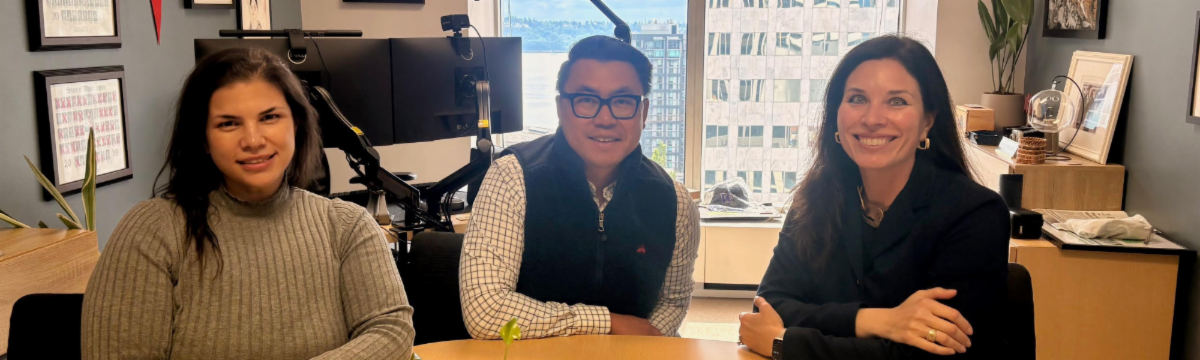
WR and Seattle Metro Chamber discuss collaboration on public safety and business climate initiatives
Alesha Shemwell, Interim CEO of WR, and Crystal Leatherman, Director of Policy and Government Affairs, met with Joe Nguyen, CEO, and Lars Erickson, Senior Vice President of Public Affairs and Communications, with the Seattle Metropolitan Chamber of Commerce on May 19, 2026, to discuss shared priorities impacting Seattle’s business community.
The conversation focused on opportunities to strengthen coordination among smaller chambers of commerce to elevate regional public safety concerns and identify collaborative solutions that support a more business-friendly environment in Seattle. Participants also explored ways to align legislative efforts on issues affecting retailers, downtown economic vitality, and broader employer needs across the region.
In addition, Seattle Metro Chamber leadership highlighted their semi-annual public opinion research initiative, The Index, which provides insights into business and community perceptions across the Seattle metro area. The latest release, Index 10, continues to inform policy discussions and stakeholder engagement.
WR appreciates the opportunity to engage in ongoing dialogue with regional partners and looks forward to continued collaboration on initiatives that strengthen public safety, support retailers, and advance economic growth.
| | |
Rose Gundersen to retire from Washington Retail Association on June 10, 2026
WR announces the retirement of Rose Gundersen, State and Local Government Affairs Associate, effective June 10, 2026, concluding a distinguished tenure of service, advocacy, and member support.
Rose joined WR in 2019, initially leading administration of the Workers’ Compensation Retro Program, a safety-focused initiative that rewards participating members for strong workplace practices and loss prevention. Her work quickly expanded as she became a trusted resource to members navigating complex systems and compliance requirements.
In 2025, Rose transitioned to the Government Affairs team, where she broadened her focus to employment law, workforce policy, and emerging regulatory issues impacting retailers statewide. Her deep understanding of labor standards was informed by a diverse professional background spanning insurance, banking, entrepreneurship in both nonprofit and private sectors, and her prior role as Small Business Liaison Manager at the Washington State Department of Labor & Industries.
Rose also played a key role in advancing WR’s Retail Workforce Initiative, grounded in the association’s Justice, Equity, Diversity & Inclusion principles, helping elevate awareness of retail as a meaningful career pathway.
A bilingual professional raised in Hong Kong, Rose brought a global perspective and strong community commitment to her work, including volunteer service with youth and refugee support organizations.
WR extends its appreciation for her years of dedicated service and wishes her the very best in retirement.
| | |
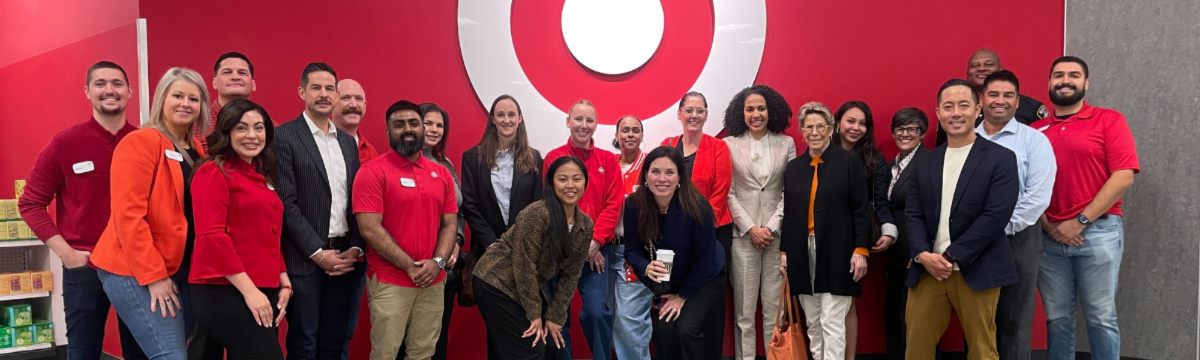
Target and Seattle leaders convene to strengthen downtown public safety and economic vitality
On May 19, Target hosted Seattle Mayor Katie Wilson, Deputy Chief Andre Sayles, Economic Development Director Beto Yarce, Seattle City Attorney Erika Evans, representatives from Councilmember Bob Kettle’s office, and leaders from the Washington Retail Association and Downtown Seattle Association at the Pike Plaza Target store in downtown Seattle.
The introductory meeting helped establish a strong public-private partnership between Target and Seattle leadership focused on issues impacting retailers, residents, team members, and the broader downtown community. Discussions centered on public safety, Organized Retail Crime (ORC), economic development, policy and legislation, downtown activation, prosecution pathways, and opportunities for long-term community investment and collaboration.
Leaders also highlighted the important role the Pike Plaza store plays in serving Seattle guests and supporting the local economy as a major downtown employer, neighborhood retailer, and community partner. The conversation reinforced the value of continued investment in strategies that support a safe, vibrant, and accessible downtown experience for residents, workers, and visitors alike.
| | |
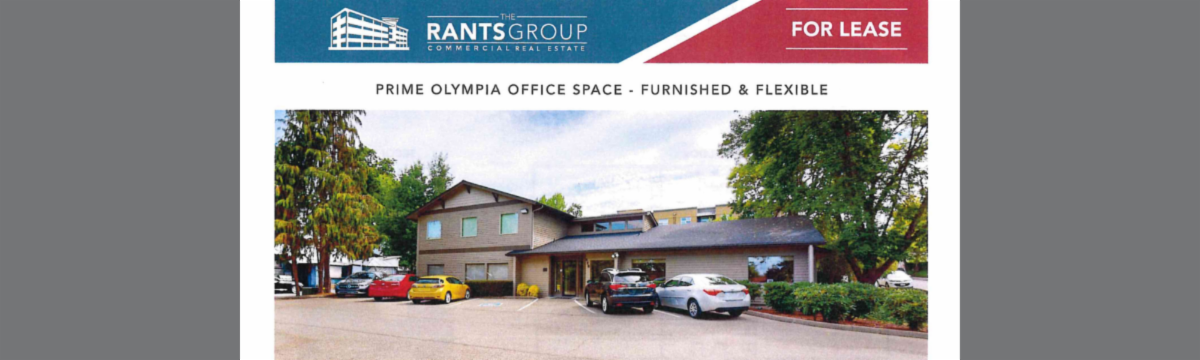
WR offers flexible office space in prime Olympia location
WR is leasing professional office space at its building located at 618 Quince St. SE in Olympia, just minutes from I-5 and Downtown Olympia. The available first-floor offices offer a convenient, flexible option for small businesses, consultants, nonprofit partners, or professionals looking for a well-located workspace in the capital city.
The building currently features three private office suites, ranging from approximately 100 to 120 square feet. Suites are partially or fully furnished, with lease rates from $400 to $600 per month, full service. Each office includes one parking space, and street parking is also available nearby.
The space offers strong visibility, easy access, and a professional setting within the WR Building. Tenants are responsible for their own in-suite internet and janitorial services.
For leasing information, interested tenants may contact Zeke Rehn, Managing Broker with The Rants Group, at (360) 915-5678 or zeke@rantsgroup.com.
Full leasing document
| | |
FEMA assistance deadline approaches for Washington residents and businesses
Washington residents and businesses impacted by the December storms and flooding have until June 10, 2026, to apply for federal disaster assistance through FEMA and the U.S. Small Business Administration.
According to FEMA, more than 605 households have already received nearly $5 million in grants. An additional $12 million in low-interest SBA disaster loans and $47 million in National Flood Insurance Program payments have also been distributed.
FEMA assistance may help cover temporary housing, home repairs, personal property losses, and other disaster-related expenses. SBA disaster loans are available for businesses, private nonprofit organizations, homeowners, and renters.
Disaster Assistance Centers remain open in impacted communities, where specialists are helping residents complete FEMA and SBA applications.
Eligible counties include Chelan, Grays Harbor, King, Lewis, Pacific, Pierce, Skagit, Snohomish, Thurston, and Whatcom, along with several Tribal nations across Washington.
Applications can be submitted online through FEMA or SBA websites, by phone, through the FEMA mobile app, or in person at a Disaster Assistance Center.
Three Ways to Apply for FEMA Disaster Assistance - YouTube
| | |
Prepare for the state-facilitated retirement savings program coming in 2027
Washington Saves is a new state-facilitated retirement savings program scheduled to open in July 2027. Certain employers will be required by law to make the program available to their employees if they don’t offer a qualified retirement plan. See if the mandate applies to your business by visiting www.wasaves.com.
The program will be easy to use. Simply register, update employees, and set up payroll contributions. Washington Saves takes care of the rest!
What employers should know:
- No program fees for employers
- No employer contributions
- No fiduciary liability for employers
- A private company manages investments, with oversight from a public Governing Board
- Employees control their own accounts and can opt out anytime
Why the state created Washington Saves
More than 1.2 million Washingtonians do not have a way to save for retirement through work. Washington Saves gives people access to portable Individual Retirement Accounts (IRAs) funded through automatic payroll contributions.
Learn more about Washington Saves
Stay connected as the program develops.
| | |
California privacy lawsuits raise concerns for businesses
A coalition working with Actum is drawing attention to a wave of litigation under the California Invasion of Privacy Act (CIPA), a 1967 wiretapping law that is now being applied to modern website tools and online business practices. The issue is raising concerns for organizations that operate websites using common features such as analytics, chat functions, digital advertising, and session replay tools.
More than 3,500 businesses, nonprofits, and public agencies have reportedly been sued under CIPA, with retailers representing a significant share of defendants. In some cases, potential liability has been cited at up to $5,000 per click, creating uncertainty for organizations with an online presence.
The coalition is seeking input from entities that have received demand letters or have been named in lawsuits, while also working to raise awareness of the broader impact on businesses. Legislative discussions include support for SB 690 as a potential path to clarify or address how the statute is applied.
Organizations looking to learn more or share their experiences can visit Stop CIPA Shakedowns or submit information through CIPA Stories.
| | |
State budget debate highlights growth in spending
A recent analysis of Washington’s state budget has renewed debate over how government spending should be measured and evaluated. The discussion centers on whether state spending should primarily be viewed as a share of personal income or on a per-person basis.
Recent data shows Washington’s spending from key state operating funds has risen significantly over the past decade when adjusted for inflation. Spending per resident has also increased following the Great Recession, even as spending measured against personal income has remained comparatively lower due to growth in the state’s economy.
Supporters of increased spending argue that a growing economy can support expanded public investments and services. Others contend that spending growth has outpaced projected revenues, creating long-term budget challenges despite recent tax increases approved by lawmakers.
The debate also reflects broader questions about the demand for public services as Washington’s population, economy, and workforce needs continue to change. Analysts note that some areas, such as K-12 enrollment, have declined while other services continue to face increasing costs.
The conversation is expected to continue as policymakers address future budget priorities and revenue forecasts.
| | |
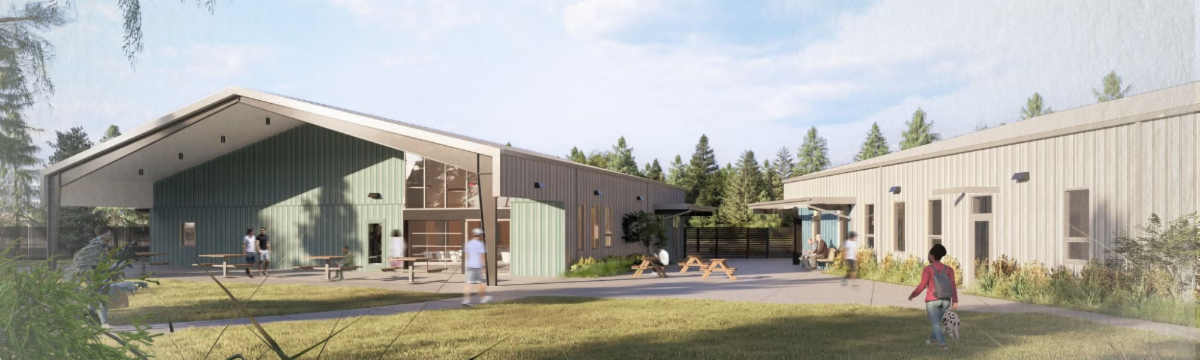
Vancouver retail and service B&O tax now in effect, supports bridge shelter funding
As of January 1, 2026, the City of Vancouver, Washington has implemented a Business and Occupation tax on certain retail sales and retail service businesses operating within city limits. The tax applies to qualifying businesses based on gross receipts and is intended to fund the construction and ongoing operations of a new bridge shelter serving individuals experiencing homelessness.
Businesses may file and pay through Localgov or in person at Vancouver City Hall. Assistance is available through the City’s Business and Occupation Tax team for questions related to filing requirements, payments, or registration by calling 360-487-8410, option 7, or emailing business.taxes@cityofvancouver.us.
| | |
US House passes Combating Organized Retail Crime Act
The U.S. House of Representatives has passed the bipartisan Combating Organized Retail Crime Act (CORCA), legislation aimed at addressing the growing impact of organized retail theft and supply chain crime nationwide. The bill, introduced by Josh Riley, would expand federal tools available for investigating and prosecuting organized retail crime networks.
According to supporters of the measure, the legislation would allow prosecutors to combine theft activity over 12 months when pursuing charges tied to organized crime operations. The bill also includes provisions focused on anti-money laundering enforcement, asset forfeiture, prepaid and gift card fraud, and improved coordination through a Department of Homeland Security center dedicated to organized retail and supply chain crime.
Retail industry data cited by lawmakers estimates that organized retail crime costs businesses and consumers more than $121 billion annually. Reports from retailers also show continued increases in cargo theft, supply chain theft, digital fraud, and large-scale organized theft operations. Supporters say the legislation is intended to strengthen enforcement efforts while helping reduce financial impacts on businesses, workers, and consumers.
| | |
FEMA releases FIFA World Cup 2026 safety toolkits
As communities across the United States prepare for FIFA World Cup 2026 activities, the Federal Emergency Management Agency, or FEMA, has released two public safety toolkits designed to help organizations, businesses, and local leaders prepare for large-scale events. The tournament is expected to bring more than five million international visitors to the U.S. and generate billions of dollars in economic activity over a 38-day period.
The new resources provide guidance on emergency preparedness, crisis communications, business continuity, and public safety messaging. FEMA developed the toolkits in coordination with partners nationwide to support safe and informed communities during World Cup-related activities.
One toolkit is designed for emergency managers, local governments, public safety agencies, and community organizations. The second focuses on private-sector businesses and includes information related to emergency response planning and information technology preparedness.
Both resources encourage five key safety practices: having an emergency plan, following local guidance during emergencies, signing up for emergency notifications, preparing for weather conditions, and remaining aware of surroundings during large events.
Additional information and downloadable resources are available through FEMA and Ready.gov as preparations continue for FIFA World Cup 2026 activities.
| | Photo: Kindel Media / Pexels | |
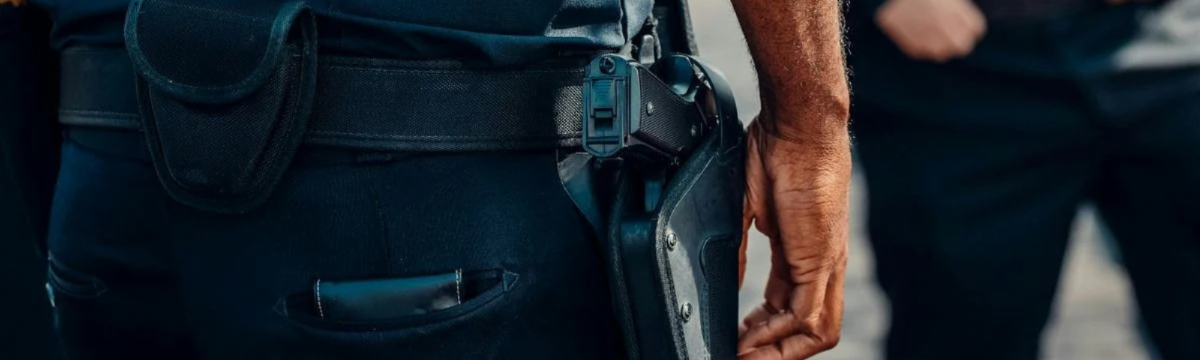
Op-Ed: Washington state keeps making it harder for law enforcement to serve
By Jared Nieuwenhuis, Councilmember, City of Bellevue
The Center Square, May 22, 2026
For 15 years, Washington has lived with an uncomfortable truth: we rank dead last in the nation for police staffing per capita. And instead of reversing course, the Legislature continues to pass laws that make it harder for officers to serve, harder for departments to retain talent, and harder to recruit the next generation of public safety professionals. Every community feels the impact — slower response times, rising caseloads, and officers stretched to the breaking point.
The results speak for themselves. In 2025, Washington police solved fewer than half of all violent crimes — a clearance rate of just 44 percent. Only 25 percent of rapes and 31 percent of robberies were cleared. Since 2022, more than 49,000 violent crimes remain unsolved, including over 400 homicides. These aren’t abstract statistics. They represent victims waiting for justice and communities waiting for answers.
Last year, the Legislature acknowledged the staffing crisis and passed a $100 million police hiring grant program. It sounded promising. But as of February 2026, not a single officer has been hired through it. Bureaucratic hurdles and a requirement that local governments adopt a new sales tax just to qualify have rendered the program effectively unusable.
Washington currently averages only 1.37 officers per 1,000 residents — far below the national average of 2.31. To simply reach average, we would need roughly 6,500 additional officers at a cost approaching $1 billion per year. Instead of helping us close that gap, recent legislation has pushed us further behind.
Four bills passed last session were framed as “reforms,” yet each one undermines the very people tasked with keeping our communities safe:
A. ESSB 5974 — Undermining Voters’ Right to Choose Their Sheriff
Sheriffs are among the few law enforcement leaders directly accountable to voters. ESSB 5974 changes that. Under the bill, a sheriff’s office is vacated automatically if the Criminal Justice Training Commission (CJTC) revokes or denies certification — no recall, no judicial review, no voter input. A governor-appointed commission makes the final call.
Multiple sheriffs have already filed lawsuits. Even Governor Ferguson signed the bill while expressing reservations about its vacancy provisions. Washington already has a system of qualification, election, and recall. This bill weakens local control and erodes democratic accountability.
B. ESSB 6002 — Restricting Investigative Tools
Automated license plate readers (ALPRs) are now indispensable for solving crimes ranging from vehicle theft to violent felonies. But ESSB 6002 imposes two major barriers. • Section 4 limits data retention to just 21 days — far shorter than investigative timelines often require. • Section 11 creates a one-sided civil remedy against agencies and officers, including attorneys’ fees, inviting speculative lawsuits.
The consequences were immediate. More than a dozen agencies shut off their Flock camera networks. Spokane County Sheriff John Nowels cited the bill’s criminal liability provisions as the reason. This isn’t theoretical. It is investigative capacity being switched off in real time.
C. E2SHB 2034 — A Pension Shift That Breaks Trust
E2SHB 2034 terminates the LEOFF 1 pension plan in 2029 and redirects between $3.3 and $4 billion in surplus assets — including a $569 million transfer to the Climate Commitment Account. The remainder goes into a holding account accessible to budget writers.
For many officers, LEOFF 1 was the foundation of their career decisions. Changing the rules decades into retirement raises serious questions about the state’s long-term commitment to those who serve.
D. SSB 5855 — Face Covering Restrictions
SSB 5855 was introduced in response to concerns about federal immigration enforcement, but it mirrors a California law already struck down under the Supremacy Clause. Washington’s version exposes officers to punitive damages and attorneys’ fees for perceived violations — even when wearing protective gear for wildfire smoke, crowd conditions, or communicable illness. It creates legal risk without improving public safety.
A pattern Washington must confront
In January 2025, Governor Ferguson called Washington’s last-place staffing ranking “unacceptable.” One year later, the Legislature passed four bills that make that ranking even harder to fix — and make policing less appealing to the very people we are trying to recruit.
The loud calls to “defund the police” may have faded from the streets, but the pressure on law enforcement never stopped. It simply shifted into legislation that undermines staffing, weakens investigative tools, and erodes trust.
If Washington is serious about public safety, then we must be serious about supporting the people who provide it. That starts with acknowledging the problem — and fixing the laws that are making it worse.
Jared Nieuwenhuis is a member of the Bellevue City Council. He was first elected to the council in November 2017.
About this commentary: The opinions expressed by the author are their own and do not necessarily represent the opinions of the entire Bellevue City Council.
| | |
Balancing retail safety technology and privacy
As retailers continue facing organized retail crime, theft and workplace violence, industry leaders are urging policymakers to carefully balance consumer privacy protections with the use of emerging safety technologies.
Advanced tools such as AI enabled cameras, video analytics, facial recognition and body worn cameras are increasingly being used to help retailers deter repeat offenders, investigate crimes more quickly and improve safety for employees and shoppers. Supporters say these technologies can also assist in locating missing children, preventing fraud, and reducing violent incidents in stores.
At the same time, several states are considering legislation that would limit how biometric data and related technologies can be used. Retail advocates caution that overly broad restrictions or inconsistent state requirements could create compliance challenges for businesses operating across multiple states while also limiting tools used for crime prevention and public safety.
Industry leaders emphasize that retailers and technology providers must maintain strong governance, transparency, and clear communication regarding how data is collected, stored and used. They also encourage lawmakers to work collaboratively with the retail industry to ensure privacy protections remain strong while allowing retailers to maintain safe and secure shopping environments.
| | |
Organized retail crime resource hub continues to support statewide collaboration
WR, in partnership with Challenge Seattle and WAORCA, developed the Organized Retail Crime (ORC) Resource Hub, a centralized online platform designed to strengthen coordination and response to organized retail theft across Washington and beyond.
The ORC Resource Hub brings together tools, training materials, and best practices for retailers, law enforcement, prosecutors, and community partners working to address ORC. By consolidating resources in one accessible location, the platform supports improved communication across jurisdictions and helps align prevention, investigation, and prosecution strategies.
Users can explore guidance on identifying ORC activity, access training resources for frontline staff, and review collaborative approaches that have been used successfully in other regions. The hub is also designed to support information sharing across sectors, helping stakeholders respond more quickly and consistently to emerging retail crime trends.
A key feature of the platform is its flexible widget tool, which allows organizations to embed the ORC Resource Hub directly into their own websites. This functionality makes it easier for retailers, associations, and public agencies to extend access to ORC resources to their networks and teams.
WR encourages stakeholders across the retail, public safety, and policy communities to make use of the hub as part of their ongoing efforts to reduce organized retail crime and strengthen community safety.
| |
WR diversity statement
WR is committed to the principles of justice, equity, diversity, and inclusion. We strive to create a safe, welcoming environment in which these principles can thrive.
We value all people regardless of race, ethnicity, gender, religion, age, identity, sexual orientation, nationality, or disability, and that is the foundation of our commitment to those we serve.
| | |
Alesha Shemwell, Interim CEO — 360.200.6450 — Email
Crystal Leatherman, Dir of Policy & Government Affairs — 360.200-6453 — Email
Rose Gundersen, State and Local Gov't Affairs Associate — 360.200.6452 — Email
| | | | |