Newsletter — March 19, 2026 | | |
POLICY
ECONOMY
ON THE LOCAL FRONT
POLITICAL NEWS
RETAIL THEFT & PUBLIC SAFETY
IN THE NEWS
| | |
2026 Legislative Session wrap-up
The 2026 Washington State Legislative Session adjourned on March 12, concluding a fast-moving 60-day session shaped by budget pressure, targeted policy changes, and continued debate over the state’s regulatory direction. In total, 267 bills passed the Legislature this session.
For retailers and the broader business community, the session reinforced several clear trends that are likely to carry into the interim and beyond.
Budget Pressure Remains a Major Concern
State budget and affordability challenges were a defining issue this session and are likely to remain front and center moving forward. Proposals involving new revenue, taxes, and fees were a core theme this session and are expected to continue.
Lawmakers Revisited Existing Laws
A significant share of the session focused on addressing unintended consequences from prior legislation and recent court decisions. For retailers, this included efforts to improve clarity, restore balance, and make compliance obligations more workable.
Environmental Compliance Continues to Grow
Washington continues to move forward with policies tied to recycling systems, product stewardship, and broader supply chain obligations. Many of these requirements phase in over time, but they point to growing long-term compliance expectations for businesses.
AI and Technology Policy Is Still Emerging
Discussion around artificial intelligence, data use, and automated decision-making gained traction this year. While some proposals advanced, other policy in this area is still developing and lawmakers are clearly building toward broader proposals in the future.
Looking Ahead
Many of the biggest issues debated this session remain unresolved, and lawmakers have signaled strong interest in continuing work during the interim. Washington Retail will remain engaged and continue advocating for balanced, practical policies that support retailers of all sizes across the state.
| | |
WR members’ environmental advocacy secured $3.2 M for the largest waste tire cleanup
Tire dealers, many of whom are family-owned small businesses, have faithfully collected the state’s waste tire fees since 2005 to support the prevention and cleanup of waste tire piles across Washington. Last December, WR’s tire members brought to our attention many existing waste tire piles, including the 7,100-ton Twin Bridge pile in Richland.
In partnership with our tire members and the NW Auto Care Alliance, WR engaged Senator Dozier to highlight the significant public health and the environment risks posed by the Twin Bridge pile in his district. WR also advocated for a holistic approach to address the tires’ environmental impact during legislative hearings on HB 2421/SB 6119. We succeeded in drawing their attention to the Department of Ecology’s 2023 report and reinforcing Twin Bridge as a top cleanup priority cited in that report.
We are grateful for the leadership and responsiveness of Representative Zach Hall, and the Chairs and Ranking Chairs of the House and Senate’s Capital Budget committees. The final Capital Budget (SSB 6003) appropriated $3.2 Million, the full amount needed to complete the Twin Bridge cleanup.
This outcome reflects the proactive leadership of WR members and the Legislature’s commitment to address known environmental hazards using existing funding tools.
| | |
Legislature requires paid leave solvency and integrity evaluation by Nov 2026
In addition to passing two bills addressing the Paid Leave program’s rate structure (2SSB 5292) and contribution allocation (2SHB 2345), the Legislature has directed the Employment Security Department (ESD) to deliver an evaluation report on the program’s solvency and integrity by November 1, 2026 in the operation budget (ESSB 5998 – Sec. 232 (27)).
As the first state to implement a comprehensive, statewide paid family and medical leave social insurance program that integrates both leave types into a single system in 2019, policymakers’ focus has been on expanding access, ensuring employer premium compliance, and strengthening worker protections. However, solvency and program integrity are emerging as critical concerns affecting long-term sustainability.
Solvency. The trust fund has faced pressure since the unexpected deficit in 2022, prompting premium increases reaching near the 1.2% statutory cap. Actuarial projections continue to show upward pressure on rates that would go beyond 2% by 2035.
Integrity. Several gaps remain. Employers lack timely access to their workers’ leave and benefit data, limiting their ability to verify usage and plan staffing, particularly for intermittent leave. Statutory limitations also restrict agency’s validity verification of family leave claims. In addition, program growth has strained ESD’s capacity to review for overlapping benefits across state programs.
WR appreciates the Legislature’s direction to incorporate advisory committee input before finalizing the report and looks forward to contributing to solutions that will strengthen the program’s sustainability and accountability.
| | |
Retail supply chains face continued uncertainty
Retail supply chains continue to navigate a period of ongoing disruption driven by global events, shifting trade policies, and geopolitical tensions. Over the past decade, retailers have faced challenges ranging from tariffs on Chinese goods and the COVID-19 pandemic to shipping disruptions in the Red Sea and renewed instability in the Middle East.
Recent developments have added uncertainty. According to the National Retail Federation, import cargo at major United States container ports is expected to remain below 2025 levels during the first half of 2026. The forecast reflects continued volatility in trade policy and global markets. In January, United States ports handled 2.08 million twenty-foot equivalent units, down 6.4 percent from the same time last year.
Trade policy remains a key factor in shaping supply chain planning. The Supreme Court recently struck down tariffs imposed under the International Emergency Economic Powers Act. At the same time, new tariffs have been announced under other federal trade authorities, creating continued uncertainty for retailers and importers.
Geopolitical tensions, including the situation involving Iran, are also being closely monitored for potential impacts on shipping costs, energy prices, and consumer spending.
In response, retailers are strengthening contingency planning, diversifying suppliers, and investing in technology that improves supply chain visibility. Industry leaders emphasize that resilience, collaboration, and proactive planning will remain essential as retailers navigate an increasingly unpredictable global supply environment.
| | |
St. Patrick’s Day spending expected to reach record levels
St. Patrick’s Day spending was projected to reach record levels in 2026, with consumers across the United States continuing to embrace the holiday despite its midweek timing. Total spending was expected to hit $7.7 billion, according to national retail data, reflecting sustained growth in participation and seasonal purchasing.
Although the holiday fell on a Tuesday, about three out of five adults were projected to celebrate. Many consumers planned to mark the occasion through small gatherings, either at home or at local establishments, with some choosing to celebrate over the preceding weekend. Food and beverages remained the most common purchases, as households prepared traditional meals and stocked up for social occasions.
Weather was also expected to influence how celebrations took place. Retail weather analytics firm Planalytics noted that cooler and wetter conditions often shift activity indoors. In several regions, including parts of the Pacific Northwest and Northeast, colder temperatures and rain were forecast around the holiday. As a result, a growing share of consumers reported plans to host or attend private gatherings, continuing a trend toward more home-based celebrations.
For many participants, St. Patrick’s Day was less about cultural heritage and more about connection and tradition. Nearly three quarters of those celebrating said they participate because it is a fun, social occasion, while others value the opportunity to spend time with friends and family following the winter season.
For retailers, the holiday was projected to present strong opportunities across food, beverage, and seasonal merchandise categories. Even with the variability of weather and a weekday schedule, St. Patrick’s Day continued to serve as a reliable driver of consumer engagement and seasonal spending.
| | |
Mayor Wilson outlines bold vision for downtown Seattle focused on housing, safety, and economic vitality
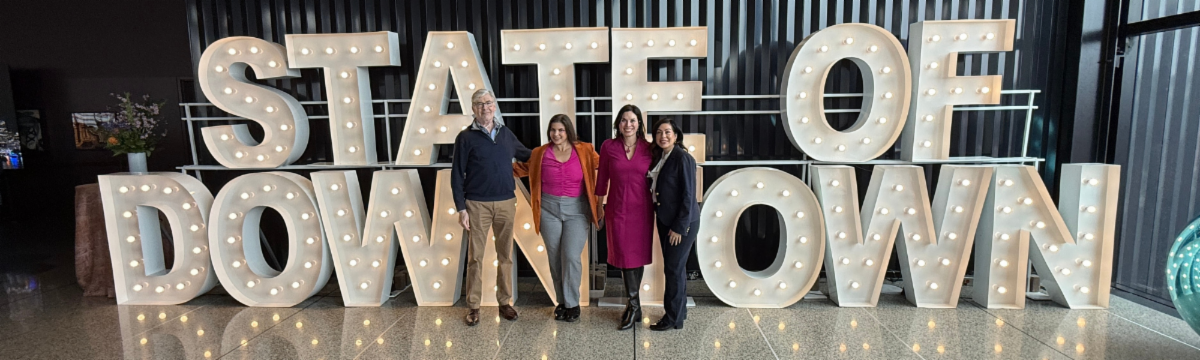
Mayor Katie Wilson made her first appearance at the State of Downtown event on March 11 and opened by thanking DSA’s Jon Scholes for serving as a co-chair of her transition committee. The Mayor said her transition team reached out to community leaders to hear from the “broadest possible cross-section of people to hear about your needs and what you would like my administration prioritize and accomplish.”
Mayor Wilson said the message back from the community was clear, “We heard that affordability, homelessness, and public safety are among the very highest priorities for almost everyone in this city -- and I know that is true for downtown.”
She emphasized that downtown is an economic engine for the city and that it “will be on display like never before” during the upcoming FIFA World Cup. The Mayor pointed out that downtown has over 100,000 residents in a cluster of neighborhoods, incredible public spaces, “amazing” local businesses, and a new playground. “In many ways, it’s a model of what a vibrant neighborhood should look like. . . when downtown succeeds, Seattle succeeds and the entire region benefits” the Mayor explained.
Highlighting homelessness and public safety, the Mayor declared that “we all agree on the importance of addressing these issues.” While acknowledging the challenge of making progress on these issues, Mayor Wilson expressed “I’m determined to prove that we can take on big challenges together and accomplish big things” including keeping our parks and public spaces “welcoming and accessible to all.”
To start, Mayor Wilson discussed the executive order she signed the week before to start the process of creating 1,000 new units of housing this year – “and that’s just the first step for the 4,000 units I hope to open over the next four years. . . It’s time we started treating this emergency like an emergency and my plan will do exactly that.”
“The goal is simple. Fewer people living outside. More people moving into housing. And more welcoming public spaces for everybody,” the Mayor stated.
Then, she addressed the public safety issues facing downtown. “We also need to act to make sure people are safe and feel safe when they come downtown.” The Mayor called on expanding the work of the CARE team, which intervenes with people having mental health crises and focusing police and outreach teams on the “highest impact areas, even as we continue to work to address our police staffing shortage.”
The Mayor moved on to say she has heard from many businesses about the cost of doing business in the city and how its tax code contributes to those costs. She restated her belief that progressive taxes have to be a part of the solution to addressing the city’s “significant” budget shortfall but also declared that “it’s not ideal for our tax environment for businesses to be wildly out of step with neighboring jurisdictions. And I will be keeping that in mind as we look at options.” She added that, as a progressive and socialist, she wants to restore faith in government that it is a “good and effective steward of our collective resources.”
Derek Thompson, co-author of the book “Abundance” with Ezra Klein, also spoke to the DSA crowd. He advocated that an abundance agenda is needed address issues of “manufactured scarcity.” An abundance agenda would combine the best from different ideologies. “It would take the left’s emphasis on human welfare . . . and combine that with the right’s fixation on national greatness . . . and libertarian’s obsession with finding bad rules.”
He went on to critique Democrats by pointing out that blue states have the hardest time building new housing and have the largest homelessness populations. And why has Texas led the nation in solar power if that is a progressive priority? Thompson said part of the reason is that Democrats “have learned to associate success with how much spending they authorized, rather than how much they actually built with that spending.” He offered that Democrats need to focus on accomplishments and not just spending.
| | Left to right: WR Retail Industry Coalition of Seattle Director, WR Director of Policy and Government Affairs Crystal Leatherman, WR Interim CEO Alesha Shemwell, and Target Senior Manager of Government Affairs Adriana Lara | | |
‘We’ve made ourselves an outlier’: Downtown Seattle Association says business taxes are pushing out employers
Mar 16, 2026
By Jake Skorheim and Spike O'Neill Show
Jon Scholes, president and CEO of the Downtown Seattle Association, called for fewer taxes on businesses in the city, saying in a recent speech, “We don’t need more business taxes in Seattle. We need more businesses in Seattle paying taxes.”
He told “The Jake and Spike Show” on KIRO Newsradio that while the idea seems straightforward, lawmakers haven’t responded that way.
“We’ve got plenty of space for more businesses to be in Seattle, paying taxes. What’s been unfortunate over these last couple of years is there’s a billion dollars of new employer taxes that our city government has imposed on folks doing business in our city,” Scholes said.
Consequently, taxes are pushing out employers, hurting job growth, and leading to a higher vacancy rate.
“[Taxes have] contributed to jobs leaving our city and job growth on the other side of the lake, and that’s contributing to a significant office vacancy rate, collapsing commercial office values in downtown Seattle, which is then shifting the property tax burden to residents and to small businesses through their leases,” Scholes explained. “So this is something we have to reckon with as a city.”
Scholes argued Seattle’s tax structure has put the city at a competitive disadvantage compared to neighboring cities like Bellevue.
“We’ve made ourselves an outlier when it comes to where you may want to locate jobs as an employer in this region, given the different tax structures,” Scholes said. “These are taxes you’re not paying in Bellevue and other parts of the region, and it’s having an effect on where those jobs are located. So I think the attitude of city government over the years is ‘We need a lot of business taxes to raise a bunch of money and make more investments, etc,’ but it’s driving businesses out. We need more businesses paying those taxes. That’s how we strengthen and grow the job space.”
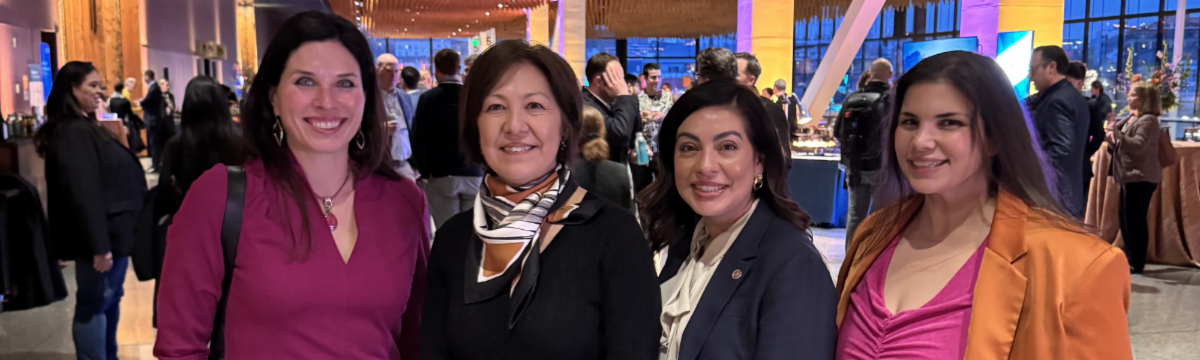
| | Left to right: WR Interim CEO Alesha Shemwell, King County Prosecutor Leesa Manion, Target Senior Manager of Government Affairs Adriana Lara, and WR Director of Policy and Government Affairs Crystal Leatherman | | Explore DSA’s 2026 Economic Report, presented by Mortenson, highlighting the key headlines shaping downtown, including the latest data on residential population, crime, tourism and much more. | | |
Seattle pauses citywide AI rollout for workers
Seattle Mayor Katie Wilson has paused the planned citywide rollout of Microsoft Copilot for city employees while her administration reviews the broader implications of artificial intelligence in government operations.
The AI tool had been piloted with about 500 employees last year under former Mayor Bruce Harrell. City staff reported positive feedback from the pilot program, with participants estimating the tool saved an average of 2.5 hours of work per week through tasks such as research and drafting written materials.
The previous administration had planned to expand access to the tool to all city employees in February. However, Wilson’s office said the pause will allow officials to better evaluate issues such as data privacy, public disclosure requirements, and the potential impact on the workforce. No timeline has been announced for resuming or expanding the program.
Seattle has already experimented with several artificial intelligence initiatives, including tools aimed at improving permitting timelines, analyzing near-miss traffic incidents, and supporting customer service chatbots. City leaders have also partnered with the University of Washington to analyze municipal laws for redundancies and inconsistencies.
As governments explore new technology, the review reflects ongoing efforts to balance innovation with transparency, privacy protections, and workforce considerations.
| | |
Executive order targets misleading "Made in America" claims
A new executive order issued by Donald Trump aims to strengthen enforcement against misleading “Made in America” claims, particularly within online marketplaces.
The order directs the Federal Trade Commission to prioritize enforcement against manufacturers and sellers that falsely advertise products as being made in the United States or make similar American origin claims in violation of existing law. The action reflects ongoing federal efforts to ensure that marketing accurately represents where products are produced and the level of domestic content in goods.
Under the order, the FTC is also asked to consider new regulations that could treat the failure of online marketplaces to verify country of origin claims as a potential unfair or deceptive practice under the Federal Trade Commission Act.
Federal agencies with oversight of country-of-origin labeling are encouraged to explore additional regulations and provide consistent guidance supporting voluntary country-of-origin labeling for products manufactured in the United States. Agencies responsible for federal procurement contracts must also periodically review and verify American origin claims for products sold to the federal government. Products found to be misrepresented may be removed from procurement programs and referred to the Department of Justice.
During a recent policy briefing hosted by the National Retail Federation (NRF), supply chain policy leader Jon Gold noted the executive order came as a surprise to many stakeholders. NRF plans to monitor how the FTC implements the directive.
| | |
Washington begins awarding police hiring grants
Washington has awarded the first grants under its new $100 million program aimed at boosting local law enforcement staffing. The Kent Police Department will receive $1.9 million to hire 20 entry-level officers, fund training, and support medical monitoring technology at its jail. Black Diamond will receive $375,000 to hire one officer, covering salary and benefits over several years.
The program, created by the state Legislature last year, is intended to address staffing shortages and increase police presence across the state. Cities and counties must implement or already have a dedicated public safety sales tax to qualify for funding, and agencies must meet training benchmarks and follow state model policies. While the process has faced criticism for red tape, officials say the grants mark a significant step toward strengthening community safety.
So far, nine departments have applied for funding, with more decisions expected in the coming months. Agencies must spend grant funds by mid-2028, and the program can cover up to 75% of officer salaries and benefits. Local leaders say the funding will help manage population growth, plan for retirements, and better serve residents.
This initial rollout signals the state’s commitment to increasing police staffing while giving local jurisdictions tools to maintain sustainable funding.
| | |
WR CEO search now closed
The Washington Retail Association’s CEO search has officially closed. We appreciate the strong interest and engagement from candidates across the industry and beyond. The selection process is now underway, and we look forward to finding our next CEO.
| | |
WR Government Affairs team reflects and plans in 2026 post-session strategic retreat
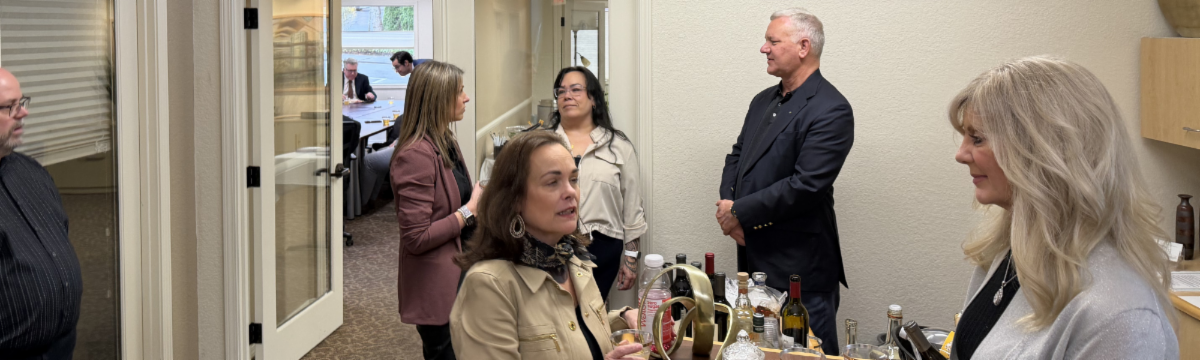
The Government Affairs team at WR recently held its 2026 Post-Session Strategic Planning Retreat in Olympia, moderated by Jennie Foglia-Jones.
Together, the team reviewed the 2026 legislative session, reflecting on successes, challenges, and lessons learned while advocating for Washington’s retail industry. The retreat also created space for discussion about team communication, coalition partnerships, and how to best use time and resources to support WR members, while outlining interim priorities such as strengthening legislative relationships, improving internal communication, and preparing for issues likely to return in the next legislative session.
If you’re interested in learning more about how to get involved, please contact Director of Policy and Government Affairs Crystal Leatherman at 360-200-6453 or cleatherman@washingtonretail.org.
| | |
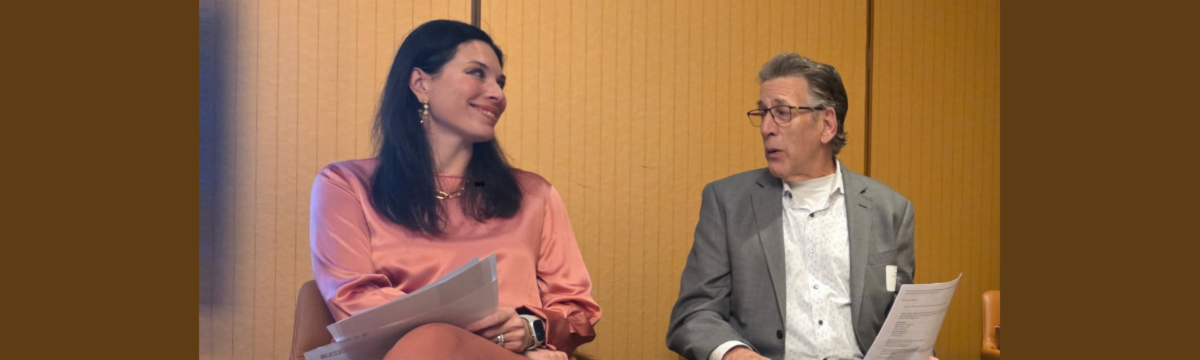
WR interim CEO discusses state of retail at CCIM-WA luncheon
Alesha Shemwell, interim CEO of WR, spoke at the March 2026 luncheon hosted by the CCIM Washington Chapter on March 18 in Bellevue. The event was held at the Bellevue Club and focused on the evolving landscape of retail across Washington state.
During the fireside chat, Shemwell shared insights with commercial real estate professionals and business leaders about the challenges and opportunities shaping today’s retail sector and why it is necessary to be involved at the political level. As consumer behaviors continue to evolve and economic pressures influence how and where people shop, Shemwell emphasized the importance of understanding the broader retail and policy environment.
She provided an overview of WR and its role in supporting retailers statewide through advocacy, policy engagement, and industry resources. Shemwell also highlighted how retail intersects with other sectors of Washington’s business community and discussed the importance of collaboration among business associations, policymakers, and industry leaders.
Attendees heard a candid assessment of the current retail climate in Washington, including legislative and economic factors affecting retailers of all sizes. Shemwell also offered a forward-looking perspective on trends expected to shape the future of retail and how those changes may influence commercial real estate, local economies, and community development.
The luncheon brought together professionals from across the commercial real estate industry and provided an opportunity to exchange ideas while gaining a clearer understanding of the forces influencing retail in Washington. The conversation underscored the continued importance of strong partnerships between retailers, developers, and business advocates as the industry continues to evolve.
| | |
WR’s Sine Die celebration draws strong crowd, returns next year
Washington Retail Association (WR) closed out the 2026 legislative session with its Sine Die event on March 12, bringing together members, partners, and policymakers for a well-attended evening of connection and reflection. The strong turnout underscored the value of WR’s advocacy efforts and the importance of coming together at the close of session.
| WR looks forward to building on this momentum and plans to host the Sine Die event again next year—be sure to mark your calendar! | |
WR diversity statement
WR is committed to the principles of justice, equity, diversity, and inclusion. We strive to create a safe, welcoming environment in which these principles can thrive.
We value all people regardless of race, ethnicity, gender, religion, age, identity, sexual orientation, nationality, or disability, and that is the foundation of our commitment to those we serve.
| | |
Alesha Shemwell, Interim CEO — 360.200.6450 — Email
Crystal Leatherman, Dir of Policy & Government Affairs — 360.200-6453 — Email
Rose Gundersen, State and Local Gov't Affairs Associate — 360.200.6452 — Email
| | | | |