Newsletter — March 05, 2026 | | |
IN THE NEWS
POLICY
ECONOMY
ON THE LOCAL FRONT
| | |
WR hosts Sine Die celebration to mark close of legislative session
WR invites members and partners to mark the official adjournment of the 2026 legislative session at a Sine Die celebration. The event will recognize the partnerships, progress, and perseverance that contributed to this year’s legislative efforts.
The open house-style gathering will take place on March 12, 2026, from 4:00 p.m. to 6:30 p.m. at WR’s Olympia office, 618 Quince Street SE. Attendees can drop in anytime to enjoy hosted cocktails and beverages, light bites, and the opportunity to connect with legislators, colleagues, and industry partners.
In legislative terms, “Sine Die” refers to adjournment without scheduling a future meeting. For WR, it is a moment to celebrate the dedication and advocacy of the retail community throughout the session. Attire is legislative chic or business social.
RSVP is requested to Kathie Davies at Kdavies@washingtonretail.org or 206-819-9422.
WR thanks all members and partners for their engagement and contributions to advancing the retail industry during the 2026 legislative session.
| | |
WR continues national search for next president and CEO
WR is conducting a national search for its next President and Chief Executive Officer following the planned retirement of longtime leader Renée Sunde.
Since December 2025, Interim CEO Alesha Shemwell has provided continuity and stability while the WR Board of Directors carries out a comprehensive search process. She will continue serving in the interim role until a new CEO is selected.
WR is seeking a strategic leader to guide advocacy efforts, strengthen member engagement, and position the association for continued success in a changing retail environment.
Learn more about the role and apply here.
| | |
WR invites retailers to strengthen their voice statewide
WR is encouraging retailers across the state to explore membership and the benefits outlined in its guide, The Retail Advantage. The guide details how WR works to protect and advance the retail industry through advocacy, education, and practical business support.
Members receive proactive representation on legislative and regulatory issues that affect retail operations. WR provides timely policy updates, guidance on compliance matters, and expertise in areas such as public safety, artificial intelligence policy, employment law, and workforce development. These resources are designed to help retailers navigate a complex business environment while staying focused on serving customers and growing their operations.
Retailers from a range of communities describe WR as a trusted partner and a unified voice in Olympia. By joining WR, businesses can strengthen their influence on statewide policy discussions and connect with peers and industry experts.
WR membership is open to retailers of all sizes seeking reliable information, advocacy, and support. Businesses interested in adding their voice and accessing industry specific tools are encouraged to learn more about becoming a member.
| | |
Washington lawmakers propose competing budgets amid debate over taxes and reserves
WR is closely monitoring the bills that have advanced through the legislative process. Each week, we’ll spotlight our weekly “hot list” key legislation that could have the most significant impact on WR members.
Commercial Electronic Mail Act (CEMA) (SB 5976 / HB 2274)
The bill passed out of the Senate Business, Economic Development and Trade Committee on the cutoff date despite internal committee tensions and limited bills moving forward. Both retail priority bills, the CEMA bill and the penny rounding bill, were advanced. The bill has now been referred to Senate Rules. Meetings have been held with key lawmakers, including the Senate floor leader and the bill sponsor, who expressed support and a willingness to help move it from Rules to the Senate floor. The coming week is critical to secure a floor vote before the next cutoff. Conversations have also taken place with the Governor’s Office, and with opposition neutralized, including the Attorney General’s Office. The outlook remains cautiously optimistic pending final passage and signature.
Position: WR supports this bill.
Status: In Senate Rules 2nd reading. The bill passed out of the Senate Business, Economic Development and Trade Committee on the cutoff date despite limited bills moving forward. Both retail priority bills, the CEMA bill and the penny rounding bill, were advanced. The bill has now been referred to Senate Rules. Meetings have been held with key lawmakers, including the Senate floor leader and the bill sponsor, who expressed support and a willingness to help move it from Rules to the Senate floor. The coming week is critical to secure a floor vote before the next cutoff. Conversations have also taken place with the Governor’s Office, and with opposition neutralized, including the Attorney General’s Office. The outlook remains cautiously optimistic pending final passage and signature.
Plastic Bag Ban (SB 5965)
SB 5965 was originally introduced as an outright ban on plastic retail bags and an increase of the paper bag fee to 20 cents. An amendment adopted in Ways and Means instead lowers the paper bag fee to 8 cents and implements gradual increases to plastic bag fees over several years rather than banning them.
With the amendment adopted, neutrality was secured. However, support for moving the bill to the Senate floor remains uncertain, as some lawmakers oppose a full product ban. The bill’s future is unclear, but if it advances, maintaining the amendment is a priority. If it does not move forward, the issue is likely to return next year.
Position: WR is opposed to this bill.
Status: In Senate Rules 2nd reading.
Budget
Both the House and Senate budgets rely on approximately $800 million from the Budget Stabilization Account to address the current fiscal shortfall. The proposed millionaire tax is separate from this immediate budget solution. Budget bills are moving out of Ways and Means and Appropriations and will proceed to floor debates, where final House and Senate negotiations will occur. The final stretch of session will focus primarily on budget votes, budget cleanup, and implementing legislation. A key development was the absence of the Apple Health Care assessment tax, which created a nearly $1 billion gap for the Senate and led to greater reliance on stabilization funds instead.
| | Image: The Washington state Capitol on April 18, 2025. (Photo by Jacquelyn Jimenez Romero/Washington State Standard) | | |
Clear standard needed to keep unsafe cookware out of kitchens in WA
By Tammie Hetrick and Alesha Shemwell
Washington State Standard, Commentary
February 24, 2026
Washington state lawmakers have a chance this session to improve on a new law that will help keep unsafe cookware and other kitchen products out of our homes and commercial kitchens.
At issue is the widely shared goal of ensuring cookware sold or used in Washington state is safe from lead contamination, which the federal government supports by actively monitoring and recalling hazardous products.
In 2024, following a handful of incidents involving cookware not readily available in the state, Washington state adopted the Cookware Containing Lead law. The new law, which took effect Jan. 1, 2026, sets a limit on lead content that is far stricter than what is allowed under federal standards.
But as with any new legislation, the devil is in the implementation details.
As approved, the law created a content standard for regulators like the Department of Ecology to use in evaluating the safety of cookware products. Regrettably, the legislation did not provide the necessary resources for the agency to identify and test these products. This places restaurants, grocery stores, convenience stores and other retailers in an awkward position when it comes to selling or using cookware products.
Currently, many manufacturers and retailers have questions about the application of this new law and how to comply.
Groups like the Washington Food Industry Association, which represents independent grocers and convenience stores, along with the Washington Retail Association, have worked with lawmakers in the interim to better help them understand the implementation challenges and enforcement issues. We believe consumers must be protected from harm without unnecessarily restricting access to necessary products.
To address industry concerns, lawmakers have introduced Senate Bill 5975, a bipartisan measure that aims to correct enforcement issues and enable state agencies to effectively enforce the law.
The bill directs the Department of Ecology to adopt a standard against which products can be tested and measured. This new standard, along with other technical changes, will help manufacturers demonstrate compliance with the law.
Known as the Access to Safe Cookware Act, SB 5975 has already cleared the Senate on a 42-7 vote, and awaits further consideration by the House.
Similar legislation has been successfully implemented in other states, providing much-needed safety guidelines for consumers, along with clear regulatory and enforcement structures. SB 5975 will do the same for us in Washington state.
Ultimately, the goal is to ensure that safe products reach store shelves, commercial kitchens and private homes. SB 5975 will prevent the sale and use of dangerous products, just as intended by the original legislation.
| | |
L&I updates equal pay and opportunity guidance
The Washington State Department of Labor and Industries updated its administrative policy on the Equal Pay and Opportunities Act to reflect recent statutory changes. The revision follows passage of SHB 1905, which expands the law by adding 11 protected classes under Chapter 49.58 RCW and WAC 296-123.
The updated policy was issued by the Employment Standards Program after a public draft was released on December 5, 2025, and a feedback session was held on December 17, 2025. The final guidance outlines how the expanded protections apply to employers and employees across the state.
Key updates include a detailed list of the newly added protected classes, clarification of what qualifies as career advancement opportunities under the Act, and direction on where to find job posting requirements. The policy is intended to help employers understand compliance expectations and to support employees in recognizing their rights.
WR members are encouraged to review the updated guidance to ensure workplace policies and job postings align with current state law. Questions may be directed to the Employment Standards Program at 360 902 6625 or by email at ESRules@lni.wa.gov.
| | |
Closure of the Strait of Hormuz and early impacts on oil, gas, and pump prices
The Strait of Hormuz, a narrow maritime route between Iran and Oman that handles a significant share of the world’s crude oil and liquefied natural gas exports, has been effectively closed to commercial shipping amid escalating conflict in the Middle East. This strategic chokepoint normally carries roughly 20 % of global seaborne crude oil and a large portion of LNG, making it critical to international energy markets.
Global oil prices responded quickly. Brent crude prices climbed above $80 per barrel, reflecting traders pricing in the risk of sustained supply disruption. Analysts from firms such as Goldman Sachs estimate that a prolonged closure could lift oil prices at least $10–$15 per barrel above normal levels, and some market observers say prices could head toward or above $100 per barrel if shipping remains halted.
These higher crude oil costs are transmitting into higher gasoline prices for consumers. In the United States, average pump prices have risen sharply, one report noted that U.S. regular gasoline jumped by 11 cents in a single day, reaching above $3.10 per gallon, the largest daily increase in four years.
In Washington State, pump prices are already significantly above the national average amid the broader energy price surge. As of early March 2026, residents are paying well over $4 per gallon on average, with prices in parts of the state rising roughly 43–53 cents in the past month and standing about 45 % higher than the U.S. average in some areas. AAA data show Washington’s average has been among the highest in the country.
Local analysts attribute part of the near-term increase to the global oil market’s reaction to the Strait of Hormuz disruption, noting that oil price volatility is a major driver of gasoline costs even in regions like Washington that do not import oil directly through the strait. Forecasts from market tracking groups suggest Washington drivers could see a further $0.15–$0.30 per gallon rise in gasoline if elevated oil prices persist in coming weeks.
While local prices also reflect regional supply chain factors, the disruption in global crude flows plays a clear role in pushing pump prices higher, as higher crude costs tend to filter through to retail fuel over time.
| | |
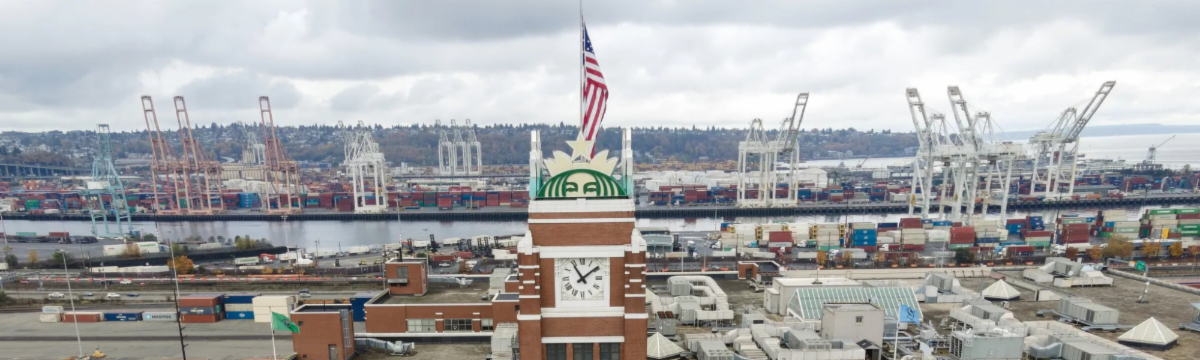
Starbucks affirms Seattle headquarters as it expands in Nashville
Starbucks has confirmed that Seattle will remain its North America and global support headquarters as the company prepares to open a new corporate office in Nashville later this year. Company leaders said the expansion is intended to strengthen sourcing and supply chain operations in the Southeast and position teams closer to key suppliers and a growing workforce.
The announcement follows a period of restructuring that included the closure of the Seattle Reserve Roastery locations in Capitol Hill and SoDo in 2025. The company also reduced its North America store count from 18,734 to 18,300, a decrease of about 1 percent, and eliminated corporate roles. In October 2025, Starbucks laid off 1,100 corporate employees globally, including more than 900 positions in Seattle and Kent.
Chief Executive Officer Brian Niccol said the changes are designed to focus resources closer to customers, strengthen operations, and support long-term growth. He noted that fiscal year 2026 is expected to include additional coffeehouse openings.
Local business leaders, including Joe Nguyen of the Seattle Metro Chamber of Commerce, said recent conversations indicate Starbucks remains committed to its hometown presence.
| | |
NRF to unveil 2026 retail sales forecast
The National Retail Federation (NRF) will release its 2026 retail sales forecast during the sixth annual State of Retail & the Consumer virtual event on Wednesday, March 18, from 1 to 2 p.m. Eastern. The event will feature insights from top retail executives, industry analysts, and consumer experts on the state of retail and consumer trends.
NRF Chief Economist Mark Mathews will present the forecast, followed by a panel discussion with leaders from the National Restaurant Association and U.S. Travel Association on economic outlook and consumer spending. Other featured speakers include Bob Eddy, Chairman and CEO of BJ’s Wholesale Club; Matthew Shay, President and CEO of NRF; and experts from Pinterest, YPulse, and the Port of Los Angeles.
The event is open for registration to editorial members of the news media. Attendees will gain early insight into retail trends, consumer behavior, and factors shaping the retail landscape in 2026.
For more information or to submit questions in advance, contact press@nrf.com.
| | |
DSA’s Future of Downtown Symposium explores vibrant, inclusive city planning
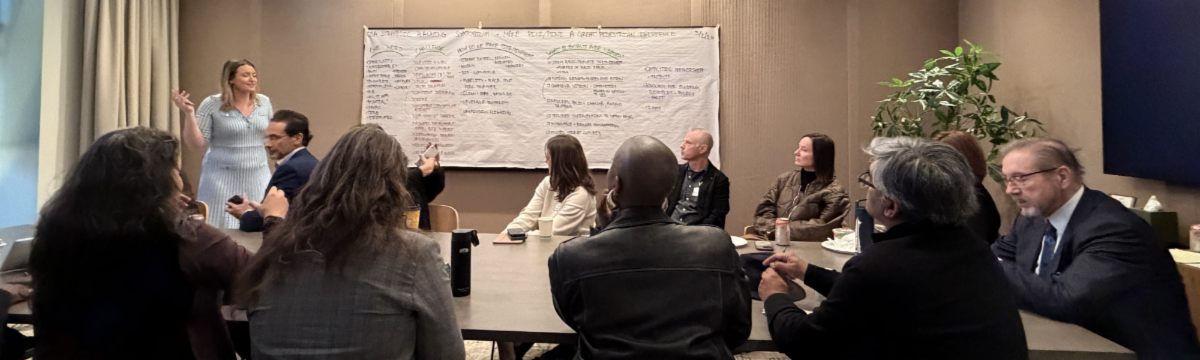
On Monday, March 2, 2026, Alesha Shemwell and John Engber attended the Downtown Seattle Association’s (DSA) Future of Downtown Symposium, a dynamic event bringing together community leaders, urban planners, and public officials to explore strategies for revitalizing Downtown Seattle.
The symposium featured several expert speakers who set the tone for robust community discussion:
-
Tim Tompkins, Senior Fellow at the Brookings Institute, discussed the Changing nature of cities and the Downtown mix of uses.
-
Ryan Russo, Executive Director of the National Association of City Transportation Officials (NACTO), highlighted trends in mobility and transit.
-
Ann Berchtold, Director of Public Art and Placemaking with MIG, explored the role of art and culture in downtown revitalization.
-
Mukul Malhotra, Chief Innovation Officer at MIG, spoke about designing public spaces that are inclusive, welcoming, thriving, and sustainable.
-
Judge Steven Leifman, Founder of the Leifman Group, shared strategies to improve justice and mental health system responses to serious mental illness.
Following the presentations, participants divided into three breakout groups focused on key downtown priorities:
- Make Pike & Pine a Great Pedestrian Experience
- Bolster Downtown as a Vibrant Arts, Culture, and Entertainment Destination
- Ensure Downtown is a Clean and Safe Neighborhood
For the Make Pike & Pine a great pedestrian experience breakout, participants
emphasized the importance of the Pike & Pine corridors as vital connections between the Waterfront and the Convention Center. Ideas discussed included fostering a culture shift around homelessness and crime, attracting and enhancing vibrant retail and food & beverage offerings, and starting with small, actionable steps. Proposals such as creating an Office of Public Realm, auditing building owners to identify opportunities for filling vacant spaces, continuing signage from the Waterfront, providing tax incentives to the building owners of the first floor retail and adding more public art and colorful sidewalks were highlighted as ways to energize these streets.
Judge Steven Leifman led a breakout session on justice reform and mental health diversion, sharing lessons from his successful work in Miami–Dade County. His model focuses on diverting individuals with serious mental illness from the criminal justice system into treatment, both before and after arrest.
A critical first step was training police officers to recognize signs of mental illness. During implementation, leaders discovered that 15–30% of officers were experiencing PTSD symptoms themselves, prompting expanded support and reduced stigma within law enforcement. Today, officers take pride in diverting individuals to treatment rather than jail.
If someone is arrested and identified as having a mental illness, they are separated from the general jail population, evaluated by a psychiatrist within 24 hours, and transferred to a crisis stabilization facility within three days. The program has saved Miami–Dade County hundreds of millions of dollars, ultimately allowing the closure of one jail facility while improving outcomes for vulnerable individuals.
The symposium concluded with each breakout group presenting their “Big Ideas,” sparking lively discussion about how these strategies can be integrated into DSA’s Strategic Plan for Downtown Seattle. Participants left energized and inspired by the opportunity to create a downtown that is safe, vibrant, and welcoming for all.
| |
WR diversity statement
WR is committed to the principles of justice, equity, diversity, and inclusion. We strive to create a safe, welcoming environment in which these principles can thrive.
We value all people regardless of race, ethnicity, gender, religion, age, identity, sexual orientation, nationality, or disability, and that is the foundation of our commitment to those we serve.
| | |
Alesha Shemwell, Interim CEO — 360.200.6450 — Email
Crystal Leatherman, Dir of Policy & Government Affairs — 360.200-6453 — Email
Rose Gundersen, State and Local Gov't Affairs Associate — 360.200.6452 — Email
| | | | |