Newsletter — August 20, 2026 | | |
POLTICAL NEWS
POLICY
ECONOMY
ON THE LOCAL FRONT
RETAIL THEFT & PUBLIC SAFETY
IN THE NEWS
TRENDS
| | |
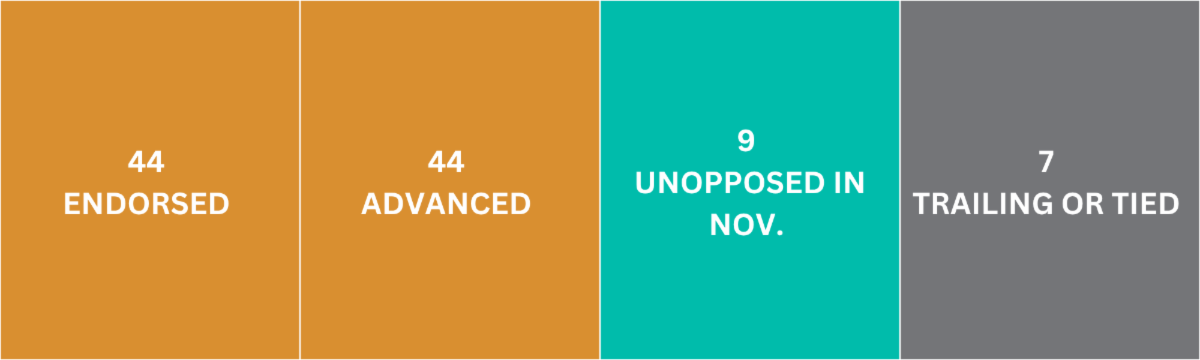
Washington Retail Association's Retail Action Council Political Action Committee (RACPAC) endorsed 44 legislative candidates in this year's primary, and all 44 advanced to the November ballot. That is a clean sweep, but it does not mean the work is done.
Nine candidates drew no opposition and will face no opponent in November. Six are returning House members: Andrew Engell and Hunter Abell in the 7th, Stephanie Barnard and April Connors in the 8th, Mary Dye in the 9th, and Dan Bronoske in the 28th. On the Senate side, Jeff Holy holds the 6th, while Alex Ybarra and Jeremie Dufault move from the House to Senate seats in the 13th and 15th.
The other 35 head into contested races, with seven of them needing your help.
Which Races Need Attention
The following candidates are some of the strongest supporters’ retail has in Olympia, and whether they are back in January depends on the support they are provided between now and November.
-
Trailing, with ground to make up: Each of these three faced a single opponent in the primary, so there is no second candidate from their own party whose votes they can pick up in the fall. They have to win over people who did not vote for them in August.
-
Kevin Waters (R), 17th Pos. 1 — 43.9%, down 8.4 points
-
David Stuebe (R), 17th Pos. 2 — 45.0%, down 9.9 points
-
Stephanie McClintock (R), 18th Pos. 1 — 47.8%, down 4.2 points
-
Won, but barely: August voters in Washington skew smaller and older than the November electorate, and that shift has usually cost Republicans a few points. A one-point lead in the primary is not a lead you can count on.
-
Drew MacEwen (R), 35th Senate — 51.0%
-
Brian Burnett (R), 12th Pos. 1 — 50.2%
-
Michael Keaton (R), 25th Pos. 1 — 50.2%
- The closest race anywhere
-
Amy Walen (D) sits 25 votes behind in the 48th, Position 2.
What Members Can Do Now
If one of these districts is yours, that candidate needs to hear from you. Call the campaign and tell them you run a retail business in their district. Invite them to walk your store and meet your team. If you are able to give, give now, while campaigns are still buying mail and digital. Please check with your accountant on Washington's contribution rules.
Ballots go out in mid-October. Everything you do before then counts for more.
Round two is coming. WR’s Government Affairs team is now evaluating a second round of endorsements, with particular attention to open seats and the most competitive races on the November ballot. We expect to announce that slate in the coming weeks. In the meantime, click here to see how all Washington Retail endorsed candidates performed in the August primary.
Percentages reflect the latest county counts and may still shift; the Secretary of State must certify statewide results by August 21. Questions about a specific race or district? Contact Crystal Leatherman, Director of Policy & Government Affairs, at cleatherman@washingtonretail.org.
| | |
Seattle's pricing ordinance puts coupons, discounts, and loyalty programs at risk
The Seattle Mayor's Office is moving an ordinance through City Council that would reshape how grocers and retailers offer everyday savings, and the timeline leaves little room to get it right. Washington Retail Association (WR) and other stakeholders have been at the table throughout. We submitted detailed feedback and specific amendment language to protect the coupons, discounts, and loyalty programs Seattle families depend on. The current draft reflects very little of it.
WR Supports the Goal
Our position has not changed. A business should not be able to use your personal data to charge you a higher price, and that should be law. During the 2026 session, grocers, retailers, labor, and consumer advocates came close to a consensus proposal before time ran out. That framework protected consumers and preserved the savings tools they rely on.
Seattle's ordinance takes a much broader approach. It reaches the discount programs themselves, and there is little evidence that brick-and-mortar grocers here are doing what it targets.
Three Ways Savings Are Exposed
-
Loyalty programs face conditions that cannot all be met. The exclusion meant to protect them permits discounts built from purchase-history "tiers," then prohibits use of that same data to "make inferences about the consumer." Sorting customers into tiers based on what they bought is an inference. An ordinary loyalty program cannot satisfy both requirements at once.
-
Personalized offers may not be permitted at all. The ordinance allows purchase-history discounts only when they are based on tiers "rather than individualized prices." That puts the targeted digital coupon a shopper clips in a store app into question.
-
Even a compliant program can be narrowed later. The Director may issue rules "including rules providing for additional restrictions on the use of prior purchase history and permissible tiers." A retailer could build a program that complies on day one and then watch the standard move by rule. There is no stated floor, and no good-faith reliance defense anywhere in the ordinance.
It's worth noting that loyalty programs are entirely voluntary. No one is enrolled without their knowledge. A shopper chooses to sign up, decides whether to use the app, can opt out at any time, and can take their business to a competitor across the street. That is a meaningful distinction from the conduct this ordinance is meant to address, which is using data a consumer never knowingly shared to charge that person more. The City's own findings describe protecting consumers from "data collection without their knowledge." A program someone knowingly joins, uses on their own terms, and can leave whenever they like is not that.
Why Legal Risk Alone Can End a Program
Even where a discount might qualify, the enforcement structure makes offering it hazardous. "Aggrieved party" includes anyone suffering "tangible or intangible harm." Any person or class may sue. There is no requirement that a customer paid more, no pre-suit notice, no chance to cure a good-faith error, and no good-faith reliance defense. A recordkeeping gap by itself is presumed to be a violation.
We have seen how this plays out. Statutes built this way, where each instance is a separate violation, and no actual harm is required, reliably generate litigation that has little to do with real consumer harm. Washington has fixed two such laws in as many years. The Equal Pay and Opportunities Act drew over 100 class actions from a handful of serial plaintiffs before the 2025 Legislature added notice-and-cure. The Commercial Electronic Mail Act is a sharper example. For 27 years it produced roughly eight retail cases total.
Then a 2025 State Supreme Court ruling let claims proceed on an email subject line alone. Retailers were hit with more than 100 suits in twelve months, and the count passed 200 before lawmakers acted. A law that had generated about one lawsuit every three years started generating 2-3 a week.
Contradictory rules are one problem. Lawsuits untethered from any actual harm or wrongdoing are another. Put them together and many retailers may simplify or drop a program rather than risk it. That is how discounts disappear. Not because anyone set out to ban them, but because offering them became too risky.
The Families with the Most to Lose
Seattle's own Race and Social Justice Initiative found that Southeast Seattle averaged 26.5% food insecurity between 2018 and 2020, with Black and Hispanic/Latinx households twice as likely to be food insecure as white households. In Southeast King County, one in four people are food insecure.
For those families, a coupon is not a convenience. Washington's state-funded WAFOOD survey found that shopping for lower prices is how households manage rising food costs more than any other strategy. Stand in a Seattle checkout line and look at the ten people around you. About seven got there chasing a lower price. More Washington households stretch the budget by hunting for deals than by cutting back on how much they eat.
Seattle also knows what grocery loss looks like. Kroger closed six Puget Sound stores last year, including Lake City's Fred Meyer, citing "a steady rise in theft and a challenging regulatory environment that adds significant costs." More than 700 workers were affected, and the Council declared a public health emergency in response.
An ordinance meant to improve affordability should not make it legally risky to offer the savings these households count on.
What You Can Do
We are not asking the Council to abandon this effort. We are asking for the time and the amendments to protect these programs, and operator voices are what the Council needs to hear.
- Review the ordinance with your team and identify how it would affect your coupons, discounts, and loyalty offerings.
- Contact your council members directly about how this ordinance could affect you and your customers.
- Submit written comment before the tentative August 21 briefing and send WR concrete examples of programs at risk.
We have amended the language that protects these programs without touching the ordinance's goal of stopping algorithmic price increases. Member voices over the next two weeks will make the difference.
Contact Crystal Leatherman, Director of Policy and Government Affairs, at cleatherman@washingtonretail.org to share how this would affect your customers.
| | |
Seattle Latino Chamber raises concerns over proposed pricing ordinance
The Seattle Latino Metropolitan Chamber of Commerce is raising concerns about a proposed Seattle ordinance that chamber leaders say could increase costs for consumers and businesses.
During an Aug. 7 hearing before the Seattle City Council’s Human Services, Labor & Economic Development Committee, chamber Founder and CEO Marcos Wanless said the proposal could affect grocery, delivery and fuel costs. The chamber represents more than 2,000 organizations and professionals and is the largest Latino-Hispanic chamber of commerce in Washington.
Wanless argued that the proposed pricing ordinance could limit discounts, rewards programs and other cost-saving measures that consumers use to manage grocery expenses. He also said the proposal could create additional costs and legal risks for businesses, particularly low-margin retailers such as grocery stores.
“The affordability crisis is real,” Wanless told council members, emphasizing that Seattle is already expensive for families and individuals. He questioned whether the proposal would achieve its intended goal of controlling prices in a free-market economy.
Wanless also expressed concern about provisions he said could expose businesses to increased civil litigation and called for greater certainty for employers and retailers.
The chamber urged council members to consider the potential economic impact on both consumers and businesses as they evaluate the proposed ordinance.
Full press release
| | |
Public safety funding reaches agencies as impact remains uncertain
A Washington state law designed to increase local law enforcement funding has begun directing money to agencies, but its impact on officer numbers remains uncertain.
HB 2015, which took effect in July 2025, created a $100 million public safety grant program administered by the Washington State Criminal Justice Training Commission (CJTC). The law also authorized cities and counties to impose a 0.1% local sales tax for public safety without voter approval. Both funding options require agencies to meet eligibility requirements that include additional training, policy changes, data collection, and reporting.
CJTC’s first grant round awarded $46.6 million to 19 agencies, supporting 74 officer positions. However, some funding is being used for purposes beyond hiring. Auburn received nearly $3.9 million but reported no officers funded through the program. Renton and Colfax also received funding without reporting officer positions. CJTC said eligible uses include co-responder programs, retention efforts, equipment, training, officer wellness and other public safety activities.
The King County Sheriff’s Office received $15 million and funded three officer positions. CJTC said most of the county’s award is supporting co-responder programs, behavioral health crisis response and community-based gun violence prevention efforts.
Local implementation varies. Centralia recently became the first agency in Lewis County to approve the new public safety tax, with officials saying the revenue will support police and public defender services. Police Chief Andy Caldwell said smaller agencies may face challenges meeting application and compliance requirements.
Thurston County has approved the tax to support its sheriff’s office but does not plan to pursue the state grant because it cannot afford the required 25% local match. Statewide, 61 jurisdictions have sought approval for the tax, while 34 have applied for grant funding. Officials say the law’s effect on staffing may take several years to assess.
| | |
Washington Retail Association needs YOU to connect with your lawmakers
The next legislative session is just a few months away, making now an important time for Washington Retail Association (WR) members to get involved. The interim provides an opportunity to build relationships with lawmakers, share your experiences, and help policymakers better understand how proposed policies can affect retailers, employees, customers, and communities across Washington.
Your experience matters
Retailers bring a perspective lawmakers need to hear. You understand what it takes to run a business, manage costs, support employees, serve customers, and keep doors open in a challenging economic environment. Sharing those experiences now can help lawmakers better understand the real-world impact of policy decisions before they return to Olympia.
Issues such as public safety, labor costs, consumer affordability, taxes, regulations, and the broader cost of doing business are likely to remain part of the policy conversation. Your firsthand perspective can help shape that conversation.
Small actions can make a big difference
Grassroots advocacy does not have to be complicated or time-consuming. Getting involved can be as simple as:
- Meeting with lawmakers in your district
- Hosting a store tour
- Sharing examples from your business
- Participating in a WR policy workgroup
- Attending a legislative or community event
- Responding to an action alert
- Contacting lawmakers about key policy issues
Even a small investment of time can make a meaningful difference. A conversation with a legislator, a quick email, or a firsthand example from your business can help connect policy ideas to their real-world impact.
WR will help you every step of the way
WR makes it easy to participate. We can help with scheduling, coordination, preparation, and follow-up so members can engage in a way that is manageable and worthwhile. Whether you are a business owner, operator, manager, team member, or industry partner, there is a role for you in this work.
Building these relationships before the session begins can make it easier to have productive conversations when lawmakers return to Olympia and legislation starts moving.
Help tell retail’s story
Retail is too important to be left out of the conversation. As the next legislative session approaches, make your voice part of the discussion.
To learn more about WR’s grassroots efforts or how to participate, contact WR Director of Policy & Government Affairs Crystal Leatherman at cleatherman@washingtonretail.org or 360-884-0771.
| | |
Technology tops back-to-school spending
Electronics remain a major part of back-to-school spending in 2026, according to the National Retail Federation (NRF). Devices and related gear account for roughly one-third of K-12 back-to-school spending and one-quarter of college spending, reflecting the growing role technology plays in students’ daily academic needs.
While laptops remain the most purchased electronic item, fewer shoppers are buying them this year. For K-12 families, one factor is the increasing number of schools that provide devices directly to students. Among shoppers who are not purchasing electronics, 20% say the school provides the needed equipment.
Shopping patterns are also shifting within the category. As laptop purchases decline among K-12 shoppers, desktop computer purchases are increasing. At the college level, the share of shoppers purchasing electronics has risen notably this year.
The findings point to continued strong demand for technology during the back-to-school season, while also highlighting changes in how families obtain and select devices. Electronics have evolved from an optional purchase to an increasingly essential part of preparing students for the school year.
The NRF's research provides additional insights into back-to-school and back-to-college spending patterns and consumer purchasing decisions.
| | |
Import cargo’s early peak season is winding down
U.S. import cargo volumes are expected to remain elevated in August before gradually declining through the end of 2026, according to the latest Global Port Tracker report from NRF and Hackett Associates.
The 2026 peak shipping season arrived earlier than the historical late summer or fall period, as retailers accelerated imports ahead of anticipated tariff changes and responded to continued supply chain uncertainty. May appears to have been the busiest month so far, with major U.S. ports handling approximately 2.24 million twenty-foot equivalent units (TEU).
Ports covered by the report handled 2.23 million TEU in June, a 13.2% increase from June 2025 and a 0.7% decline from May. Imports during the first half of 2026 totaled 12.7 million TEU, up 1.1% from the same period last year.
July imports are projected at 2.21 million TEU, down 7.6% from a year earlier, while August is forecast at 2.22 million TEU, down 4.2%. Volumes are expected to ease through the remainder of the year, although most months are projected to remain above 2025 levels.
The report estimates total 2026 imports will reach approximately 25.5 million TEU, essentially unchanged from 2025.
The report notes that consumer spending has remained resilient despite ongoing economic and geopolitical uncertainty. Retailers are expected to enter the holiday season with inventories in place while continuing to adapt to changing trade and supply chain conditions.
| | |
Seattle mayor faces recall petition over public safety concerns
Seattle Mayor Katie Wilson is facing a recall petition alleging she has failed to meet city charter obligations related to public safety and law enforcement.
The petition, filed with King County Elections on Aug. 11, alleges that decisions made during Wilson’s first eight months in office have contributed to concerns about crime, police staffing and neighborhood safety. The filing specifically criticizes the mayor’s decision to seek the resignation of former Seattle Police Chief Shon Barnes following the July shooting at the Bite of Seattle that killed three people.
The petition also cites concerns raised by North Aurora residents about alleged human trafficking and gun violence, as well as the removal of closed-circuit television cameras in the Stadium District and Little Saigon after the World Cup. Petitioners argue the cameras provided an important tool for deterring crime and protecting businesses and residents.
Wilson’s office said the petition does not appear to have merit and that the administration remains focused on improving safety and affordability. The administration pointed to efforts including expanded community crisis responder hours, shelter expansion, transit investments and measures addressing grocery pricing.
The filing is the first step in a lengthy process. If it meets technical requirements, the case would proceed to King County Superior Court, where a judge would determine whether the allegations meet the legal standard for recall.
If approved, petitioners would have 180 days to collect nearly 70,000 verified signatures, equal to 25% of votes cast in Seattle’s previous mayoral election. If enough signatures are certified, a special recall election would be held.
| | |
Walmart commits $500,000 to Spokane wildfire recovery
Walmart and the Walmart Foundation have committed $500,000 in grants and support to assist communities affected by the Spokane Complex fires, which destroyed hundreds of homes in Spokane County.
The company is coordinating with local organizations and agencies to identify immediate and long-term needs. Partners include the Innovia Foundation, Save the Children, Second Harvest Food Bank, Spokane Public Schools, and Spokane County Emergency Management.
Walmart said its support will focus on essential services, assistance for families who lost homes, and back-to-school needs for students and families affected by the fires. The company also plans to support nonprofit organizations working directly with survivors.
In addition, the Walmart store at 5025 E. Sprague Ave. will provide space for nonprofit and community organizations assisting residents with recovery efforts.
The company said its disaster response is intended to extend beyond the immediate aftermath. Walmart has previously provided support following disasters including Hurricane Katrina, wildfires in Maui and California, and flooding in Western Washington.
The Spokane Complex fires began Aug. 1. Evacuation levels were lifted Aug. 11, as the community moved into the recovery phase.
| | |
Tukwila police target suspect in organized retail theft case
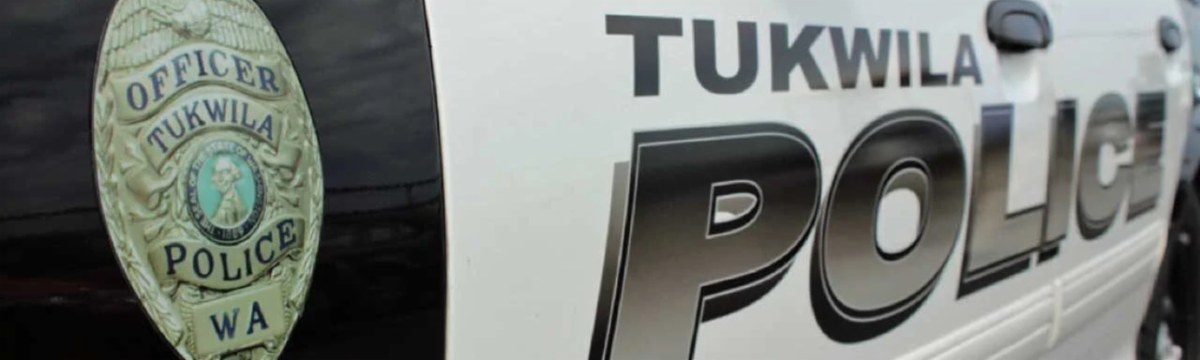
Tukwila police are asking for the public’s help identifying a suspect accused of stealing multiple coats from a department store. Detective Mosley, the department’s Retail Emphasis Detective, is investigating the case as part of the city’s broader effort to address organized retail crime.
The Tukwila Police Department created the dedicated detective position earlier this year to work with retailers and loss prevention personnel and pursue organized retail theft cases. Police say these offenses can involve thefts across multiple jurisdictions and may be connected to other crimes, including vehicle theft, robbery and narcotics offenses.
The department has investigated similar cases this year. In June, two suspects allegedly stole about $4,000 in merchandise from a department store before fleeing to a waiting vehicle. Police pursued the case as organized retail theft.
Tukwila’s retail activity, including the Westfield Southcenter area, draws shoppers from throughout the region and contributes to the city’s high volume of reported property crime.
Washington has taken several steps to address organized retail crime, including the Attorney General’s Organized Retail Crime Task Force, established in 2022 to support coordination among law enforcement and prosecutors across jurisdictions.
Police are asking anyone who recognizes the suspect in the coat theft to contact the Tukwila Police Department’s non-emergency line at (206) 241-2121 or email tips@tukwilawa.gov.
| | |
Federal legislation could strengthen organized retail crime response
Retail theft and organized retail crime (ORC) continue to present challenges for retailers, employees, consumers, and communities across the country. A new report from the National Retail Federation (NRF) found that retailers experienced a 12.4% decrease in shoplifting incidents and an 8.1% decrease in merchandise theft incidents from 2024 to 2025.
The report also highlights the continued evolution of ORC networks. Criminal groups are increasingly involved in activities including cargo and supply chain theft, gift card and loyalty fraud, phone scams, and cyber-enabled crime. Some groups use artificial intelligence and other technologies to expand their operations, which can extend across state and national borders.
Retailers have responded by increasing investments in loss prevention, merchandise protection, employee safety, training and risk intelligence. The report found a slight decrease in in-store violence associated with theft, although other forms of violence involving customers and other individuals have increased.
Despite these efforts, retailers and law enforcement continue to identify limited resources, coordination challenges, and prosecutorial support as barriers to disrupting sophisticated criminal organizations.
The NRF report calls for greater federal support and coordination, including passage of the Combating Organized Retail Crime Act (CORCA). The U.S. House of Representatives passed the legislation in May 2025 with broad bipartisan support. The proposed legislation would strengthen information sharing and provide additional resources and coordination for state and local law enforcement and prosecutors addressing ORC that crosses jurisdictions.
Supporters say the legislation would complement existing state and local efforts rather than federalize retail theft, with the goal of improving coordination and helping disrupt organized criminal networks.
| | |
Value drives growth among 2026 National Retail Federation’s Hot 25 Retailers
The 2026 National Retail Federation (NRF) Hot 25 Retailers list highlights the continued importance of value as consumers look for affordable prices without sacrificing quality or experience.
Compiled by Kantar, the annual ranking identifies the nation’s fastest-growing retail companies based on year-over-year domestic sales. A strong focus on value is a common theme among this year’s top performers, with many successful retailers offering lower prices, promotions, private-label products, or affordable alternatives.
Kantar retail analysts say consumers across income levels are increasingly focused on getting the best value for their money. At the same time, retailers are finding that affordability alone is not always enough. Successful retailers are pairing competitive prices with quality, distinctive merchandise, strong brand identities, and engaging shopping experiences.
The 2026 Hot 25 results suggest that while price remains an important factor in consumer decisions, retailers can strengthen their appeal by delivering value in multiple ways. The combination of affordability, quality, differentiation, and customer experience continues to be an important driver of retail growth.
| | |
The K-shaped consumer looks different this time
Consumer spending patterns in 2026 continue to show a K-shaped economy, but the divide between higher- and lower-spending households has narrowed. According to analysis from the Consumer Insights Studio, all consumer spending groups increased their spending during the first six months of 2026 compared with the same period last year. Higher-spending consumers continue to account for the largest share of growth, but lower-spending groups are also contributing.
The analysis also found stronger growth in discretionary purchases than in essential goods. Discretionary spending increased 3.9% year over year, compared with 2% growth in staples. Discretionary spending outpaced staples among six of the bottom eight spending groups, suggesting consumers across income levels continued to allocate money toward non-essential purchases despite generally weak economic sentiment.
Researchers suggest tax refunds may have helped support spending during the first half of the year. However, the outlook for the remainder of 2026 is less certain.
Oxford Economics analysis indicates that higher gas prices could eventually offset the benefit consumers received from larger tax refunds, potentially between July and August. At the same time, moderating wage growth and persistent inflation could place additional pressure on household budgets.
The spending trends point to a relatively strong first half of the year, but whether consumers can maintain that momentum will depend on how gas prices, wages, and inflation affect purchasing power in the months ahead.
| |
Washington Retail Association diversity statement
Washington Retail Association is committed to the principles of justice, equity, diversity, and inclusion. We strive to create a safe, welcoming environment in which these principles can thrive.
We value all people regardless of race, ethnicity, gender, religion, age, identity, sexual orientation, nationality, or disability, and that is the foundation of our commitment to those we serve.
| | |
Jan Himebaugh, President & CEO — 360.200.6450 — Email
Crystal Leatherman, Dir of Policy & Government Affairs — 360.200-6453 — Email
| | | | |