Newsletter — November 6, 2025 | | |
Honoring Washington's veterans
Today, we pause to honor the brave men and women who have served our country with courage and dedication. Their commitment to protecting our freedoms and strengthening our communities embodies the very best of our nation.
WR extends our deepest gratitude to all veterans, active-duty service members, and their families. Your sacrifice and service inspire us every day.
Thank you for your leadership, resilience, and unwavering devotion to our country.
| | |
IN THE NEWS
POLICY
ON THE LOCAL FRONT
POLITICAL NEWS
RETAIL THEFT & PUBLIC SAFETY
TRENDS
| | |
Empower your business and the industry – become a Washington Retail Association member
Washington Retail Association has released The Retail Advantage, a membership guide now available that highlights how WR protects and advances retailers statewide. Members gain proactive advocacy, real-time policy alerts, compliance support, and access to valuable resources. The guide highlights how WR engages in coalition efforts addressing public safety, AI policy, employment law, and initiatives that strengthen the retail workforce.
Members say the value is real. North 40 Outfitters calls WR “a trusted and essential partner.” Drees says “small business voices are heard.” Brookfield Properties praises “a strong, unified voice in Olympia.”
Explore the new guide and consider joining to add your voice, connect with experts, and equip your team with tools that help your business and community thrive.
The Retail Advantage, A Guide to Membership
| | |
Corporate job cuts ripple across Washington’s retail landscape
Recent workforce reductions by several major national retailers are having notable effects in Washington state, where both local economies and retail activity are feeling the impact.
Amazon, one of Washington’s largest employers, is reportedly cutting more than 2,300 corporate jobs across the state, with nearly 1,900 based in Seattle. The layoffs are expected to significantly affect the city’s payroll tax revenues, potentially reducing collections from Seattle’s “JumpStart” tax by as much as $12 million. Local economists also warn that the loss of high-paying jobs could dampen consumer spending, leading to declines in retail sales and restaurant activity across the region.
Starbucks, also based in Seattle, will eliminate about 900 non-retail positions and close select underperforming coffeehouses as part of its “Back to Starbucks” restructuring plan. While the company continues to invest in store remodels and new openings, these cuts underscore its focus on improving operational efficiency and customer experience. The closures will reduce Starbucks’ North American store count by about one percent before expanding again in 2026.
Walgreens Boots Alliance recently announced another round of layoffs and continues to scale back operations nationwide. While its latest 80 corporate job cuts are centered in Illinois, Washington has already seen local store closures in cities such as Tacoma. These closures limit pharmacy access for residents in underserved areas and can weaken nearby retail corridors that depend on consistent foot traffic.
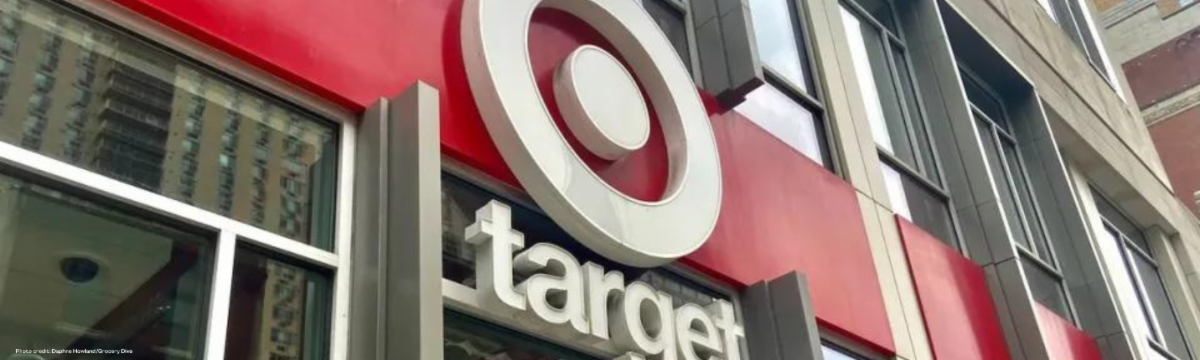
Target Corporation plans to eliminate about 1,000 corporate roles and close 800 open positions as it streamlines operations. Though no store-level jobs are affected, the changes could influence future investments and hiring across Washington’s retail sector.
Together, these decisions reflect an ongoing recalibration across national retail chains, with Washington communities bracing for downstream effects on consumer confidence, local tax revenues, and employment stability.
| | |
Retail community invited to upcoming Tacoma conversation
Members of the retail industry are invited to join a small business roundtable hosted later this month in Tacoma featuring Representative Melanie Morgan (D-29). This event will provide a space to share challenges, explore solutions, and strengthen connections between small businesses and state leadership.
- Thursday, November 13, 2025
- 9 AM to 10:30 AM
- Eastside Community Center – Party Room, 1751 E 56th Street, Tacoma, WA 98404
| | |
Department of Revenue updates webpage and resources for new sales tax law
The Washington State Department of Revenue (DOR) has updated its webpage to provide clearer information about the new sales tax law, ESSB 5814. The changes were made following feedback from the Business Advisory Council and additional input from community and business leaders.
To help businesses better understand and comply with the law, DOR has created several new resources, including an updated webpage, an informational flyer, and a short awareness video. These materials aim to make the requirements easier to navigate and share with business owners across the state.
The Department encourages organizations and community partners to distribute these resources to ensure businesses are informed and prepared. More details and materials are available on the DOR website.
| | |
Paid Family and Medical Leave premiums to rise 23% in 2026
The Washington State Employment Security Department has announced new Paid Family and Medical Leave (PFML) premium rates beginning Jan. 1, 2026. The total premium rate will rise to 1.13 percent of each employee’s gross wages, up from 0.92 percent in 2025. Employers will contribute 28.57 percent of the total premium, while employees will pay 71.43 percent.
For employers, the 23% rate increase from 2025 to 2026 represents an additional $608 in annual PFML taxes for every $1 million in payroll. An employer with a $17 million payroll would therefore pay approximately $10,000 more per year. For workers earning the 2024 average wage of $95,000, the increase amounts to roughly $56 more in annual PFML premiums.
Businesses with fewer than 50 employees are not required to pay the employer portion but must continue collecting employee premiums or pay them on behalf of workers. Employers should begin withholding the updated rate from wages paid on or after Jan. 1, 2026, and note that the Social Security wage cap will increase to $184,500. First-quarter premiums using the new rate will be due by the end of April 2026.
The Employment Security Department will release updated employer resources by the end of November, including new guides, posters, and paystub inserts. Additional program updates include expanded job protections, clarified health care benefit requirements, and changes to small business assistance grants.
More details and resources can be found at paidleave.wa.gov/employer-roles-responsibilities.
| | |
Toxic-Free Cosmetics Act sell-through deadline set for Dec. 31, 2025
Washington retailers and distributors should prepare now for the sell-through deadline under the Toxic-Free Cosmetics Act (TFCA). The law’s initial restrictions took effect Jan. 1, 2025, and products containing prohibited chemicals may be sold only during the one-year sell-through period that ends Dec. 31, 2025.
Key compliance points for retailers:
- Review current inventory and identify any products that may contain restricted substances, including formaldehyde releasers.
- Work with suppliers to confirm formulations and obtain documentation showing products meet TFCA requirements.
- Note interim rules on lead impurities and other transitional provisions that may affect product eligibility.
- Maintain records demonstrating good-faith efforts to comply in case of enforcement inquiries.
- Expect the Department of Ecology to continue clarifying rules and enforcement approaches as the program matures.
For implementation help, compliance resources, and guidance materials are available on the Department of Ecology’s webpage.
Retailers should act promptly to ensure prohibited products are removed from shelves by Dec. 31, 2025, and to minimize disruption to shoppers and operations.
For questions, contact WR’s Director of Policy and Government Affairs, Crystal Leatherman, CLeatherman@WashingtonRetail.org.
| | |
Olympia Workers’ Bill of Rights measure trails by 12% in early results
Early election results show Olympia’s Proposition 1, which sought to raise the city’s minimum wage to $20 dollars an hour and establish a Workers’ Bill of Rights (Prop 1), is likely to fail. As of November 4, preliminary tallies showed 56 percent of voters opposing the measure and 44 percent in favor, with about 8,600 ballots counted.
The proposal included provisions for predictive scheduling, additional work hours for current employees before hiring new staff, and different wage tiers based on business size. While supporters argued the measure would help workers meet the region’s high cost of living, opponents expressed concern about the potential economic impact on small businesses and nonprofits.
This outcome reflects the effective grassroots efforts of Olympia Together, a volunteer-based coalition of small businesses, former city leaders, and community members who rallied to educate voters about the potential unintended consequences of the measure –all on a shoestring budget.
Amalie O’Connor, volunteer-coordinator of Olympia Together, expressed deep gratitude to Olympia voters for engaging thoughtfully with Proposition 1 and for affirming the importance of balanced, sustainable solutions created within our community. The group emphasized its commitment to continuing conversations and working collaboratively to address local challenges moving forward.
Based on turnout trends from Olympia’s 2023 City Council race, the initial ballot count likely represents just over half of total ballots expected. Interestingly, many of the same voters also re-elected City Council incumbents who were vocal supporters of Prop 1.
WR extends gratitude to board member Ruthann Goularte, owner of Drees, a cherished downtown Olympia retailer, for her service on the “Con” Committee in the Voters’ Pamphlet. WR hopes that voters in the City of Tacoma, where a similar measure is expected to appear on the February 2026 special election ballot, will look to Olympia’s example and reject a one-size-fits-all proposal developed without meaningful local input. Final election results will be certified later this month.
| | |
Close election results for Seattle Mayor and King County Executive
Early results in the November general election show close results in some key races. In the race for Seattle Mayor, incumbent Bruce Harrell leads his challenger, Katie Wilson, by 7%, reversing a 9% loss in the August primary. However, Seattle candidates (like Wilson) who are endorsed by The Stranger often surge in ballot counting following election day, so this race is too close to call.
In the campaign for King County Executive, Girmay Zahilay narrowly leads fellow King County Councilmember, Claudia Balducci, by a razor-thin 1.6% margin. Like Wilson, Zahilay was endorsed by The Stranger, so his vote margin could grow significantly over the coming week.
Some races were far less close. The City’s two At-large Councilmembers saw very different outcomes. Council President Sara Nelson (Position 9) trails her challenger by over 16% while Position 8 Councilmember, Alexis Mercedes Rinck, coasted to victory by more than 58%. In the District 2 race, Eddie Lin rolled up an impressive 37% win over Adonis Ducksworth.
In the Seattle City Attorney race, incumbent Ann Davison lost to challenger Erika Evans by more than 25%.
Seattle voters also approved a change in the city’s business and occupancy (“B&O”) that will eliminate or reduce the tax on 90% of all businesses. However, the remaining 10% of businesses with the highest gross revenues will see their tax rate jump by about 60%.
| | |
Washington State Election update: Key races tighten as ballot counting continues
Ballot counting is underway in the 2025 General Election across Washington State. While initial results show some clear frontrunners, others could still shift as later ballots are processed in the coming days.
The following are some of the most-watched state races:
Washington House of Representatives
- Legislative District 33
- The LD 33 House contest between two Democrats remains competitive. Appointed incumbent Edwin Obras holds 47%, with challenger Kevin Schilling ahead at 50%.
Washington Senate
- Legislative District 48
- In another Democrat-on-Democrat matchup, appointed Senator Vandana Slatter leads with 55%, compared to Amy Walen’s 42%.
- Legislative District 26
- In the LD 26 Senate race, appointed incumbent Deb Krishnadasan (D) leads with 52%, while Michelle Caldier (R) trails slightly at 47%.
- Legislative District 5
- Appointed incumbent Victoria Hunt (D) currently leads the LD 5 Senate race with 54%, while Republican challenger Chad Magendanz follows with 45%.
Timeline and Certification
With many ballots still to be counted, several of these races may tighten as updated results are reported. County election officials will continue verifying and tabulating ballots through Tuesday, November 25. The Washington Secretary of State is scheduled to certify the 2025 General Election results by Friday, December 5.
What’s Next
WR will continue to monitor election results as additional ballots are counted and final outcomes take shape.
To view the full list of WR-endorsed state and local candidates, click here.
| | |
USDOT issues emergency rule tightening CDL eligibility for non-citizens
The US Department of Transportation has issued an emergency final rule that changes how states issue Commercial Driver’s Licenses (CDLs) to non-citizens. The rule restricts eligibility to those holding specific lawful employment-based nonimmigrant statuses, such as H-2A, H-2B, or E-2 visas. Individuals with Employment Authorization Documents, including asylum seekers and DACA recipients, will no longer qualify.
States must now verify every non-citizen applicant’s immigration status through the federal Systematic Alien Verification for Entitlements (SAVE) system. Applicants will need to present an unexpired foreign passport and a valid I-94 Arrival or Departure Record to confirm lawful status.
The emergency rule also directs states to immediately halt new and renewed non-domiciled CDL issuances until their systems meet federal compliance standards. States that previously issued CDLs outside of these new requirements must identify and revoke those licenses.
In addition, the rule limits the expiration of CDLs and Commercial Learner’s Permits to the applicant’s authorized period of stay or one year, whichever is shorter.
This change could impact retailers and their subcontractors who rely on commercial drivers holding non-domiciled CDLs, particularly those employing temporary or seasonal foreign workers.
| | |
Federal Reserve cuts key rate but signals caution on future moves
The Federal Reserve lowered its benchmark interest rate for the second time this year, reducing it by a quarter point to about 3.9 percent. The move aims to support economic growth and hiring as inflation remains above the central bank’s 2 percent target.
Federal Reserve Chair Jerome Powell said the decision reflects a careful balance between slowing job growth and persistent inflation but warned that future rate cuts are not certain. He noted significant disagreement among Fed policymakers and said upcoming economic data will guide December’s decision.
Powell also acknowledged that the ongoing federal government shutdown has limited access to key economic reports, including employment and inflation data, which could prompt a more cautious approach in the coming months.
While the rate cut could gradually lower borrowing costs for mortgages, auto loans, and business credit, Powell emphasized that inflation pressures are easing in some sectors, such as housing and services. The Fed will also halt the reduction of its securities holdings in December, a step expected to slightly ease long-term interest rates.
Financial markets responded cautiously, with major indexes ending mixed following Powell’s comments on the uncertain path ahead for monetary policy.
| | |
Rep. Leavitt Brings Statewide Focus to Public Safety, Retail Theft, & ORC
Washington’s Growing Epidemic: The Rising Cost of Retail Crime
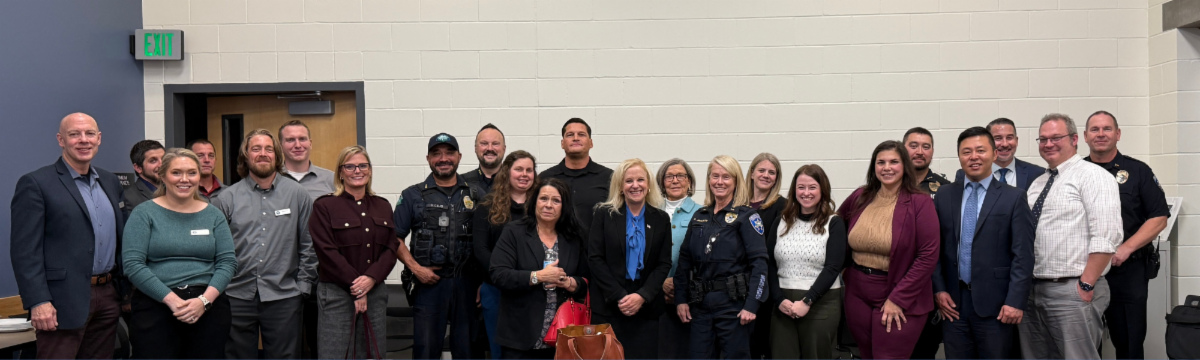
Rep. Mari Leavitt (D-28), in collaboration with the Washington Retail Association and the Washington Organized Retail Crime Association (WAORCA), convened a discussion with lawmakers, law enforcement, prosecutors, and loss prevention professionals from around the state to discuss one of Washington’s fastest-growing, yet often overlooked, public-safety challenges: retail theft and organized retail crime (ORC). The meeting brought together those working on the front lines to share firsthand experience on the rise in retail crime, its impact on workers and customers, and the growing harm being done to the community, as well as local and state governments. Participants also explored opportunities to strengthen coordination and identify legislative needs to reduce theft, support affected businesses and improve public safety.
A National & Local Crisis
According to the NRF’s 2025 Impact of Retail Theft & Violence report, retailers nationwide lost more than $112 billion to theft and organized retail crime last year, and saw a sharp increase in repeat-offenders and violence during thefts. Additionally, small retailers’ survival is at risk. According to a 2024 small business survey from Forbes Advisor, Washington ranked #1 in the nation for small businesses most impacted by retail theft.
Economic Fallout for Washington
Lastly, these crimes come with significant economic consequences. The US Chamber of Commerce estimates that in 2021, Washington experienced an estimated $2.7 billion in stolen goods and as a result, lost out in $603 million in state and local tax revenue. These losses cannot be understated, especially as the state faces the possibility of another revenue shortfall, even after passing one of the largest tax packages in its history.
Next Steps: Strengthening Partnerships and Policy Solutions
The discussion underscored the need for comprehensive legislation, stronger public-private partnerships, consistent prosecution standards, and targeted support for retailers and small businesses disproportionately impacted by crime. The consensus from participants was that addressing retail theft and ORC is essential not only to protect Washington’s economy but also to safeguard workers, consumers, and communities across the state.
Join WR in the Fight Against Retail Crime
WR has been the leading voice in Washington advocating for comprehensive solutions to address retail theft, ORC, and strengthen public safety. WR’s efforts were instrumental in the creation of the Attorney General’s Organized Retail Crime Unit, as well as the development of the ORC Resource Hub, launched in collaboration with Former Governor Christine Gregoire and Challenge Seattle to strengthen coordination and share tools statewide.
To learn more about WR’s ongoing advocacy efforts and to find out how you can get involved, please contact Crystal Leatherman, Director of Policy & Government Affairs, at (360) 884-0771 or cleatherman@washingtonretail.org.
| | |
Retailers face rising theft and violence, new study shows
A new national study finds retailers are continuing to face increasing levels of theft and violence. The Impact of Theft & Violence 2025 report, released by the National Retail Federation and the Loss Prevention Research Council and sponsored by Sensormatic Solutions, shows an 18 percent increase in shoplifting incidents and a 17 percent rise in threats or acts of violence in 2024 compared with the previous year.
The report highlights a troubling shift in organized retail crime, with criminal groups expanding beyond in-store theft into more sophisticated digital, phone, and supply chain schemes. Nearly two-thirds of retailers reported activity from transnational organized groups. Limited law enforcement resources and a lack of prosecutorial follow-through remain major barriers to addressing these crimes.
Retailers are responding by investing in stronger security measures such as improved lighting, cameras, license plate readers, and redesigned store layouts. Industry experts emphasize the importance of shared data and cross-sector coordination to understand and combat the problem.
The National Retail Federation continues to urge Congress to pass the Combating Organized Retail Crime Act, which would strengthen collaboration among federal, state, and local law enforcement to address these growing threats.
| | |
Woman arrested in connection with multiple thefts at Lacey Target
A 44-year-old Shelton woman was arrested after allegedly stealing merchandise from a Target store in Lacey over several months.
According to a report from the Lacey Police Department, store employees detained the woman on October 20 after she was accused of taking about $273 worth of items without paying. Further investigation revealed she was connected to several prior incidents at the same location and another Target store in Olympia.
Using the store’s radio frequency identification tracking system, investigators linked the suspect to at least five separate thefts between June and September. In each case, she reportedly used self-checkout to pay for some items while leaving others unscanned. The total value of unpaid merchandise from the combined incidents was estimated at $753.56.
The woman was booked into the Thurston County Corrections Facility on suspicion of second-degree organized retail theft and has been banned from returning to the store.
Retail theft continues to be a significant concern for local businesses, and tools such as RFID technology are increasingly being used by retailers to detect and prevent loss.
| | |
New report reveals billions lost to rising cargo theft
The American Transportation Research Institute (ATRI) has released a new study highlighting the growing threat of cargo theft and its significant economic impact across the United States. According to the research, the trucking and logistics industry faces an estimated 6.6 billion dollars in annual losses, or more than 18 million dollars each day. Motor carriers report average yearly theft losses exceeding 520,000 dollars, while logistics service providers face nearly 1.84 million dollars in losses.
The study points to increasingly sophisticated theft methods, including cyber fraud and digital deception. One high-profile case involved criminals impersonating company officials and spoofing GPS systems to steal a million-dollar shipment of tequila. Experts warn these tactics are now part of a broader, organized global enterprise that threatens supply chain security and raises costs for businesses and consumers.
ATRI recommends several strategies to address the crisis, such as creating stronger security cultures within carriers, enacting model state legislation with clear penalties, and establishing a centralized federal cargo theft reporting agency. Lawmakers are also considering the bipartisan Combating Organized Retail Crime Act, which would strengthen data sharing and enforcement to help combat these crimes.
The full ATRI report is available here.
| | |
Retail thief sentenced to 13 years for $750,000 mall crime spree
A man convicted of stealing more than $750,000 in merchandise from malls across western Washington has been sentenced to 13 years in prison. Micah Snyder, 43, was described by the Washington Attorney General’s Office as one of the most prolific retail thieves the state has seen in years.
Snyder pled guilty in Snohomish County Superior Court to multiple charges, including first-degree burglary, unlawful firearm possession, trafficking in stolen property, malicious mischief, and organized retail theft. Between January and March 2025, Snyder carried out a series of burglaries targeting malls in Lynnwood, Tukwila, and Puyallup.
Authorities said Snyder broke into stores after hours using firearms and axes, stealing high-end sneakers, streetwear, and jewelry. During one incident at the South Hill Mall, he fired into a jewelry kiosk before smashing display cases, taking more than $45,000 in merchandise. Another break-in at the Tacoma Mall resulted in losses of about $249,000.
Snyder was arrested in Pierce County in March by the Snohomish County Violent Offender Task Force following an investigation led by the Lynnwood Police Department and prosecuted by the Attorney General’s Office.
| | |
Where to find the best Black Friday 2025 deals
The holiday shopping season is officially underway, and this year’s Black Friday, falling on November 28, 2025, is shaping up to be one of the biggest yet. Major retailers have already begun rolling out early deals, giving shoppers plenty of time to snag savings before the crowds hit.
Best Buy is kicking things off early, offering discounts from November 20 through 29, with some markdowns available as soon as October 31. Expect major savings on TVs, laptops, and home appliances. Target is running week-long promotions throughout November, featuring deep cuts on electronics, toys, and home goods. Their most popular offers often go live online at midnight, so it pays to plan ahead.
Amazon is once again leading the charge with rolling daily deals across tech, fashion, and home essentials, while Macy’s is highlighting apparel, accessories, and home décor—many discounted by 40–60 percent. Ulta Beauty fans can find early markdowns on hair tools, fragrance sets, and trending skincare items. For those working on home projects, Home Depot is expected to unveil major savings on tools, appliances, and outdoor gear around November 27.
Even Walgreens is joining in, offering holiday savings on wellness, beauty, and seasonal gift items.
With so many early deals available, now’s the time to make your shopping list, sign up for retailer alerts, and compare prices. Whether you’re buying online or in-store, Black Friday 2025 is packed with opportunities to save big.
| |
WR diversity statement
WR is committed to the principles of justice, equity, diversity, and inclusion. We strive to create a safe, welcoming environment in which these principles can thrive.
We value all people regardless of race, ethnicity, gender, religion, age, identity, sexual orientation, nationality, or disability, and that is the foundation of our commitment to those we serve.
| | |
Renée Sunde, President/CEO — 360.200.6450 — Email
Crystal Leatherman, Dir of Policy & Government Affairs — 360.200-6453 — Email
Rose Gundersen, State and Local Gov't Affairs Associate — 360.200.6452 — Email
| | | | |