Newsletter — March 26, 2026 | | |
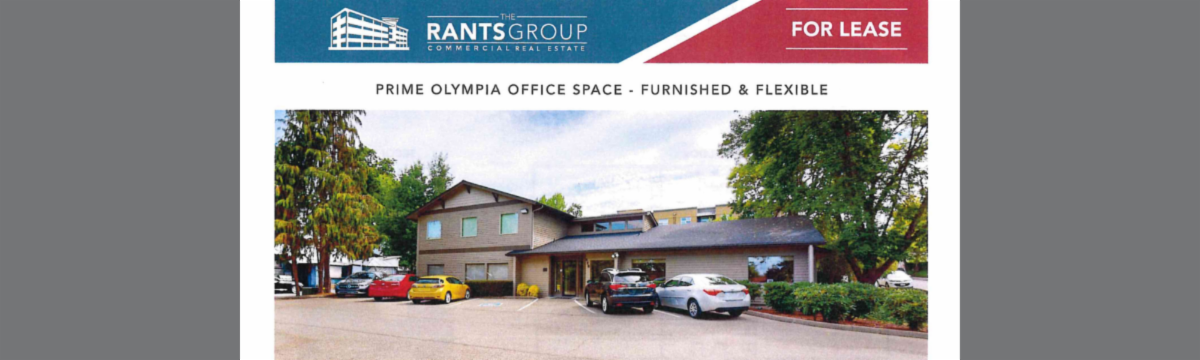
WR office space now available for lease
WR is offering first-level professional office space for lease, creating an opportunity for businesses seeking a well-located and collaborative environment.
The space includes access to shared amenities that support daily operations, along with a central location and convenient access to surrounding businesses and services.
This opportunity is well-suited for organizations looking to establish or expand their presence in a professional setting connected to the retail community.
Businesses interested in details on layout, terms, and availability are encouraged to review the full leasing document.
| | |
POLICY
ECONOMY
ON THE LOCAL FRONT
POLITICAL NEWS
RETAIL THEFT & PUBLIC SAFETY
IN THE NEWS
| | |
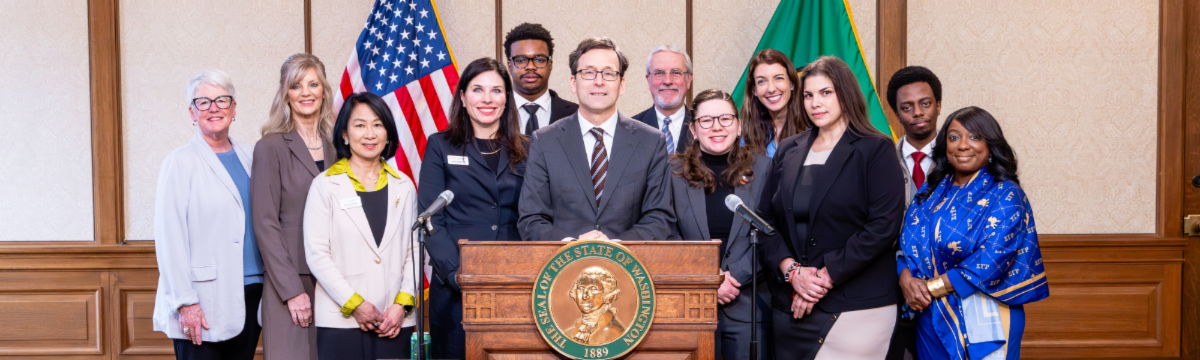
WR advocacy delivers: Governor Ferguson signs HB 2274 into law
Governor Bob Ferguson has signed HB 2274 into law, marking a major win for Washington’s business community and an important step toward restoring balance and common sense to the Commercial Electronic Mail Act.
WR, our members, and coalition partners are especially grateful to Prime Sponsor Rep. Larry Springer and companion sponsor Senator Harris, sponsor of SB 5976, for their leadership and partnership in advancing this issue.
Why HB 2274 Was Needed
WR brought this legislation forward in response to a growing problem that emerged after the Washington Supreme Court’s Brown v. Old Navy decision. Following that ruling, businesses faced a wave of lawsuits over routine marketing email subject lines, even when the body of the message accurately reflected the promotion, and there was no requirement that a consumer opened, read, or relied on the email. What began as a consumer protection law was being applied in a way that created significant legal exposure over ordinary advertising language.
A Targeted Fix to CEMA
HB 2274 delivers a targeted and meaningful fix. The new law clarifies the standard for misleading subject lines and recalibrates statutory damages, helping address the recent surge in litigation while preserving core consumer protections.
A True Coalition Effort
This achievement would not have been possible without a tremendous coalition effort. WR is deeply grateful to the businesses, chambers, trade associations, and partners who stood with us throughout this process. Thank you to everyone who signed in PRO during public hearings, testified, engaged lawmakers, signed coalition letters, shared feedback, and supported advocacy efforts behind the scenes. Your involvement made a real difference.
Looking Ahead
While HB 2274 is a meaningful and much-needed step, the work is not over. Interim stakeholder discussions will now begin as we explore a more robust, long-term solution. We look forward to continuing that work with lawmakers, coalition partners, and stakeholders in the months ahead.
If you are interested in joining the interim stakeholder work, please contact Director of Policy & Government Affairs Crystal Leatherman at cleatherman@washingtonretail.org or 360-884-0771.
| | |
Washington updates cash transaction rules amid penny shortage
Gov. Bob Ferguson has signed HB 2334, supported by Washington Retail and sponsored by Rep. April Berg (D–Mill Creek), establishing clear rules for when businesses should round cash transactions up or down to the nearest five cent increment. With the federal government no longer producing pennies, there was no guidance on how retailers should adjust cash transactions as pennies are increasingly scarce. Washington has now created a predictable, statewide standard.
Under HB 2334, beginning June 11, 2026, retailers may round cash payments to the nearest nickel.
- Totals ending in 1 or 2 cents round down to 0
- Totals ending in 3, 4, 6, or 7 cents round to 5
- Totals ending in 8 or 9 cents round up to 10
Electronic payments, including credit, debit, and digital transactions, are not affected and continue to be calculated to the exact cent.
This new law provides long-needed clarity for both consumers and retailers. Businesses across Washington have struggled with persistent penny shortages and the rising cost of minting one-cent coins, which cost 3.7 cents each to produce in 2024, according to the U.S. Mint. HB 2334 offers a simple, consumer-friendly solution that reduces friction at the point of sale while maintaining transparency and fairness.
The new law also includes a safe harbor that protects retailers who follow the rounding rules in good faith from inadvertent violations of state or local laws, including existing rounding ordinances in Snohomish and King Counties.
With this change, Washington joins a growing number of states responding to the national penny shortage. According to Associated Press, states including Arizona, Florida, Oregon, Tennessee, Virginia, and Indiana have already adopted or advanced similar rounding policies as the federal government phases out the penny. Washington’s action places it among the early adopters of modernizing cash transaction rules to reflect today’s currency realities.
WR supported HB 2334 because it modernizes the state’s cash handling rules, provides predictability for businesses and customers, and strengthens the reliability of in-store transactions. With the Governor’s signature, retailers now have a clear, uniform framework for handling cash purchases in a world where pennies are increasingly impractical.
| | |
Washington strengthens community reinvestment with HB 2523
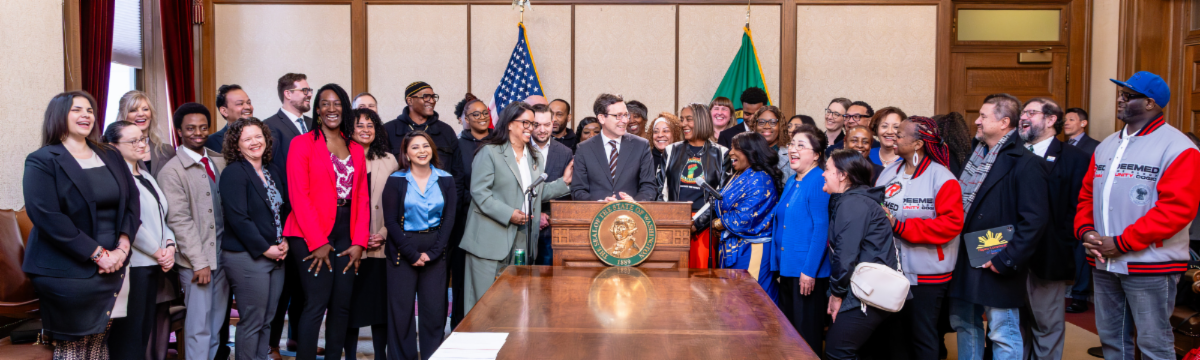
On March 23, 2026, Governor Bob Ferguson signed HB 2523 into law, advancing Washington’s community reinvestment program and reinforcing the state’s commitment to long-term economic opportunity. Prime sponsored by Rep. Kristine Reeves, the bill passed the House 88-9 and the Senate 45-3. Companion legislation, SB 6275, was sponsored by Sen. T’wina Nobles.
HB 2523 helps expand access to small-business support, entrepreneurship resources, financial literacy training, and other economic development tools that drives real poverty reduction and long‑term economic independence. The law also continues investments in areas tied to long-term community stability, including reentry services, violence prevention, and economic support for historically marginalized and underrepresented communities. Just as importantly, HB 2523 places added emphasis on accountability. The law establishes a clearer funding structure, reporting requirements, plan updates, and independent review to help ensure public dollars are used effectively and deliver measurable results.
WR supported HB 2523 because these investments can help strengthen healthy commercial corridors by expanding economic participation, supporting workforce connections, and creating more resilient local business environments. We appreciate the bill’s thoughtful approach and its recognition that long-term economic growth depends on investing in communities in ways that are intentional, transparent, and built to last. We also appreciate the efforts of advocates, including FMS Global Strategies and the Washington Workforce Association, whose work helped move this legislation forward.
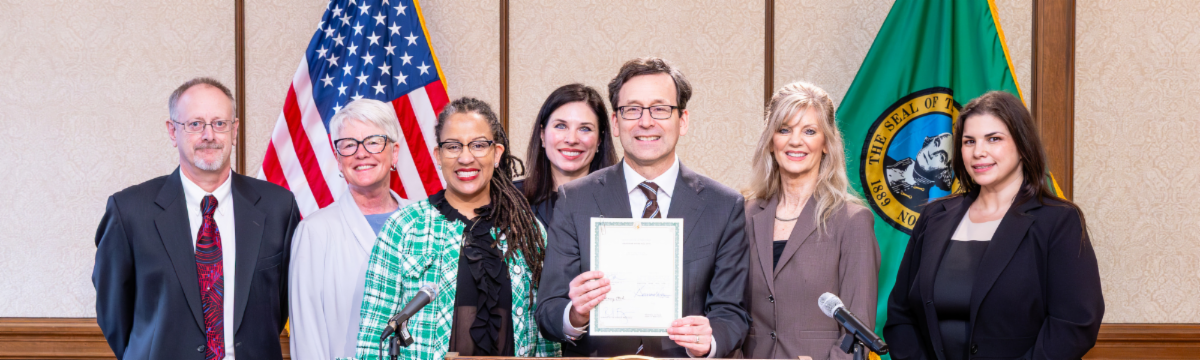
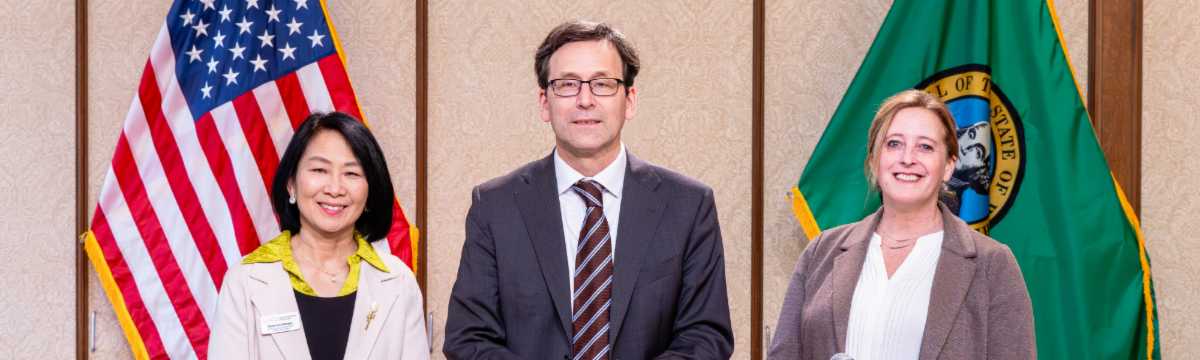
| | From the right: Rose Gundersen, Washington Retail's State and Local Govt Affairs Association, Governor Ferguson, Elizabeth New with the WA Policy Center | | |
Governor signed employment law legislation that promotes transparency
This Monday, Governor Ferguson signed two employment bills with unanimous bipartisan support aimed at improving transparency for both workers and employers. Senator King (Yakima), Ranking Member of the Senate Labor & Commerce Committee, served as the prime sponsor of both bills.
SB 6134 requires the Employment Security Agency to provide clear notice to striking workers who receive unemployment (UI) benefits. The notice explains the legal obligation to repay UI benefits if backpay wages are later received. The requirement was inspired by the Washington Policy Center’s analysis to ensure workers receive direct and timely notice even though ESD has already created such guidance online.
SB 6136 strengthens transparency in workers’ compensation rate setting by requiring L&I to disclose both the actuarially indicated rate and the proposed premium rate for each risk class. This approach provides enhanced public’s access to rate subsidization while preserving the Director’s authority to utilize the contingency reserve to moderate rate increases.
| | |
AI bills signed into law as Olympia’s focus on artificial intelligence grows
Artificial intelligence was one of the bigger emerging policy topics during the 2026 legislative session, with two AI-related bills passing the Legislature and signed into law by Governor Ferguson on Tuesday, March 24, 2026.
HB 1170 addresses disclosure and provenance standards for certain AI-generated or materially altered content. WR was initially opposed to the bill, but through stakeholder work with prime sponsor Rep. Clyde Shavers and the business community, including WR, AWB, TechNet, and WTIA, the legislation improved significantly, and WR ultimately moved to a neutral position. The final bill focuses on large, covered providers and includes limits related to business-to-business uses and certain consumer-facing exclusions.
HB 2225, Governor-request legislation, was intended to address high-risk AI companion chatbots, particularly those affecting youth. WR supported the bill’s intent but monitored it closely and worked with Rep. Callan, the Governor’s Office legislative team, and industry partners to ensure the measure targeted high-risk uses of AI without sweeping in retailers’ routine use of chatbots and other tools designed to improve the customer experience. WR is neutral on the final bill. The enacted measure focuses on AI companion chatbots and includes added transparency, safety, and youth protection requirements.
The discussion around AI public policy is only going to grow from here. WR members interested in joining the member-only AI workgroup are encouraged to contact Director of Policy & Government Affairs Crystal Leatherman at cleatherman@washingtonretail.org or 360-884-0771.
| | |
Retail outlook shows steady growth amid economic uncertainty
The National Retail Federation (NRF) projects retail sales will grow 4.4 percent in 2026, reaching $5.6 trillion, according to a new forecasting model developed with Oxford Economics. This rate exceeds the 10-year average of 3.6 percent, excluding pandemic-era volatility.
NRF leaders point to continued consumer resilience as a key driver. Household spending remained strong in 2025 despite fluctuating economic conditions and is expected to continue supporting growth in the year ahead. Higher income households are projected to account for a significant share of retail spending, while lower income consumers may remain more cautious.
Economic conditions present a mixed outlook. Global tensions and trade policy uncertainties could impact markets, while inflation is expected to stay elevated through midyear before easing later in 2026. Modest gains in consumer spending may also be supported by larger tax refunds tied to recent federal tax changes.
The labor market is expected to soften slightly, though unemployment is forecasted to remain below 4.5 percent. Despite lukewarm consumer sentiment, NRF notes that spending trends have remained relatively strong, supported by income growth and stable household finances.
Overall, WR members can expect moderate but steady growth, with economic fundamentals continuing to support consumer activity.
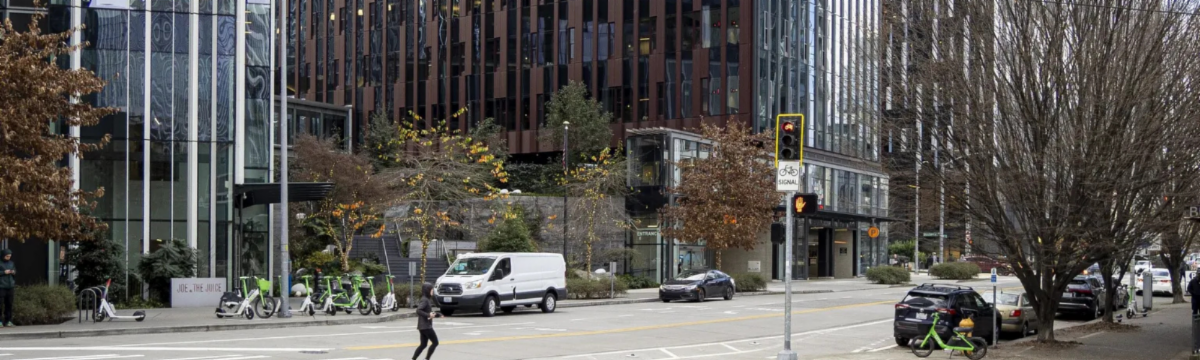
| | Amazon buildings in South Lake Union in Seattle in January. Amazon, Expedia Group, Meta and Microsoft all reported layoffs, albeit a small fraction of their overall employment, writes the columnist. (Kevin Clark / The Seattle Times) | | |
WA has a jobs crisis. Why won’t our leaders say it?
March 22, 2026
By Alex Fryer
Seattle Times Opinion columnist
In all the hue and cry over taxes in Olympia this year, there was one seemingly overlooked fact.
State lawmakers plugged a budget hole by tapping about $880 million from the state’s rainy day fund, officially known as the Budget Stabilization Account. By law, they were able to access this only-in-emergencies money with a simple majority vote because the state’s employment growth was forecast at less than 1%.
In other words, we’re in for some stormy weather, employment-wise.
You’d never have guessed the job situation was that dire, given all the talk around taxes and spending over the last few months. Most of it centered on how rich people and big businesses would react if and when the tax man cometh for more and more.
The job market sucking wind? Didn’t seem to be much of a priority.
That ought to change.
How about someone in political leadership stepping up to the microphone and saying simply:
“We want businesses to come here. We want them to pay their employees a lot of money. We know every state and region is in competition for good jobs, and we want to win.”
That simple declaration won’t change the world, but it does create a mindset, a philosophical grounding that for all the ills of corporate America — and they are very, very many — it is better to live in a strong economy than one that fails to put food on the table.
To be sure, the economic warning light is blinking red.
| | |
Easter spending projected to reach record levels
Consumer spending for Easter is expected to reach a record $24.9 billion in 2026, according to new survey data from the National Retail Federation and Prosper Insights and Analytics. This surpasses the previous high of $24.0 billion in 2023, with per-person spending projected at $195.59.
Despite ongoing economic uncertainty, most consumers continue to prioritize holiday traditions and celebrations. About 80 percent of respondents plan to celebrate Easter, with tradition cited as the leading motivation for purchases. Promotions, social shopping experiences, and seasonal products are also influencing buying decisions.
Candy remains the most popular purchase, with 92 percent of consumers planning to buy sweets. Food follows closely at 90 percent, with total food spending expected to reach $7.5 billion. Other categories include gifts at $3.9 billion, clothing at $3.7 billion, candy at $3.5 billion, and flowers at $2.2 billion.
Common ways people plan to celebrate include preparing a holiday meal, visiting friends and family, attending church, and hosting Easter egg hunts.
Discount stores continue to be the most popular shopping destination, followed by department stores and online retailers. Notably, more than half of those not celebrating still plan to shop Easter-related sales, highlighting continued consumer engagement across retail categories.
| | |
Mayor pauses more surveillance cameras and pushes for more housing for the homeless
Seattle Mayor Katie Wilson moved ahead on a couple of policies that impact retailers operating in the city.
During the campaign, Mayor Wilson expressed concern about Mayor Harrell’s planned expansion of surveillance cameras, reflecting the fears of some that the information collected could end up in the hands of ICE and other federal agencies. Indeed, in July 2024, the city’s surveillance working group urged the city to not install police surveillance cameras.
The Mayor chose to keep operating existing surveillance cameras and install – but not turn on – 26 new cameras in the area south of downtown. The Mayor said they could be activated if a “credible threat” arises that justifies their use, like an attack during the FIFA World Cup.
The City will also contract with researchers at New York University’s Policing Project to conduct a “privacy and data governance audit” to determine whether to expand the use of surveillance cameras. The researchers expect to complete the audit after a few months.
“I think that if, the audit comes back and says everything’s totally secure, we’re not at all worried about this data getting into the hands of federal government I think likely my decision at that point would be to move forward with the expansion of the pilot,” Wilson explained. She added that the question of whether “we want to live in a society where there’s cameras on every corner” is legitimate.
Finally, the Mayor ordered the Seattle Police Department (“SPD”) to switch off its Automated License Plate Reader (“ALPR”) systems installed on 400 patrol cars and 6 parking enforcement vehicles. A new state law prohibits the use of ALPR systems around schools, courthouses, and other locations. The SPD will study whether it can geofence the technology around prohibited locations.
And, in a first step on her commitment to begin addressing homelessness, Mayor Wilson sent three pieces of legislation to the City Council. One bill would provide $5 million to build new tiny house villages. Another would authorize the City to lease and prepare land for future shelters. The third bill could trigger more scrutiny. It would expand the size of tiny house villages from the current limit of 100 people to 250 residents.
The Mayor has set the goal of creating 500 new shelter beds before the World Cup arrives in June and another 500 before the end of the year. She has also set a 4-year goal of creating 4,000 new beds for the homeless.
| | |
WA Legislature sees change with key retirements
March 24, 2026
By Sophia Sostrin
Seattle Times staff reporter
OLYMPIA — Multiple high-profile departures will reshape the Washington state Legislature as several senators and representatives have announced plans to retire or make bids for higher office.
The exits span both parties and will open contested races up and down the ballot heading into November. Taken together, they represent a moment of political ambition and transition in Olympia — one that could reverberate far beyond the state’s borders.
Here is a look at nine of the seats being vacated as election season approaches. All 98 House seats will be on the ballot, as will 24 Senate seats. Candidates have until May 8 to file their declaration to run for office.
Sen. Steve Conway, D-South Tacoma
Conway, 81, has represented the 29th Legislative District in Pierce County since winning a special election in 1993 — making him the longest continuously serving Democratic member of the state Legislature. He served as a representative for 18 years before his election to the Senate.
Conway said in a statement he plans to spend more time with his family in his retirement.
Conway is vice chair of the Labor and Commerce Committee, vice chair of the Senate Rules Committee, and a member of the Ways and Means Committee. Conway’s focus has largely been on labor issues — before his time in the Legislature, he was a labor relations specialist for the United Food and Commercial Workers Union.
Democratic Rep. Sharlett Mena, D-Tacoma, confirmed in January that she would run for the seat, which will leave her House position open.
| | |
Work Opportunity tax credit supports hiring and workforce access
The Work Opportunity Tax Credit, or WOTC, is a federal program designed to help employers hire individuals who face barriers to employment while offsetting some hiring and training costs. Established in 1996, the program has been periodically renewed by Congress and continues to connect businesses with job seekers from targeted groups.
Eligible individuals may include veterans, people recently released from incarceration, and others who may face challenges entering the workforce. By offering a financial incentive, WOTC encourages employers to expand their talent pool and consider candidates who might otherwise be overlooked.
Employers can receive a federal income tax credit based on wages paid during an employee’s first year, with most credits up to $2,400 per eligible hire. Some categories, including certain veterans, may qualify for higher amounts. To claim the credit, employers must confirm eligibility and receive certification through their state workforce agency.
Research suggests the program may also reduce reliance on public assistance programs. Estimates indicate each certified hire can generate about $17,700 in public savings through decreased use of services such as Medicaid and food assistance.
For nearly 30 years, WOTC has supported workforce participation while helping businesses meet hiring needs, aligning with shared goals of economic growth and opportunity.
| | |
Supplemental budget secures $500,000 for organized retail crime pilot program
The legislature’s final supplemental budget includes $500,000 in General Fund-State funding for fiscal year 2027 for the WAORCA pilot program, an important investment in Washington’s ongoing efforts to respond to organized retail crime.
This funding was secured thanks in large part to the leadership of Rep. Mari Leavitt, who has spent significant time working to better understand this pervasive issue and help advance meaningful solutions. Over the interim, Rep. Leavitt took a hands-on approach to learning about the real-world impacts of organized retail crime (ORC), which included attending the NRF State Legislative Leadership Experience, attending an ORC conference, convening a public safety roundtable discussion during the interim, and participating in a ride-along during a fence operation bust to see these challenges up close.
This funding will continue to support the pilot program launched last year, which is focused on developing innovative ways to respond to organized retail crime, particularly through diversion-oriented programs. It builds on progress already made and reinforces the value of sustained resources in tackling retail crime.
While no other major public safety legislation supported by WR advanced this session, this funding is an important step forward.
We are grateful to Rep. Leavitt for her partnership, leadership, and commitment to this issue, and we look forward to continuing this work in the interim.
| | |
Join the April 28 Tri-City Advocacy Roundtable to strengthen grassroots engagement
What just happened in Olympia, and what it means for your business.
This session breaks down real-world impacts on costs, regulations, and workforce challenges, while providing a path to influence what comes next.
Register HERE
The Tri-City Regional Chamber has invited Rose Gundersen, Washington Retail Association’s State & Local Government Affairs Associate, to share insights on how recent legislative changes will affect retailers and employers across the region.
Participation directly informs grassroots advocacy as the region heads into the interim and prepares for the 2027 legislative session. A strong example of this impact: collective advocacy helped secure $3.2 million for the largest waste tire cleanup in Richland.
If not at the table, perspectives may not be reflected. Join to ensure business voices remain practical, informed, and effective
| | |
Join the opening of new food waste facility in Longview
WR members are invited to attend the grand opening of a new food waste processing facility in Longview on April 29, 2026, in recognition of Stop Food Waste Day.
Hosted by Divert, Inc., the event will celebrate the launch of its Integrated Diversion and Energy Facility, designed to support food retailers, manufacturers, and local jurisdictions in reducing food waste and meeting Washington’s organics management goals.
Attendees will have the opportunity to hear from speakers, participate in the official ribbon cutting, and tour the new facility. The site uses advanced technology to convert unsold or inedible food into renewable energy and organic fertilizer, while also providing data insights to help businesses reduce waste and increase food donation efforts.
Event details:
- April 29, 2026
- 11:00 a.m. PT
- 1800 Prudential Blvd., Longview, WA 98632
The program will include opening remarks and a facility reveal at 11:00 a.m., followed by a ribbon cutting and photos at 11:45 a.m., and guided tours beginning at approximately 11:55 a.m.
WR encourages members interested in food waste reduction, sustainability, and evolving regulatory requirements to attend.
RSVP here
| |
WR diversity statement
WR is committed to the principles of justice, equity, diversity, and inclusion. We strive to create a safe, welcoming environment in which these principles can thrive.
We value all people regardless of race, ethnicity, gender, religion, age, identity, sexual orientation, nationality, or disability, and that is the foundation of our commitment to those we serve.
| | |
Alesha Shemwell, Interim CEO — 360.200.6450 — Email
Crystal Leatherman, Dir of Policy & Government Affairs — 360.200-6453 — Email
Rose Gundersen, State and Local Gov't Affairs Associate — 360.200.6452 — Email
| | | | |