Newsletter — February 19, 2026

WR launches search for next president and CEO


WR has launched a national search for its next President and Chief Executive Officer following the planned retirement of longtime leader Renée Sunde.


Since December 2025, Interim CEO Alesha Shemwell has provided continuity and stability while the WR Board of Directors conducts a comprehensive search. She will continue serving until a new CEO is selected.


WR is seeking a strategic leader to guide advocacy efforts, strengthen member engagement, and position the association for continued success in a changing retail environment.


Learn more about the role and apply here.

IN THIS ISSUE

POLICY

ECONOMY

ON THE LOCAL FRONT

RETAIL THEFT & PUBLIC SAFETY

IN THE NEWS

What we are tracking — WR Legislative Hot List


WR is closely monitoring the bills that have advanced through the legislative process. Each week, we’ll spotlight our weekly “hot list” key legislation that could have the most significant impact on WR members.


Commercial Electronic Mail Act (CEMA) (SB 5976 / HB 2274)

A proposed substitute bill was negotiated to keep the bill moving forward, with opponents of the bill shifting to a neutral position. The substitute lowers statutory damages from $500 to $100 and adds a knowledge standard tying liability to what a sender knew or reasonably should have known. However, it does not include retroactivity, an injury requirement, or a requirement linking subject-line language to the commercial nature of the email. While not addressing recent court precedent or underlying litigation drivers, the changes are expected to reduce exposure and slow escalation, with more comprehensive reform planned for the next session.

Separately, ESHB 2274 passed the House 86–11 (1 excused) with bipartisan floor support and no opposition testimony. Floor discussion emphasized that the underlying law was written in 1998 and is being applied to modern communications in ways creating significant business risk. The bill was characterized as a stabilization step rather than a final fix, with interim stakeholder work planned to pursue broader reform.

Position: WR supports this bill.

Status: The bill has moved to the Senate and must clear policy committee by February 25 and pass the chamber by March 12 to stay on track this session.


Employer Medicaid Reimbursement (SB 6173)

SB 6173 would require employers to reimburse the state for healthcare costs if their employees utilize Apple Health (Medicaid). Stakeholders are concerned this would create a significant new employer cost, effectively operating as a hidden tax on businesses, with estimated impacts approaching $1 billion across the employer community. A large coalition of employer and industry groups is actively coordinating opposition, with AWB leading engagement. A detailed memo outlining technical, legal, and implementation concerns has been submitted to the bill sponsor. Current advocacy efforts are focused on both policy concerns and emphasizing the substantial fiscal impact to employers, even as broader policy discussions continues.

Position: WR is opposed to this bill.

Status: The bill is currently awaiting a vote in the Senate Ways & Means Committee scheduled for February 19, 2026.


Immigration enforcement employer requirements & penalties (HB 2105)

This is modeled after California’s 2017 Immigrant Worker Protection Act, but the initial version would significantly expand compliance requirements and penalties well beyond California’s framework, including establishing a private right of action and imposing high fines multiplied by the number of Washington-based employees. The bill was executed out of House Appropriations on 2/7. WR and the broader business community testified in opposition, primarily due to concerns about the private right of action.

Position: WR is opposed to this bill.

Status: The bill has passed the House and is currently moving through committee in the Legislature as of mid‑February 2026.


Promoting transparency in workers’ comp rate setting and subsidization (HB 2188 / SB 6136) 

This bill strengthens transparency in the workers’ compensation premium rate-setting process by requiring additional public reporting when the Department of Labor & Industries (L&I) sets rates below actuarially indicated levels. While the Director retains the discretion to adopt rates lower than actuarial rates, the bill requires clear disclosure of both rates by each risk class to the Legislature, the Workers’ Compensation Advisory Committee, and the public.

For employers, HB 2188 does not change benefit levels or directly alter premium calculations. Instead, it enhances visibility into how rates are determined, including whether contingency reserves are being used to moderate increases and whether limiting increases in certain risk classes may shift costs indirectly to others. 

Position: WR supports this bill.

Status: HB 2188: Advanced to House Rules for second reading; SB 6136: Set for public hearing in House Labor & Workplace Standards Committee on Feb 25 at 8:00 AM.


Plastic Bag Ban (SB 5965)

Multiple proposals this session would revise carryout bag policies, ranging from expanded plastic bag bans and fee increases to proposals that would repeal fees and thickness requirements. WR supports data-driven flexibility and opposes measures that disproportionately impact low-income shoppers. Most recently, the Senate Environment Committee amended the plastic bag bill to ban plastic bags and set an 8¢ paper bag fee (reduced from earlier proposed higher amounts). The amendment created a negative fiscal impact, and the bill has now been referred to Ways & Means, where the key question will be whether lawmakers choose to fund the resulting revenue shortfall.

Position: WR is opposed to this bill.

Status: Feb 19: Scheduled for executive session in the Senate Committee on Ways & Means at 4:00 PM


DOR “technical” tax-administration cleanup bills (HB 2257 / SB 6113)  

This bill raises significant concern because it could expand taxation on advertising, particularly if constitutional challenges to the digital advertising tax succeed. Earlier language included a provision that would have eliminated the entire section, including existing deductions and exemptions — if any portion of the law was struck down, potentially broadening an advertising sales tax to cover physical signage, in-store displays, point-of-sale materials, print inserts, and circulars in addition to digital advertising. Due to the potential broad retail impact and ongoing legal scrutiny around differential treatment of digital versus traditional advertising, this remains a high-priority issue. As of 2/6/2026, the tax administration cleanup bill was amended to remove the Section 26 “blow-up” provision that could have eliminated key deductions and exemptions (including retail signage), with support from House leadership. The Senate has now voted on SB 6113 and, consistent with the House’s action on HB 2257, removed the “blowup” amendment.

Position: WR has concerns with this bill.

Status: HB 2257 is in House Rules for second review after Finance Committee approval; SB 6113 has passed both chambers and awaits final enactment.


Decrease in Estate Tax Increase Under Consideration (HB 2736 / SB 6347) 

The Senate is awaiting full floor action on legislation to pare back portions of last year’s estate‑tax increase (SB 6347) that reduces projected state revenues by $44.8M in FY 2027 and $191.1M in FY 2028, the first full year of impact. Meanwhile, the House will hear similar legislation (HB 2736) that goes further by fully restoring the pre-2025 estate tax rate structure beginning July 1, 2026. 

Position: WR has concerns with this tax.

Status: HB 2736 was referred to the House Finance Committee on February 12 and is awaiting further action, while SB 6347 passed the Senate on February 16 by a 38 to 11 vote after adoption of floor amendments and third reading.


Bills not likely to advance

Textile EPR (HB 1420)

Textile Extended Producer Responsibility program modeled on California law. Not ready this session; potential future alignment with CA assessment model. 

Position: WR opposed this bill.


ORC Sentence Enhancements (HB 2209) 

This bill proposed adding extra felony sentencing time when the value of stolen/possessed/trafficked property was high. It would have applied to crimes including theft, possessing stolen property, second-degree robbery, theft with intent to resell, organized retail theft, retail theft with special circumstances.

Position: WR supported this bill.


Grocery Algorithmic Pricing (HB 2481)

This bill targeted “surveillance-based price discrimination” and “surge pricing” in retail/grocery settings, but as drafted remained overly broad and could have unintentionally restricted routine, consumer-friendly pricing practices such as sales/markdowns, flash discounts, coupons, loyalty offers, and targeted discounts for groups like seniors and veterans. 

Position: WR opposed this bill.


Data Broker Registry (HB 2483) 

WR opposed this bill because it severely restricts common employer monitoring tools—including cameras, keystroke tracking, and system or badge logins—while imposing vague notice requirements, statutory damages, and a private right of action. 

Position: WR opposed this bill.


Ban certain rodenticide (HB 2516) 

This proposal places a moratorium on rodenticides with anticoagulants and rodenticides containing bromethalin as an active ingredient before evaluating its impact on public health and working with relevant agencies such as the Department of Health and Agriculture. Alternatives have not been studied adequately to ensure effectiveness and cost equivalence. Prime sponsor Legislators indicated there will be continuous stakeholdering during the interim.

Position: WR opposed this bill.


Pathway to unionizing security guard by establishing an industry standard board  (HB 2524) 

This bill would have established an industry standards board for security guards. The board would set requirements for training, wages, benefits, and working conditions, create a private right of action (PRA), and be funded through workers’ compensation premium dollars. Due to concerns about increased costs, regulatory burden, and litigation exposure.

Position: WR had concerns with this bill.


Mattress EPR (SB 6271) 

This bill replaces HB 1901 introduced in 2025 with an EPR framework with more agency oversight and fines for non-compliance. Producers will be responsible for all costs related to an EPR organization while some retailers would become categorized as producers and continue to prohibit retailers from collecting a point-of-sale recycling fee like those in other states. Legislators indicated there will be continuous stakeholdering during the interim.

Position: WR opposed this bill.

Washington Retailers support bipartisan legislation to head off onslaught of lawsuits after state Supreme Court ruling last year


An April 2025 court ruling on the Commercial Electronic Email Act applied a broad standard for lawsuits against businesses using email marketing to grow and sustain their businesses.


The Washington State House of Representatives passed House Bill 2274 this week with a bipartisan vote of 86–11.The measure was introduced by Rep. Larry Springer, D-Kirkland, and Rep. Stephanie McClintock, R-Vancouver.


The legislation updates the state’s Commercial Electronic Mail Act (CEMA) following the Washington Supreme Court’s 2025 decision in Brown v. Old Navy, LLC. Since that ruling, nearly 80 lawsuits have been filed in Washington courts, many targeting routine email subject lines without allegations of consumer harm.


The bill responds to the lawsuit surge by providing targeted stabilization measures while preserving core consumer protections. House Bill 2274, as adopted: 

  • Reduces statutory damages from $500 to $100 per email, lowering the financial multiplier driving high-volume litigation. 
  • Applies a knowledge standard, tying liability to what a sender knew or reasonably should have known at the time the email was sent. 
  • Preserves accountability for genuinely false or misleading subject lines. 
  • Maintains CEMA as a per se violation of the state’s Consumer Protection Act, keeping enforcement authority intact.


“This legislation reflects bipartisan recognition that the current trajectory of lawsuits is unsustainable,” said Alesha Shemwell, Interim President and CEO of the Washington Retail Association. “The bill maintains meaningful consumer protections while reducing the immediate litigation pressures created by the Court’s interpretation of a decades-old statute.”


Under the current CEMA law, statutory damages may reach up to $1,500 per violation over a four-year statute of limitations, creating substantial financial exposure based solely on the volume of emails sent. House Bill 2274 provides greater proportionality and predictability while ensuring that deceptive practices remain subject to strong enforcement tools.


The bill now moves to the Washington State Senate for consideration.

Lawmakers reconsider estate tax increase amid relocation concerns


Democratic lawmakers in Washington are moving to reconsider a 2025 increase that raised the state’s top estate tax rate to 35%, the highest in the nation. The change, approved last year, applies to the largest estates and took effect in June.


Senate Bill 6347, introduced in early February, would roll back the increase. The measure advanced quickly through the Senate Ways and Means Committee and could soon receive a full Senate vote.


Supporters of revisiting the policy cite anecdotal reports that some high-net-worth residents are considering relocating to states with lower taxes. While state officials say it is too early to determine the revenue impact, some lawmakers have expressed concern that potential moves could also affect collections from other sources, including the capital gains tax.


The proposal comes as Democrats continue to debate additional tax measures, including a new income tax on individuals earning more than $1 million annually.


Business advocates and critics argue that recent tax changes may influence investment and residency decisions. Others maintain that tax policy design and long-term revenue stability remain central considerations as lawmakers weigh possible adjustments. 


WR will continue to monitor developments and provide updates for members.


SeattleTimes.com

Understanding the debate over algorithmic pricing


As policymakers examine so-called algorithmic pricing, national retail leaders are urging a fact-based conversation about how digital pricing tools are actually used in stores and online.


Industry representatives argue that modern pricing technology is largely an extension of long-standing retail practices. Retailers have always considered costs such as rent, wages, transportation, inventory levels, and competitor prices when setting prices. Digital tools now allow those calculations to be performed more quickly and accurately, often with human oversight.


Supporters say these systems are primarily used to offer targeted discounts, loyalty rewards, checkout coupons, and markdowns designed to move inventory efficiently. They also note that electronic shelf labels help improve price accuracy, reduce errors at checkout, and support e-commerce fulfillment.


Critics have raised concerns about transparency and potential harm to consumers. Retail advocates respond that existing state and federal laws already prohibit price fixing, deceptive practices, discrimination, and price gouging. More than 40 states enforce price gouging protections, and numerous privacy laws regulate the collection and use of personal data.


For members of WR, the debate underscores the importance of clear communication about pricing practices. As technology evolves, retailers continue balancing innovation, competition, and consumer protection in a highly transparent marketplace.

State seeks federal aid for record flood damage


Washington is requesting a federal major disaster declaration following December flooding that officials say caused the largest public infrastructure losses in more than four decades. Gov. Bob Ferguson announced a preliminary damage estimate of $182.3 million for roads, bridges, debris removal, and related repairs. The request seeks access to FEMA’s Public Assistance Program, which can reimburse up to 75% of eligible costs, with state and local governments responsible for the remaining share.


A separate appeal submitted earlier seeks $21.3 million in support for affected families. The state is also applying for FEMA’s Hazard Mitigation Grant Program, which could provide up to 20% of the total damage estimate, or more than $36 million, for projects that reduce future disaster risk.


Some transportation impacts, including certain highways, are being addressed through a separate federal process and are not included in the current estimate. Officials note the damage total may rise as assessments continue.


Attorney General Nick Brown also joined a multistate effort urging a federal court to require FEMA to reinstate a disaster mitigation program that has funded projects nationwide. State leaders and business groups have voiced bipartisan support for securing federal assistance.

Tariff studies find most costs borne by U.S. firms and consumers


Recent analyses from the Federal Reserve Bank of New York and other research groups indicate that U.S. businesses and households are absorbing the majority of costs associated with tariffs implemented in 2025.


According to New York Fed researchers, tariffs introduced in April 2025 increased the average tariff rate from 2.6% to 13% by year end. Import prices for affected goods rose about 11% more than prices for untaxed goods. The report concludes that U.S. firms and consumers bore nearly 90% of the added costs.


Additional findings from the Kiel Institute for the World Economy estimate that 96% of tariff costs have been paid domestically, with about $200 billion in revenue generated in 2025. The Tax Foundation reported the average household paid about $1,000 in higher costs last year, with that figure projected to rise to $1,300. The Yale Budget Lab estimates a 1.3% short-term price increase and a $1,751 annual household impact, along with a 0.4 percentage point reduction in gross domestic product growth.


Separately, Boston Consulting Group noted that the share of U.S. imports covered by tariffs increased from 13% to 61% in 2025, potentially affecting trade flows and supply chains.

Image: Leo_Visions on Unsplash

A warning to Seattle: Don’t become the next Cleveland


Published in GeekWire

by Charles Fitzgerald on Feb 10, 2026 


Consider a successful mid-sized American city. One with decades of population growth. Median household incomes on par with or exceeding New York City. A bustling port in a prime location. Bold civic architecture. A vibrant arts and cultural scene. And home to some of the world’s biggest and most valuable companies.


That could be Seattle. It also describes Cleveland about 75 years ago. In the 1950s, Cleveland was an epicenter for the era’s “Big Tech.” Industrial giants like Standard Oil, Republic Steel, and Sherwin Williams were all founded in Cleveland. Like engineering outposts in Seattle, other leading companies including General Motors, Westinghouse, and U.S. Steel were well represented locally.


Yet Cleveland’s success unraveled remarkably quickly. Within 20 years, when the Cuyahoga River caught fire in 1969, the city was seared into history as “the mistake on the lake.” The population has declined by 60% since 1950 (and is still shrinking).


Cleveland has gone from the seventh largest U.S. city in the country to the 56th. Median household incomes are now less than half the national average — and less than 40% of the Seattle area.


Today in Seattle tech circles there is great trepidation about the region’s next act. Seattle is not punching above its weight in the AI era the way we did in the software era. We might not even be punching our weight.


Entrepreneurs, executives, investors, and technologists are departing, either because they don’t think they can be competitive here in the white-hot AI market and/or are concerned about a deteriorating business environment. And the exodus appears to be accelerating.


You might take solace that our little corner of the country hosts two of the world’s five biggest companies (which is a little crazy). But it is easy to believe both Amazon and Microsoft are past peak employee count, as they become more capital-intensive and lean into AI-driven productivity.


Other local tech companies and engineering centers are also shrinking, while new job listings have plummeted.

Sensory Tool House receives Distinguished Leaders Award


Sensory Tool House (STH) has received this year’s Distinguished Leaders Award from Leadership Thurston County. Celebrating community leadership for more than 20 years, the Distinguished Leaders Awards recognize individuals who demonstrate outstanding initiative, inspire others, and make a significant impact that extends beyond their own organizations through meaningful community involvement. This marks the second consecutive year a retailer making a strong local impact has earned the honor.


Founded during the COVID lockdown, STH grew from founder Katie McMurray’s personal experience as a neurodivergent adult and as the mother of a child with autism spectrum disorder. She identified a clear gap in the marketplace. Many individuals with neurosensitivities need to touch, feel, and test products before purchasing, an experience rarely available through online shopping. Today, 90% of the store’s staff identify as neurodivergent, allowing them to provide informed and empathetic guidance that helps customers make confident decisions.


Local teachers, therapists, and parents consistently praise the store’s welcoming and supportive environment. In addition to retail services, STH offers employer training programs focused on understanding and leveraging neurodivergent strengths in the workplace, equipping businesses to build inclusive teams where all employees can thrive.


Those who know McMurray describe her as courageous, innovative, and deeply committed to her community. Sensory Tool House demonstrates how retail can be both economically vibrant and mission-driven. WR is proud to count STH among its members and celebrates this well-deserved recognition of leadership and impact.


Katie McMurray – 2026 Distinguished Leader Awards Honoree

Image: City of Seattle

Mayor Wilson delivers her first State of the City address


After a month and a half in office, Mayor Katie Wilson delivered her first wide-ranging look at Seattle in a speech at the Langston Hughes Performing Arts Institute. Three issues dominated the speech – public safety, homelessness, and affordability.


Early in her address, she expressed her sadness that two Rainier Beach High School students were shot to death while waiting for a bus after school. She also highlighted recent shootings in Chinatown International District and in Pioneer Square.


"How can students be expected to learn if you are worried, as one young woman told me, that if you leave school for lunch, you might never come back? How can you be expected to concentrate in class if you’re living in a constant state of grief or fear? How can you be expected to thrive when you’ve seen so much tragedy and not nearly enough hope, and opportunity, and joy? We have to do better for our kids."


Wilson declared that “my job is to take action,” and she outlined specific steps to reduce violence, including:

  • Implementing an intensive stabilization plan through the end of the school year to reduce conflict and prevent retaliation;
  • Restoring late-night police patrols in the Chinatown International District;
  • Developing a robust and multi-pronged gun violence strategy, under the leadership of Seattle Police Chief Shon Barnes and other SPD leaders who “bring extensive experience in gun violence reduction that will be invaluable in this effort.”


She also committed to carefully review the City’s planned expansion of surveillance cameras. While she said she remains concerned about the data security and privacy issues raised by the cameras, she has also heard the voices of people who want gun violence reduced in their neighborhoods. She promised to collect the best information available to guide this decision.


Next, the Mayor turned to the issue of homelessness, another area where she said, “we are falling short.”


"We have to make sure that everyone can access and enjoy our parks, trails, sidewalks, and other public spaces. And we can’t just keep moving people from place to place and calling that progress."


So, the Mayor committed to prioritizing keeping parks, trails, and public spaces available for all to enjoy. She continued that she would prioritize encampment removals based on “safety issues and neighborhood impacts. . . I’m committed to minimizing harm to people living in encampments at the same time as I take seriously the City’s mandate to keep public spaces open and accessible for their intended use.”


She highlighted her efforts to expand shelters with services, tiny homes, and other housing for the homeless, “exploring every possible administrative and legal tool we have to accelerate the expansion of emergency housing and shelter.”


She admitted putting off any discussion of taxes and revenue, saying that her staff is hard at work combing through the budget at this point. Instead of attaching price tags to her ideas and goals, she explained “there’s a lot more to be gained by starting that conversation by looking at what we need and where we want to be, then figuring out how to get there.”


Wilson shared how her experience as an organizer guides her: 

"I came to the job of mayor as an organizer and a coalition builder. And when you build a campaign to make progress on an issue, you start by bringing people together around the biggest vision possible. You find consensus where you can. You attract more people. You move forward. You make some gains. Maybe you don’t get everything you wanted, but when you accomplish things, you raise expectations, and you set the stage to achieve even more."


She also expressly welcomed the voices of employers, saying “we want you at the table. We can build a city that’s more affordable and safer.”


Mayor Wilson admitted that she is a new football fan, with the NFC Championship game at Lumen Field being the first she’s seen in person. She closed with her vision for Seattle.


"The parade last week was an amazing experience, just seeing that spirit where everyone was united, joyfully celebrating our city. And that feeling of unity, and pride, and celebration – that’s what I want to cultivate all year round. And it’s how I want my term to be judged. I want to be judged on whether people are feeling excited to live here, whether they love their neighborhoods, enjoy our parks and public spaces, and feel free to live their lives and pursue their dreams. I want to be judged on whether we are living our values as a welcoming city. Whether people are excited to start a business. To have a family. To retire. To celebrate. To just be who they are in all of their beautiful complexity."

Image: Covington Police Department

Covington police arrest suspects in $3,500 retail theft


Covington police arrested two individuals after a local retailer reported more than $3,500 in stolen merchandise. Officers quickly identified the suspects using clear images and the distinctive van involved. Officer Crookston leveraged Flock technology and database information to confirm the vehicle and the suspects’ identities.


Following the identification, police coordinated with the King County Sheriff’s Office to locate the van. Deputies successfully stopped the vehicle and arrested the two individuals, who were booked for investigation of trafficking in stolen property. Authorities have obtained a search warrant for the van and expect to recover additional stolen merchandise and evidence.


WR encourages members to stay vigilant and utilize available security tools, such as video monitoring and license plate recognition technology, to help prevent and respond to retail theft.

State agencies offer anti trafficking workshop for Fan Zone Cities


The Washington Department of Commerce and the Attorney General’s Office, in partnership with Businesses Ending Slavery and Trafficking, are offering a free online strategy workshop for executives of tourism-impacted businesses in designated Fan Zone Cities as the state prepares to host matches during the 2026 FIFA World Cup.


State officials note that large-scale events can bring increased risk of human trafficking, as crowded settings may create opportunities for criminal activity. Public-facing businesses are encouraged to prepare in advance by establishing clear policies and providing staff training to recognize and respond to potential signs of exploitation.


The interactive workshop will be held on Thursday, February 26, 2026, from 10 a.m. to 12 p.m. online. Registration closes Monday, February 23, 2026. Space is limited.


Participants will receive guidance on developing anti trafficking policies, establishing reporting protocols, and training frontline employees. The session also provides an opportunity for collaboration among businesses focused on community safety.


WR encourages members in Fan Zone Cities to consider participating to strengthen preparedness efforts ahead of increased visitor activity next summer.


Register here

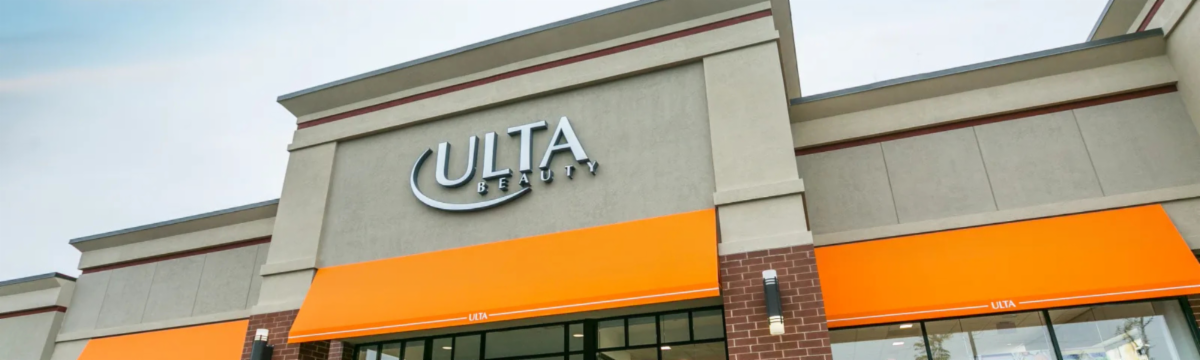
Ulta Beauty focuses on core growth and brand expansion


At NRF 2026 Retail’s Big Show, Kecia Steelman reflected on her first year as president and CEO of Ulta Beauty and outlined the company’s direction under its Ulta Beauty Unleashed strategy. Steelman described the approach as more than a business plan, calling it a companywide mindset centered on strengthening the U.S. core business, pursuing new growth opportunities, and realigning operations to support long-term expansion.


Steelman began her retail career earning $8 per hour at Target and later held leadership roles across multiple retail sectors before joining Ulta Beauty in 2014. She credited that experience with shaping her leadership philosophy and focus on team development.


A key driver of growth is Ulta Beauty’s loyalty program, which includes 46 million active members who have shopped within the past 12 months. The company is increasing its use of data and artificial intelligence to personalize marketing and better anticipate customer needs.


Ulta Beauty is also expanding its assortment, wellness offerings, cultural partnerships, and international footprint through agreements in the United Kingdom, Mexico, and the Middle East. With 80% of sales occurring in stores, the retailer plans to invest further in in-store events and brand building while continuing to prioritize operational fundamentals.


Steelman said results through the first three quarters have been strong and expressed confidence in the company’s trajectory.

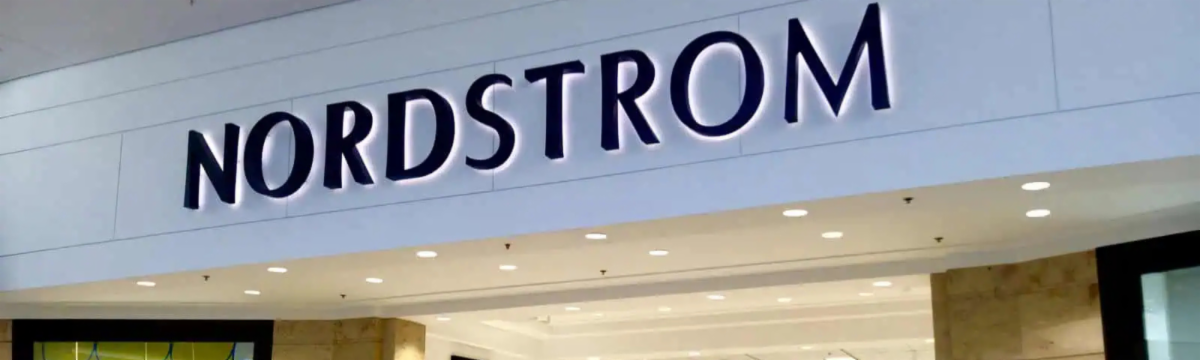
Nordstrom marks 125 years with brand partnerships and promotions


Nordstrom is celebrating its 125th anniversary in 2026 with a yearlong series of events, exclusive merchandise, and expanded promotions. The retailer is launching the milestone during fashion week with events in New York City and Paris, alongside partnerships with luxury brands including Chanel, Christian Louboutin, Manolo Blahnik, and Tory Burch.


Anniversary offerings include limited edition products inspired by historic company logos and designs. The annual Nordstrom Anniversary Sale will feature new brands, an expanded catalog, and special promotions such as $1.25 coffee at Nordstrom restaurants and cafes during the event.


The company is also inviting customers to share personal stories as part of a broader marketing campaign that will roll out later this year across television, social media, and in Seattle. Loyalty members can expect additional perks throughout 2026, including exclusive products, curated experiences, and giveaways. Nordstrom Rack plans to participate with loyalty offers and 125 featured deals in September.


The celebration follows the company’s transition to private ownership in a $6.25 billion transaction completed in 2025 at $24.25 per share, with the Nordstrom family retaining a controlling stake.

WR diversity statement


WR is committed to the principles of justice, equity, diversity, and inclusion. We strive to create a safe, welcoming environment in which these principles can thrive.


We value all people regardless of race, ethnicity, gender, religion, age, identity, sexual orientation, nationality, or disability, and that is the foundation of our commitment to those we serve.

Washington Retail Staff

Alesha Shemwell, Interim CEO — 360.200.6450 — Email

Crystal Leatherman, Dir of Policy & Government Affairs — 360.200-6453 — ‬Email

Rose Gundersen, State and Local Gov't Affairs Associate — 360.200.6452 — Email