Newsletter — September 17, 2026 | | |
IN THE NEWS
POLICY
ECONOMY
ON THE LOCAL FRONT
POLTICAL NEWS
RETAIL THEFT & PUBLIC SAFETY
TRENDS
SAFETY
| | |
Washington Retail Association announces staffing promotions
Washington Retail Association has announced two staffing promotions effective Sept. 14, reflecting expanded responsibilities in government affairs and member engagement.
Crystal Leatherman, previously Director of Policy & Government Affairs, has been promoted to Vice President of Government Affairs. Leatherman has overseen the association’s government affairs efforts during the past year, advocating policy issues affecting retailers across Washington.
Kathie Davies, previously Senior Executive Legislative Assistant, has been promoted to Director of Member Engagement. In her new role, Davies will continue to plan and execute association events while taking on expanded responsibility for serving as a primary resource for members. The position is intended to strengthen member engagement and provide a central point of contact for member needs and opportunities.
| | |
See you in Washington, D.C. for the CSRA Annual Meeting - September 22–24, 2026
The Council of State Retail Associations (CSRA) Annual Meeting is just around the corner, taking place September 22–24, 2026, in Washington, D.C. The annual gathering brings together retail association leaders and corporate government affairs professionals from across the country for collaboration, learning, networking, and discussion of issues affecting the retail industry.
Washington Retail’s President & CEO, Jan Himebaugh, and Vice President of Government Affairs, Crystal Leatherman, will attend this year’s meeting and connect with retail association colleagues and partners from across the country.
The 2026 meeting will feature programming focused on emerging issues and practical strategies for retail advocacy, including artificial intelligence and retail innovation, emerging litigation trends, strategic public relations for high-stakes lobbying, effective messaging, and current policy challenges. The agenda will also include discussion of the upcoming midterm elections and interactive roundtables.
The meeting will be held at the historic Hotel Washington, located across from the White House. The schedule includes a private Amazon facility tour and executive briefing for state retail associations, a Women Retail Leaders Networking Breakfast, a reception at the National Retail Federation, and a closing reception at Old Ebbitt Grill.
This year’s meeting also coincides with the nation’s 250th anniversary. Attendees will have an opportunity to experience events and activities taking place throughout Washington, D.C., as the country commemorates the milestone.
Washington Retail looks forward to connecting with retail association partners and colleagues during this year’s CSRA Annual Meeting.
Learn more and register at www.csrameeting.com.
| | |
The retail advantage: membership that delivers results
The Washington Retail Association (WR) helps retailers protect their businesses, reduce costs, strengthen their teams, and navigate a changing business environment.
Representing more than 2,500 retail storefronts, WR focuses on championing retail and driving results through advocacy, practical resources, and industry collaboration.
At the center of membership is advocacy that protects your business. WR gives retailers a strong voice in Olympia by opposing costly proposals and advancing practical policies. The association also provides knowledge that simplifies compliance, with timely updates and guidance explaining how changes to gift card requirements, workplace regulations, and other laws may affect business operations.
Members have access to training that strengthens your team, including workshops and workforce resources that support talent development and help employers address workforce challenges. WR also builds partnerships that amplify your voice by bringing retailers, industry leaders, and statewide associations together to address shared priorities.
Through solutions that save you money, members can access workers’ compensation savings, 401(k) solutions, and discounts designed to reduce costs and strengthen the bottom line. WR reports that its workers’ compensation retrospective rating program has returned millions of dollars to participating members.
Membership also provides visibility that elevates your reputation through features, events, speaking opportunities, and recognition. Public safety resources offer strategies that prevent loss, including organized retail crime intelligence and practical ways to protect employees, customers, merchandise, and operations.
Discover the retail advantage and the value of WR membership.
| | |
Mary Kay launches new global brand platform
Mary Kay Inc. has introduced Beauty Is More Beautiful Shared™, its largest consumer-facing campaign to date and a new global brand platform intended to support the company’s next phase of growth.
The campaign is launching across 40 markets and focuses on beauty as a shared experience, emphasizing connection, community, and relationships. The company says the platform is designed to introduce Mary Kay to a new generation of consumers while connecting its current customer base with the brand’s longstanding focus on relationships and entrepreneurship.
Developed in partnership with global advertising agency Grey, an all-women team created the campaign. The rollout includes digital and social media, influencer partnerships, out-of-home advertising, and in-person events. Consumer events aimed in part at engaging Gen Z will begin in New York before expanding to markets around the world.
The campaign also is intended to support Mary Kay Independent Beauty Consultants by increasing brand awareness and encouraging consumers to purchase products and connect with consultants through their digital storefronts.
Mary Kay reported several recent industry rankings alongside the campaign launch. Forbes ranked the company No. 8 among 5,500 brands on its 2026 Best Brands for Social Impact list, up from No. 9 in 2025. Mary Kay also ranked No. 2 on Forbes’ 2026 Best Customer Service list, compared with No. 93 in 2025. The company was additionally included in Happi’s 2026 Top 50 U.S. Companies report.
Founded by Mary Kay Ash in 1963, Mary Kay operates in 40 markets and offers skincare, cosmetics, fragrances, and wellness products through its direct-selling business model.
| | |
Washington's new battery recycling program is coming
A new battery recycling program is coming to Washington. Created through SB 5144, the law is designed to make battery recycling easier and more convenient for residents across the state. The program will provide a network of collection sites, educational resources, and outreach to help keep batteries out of the trash and ensure they are recycled safely.
The Battery Network will share a series of updates to help Washington retailers understand the new program, what it means for their businesses, and how to prepare for 2027. We will also present at a webinar hosted by the Washington Retail Association to provide additional information and answer questions prior to 2027.
Beginning in 2027, battery producers will be responsible for funding the program and participating in an approved stewardship plan to sell covered batteries and battery-powered products in Washington. Retailers will play an important role in helping ensure compliant products are available to consumers and may also have opportunities to support battery recycling efforts in their communities.
What is a covered battery and battery-powered product?
A covered battery is a battery that falls within the scope of Washington's battery stewardship program and must be managed through an approved battery recycling program. Generally, this includes:
-
Portable batteries* (beginning January 1, 2027)
-
Primary battery examples include AA, AAA, C, D, and 9-volt batteries and any product sold with these battery types inside
-
Rechargeable battery examples include batteries found in cordless drills, cordless vacuums, and portable chargers
-
Medium-format batteries* (beginning January 1, 2029)
- Examples include e-bike batteries and lawn mower batteries
*All batteries inside a product must be removable by consumers with common household tools.
| | |
Washington senators take up gift card fraud & tampering
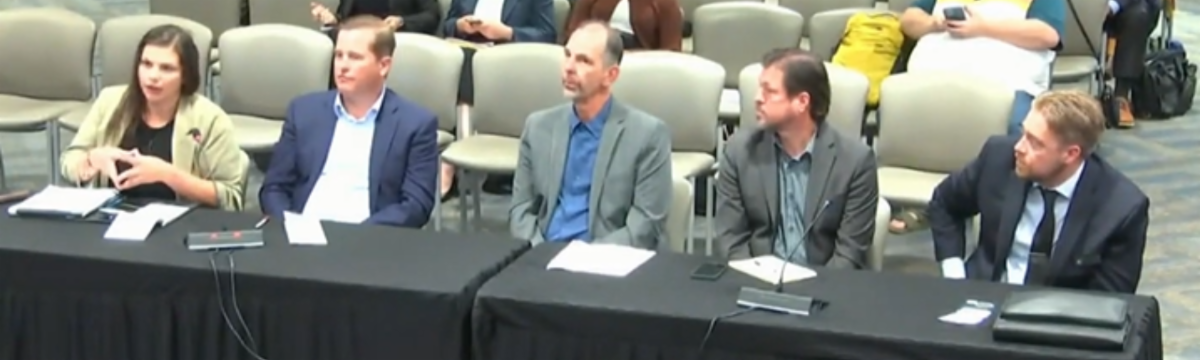
On Tuesday, September 15, the Senate Law & Justice Committee held a work session on gift card fraud and tampering. Washington Retail Association (WR) led the work session alongside the Washington Organized Retail Crime Association (WAORCA), the Gift Card Fraud Prevention Alliance (supported by RILA), The Home Depot, and the Washington Attorney General’s Office to walk senators through how this crime works, what it costs, and what the state can do about it.
Click here to watch the full work session.
What gift card tampering actually looks like
Most people hear "gift card fraud" and picture the phone scam. Someone calls pretending to be the IRS or a utility company and talks a victim into buying gift cards and reading off the numbers. That crime is real, and it does terrible damage, particularly to older adults.
Tampering is something else, and it happens before anyone has bought anything. A crew takes gift cards off the display rack, opens the packaging carefully, records the card number and redemption code, reseals the package so it looks untouched, and puts the cards back where they found them. Then they wait. A shopper picks up one of those cards, loads a hundred dollars onto it at the register, and the money is drained within minutes. Nobody finds out until the card is given as a gift and comes back empty.
An evolving form of organized retail crime
This is the same booster-and-fence structure behind merchandise theft, adapted to a product that moves fast and is far harder to trace than cash. These are not individuals committing petty theft. They are organized crews working from shopping lists, moving between stores and across state lines at high volume.
It is not just happening in Washington. In Kentucky, a grocery store loss prevention officer watched a man returning gift cards to a rack and called it in. Officers stopped the car and found thousands of tampered cards, along with a glue gun, tubs of glue, heating pads, knives, and scales. Four men who had traveled from New York and California were arrested on charges including engaging in organized crime, with the cards valued at more than a million dollars.
The proceeds do not stay in retail. Drained cards are used to buy high-value merchandise in bulk, which move through rented warehouses and are exported overseas. That supply chain turns violent at the far end. In May 2025, a 41-year-old warehouse worker was stabbed to death in a Derry, New Hampshire parking lot in the middle of the day while unloading boxes. Three men had driven up from New York to steal the devices inside. This is a public safety issue, not just a customer service problem.
Federal investigators see the same pattern nationally. Homeland Security Investigations runs an operation focused on card tampering that has seized more than 45,000 compromised cards across at least twelve states and made more than 150 arrests in its first year.
The retail industry takes action
Customers take the hardest hit. These rings found a loophole in existing statutes. A gift card has no value until it is loaded, which means someone caught with thousands of tampered cards has not yet stolen anything the law recognizes as having value. The theft lands later, on a shopper who did nothing wrong and usually finds out at the worst possible moment, when a gift is opened, and the balance reads zero. Roughly one in four American consumers say they have given or received a card that had already been drained.
Retailers have not waited for laws to catch up. The industry has spent years educating lawmakers, training employees to spot tampered packaging, and partnering with state attorneys general to reach shoppers before the holidays, when tampering peaks. Last holiday season, Washington Attorney General Nick Brown filmed a public service announcement with the Gift Card Fraud Prevention Alliance warning consumers what to look for.
That advocacy has moved more than 20 states to introduce gift card legislation, and 12 have enacted laws as of 2026. WR and our partners introduced companion bills during the 2025-26 biennium to close the activation gap and give law enforcement a workable tool. Senator Keith Wagoner, a member of the Law & Justice committee, sponsored the Senate version. Washington has not passed a law yet, but we are hoping that changes in 2027.
Momentum heading into 2027
The senators asked great questions during the presentation and showed a strong desire to get ahead of this emerging crime trend rather than react to it years from now. Several committed on the dais to working together on the issue heading into the next session, and other members signaled they want to help address retail theft more broadly.
Thank you
Our thanks to Senator Manka Dhingra, chair of the Senate Law & Justice Committee, Ranking Member Jeff Holy, and the full committee for making time for this issue. We also want to thank the committee staff who organized the session. They do not sit on the dais, and they rarely get named, but they keep the process running for everyone who engages in legislative advocacy. This work does not happen without them.
Get involved
WR is developing legislative solutions to combat retail theft and organized retail crime. If you want to be part of that work, share what you are seeing in your stores, or help shape our 2027 legislative agenda, we would like to hear from you. Email Crystal Leatherman at cleatherman@washingtonretail.org.
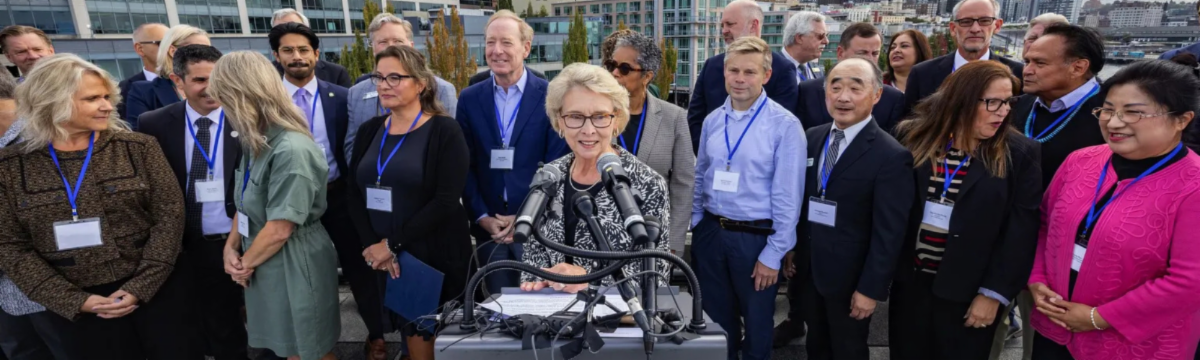
| | Image: Former Gov. Chris Gregoire, at podium, gathers politicians, business leaders, and others for comments and a press conference announcing the launch of a new economic task force. (Ken Lambert / The Seattle Times) | | |
Puget Sound leaders launch new effort to address economic challenges
A new regional economic initiative is calling for coordinated action as the Puget Sound economy faces slower job growth, rising costs, and increased competition from other regions.
Challenge Seattle recently released Keeping Puget Sound Strong: A Regional Plan for Jobs and Opportunity and helped launch the Partnership for a Competitive Puget Sound. The effort focuses on King, Pierce, Snohomish and Kitsap counties, which lost nearly 7,000 jobs in 2025. The decline marked the region’s first annual employment loss in more than two decades outside a major recession or pandemic, according to the initiative.
The report identifies several factors affecting the regional business climate, including regulatory requirements, permitting processes, housing and childcare costs, and coordination among governments and businesses. It also points to slower business creation, reduced venture capital investment, and employment declines in downtown Seattle.
At the same time, the region retains significant economic assets, including technology and manufacturing industries, a major port, research institutions, and a large workforce.
The new partnership is proposing 20 recommendations focused on improving the predictability of the business environment, streamlining permitting, reviewing regulations, strengthening workforce partnerships, and supporting key industries. It is also encouraging local governments, businesses, and other stakeholders to approach economic development as a regional effort rather than as separate jurisdictions.
Challenge Seattle and its members plan to contribute $1 million to Greater Seattle Partners to support implementation and publicly track progress. The initiative joins other economic development efforts launched this year by state and local leaders.
| | |
Millionaires’ tax raises questions about wealthy residents leaving Washington
Washington’s new 9.9% income tax on household income above $1 million, scheduled to take effect in 2028, has sparked debate over whether wealthy residents will leave the state to avoid the tax.
The issue is becoming part of the campaign surrounding Initiative 645, which would repeal the tax before it takes effect. Supporters of the tax say it will provide billions of dollars annually for education, health care and other public services. Opponents argue the tax, combined with other recent increases, could make Washington less attractive to entrepreneurs and high-income residents.
State estimates indicate about 25,000 Washington households would be subject to the tax, generating roughly $3.5 billion annually. Some wealthy residents and business owners have already said taxes influenced decisions to relocate or consider moving. Real estate professionals and financial advisers also report increased interest among some clients in lower-tax states.
However, research on tax-related migration suggests a large-scale exodus may be unlikely. Cornell University researcher Cristobal Young estimates Washington could lose about 1.9% of its millionaires because of the new tax, or roughly 475 households. National research has found that most high-income residents remain in their states after tax increases, often choosing other tax-planning strategies instead of relocating.
The extent of any migration remains uncertain. Washington’s tax would represent a significant change for a state that historically has had no personal income tax, and critics argue the combined effect of multiple tax changes could produce a different outcome.
Voters will decide the future of the tax and whether Initiative 645 passes in November.
| | |
Seattle-area wealth migration reshapes where residents are moving
King County experienced a significant outflow of income as residents relocated to other counties and states, according to an analysis of 2022 and 2023 IRS tax return data by the Puget Sound Business Journal.
Between 2022 and 2023, King County recorded a net loss of $1.77 billion in adjusted gross income. The largest number of residents who left the county moved to nearby Snohomish and Pierce counties, with 17,266 and 16,244 people relocating there, respectively.
Among out-of-state destinations, Maricopa County, Arizona, attracted the largest share of former King County residents. About 2,460 people moved there, representing a net loss of approximately $150 million in adjusted gross income for King County. Other popular destinations include Los Angeles County, California, and counties in Texas, Nevada, Oregon, and Idaho.
The migration reflects broader national trends that accelerated during the pandemic. Remote work reduced the need for some workers to live near major employment centers, while housing costs and state tax policies have influenced relocation decisions.
At the same time, King County continued to experience modest overall population growth after a decline in 2021. The data also shows movement in the opposite direction, with King County gaining residents and income from several California counties, including Santa Clara, Los Angeles, and Alameda.
Researchers cited housing affordability, economic conditions, and tax policies as factors influencing migration. They also noted potential fiscal impacts for communities that lose higher-income residents, including reduced local tax revenue and consumer spending.
The broader trend suggests that population and wealth are becoming more dispersed across metropolitan areas, with suburban and lower-density communities continuing to attract residents and economic activity.
| | |
Seattle-area inflation remains above national rate
Consumer prices in the Seattle, Tacoma, and Bellevue area increased 4.4% in the year ending August, according to the latest Bureau of Labor Statistics data. The rate was down slightly from June but remained 1 percentage point higher than the national inflation rate of 3.4%.
Energy costs continued to contribute to higher prices. Motor fuel prices in the Seattle area increased 18.2% over the year, compared with a 27.9% increase nationally. Economists cited global oil market disruptions as one factor affecting fuel prices.
Other categories also recorded notable increases. Grocery prices rose 4.5%, restaurant food increased 6%, and recreation costs climbed 7% over the year.
Economists noted that inflation can affect households differently depending on spending patterns and whether wages have kept pace with rising costs. Demand associated with investment in artificial intelligence infrastructure is also contributing to increased demand for construction materials and certain technology products.
While the current inflation rate is below the levels seen several years ago, it remains above the Federal Reserve's 2% target. The latest data will be among the factors considered as the Federal Reserve evaluates interest-rate policy.
Economists also cautioned that even if inflation slows, consumer prices generally do not return to previous levels. Businesses facing expectations of higher future costs may raise prices in anticipation, while sustained declines in prices are less common.
| | |
Seattle business leaders press city on public safety
Thirty-five Seattle business leaders have called on Mayor Katie Wilson and the Seattle City Council to take additional action on public safety, citing concerns about crime, emergency response, and conditions affecting employees, customers, and visitors.
The letter, posted by the Seattle Metropolitan Chamber of Commerce, asks the city to develop a comprehensive public safety action plan, increase public safety investments, activate the city’s CCTV system, improve 911 response times and address public drug use and encampments near parks and playgrounds. The business leaders also urged the mayor and council to support these priorities through the city budget.
Signatories include executives from Microsoft, Costco, Alaska Air Group, Starbucks, Nordstrom, Zillow Group, T-Mobile, Weyerhaeuser, Puget Sound Energy and other major employers and business organizations.
The letter referenced an Aug. 17 poll of registered Seattle voters that found 34% were confident the city had an effective public safety plan. The business leaders said residents are seeking clear actions, timelines, and measurable results.
Wilson responded that several of the requested actions are already underway. She pointed to increased police presence in several neighborhoods, street-level investments in the Chinatown-International District and Little Saigon, changes to the built environment, additional crisis responder hours and continued police recruitment. Wilson also said the city is recruiting a new police chief.
Wilson said Seattle Police Department data show shootings and homicides at their lowest levels in a decade, while acknowledging continued concerns about crime and public disorder. She said she plans to announce a gun violence reduction strategy and provide an update on shelter expansion efforts.
Read the full Public Safety Business Letter
| | Image: Ivy Ceballo / The Seattle Times, 2025 | | |
Seattle’s Fair Pricing and Transparency legislation advances to full Council
On Friday, September 11, the Seattle City Council’s Human Services, Labor, and Economic Development Committee approved legislation to regulate medium and large grocers in the city. The full Council will consider the legislation on September 22.
Washington Retail Association (WR), grocers, and others have expressed concerns about the breadth of the legislation. For the past three months, WR, grocers, and delivery companies have met with the Mayor’s office, Councilmember Alexis Mercedes Rinck, and other Councilmembers to make improvements in the legislation.
In its current form, the legislation could force grocers to stop offering discounts, coupons, and loyalty programs in the city because those savings are based on the customer’s purchase history. In other words, people who buy cat litter are offered coupons and discounts for litter, and people who purchase baby formula receive savings for those products. Coupons and discounts are targeted promotions.
At the Friday committee meeting, John Engber, Director of the Retail Industry Coalition of Seattle, offered public comments urging the Council to protect coupons, discounts, and loyalty programs and the ability of retailers to use cameras and other technology designed to combat violence and organized retail crime. WR continues to meet with Councilmembers to advocate for these priorities.
WR strongly supports banning the use of personal and purchase information to increase prices on consumers. But WR also strongly supports amending the legislation to protect programs that save consumers money. These programs save Seattle consumers tens of millions of dollars annually.
| | Image: Anthony Bolante | PSBJ | | |
Seattle mayor outlines plan to diversify economy
Seattle Mayor Katie Wilson has announced a series of initiatives aimed at strengthening and diversifying the city’s economy amid concerns about Seattle’s reliance on the technology sector.
A 129-page economic analysis commissioned by former Mayor Bruce Harrell and released by Wilson warns that Seattle’s concentration of technology employment leaves the city particularly exposed to changes in the industry, including the effects of artificial intelligence. The report states that Seattle’s economy is 42% more exposed to AI disruption than the national average.
The city also faces challenges, including high downtown office vacancy rates, competition from neighboring communities, and concerns about taxes, public safety, and the business climate. The report notes that 75% of Seattle’s JumpStart tax revenue comes from 10 large employers, creating potential revenue risks if major technology companies reduce their local employment.
Wilson plans to establish a Resilient Seattle Economy Task Force composed of business, labor, and other community leaders. Her administration also plans to create a strategic initiatives fund to support innovation in sectors such as clean energy and advanced manufacturing and to streamline permitting for businesses seeking to start or expand in Seattle. Details about the task force membership, funding sources, and investment levels have not yet been finalized.
Business leaders have expressed interest in the initiatives while emphasizing the importance of the city’s tax and spending decisions. Wilson has defended taxes that support housing and social services while acknowledging that differences in local tax structures can influence where companies locate jobs.
The mayor’s economic strategy is expected to receive additional attention as Seattle begins work on its 2027 city budget.
| | |
Amazon plans to vacate another Seattle office
Amazon is reportedly planning to leave an 81,000-square-foot office building at 428 Westlake Ave. N. in Seattle’s South Lake Union neighborhood when its lease expires in 2027, according to a report from commercial real estate firm Cushman & Wakefield.
Amazon leased the building in 2016 during a period of rapid expansion in Seattle. The company has since been reducing its office footprint as its workforce and workplace needs have changed. An Amazon spokesperson said the company regularly evaluates its office space to ensure it serves its business, employees, and customers.
Amazon’s Seattle workforce has declined from a peak of about 60,000 employees in 2020 to fewer than 50,000 recently. At the same time, its presence in Bellevue has grown, with approximately 14,300 employees there in 2024, up from 11,000 in 2023, according to city data.
The company has also vacated several other Seattle properties in recent years, including portions of office towers in the Denny Triangle. Amazon has generally reduced space as leases expire, although it has renewed or expanded some locations.
The changes are contributing to elevated office vacancies in Seattle’s downtown neighborhoods, which Cushman & Wakefield estimates at 35%. Bellevue’s downtown vacancy rate is about 25%.
Seattle’s office market has seen some new leasing activity. General Motors and Databricks have taken space in a building previously occupied by Amazon, while Apple and Anthropic are expanding in South Lake Union. However, new leases have not fully offset the space being vacated by Amazon and other companies.
| | |
Fred Meyer to close another Tacoma store
Fred Meyer plans to close its Marketplace location at James Center, 6901 S. 19th St. in Tacoma’s West End, marking the second Tacoma store closure for the grocery chain in two years.
Parent company Kroger declined to renew the store’s building lease amid higher rental costs. The closure also comes as Kroger addresses rising retail theft and pursues a broader strategy to streamline operations and reduce underperforming or higher-cost locations.
Fred Meyer confirmed the closure but did not provide a specific closing date. The company said it remains committed to serving Tacoma-area customers through nearby Fred Meyer and QFC locations.
The United Food and Commercial Workers Local 367, which represents Kroger employees, said it will bargain over the impact of the closure and support affected workers. According to the union, the store is expected to continue operating through the current lease expiration on Jan. 30, 2027.
The James Center shopping center was sold in March 2025 for $36.75 million to an LLC affiliated with Bellevue-based commercial real estate firm Rosen Harbottle.
Other nearby locations include Fred Meyer’s Tacoma Stevens store, QFC Parkland, Fred Meyer in University Place, and QFC on 49th Avenue NE in Tacoma. A Fred Meyer Marketplace also remains in Gig Harbor.
The closure follows the September 2025 shutdown of Fred Meyer’s longtime South End Tacoma store at 7250 Pacific Ave.
| | |
Washington income tax revenue estimate rises
The Washington Department of Revenue has increased its estimate for revenue from the state’s new tax on high earners, projecting $3.1 billion in the initial fiscal year and approximately $8.3 billion for the 2029-31 biennium. The earlier estimates were $2.7 billion and $6.9 billion, respectively.
The 9.9% tax, established by legislation passed in 2026, applies beginning Jan. 1, 2028, to individuals and married couples filing jointly with annual adjusted gross income exceeding $1 million. First tax returns will be due in April 2029.
The Department of Revenue estimates that about 25,000 households could be subject to the tax, up from the 21,000 assumed during the legislative session. The agency attributed the higher projection to improved economic forecasts between November 2025 and June 2026, including increases in projected dividend income, stock income, personal income, and wages. Analysts estimate that about 4,000 households previously near the $1 million threshold could exceed it by the time the tax takes effect.
The updated figures are estimates and have not yet been incorporated into the state’s official revenue forecast. Chief economist Dave Reich said the September forecast will be the first opportunity to evaluate whether the higher figures should be included.
Initiative 645, which will appear on the Nov. 3 statewide ballot, would repeal the tax. If approved, the projected revenue would not be available to the state. The tax could also face a constitutional legal challenge if it remains in effect.
| | |
Washington Retail adds to 2026 endorsement list
The Retail Action Council Political Action Committee (RAC PAC) has announced new endorsements for the November general election. Endorsements are given to candidates who stand with Washington's retailers and champion the issues that matter most to our industry. The RAC PAC also endorses causes that have a direct impact on retail businesses.
New Endorsements
In this round, the RAC PAC is endorsing the following candidates and causes:
- Lawmakers
- Rep. Kristine Reeves (D-30)
- Rep. Osman Salahuddin (D-48)
-
Rep. Mari Leavitt's Courage PAC: Rep. Leavitt (D-28) is one of the Legislature's leading voices on retail theft and organized retail crime, and WR recognized her earlier this year as a Champion of Public Safety. Her newly launched Courage PAC will back principled candidates and policies that will grow the economy and keep communities safe. Click here to contribute to the Courage PAC.
-
Yes on I-645: This initiative would repeal the state's new 9.9% tax on income over $1 million before it takes effect in January 2028. Though it was billed as a tax on millionaires, profits from LLCs, S corporations, partnerships, and sole proprietorships count as the owner's personal income, which means family-owned retailers structured this way can owe the tax. And because the tax was created in statute, a future Legislature could lower the $1 million threshold. Click here to learn more.
The full list of Washington Retail endorsed candidates and causes can be found by clicking here.
Open seats are next
WR's Government Affairs team is now evaluating candidates running for open seats, which are races with no incumbent on the ballot, usually because the current lawmaker is retiring or running for another office. We expect to announce another round of endorsements in the coming weeks.
Candidates who would like to be considered should contact Crystal Leatherman at cleatherman@washingtonretail.org.
Key dates
County elections offices will mail ballots by October 16. The deadline to register or update an address online or by mail is October 26. The general election is Tuesday, November 3, and ballots must be postmarked or placed in a drop box by 8 p.m. that day.
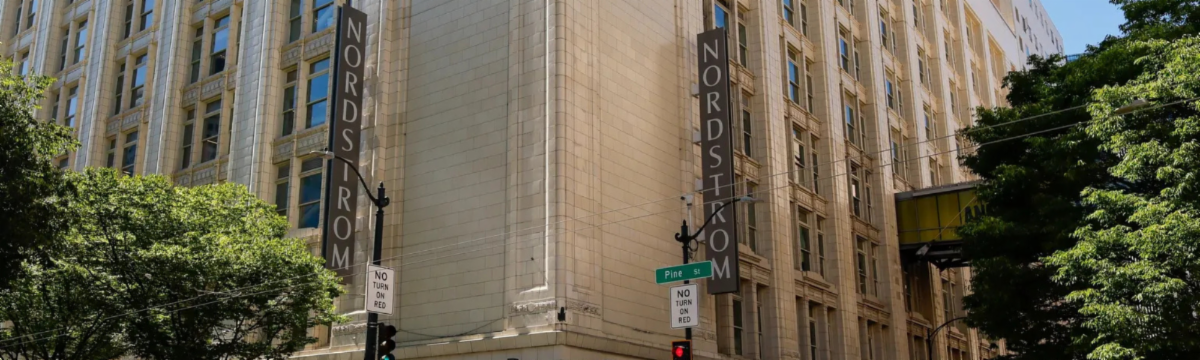
| | The flagship Nordstrom store on Pine Street. (Jennifer Buchanan / The Seattle Times, 2025) | | |
Seattle Times: Even Nordstrom now says it has trouble getting Seattle cops to show up
Sep. 12, 2026
By Danny Westneat , Seattle Times columnist
Over the years I’ve found that one thing that really hacks off Seattleites is when they call the cops and no one shows up.
I’ve written about it periodically. There was the time a man crashed a truck into a row of parked cars in Maple Leaf, then abandoned it. Police didn’t respond to repeated 911 calls, even when the perpetrator came back later to retrieve the truck. (He got away.)
There was another time a thief took some laptops and cellphones from backpacks at a soccer practice. After a citizen tracked the devices, he couldn’t get the cops to respond — even after he ended up squared off against the perpetrator on a crowded Metro bus.
Then there was that episode involving me calling for help, after my then 14-year-old daughter had tracked our stolen phone and wallet from a smash and grab. Those thieves turned out to be “Washington’s most wanted” car prowlers. Seattle police did apologize for not showing up on that one, though it was the tiny Sammamish police force that eventually caught the perps and got them jailed.
It turns out the big dogs in town get the same cold shoulder.
This past week, 35 big business execs, from Microsoft, Costco, Alaska Airlines and others, called on the city to get its act together on public safety. They asked for an action plan to boost police patrols in certain neighborhoods and to get tougher on drug markets, such as in beleaguered Little Saigon.
In the letter, Nordstrom CEO Erik Nordstrom revealed an astonishing figure. The letter said that when Nordstrom employees at the flagship downtown Seattle store call police, “only 29% of their 911 calls yield a police officer response.”
At the company’s Southcenter mall location — which also has some history of retail theft and other crime problems — 911 calls get a 100% police response, Nordstrom said.
I followed up with the company and it said this represents 70 calls to 911 from the downtown store between January and July of this year. Most of the problems involved shoplifting and disruptive customers, though a search of the city’s 911 database for that block also includes crimes like check fraud, assault and public drug use, as well as noncriminal matters such as “person down” reports. According to Nordstrom, police came just 20 times.
At the Southcenter store, police came 47 out of 47 times, according to Nordstrom.
The Tukwila police have a budget of around $22 million. Seattle police have a budget of $488 million.
| | |
Seattle crime trends vary by neighborhood
Reported crime in Seattle has declined overall since 2018, but the trend has varied significantly by neighborhood, according to a Seattle Times analysis of Seattle Police Department data.
The city’s downtown commercial core experienced the largest decline, with nearly 2,000 fewer violent and property crimes reported in 2025 than in 2018, a reduction of almost 50%. The Chinatown International District also recorded 642 fewer reported offenses over the same period.
Other neighborhoods saw increases. Capitol Hill had the largest increase in reported violent and property crimes, with 780 more offenses in 2025 than in 2018. First Hill reported 568 more, and South Lake Union/Cascade reported 457 more. Belltown also saw an increase in violent crime, including a series of fatal shootings over Labor Day weekend.
The analysis notes that several factors may have contributed to downtown’s decline, including concentrated police resources, sanitation efforts, outreach programs and economic revitalization initiatives. Some community members, police officials and experts have raised the possibility that crime may shift between neighborhoods in response to changes in policing and other conditions.
Despite differences among neighborhoods, Seattle’s overall crime picture has improved. Reported offenses citywide were 16% lower in 2025 than in 2018 and 11% below the pandemic-era peak. The city also recorded no homicides during June 2026, the first June without a homicide since 1970.
The findings highlight the differing public safety trends across Seattle neighborhoods and the challenges of determining which factors are driving those changes.
| | |
Two charged after alleged Covington retail theft
Two men have pleaded not guilty to charges stemming from an alleged theft of approximately $2,000 in merchandise from an Ulta Beauty store in Covington on Aug. 20.
According to King County prosecutors, deputies began investigating after a store alarm was triggered, and surveillance footage showed Jaycob Fernandez allegedly leaving the store with unpaid merchandise and entering a waiting vehicle. Deputies later located Fernandez and 24-year-old Kane Christensen in a stolen Hyundai Sonata at a Kent gas station.
Authorities said the driver fled as deputies approached, striking another vehicle and driving recklessly through traffic. A King County Sheriff’s Office helicopter tracked the vehicle to Covington, where the driver abandoned it and fled on foot.
Investigators said the suspect entered a nearby Fred Meyer, went to a bathroom and changed clothes. Deputies arrested Christensen as he exited the store. Authorities also recovered an illegal short-barrel shotgun that they said had been covered by clothing dropped during the pursuit.
Christensen faces charges including organized retail theft, attempting to elude police, possession of a stolen vehicle, hit-and-run, and unlawful possession of a firearm. He is being held on $150,000 bail.
Fernandez was arrested at the Kent gas station and faces a second-degree organized retail theft charge. His bail was set at $5,000.
Prosecutors said both men have prior felony convictions. The allegations remain pending in court, and both defendants have pleaded not guilty.
| | |
The early arrival of Halloween shopping
Halloween is increasingly becoming a season rather than a single-day celebration, with consumers planning and shopping earlier each year.
Nearly half of consumers, 49%, began their Halloween shopping before October last year, up from 34% a decade ago. By early August this year, one in four consumers had already purchased Halloween items, including decorations, costumes, candy or greeting cards.
Early shopping is also showing up in what consumers are buying. Adult costumes and candy were among the most commonly purchased items by early August, while purchases of children’s and pet costumes had doubled compared with the same point last year.
Seasonal changes also play a role. Among consumers who celebrate Halloween, 42% said cooler fall weather motivates them to begin shopping. The connection between Halloween and the broader fall season means consumers may start decorating, planning gatherings and participating in seasonal activities well before October 31.
At the same time, consumers remain mindful of economic pressures. In an early August survey, 54% said inflation and 40% said tariffs were negatively affecting their view of the economy. Over the previous six months, 43% said they had focused more on needs than wants, while 40% said they had become more practical in their purchases.
The combination of earlier planning, seasonal enthusiasm and economic caution is shaping how consumers approach Halloween. Retailers are responding by making seasonal merchandise available earlier, giving shoppers more time to plan while accommodating changing purchasing priorities.
| | |
AI helps retailers shorten the path from insight to action
Retailers are increasingly using artificial intelligence to reduce the time between identifying an opportunity and acting on it. At NRF 2026: Retail’s Big Show Europe, examples of emerging technology highlighted how AI can support faster decisions in pricing, merchandising, customer service, and fulfillment.
In pricing, Profitmind uses agentic AI to continuously evaluate pricing, planning, and merchandising decisions. Batteries Plus reported a 240-basis-point increase in profit after optimizing against live competitor pricing.
AI is also being used to personalize product discovery in real time. Good Growth adjusts product recommendations based on customer intent, inventory, and margin during a shopping session. Its technology is being used by retailers including The Home Depot, Kohl’s, M&S and Dunelm.
Customer service and fulfillment are seeing similar applications. Nairos uses AI agents to answer product and inventory questions in real time. Electronics retailer Zoommer reported that response times fell from hours to seconds, while sales increased about 15% and customer satisfaction reached 98.7%.
In fulfillment, Starship Technologies uses autonomous delivery robots to shorten the time between ordering and receiving products. The company reports grocery deliveries in about 22 minutes and increased app downloads through deployments with retail partners in Europe.
The examples point to a broader shift in retail technology. The value may come less from collecting more information and more from reducing the time required to act on existing information.
However, adopting faster decision-making also requires changes to organizational processes. Retailers need to establish which decisions AI can make independently, what limits apply, and who remains accountable. Without those changes, faster technology may simply feed into slower existing processes.
| | |
September safety observances offer timely reminders for retailers
September includes several national safety observances that provide retailers an opportunity to review workplace practices and reinforce employee training ahead of the busy fourth quarter.
National Preparedness Month encourages businesses to review emergency plans, evacuation procedures, communication lists, and emergency supplies. Retailers can also conduct tabletop exercises to help managers and employees prepare for potential severe weather, power outages, wildfires, cybersecurity incidents, and other emergencies.
Food Safety Education Month highlights the importance of proper food handling for retailers that sell or prepare consumable products. Reviewing food storage temperatures, handwashing, sanitation, and contamination prevention practices can help reinforce existing procedures.
Employee well-being is also a focus during National Suicide Prevention Awareness Month. Employers can promote available Employee Assistance Program resources, encourage open communication, and ensure supervisors know how to recognize signs of stress and burnout.
Falls Prevention Week provides a reminder to regularly inspect sales floors, stockrooms, entrances, and receiving areas for hazards. Wet floors, clutter, unsecured cords, and improper ladder use can create risks for employees and customers.
National Concussion Awareness Day highlights the importance of recognizing and reporting head injuries, which can result from falls, falling merchandise, or impacts involving equipment and fixtures.
Child Passenger Safety Week offers an opportunity to share information about age- and size-appropriate restraints and proper car seat installation.
Reviewing these safety areas in September can help retailers identify potential hazards, reinforce training, and strengthen preparedness before the fourth quarter.
| |
Washington Retail Association diversity statement
Washington Retail Association is committed to the principles of justice, equity, diversity, and inclusion. We strive to create a safe, welcoming environment in which these principles can thrive.
We value all people regardless of race, ethnicity, gender, religion, age, identity, sexual orientation, nationality, or disability, and that is the foundation of our commitment to those we serve.
| | |
Jan Himebaugh, President & CEO — 360.200.6450 — Email
Crystal Leatherman, Dir of Policy & Government Affairs — 360.200-6453 — Email
| | | | |