Having trouble viewing this email?

View as Webpage

Inside the Museum Logo

By Jamie Hendrix-Chupa, Exhibition Interpreter and Content Manager

SOU Theatre Class of '27

Special Alert:

Due to snow and unsafe conditions, the museum is closed today, Wednesday, February 18. We appreciate your understanding and look forward to welcoming you back when it is safe to do so. Please check our website for updates.

Calligrams

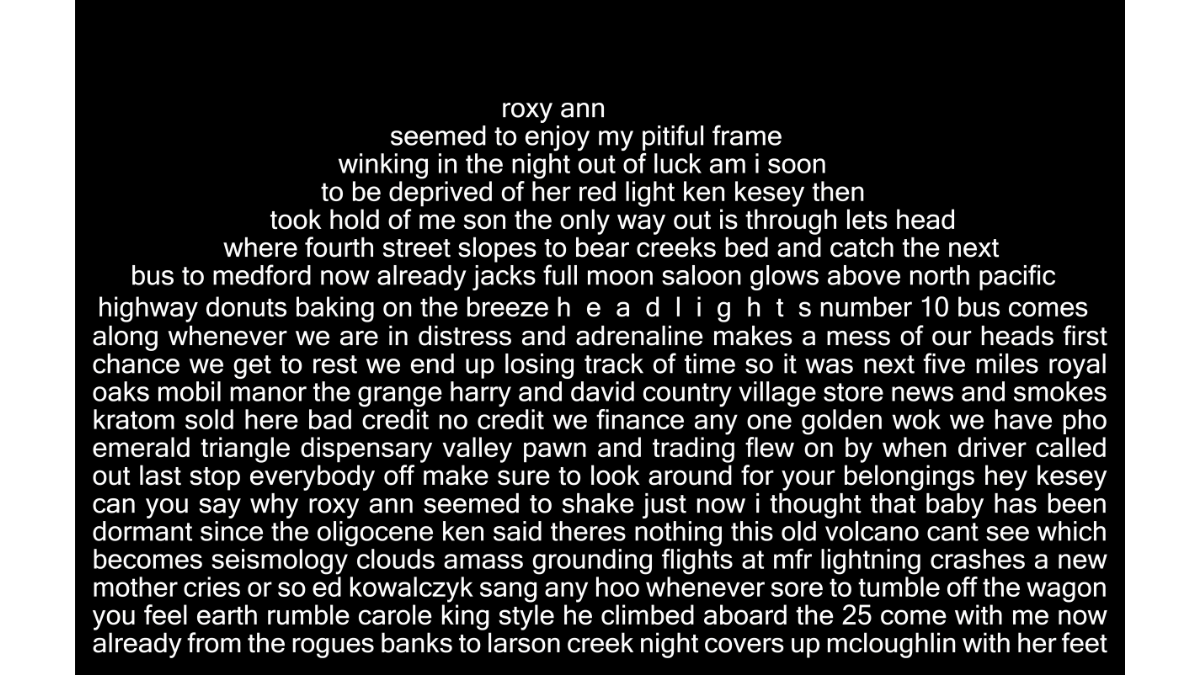
Robert Arellano, purgatoregon, 2018, calligram wall-projection, Courtesy of the artist.

A calligram is a poem, phrase, or single word that is arranged to create a thematically related image. The text can be in lines or curved, and can span a variety of script styles. French artist and writer Guillaume Apollinaire is thought to have invented or originated the art of calligrams, and he authored a book of calligram poems. Calligrams fall under the larger category of visual poetry, which is any poetry that incorporates visual design elements to more effectively convey meaning.

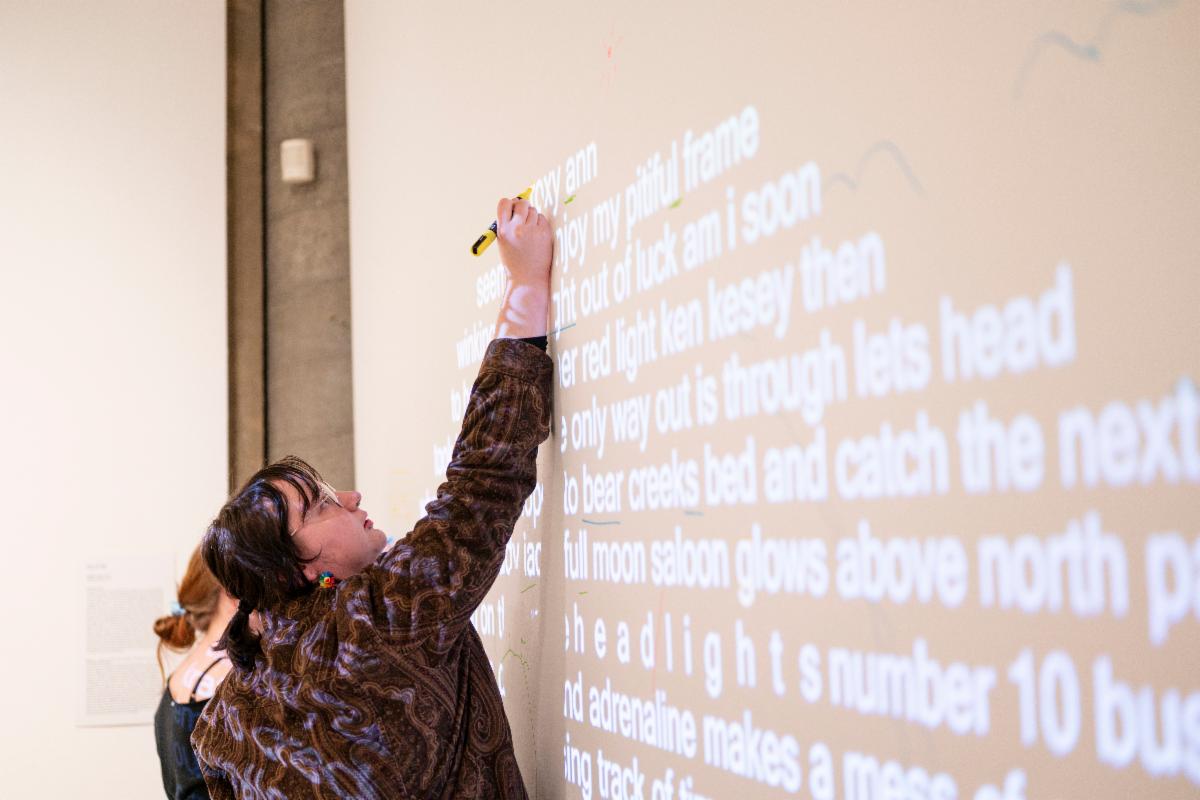
Robert Arellano is an artist and SOU professor of Design, Production, and Writing, and he established the Emerging Media and Digital Arts program at the university. His calligram piece, purgatoregon, is an arrangement of words based on his experience in the Rogue Valley, formed into the shape of Roxy Ann peak, a mountain in Medford, Oregon. purgatoregon is an interactive piece, one of two in "Pursuit of Happiness" that invites viewers to contribute. We have provided paint pens that are allowed to be used on the wall on which Arellano's piece is projected, in order for museum goers to add their own drawings or highlight certain words in purgatoregon that stand out to them. It even presents the opportunity for someone to make their own calligram out of the words provided, if you so choose. Learn more about artist and author Robert Arellano at the link below, and check out his work, purgatoregon, on view until March 14th!


https://bobarellano.com/

Interactive Technology

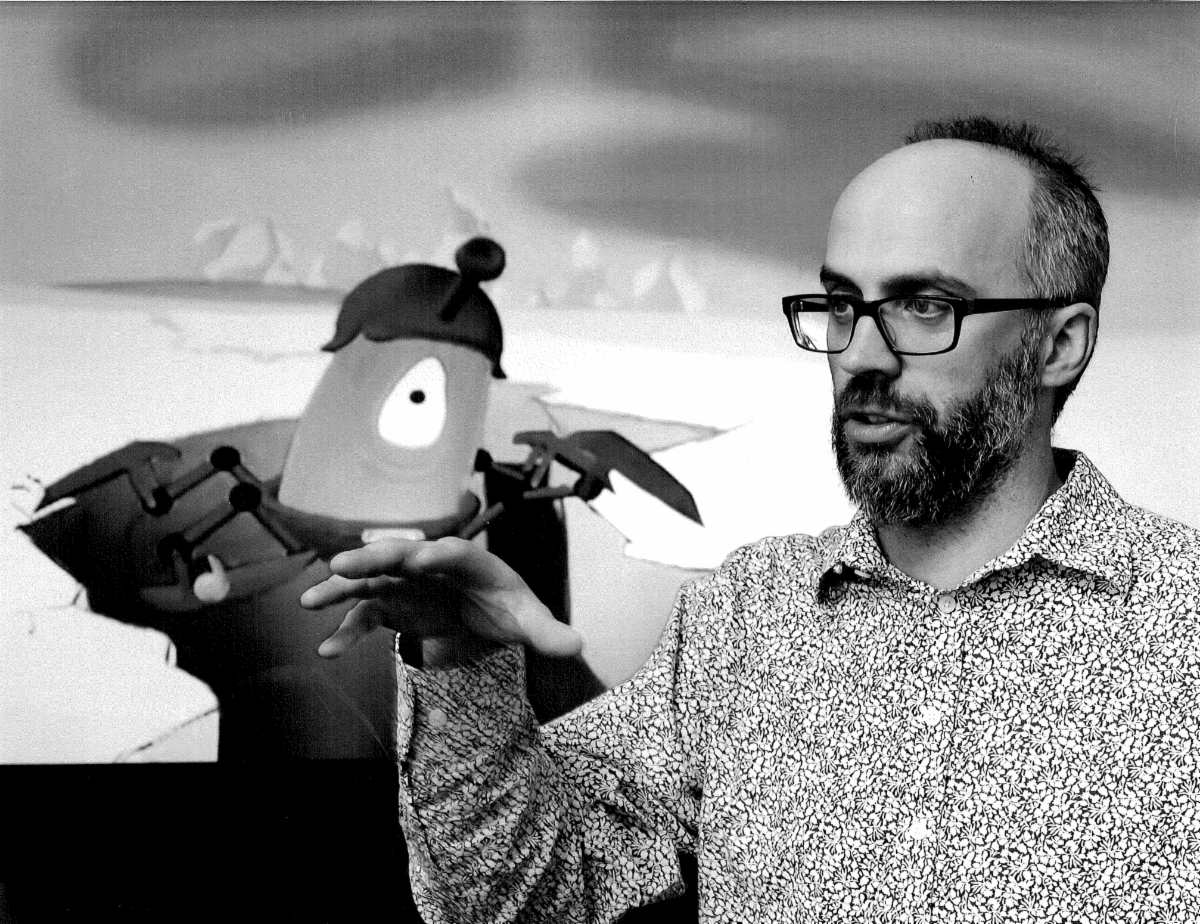
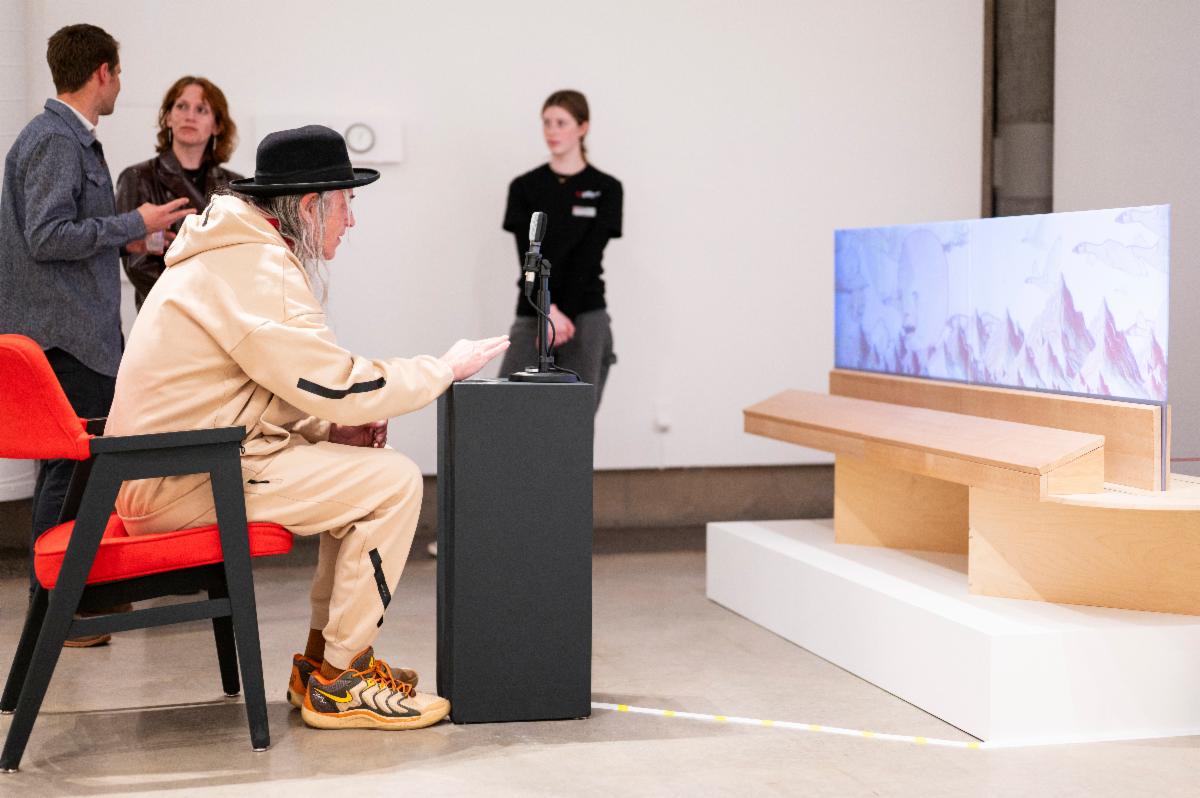
SOU Professor Craig Wright interacting with David Bithell's The Birth of Language at the opening reception of Pursuit of Happiness.


David Bithell, The Birth of Language, 2024-2025, Interactive installation, hand tracking, generative animation, electroacoustic sound, video projection, custom software, wood and plexiglass. Characters based on those in a painting by Stian Rasmussen (with permission). Courtesy of the artist

The second piece of interactive art in "Pursuit of Happiness" is Creative Art department chair David Bithell's digital piece, The Birth of Language. David Bithell is an interdisciplinary composer, artist, and performer who explores the connections between visual art, music, theater, and performance. Utilizing new technologies and real-time interactive environments, his work brings the structure of contemporary music and audio practices together.


"The Birth of Language was created as a performance work utilizing hand tracking and sound input as drivers of an abstracted narrative exploring communication, relationships, and play. Adapted here as an interactive installation, you are invited to embody digital puppets with your hand gestures and vocal contributions. Try to get them to move, to talk, to sing. The fun is in the exploration." --David Bithell


This piece uses an Ultraleap hand tracking sensor that analyzes a stereo infrared camera image to extract the position of your hands and fingers. This data is then sent using custom software to control the position of two characters, one large and one small, along with separate image layers that control their mouths and eyelids. This allows you to use your hands to move the characters back and forth, a sort of digital puppeteering. Additionally, a microphone is set up with the piece, which receives sounds, transforms them, and uses them to trigger ‘babbling’ that results in sounds and debris coming from the mouths of the two characters. Generative images of clouds, birds, and mountains are placed within the world using controlled but random coding. A programming language called Max is used to gather sensor and audio data and to control the sound playback and manipulation of live sound. It also sends its data to javascript running through Google Chrome, which generates and displays the visual elements. The links provided should offer more insight about these programs, to hopefully further explain how The Birth of Language works!


Come visit the Schneider this week to interact with David Bithell's The Birth of Language, and explore the artist's work at the link below.


http://www.davidbithell.com/about.html

Discover More!

Tuesday Tours

Sign up for our FREE Tuesday docent-led tour, every week at 12:30pm to learn more about our current exhibition. Register now!


Inside the Museum Archive

Visit our archive to read past editions of Inside the Museum!


Subscribe to our YouTube Channel

Both the Schneider Museum of Art and the Oregon Center of the Arts now have YouTube channels. Subscribe now to see what's going on in SOU's world of art!


Thank you to our Celebrating 40 Years Sponsors!


Legacy Sponsors


Cindy Barnard & Jerry Kenefick


Kumar & Roberta Bhasin


Sandy Friend, Pam Leandro-Notch, & Vivian Stubblefield


Frieda & Bob Golding


Carole Kehri & Karen Sue Smith


MaryBeth & Terry Limpert


Thank you to our 2025-2026 sponsors!


Kumar and Roberta Bhasin


Jeannie Taylor

City of Ashland
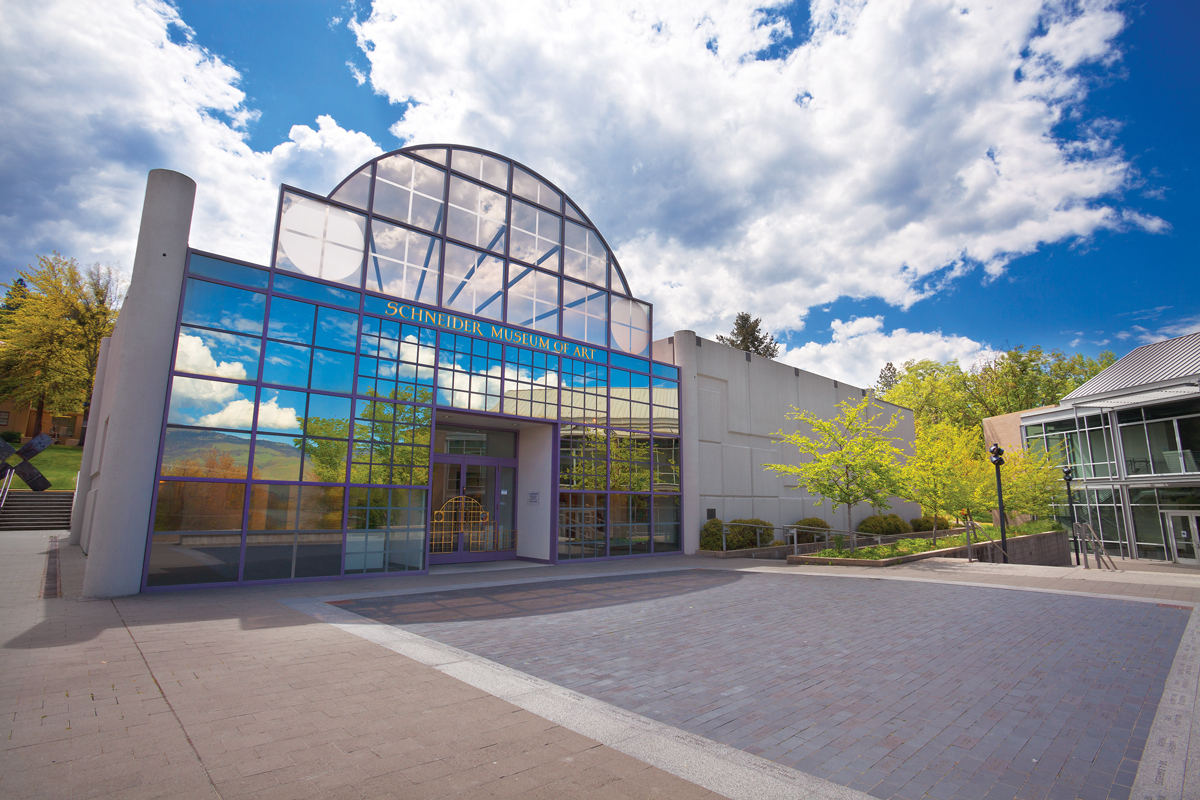
Exterior Daytime

SCHNEIDER MUSEUM OF ART

555 Indiana Street

Ashland, OR 97520


ADMISSION

Always Free, Suggested $5 Donation


CONTACT

sma@sou.edu

541.552.6245

Facebook  X  Instagram