|
By Jamie Hendrix-Chupa, Exhibition Interpreter and Content Manager
SOU Theatre Class of '27
| | |
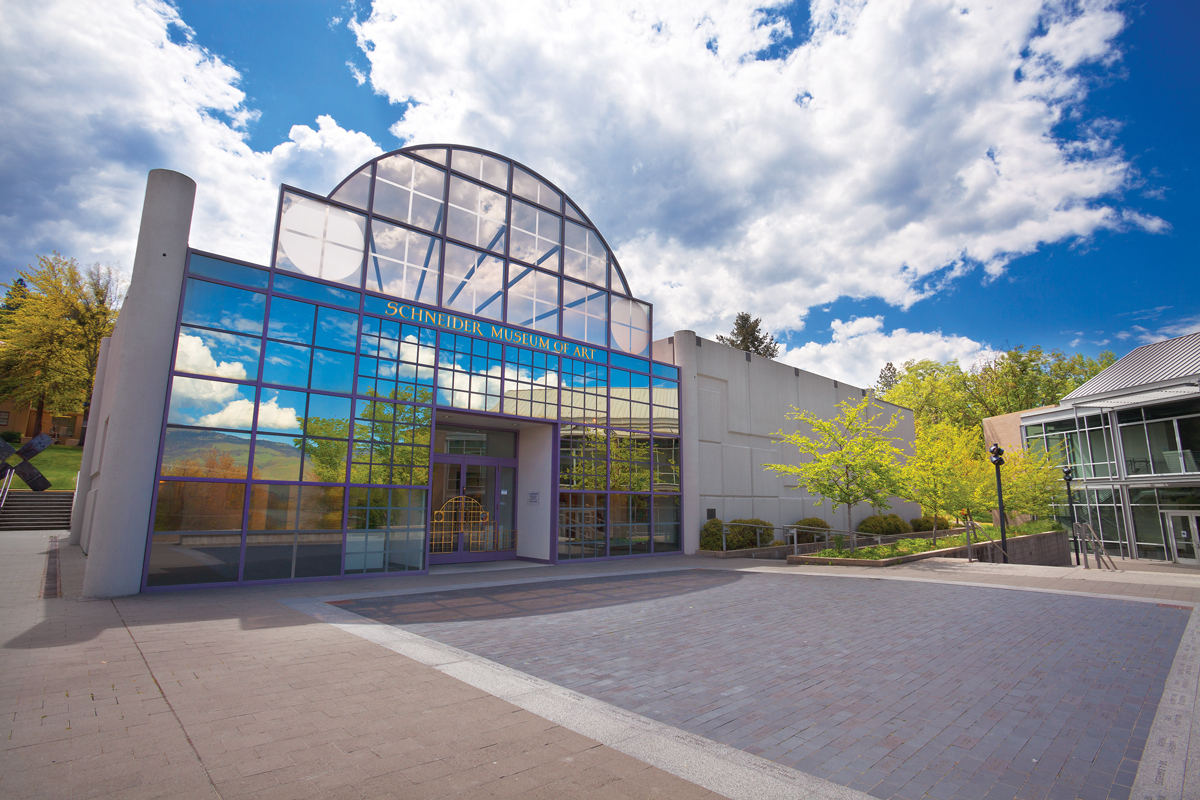
This week, our doors will be open on Friday night until 7:00 pm for Ashland's First Friday Art Walk. Come and see what we have in the Entry Gallery and, of course, our exhibition "Pursuit of Happiness", at this special nighttime event!
Ashland's First Friday Art Walk is an eclectic mix of visual delights, interesting conversations, intimate music, and tasty treats. The collage of image and experience grows as you stroll through the galleries and studios that are located in the Historical Downtown and Railroad Districts. Find more information about this event and the variety of artwork you may be able to see at the link below.
https://ashlandgalleries.com/pages/first-friday-artwalk
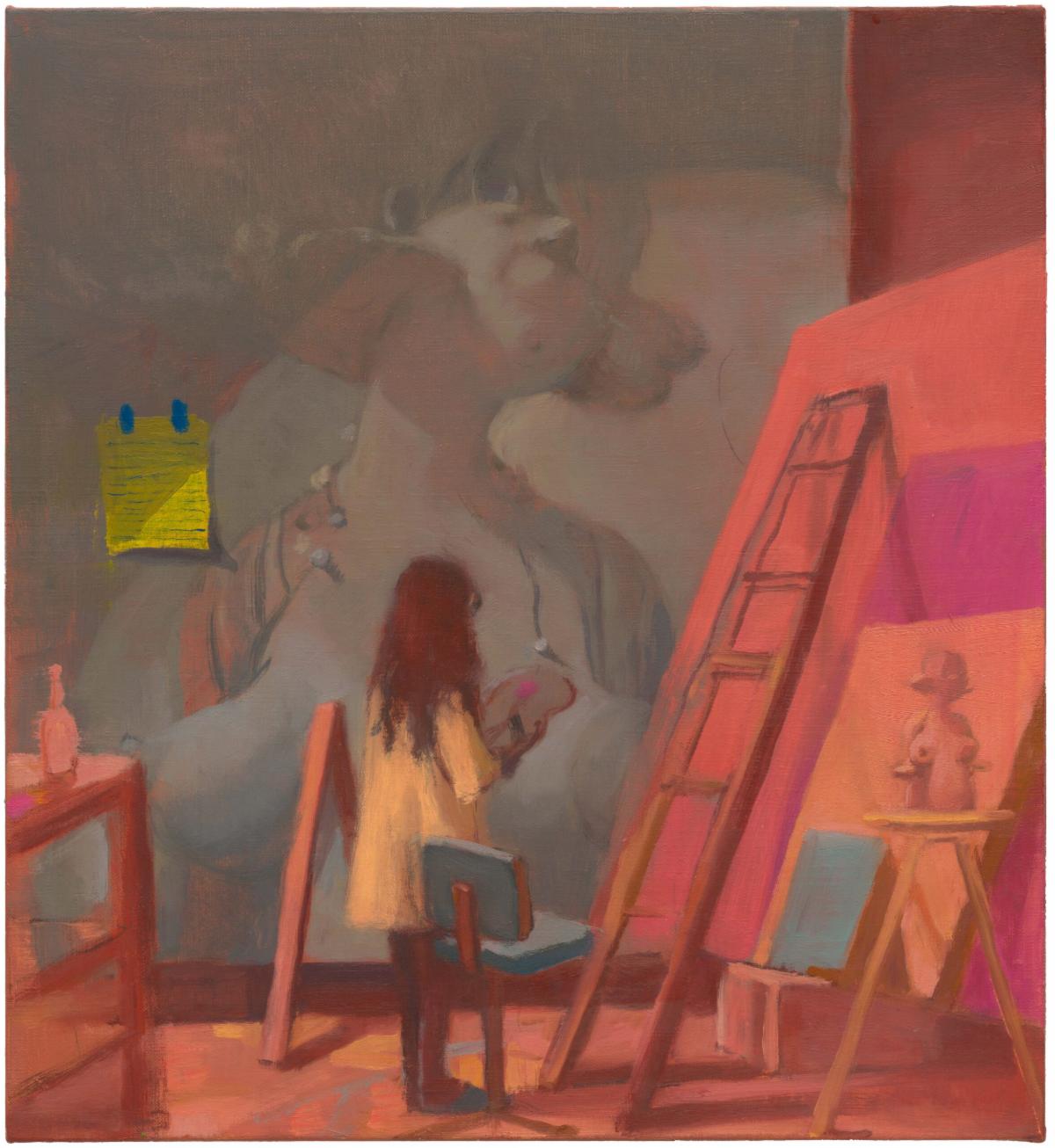
| | Lisa Yuskavage, Painter, 2024, Oil on linen | | American artist Lisa Yuskavage is known for her original approach to figural art. Her art does not shy away from the lewd and absurd, often depicting women with large breasts, naked, and facing the world unafraid. Her early works were more realistic depictions of the female body, but as she continued painting, the bodies became exaggerated and almost grotesque at times. Some of her early works resemble sexualized "pin-up" girls, strip-teasing the viewer or even showing full nudity. This approach highlights the male gaze, emphasizing the focus of the sexually driven and forcing viewers into that position, whether their minds are in that space or not. It is almost reminiscent of the work of Marlene Dumas, whose work we recently showed in the Entry Gallery, yet Dumas's messaging is still more subtle. However, a similarity these two artists share is their love for the female body. Though Yuskavage's work has a message about misogyny, it also comes with a fierce respect and appreciation for women. Currently in the Entry Gallery, Yuskavage's large-scale work, Painter Painting (2024), is on display. The painter in this work may very well represent Yuskavage, as she stands before the large breasts of her portrait. The image above is a precursor to Painter Painting. On her website, Yuskavage shows the development of her paintings, which she does through making prototypes of what ends up being the final design. It is a very interesting process to observe, to see the differences between the trials and the final design. If you visit the Entry Gallery and see Painter Painting, try to find the little details that may have emerged through Yuskavage's prototypes. And, check out an interview with the artist down below! | | Michele Fulkerson, Self-Portrait as Venus, 2025, Acrylic and photographs on canvas, Courtesy of the artist. | | |
While Lisa Yuskavage pushes viewers to understand the effects of the male gaze with her depiction of the female body, there are many different approaches to representing it in the art world. Cubists and expressionists like Pablo Picasso or the more modern George Condo break up the female body into sections, perhaps showing a more rigid understanding of women, shrouding them in mystery and edge. Yuskavage's women are round and curvy, as she emphasizes and exaggerates a type of natural feminine shape. Marlene Dumas shows the close-up realities of the female body, sometimes focusing on one aspect, such as one breast, the eyes, or the lips.
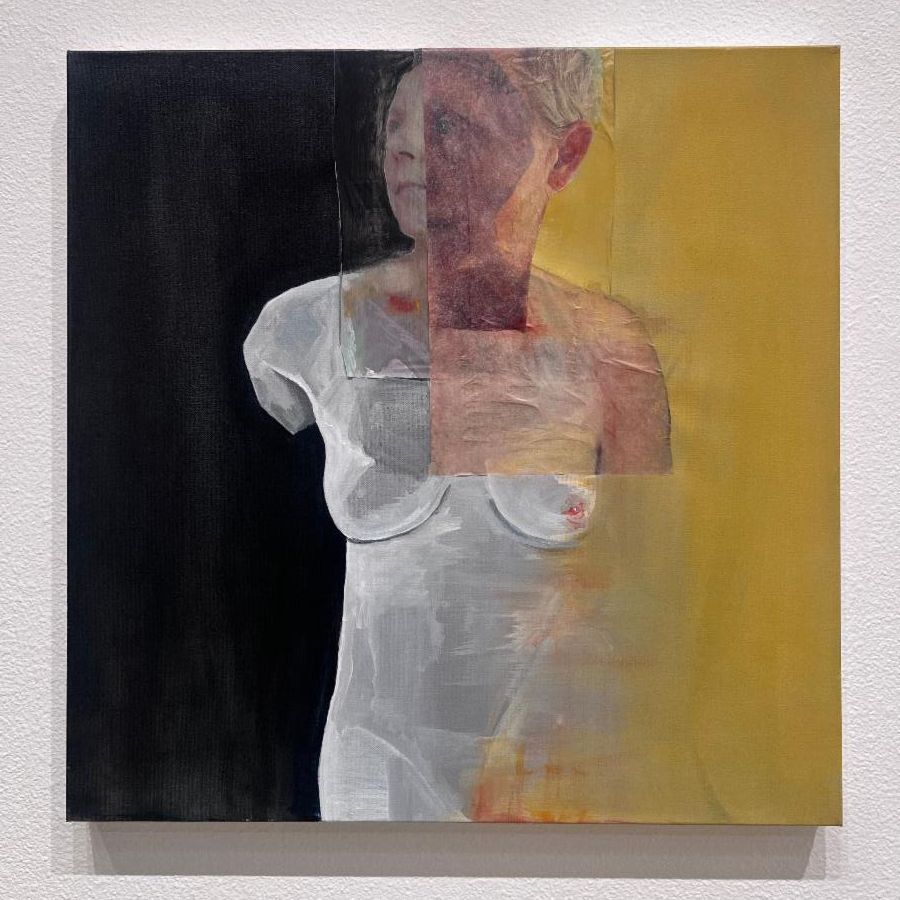
In our current exhibition, "Pursuit of Happiness", there are multiple artists whose work is focused on the female form. SOU's VAST resident, Bix Archer, includes a piece in the exhibition that depicts her partner asleep in bed. My Life Before Dawn (2025) has a glowing quality, with light mostly emanating from the curled-up form of Archer's partner. They are seemingly mostly nude, wearing underwear and socks, but it has a domestic nature rather than a sexual one. Alongside Archer's work in Heiter Gallery, SOU professor Michele Allen Fulkerson includes multiple self-portraits. Namely, the classical-inspired Self-Portrait as Venus (2025), which depicts the artist as the famous Venus statue. Venus, sometimes called Aphrodite, is the goddess of love and fertility. Aptly, she has been associated with women for thousands of years, so Fulkerson taking on her form in this portrait is incredibly symbolic and meaningful. Printmaker Samantha Mendoza features a triptych of woodblock prints in the Main Gallery, depicting three women who represent the seasons of Summer, Autumn, and Spring. These women have an animalistic quality about them. They are naked, and two of them, Emergence of Spring (2025) and Preparations of Autumn (2025), are crouched in positions of the hunt. The third, Strength of Summer (2025), appears to be breastfeeding a baby animal, while other forest creatures watch on. All of these women are different, yet the bodies that connect them are similar. It is a unique thing to be a woman, yet there is much connection to be found in it. Check out "Pursuit of Happiness", on exhibition until March 14th, to see the work of these amazing women on display!
| | |
Discover More!
Tuesday Tours
Sign up for our FREE Tuesday docent-led tour, every week at 12:30pm to learn more about our current exhibition. Register now!
Inside the Museum Archive
Visit our archive to read past editions of Inside the Museum!
Subscribe to our YouTube Channel
Both the Schneider Museum of Art and the Oregon Center of the Arts now have YouTube channels. Subscribe now to see what's going on in SOU's world of art!
| | |
Thank you to our sponsors!
Kumar and Roberta Bhasin
Jeannie Taylor
| | | | |