|
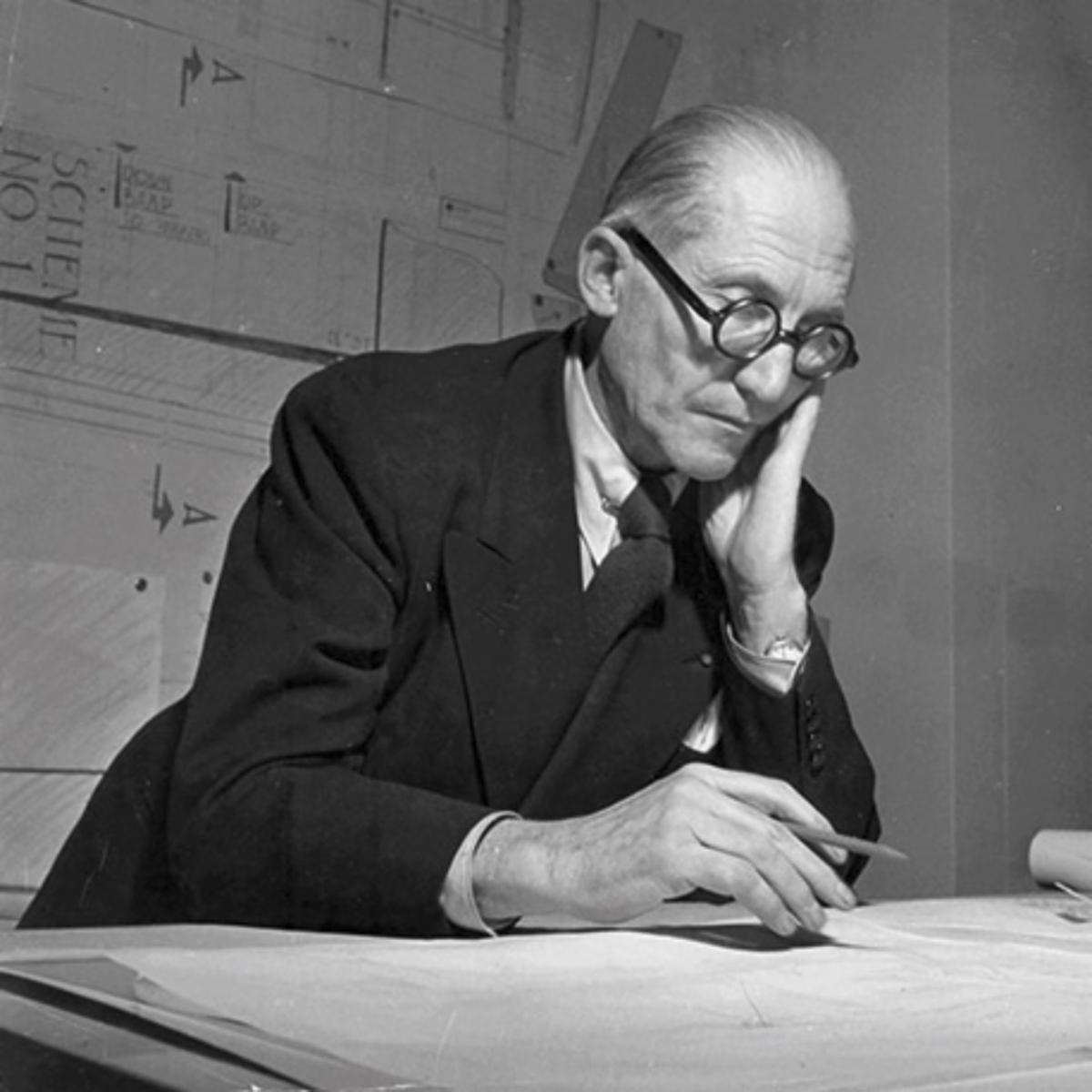
Artist and architect Charles-Edouard Jeanneret, better known as Le Corbusier, was a member of the Cercle et Carré group, though his main focus was architectural design. His name, Le Corbusier, was a pseudonym taken from his grandfather's name, as a reflection of his core belief that anyone could reinvent themselves. His interest in painting came from his early education, though his educators quickly turned him towards architecture. Le Corbusier and Cubist painter Amedee Ozenfant were responsible for the creation of Purism, an artistic movement that took place between 1918 and 1925. Purism questioned aspects of Cubism, proposing a style of painting where objects and elements were represented as simplified forms with minimal detail and a focus on technology. Le Corbusier believed Cubism to be a decorative and romantic art, something that he criticized as lesser in the hierarchy of arts. His work in Purist painting directly informed his later architectural works, where he used a great attention to detail and functional form.
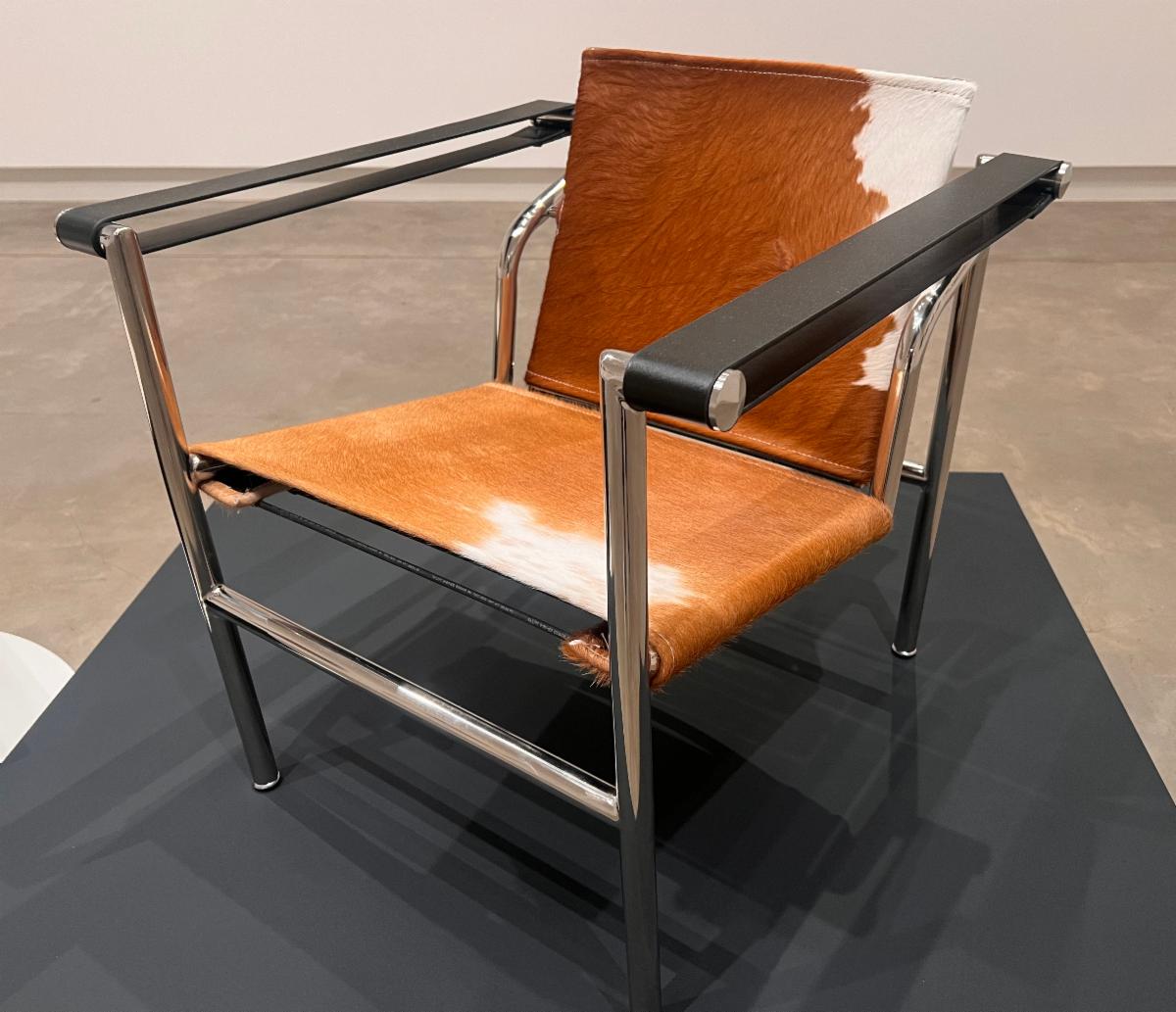
As an architect, Le Corbusier designed homes as well as furniture. He had countless theories that he developed about architectural design, including one that differentiated between furniture types -- type-needs, type-furniture, and human-limb objects. "He defined human-limb objects as: "Extensions of our limbs and adapted to human functions that are type-needs and type-functions, therefore type-objects and type-furniture. The human-limb object is a docile servant... He further declared: 'Chairs are architecture, sofas are bourgeois'" (Wikipedia). This was how Le Corbusier saw the world, as something that was able to be categorized and defined. Interestingly, he was also known to consider art and science separate. The separation of people and ideas was also a part of his personal beliefs, as he was known to have contradictory political views, especially in comparison to his fellow Cercle et Carré collaborators. He was an outward supporter of fascism, being published in fascist journals and apparently being a part of an institute in France that was dedicated to the study of eugenics. This is an interesting consideration, especially taking into account that some Cercle et Carré artists like Willi Baumeister were impacted by the Nazi regime. Le Corbusier allegedly abandoned politics after his failed suggestion to rebuild Algiers in an effort to reject indigenous Algerian architecture.
|