In the latest issue of Discoveries: | | |
🔬 Discover how Sanford Burnham Prebys Medical Discovery Institute scientists uncovered that the protein serving as a muscle’s master regulator plays an unexpected role in our bodies, turning from a gene activator into a gene silencer.
🧫 Explore research using a new method that revealed hundreds of hidden binding partners for a blood protein receptor.
🧠 Learn about a new study helping to explain why a common form of pediatric cancer called neuroblastoma is often treated successfully with chemotherapy but prone to relapse in several years.
📰 Read Sanford Burnham Prebys President and CEO David A. Brenner, MD's perspective on two national challenges: securing the future of U.S. science through the FAIR research funding model and addressing the shortage of donor organs, which leaves more than 100,000 Americans waiting for transplants.
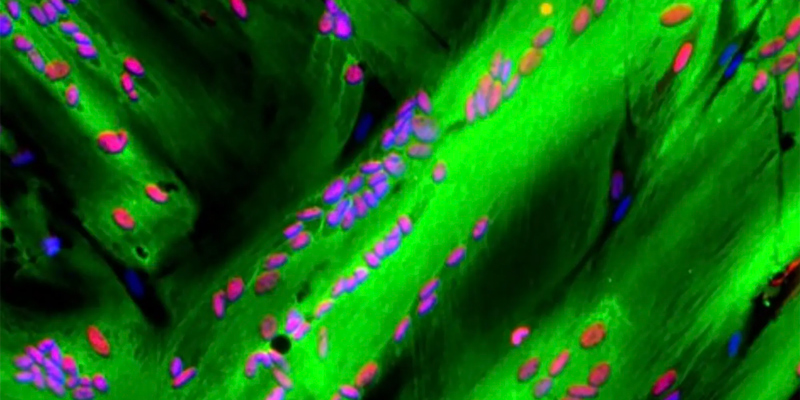
| | Image credit: Lorenzo Puri, Sanford Burnham Prebys. | | Muscle’s master regulator moonlights as gene silencer | | |
For decades, scientists thought MYOD was only responsible for activating genes to build muscle. New research from the Puri lab at Sanford Burnham Prebys, where Pier Lorenzo Puri served as senior and co-corresponding author, has uncovered that the protein plays an unexpected role in our bodies.
Like Spiderman hiding in plain sight as the unassuming photojournalist Peter Parker, this activator of genes specific to muscle has been harboring a secret identity. Scientists at Sanford Burnham Prebys and their international colleagues published findings in Genes and Development demonstrating that MYOD has its own Jekyll-and-Hyde twist, turning from a gene activator to a gene silencer.
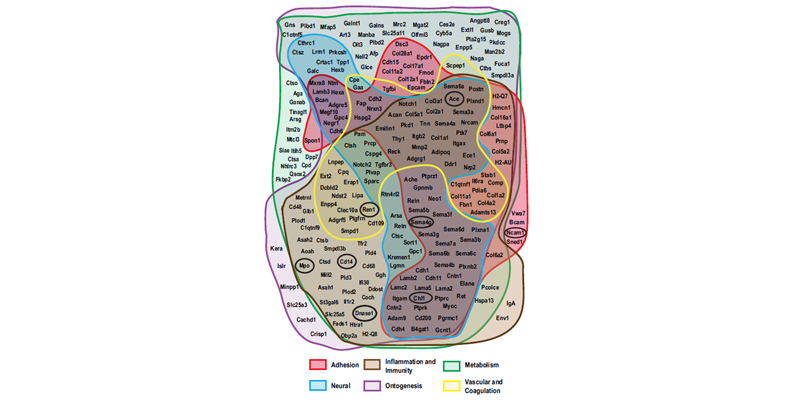
| | Image credit: Jamey Marth and Mayank Saraswat, Sanford Burnham Prebys. | | Signal boost uncovers hundreds of hidden binding partners for blood protein receptor | | |
The levels of the more than a thousand different glycoproteins in your blood vary widely, with the 10 most abundant accounting for 90 percent of the total mass. Finding a protein outside of this top 10 is a bit like searching for Waldo when only one version of him is left hidden in a stack of every “Where’s Waldo?” book ever printed.
Scientists at Sanford Burnham Prebys, led by Jamey Marth, PhD, professor and senior and corresponding author, together with colleagues at Scripps Research Institute, published findings in Nature Communications demonstrating a strategy for identifying less-abundant proteins that bind with a specific type of receptor termed an endocytic lectin, specifically the mannose receptor Mrc1. Using this approach, the team uncovered hundreds of binding partners that predicted Mrc1’s roles in our health.
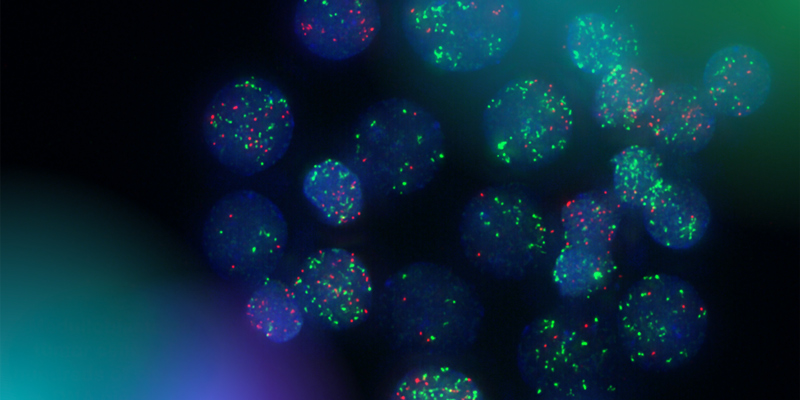
| | Image credit: Lukas Chavez, Sanford Burnham Prebys. | | Zombie cancer cells give cold shoulder to chemotherapy | | |
An international team of scientists, including Lukas Chavez from Sanford Burnham Prebys, recently published findings in Cancer Discovery that shed light on why neuroblastoma—a common pediatric cancer—often responds well to chemotherapy but is prone to relapse years later.
Cancer cells with many copies of the MYCN oncogene on circular extra-chromosomal DNA elements (ecDNA) grow quickly but are more easily destroyed by chemotherapy. Tumor cells with fewer copies of the oncogene located on ecDNA enter a zombie-like state known as senescence where they persist but no longer divide to make new cells. These zombie cells are unaffected by chemotherapy and can be reactivated a year or two later, triggering the cancer to relapse.
The researchers demonstrated that combining standard chemotherapy with a secondary therapy able to target senescent cancer cells led to dramatically improved outcomes in tests on mouse models of neuroblastoma.
| | |
August is National Make-A-Will Month
National Make-A-Will Month is August, and it's an annual observance that emphasizes the importance of creating a will. A charitable bequest is an excellent way for you to leave a legacy and help further our mission. A bequest is also one of the easiest gifts you can make.
Your estate planning attorney can include a provision in your will that leaves a lasting gift to Sanford Burnham Prebys. It could be a gift of a specific asset, a dollar amount or a percentage of your estate. You could also designate Sanford Burnham Prebys as beneficiary of your retirement plan, life insurance policy, or bank or investment account.
As you create your plans, please consider planning a gift of any size to Sanford Burnham Prebys. This contribution costs nothing today, but builds a legacy of support for our research community as it discovers cures and therapies for cancer and other diseases.
For more information, please visit sbplegacy.org or contact Sandy Liarakos at sliarakos@sbpdiscovery.org.
| | The Fishman Awards honor exceptional postdoctoral scholars, supporting their research and helping them grow into future scientific leaders. Join us on Thursday, September 18, 2025, from 5:00–7:30 PM as we celebrate this year’s remarkable recipients. | |
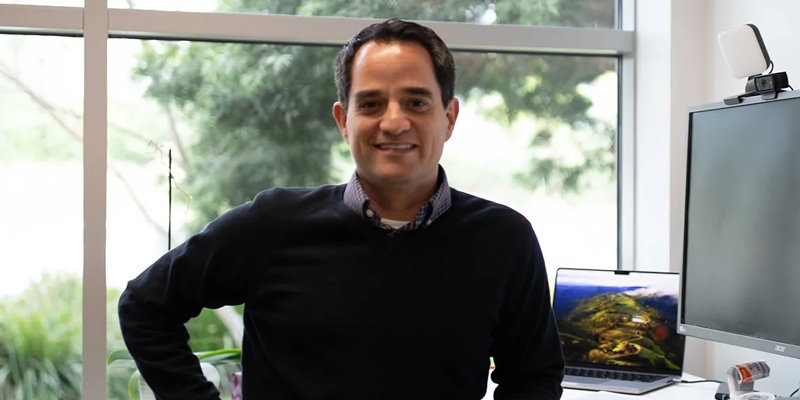
| Lukas Chavez joins NIH Cancer Genetics Study Section | Lukas Chavez, PhD, an associate professor in the Cancer Genome and Epigenetics Program at Sanford Burnham Prebys, was named a standing member of the Cancer Genetics Study Section at the National Institutes of Health. | |
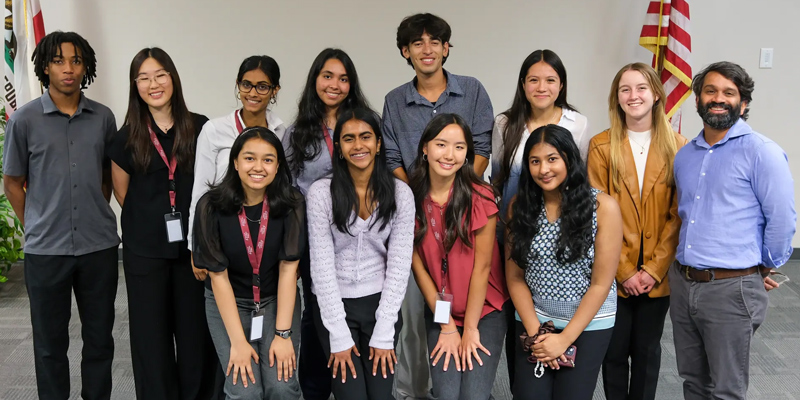
Image credit: Sanford Burnham Prebys. | | Study sections are groups of invited experts from across the country who are tasked with assessing the scientific merits of grant applications. Their reviews are a major influence in the NIH’s decisions about which proposed research projects to fund. | | Summer interns SPARK interest in regenerative medicine | The Institute welcomed its fourth cohort of interns this year for the Summer Program to Accelerate Regenerative Medicine Knowledge (SPARK). | |
Image credit: Sanford Burnham Prebys. | | |
The SPARK participants completed six-week internships and worked on projects under the supervision of their faculty mentors.
“I would definitely recommend the SPARK internship to any high school student interested in biology, stem cells and regenerative medicine,” said Daniel Ruiz, who will be attending Loyola University of Chicago this fall after his internship in the lab of Xueqin (Sherine) Sun, PhD.
“It's such an outstanding opportunity to learn, gain experience and get connected in the field, and it absolutely was a highlight of my summer.”
| | Preuss School interns wrap up unforgettable research experience | Six students. Three weeks. Future scientists in action. | |
Image credit: Sanford Burnham Prebys. | | |
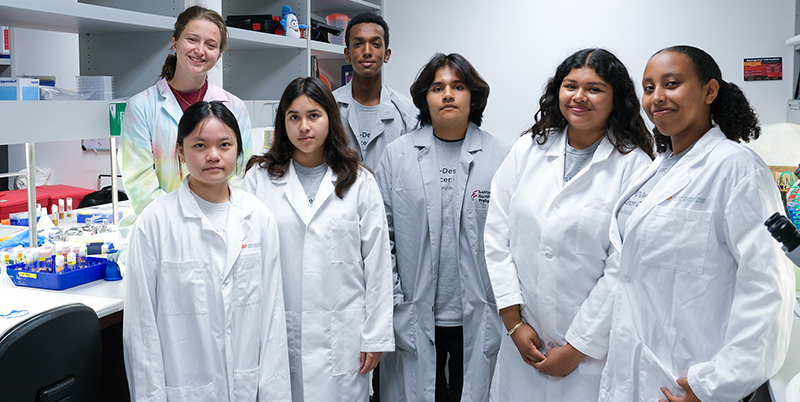
Sanford Burnham Prebys was proud to host Preuss School interns for an immersive research experience.
From preparing experiments with fruit flies to presenting their findings on how diet affects health, these future scientists dove headfirst into the world of biomedical research.
We’re proud to support the next generation of researchers and thank you to Peggy and Peter Preuss, and Debby and Wain Fishburn, for making this program possible.
| | Perspectives from David A. Brenner, MD | | Sanford Burnham Prebys president and CEO David A. Brenner, MD recently shared his thoughts on two critical national challenges: ensuring strong federal support for research and addressing the chronic shortage of donor organs. | | A FAIR way forward for federal research funding | The future of U.S. research is on the line. The proposed FAIR model offers a remedy to the funding crisis by ensuring transparency, accountability and flexibility while safeguarding U.S. leadership in science and medicine. | | | Opinion: Chronic donor organ shortage drives search for new solutions | More than 100,000 people are waiting for donor organs, and 13 die each day without receiving a match. In an essay in The San Diego Union-Tribune, Dr. Brenner explores emerging solutions, from improved preservation to lab-grown organs, and the ethical questions they raise. | | | |
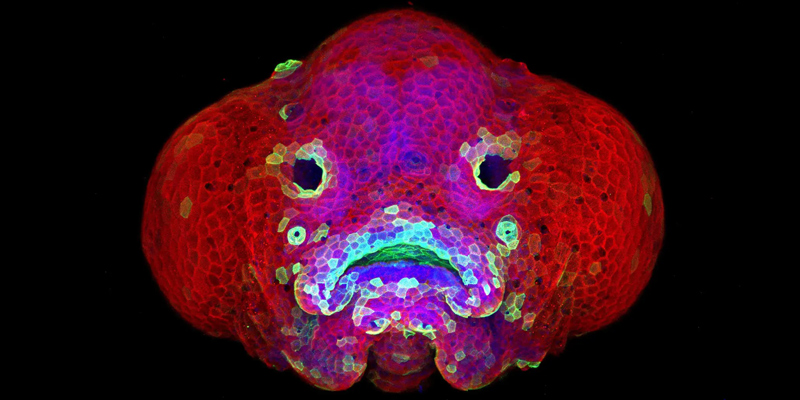
The face of a 6-day-old zebrafish larva, one of science’s preferred animal models. What look like eyes will develop into nostrils, and the bulges on either side will become eyes.
Image courtesy of Oscar Ruiz and George Eisenhoffer, University of Texas MD Anderson Cancer Center.
| | | | |