|
INVESTOR RIGHTS MONITOR
Insights You Can Use, Advocacy You Can Trust.
November 2026
| | |
Investor Protection in a Changing Market
Several of the issues FAIR Canada has worked on this year point to a broader question: how should investor protection evolve as markets, technology and investor behaviour change? Capital markets are changing quickly, industry is pushing for new products and new ways of doing business, and regulators are being asked to reconsider established boundaries. In that environment, an independent voice for investors is critical.
Our work on prediction markets this year is one example of how an independent voice for investors can make a difference. Securities regulators were facing increasing pressure to expand retail access to prediction markets. Some industry participants argued that all event contracts should come within securities regulation simply because they are legally structured as derivatives. We challenged that position, arguing that legal classification is only a starting point. Regulators should also consider whether the product serves a legitimate capital-markets purpose. If it does not, it may belong under gambling regulation instead. Recent regulatory guidance reflects a more thoughtful approach than relying on legal classification alone. However, where to draw the line between securities regulation and gambling remains open to debate and will continue to be an area of interest to FAIR Canada.
Industry was not the only one pushing regulators for change. FAIR Canada also pressed regulators to amend their rules to achieve consistent standards across Canada for handling investor complaints. As an example, FAIR Canada called on the Canadian Investment Regulatory Organization (CIRO) to establish a complaint-handling rule consistent with that of the Autorité des marchés financiers (AMF) and move toward a harmonized Canadian standard. CIRO has now proposed new rules, and we will press for final rules that give investors across Canada the same protections.
We are helping ensure retail investors have a voice, but there is more work ahead.
Artificial intelligence and AI agents could fundamentally change how investment information and advice are delivered. As these tools become more sophisticated and personalized, the line between providing education and providing advice will be increasingly difficult to distinguish.
At the same time, we need to confront a growing gap in our market. Many mass-market investors cannot access affordable advice and are instead left to invest via order-execution-only platforms, the channel through which an increasing number of novel, complex, and risky products are now primarily distributed. Giving investors access to more products without addressing their need for advice is not necessarily empowering them. It can simply leave them with more consequential decisions to make on their own.
We also cannot ignore the changing experience of younger investors. Investing, gaming and gambling increasingly compete for their attention. When the line between building wealth and placing a wager gets harder to distinguish, regulators will face difficult decisions between industry innovation and the public interest.
These developments will require regulators and governments to make difficult choices about innovation, access and investor protection. FAIR Canada’s role is to ensure that the retail investor perspective is not lost in those decisions, and that investor protection remains central as our markets evolve.
JP Bureaud, CEO, FAIR Canada
| | |
Investors Deserve Faster, More Predictable Account Transfers
When you decide to move your investments from one firm to another, you should be able to expect a clear and predictable process. Instead, account transfers can involve significant delays.
CIRO is proposing changes to modernize how account transfers work. Its current 2026 proposals would establish deadlines for specific stages of the transfer process. This differs from CIRO’s 2025 proposal, which would have required the firms involved to complete a transfer within 10 clearing days.
FAIR Canada believes investors need the clarity of an overall deadline. We recommend that CIRO return to a 10-clearing-day deadline for completing a transfer from start to finish, while requiring firms to complete transfers sooner where possible. An exception should apply only when a delay is demonstrably caused by another party’s action or omission and is reasonably beyond the firm’s control.
Better technology is also part of the solution. FAIR Canada supports common technology solutions that all financial institutions would be required to use. Canada’s financial-services regulators should also work together on a common transfer process and common deadlines, so that financial consumers have consistent expectations about transfer timing regardless of the financial product involved or the regulatory framework that applies to their financial services provider.
The goal is straightforward: when investors choose to move their accounts, the system should work for them. Account transfers should be automated, efficient and consistent in timing. Clear overall deadlines, better technology and greater regulatory coordination would help put the investor experience at the centre of the transfer process.
You can read our submission here.
| |
Advisor Incorporation Shouldn’t Weaken Investor Protections
Not all investment advisors have the same options for receiving compensation. Mutual fund dealing representatives can have a portion of their compensation paid to a corporation, while other advisors cannot. CIRO wants to change that.
CIRO’s “incorporated approved person” (IAP) proposal is meant to harmonize advisor compensation options. It would allow advisors to establish an IAP that could carry out certain activities on behalf of their dealer and receive their compensation. An IAP could also provide related services and operate in other regulated areas of financial services, such as insurance. For advisors, the IAP model would offer greater flexibility in how they structure their businesses, as well as potential tax benefits.
FAIR Canada is not opposed to the incorporation of advisors in principle. But more flexibility for advisors should not come at the expense of investor protection.
Putting a corporation between an advisor and their dealer raises important questions. Will dealers remain fully accountable for activities carried out through the IAP? Will existing insurance be sufficient for IAP activities? And could the new structure make it harder for investors to recover losses when something goes wrong?
The proposal does not yet provide clear enough answers. Key aspects of the model remain unresolved or have not been provided, including how dealers will supervise IAPs, whether multiple layers of IAPs will be allowed, what the agreements defining responsibilities will look like, and whether a thorough analysis of the proposal’s legal and investor-protection implications has been done.
FAIR Canada believes the IAP model could be workable. But before moving forward, CIRO must address the investor-protection risks and show that the framework will preserve accountability, effective oversight, and investors’ ability to recover losses when something goes wrong.
| | |
Extended-Hours Trading: What Investors Should Know
Stock markets have traditionally kept regular business hours, generally from 9:30 a.m. to 4:00 p.m. Eastern Time. But Canadian investors increasingly have access to trading outside those hours, particularly for U.S.-listed stocks and ETFs. Depending on the dealer, that can include pre-market, after-hours and even overnight trading.
For investors, that means greater flexibility over when they can trade and an opportunity to respond to market developments outside regular trading hours. But there are trade-offs. Recent CIRO guidance warns that extended-hours markets may have lower liquidity, wider bid-ask spreads, greater volatility and prices that differ significantly from those available during regular trading hours.
CIRO is taking steps to address these risks, including proposing to apply volatility controls during extended trading hours. As access expands, regulators and dealers also need to ensure investors understand the different conditions they may face.
FAIR Canada supports greater investor choice, provided it is accompanied by appropriate protections and clear information about the risks. Investors need to understand that they may be trading in a market with fewer participants, less liquidity and different prices.
Greater choice is welcome, but it should not come at the expense of investor protection.
| |
CIRO Data Breach Settlement: December 15 Opt-Out Deadline
If you received an email or letter from CIRO saying that your personal or financial information was compromised in its August 2025 cybersecurity incident, an important deadline is approaching.
A proposed national settlement has been reached, but it still requires court approval. The Superior Court of Québec will consider whether to approve it on January 14, 2027.
If you do not want to be part of the settlement, you must opt out by December 15, 2026. Opting out means that you will not receive any benefits under the settlement, but you will retain the right to pursue your own legal claim. If you remain in the settlement, you will be bound by its terms if it is approved, including the release of claims covered by the settlement.
You do not need to do anything now to remain included. If the settlement is approved, however, you will need to submit a claim later to receive compensation. The December 15 deadline is therefore an opt-out deadline, not a deadline to claim compensation.
Review the official settlement notice carefully for information about who is covered, how to opt out and the rights you will give up if you remain in the settlement. If you are uncertain about your options, consider obtaining independent legal advice before December 15.
| | |
Know What You Pay: Clearer Investment Cost Reporting is Coming
November is Financial Literacy Month, a good time to remind investors about a coming change to annual total cost reporting. Starting in 2027, investors will receive a new total cost report that includes embedded mutual fund expenses, giving a more complete picture of what they pay in fees and charges, including mutual fund management fees. CIRO’s guide, Total Cost Reporting: What Investors Need to Know for 2027, explains this important change.
Investors should use the new enhanced cost report to prepare for a conversation with their investment firm or advisor. Questions to ask include: What costs am I paying? What are the fees for? Are there other lower cost options?
Knowing what you pay is the first step to determining whether you are getting good value
| |
Fraud Prevention Starts with Your Account Settings
A recent Globe and Mail article about unauthorized access to investor accounts highlighted an important reality: protecting your finances involves more than choosing the right investments. It also means understanding the security controls governing your investment accounts.
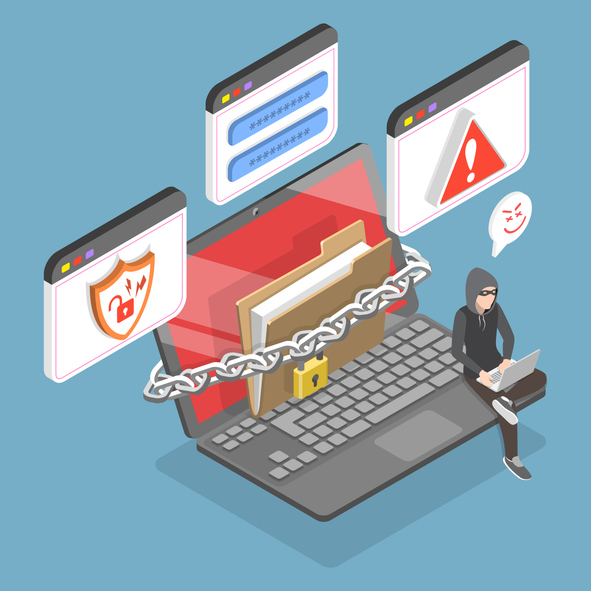
Criminals often gain access through stolen passwords, data breaches, or social engineering such as phishing scams. Once they obtain account credentials, weak security settings can make it easier for them to initiate unauthorized transactions.
One important lesson for investors is that default security settings may not be configured for maximum protection. Financial institutions often balance security with convenience, meaning stronger safeguards may be available but require users to enable them. That's why it's important to review the security features available on any banking or investment account.
Some safeguards to consider include:
- Multi-factor authentication (MFA): Requires a second form of verification in addition to your password.
- Account alerts: Sends notifications when someone logs in, changes personal information, or initiates a transaction.
- Transfer restrictions and enhanced verification controls: May provide additional protection against unauthorized withdrawals or transfers.
- Trusted contact persons: Available through many investment firms as an added safeguard in certain situations.
Security features vary by institution, so take the time to understand what's available for each of your accounts. If you're unsure, contact your financial institution and ask what fraud-prevention tools and account controls they offer.
It's also a good idea to regularly update your passwords and ensure your contact information is up to date. These simple steps can help you spot suspicious activity early and reduce the risk of fraud.
Learn More:
-
Get Cyber Safe: Government of Canada guidance on passwords, phishing, multi-factor authentication, and online security. https://www.getcybersafe.gc.ca
| | |
Canada Participates in Prediction Markets Panel
On October 20, our CEO, Jean-Paul Bureaud, participated in a panel at IIC Canada’s 22nd Annual Conference in Ottawa on advertising and the regulation of prediction markets. The panel examined how these platforms operate, their potential risks and benefits for participants, and their implications for investors, market integrity, and consumer protection.
As interest in prediction markets continues to grow, FAIR Canada will continue to monitor developments and advocate for a regulatory framework that protects investors while promoting fair and transparent markets.
Learn more about FAIR Canada's work on prediction markets at faircanada.ca.
| | |
Do you have feedback on our newsletter or suggestions for topics you’d like us to write about? Your input is valuable and will help us improve our newsletter content for loyal subscribers like you. Please email us at info@faircanada.ca with your comments and/or suggestions.
| | | | |