A note from the road, the clinic, and the heart of our community | |
Welcome to Developmental FX Learning Journeys' Insights newsletter, designed especially for clinicians. We are so happy you are here, in a space where like-minded colleagues can learn from one another’s insights and collectively elevate our important work. | | September 2026 – When Science Comes Alive: Building Foundations for Action | |
Reflections from Tracy...
One of the most refreshing parts of our Learning Journeys community is experiencing what happens when we gather together around new ideas.
Reflecting on Steven K. Kapp’s sensory–movement account of lifelong neurodivergence last month, we experienced the heart of this community. Through shared clinical reasoning, we explored how emerging science intersects with our therapeutic work.
| | | |
The Power of "Proprioceptive Automaticity"
One idea from Kapp’s work that continues to spark conversation is ‘proprioceptive automaticity’—the often-invisible bodily knowing that allows us to move and act without continually thinking about our alignment or consciously organizing our next steps.
This highlights a critical insight: the vital role sensory integrative processing plays in building the foundational capacities that support more complex abilities.
Developmental science reminds us that what we see on the surface—communicating, relating, learning, planning, adapting, and participating—depends upon many less visible processes working together. A person must take in sensory information, organize a sense of their body, assign meaning and value to experience, prepare an action, and adjust that action as circumstances change. These capacities help make other capacities available.
| | |
Looking Beneath the Surface
This aligns with Jean Ayres’ understanding of sensory integration and helps explain why her theory and approach remain so essential to our work. Ayres centered the integrative process for the purpose of adaptive action, inviting us to look beneath an observable skill or behavior and consider the sensory and motor capacities that make increasingly complex engagement possible. We must understand both the target skill and the underlying capacities that make it available.
This fact raises several important questions for our practice:
- What happens when the body is not automatically and reliably available for action?
- How much conscious effort is required just to sit, reach, speak, shift, or participate?
- Are our current approaches doing enough to build the underlying availability?
| |
Bridging Science and Lived Experience
These questions cannot be answered by research or any single discipline alone. They require bridging science with lived experience, clinical observation, relationships, and practical wisdom.
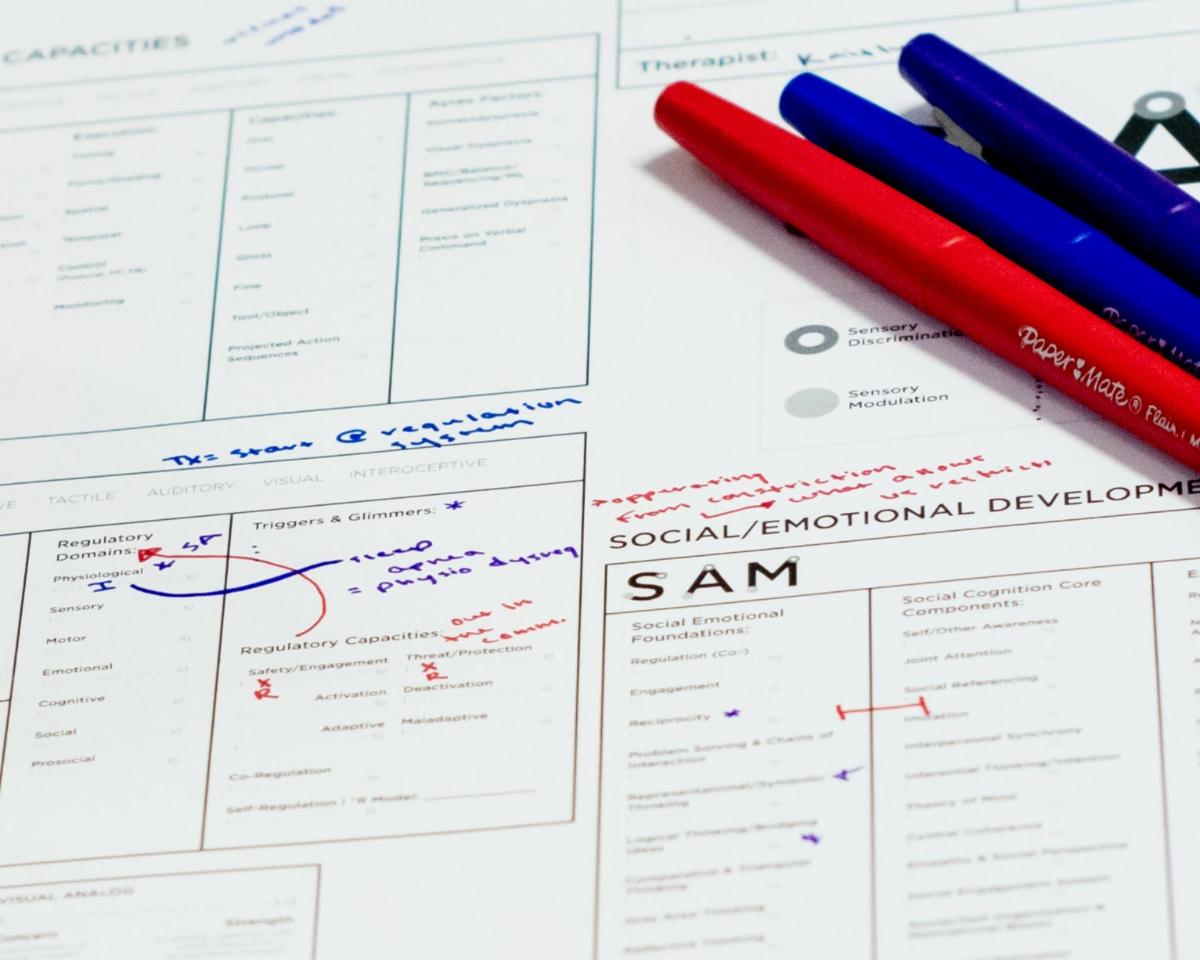
Our clinical reasoning frameworks guide this integration. Through the SpIRiT, centered around the S-A-M lens, we view sensory, affective, and motor processes as distinct yet deeply interconnected. Sensation informs movement, and movement generates sensory feedback. Affect provides meaning and emotional tone, signaling what feels safe, inviting, effortful, or overwhelming. Together, these processes shape one another within relationship, context, and individual agency.
The S-A-M lens keeps us from isolating single behaviors or systems, prompting us to ask:
- What sensory information is available to this person?
- How reliably can their body use that information to prepare and act?
- What feeling, meaning, or expectation is connected to the experience?
- How are sensation, affect, and movement working together (or struggling to come together)?
- What kinds of support might make participation more available?
Our tools, the SpIRiT and STEPPSI, don't provide rigid answers, but they do help us anchor these questions in clinical reasoning: observing patterns, analyzing components, mapping interconnections, and tailoring support for each individual.
| |
Why This Community Matters
This highlights why our community is vital, and why we are committed to expanding our collective learning. Individual practitioners should not have to solve challenges in isolation when standard methods of proprioceptive automaticity or sensory–movement foundations fall short.
We need both evidence-based practice and practice-based evidence. We need therapists, educators, researchers, neurodivergent individuals, and families collaborating—sharing observations, challenging assumptions, and refining what truly helps.
This collaborative spirit is what makes DFX Learning Journeys so meaningful. We are creating a space where rigorous science meets clinical wisdom, turning information into insight, and insight into compassionate, individualized care.
| | |
Warmly, and in reflection,
Tracy
| P.S. I’d love to hear your thoughts on this month's reflections. How are you seeing "proprioceptive automaticity" show up in your own practice or lived experience? Email us at learningjourneys@developmentalfx.org | | This month in the Learning Journeys Community... | | We will be gathering together this month for a live discussion, on September 24th at 2pm MT (find your time here). All community members can watch the recording of our live sessions when it is posted the following week. That means if you join now, you’ll have access to over a year’s worth of live forum recordings! | | | |  |
Live LJ Community Events: Fall 2026
-
Live Discussions will occur on September 24th, September 27th, October 22nd, and November 19th
LJ Live Discussions are
at 2:00pm MT
| | | |
Now is a great time to join the self-paced SpIRiT© course as part of our new Study Group model! Right now if you sign up for the self-paced course, you will also get access to:
- The Learning Journeys Community, through the end of your enrollment in the course, which includes an archive of case processing and forum discussion recordings 💻
-
A private discussion board in the community that will be actively moderated by the Learning Journeys team to respond to questions as you progress through the course 🗣️
- TWO live case processing opportunities facilitated by Tracy Stackhouse! We will watch a video case and then see the entire SpIRiT clinical reasoning process in action 💬
*Those who have already taken courses with us are eligible for a discount - email us at learningjourneys@developmentalfx.org to learn more!
| |
DFX Learning Journeys Opportunities: | | Self-paced versions of the SpIRiT© and STEPPSI© are always available to support your learning. | | If you have a group that would like to set up a private cohort (5+ people) to work through either the SpIRiT© or STEPPSI© courses, reach out to us at learningjourneys@developmentalfx.org!
| |
Other Ways to Join Us in 2026: | |
SEPTEMBER
-
You can catch Tracy in Spain at the 2026 PVI International Gathering - she will be presenting at the post-conference workshop day for clinicians about “Sensory Integrative Interventions: Portals to Possibility.”
-
DFX and Unyte invite you to a free webinar, Embodied Clinical Reasoning in Pediatric Practice: When Knowing Isn’t Enough, with Tracy and Kelly Beins, who serves as Unyte’s Senior Clinical Educator. The webinar is on September 28th from 1-2pm ET - reserve your spot now!
| |
OCTOBER
-
On October 2nd Tracy will be giving the keynote address at the 2026 JFK Partners Autism Conference.
-
ICDL’s 2026 International DIRFloortime® Conference is live online! As part of the conference you can catch:
-
Tracy’s introduction to S-A-M (sensory-affect-motor). This is a great place to start if you haven’t yet taken the SpIRiT© course, as SAM is the foundation of this clinical reasoning tool!
-
DFX team members Sam Mulvey and Kaitlyn Darbe presenting “The Power of Two: Enhancing DIRFloortime with Dual Adult Engagement.”
-
Mind 2 Mind Courses is hosting Tracy in Sydney, Australia for a two-day course focused on praxis, “Sensory Integrative Processing Treatment Approaches for Praxis Capacities: From Sensory Discrimination to Skillfullness.” Register here!
| |
NOVEMBER
In November 2026, CPD Retreats is hosting Tracy for a second time as she leads A Spirited Retreat - an immersive learning experience in Bali, Indonesia, focused on the SpIRiT© model. Retreat participants will take the online SpIRiT course and then join together for a week of in-person, in-depth application of the tool in small groups. We are frequently asked for more opportunities to learn how to use the SpIRiT in practice, and this is an incredible opportunity to do just that! This retreat is currently full - you can learn more here.
| |
DECEMBER
Tracy and our colleagues Gretchen Kamke and Amy Lewis are presenting at the AOTA Children and Youth Specialty Conference in New Orleans. Their work, titled “Clinical Practice Guidelines for Occupational Therapy in DIRFloortime Practice: Defining OT's Unique Contribution” will be on December 3rd from 2-5pm.
| | |
Curious about integrating your pediatric practice with current neuroscience?
Join the Learning Journeys Community to engage and learn!
| | | | |