Sasakawa USA Newsletter May Highlights | | |
Included in this issue of the newsletter:
- Message from Sasakawa USA’s Chairman Satohiro Akimoto
May Activities
- U.S.-Japan Integrated Security Dialogue: Diet Delegation Visits Silicon Valley and Washington
- Networking the Neighbors of the Philippine Sea: Palau Conference
- Japan US Military Program (JUMP): JUMP Honolulu
External Engagements
- Shanti Shoji Speaks on Panel "Beyond 1325@25: Strategies to Advance the Women, Peace and Security Agenda in a Shifting Geopolitical Landscape"
| |
Message from Sasakawa USA's Chairman Satohiro Akimoto | |
Sasakawa USA convened a three-day conference entitled “Networking the Neighbors of the Philippine Sea,” held from May 18 to May 20 in Palau. The conference was designed to achieve three principal objectives: to cultivate new relationships among countries in and around the Philippine Sea, to enhance shared understanding of strategically significant issues affecting the region, and to generate innovative ideas for coordinated action aimed at advancing common diplomatic and economic interests.
Sasakawa USA undertook this initiative in recognition that the countries bordering the Philippine Sea share critical strategic interests, yet remain insufficiently integrated to fully leverage their collective diplomatic and economic resources. While strong bilateral ties exist, exemplified by the U.S.-Japan Security Alliance, and minilateral cooperation is beginning to take shape, as seen in coordination among the United States, Japan, and the Philippines, further progress is needed to advance peace, stability, prosperity, and the rule of law through broader networks of cooperation among like-minded states. Such collaboration among countries in and around the Philippine Sea has important strategic significance for this vital body of water and the broader region, as framed by the First and Second Island Chains.
Sasakawa USA wishes to express our sincere appreciation to Hon. Surangel Whipps Jr., President of the Republic of Palau, for his alignment with and support of Sasakawa USA’s vision for the conference. In particular, gratitude is extended for his keynote remarks at the opening night reception, despite his scheduled departure immediately afterward to the United States to attend the U.S. Coast Guard Academy’s 145th commencement. We also wish to acknowledge National Security Coordinator Jennifer Anson for her encouragement of this initiative and for her collaboration with Brian Harding, Senior Fellow (non-resident) at Sasakawa USA, whose contributions were instrumental in bringing this conference to fruition.
On the final day of the conference, Sasakawa USA organized a half-day visit to Peleliu Island for conference participants. The island was the site of an intense and devastating battle fought between September 15 and November 27, 1944, involving the U.S. 1st Marine Division, the 81st Infantry Division, and supporting units, as well as Japan’s 14th Infantry Division, the 49th Mixed Brigade, and additional forces. The visit to these former battlefields, where so many lives were lost in horrific ways, was a solemn reminder of the enormous human cost of military conflict. It also highlighted the remarkable progress the United States and Japan have made in forging a strong and enduring security alliance following World War II, as well as the importance of preventing such tragedies from recurring and ensuring a free and secure region.
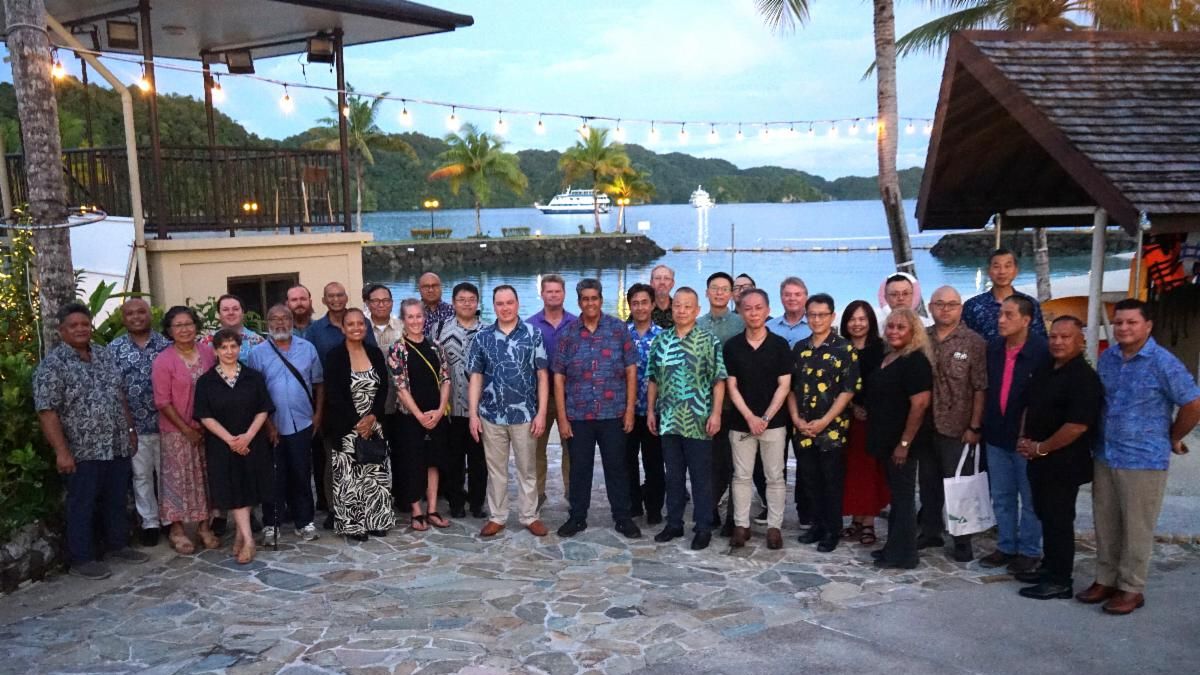
Photo: Participants of the Networking the Neighbors of the Philippine Sea conference at the welcome dinner with President Surangel Whipps Jr.
| | |
U.S.-Japan Integrated Security Dialogue:
Diet Delegation Visits Silicon Valley and Washington
| | |
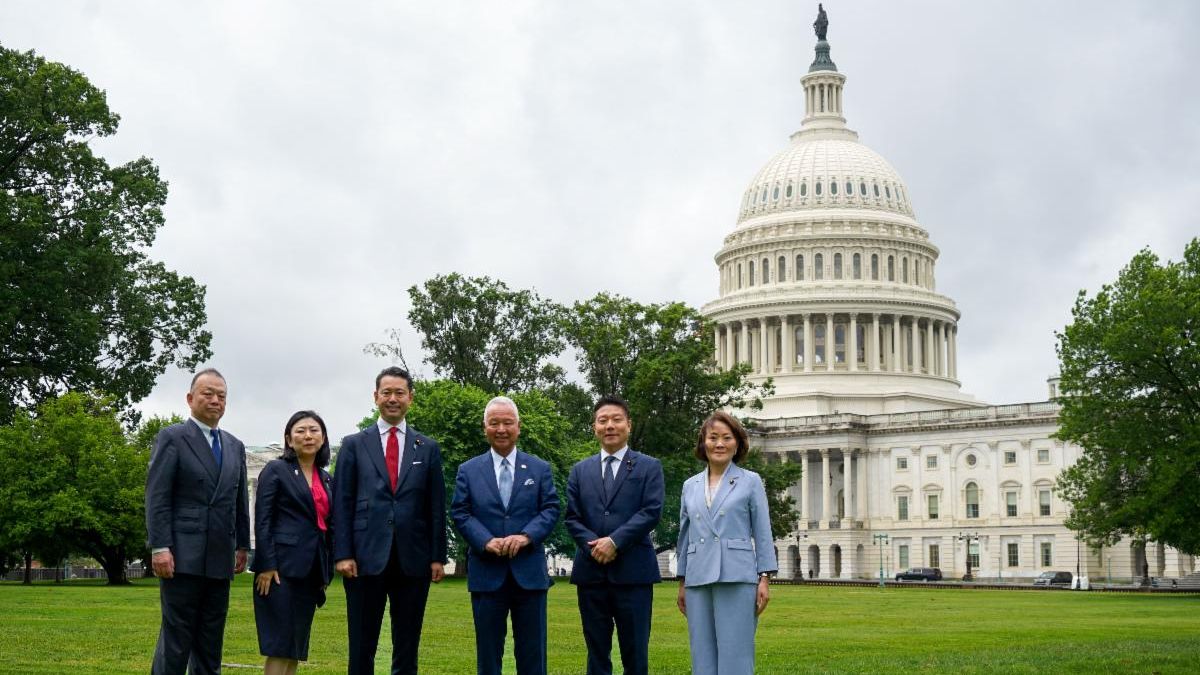
From May 3 to May 8, Sasakawa USA hosted a delegation of one former and four active members of the National Diet of Japan for the 2026 Integrated Security Dialogue. Led by Hon. Akira Amari, former secretary-general of the Liberal Democratic Party, this year’s delegation visited both Silicon Valley, CA and Washington, DC for meetings with a thematic focus on AI and technological innovation. In Silicon Valley, the delegation visited several companies in the AI, semiconductor, and other critical tech sectors. For the Washington portion, the group met with bipartisan members of Congress, government officials, and policy experts to deepen their understanding of key strategic issues facing the U.S.-Japan alliance.
Photo (left to right): Dr. Satohiro Akimoto; Hon. Karen Makishima, Ph.D.; Hon. Taku Otsuka; Hon. Akira Amari; Hon. Taro Honda; Hon. Miki Yamada
| | |
Networking the Neighbors of the Philippine Sea:
Palau Conference
| | |
From May 18 - 20, Sasakawa USA hosted a three-day conference in Palau as a part of the Networking the Neighbors of the Philippine Sea project. The conference welcomed around 30 officials from the U.S. (The Commonwealth of the Northern Mariana Islands; Washington, DC; Guam), Japan, Republic of the Marshall Islands, Palau, the Philippines, and Taiwan, to discuss opportunities for security cooperation, as well as to strengthen networks and cooperation among like-minded neighbors. A report about the findings and recommendations from the conference will be published by Sasakawa USA in late 2026. This will be followed by a series of roll-out events in several capitals of the conference participants.
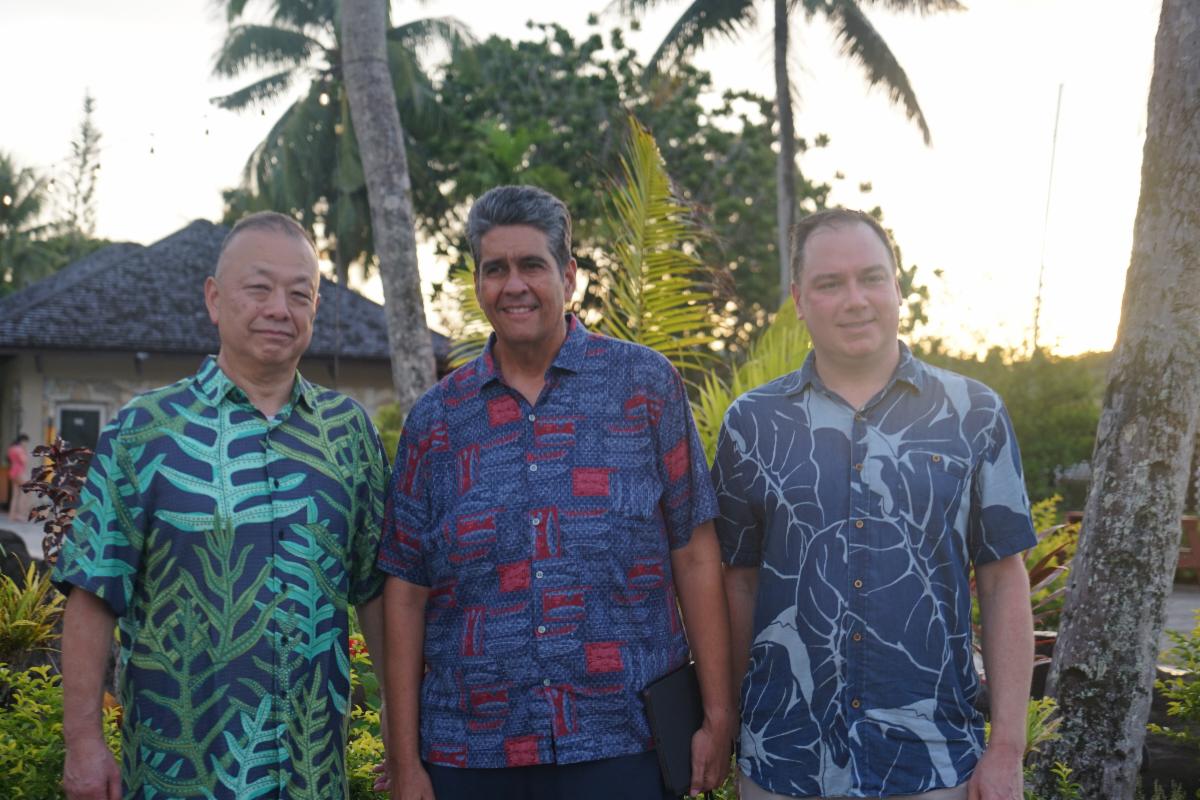
Photo (left to right): Dr. Satohiro Akimoto, President Surangel Whipps Jr., Mr. Brian Harding
| | Japan US Military Program (JUMP): JUMP Honolulu | | |
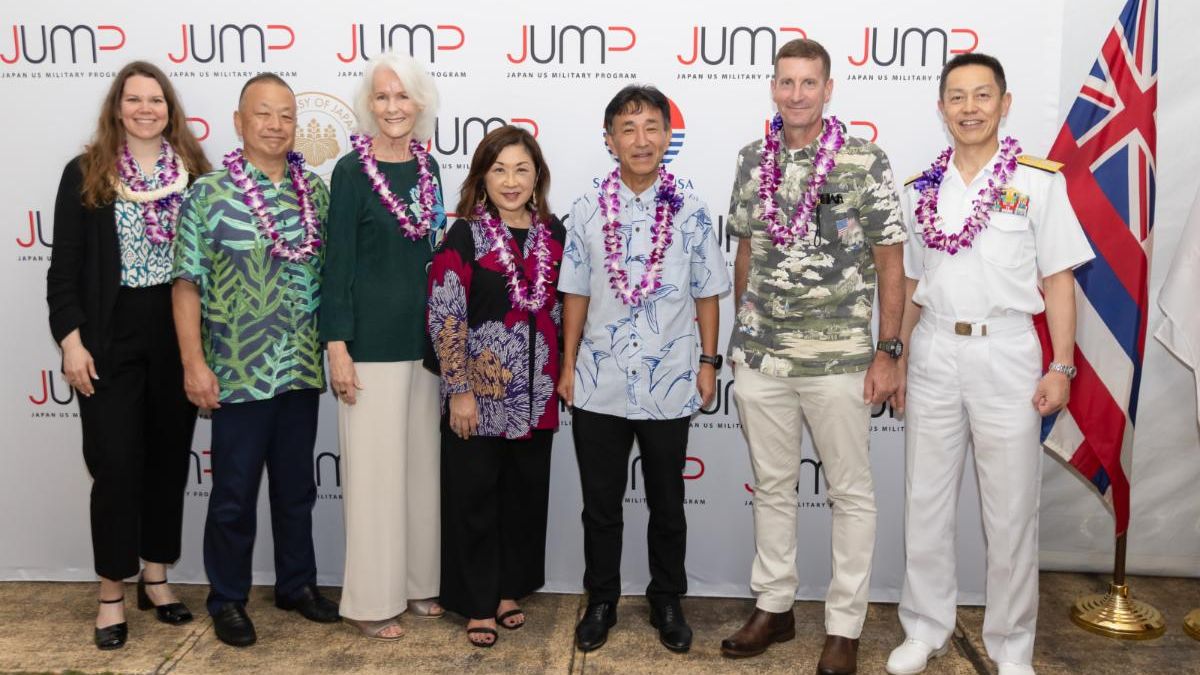
On May 29, Sasakawa USA held a Japan US Military Program (JUMP) event in Honolulu, HI, in partnership with the Embassy of Japan, the Japan-America Society of Hawaii, and the Consulate-General of Japan in Honolulu. LTG Joel B. Vowell (USA), deputy commanding general for U.S. Army Pacific, and RADM Toshiyuki Hirata (JMSDF), director general of the Maritime Staff Office’s Operations and Plans Department, shared keynote remarks at the event highlighting the enduring strength and importance of the U.S.-Japan alliance in the Indo-Pacific. Additional remarks were made by Mr. Hideaki Chotoku, consul-general of Japan in Honolulu; RADM Ryoko Azuma, commanding officer of the Japan Training Squadron; Dr. Satohiro Akimoto, chairman and president of Sasakawa USA; Ms. Reyna Kaneko, president of the Japan-America Society of Hawaii; and Ms. Karen Knudsen, chair of the Japan-America Society of Hawaii.
JUMP Honolulu was held to mark a port visit at Pearl Harbor by the Japan Training Squadron, an annual training mission for newly commissioned officers of the Japan Maritime Self-Defense Force that develops their experience at sea and allows them to work alongside partners from countries around the world. Over 200 people attended JUMP Honolulu, primarily U.S. and Japanese servicemembers as well as invited guests from the local community. Musical performances were given by the Japan Training Squadron's band and taiko drum group, deepening cultural ties by playing music from both Japan and the U.S.
This JUMP material is distributed by Sasakawa Peace Foundation USA on behalf of the Embassy of Japan. Additional information is available at the Department of Justice, Washington, DC.
Photo (left - right): Ms. Shanti Shoji, Dr. Satohiro Akimoto, Ms. Karen Knudsen, Ms. Reyna Kaneko, Hon. Hideaki Chotoku. LTG Joel B. Vowell (USA), RADM Toshiyuki Hirata (JMSDF). Photo by Tony Grillo.
| | Shanti Shoji Speaks on Panel "Beyond 1325@25: Strategies to Advance the Women, Peace and Security Agenda in a Shifting Geopolitical Landscape" | | |
On May 12, director of programs Shanti Shoji spoke on the panel, “Beyond 1325@25: Strategies to Advance the Women, Peace and Security Agenda in a Shifting Geopolitical Landscape,” hosted by Women in International Security (WIIS) and New Lines Institute. The panel served as a launch event for a recently published policy brief that shares insights from the 1325@25 Conference which convened scholars, practitioners, and global experts to reflect upon the 25th anniversary of the Women, Peace and Security (WPS) agenda and explore opportunities to further advance implementation.
In addition to Ms. Shoji, speakers included Dr. Lauren Van Metre, president and CEO, WIIS; Ms. Nisha Singh, senior global policy and advocacy manager, Women for Women International; Ms. Tazreen Hussain, co-founder, WPS Collective; and Ms. Kallie Mitchell, program head and analyst, gender policy portfolio, New Lines Institute. The discussion was moderated by Ms. Mahathi Ayyagari, Howard S. Brembeck Women, Peace and Security fellow, WIIS. Through their remarks, panelists examined the importance of civil society leadership, locally rooted messaging, and cross-border coalitions, especially as traditional state-level WPS implementation faces challenges in today’s geopolitical landscape. Ms. Shoji highlighted best practices on WPS within the Indo-Pacific context, including examples of localization of the agenda into regional cooperation frameworks such as ASEAN’s Regional Action Plan, as well as Japan’s initiatives to apply WPS into domestic disaster risk reduction efforts and transportation infrastructure. The panelists engaged in a Q&A with the audience following their remarks.
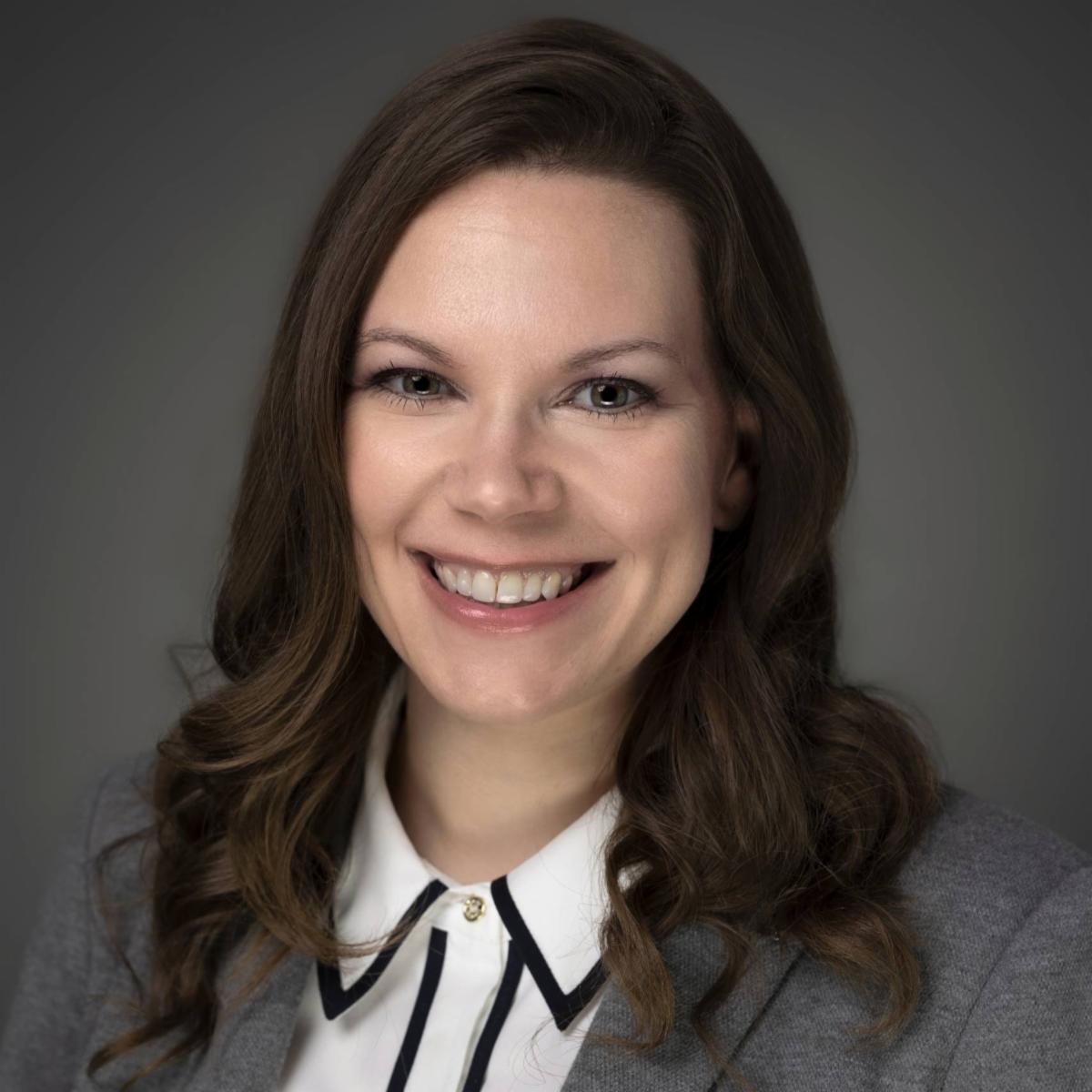
Photo: Ms. Shanti Shoji
| | |
Sasakawa Peace Foundation USA
1819 L Street, NW, Suite 300
Washington, DC 20036
+1.202.296.6694
| | | | |