|
Daily Transportation News
May 28, 2026
| | | International Road Federation (IRF) Joins the IATR Advisory Board! | |
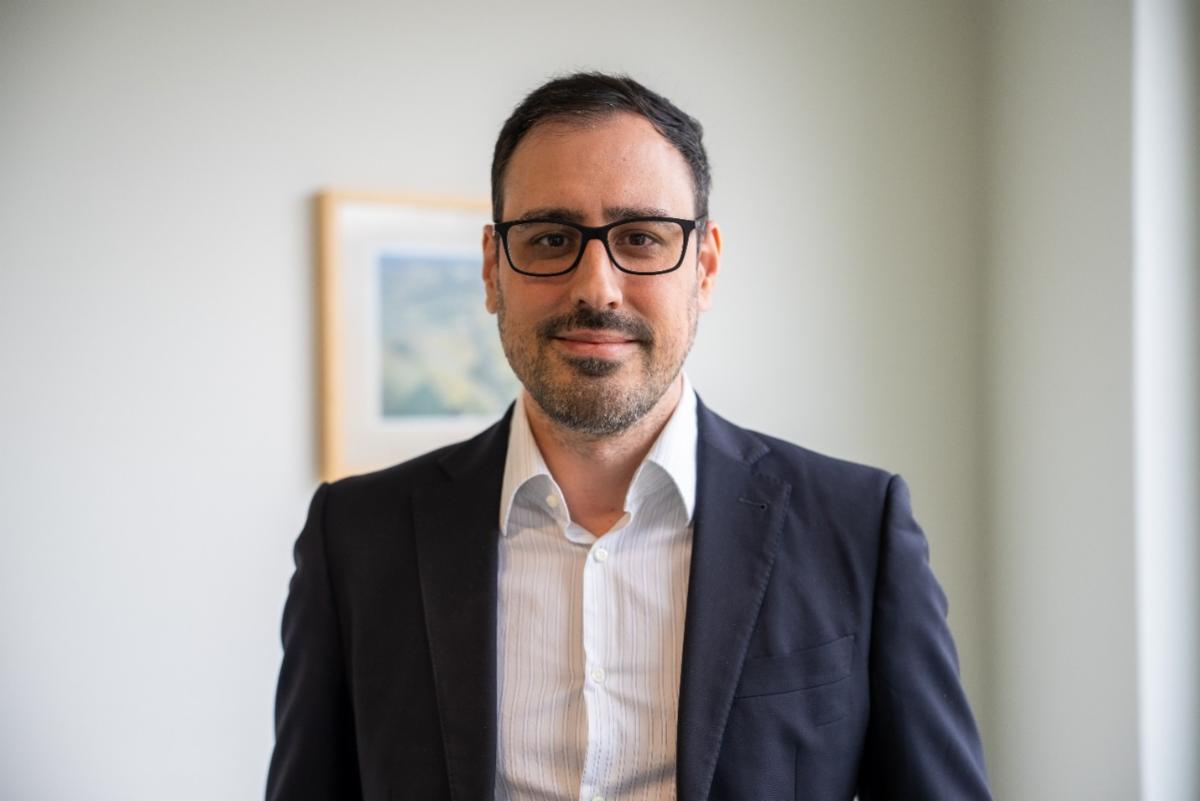
Gonzalo Alcaraz, Director General of the International Road Federation (IRF) | |
IATR is pleased to welcome Gonzalo Alcaraz, Director General of the International Road Federation (IRF), as its newest advisory board member. IRF is the world’s leading organization dedicated to promoting safer, greener, and more sustainable road systems worldwide.
On joining the IATR Advisory Board, Gonzalo said, “It is a privilege to join the IATR Advisory Board at a time when transportation regulators are navigating unprecedented complexity, from new mobility modes to automation and decarbonization. Headquartered in Geneva and active on every continent, IRF has long believed that safer, more sustainable mobility depends on bringing together regulators, industry, and civil society across borders. I look forward to contributing an international perspective, sharing best practices from IRF’s global membership, and working with fellow board members to advance regulatory frameworks that place road safety and sustainability outcomes at the center of innovation.”
Matt Daus, IATR President, said, “We are honored to welcome Gonzalo Alcaraz and the IRF to the IATR Advisory Board. Gonzalo brings an impressive background and a strong commitment to improving road safety and sustainable infrastructure worldwide. IRF has played a vital role in advancing collaboration between governments, industry leaders, and transportation stakeholders across the world, and its global perspective will be an important asset to IATR as regulators continue adapting to evolving mobility technologies and transportation models. We look forward to working closely with Gonzalo and IRF to help advance practical, forward-looking regulatory approaches that prioritize safety, innovation, and public benefit.”
In this role, Gonzalo leads IRF’s international programs, policy advocacy, and member engagement by working with governments, multilateral institutions, and industry leaders to advance road safety, sustainable infrastructure, and connected and automated mobility.
Over a 15-year career spanning IoT engineering, intelligent transportation systems, autonomous fleet management, and transport policy, he has worked in the European private sector before moving into international institutional leadership. He has represented the road sector at major events and forums around the world and mentors early-stage ventures through Techstars accelerator programs. He holds degrees from Universidad Blas Pascal (Argentina), Politecnico di Torino (Italy), and Blekinge Institute of Technology (Sweden), and works in four languages.
Active since 1948, the IRF is an international, membership-based organisation headquartered in Geneva that shapes the future of road and transport infrastructure systems for people and the planet. Mobilising the world’s road transport ecosystem through a trusted platform for collaboration, we provide practical knowledge, policy engagement and capacity building to support countries and industry leaders deliver road systems that are inclusive, safe, green and efficient.
As transportation regulation and technology evolve, more government entities and stakeholders are taking on roles in overseeing, coordinating, and regulating both emerging and established industry participants. IATR members now regulate not only taxicabs and limousines, but also pedicabs, Transportation Network Companies (TNCs), liveries, black cars, app-based firms, jitneys, shuttles, microtransit services, and public and private paratransit. In many regions, they also collect transportation data from licensees and work with technology vendors, automakers, and other businesses connected to for-hire ground transportation providers, drivers, and vehicle owners through permitting, authorization, franchising, and regulation.
This expanding regulatory landscape includes airport authorities, multimodal public transit agencies, local transportation and traffic departments, state highway and transportation agencies, public utilities commissions, consumer affairs agencies, taxi and limousine or for-hire departments, police departments, state agriculture departments, and weights and measures agencies or divisions. It also now includes state Departments of Motor Vehicles, certain federal agencies, international ministries, land transport authorities, and social service regulators responsible for Non-Emergency Medical Transportation. IATR’s diverse membership of government agencies helps the organization collaborate with peer nonprofits that support education and advocacy, reinforcing the mission and objectives of IATR.
In response to this fast-changing landscape of new mobility, oversight, decarbonization, and road safety, IATR includes a range of organizations on its advisory board to ensure that strong guidance, practical insight, and leading practices are shared through conferences, subcommittees, joint projects, and industry hackathons. Advisory board members include Together for Safer Roads, the American Public Transportation Association (APTA), the University Transportation Research Center (UTRC), and the Non-Emergency Medical Transportation Accreditation Commission.
| | New NYC Taxi and Limousine Commissioner Looks to Drivers to Set Agenda | |
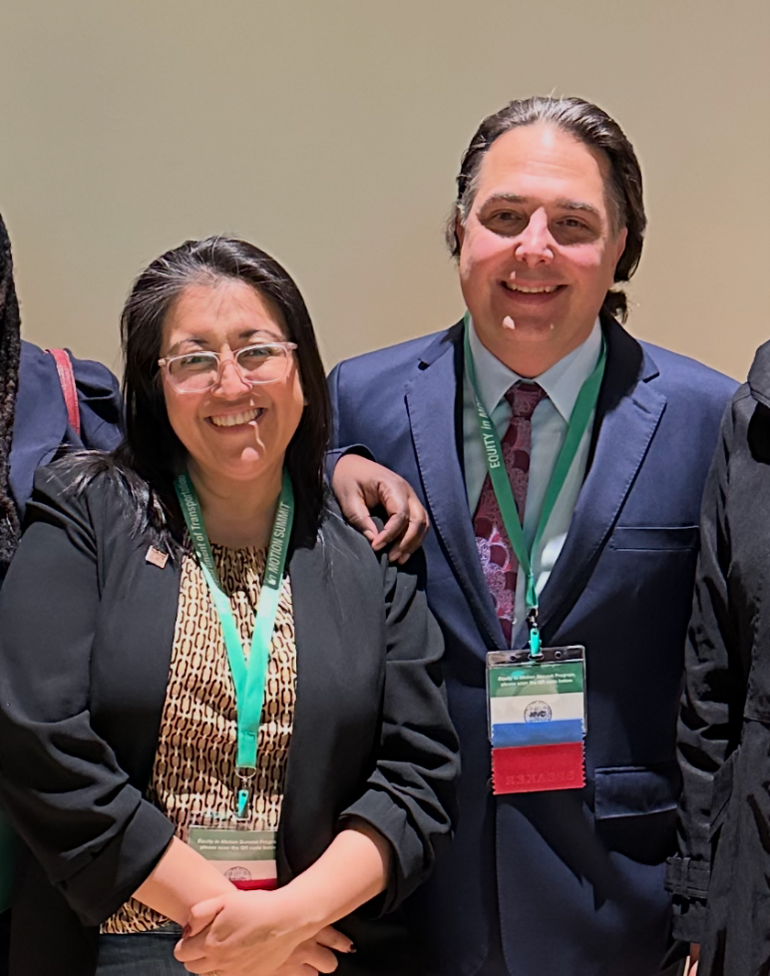
From Left: Midori Valdivia, Commissioner and Chair of the NYC Taxi and Limousine Commission; and Matt Daus, President of the International Association of Transportation Regulators and former longest-serving Commissioner and Chair of the NYC Taxi and Limousine Commission | |
When Midori Valdivia stepped into her new role as commissioner of New York City’s Taxi and Limousine Commission, it felt familiar.
A decade earlier, Valdivia worked at the agency. Now, she’s returning to lead it at a time when drivers are grappling with everything from declining medallion values to changing street designs and competition from rideshare apps.
“We’re talking about 180,000 drivers who contribute to New York’s economy, who raise children here, who love the city and really want to be ambassadors to this city,” Valdivia said.
Valdivia brings years of transportation experience to the role, including work at the Port Authority of New York and New Jersey. Since being confirmed, she said she has focused on hearing directly from drivers by launching a survey and beginning a listening tour across the city.
She said her administration is centered on three priorities: giving drivers a voice in transportation policy, accountability and dignity.
Source: New York 1
Click Here to Read More
| | |
Zum and SFUSD Announce Largest Electric School Bus Deployment in the Nation
In August of 2026, Zum will deploy 104 electric school buses with bidirectional charging infrastructure in San Francisco. These buses will provide quiet, zero-emission transportation to students and will have the capability to return approximately 3 gigawatt-hours of clean energy to the local grid annually during peak hours, providing power to 1.2 million homes for up to 3-4 hours. Plans include adding additional electric buses to complete the 2027-2028 school year to make a total of 238 EVs with bidirectional charging in San Francisco.
Click Here to Read More
McKinsey: US Autonomous Vehicle Market Could Reach $230bn by 2035
The US and China are leading the way and London is the latest big city to join the movement, as the autonomous vehicle future promises reduced traffic, road fatalities and more connected communities.
Click Here to Read More
Philadelphia Schools Fight for a Rideshare Tax to Avoid Deep Cuts
Principals across the city say a proposed $1-per-ride Uber and Lyft tax could prevent major staffing reductions that would increase class sizes and eliminate critical student supports.
Click Here to Read More
| |
TTC Enhances Security Efforts with More Checks, Track Intrusion Focus
The TTC plans to implement enhanced security measures as part of the "Advancing Safety on the TTC: 2026 Focus Areas Plan." These measures include an increased number of security checks and a focus on preventing track intrusions. The report detailing these initiatives is scheduled for presentation to the TTC Board on June 3.
Click Here to Read More
Quebec Taxi Permit Holders Are Asking the Supreme Court to Hear Their Case
Ultimately, it is the Supreme Court that will decide the case of taxi permit holders who believe they have been wronged in their rights when their permits lost a large part of their real market value, when the Quebec government deregulated paid passenger transportation in 2019 in order to open the door to carriers like Uber.
Click Here to Read More
No-Upfront Payment Model to Improve Trust in Toronto Airport Transfers
Hidden ride charges are the main reasons why consumers criticise the airport transfers. The traditional taxi and ride-hailing ecosystem has long been associated with challenges. There are other problems like surge pricing and unpredictability. Then the rigid prepayment models play a disruptive role as well. In response to these evolving needs, Pearson Airport Limousine & Taxi Service has introduced a refined booking approach.
Click Here to Read More
| |
Vianova Launches “Street Level” Intelligence Platform
Built with input from cities, transport authorities and operators across 17 countries, the platform is designed to combine multiple data sources including connected vehicle data, public transport information, infrastructure mapping, weather and air quality datasets into a single operational layer for urban mobility planning.
Click Here to Read More
Romanian Taxi Operators Fined for Colluding to Block Competing App at Otopeni Airport
Specifically, the 18 taxi companies and the two transport associations “coordinated their behavior” to eliminate the company Clever Tech SRL from the airport premises, which managed an aggregator application that included offers from several taxi drivers, according to the Competition Council.
Click Here to Read More
Council Wants to Replace DublinBikes with a 4,000-Bicycle System That It Owns
A briefing note to councillors ahead of their mobility committee meeting next week outlines that the current DublinBikes contract ends in September 2027, and the council wants to initiate ‘market sounding’ — a preliminary engagement process — with bicycle share operators in advance of a formal procurement process.
Click Here to Read More
| |
Cambodia: Taxi, Tuk-Tuk Drivers’ Concerns over WOWNOW’s Low Ride-Hailing Fares Resolved after Ministry’s Review
Driver representatives say WOWNOW’s electric taxis and tuk-tuks service was causing unfair business competition and affecting the livelihoods of informal transportation workers. However, the company later agreed to halt and adjust its system after government intervention
Click Here to Read More
Bharat Taxi Becomes World’s Largest Mobility Cooperative with over 3.5 Million Users
Launched on February 5 by Union Home and Cooperation Minister Amit Shah, the platform is grounded in the cooperative model envisaged by Prime Minister Narendra Modi’s vision of “Sahkar se Samriddhi”. It empowers thousands of drivers to become owners of the service they operate, rather than functioning merely as providers.
Click Here to Read More
The Long Road to a Bike-Friendly Australia
At the rate Australian cities are building cycling networks, a cohesive system is probably decades away. What’s taking so long?
Click Here to Read More
| | House Surface Transportation Bill Would Codify FTA Taxicab Exception | |
Transportation and Infrastructure Committee Chairman Sam Graves (R-MO) | |
On May 17, the House Transportation & Infrastructure Committee released the draft “BUILD America 250 Act,” a five-year surface transportation reauthorization bill covering FY2027–2031 that includes major provisions impacting transit, micromobility, autonomous vehicles, intercity bus access, and public-private transportation partnerships. The approximately $580 billion package comes as Congress races to renew key Infrastructure Investment and Jobs Act (IIJA) surface transportation authorities before their September 30 expiration deadline. Among the most closely watched provisions for the for-hire transportation industry is language that would formally codify and clarify the Federal Transit Administration’s longstanding “taxicab exception” under federal drug and alcohol testing rules.
The proposal arrives amid ongoing controversy surrounding the FTA’s December 2024 proposed reinterpretation of the exception, which would have significantly narrowed the ability of transit agencies to partner with taxis and Transportation Network Companies (TNCs) without triggering full federal drug and alcohol testing requirements. Transit agencies, accessibility advocates, and mobility providers across the country raised concerns that the proposed FTA policy could disrupt paratransit operations, first- and last-mile programs, and innovative Mobility-as-a-Service partnerships that have expanded dramatically over the last decade.
Under the draft legislation, the Secretary of Transportation would generally be prohibited from classifying taxi and TNC drivers as covered individuals under FTA drug and alcohol testing regulations when transit agencies provide riders with more than one transportation provider option for each trip and disclose differences in testing requirements between providers. The legislation also expressly extends the framework to TNCs and requires that any such services “supplement, not supplant” fixed-route public transportation. Supporters view the language as an attempt to balance federal safety oversight with the operational flexibility needed for modern multimodal transit partnerships.
| |
The bill language closely aligns with recommendations outlined in IATR’s 2025 draft report, FTA’s Taxicab Exception: Modernizing Public Transit for a Multi-Modal Future, which urged Congress to preserve and codify the exception during the next surface transportation reauthorization process. While the bill language does align with the report, IATR is open to hearing other views at and before its 39th Annual Conference, taking place September 14th - 17th in Las Vegas. There, we will take a deep dive and discuss the issue further during our sessions titled "Public Transit Partnerships with Taxis, FHVs and TNCs: The Status of the FTA Taxicab Exception Debate."
The BUILD America 250 Act remains in draft form and is expected to evolve as it moves through the committee and legislative process. Nevertheless, transportation stakeholders nationwide are likely to view the inclusion of the taxicab exception language as one of the clearest signals yet from Congress regarding the future of multimodal public-private partnerships and the evolving role of taxis and TNCs in federally supported transit systems.
Click Here for BUILD America 250 Act Details
Click Here for the IATR’s Taxicab Exception Report
| |
|
Message from IATR President Matthew W. Daus
At the International Association of Transportation Regulators (IATR), our regulators are at the forefront of addressing both the challenges and opportunities facing the mobility paradigm. Our IATR members, partner organizations, and regulated industries will continue on our shared quest to fulfill the mission of our non-profit educational organization - to bring about Multi-Modal Mobility Innovation for All! This mission can best be accomplished through information sharing, collaboration, identifying and promoting best practices, and educating our membership. These educational updates and electronic media clips are affectionately known as “IATR snips” and endeavor to cover all aspects of mobility around the globe - especially news and developments involving safety, technology innovation, multi-modal integration, automation, sustainability, electrification, accessibility, regulatory modernization, and equity.
If you would like more information about the IATR, you can visit our website at www.iatr.global. Current members can renew their memberships when you log in to your IATR portal on the top right-hand side of our website, or click here. If you forgot your membership password, please email our Membership Director, Eric Richardson, at erichardson@iatr.global.
| | | | | |
|
RENEW YOUR MEMBERSHIP FOR 2026:
Weekly news snippets
Access to the membership database
Videos and files from recent conferences
Discounted rates for future conferences, and more!
Renew your membership at http://www.iatr.global or email info@iatr.global for any questions!
| | | | |