|
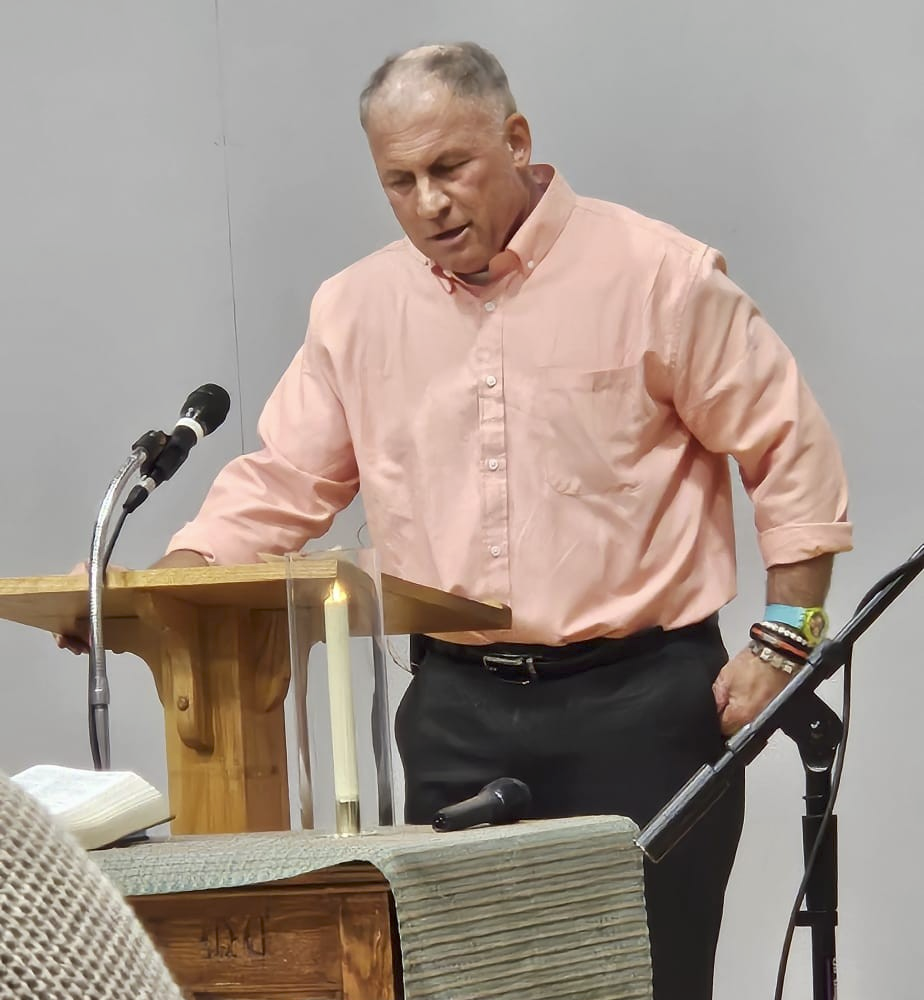
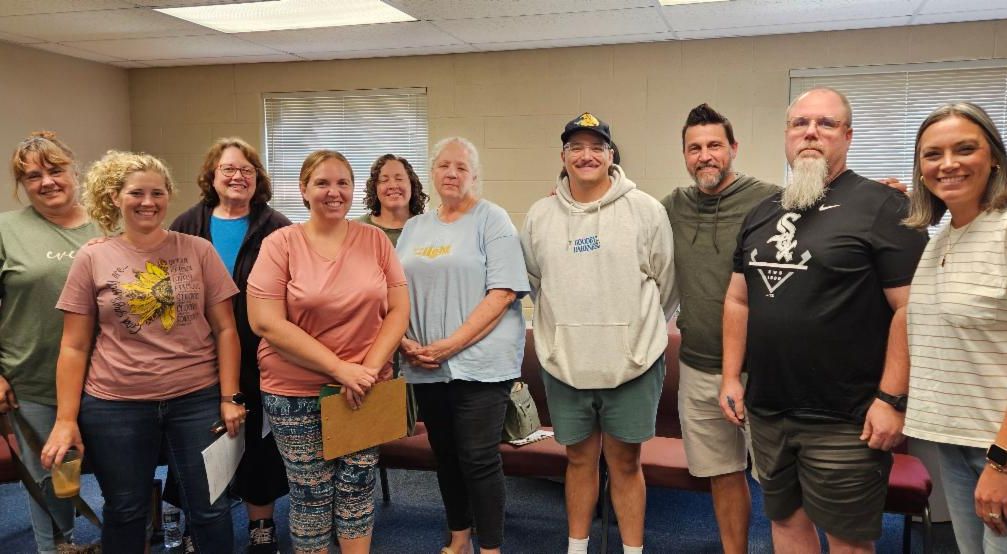
First, let us celebrate Pastors David Wright (shown to the left, Lebanon First Baptist Church), Roberta White (Congregation of the Covenants), Tony Hart (Associate pastor, New Era, where I worshiped two Sundays ago). Let us celebrate their faithfulness, leadership, and ministry!
Lebanon First Baptist Church is the northernmost congregation in our region, while Congregation of the Covenants is ABCGI’s southernmost congregation. I went to church in the north, this past Sunday morning, and to church in the south, this past Sunday evening.
Pastor Wright began a series on the church family, holding forth the premise that the integrity and character of the world are dependent on the ability of the church to maintain its own integrity and leadership authority in Jesus Christ. Although the sermon was not based on the scripture that was read, that scripture grabbed me by the neck as it always does. The passage we reference as the Good Samaritan takes on far more meaning for me in these times in America. I hope it does for you too. A foreigner, a minority, and a hated traveler stops to notice the privileged born native in trouble, left for dead while other born natives pass him by. This foreigner is capable of love, care, empathy, human compassion, and human duty. He pays his bills – bills incurred by the security, shelter, and healthcare needs of another man. The people who pass by the distressed man are intensely religious.
Jesus means for this story to judge, yes, those religious people who passed the bludgeoned man by, but also us as unequivocally as it was meant to judge the original hearers, the Pharisees. Passages like this should demand of us, “How does this scripture move your heart and thoughts toward the relatives of over 100 men dead in the Caribbean Sea, victims of homicide most unusual and at least questionable – if not the men themselves? How does this scripture move you to feel about Renee Nicole Good, or the person referenced as “her wife?” Her having a wife has become more of an issue for some Christians, rather than her death and the circumstances thereof – just the ugly sight of a bloody, beaten-up Jew was more an issue for two other religious Jews than his humanity, crying out for a human response, while, ironically, the “dirty” and “worthless” Samaritan, expected to hate this Jew, was the one who was more like Jesus). How does this scripture affect your thinking about the forlorn Karen (Burmese) woman in Minnesota, recently arrived in America with her kids as a legitimate refugee, arrested by ICE, just for being Karen, leaving her children including a baby, unattended?
What distinguished this Samaritan from the Jews in Jesus’s story? What must distinguish us, in this tumultuous time and age of cruelty, terror, abuse, and injustice, from other Americans (especially other American Christians) in the ways Americans, in general, regard minorities of any kind? There are millions of people in America – and thousands of them are in the ABCGI and our ABCUSA “family” – who desperately hope that your answer, and mine, will reveal something that renders us more like the Samaritan, than the priest or Levite. These thoughts began to germinate while I worshiped Sunday morning.
Then, on Sunday evening, at Congregation of the Covenants, worship began with a reading from Psalm 82. Its rendition in the Living Bible was pungent and jarring for anybody not living under a rock in America, lately. Here it is:
God stands up to open heaven’s court. He pronounces judgment on the judges. 2 How long will you judges refuse to listen to the evidence? How long will you shower special favors on the wicked? 3 Give fair judgment to the poor man, the afflicted, the fatherless, the destitute. 4 Rescue the poor and helpless from the grasp of evil men. 5 But you are so foolish and so ignorant! Because you are in darkness, all the foundations of society are shaken to the core. 6 I have called you all “gods” and “sons of the Most High.” 7 But in death you are mere men. You will fall as any prince—for all must die.
8 Stand up, O God, and judge the earth. For all of it belongs to you. All nations are in your hands.
These scriptures are examples of how the things people often reference as (partisan) “politics” are patently biblical, and therefore matters of justice, liberation (salvation) and righteousness. The church’s work is reconciliation and salvation that includes the pursuit of justice, fairness, righteousness, and the reflection of God’s “economy” where “all of it (the earth) belongs to (God)” and in which, therefore, everyone – regardless of all their diverse differences (diversity), is included (inclusion), in sharing God’s earth and its resources equitably (equity). Pastor Roberta made the clear link between Psalm 82 and a lectionary passage for the day (from Isaiah 42), which includes the words, rendered in the Message version, “Take a good look at my servant…He’ll set everything right among the nations. He won’t call attention to what he does with loud speeches or gaudy parades. He won’t brush aside the bruised and the hurt and he won’t disregard the small and insignificant, but he’ll steadily and firmly set things right.” Pastor Roberta made clear that we American Christians – not only Jesus – are that servant, for such a time as this.
At the heart of what I heard in both worship services is a word that wasn’t mentioned in either: repentance. Repentance isn’t primarily about salvation and heaven (the way it was used in the Billy Graham era just before and after); no, repentance is primarily about internal and behavioral change. Our country’s leaders, people, and Christians, in this season – including you and me – are urgently in need of repentance. We have lost our way, and badly. And because America has indeed led the world in many ways, when we break bad, we lead the world to break bad; and the scriptures forewarn of greater punishment for those who cause others to sin.
|