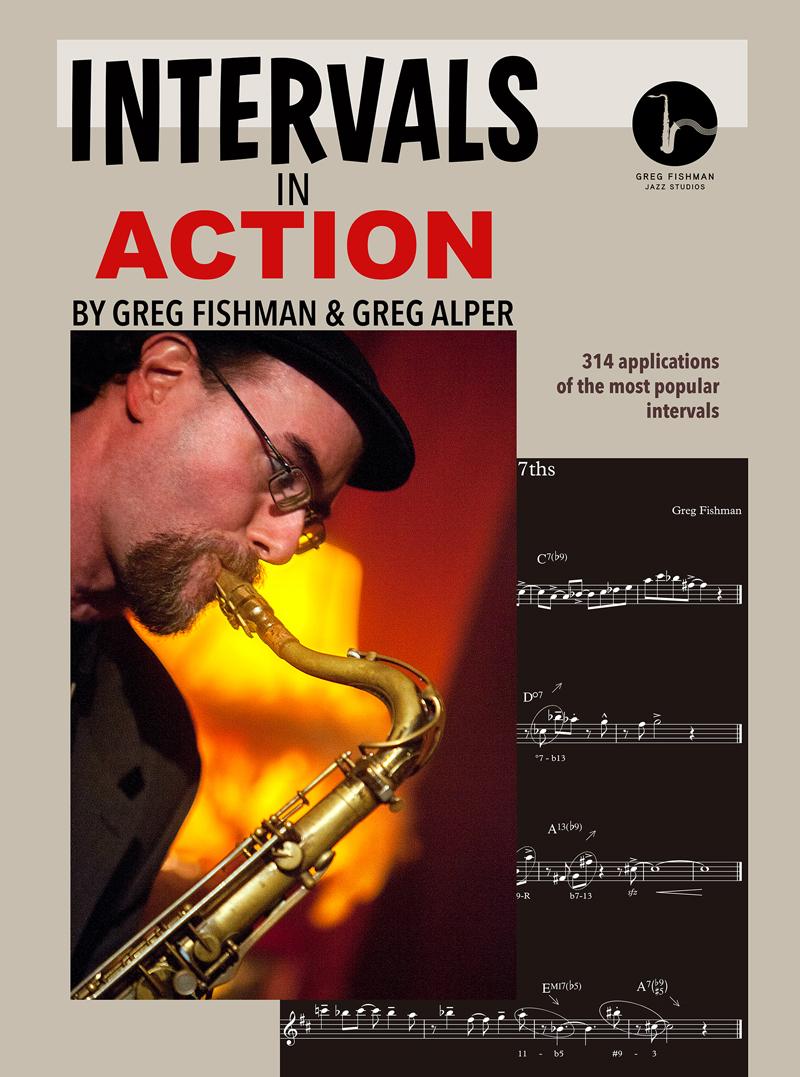
Intervals in Action provides a fun and creative way to train your ear to
hear intervals in many different harmonic contexts. This will help you
create and play musical phrases which accurately portray your feelings
and emotions through your instrument.
Working with
Intervals in Action as part of your daily practice routine
will expand your harmonic awareness, giving you an increased ability to
tap into the melodic and harmonic possibilities hidden within each
interval.
-------------------------------------------------------------------------
"Greg has a deep understanding of how to use intervals."
--Toots Thielemans
With Intervals in Action, I'm sharing the practice method that helped develop that understanding. --Greg Fishman
---------------------------------------------------------------
Highlights of
Intervals in Action:
* 314 Applications of the Most Popular Intervals
* Organized for Maximum Practice Efficiency
* An Excellent Resource for Ear Training
* Systematically Teaches You to Hear Intervals in Harmonic Context
* 108 Pages
* Dimensions: 8.5 x 11
* Spiral Bound
(
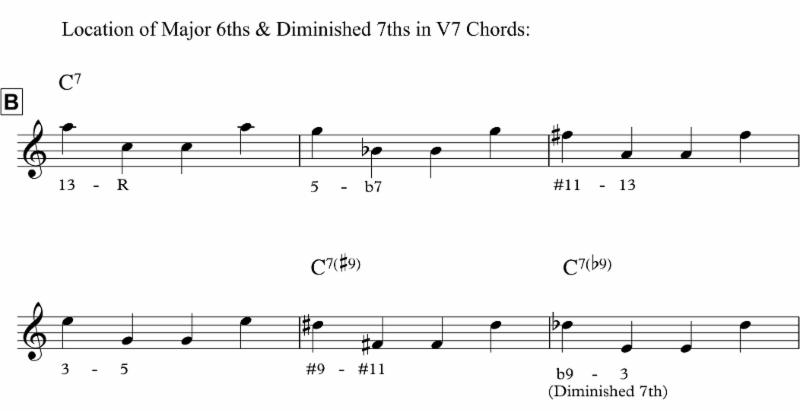
Above): an excerpt from Section 2 -- These are just a very few of the locations for Major 6ths in a C7 chord (the book includes locations for major, dominant, minor, half-diminished and diminished chords). Arpeggiate the chord and then play the interval as shown. Notice the changing effect of the interval as the placement varies in location with the same chord.
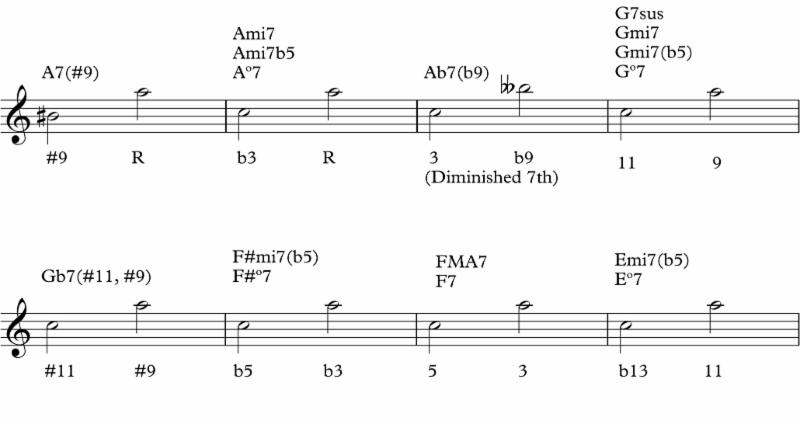
(Above): an excerpt from Section 3. This section of the book explores the intervals in a different way than Section 2, by keeping the interval the same and changing the chords in each measure. This gives your ears a great harmonic sampling of the many unique flavors brought out with the interval placed over different chord types.
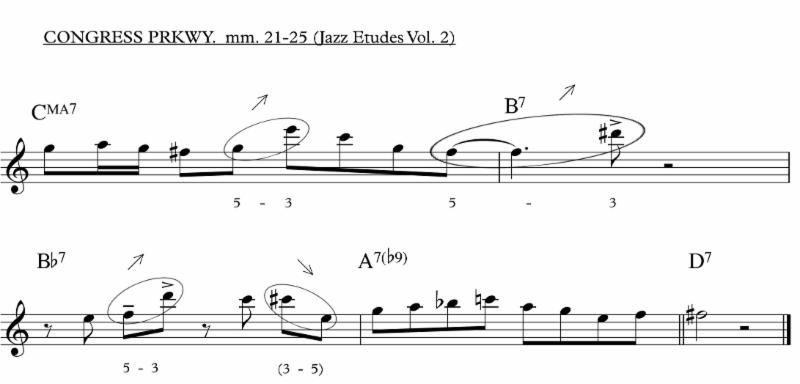
(Above): an excerpt from Section 4. See and hear my favorite ways to apply each interval in the context of a phrase from one of my etudes or licks. Easy identification of the interval and direction of the interval is made possible by simply following the circled notes and looking at the directional arrows.
Also helpful with analysis, you can see the chord tones highlighted with the interval by simply reading the numbers underneath the circled notes. (Numbers in parenthesis indicate notes anticipated for the upcoming chord). This gives you great insight to the practical application of each interval within a phrase.