Our mission is to inspire meaningful connections to Santa Barbara history. | |
|
Dear Friends,
I am excited to introduce you to a new quarterly designed to spark your interest in
Santa Barbara's history... Pequeñas Noticias.
Today’s feature — by one of my favorite historians, Hattie Beresford — chronicles the history behind the Boy Scout Camp known as Rancho Alegre.
Happy reading!
Dacia Harwood
Executive Director
| |
|
Rancho Alegre
By Hattie Beresford
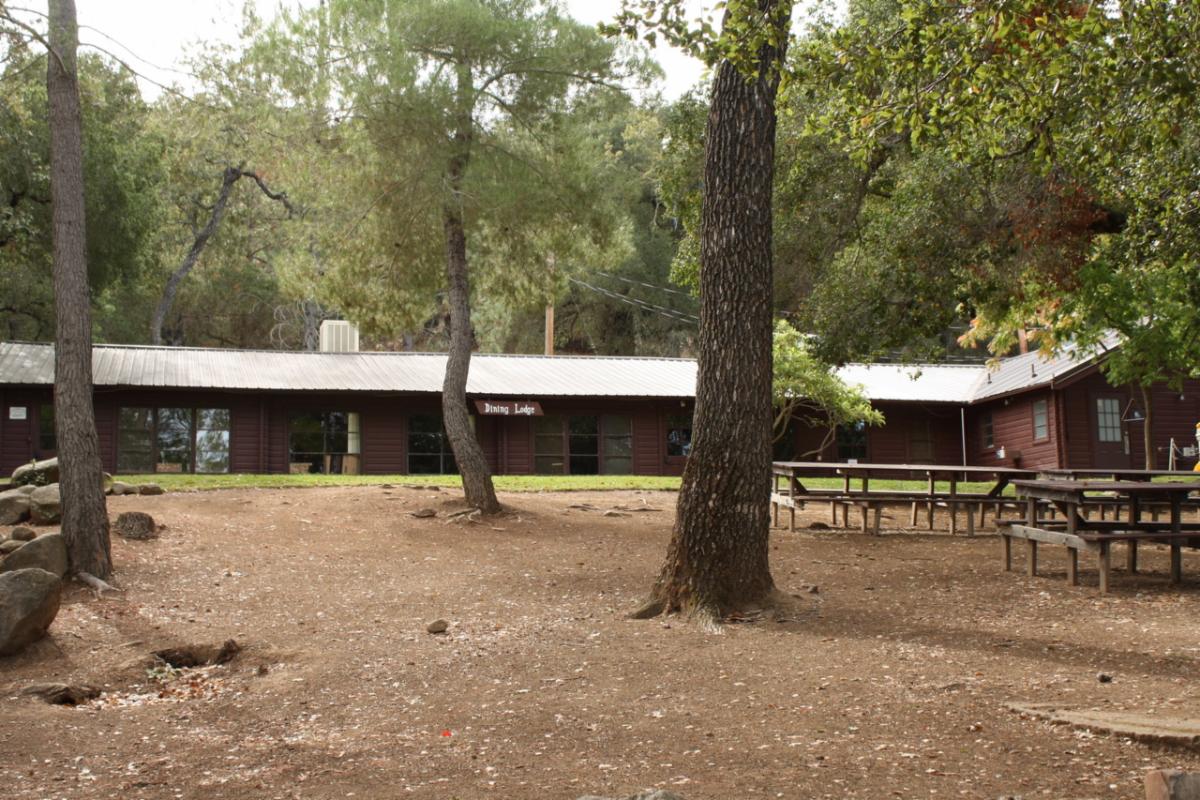
In July 2017, a raging inferno swept the mountains west of Lake Cachuma and laid waste to Rancho Alegre, the site of the Los Padres Council Boy Scout Camp and Santa Barbara County Outdoor School. With the exception of the dining hall, all of historic Rancho Alegre was lost along with many artifacts of its origins. Luckily, the campers and staff, who had sheltered in place, were evacuated safely, as were the campers to the north at Circle V Ranch, the former Camp Drake which had been founded in 1923.
Originally homesteaded by members of the Step and Ilestine families, the lands were sold to Thomas More Storke, founder of the Santa Barbara News-Press, in 1937. Dubbed the TMS Ranch, it was also known as Pasatiempo. Stork built a new ranch house for his weekend retreats and proceeded to entertain his many friends and acquaintances.
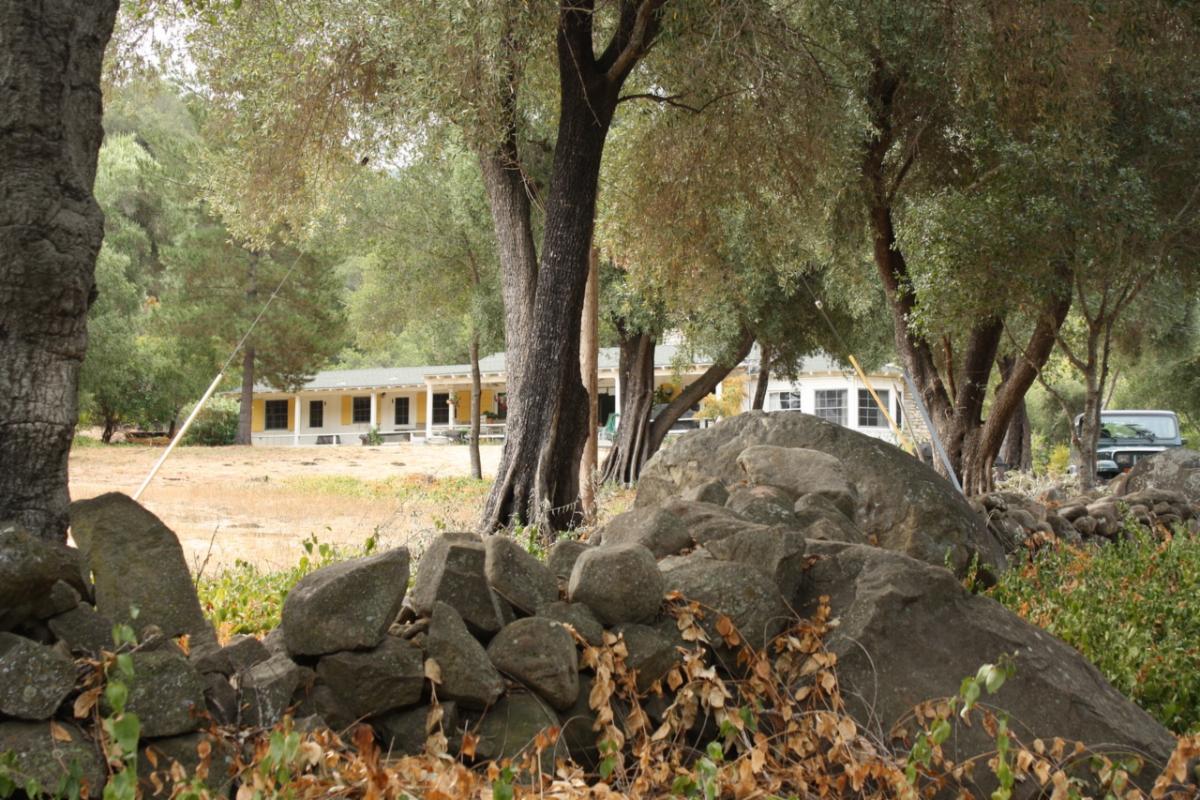
Storke’s new hacienda had plenty of room and spectacular views. On the south side, a covered patio was warmed by a fieldstone fireplace and looked out on a large built-in barbeque and pool. On the north side, the meadow sloped down gently past the caretaker’s cottage and horse barn. A stonewall and olive trees lined the drive.
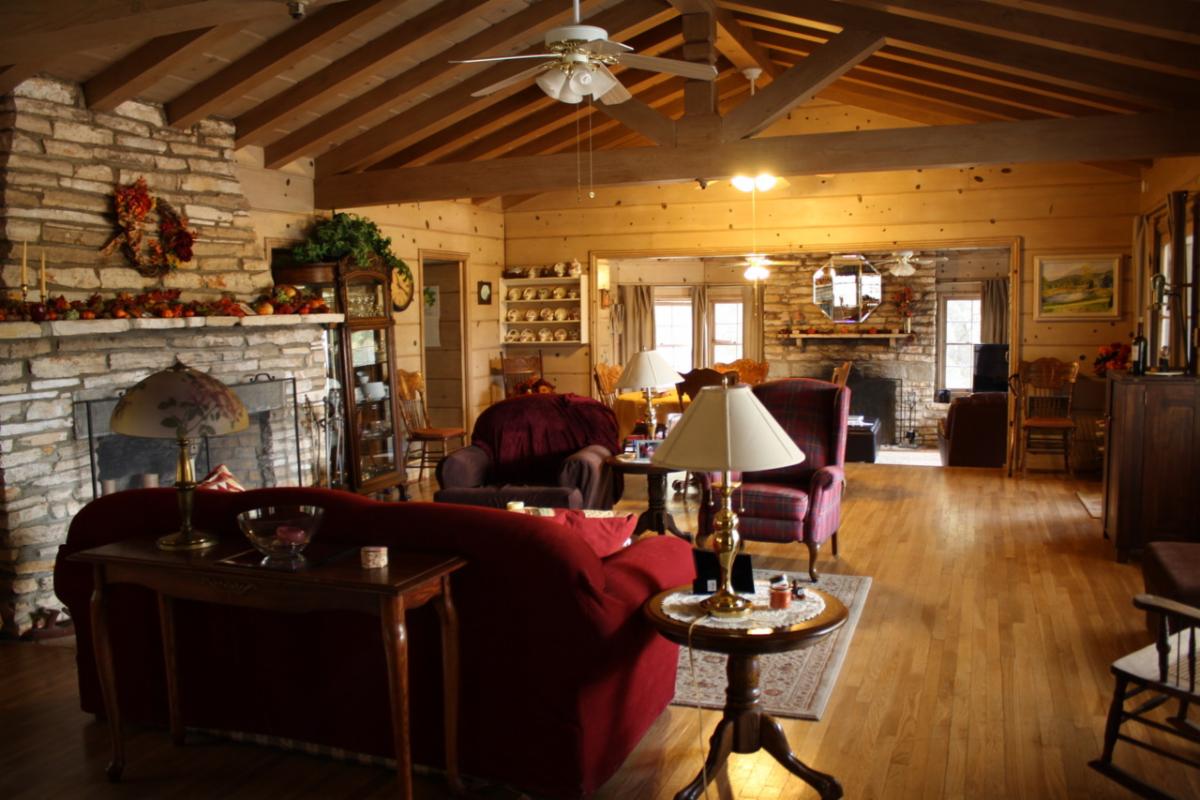
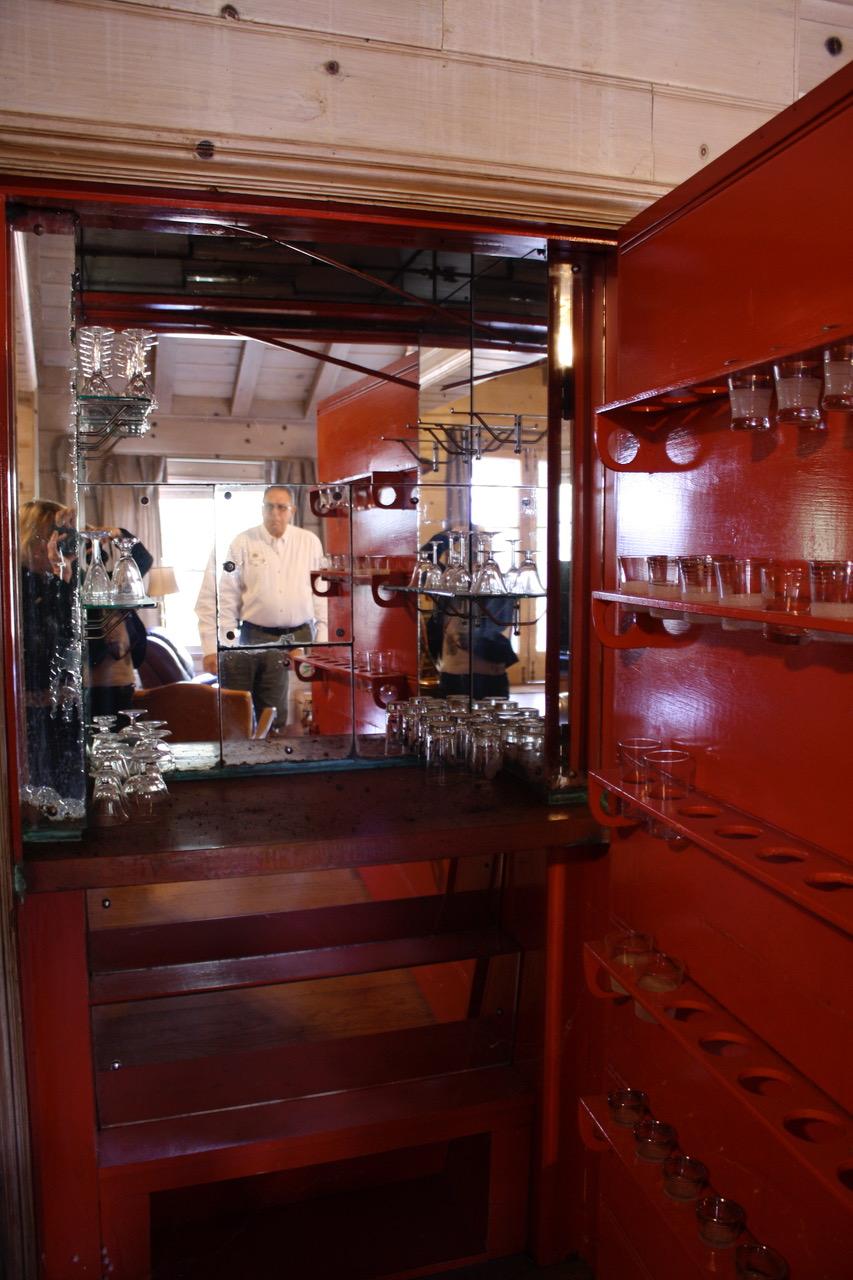
Inside, 6 bedrooms and 3 and ½ baths provided plenty of space for entertaining overnight guests. The large living room and adjoining den each had fireplaces constructed of limestone shale quarried on the property. One closet housed a little copper-topped bar. There, a small, mirrored door opened to the kitchen, so staff could service the bar.
In the kitchen, a panel opened to reveal lights numbered according to each bedroom. When Storke’s guests wanted something, they flipped a switch, the light would light, and a servant would scurry to attend the visitor. Storke also constructed a reservoir and filtration system at the top of the hill to provide reliable water to the house and gardens.
| |
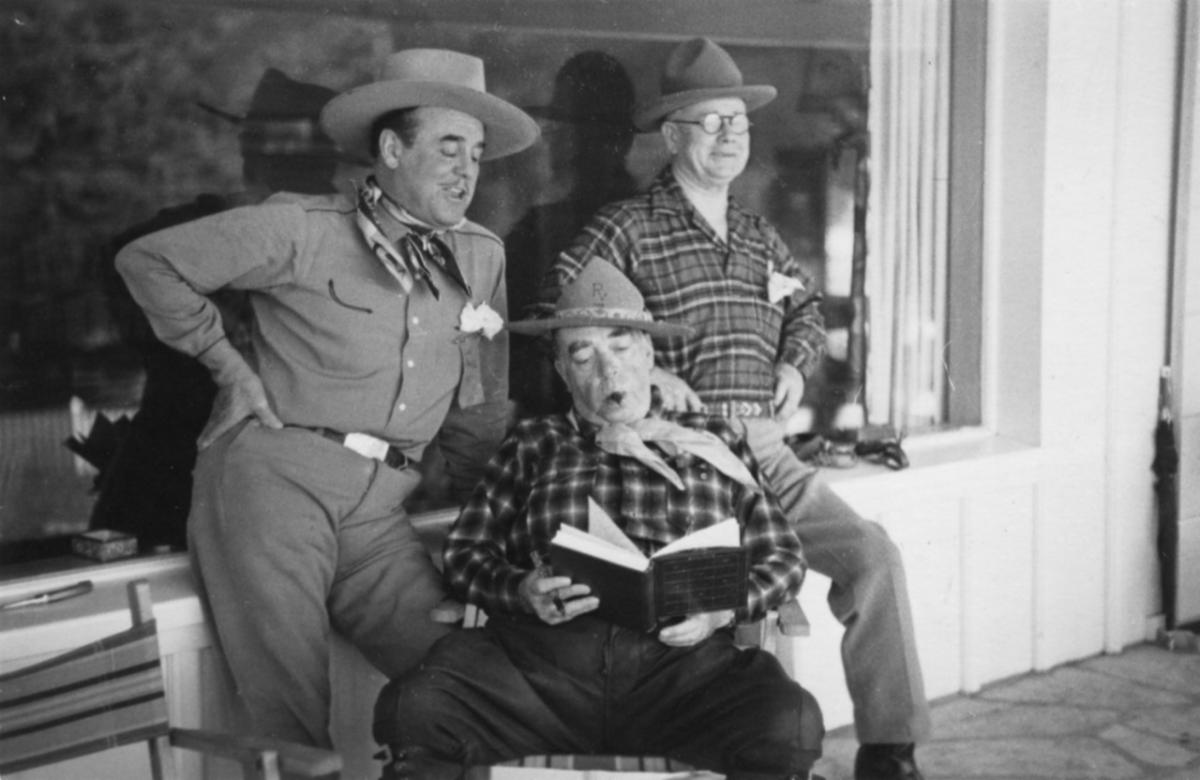
Movie cowboy Leo Carrillo, humorist and author Irvin Cobb, and News-Press editor Tom Storke enjoy a Ranchero moment on the front porch of TMS Ranch circa 1940. (Photo: Santa Barbara Historical Museum) |
|
A 2011 view of the ranch house built for Thomas Storke (Author photo) |
|
The ranch house sported three stone fireplaces built with fossil-embedded limestone quarried on the property in an area called, appropriately, Fossil Hill. A boar’s head once hung above the living room fireplace. (Author photo) |
Disguised as a closet, Storke’s copper topped bar with its mirrored window was a favored feature of the house. Ron Walsh, former director of the camp, is reflected in the mirror. (Author photo) | |
|
Wartime Refuge
In 1942, the Japanese attacked the Ellwood Oil Fields. Anna La Chapelle Clark, widow of Copper Baron and former U.S. Senator William Andrews Clark, became concerned for the safety of her family and staff. The army had set up a camp in the Santa Barbara Cemetery, canons pointed to the sea, and patrols walked the bluffs on her property above East Beach, watching for Japanese submarines and planes. Also, as wartime shortages and rationing became more severe, she wanted to ensure that her staff at Bellosguardo would have the supplies they needed, as well a place of refuge in the event of another attack. She convinced Thomas Storke to sell his ranch to her.
She renamed the ranch Rancho Alegre and installed Nils “Slim” Larsen as caretaker. He ensured that ranch livestock supplemented the produce grown at the estate in Santa Barbara. Dairy cows from the ranch provided milk that was churned into butter for the use of her staff. Though the Clarks rarely visited the ranch, Barbara Doran, whose father Albert Hoelscher was the superintendent of Bellosguardo, remembers an idyllic childhood of picnics and birthday parties at the ranch house, riding the trails, and boating and swimming in the reservoir.
After the war, Storke wanted to buy his ranch back, but Anna Clark refused. Anna E. Clark died in 1963, and her daughter Huguette carried out her mother’s wishes to deed Rancho Alegre to the Boy Scouts of America. Anna’s one stipulation had been that Slim Larsen be allowed to live in the caretaker’s cottage on the ranch for as long as he wished. The meadow below the main ranch house was named in his honor.
| |
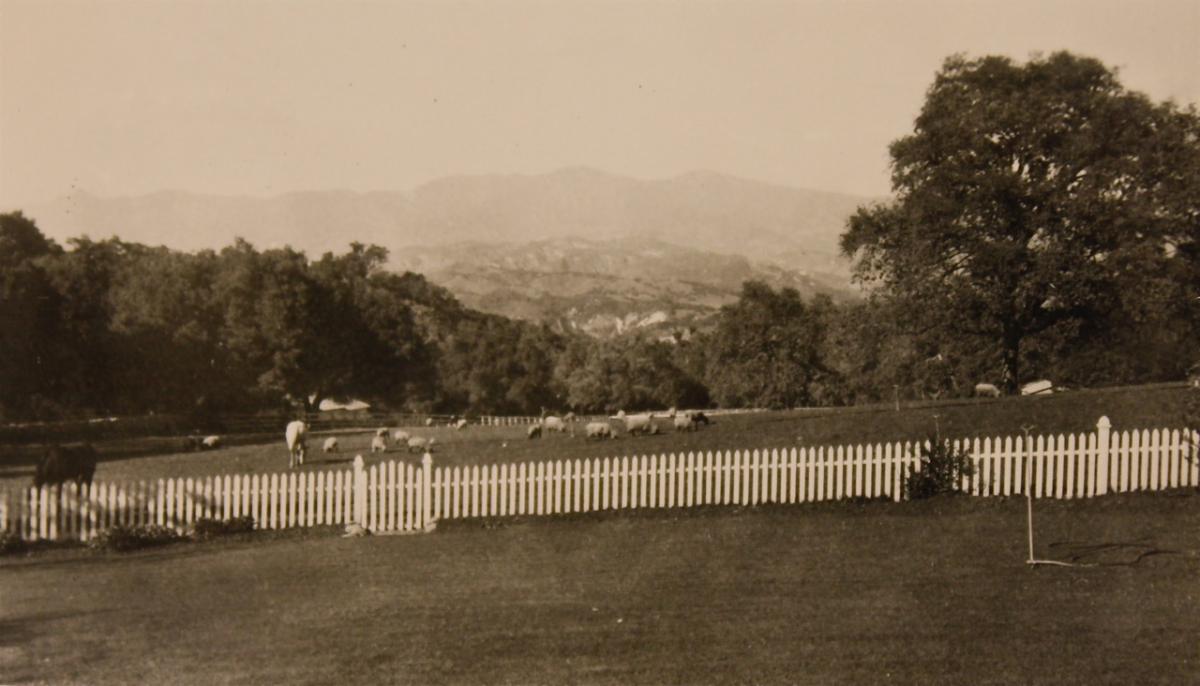
Livestock from the ranch supplied Bellosguardo during WWII. The meadow was later named for Nils Larsen. (Courtesy Barbara Hoelscher Doran) | |
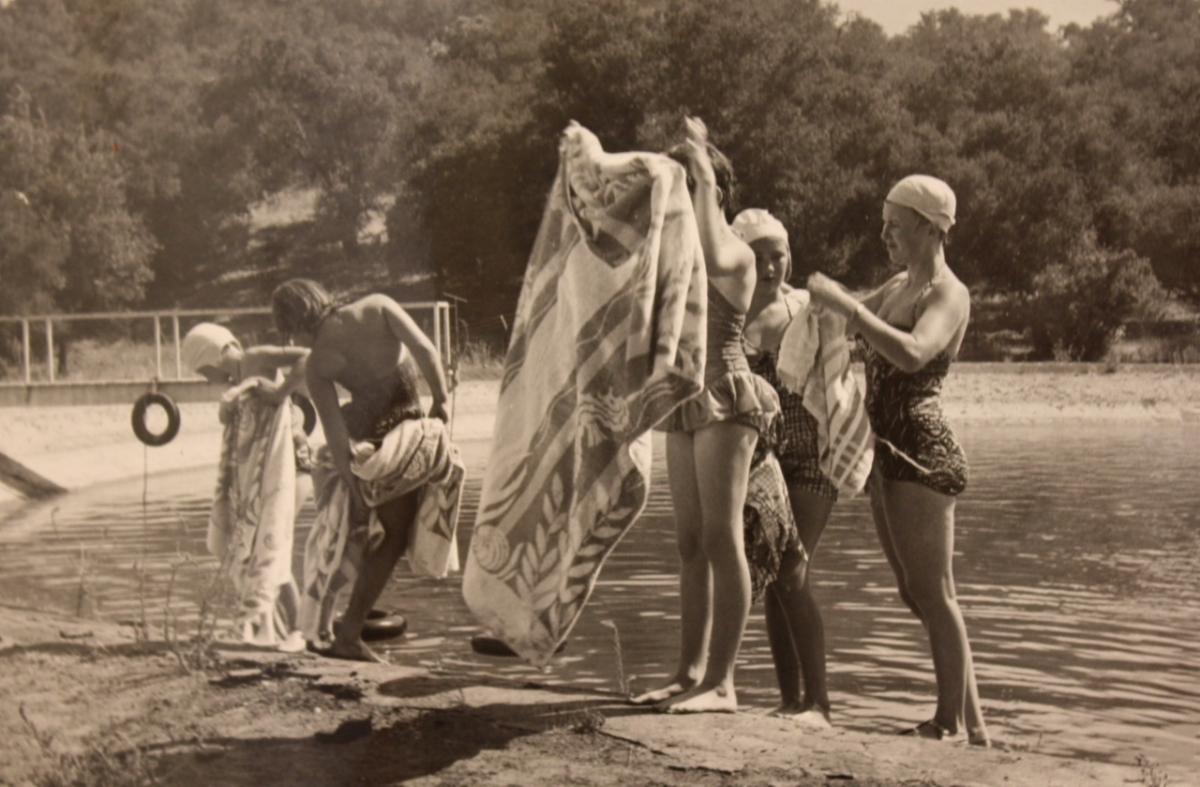
The girls at Barbara Hoelscher Doran’s 10th birthday party frolicked in the reservoir at Rancho Alegre in the 1950s. (Courtesy Barbara Hoelscher Doran) | |
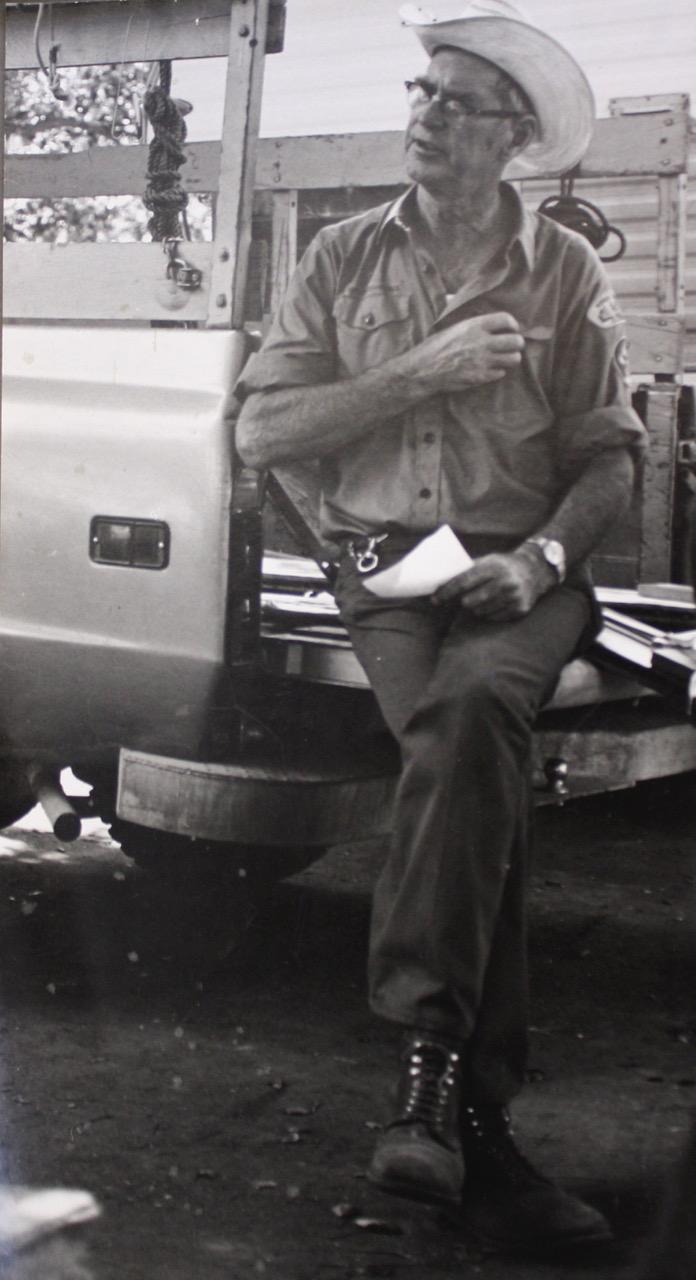
Anna E. Clark hired Nils “Slim” Larsen to oversee Rancho Alegre and ensured he had a position when she later donated it to the Boy Scouts of America. (Photo courtesy of Los Padres Council of the BSA) | |
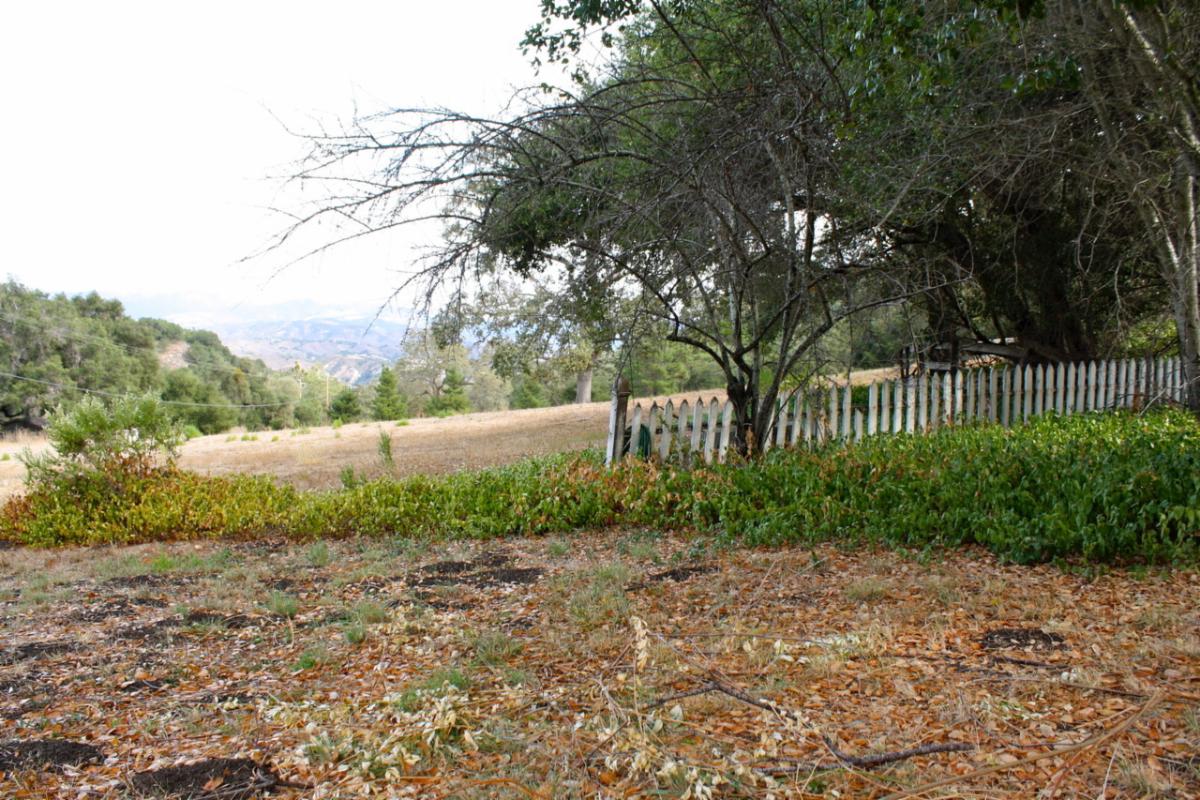
Larsen Meadow in 2011 shows the remains of the white picket fence. (Author photo) | |
|
Rancho Alegre and the Outdoor School
When the Boy Scouts acquired Rancho Alegre, they sold Camp Drake, and Mission Council raised money to create a new camp, which opened in 1965. By 1969, the camp boasted 11 campsites with dry pit latrines, piped drinking water, and a 7-acre lake with boating and canoeing facilities. Campers enjoyed archery ranges, a campfire bowl, a fossil excavation site, horse riding facility, hiking and nature trails, and much, much more. In 1969, the cost for use of the camp was free to Mission Council members and was 25 cents a day/per person to all others.
In the 1980s, the Outdoor School of Santa Barbara, created by the County Department of Education in 1952, found a permanent home at Rancho Alegre. Their mission is to help develop community and environmental stewardship through first- hand experience with nature. Operated by the Los Padres Council of the Boy Scouts of America, the school serves 4,000 local 5th and 6th graders a year.
Today, Rancho Alegre is rising phoenix-like from the ashes of the Whittier Fire and building new dorms and staff housing. Their website reveals their continued commitment to the children of Santa Barbara as they raise funds for reconstruction.
| |
The dining lodge of Camp Rancho Alegre was the only structure to survive the fire of 2017. (Author photo) | |
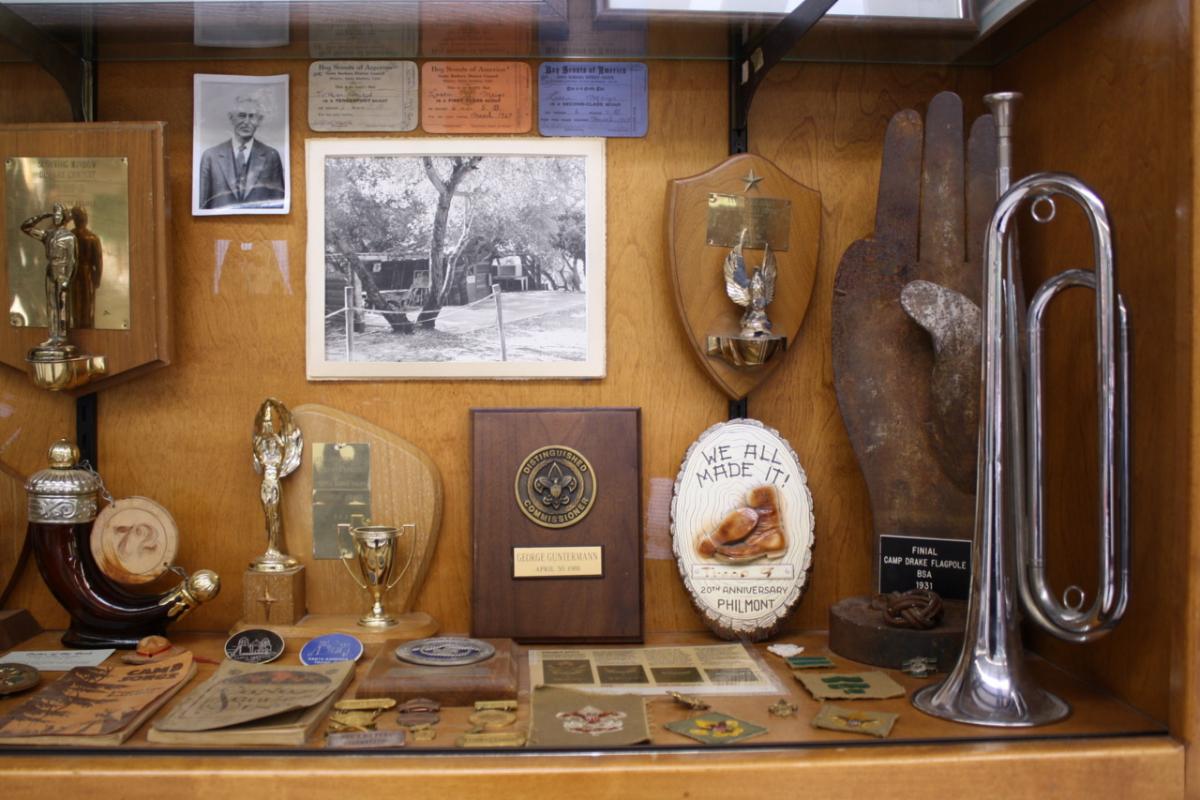
The display case in the dining hall commemorates the Scout’s time at Camp Drake, today’s Camp V. Luckily, the historic display case escaped the fire. (Author photo) | |
More information about the camp can be found here.
| |
|
Sources not mentioned in text: News-Press 18 September 1983 article by Karen O’Hara; “Camper’s Guide to the Santa Barbara Area” 1969; Stanley journals of Ranchero Rides; California Editor by Thomas More Storke; History of Santa Barbara County by O’Neill; article by Bob Burtness.
Special thanks to Ron Walsh, program director for Rancho Alegre for the information and tour back in 2011; John Crockett of the Santa Ynez Historical Society for assistance and photo; and Barbara Hoelscher Doran for photos and interview.
| |
|
About the Author
Historian Hattie Beresford authored three Noticias and recently completed the 100-year history of the Community Arts Music Association entitled Celebrating CAMA’s Centennial.
For nearly two decades Beresford has written a column for the Montecito Journal called “The Way It Was,” in which she has been able to indulge her long-standing interest in the people and events of Santa Barbara’s past. She is also a regular contributor to the Montecito Journal Magazine. Read her articles here.
She co-edited and produced the memoir of local artist Elizabeth Eaton Burton, My Santa Barbara Scrapbook and authored the sold-out book, The Way It Was: Santa Barbara Comes of Age.
Explore her work for sale in our museum store here.
| |
|
The Museum is open Wednesdays 12-5pm, Thursdays 12-7pm,
Fridays 12-5pm, Saturdays 12-5pm, and Sundays 12-5pm. Admission is complimentary.
| |
|
Read past issues of Noticias
HERE
| |
Our mission is to inspire meaningful connections to Santa Barbara history. | | | | |