|
|
Dear Friends,
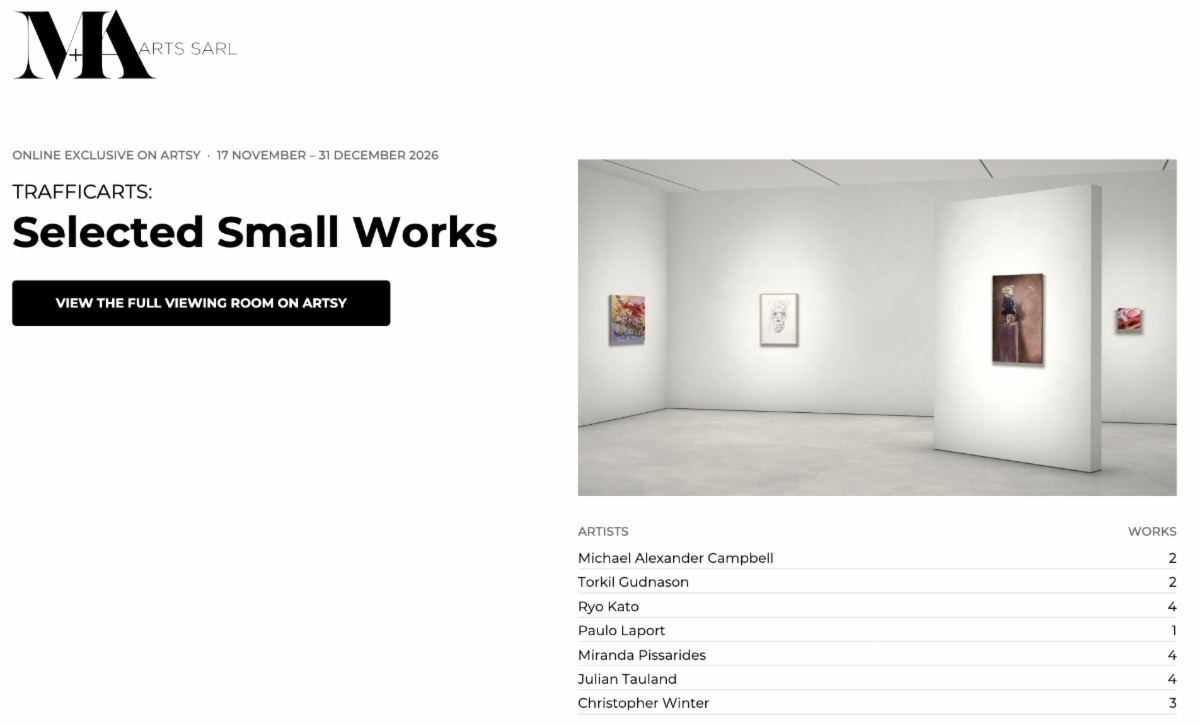
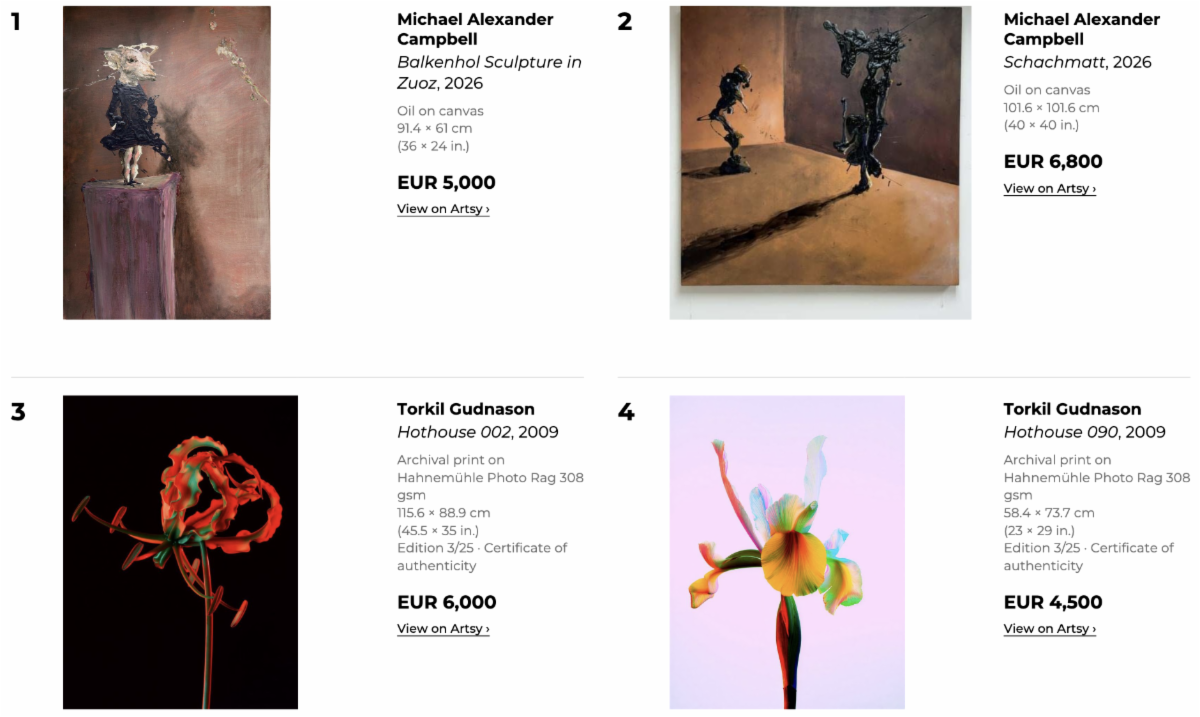
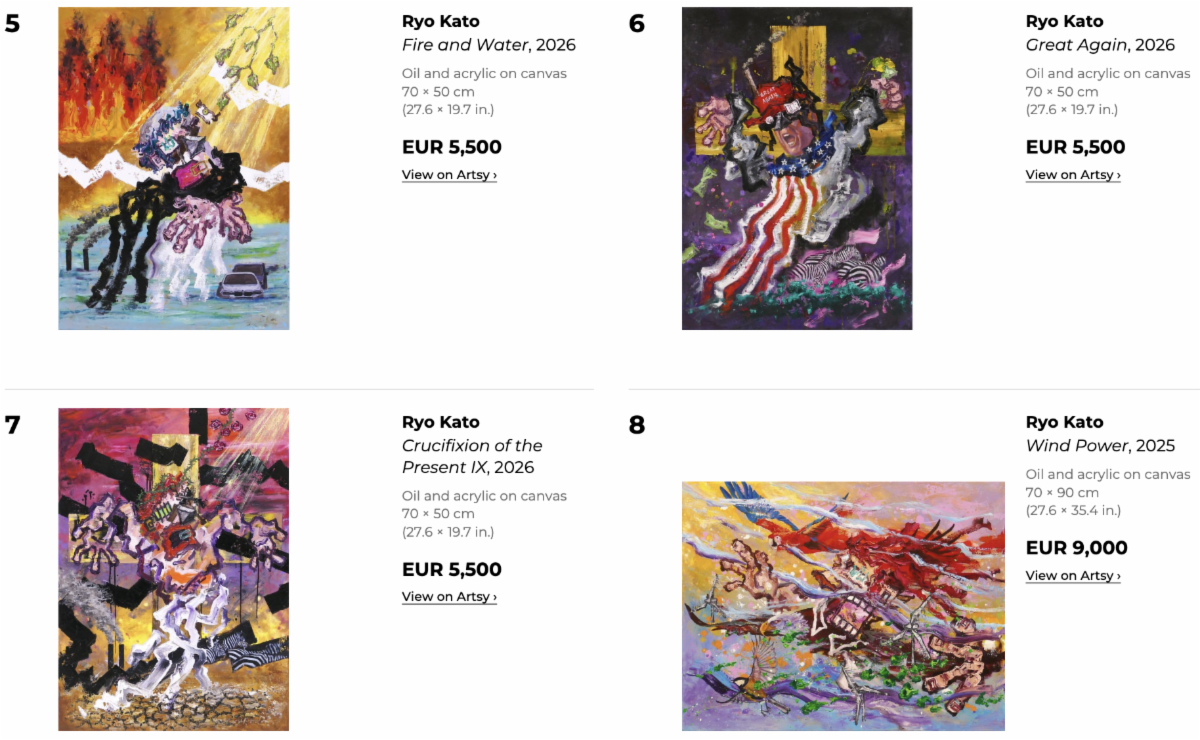
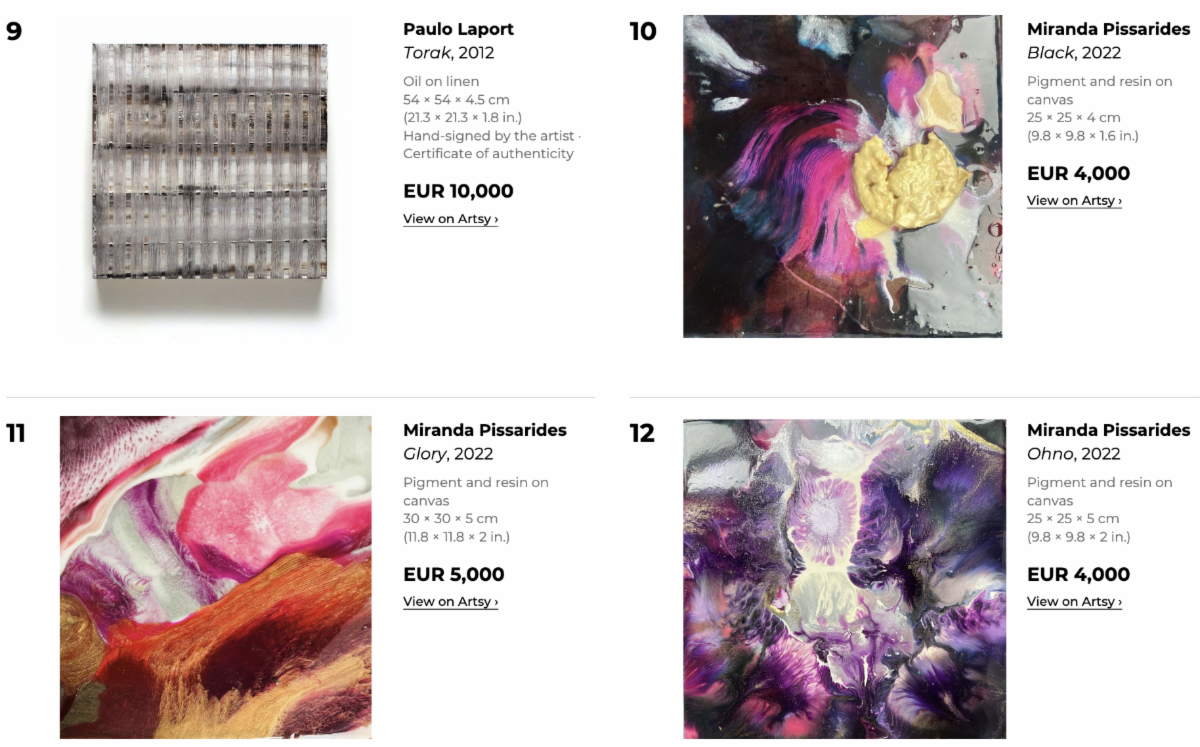
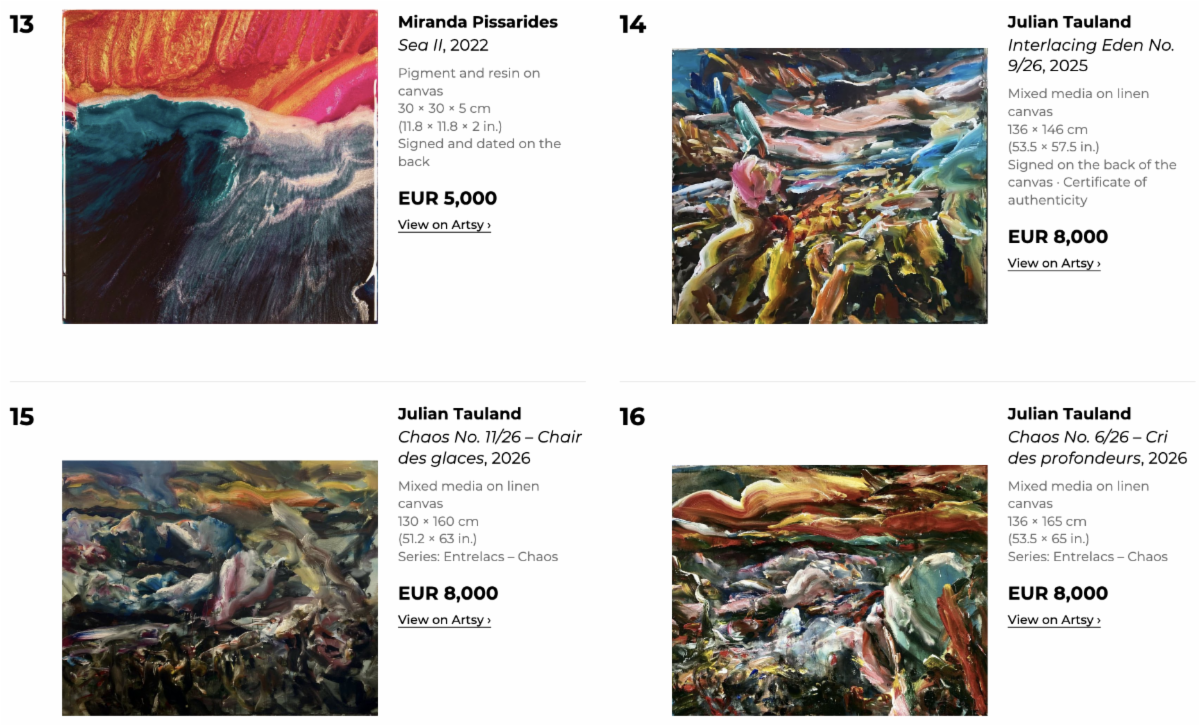
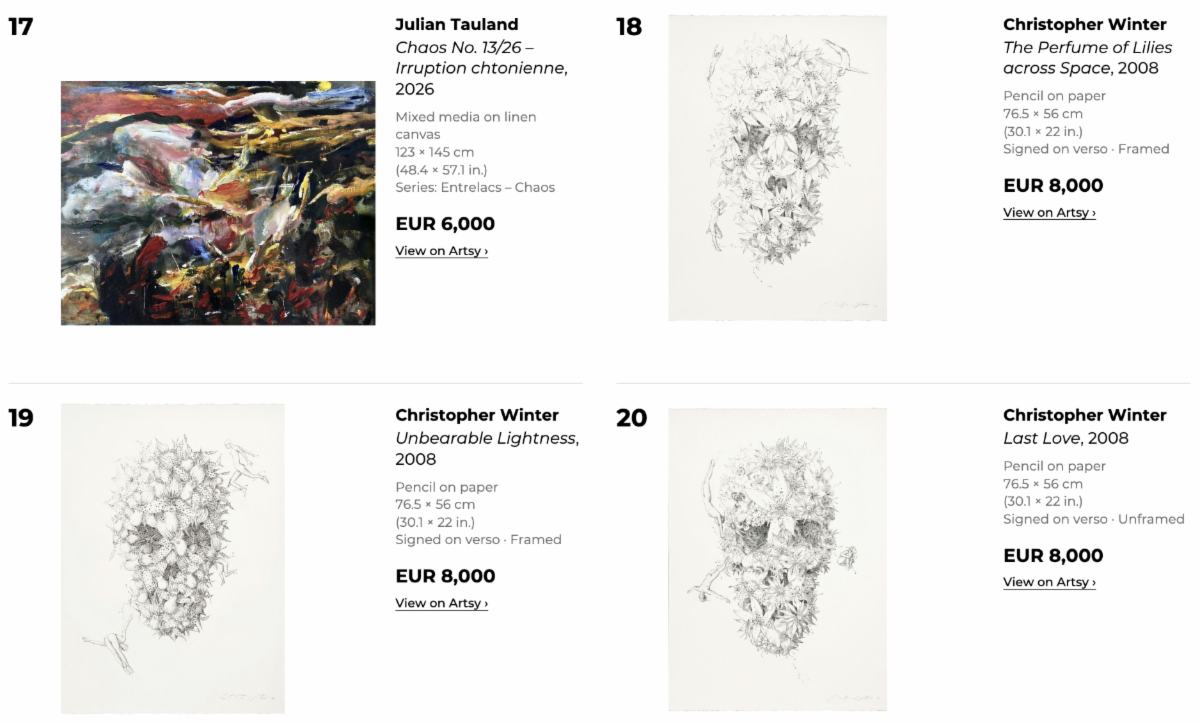
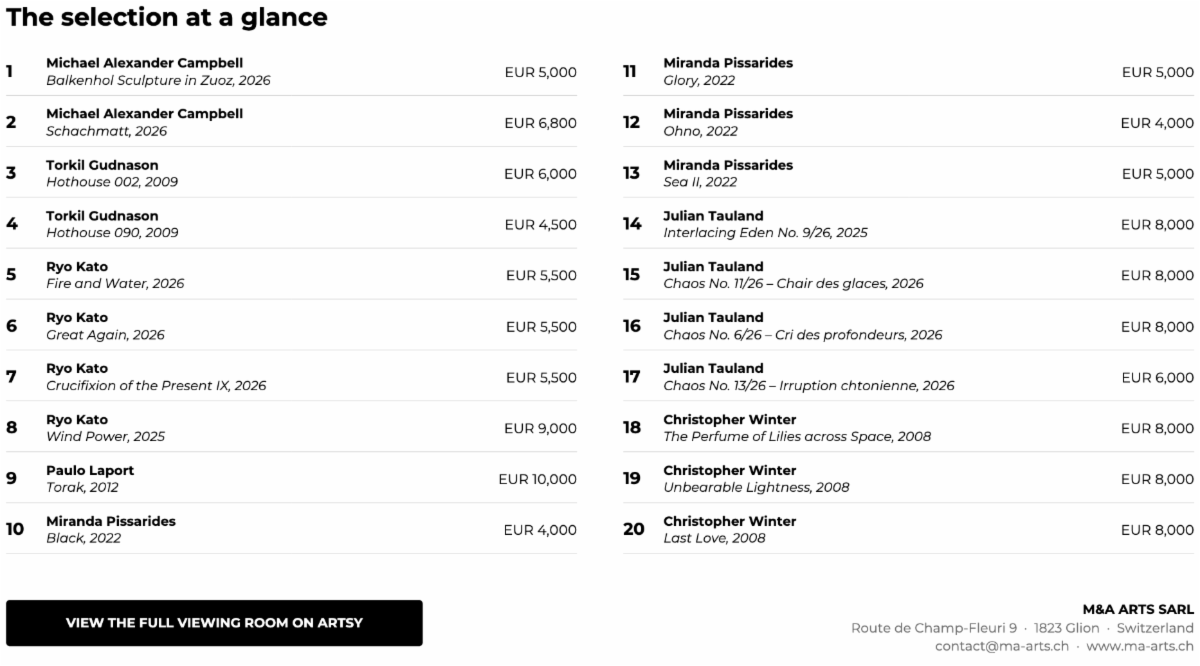
The wonderful time of year is here. Christmas is just a few weeks away. It may seem corny but we have asked our sponsored artists to give us affordable works. The real thing, just smaller. We hope you enjoy the selection. Artsy awaits your visit. Simply click at the end to visit.
AE
|
|
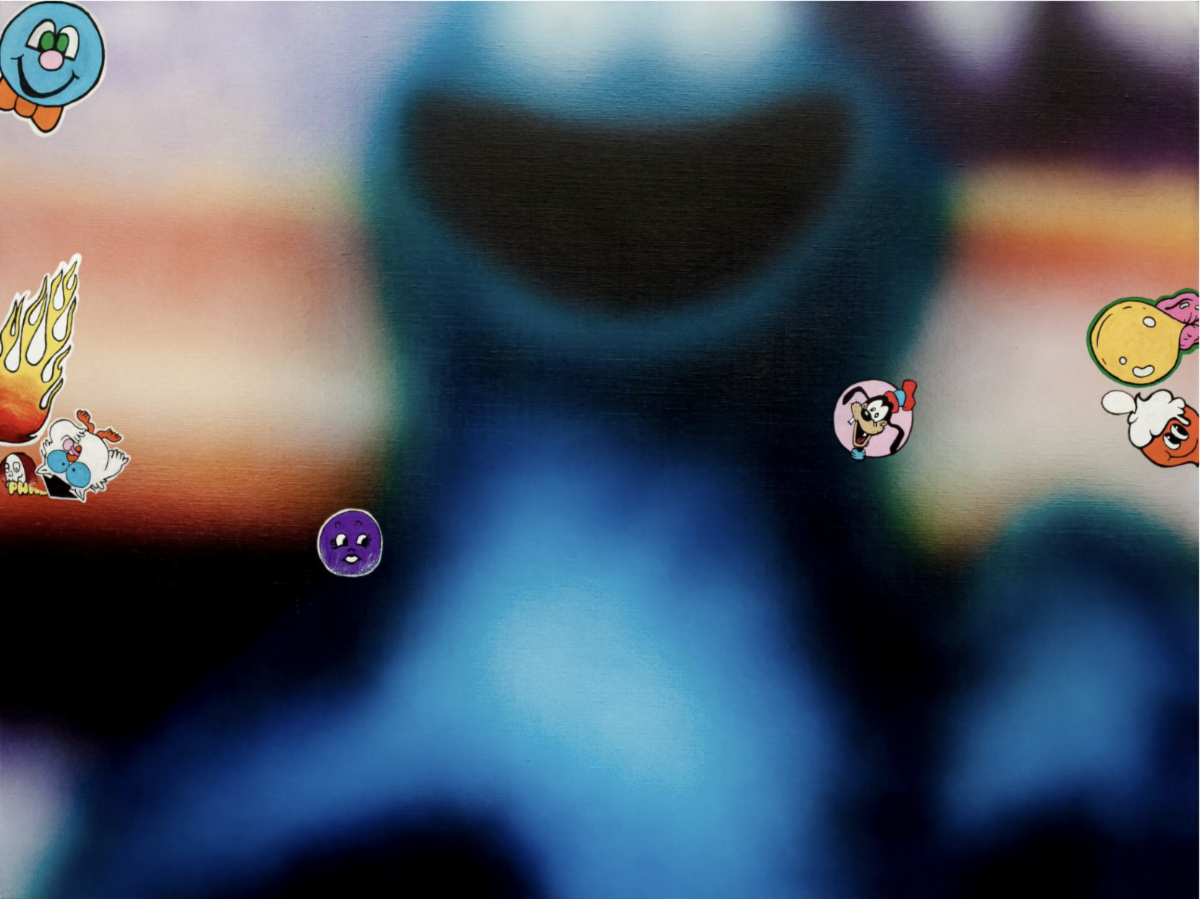
On November 1st, we released an offering of a painting by Erik Foss, underwritten by Timeless Investments. Works by Erik have a CAGR of 20.97%. Approximately 13% of the offering remains available.
Erik Foss
| |
Erik Foss
Crumbsuckers, 2024
Water based paint and acrylic on canvas, entirely hand-painted
76.2 x 101.6 cm (30 x 40 in.)
Erik Foss is a self-taught American artist, born in Elgin, Illinois, in 1973 and raised in the desert outskirts of Phoenix, Arizona. His early influences were shaped by the American cultural landscape—rooted in a religious upbringing, skateboarding, underground music, and other defining elements of late 20th-century subcultures.
Foss has developed a distinctive visual language that combines vibrant color, urban imagery, and autobiographical references to explore themes of addiction, consumer culture, violence, redemption, and personal transformation. Drawing inspiration from both street culture and art history, Foss creates layered compositions that juxtapose beauty and decay, often incorporating symbols associated with contemporary American life. His work reflects on the complexities of modern existence while maintaining a deep personal perspective shaped by his own life experiences and recovery journey. Through a combination of expressive mark-making, found imagery, and symbolic narratives, Foss examines the tensions between excess and restraint, vulnerability and resilience, chaos and hope.
Over the past two decades, Foss has exhibited extensively throughout the United States and internationally. His work has been presented in numerous solo and group exhibitions and has been featured at major art fairs and institutions. He has collaborated with a wide range of artists, musicians, and cultural organizations, further expanding his influence beyond the traditional boundaries of contemporary painting.
Works by Erik Foss will be exhibited in March in a major museum show about painting. More details to come.
|
|
On November 20th, we will release an offering of a painting by Ryo Kato, underwritten by Timeless Investments. Works by Ryo have a CAGR of 21.64%.
Ryo Kato
| |
Ryo Kato is an emerging Japanese painter, born in 1978 in Nimi, Okayama Prefecture. He currently lives and works in Berlin.
Kato‘s artistic style seamlessly merges figurative and abstract elements, with subtle realistic motifs emerging through his masterful use of color blending and scraping techniques. A traditionally trained Go player, Kato approaches the canvas with strategic precision, deconstructing figuration into organic and geometric forms that evoke the entropy and fragmentation of nature.
From early on, Kato’s work addresses environmental issues, a theme that resonates deeply with many and has garnered significant press attention. He describes his work as a journey of exploration, characterized by vivid colors, constant movement, and the potential for new discoveries, reflecting his commitment to both artistic expression and environmental awareness.
Kato’s work has been widely exhibited in galleries, art fairs, Kunstvereine (art associations), and museums in recent years, with several exhibitions scheduled for 2027.
|
Timeless Investments on Instagram | |
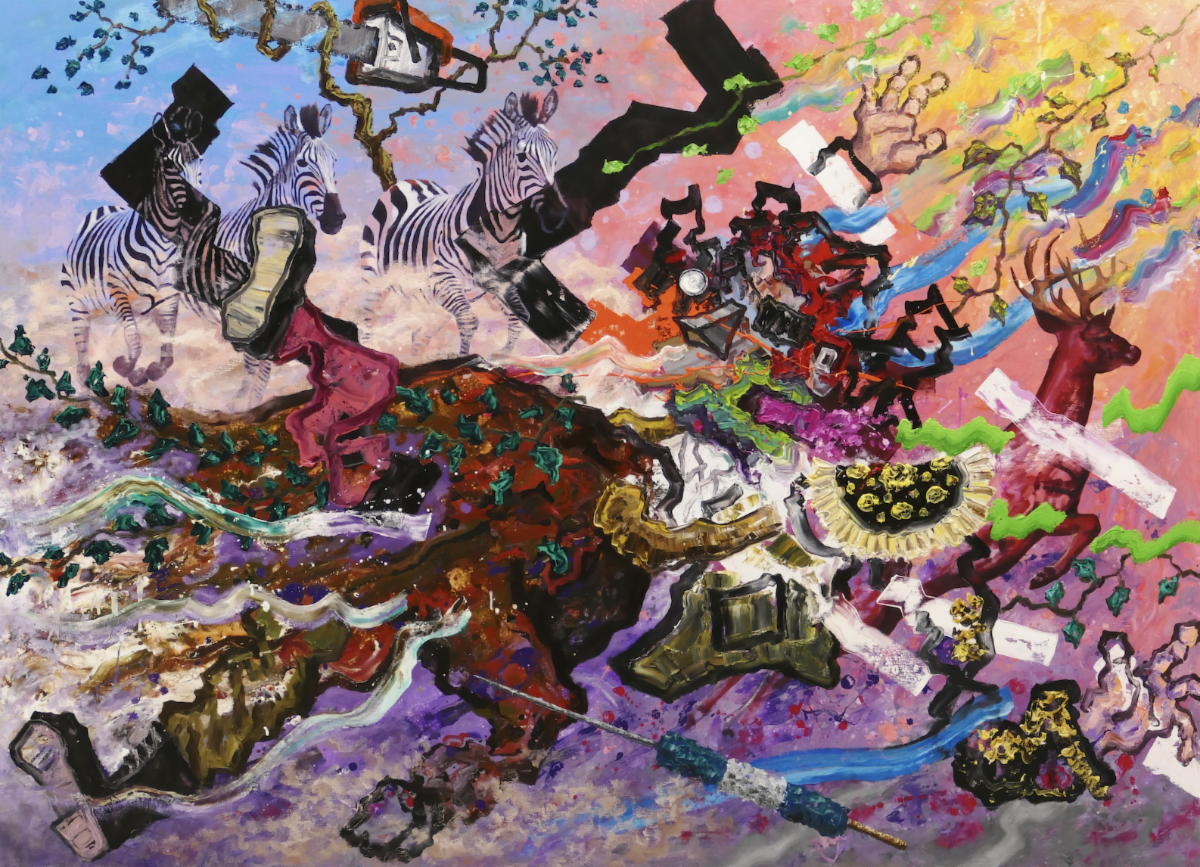
Ryo Kato - Towards the Light, 2025
Ryo Kato is back on Timeless with another unique painting! Through vivid colours, wild animal imagery, and layered forms, Towards the Light explores humanity's relationship with nature, moving between destruction and the hope of renewal.
|
|
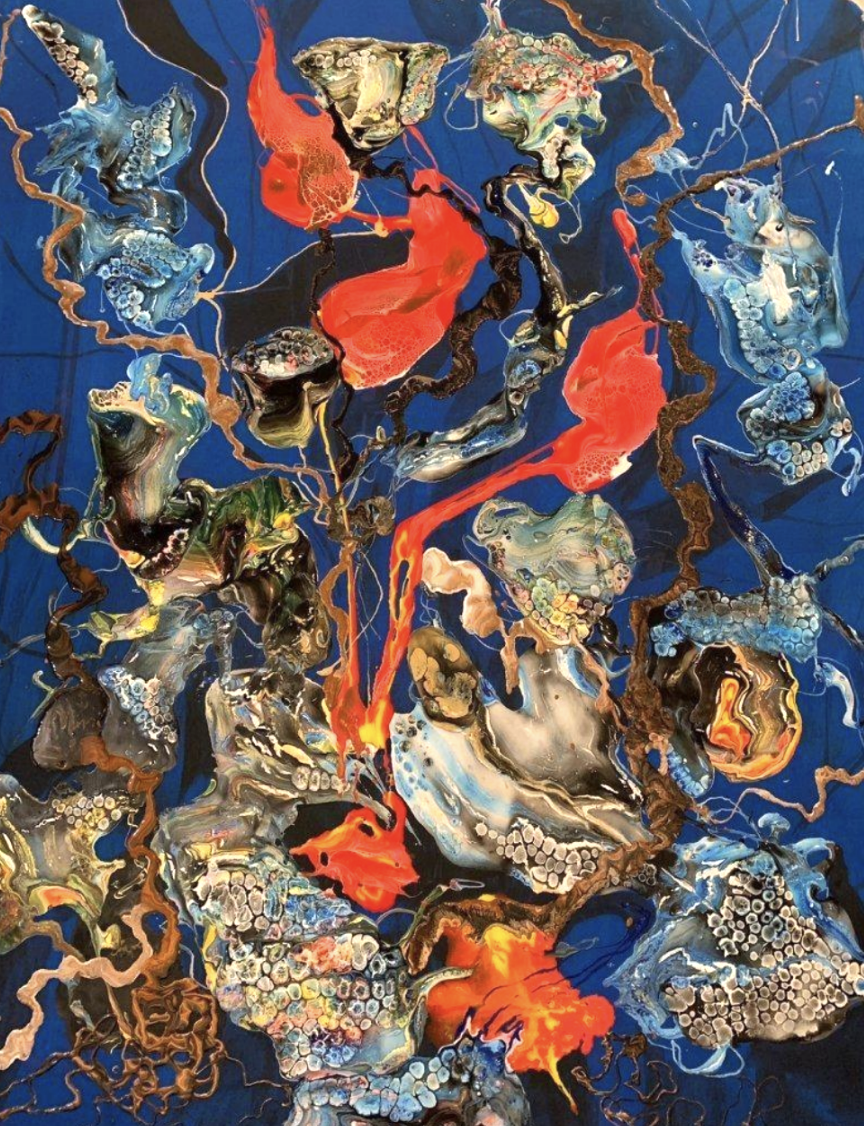
On December 3rd, Phillips will auction a painting by Britt Boutros-Ghali.
Britt Boutros-Ghali
| |
Britt Boutros-Ghali b. 1937
Untitled (No 86-024)
Signed 'Britt B.G' lower right; signed and titled 'Britt Boutros Ghali No 86/024' on the reverse
Acrylic on canvas
150.5 x 130.7 cm (59 1/4 x 51 1/2 in.)
Painted in 2024, in Egypt.
Estimate £30,000 - 50,000
|
| |
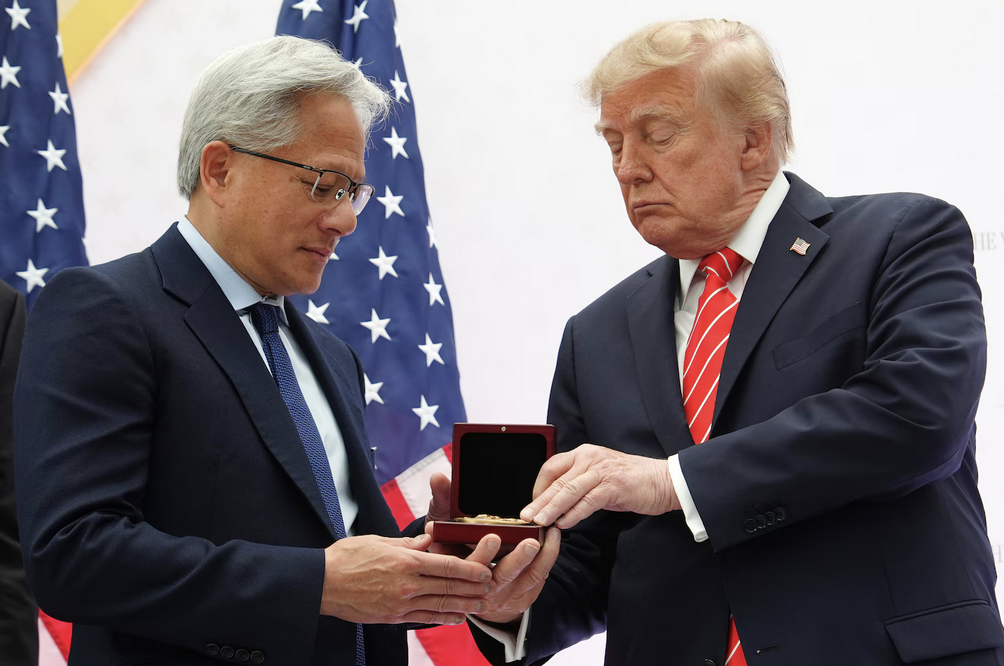
Trump’s stake in Nvidia grew to as much as $62 million before scandal broke out
The president benefited from the firm’s success, disclosures show. The value of his holdings rose dramatically as his administration let Nvidia sell advanced chips in China.
By Meryl Kornfield and Steve Thompson
Washington Post, November 16, 2026
| | |
Nvidia’s former CEO Jensen Huang enjoyed extraordinary access to President Donald Trump, traveling with him on Air Force One on his last China trip. Trump allowed the world’s dominant artificial intelligence chip company to sell some of its advanced chips in China, and Commerce Secretary Howard Lutnick held off on restricting a company suspected of diverting Nvidia chips there.
Meanwhile, Trump benefited from Nvidia’s success.
Trump, whose portfolio has logged tens of thousands of stock trades in his second term, reported trades this year that suggest he held between $13 million and $62 million in Nvidia stock as of the end of August, according to a Washington Post review of his financial disclosures. The actual value range was probably higher because Nvidia’s share price rose between the end of 2025 and the end of August. Because of reporting lags, the disclosures do not yet show trades from the two most recent months. The figure is dramatically higher than the $615,000 to $1.3 million in Nvidia shares that Trump had at the end of 2024.
Trump has rejected calls to divest his stocks. The White House has described how his portfolio is managed in two ways. It has said the president’s assets are held in a trust managed by his children. White House spokesman Davis Ingle also previously told The Post that third-party financial institutions independently manage the portfolio, copy recognized indexes such as the Schwab 1000 and make all investment decisions. Nvidia is among the largest companies in such indexes, so a portfolio that copies them would hold Nvidia among its biggest positions.
In response to questions about this article, the White House said in an unsigned statement, “The President does not pick or trade individual stocks. Independent financial managers handle his portfolio.”
Huang resigned as Nvidia’s chief executive last week after acknowledging that he had an affair with an executive at Megaspeed, a Singapore-based Nvidia customer. U.S. officials suspect the woman of spying for China, and the Commerce Department had been investigating whether Megaspeed breached U.S. export restrictions.
| | |
America Has Entered a New Age of Propaganda
Philosophers Avishai Margalit and Assaf Sharon warn against a future in which truth and falsehood are indistinguishable.
By Jimmy So
The New Republic, November 12, 2026
On July 16, Donald Trump went on prime-time television to repeat to Americans that an election he had lost nearly six years earlier had been stolen. Four months before the midterms, Trump turned a presidential address into another recital of the conspiracy theories that have sustained him since 2020. In an ominous and unhinged speech, he claimed that China’s attempts to acquire voter data were evidence of a plot to corrupt the vote, then returned to his familiar claims about widespread fraud.
ABC and NBC declined to carry the speech on their main broadcast channels. CBS aired it, then broke away after about 15 minutes to debunk Trump’s assertions. Trump answered that the networks were engaged in a “plot” and said those that did not air the speech should lose their licenses. Six days later, Federal Communications Commission Chair Brendan Carr said ABC’s snub would be considered in an unusually early review of licenses for eight Disney-owned stations. ABC and Disney have since sued the FCC, alleging retaliation.
America has entered a new era of truth manipulation and censorship in which journalists are faced with a self-sealing trap. Carry the speech and help spread the election lie, or refuse and be cast as part of the conspiracy supposedly suppressing it. Either response could be recruited into the government’s propaganda campaign.
The prospect of a society in which truth and falsehood are indistinguishable—one in which the difference doesn’t even seem to matter—troubles philosophers Avishai Margalit and Assaf Sharon in their book Captive Minds: A Study of Manipulation. Sharon is a political theorist who specializes in democratic legitimacy and the conditions under which citizens can genuinely govern themselves. Margalit is a preeminent philosopher best known for The Decent Society (1996), The Ethics of Memory (2002), On Compromise and Rotten Compromises (2010), and On Betrayal (2017). He has spent his career asking what degrades human dignity—humiliation, forgetting, rotten compromise, betrayal—and now, with Sharon, turns to the capture and domination of judgment itself.
| | |
|
Gradually, Then Suddenly: How NVIDIA Could Unravel the AI Trade
Financial Bubbles Don’t Pop, They Unfurl
Michael Maiello
Nov 16, 2026
| |
Jensen Huang’s resignation as chief executive officer of NVIDIA, the company he founded and led for 33 years, seems a key moment in the unraveling of the artificial intelligence trade that’s been dominating financial markets for five years. None of this has anything to do with sex and spies, though both are fun and will make great pages for some writerly financial journalist’s book.
Before Huang’s resignation, United States President Donald Trump commented that he thought Huang should stay on. This despite it being widely reported that Trump had been briefed months ago that Huang was carrying on with a woman who was using a Singapore-domiciled company called Megaspeed to funnel restricted Nvidia technology in China. Singapore even knew about it and for months confiscated her passport in an attempt to help, but the U.S. government showed no public interest in pursuing it even as Huang lobbied his friend Trump to ease export restrictions, promising to get China’s tech industry addicted to American innovations.
Huang quit only after the board learned that he had slept with other subordinates at NVIDIA and lied about it. The board could not have kept Huang as CEO knowing it had been deceived many times but the resignation has left some, maybe including Huang, with hopes that he can return after some investigation and a cooling off.
Based on what we know, this seems unlikely and irresponsible but the clamor from investors and other tech executives is understandable as Huang’s tenure and departure reveal flimsiness in the economics of the AI boom. Huang did not conduct business the way most CEOs do. He had 60 direct reports. He forged personal relationships with customers. He made major, risky and mostly correct decisions about how to invest NVIDIA’s earnings. I keep seeing his organization described as “flat” but it definitely had one imperial peak.
NVDIA gained its foothold in graphics processors, used mostly for gaming and computer modeling. It’s often described as a bit of luck that the type of processor used to render realistic images in Grand Theft Auto is also very good at powering AI, but that doesn’t give Huang enough credit. He anticipated in 2006 that his graphics processors could be used for other applications and he mandated that all of NVIDIA’s processors be equipped with CUDA (originally Compute Unified Device Architecture) to allow the chips to perform complex tasks like molecular modeling and physics simulations. This increased his manufacturing costs while margins were tight and the capabilities were at first little used. NVIDIA’s stock was crushed. Analysts question the investment.
| | | | |