March 31, 2026

This months issue is an 8 min read

Download Images or Open in Browser for optimal viewing

The Lead Off


Coming out of PDAC 2026 - where attendance once again pushed toward 30,000+ industry participants - the underlying tone across the mining and capital markets community was constructive. Conversations pointed to renewed interest in commodities, improving capital access, and a growing recognition of the structural importance of metals in a shifting global economy.


In the weeks since, however, a market pullback has tempered sentiment - raising a familiar question: is this cycle losing steam, or simply resetting?


Market Watch

Index

Price

YTD

Previous YTD

TSX

31,934.94

0.37%

8.44%

TSXV

908.98

(9.36%)

10.35%

CSE

154.18

(10.62%)

1.51%

Volatility S&P 500

30.62

106.20%

38.38%

Commodity/ USD


Gold

4,510

4.10%

19.68%

Silver

70

(3.9%)

(17.12%)

CAD

0.7183

(1.37%)

(1.16%)

BTC

67,800

(22.37%)

(16.67%)

From TradingView

As of close on Monday March 30, 2026

Pullbacks Are Part of the Process
Positioning for the Next Leg in Metals


Over the past several weeks, markets have pulled back across precious metals and copper equities. For many investors, that raises a natural question: is the cycle losing steam?


Our view is clear: this looks far more like a healthy reset within a developing bull market than the end of one.


A Necessary Pause in a Rising Market


Commodity cycles are never linear - and history is consistent on this point.


  • During the 2001–2011 gold bull market, corrections of ~15-20% occurred regularly before prices continued higher
  • In the 1970s cycle, gold experienced multiple drawdowns exceeding 20%, including a ~47% pullback - yet still delivered one of the strongest runs in history


These pullbacks tend to occur as:


  • speculative capital exits after sharp rallies
  • macro or liquidity events force short-term selling
  • positioning and leverage reset


Importantly, these phases have historically reinforced - not broken - longer-term trends, allowing markets to consolidate before the next leg higher.


The Structural Case Has Only Strengthened


What matters most is not short-term price action, but whether the core drivers of the cycle remain intact.


On that front, the picture remains compelling. Supply constraints have not eased, while long-term demand tied to electrification, infrastructure, and strategic resource security continues to build. At the same time, a backdrop of persistent geopolitical tension and supply chain fragmentation is reinforcing the importance of hard assets.


In short, the fundamentals are not weakening - they’re becoming more pronounced.


1. Copper: A Structural Deficit Story


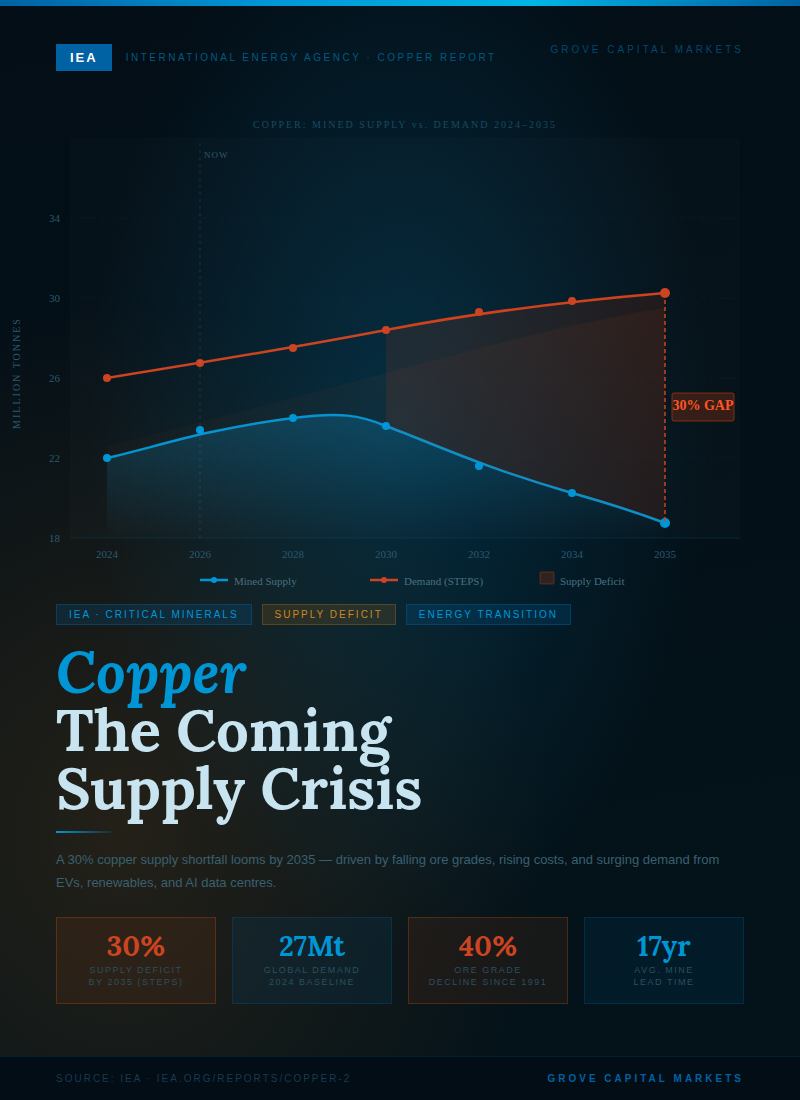
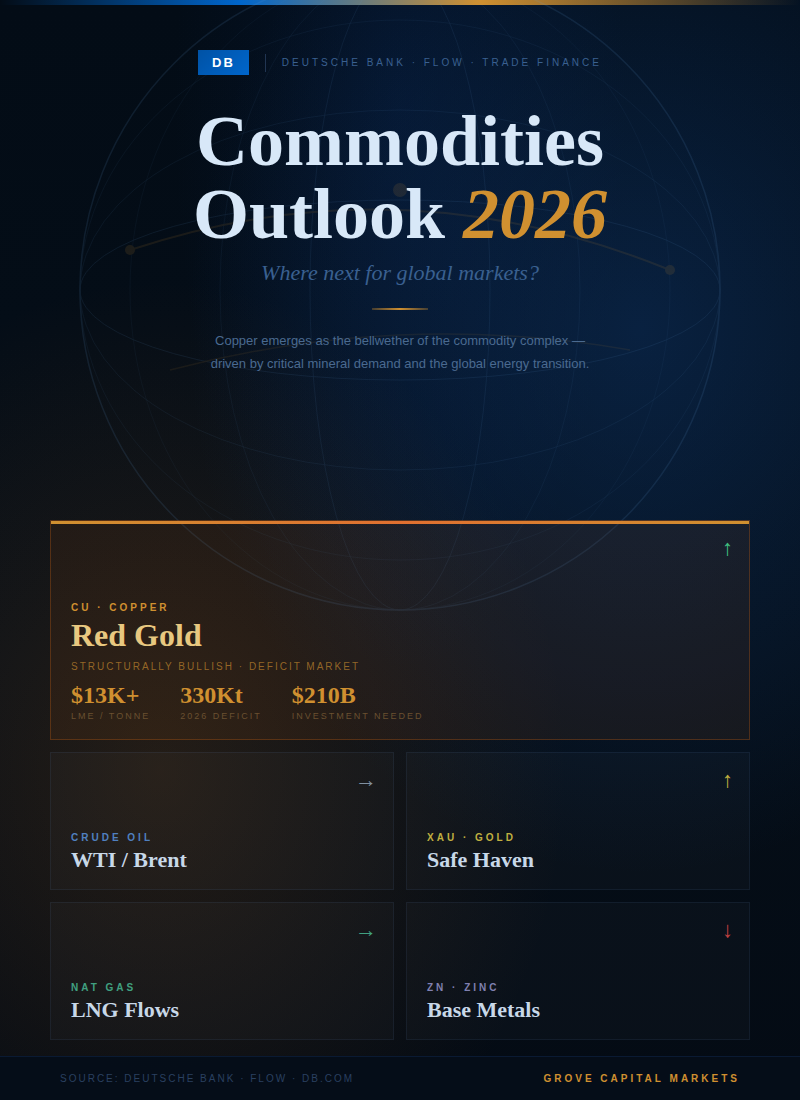
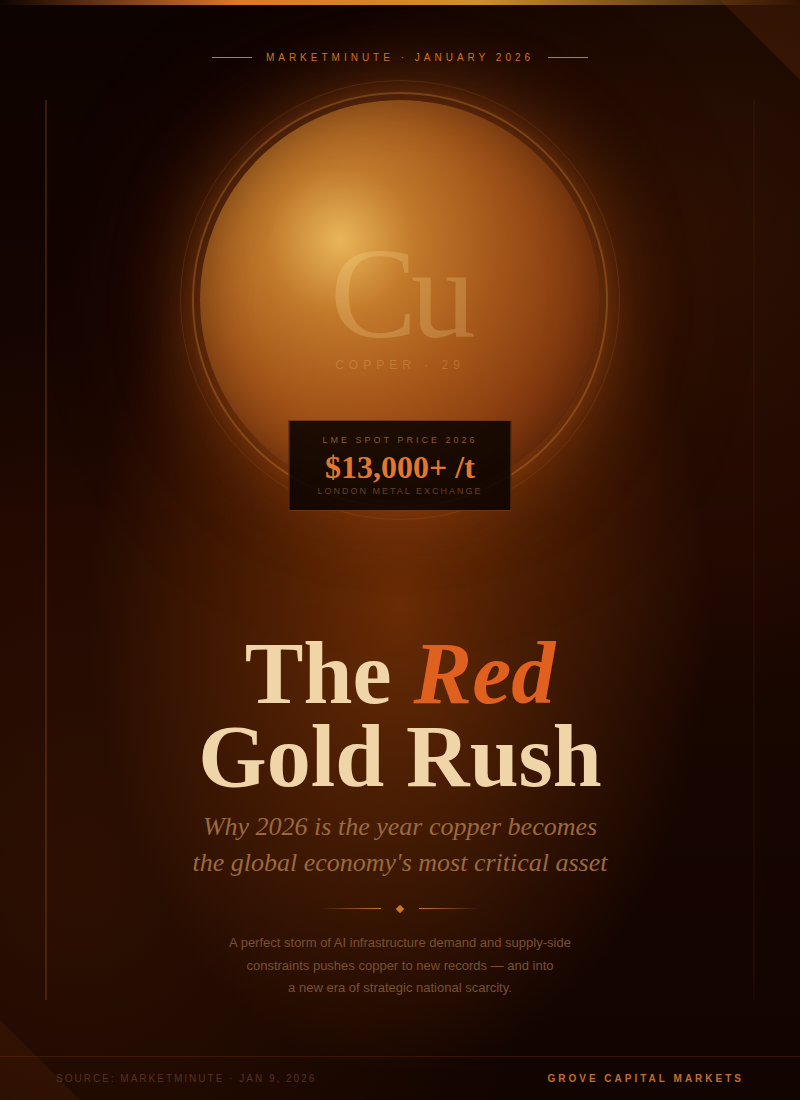
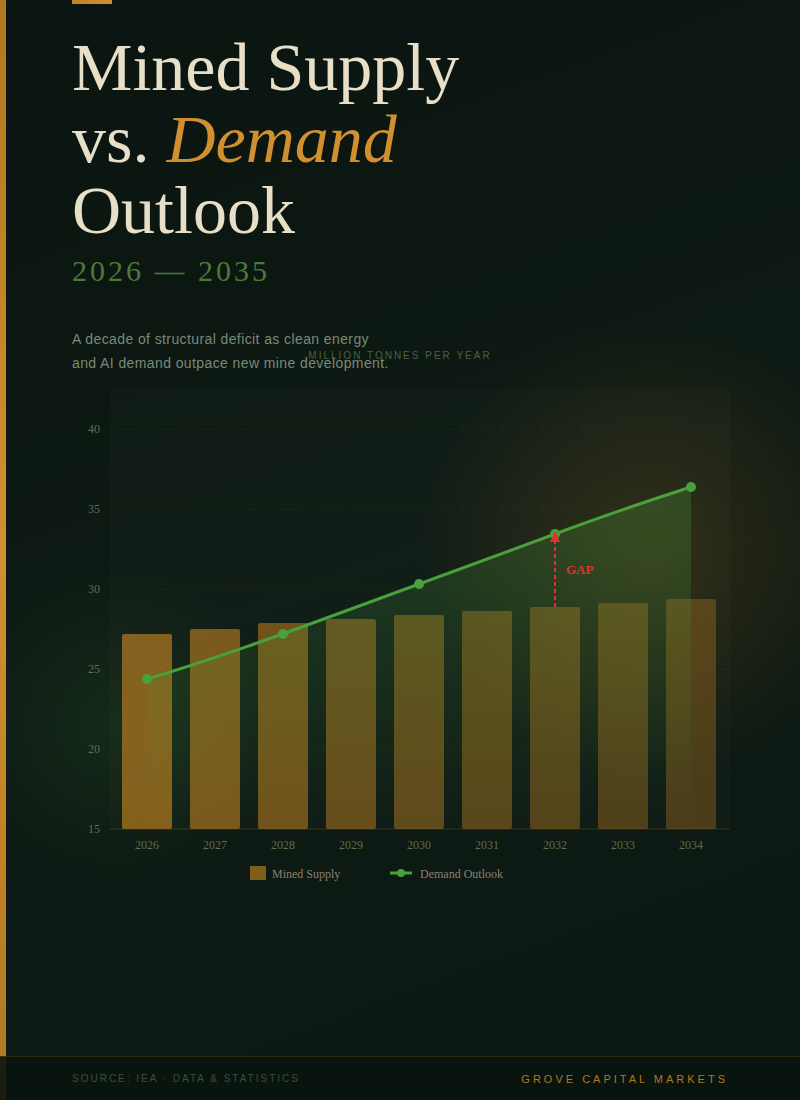
Copper remains one of the clearest long-term supply-demand imbalances in global markets. Demand is being structurally driven higher by electrification, grid expansion, EV adoption, and the buildout of digital and AI infrastructure—and the numbers are increasingly difficult to ignore:


  • Global demand is expected to increase by over 40% by 2040
  • Meeting that demand may require 80 new mines and more than $250 billion in investment by 2030
  • Supply is already falling behind, with deficits now beginning to emerge in 2026 and expected to widen through the remainder of the decade


At the same time, the supply side is becoming more constrained. Declining ore grades, rising capital costs, longer permitting timelines, and increasing geopolitical complexity are all contributing to a slower and more uncertain supply response.


Even more importantly, the timeline to solve this imbalance is measured in decades:


  • It takes ~15–17 years on average to bring a new copper project from discovery to production—one of the key reasons capital is gravitating toward brownfield, expansion-stage, and near-term production assets


This means that even if capital flows into the sector today, it will not materially impact supply until well into the next decade.


This is not a short-term imbalance—it’s a multi-decade structural constraint unfolding alongside one of the largest demand expansions the metal has ever seen.


Global Critical Minerals Outlook 2025, Copper


International Energy Agency

May 21, 2025


Read the Article


2. Demand Is Being Rewritten by Electrification & AI


As we have mentioned previously, Copper is no longer just an industrial metal—it is increasingly a core input to the modern digital and energy economy. What was once tied primarily to construction and manufacturing is now being driven by a new layer of structural demand linked to electrification and technological infrastructure.


Demand is being accelerated by several overlapping trends:


  • EVs and battery storage, which require significantly more copper than traditional systems
  • grid expansion and electrification to support rising power demand
  • renewable energy systems, where copper intensity is materially higher
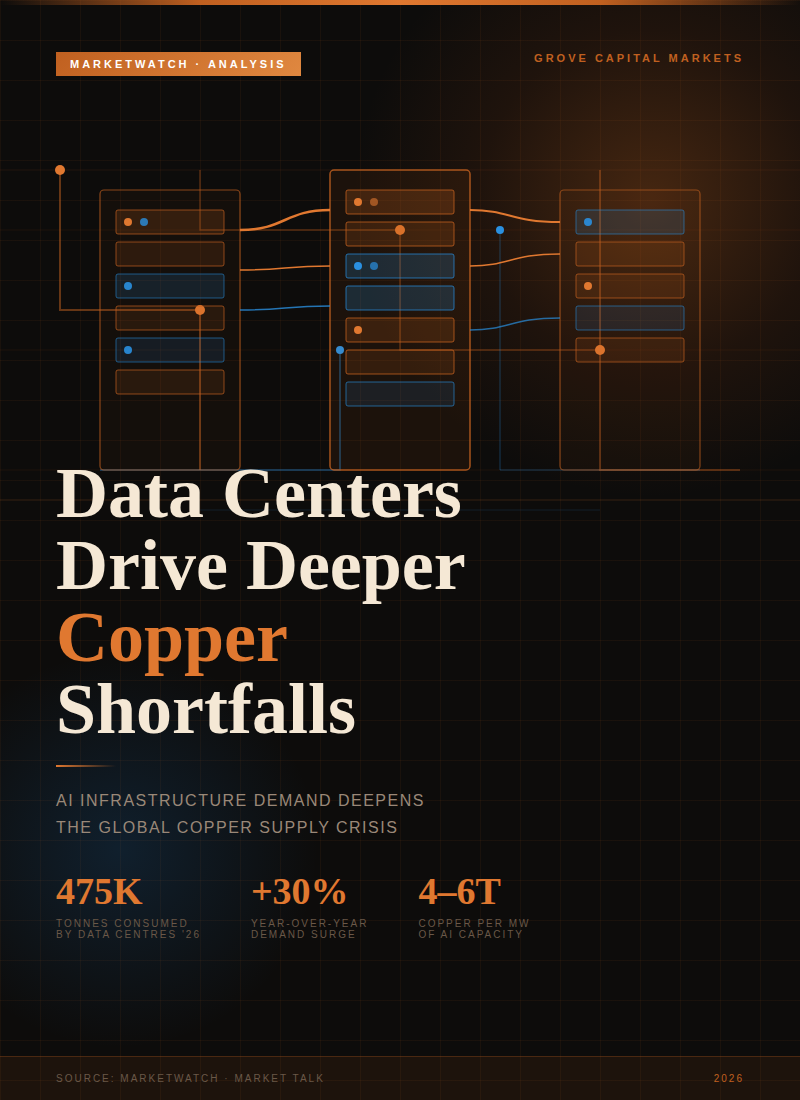
  • data centers and AI infrastructure, which are rapidly scaling in both size and energy intensity


In fact, data centers alone are expected to become a meaningful incremental driver of copper demand this decade, adding further pressure to an already tight market.

This is the key shift: AI isn’t just software—it’s physical infrastructure. And that infrastructure is deeply metal-intensive.


3. Gold: Strategic Demand, Not Speculation


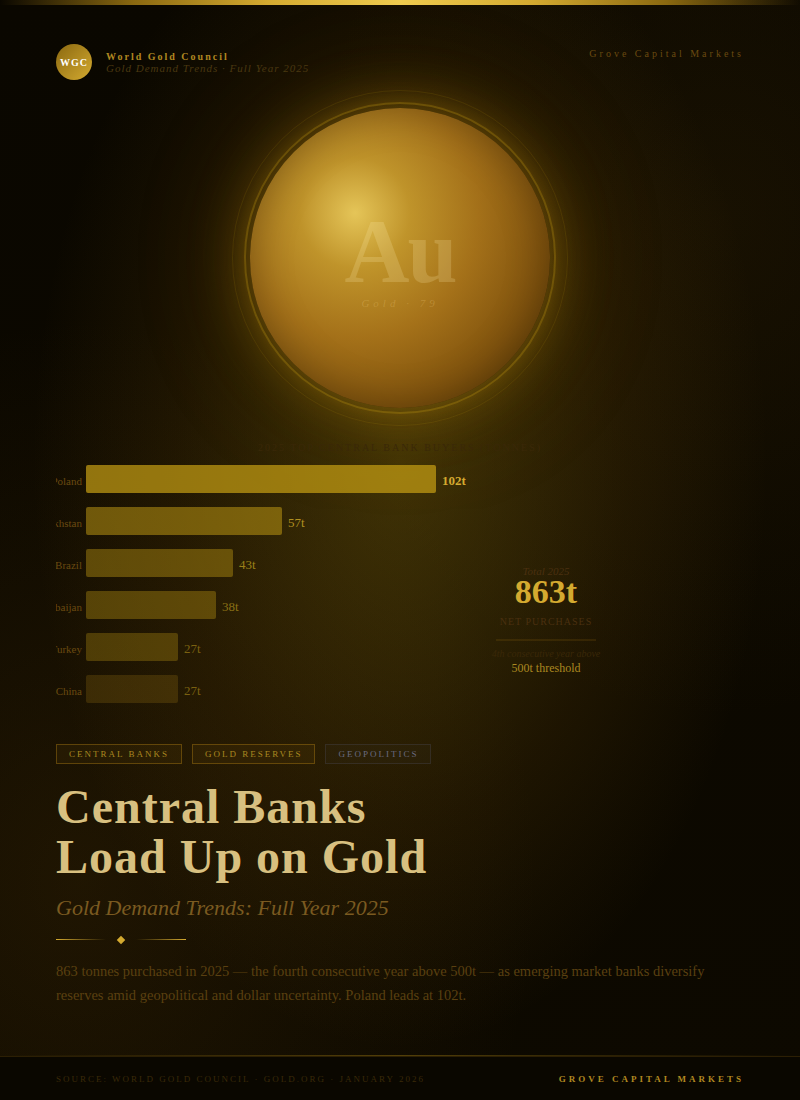
On the precious metals side, gold continues to benefit from one of the strongest structural demand trends in decades. Unlike prior cycles driven primarily by retail or ETF flows, today’s demand is increasingly anchored by sovereign buyers:


  • Central banks purchased approximately 863 tonnes of gold in 2025, well above historical averages
  • Recent years have seen near-record buying levels, far exceeding the ~400–500 tonne annual average of the prior decade


This is not speculative demand—it’s strategic and long-term in nature.

Central banks are accumulating gold as part of a broader shift in global reserve management, driven by:


  • reserve diversification and ongoing de-dollarization trends
  • persistent geopolitical tension and global fragmentation
  • long-term concerns around currency stability and purchasing power


Gold is increasingly being re-established not just as a hedge, but as a core reserve asset in a shifting financial system.


Gold Demand Trends: Q4 and Full Year 2025, Central Banks


World Gold Council

January 29, 2026


Read the Article


Zooming Out: Where the Opportunity Sits


When you step back, the current setup looks far more like the early stages of a commodity cycle than the end of one.


  • Supply remains constrained after years of underinvestment
  • Demand is accelerating structurally
  • Capital is only just beginning to return to the sector


Historically, this combination has led to:


  • multi-year price appreciation
  • margin expansion for producers
  • increased M&A activity, as majors look to replenish pipelines
  • meaningful re-rating of quality junior and mid-tier companies


Importantly, while the macro case is increasingly well understood, the market has only begun to reprice what this means at the equity level—particularly across the nano- and mid-cap segment.


This is where cycles tend to become most asymmetric.


Volatility Is Where the Opportunity Lives


These cycles are never linear. Volatility is not a signal that the opportunity has passed—it’s often where the opportunity is created.


Short-term corrections can be uncomfortable, but they tend to be the periods where capital is deployed most effectively, as weaker hands exit and valuations reset.


The key is discipline:


  • Focus on high-quality assets in strong jurisdictions
  • Back credible management teams with proven execution track records
  • Use periods of weakness to build positions thoughtfully, rather than chase momentum


Our View


We remain constructive on metals and mining equities over the next several years.


Pullbacks like the one we’re seeing now are not a reason to step aside—they are part of the process.


In our view, this is the phase where patient, informed capital gets positioned—particularly in the nano- and mid-cap segment—before the broader market fully re-prices the opportunity.


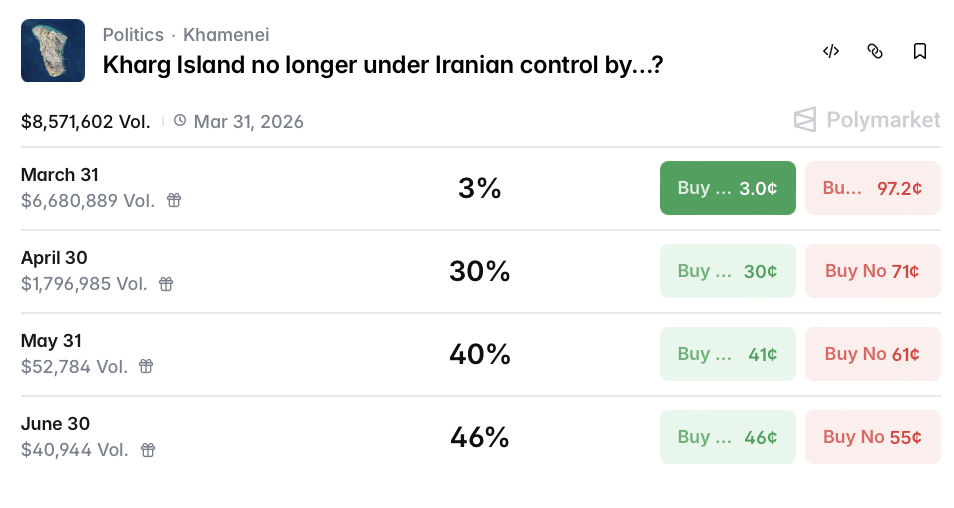
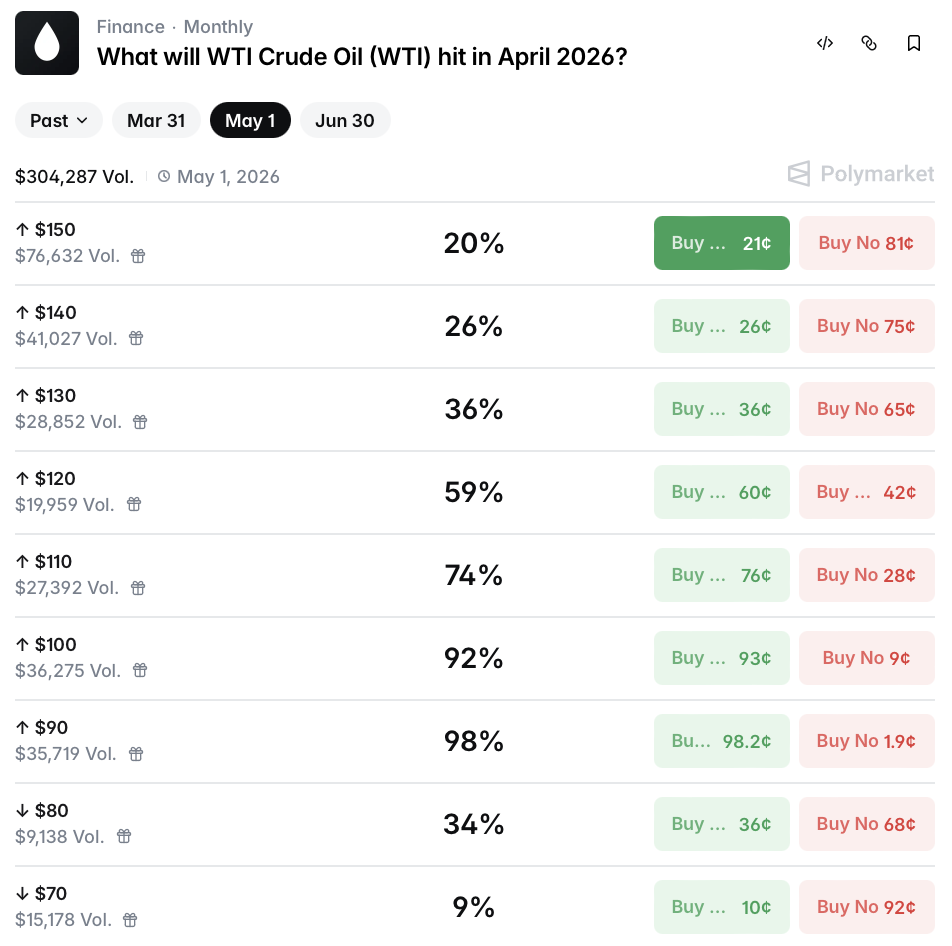
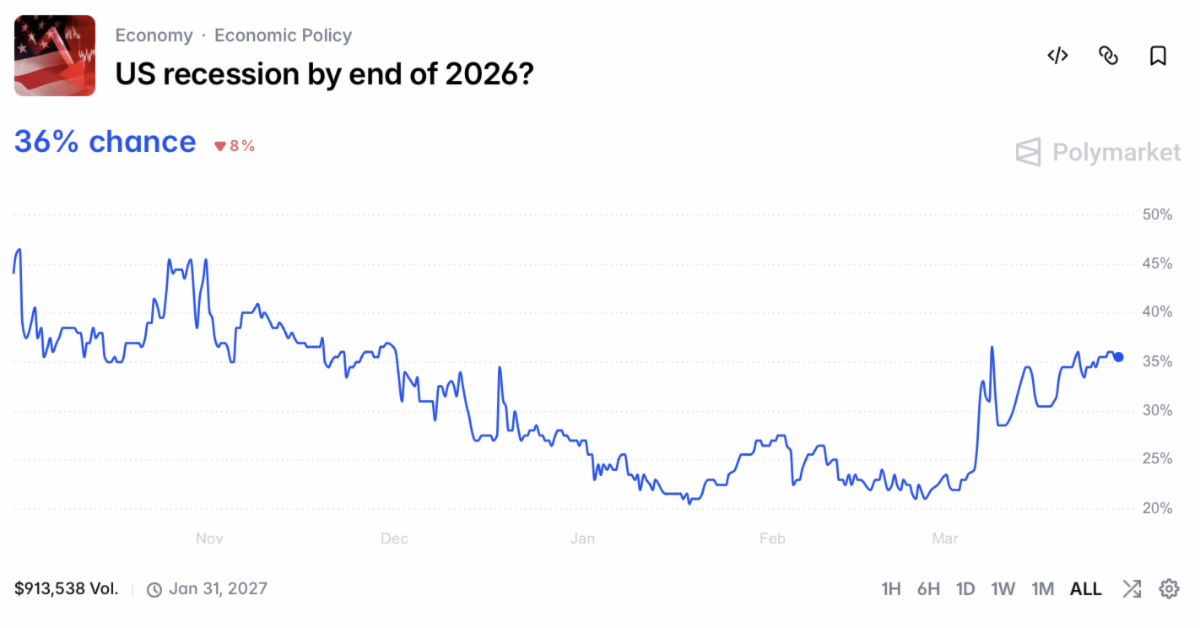
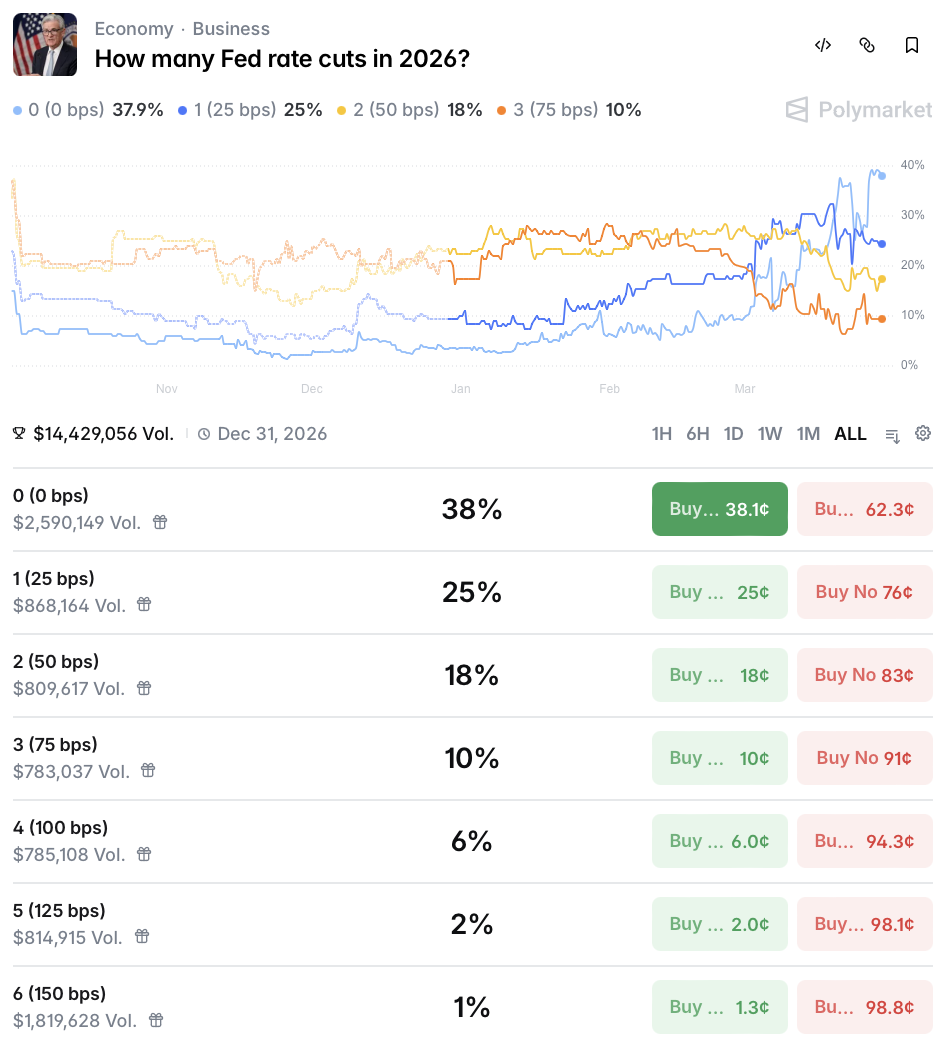
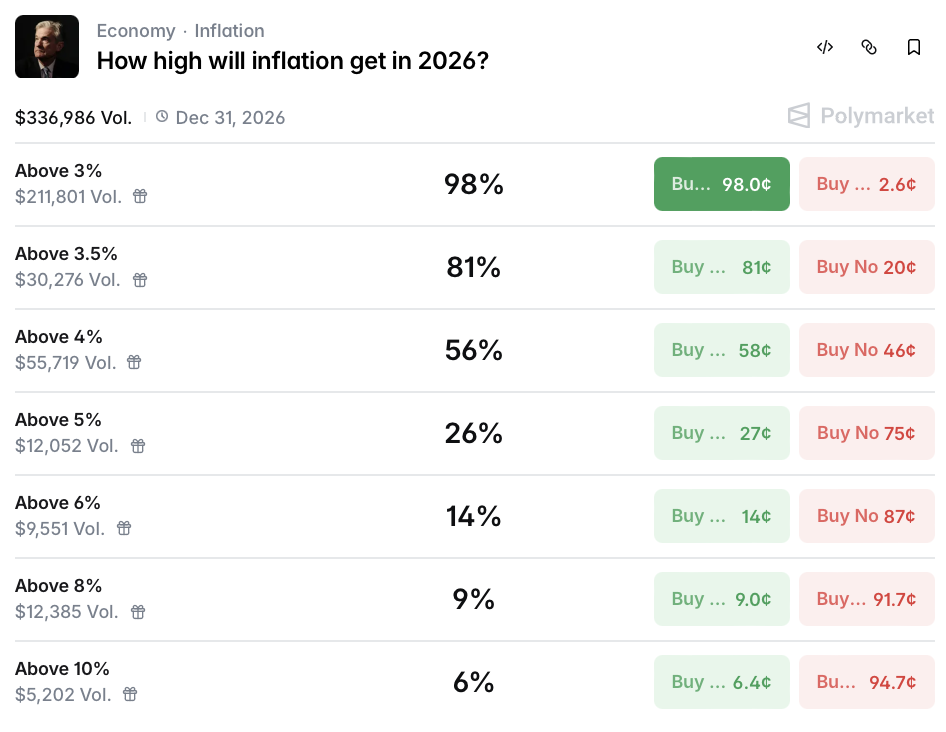
Prediction Markets

Interesting Reads

Contact Us


Where insight meets opportunity - tailored solutions and strategic guidance to help you navigate the capital markets with confidence. Reply to this email or reach out to Nick at nick@grovecorp.ca to explore how Grove can help your business.


From our Grove Departments

Contact us via email at sales@agmconnect.com or by calling 416-222-4202

LinkedIn  Web  X

Speak to an expert today by emailing sales@otcadvisoryservices.com or by calling 416-799-7061

LinkedIn  Web  X
Web  LinkedIn  X  Instagram