| | Over 20 Years of Middle Market Investing | | | | IRONWOOD'S AEROSPACE & DEFENSE INDUSTRY INVESTMENT PERSPECTIVE | | |
In this post, we will discuss Ironwood’s perspective on the United States Aerospace and Defense (A&D) industry, with a focus on the commercial Maintenance, Repair, and Overhaul (MRO) segment, analyzing changes in the market landscape, key investment considerations, and our experience investing in the sector.
Ironwood has been an investor in the US A&D industry since 2003, investing across manufacturers, suppliers, professional services, and maintenance services businesses. We look to continue to support businesses exhibiting stable and recurring demand, diversified supply chains, and a willingness to embrace technological innovation and operational excellence.
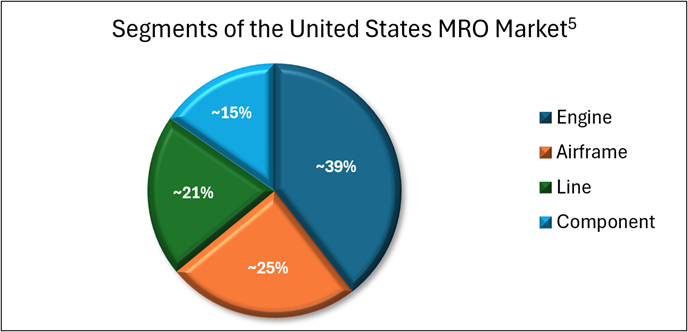
Within the A&D market, the MRO segment plays a vital role in ensuring the operational readiness and safety of aircraft, spanning line maintenance, airframe heavy maintenance, component maintenance, and engine maintenance. These segments are integral to supporting airlines’ critical metrics such as on-time performance and dispatch reliability. Success in the MRO industry will require firms to adapt to evolving industry trends and challenges such as increasing passenger demand, persistent supply chain disruptions, and technological advancements.
Further discussion on these topics is provided below.
| | |
Emerging Trends and Challenges in the A&D Industry
There are several dynamics shaping the A&D industry in 2025. Many elements – labor shortages, supply chain instability, and the evolution of AI – are not unique to the A&D market, but continue to have material impacts on operations, pushing companies to innovate to proactively address challenges. These dynamics include:
-
Defense Spending Uncertainty: While the Continuing Resolution shored up the DoD budget for the balance of FY2025, the Trump administration has indicated a desire to reduce spending in certain areas and shift spending priorities which will likely favor border security and the Iron Dome Missile Defense Shield (next generation missile defense). This shift in priorities may affect legacy programs that have been plagued by cost overruns1.
-
Continued Geopolitical Tensions: Sustained international geopolitical tensions continue to drive spending in the A&D sector. The US remains NATO’s largest spender, while other members are under pressure to increase their share of expenditures driven by the war in Ukraine. Additionally, conflict in the Middle East continues to drive spending out of that region and internationally1.
-
Labor Shortages: Aging workforces and competition from tech sectors have exacerbated labor shortages, posing a challenge across the A&D industry2. Businesses may look to develop early talent pipelines or apprenticeship programs at the local level to attract personnel. Internal training programs and leveraging digital technologies will likely allow firms to differentiate and maintain competitiveness over the coming years3.
-
Supply Chain Disruptions: Ongoing supply chain challenges, stemming from pandemic-related disruptions, geopolitical tensions, and material shortages, coupled with inflationary pressures and the prospect of reciprocal tariffs, have already affected parts availability, delivery timelines, and material prices. Technical issues in new-generation engine production have also led to slower delivery schedules and increased workload for engine maintenance providers as existing fleets stay in service longer than anticipated3.
-
Digital Transformation and AI Integration: AI enhances aircraft maintenance operations by analyzing historical data for predictive maintenance, optimizing inventory, and minimizing downtime. It streamlines aircraft intake and service through AI-driven simulations that evaluate physical space, technician availability, and parts inventory. Additionally, smart tools ensure optimal allocation of technicians, parts, and resources, reducing delays and improving service delivery3.
| |
MRO Industry Overview and Market Dynamics
Within the A&D sector, the global MRO market spend is projected to grow at a 2.2% CAGR from $112 billion in 2023 to $139 billion in 2033, driven by increased passenger demand, heightened aircraft utilization, and delays in new aircraft deliveries due to supply chain constraints. North America, accounting for approximately 26% of the market, is expected to lead growth in the sector with a 3.3% CAGR during this period4. While the growth rate for North American MRO is moderate compared to emerging markets, it remains a compelling area for investment due to its large scale, essential role in aviation, and steady demand.
| | As shown in the chart above, the MRO industry includes several sub-segments such as Line Maintenance services, which include daily maintenance services performed at the gate such as preventative maintenance, engine servicing, and addressing cabin needs. Line maintenance services have a direct impact on important operator metrics such as on-time performance and dispatch reliability; the segment has a fragmented third-party supplier base, as airlines tend to outsource services at non-hub airports. Airframe Maintenance involves comprehensive checks performed in a hangar environment; widebody aircraft services are sourced globally while narrowbody and regional jets are usually serviced within the operator’s region to minimize downtime. Component Maintenance follows a “fly to failure” model, where the components are replaced as needed; this segment has high barriers to entry and airlines manage expenses through cost-per-flight-hour agreements. Lastly, the largest segment of the MRO market is Engine Maintenance, which includes complex overhauls and repairs that require high capital investment and technical expertise. | | |
MRO Market Dynamics and Investment Considerations
The MRO services market is considered a stable industry; however, there are several drivers contributing to its upward trajectory making it a compelling area for investment. Growth will be supported by increasing fleet utilization and technological advancements among other factors described below.
-
Passenger Traffic Recovery: Following pandemic-era disruptions, global air traffic has rebounded, creating higher demand for maintenance services to sustain aging fleets4.
-
Aircraft Retirement Deferrals: Ongoing supply chain challenges, delays in the delivery of next-generation engines, and technical issues with new-generation engines, have pushed operators to extend aircraft lifespans, increasing reliance on MRO services. The global shortfall of 4,500 commercial aircraft has strained fleets, underscoring the critical role of MRO services. In 2024 alone, missed delivery commitments of 560 aircraft created significant capacity gaps, driving sustained demand for mid-life aircraft services6.
-
Deferred Shop Visits and New Generation Aircraft: Shop visit deferrals coming out of the COVID-19 pandemic led to pent up demand. Additionally, new generation aircraft require more frequent repairs than anticipated for a variety of reasons such as powder metal contamination4.
-
Freighter Conversions: Surging e-commerce demand has further boosted MRO activity, especially for converting passenger aircraft into freighters4.
-
Advancing to Composite Materials: Composites such as carbon fiber reinforced plastic (CFRP) are becoming more prevalent in the modern aircraft manufacturing processes thanks to their high strength-to-weight ratio; weight reduction stands out as a primary industry focus. ~50% of modern aircraft structures such as the Airbus A350 and Boeing 787 Dreamliner are made from CFRPs. However, these materials are not easily recyclable, and the supply of certain alloys has been heavily affected by ongoing geopolitical issues, which may continue to contribute to delivery delays7.
-
Supply Chain Resilience: Firms with diversified supplier bases and strong inventory management capabilities are better equipped to navigate disruptions and inflationary pressures. Investments in supply chain visibility will help ensure consistent parts availability and timely service delivery, maintaining customer trust and retention.
-
Technological Adoption: Companies that embrace AI, predictive analysis, automation, and other digital tools will differentiate themselves through enhanced operational efficiency and improved service reliability. These technologies can help streamline processes and enhance resource allocation.
-
Workforce Development: Companies that prioritize workforce training, skill development, and competitive talent acquisition strategies will secure a reliable and skilled technician base, ensuring long-term operational continuity.
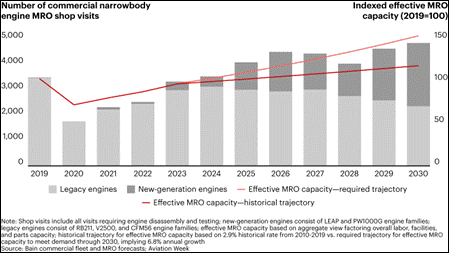
Overall, a supply-demand imbalance for MRO services is expected to persist in the coming decade. The chart below demonstrates the impact of the above trends. The chart shows 1) the historical and projected number of commercial narrowbody engine MRO shop visits for legacy and new generation engines (bars) and 2) historical and projected MRO capacity based on the required need and historical trajectory (line). Overall, the demand for MRO capacity is projected to exceed supply over the coming decade leaving the opportunity for growth and innovation in the industry8.
| | In summary, the MRO sector remains a cornerstone of the aerospace and defense industry. As operators navigate a landscape shaped by technological evolution, labor dynamics, and supply chain challenges, the sector’s resilience and growth potential continue to present attractive opportunities for investment. | |
Ironwood Investment Experience
Ironwood’s investments in the A&D and MRO market include both active and exited portfolio companies:
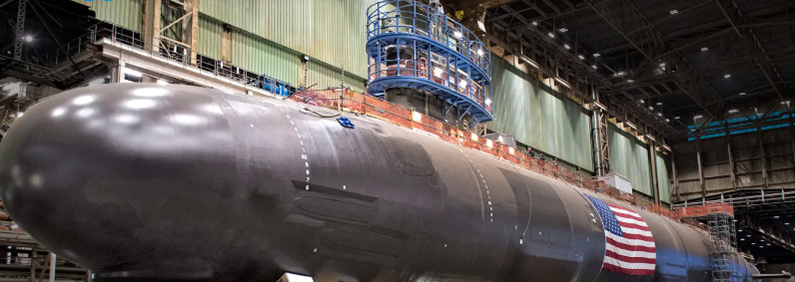
| | Certified Aviation Services (Active): Based in Ontario, CA, Certified Aviation Services conducts line maintenance, modifications, installations, component overhauls and engine washes, as well as heavy recovery and repairs for airlines and OEMs globally. | | | Nautilus Integrated Solutions (Active): Based in South Windham, CT, Nautilus Integrated Solutions is a precision manufacturer of critical components for defense, nuclear, and railroad markets. Micro Precision, a member of the Nautilus family, provides a broad range of components and assemblies and is the sole-source contractor for the US Navy’s Viriginia and Columbia class nuclear submarines. | |
| Capewell Aerial Systems (Active): Based in South Windsor, CT, Capewell Aerial Systems is a manufacturer in aerospace and life support and a respected provider of engineered products for aerial delivery, life support and tactical gear for military, law enforcement and humanitarian agencies worldwide. | | | Whitcraft, LLC (Realized): Sold to Linsalata Capital Partners and now a part of Pursuit Aerospace (Greenbriar/CD&R), Whitcraft is a CT-based manufacturer of high quality, precision formed, machined, and fabricated parts for the US commercial and military aerospace industry. | | | Numet Machining (Realized): Sold to Bromford Industries and now a part of Kinetic Engine Systems (Arlington Capital), Numet is a CT-based manufacturer of precision machined parts, kits, and assemblies for jet turbine engines for a variety of commercial and military aircraft. | |
| We are excited about the opportunities we see in the A&D industry, and specifically in the MRO sector and are actively evaluating investments aligned with this thesis. To learn more, please visit our website and reach out to one of our team members. | |
The information contained herein has been obtained from sources believed to be reliable, but the accuracy of such information cannot be guaranteed. Views expressed are as of the date provided. Ironwood is under no obligation to update this information or to advise on further developments relating to the investments discussed herein. References to a particular investment is not a recommendation to buy or sell such investments. The information contained in this document is prepared for general circulation and is circulated for general information only. Past performance is no guarantee of future results. Any investment contains risk including the risk of total loss. There is no assurance that the investment objectives will be achieved or successful. Please refer to the Firm’s Form ADV 2A Brochure for more information about the Firm, services and fees on file with the SEC, www.adviserinfo.sec.gov. Firm CRD #321642. You may also contact us at 860-409-2100 or visit our website for a complete list of investments at www.ironwoodcap.com. | | |
Works Cited
1 - New York Times, Trump Orders ‘Iron Dome’ for U.S., but Freezes Funds for Nuclear Protection; New York Times, Trump Orders ‘Iron Dome’ for U.S., but Freezes Funds for Nuclear Protection
2 - BRG, 2025 A&D M&A Outlook: Key Trends and Challenges for Dealmaking; 2025 Aerospace and Defense M&A Outlook: Key Trends and Challenges for Dealmaking | Insights | BRG
3 - Deloitte, 2025 A&D Industry Outlook; 2025 Aerospace and Defense Industry Outlook | Deloitte Insights
4 - Alton Aviation Consultancy, 2023-2033 Global MRO Demand Forecast; 2023-2033 Global MRO Demand Forecast | Alton Aviation Consultancy
5 - Grand View Research, Aerospace and Defense MRO Market Trends; Aerospace And Defense MRO Market | Industry Report, 2030
6 - PwC, Optimism for global aviation industry into 2025 and beyond, despite challenges; https://www.pwc.ie/media-centre/press-releases/2025/aviation-industry-review-outlook.html#:~:text=PwC's latest Aviation Outlook%2C published,from Boeing%2C despite their challenges.
7 - Seco, The Rise of Composite Materials in Aerospace Manufacturing; The Rise of Composite Materials in Aerospace Manufacturing | Seco Tools
8 - Bain, Get a Step Ahead of the Engine Maintenance Capacity Crunch; Get a Step Ahead of the Engine Maintenance Capacity Crunch | Bain & Company
| | | | |