Is My Zestimate Accurate? |
|
Good morning and happy Saturday!
In this week's newsletter, I discuss Zestimates in depth and why they may be leading you astray.
Estimated Read Time - 6 min 46 sec
|
|
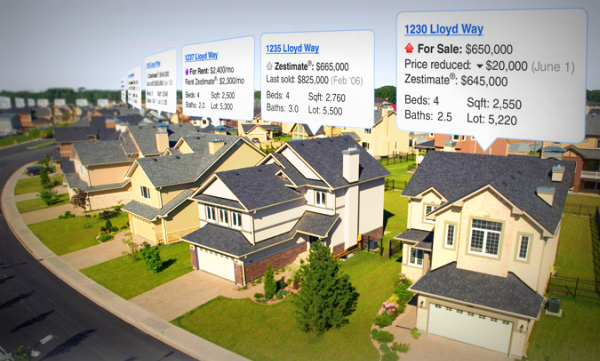
The Zillow Zestimate is an algorithmic valuation modeling system that, when introduced in 2006, helped to cement Zillow as the staple online platform in the nascent realm of web-based real estate searches. Fast forward to 2023, and it is clear that the internet, due in part to Zillow's impact, has revolutionized how real estate listings are displayed, organized, searched for, and ultimately sold.
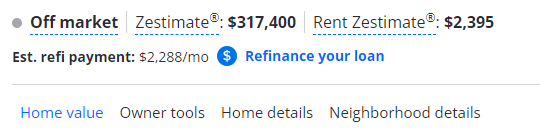
The Zestimate is nothing if not fun. Now, with a click of a button, almost any homeowner can pull up their address and get an estimate as to how much their home is potentially worth on a given day. I'll confess that I take part in this exercise with my own home more than I'd like to admit! It is certainly one of the most used Automated Valuation Models (AVMs) available to the general public and I find it is often the main source of pricing information that people rely on, whether rightly or wrongly.
The big question is, what happens when real-world, open-market sales and Zillow Zestimates intersect? How good is the AI that powers this tool at predicting what flesh and blood buyers are willing to pay? The answer might surprise you.
|
But the Zestimate says.... |
|
As an industry professional, I tend to run into this on both sides of the table. Buyers will stake a position based on a lower valuation and sellers will fight to the bitter end should a Zestimate hint at a higher sale price. I understand both sides! However, the Zestimate AI has very specific faults (which we will get to next) that create a rather large margin of error, an error that compounds when evaluating homes that are not currently on the market. For this reason, good agents will never use or put any sort of weight on an AVM when coming up with a pricing strategy. According to Zillow's own data the Zestimate - on a national scale - has a median error rate of 7.5% for unlisted properties. With on-market homes, that have been evaluated by a professional, that error rate falls to 2.4%. (Zillow, Nov 8, 2022) That's a $26,000 swing on the average $350,000 home! When we evaluate the data at a state level, the picture becomes even more clear. For Nebraska properties not currently on the market Zillow cites the following accuracy rates of its estimates on final sale price -
Within 5% of Sale Price - 40.36%
Within 10% of Sale Price - 64.32%
Within 20% of Sale Price - 84.40%
(Zillow, Nov 8, 2022)
As you can see, relying on a Zestimate, especially when formulating a listing price for an upcoming listing, can be problematic when the Zestimate is within 5% of the final closed price only 40% of the time.
|
|
In my opinion, there are three main reasons that account for this error and these reasons may prevent AI-based systems from ever becoming more accurate in the assessment of homes.
RADIUS OVER FOCUS
Our market is somewhat unique in the fact that most of the city is segmented into very definable subdivisions with clear borders. Falling outside of the borders can absolutely skew data and, when evaluating comparables for a home in the metro, agents like myself know that including properties outside of a given subdivision or area can greatly skew the numbers. For example, I live in the Pepperwood subdivision. Pepperwood has maintained an average sale price of approximately $305,000 for the last 2 years. If I was evaluating comps for my own home and extended my search a scant half mile to the west, across 156th St, sold data from Barrington Park would now be included in my market analysis. Barrington Park has an average sale price of $870,000. That looks great on paper! The reality is I now have an unrealistic conception of sale/listing price because I am comparing apples to oranges. AI-powered AVMs generally search by radius rather than a limited focus, pulling all kinds of properties that may not compare to the style and layout of my home from within that radius. It then applies an equation based on price per square foot (also problematic), beds, baths, etc to generate an estimate.
CONDITION IS A MONEY MAKER
One of the metrics on a real estate appraisal that impacts value the most is the condition score of a property. An appraiser will evaluate the home, in person, and rate the home C6 through C1 with C1 reserved for new construction homes in the best condition. Obviously, a Zestimate has no way of knowing what the inside of a home looks like or the extent of deferred maintenance that might be present. It cannot smell a home, feel soft siding, or hear the noise of the nearby highway. They have tried to improve this in recent years through innovation of their photo-analyzing software however it is hard to believe that computer programming will ever be able to outperform an in-person evaluation of condition.
PENDING DATA AND LOCAL MARKET KNOWLEDGE
One of the things that I talk about with clients is the importance of creating a pricing strategy rather than trying to play appraiser. A sale means positioning the home in the current market so that it is the obvious choice to a buyer over the competition, not adjusting the price $2,500 here and there for granite counters, new carpet, and the like until our calculator spits out a listing price. It means putting the home in a position that attracts the absolute most traffic online and evaluating the house selling down the street so we can capture those buyers rather than losing them to the competitor. One of the ways I do this is by giving lots of consideration to homes that are currently pending and active on the market. Pending homes tell me what buyers are willing to buy, right now! That agent is likely someone I've dealt with and a phone call and some good will enhances my knowledge of the hyper-local buying pool. Active homes tell me what our competition is and where I need to be in relation to that competition. I also know that ranch homes tend to be more desirable here, walkout basements will typically be more sellable than flat lots, this neighborhood has been hot in recent weeks, and that steep driveway is going to turn some buyers away. An AVM/Zestimate has no access to this "data" as the primary source of information is historical closed sales. They also don't analyze the effect of competition. This inherent lack of information short sides even the most ambitious data collection efforts.
|
|
One of the biggest news stories within the real estate world over the last 2 years paints a picture of the shortcomings of AI-based AVMs. Zillow bet big when they formulated a business venture based on their AVM data to buy homes as real estate markets started to climb all over the country. The idea was to purchase homes at prices based on their Zestimate program with institutional cash, make renovations, and resell at prices forecasted by that same algorithm. In the 2021 national market where median prices increased an unprecedented 17.5%, Zillow lost $881 million dollars and shuttered the program citing volatile market conditions and the AI's failure to accurately predict market trends (WSJ, Feb 11, 2022).
All of this said it is not my intention to take away from the utility of a Zestimate. As I said they are nothing if not fun. When I evaluate a property I do make a note of several different AVMs just so I know what they are predicting. However, when making actual, real-world decisions it is best to know the limits of technology so we can focus on the aspects of buying and selling that carry the most weight.
As always it is impossible to time the market. I pride myself on delivering actual value and I hope this newsletter provides just that. If you find yourself in need of a trusted advisor please don't hesitate to reach out directly and stay tuned for next week's newsletter!
|
|
Clay Warren | 402.427.3686 | clay.warren@bhhsamb.com |
|
|
|
|
|
|