|
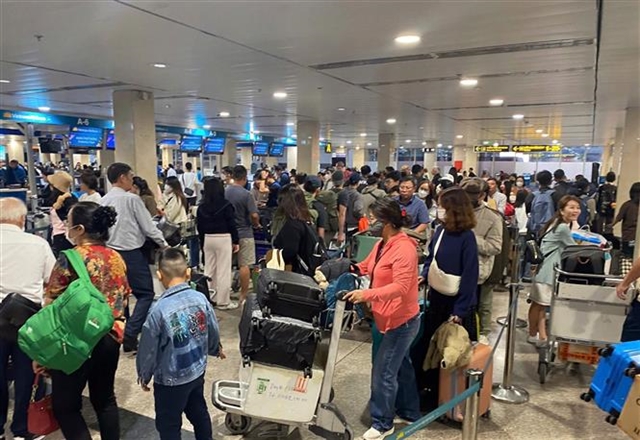
Tan Son Nhat Airport during the Tet holidays
Photo Source: Vietnam News, January 22, 2025
Future Impact
According to research in 2019 by the World Travel and Tourism Council (WTTC), travel and tourism (including its direct, indirect, and induced impacts) accounted for 10.5 percent of all global jobs (334 million) and 10.4 percent of global GDP ($10.3 trillion). International visitor spending totaled $1.91 trillion in 2019.
This was the status of tourism prior to Covid. For the post-Covid era, some of these trends have returned. In 2023, the travel and tourism sector contributed 9.1 percent to global GDP which was an increase of 23.2 percent from 2022. There were 27 million new tourism jobs in 2023 which was 9.1 percent more than in 2022. International visitor spending increased, but it is still 14.4 percent below its pre-Covid level. The WTTC is optimistic about the future of tourism. It is still compiling its 2024 report, but Julia Simpson, the WTTC President and CEO, has stated,
“The future is very bright. We can predict a record-breaking 2024. The sector’s global economic contribution is set to reach an all-time high of $11.1 trillion, which will generate one in every ten dollars worldwide. The sector is also expected to support nearly 348 million jobs, an increase of 13.6 million jobs on its 2019 record.”
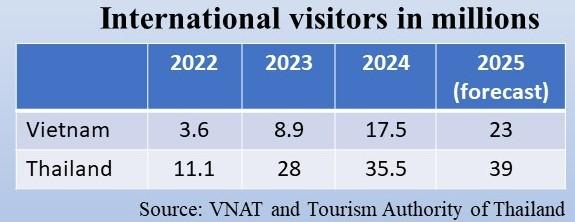
As noted above, tourism plays an integral role for Vietnam’s economy. Once the tourists get into the country, they have an impact. The tourism industry overall recorded nearly $33 billion in revenue in 2024 which was 23 percent more than the previous year. For 2025, VNAT expects Vietnam will have 22 to 23 million international visitors and 120 to 130 domestic tourists. Its additional goal is that tourism will contribute six to eight percent of GDP and create 5.5 million jobs.
So, if the world’s tourism sector is back on track, how can Vietnam capitalize on this recovery? Aside from the visa issue, what needs to be done?
There’s a lot to do.
In the MICE sector (Meetings, Incentives, Conferences, and Exhibitions), the door is wide open for development. This will require infrastructure investment for transportation as well as high-end conference facilities. It’s a good investment though as MICE visitors are not traditional tourists. While they may not reside in Vietnam for a long time, they spend a lot of money.
There has been some progress with transport infrastructure. For example, the ride from Ho Chi Minh City to the beaches of Mui Ne in Phan Thiet used to take four or more hours. It is down to around two thanks to a completed express way. The drive from Hanoi to the cruise ships of Ha Long Bay has also improved dramatically. It’s now possible to make a Ha Long Bay cruise a day trip (albeit quite a long day). Fingers crossed the new international airport at Long Thanh in Dong Nai Province outside of Ho Chi Minh City, which has been under construction since its groundbreaking in January 2021, will meet one of its deadlines which currently calls for the first commercial flight to land in September 2026. A new international airport is desperately needed as Tan Son Nhut Airport has been at capacity for several years.
The need for infrastructure development is not new. Vietnam has been playing catch up for the past two decades. For the tourism industry, the timing is opportune. Vietnam is a “hot destination” for many outsiders. Travelers around the world are putting Vietnam on their Bucket Lists. Again, visas aside, it is relatively easy to travel around, its inexpensive, there are a lot of options, and people rave about the food because it is totally worth raving about. All the sound bites are basically true. At the same time, there is a bit of a tourism backlash in Europe. Local newspapers in Vietnam have published numerous stories and video clips of locals, who are tired of having so many visitors in their cities, throwing water at tourists in prime European destinations.
That is not yet a problem in Vietnam. If and when such a problem does arise, it should be listed in the ‘good problem to have’ category. January’s record number of international visitors of 2.1 million is noteworthy. If it continues, Vietnam and its tourism operators will have a lot to do.
Good luck to them all.
|