|
|
Greetings!
Welcome to the June 2026 issue of Key Notes - Marketing Keys' monthly newsletter! As students wrap up another school year and families settle into summer routines, we hope your business is also graduating with honors in 2026 and gearing up for an exciting second half of the year. Key Notes is an informative, quick-read newsletter to get you caught up on all things media and marketing. Our goal is for you to be informed and entertained with the latest media and marketing happenings quickly and efficiently.
| Is AI Stealing the Spotlight? | |
While artificial intelligence continues to dominate headlines and online discussions, it is not the issue weighing most heavily on consumers. Recent polling shows that affordability remains one of the public’s biggest concerns, far surpassing worries about AI and emerging technology. Although AI has become a major focus in media coverage, many people are far more concerned with the rising cost of housing, groceries, healthcare, and other daily expenses. For consumers, managing everyday financial pressures continues to take priority over conversations about technology’s future.
Consumer spending has remained relatively stable overall, but many households are approaching spending differently than they did a few years ago. Families are increasingly looking for lower-cost alternatives, including store-brand products and discounted services, as they try to stretch their budgets further. Even higher-income households have reported feeling the strain of rising prices. Housing costs continue to climb, healthcare expenses remain high, and everyday essentials such as food and gas are taking up a larger share of monthly budgets. As costs rise across multiple areas of life, consumers are becoming more careful about where and how they spend their money.
Financial concerns today also extend beyond the price of goods and services. Many consumers are experiencing a broader sense of uncertainty about the future, which has contributed to lower levels of confidence overall. Despite the economy avoiding a formal recession, consumer sentiment surveys continue to show unusually low levels of optimism. Experts believe years of disruption, including the long-term effects of the pandemic and ongoing economic volatility, have changed how people view financial security. Consumers are now more cautious, spending more time researching purchases, comparing options, and evaluating whether purchases feel financially safe.
Because of this shift in consumer behavior, businesses are being encouraged to focus on building trust and reducing financial stress for customers. Competitive pricing still matters, but consumers are also looking for reassurance and flexibility when making purchasing decisions. During past periods of economic uncertainty, some companies successfully gained consumer trust by offering guarantees or policies designed to ease financial concerns. Today, brands that can provide stability, transparency, and a sense of security may be better positioned to connect with consumers who are navigating an increasingly uncertain financial environment.
| Is TV Still Bringing Leads? | |
Traditional television isn’t disappearing just yet, even though its audience continues to shrink over time. New research suggests that linear TV still plays a meaningful role in advertising strategies and continues to deliver competitive performance compared to newer digital channels. While viewing habits are clearly shifting, the data shows that older formats still hold value for many brands.
In terms of return on investment, linear TV brings in about $0.81 for every dollar spent. That is slightly below digital platforms, which average around $0.90. However, the difference is not as large as many advertisers assume. For brands with bigger budgets, especially those investing in high-visibility placements around live sports and major events, linear TV can still be an effective way to reach large audiences and generate strong returns.
Connected TV is continuing to grow and is showing stronger performance in many cases. It delivers about 15 percent higher returns than traditional TV and roughly 21 percent more than short-form video advertising. Because of this, experts recommend a gradual shift in spending rather than a sudden switch. A common approach is to move around 20 percent of a media budget into connected TV first, then increase that share to about 40 percent after measuring results and refining strategy.
Looking ahead, viewing habits are expected to keep changing as audience preferences evolve. Connected TV is gaining more traction with middle-aged viewers, particularly higher-income households, while younger generations are expected to drive most future consumer spending growth. By 2030, Gen Z and Millennials are projected to represent the majority of spending increases in the U.S., and they are already showing strong interest in digital-first sports and entertainment options such as esports, college athletics, and emerging global sports like soccer and rugby.
| Did You Write Off TV Too Soon? | |
As more advertisers apply digital marketing strategies to television, TV is increasingly being viewed as an underutilized channel for driving clear, trackable results. Rather than being seen only as a tool for awareness, TV is now being recognized for its ability to generate actions like website visits, app downloads, phone calls, and direct purchases. This applies across both streaming platforms and traditional linear TV, signaling a broader shift in how marketers evaluate performance and success.
That shift was a major focus at a recent industry gathering ahead of upfronts week, where leaders from measurement, consulting, and data companies discussed how quickly expectations around TV are evolving. A common theme was that the old way of separating TV into “brand building” or “conversion” channels no longer reflects how people actually consume media. Instead, marketers are increasingly using advanced data tools and AI to guide decisions, allowing them to target audiences based on behavior and intent throughout the customer journey. Another major point of discussion was measurement, with growing pressure on advertisers to move beyond last-click attribution and focus more on incremental impact and real business outcomes.
Live sports also came up as both a valuable and increasingly expensive part of the TV landscape. While major events still deliver strong reach and engagement, rising costs are forcing brands to be more selective about when and how they buy them. Some leaders noted that even traditional linear TV may be misunderstood rather than ineffective, with value often overlooked in favor of newer streaming options that are not always more efficient. Overall, the message was that TV remains a strong performance channel, but success today depends on smarter targeting, stronger measurement, and a more flexible approach to where media dollars are spent.
| Is the U.S. 'booting' the World Cup? | |
Even with the United States set to take a central hosting role, enthusiasm for the World Cup remains relatively muted among American consumers. Only about one in ten U.S. adults say they follow the tournament, putting the country near the bottom of global rankings for fan interest. Globally, interest is significantly higher at roughly one in four adults, and in several countries engagement is several times stronger than in the U.S.
In football-driven markets such as Brazil and Argentina, more than 40% of consumers report following the World Cup, with South Africa showing a similar level of interest. These regions benefit from long-standing soccer traditions and, in some cases, recent hosting experience that continues to fuel excitement. By contrast, the U.S. sits well behind most markets, with only a handful of countries reporting lower participation in the sport overall.
Beyond fan interest, the data also points to a valuable audience profile. World Cup followers are more likely than the average adult to have higher incomes, with a larger share classified as high net worth. They also show stronger intent to spend on major purchases like travel, home upgrades, and vehicles, and tend to be more engaged with topics such as technology and finance. For marketers, this suggests that while the American audience may be smaller, it represents a potentially high-value group with strong purchasing power and clear consumer interests.
| Who's Winning the Streaming War? | |
Traditional TV network companies are facing a more competitive connected TV (CTV) market as digital-first streaming platforms continue to gain ground. Even though the overall CTV advertising space is expected to grow rapidly, the benefits of that growth are likely to be unevenly distributed. Global CTV ad spending is projected to rise from about $44 billion in 2025 to roughly $81 billion by 2030, showing just how quickly this part of the industry is expanding.
Much of that growth is expected to be concentrated among three major players: YouTube (Google), Amazon’s Prime Video, and Netflix. Together, they are forecast to capture around half of all global CTV advertising by 2030. YouTube is expected to lead with about a 26% share, followed by Amazon at 13% and Netflix at 9%. Their advantage comes not only from large audiences, but also from owning the underlying technology, data systems, and advertising infrastructure that shape how ads are delivered and measured on streaming platforms.
For legacy media companies, this creates a tougher path forward. Traditional players like Disney and Warner Bros. Discovery still benefit from strong brands, loyal audiences, and deep experience producing premium content, but they are increasingly operating in a space shaped by tech-driven competitors. Many are expanding their streaming ad capabilities and incorporating more flexible, programmatic buying into upfront deals, but they are still adapting to a market where commerce, data, and advertising ecosystems are tightly integrated. While legacy networks are far from irrelevant, the future of CTV is clearly being shaped by companies that combine entertainment with advanced digital advertising systems.
| |
Here is a recent highlight from Marketing Keys' blog page. Please start following our blogs and let us know what you think.
Which day is best to get your email responded to?
Get the latest insight here!
| BUILDING A BETTER MOUSETRAP | |
Whether you've been at your marketing position for 1 year or for 20 years, the pressure to produce and come up with the right strategies to reach your target audience is always there.
You no longer need to go about this on your own with 100% of the pressure. Now, you can collaborate with a media expert to help you with the latest, most effective and most efficient media strategies.
We can help by placing your campaigns in the right places, at the right times with the right frequencies. We'll make sure your campaign succeeds by examining the cost effectiveness, engagement potential and audience suitability of different media channels.
It is also critical to reach your customer on multiple platforms. This is how they are spending their media day. Therefore, it is critical that your messaging gets targeted and delivered in multiple online and offline ways.
As a 12 year former Disney executive with 30+ years in the business, I have discovered the best ways on how brands can cut through the clutter to reach their target.
By teaming up with us, we make the process enjoyable with minimal stress.
Furthermore, we will listen to you and always be committed to you. We strive to run our business with passion and humility all with the utmost integrity.
We look forward to empowering you to do your best work.
Until next month,
Roger Keys
Founder and CEO
Marketing Keys
P.S. Thank you for your loyalty in reading our newsletters!
If you feel this information is useful to
someone you know, we would appreciate you sharing
it with them. See share buttons below for social.
|
|
|
Congrats to Jeff Buys Your House partners Jeff Nydegger (on left)
and Kevin Hansen (on right) for hitting their 19th year servicing
Chicagoland's homeowners. Our own President, Roger Keys, along
with WGN Radio's Bob Coyne took Jeff and Kevin out for a round of
golf on their Anniversary date to celebrate the milestone. Cheers
to another 19 years!
| |
As summer brings new beginnings, many homeowners are taking the opportunity to make a fresh start. Whether it’s downsizing, relocating, handling an inherited property, or simply wanting a faster and easier selling process, Jeff Buys Your House is here to help make the transition stress-free.
Unlike the traditional real estate process, Jeff Buys Your House purchases homes as-is, helping homeowners avoid repairs, showings, and long waiting periods. During a season when schedules fill quickly with vacations, family events, and outdoor activities, having a simple and flexible selling option can make all the difference.
Learn more here!
| Summer Success Starts Now! | |
Looking for a summer program that fits your child’s needs? Brightmont Academy offers personalized one-on-one summer learning for students PreK through 12th grade.
Whether your child wants to catch up, get ahead, or build new skills, programs include kindergarten readiness, math, reading, science experiments, test prep, and credit recovery.
Sessions are available at multiple locations. Head here to learn more and register.
| Are you Socially Challenged? | |
During my 18 years as a business owner, I have discovered there are (4) main challenges that businesses have when it comes to managing their social media platforms:
1) A lack of time to post consistently enabling your company to grow its following
2) A lack of strategy/knowledge on the type of content and messaging to post in order to grow your following
3) A lack of knowledge of which social media platform(s) a company should utilize in order to effectively target on social media
4) A lack of graphic design/video ability/images to post eye-catching content to grab your target's attention.
If one or more of these challenges hits home, we can help! We have a reasonable and effective solution to manage your social media platforms. Our solution combines the wisdom of a 30-year media vet with the talents and creativity of our Gen Z social media expert, Cate Bender.
For more information, please contact Marketing Keys at (312) 375-5007 or you can email us HERE!
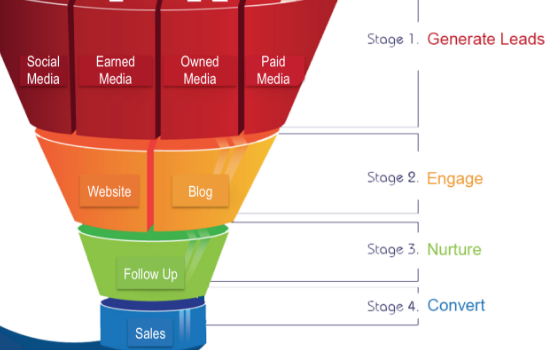
| Fill up your lead funnel! | |
In the days of Mad Men, creativity was everything. The goal was for a brand to be the most creative creating a tag line to resonate with the audience. Now, creativity takes a back seat to targeting through data and reaching your target synergistically through multiple mediums with an integrated marketing campaign.
Find out how Marketing Keys can help leverage your current database list and reach those people along with others that have similar traits and characteristics through other online platforms.
For more details, Contact us here!
|
|