June 2026

It was a busy legislative session in Illinois, and the League was engaged, active and advocated for key legislation and initiatives. While the Illinois General Assembly's spring session may have ended on May 31, we are already gearing up for the fall legislative session amid a critical midterm election.


We will stay in touch during the summer with important updates and educational issues.


In League,

Your LWVIL Issues & Advocacy Committee

issues@lwvil.org

ISSUES

Election Omnibus Bill Fails to Receive Floor Vote

An omnibus election bill containing a wide range of election administration and voter access reforms was not called for a vote before the General Assembly adjourned at the end of May.


The legislation included several measures designed to increase transparency, including a requirement that election officials publish candidate contact and filing information shortly after petition filing periods close. It also proposed a pilot program to establish additional vote centers in historically under-represented communities and areas with lower voter turnout.


Other provisions would have strengthened protections against voter intimidation, created new regulations addressing AI-generated and deceptive political advertising, allowed vote-by-mail ballots returned at polling places to be processed in voters’ home precincts, and waived certain lobbyist registration fees for small nonprofit organizations. The bill also sought to improve statewide consistency in ballot tracking, universal voting sites, drop box administration, and election equipment funding.


Although the legislation did not advance to a final vote this session, many of its provisions are expected to remain part of ongoing discussions and will feature in LWVIL's advocacy efforts.

What is an omnibus bill? 

An omnibus bill is a single piece of legislation that combines multiple issues, policy proposals, or appropriations into one package. These measures may address a variety of subjects, including provisions that did not advance independently through the legislative process.

State Budget

The Digital Advertising Tax, which would impose a tax on digital advertising revenue on large corporations, was approved by the General Assembly. However, because legal challenges to the tax are anticipated, the projected revenue was not included in the final budget estimates. While the fiscal impact remains uncertain, it is still a win.


On the education front, the budget includes a $300 million increase for the Evidence-Based Funding Formula, along with an additional $48 million for property tax relief. The budget also provides $67 million for K–12 mandated categoricals. While this falls short of the $100 million increase LWVIL advocated for, it represents meaningful progress in a tight budget year.


The LWVIL-supported Medicaid omnibus bill (SB3365) passed and was approved by the governor. This legislation includes the creation of the Newborn Equity Support Transfer (NEST) pilot program. The program will be administered by the Illinois Department of Human Services and funded through local and private sources, marking an important step toward supporting newborn and maternal health equity initiatives. 


The budget process also brought some disappointments. The General Assembly ultimately passed a budget with less projected revenue than the governor proposed in February, limiting opportunities for additional investments in key priorities. See more budget details.

Climate and Environmental Protection

The 2026 legislative session was marked by limited time and modest results. Despite strong support from the League, environmental advocates, and many lawmakers, the General Assembly did not advance LWVIL's top priorities: establishing guardrails for data centers, protecting wetlands from development, and banning toxic polystyrene foam foodware.


However, shortly after the session ended, Governor Pritzker announced a pause on new data center tax incentives beginning July 1. The pause will provide time to develop a comprehensive long-term framework for data center policy in Illinois—a significant step toward addressing one of our key concerns.


ADVOCACY

League in Springfield

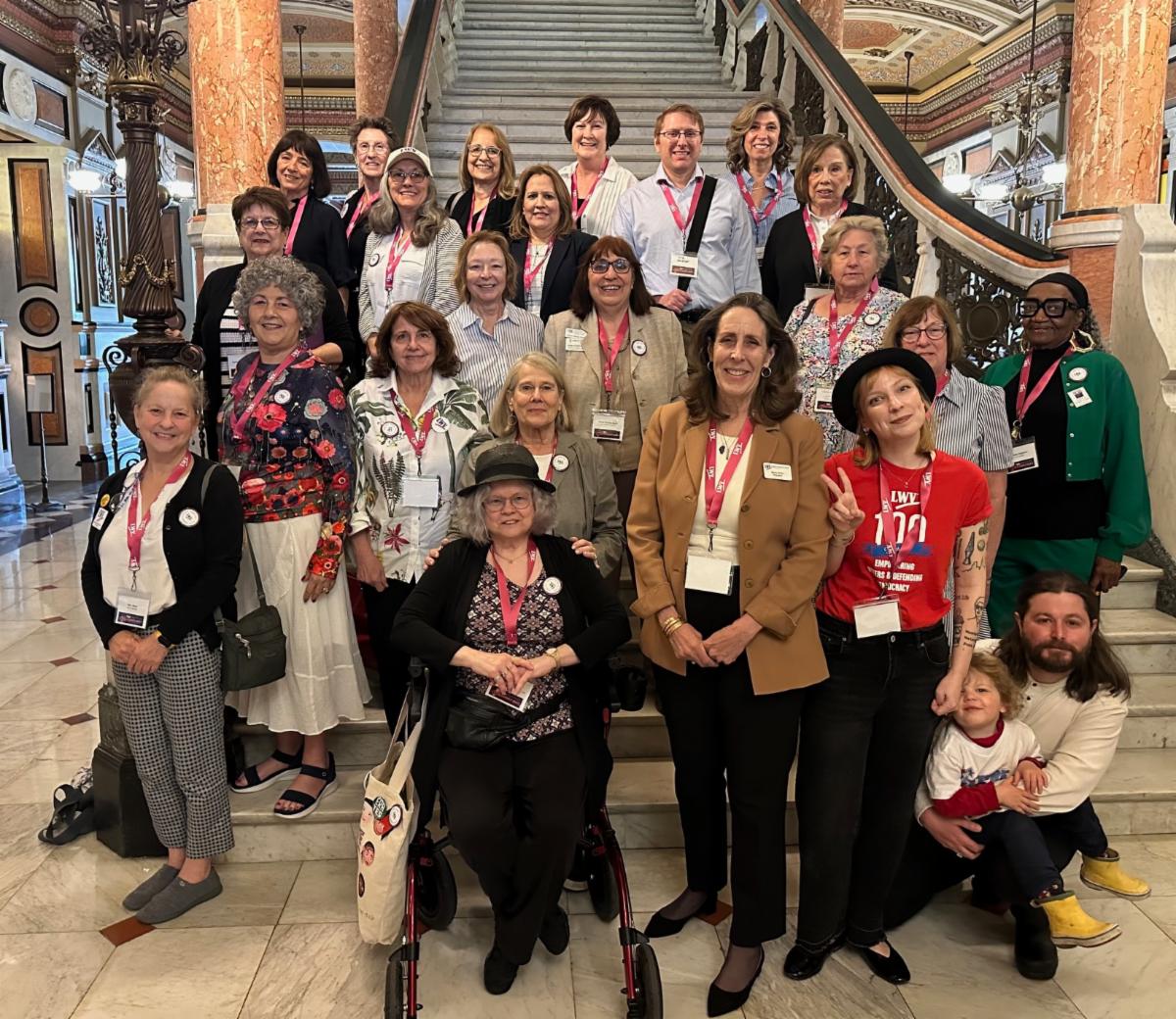
On May 13, thirty members of the League of Women Voters participated in our Lobby Day to advocate for LWVIL's legislative priorities. We met with legislators, secured additional support for key bills, and demonstrated the League’s presence and influence in the halls of the Capitol.


So, how did we do?

Three of our priority bills passed both chambers of the General Assembly:

  • The Reverend Jesse L. Jackson, Sr. Young Voter Empowerment Law (HB4339/SB1786) provides eligible high school graduates with the opportunity to register to vote.
  • The Patient Bill and Outsourced Care Act (HB5390/SB3976) prevents surprise bills from third party medical providers.
  • The Digital Ad Tax Act (HB4894/SB3353) establishes a tax on digital advertising revenue.


But we aren't done yet! We will continue to monitor our priority legislation during the fall veto session and advocate as needed.

What is a veto session? 

A veto session is a scheduled legislative period held each fall during which the Illinois General Assembly reviews and votes on bills vetoed by the governor. It also provides lawmakers with a final opportunity to address unfinished legislation before the end of the calendar year.

New League Advocacy Platform

LWVIL has launched a new advocacy platform, Muster, designed to make contacting your legislators quick and easy. For each action alert, you simply enter your name and address, and Muster automatically identifies your relevant legislators and populates their contact information. With just a few clicks, your message, already pre-written by LWVIL, is sent.

Letters & Endorsements

LWVIL has signed on to letters endorsing the following initiatives: 

Lobby Corps Advances the League Mission

The LWVIL Lobby Corps is a trained group of League members from across the state who monitor and advocate for priority legislation year-round. Launched in 2024, this was its second full legislative session—and it proved to be an active and consequential one.


If you are interested in learning more about the Lobby Corps or becoming an Issue Specialist, please contact issues@lwvil.org.

Thank you for reading! How did you like this newsletter?
Positive        Neutral        Negative