|
It's "Touch and Go" for Intercity Bus Travel
Intercity Bus E-News, March 2026
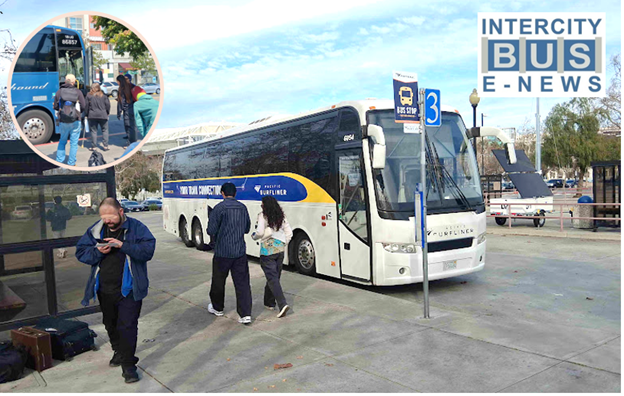
March 17, 2026 | Above: An Amtrak Thruway bus at San Jose Diridon Station on February 7, 2026.
Inset: Oakland stop in September 2025
| |
Editor’s Perspective
It's shaping up to be a touch-and-go year for intercity bus lines, according to the motorcoach professionals and economists I’ve spoken with. Their optimism about ridership is tempered by apprehension about an unusually substantial number of disruptive forces looming. Big swings in demand from one month to the next may be on the way.
| |
Let’s start with the positive trends I have heard:
-
A favorable outlook for the U.S. economy. Goldman Sachs forecasts 2.6% real GDP growth in the U.S. this year. This is an uptick from 2025, but the projection was made before the escalating conflict in Iran and subsequent oil price surge. Still, “[r]eal wage gains and rising wealth should also help sustain consumer spending growth,” says David Mericle, chief U.S. economist.
-
Flix’s investments in Greyhound. Greyhound is running stronger, having received around 200 new buses over the past few years and improved on-time performance. Greyhound’s improving reputation and efficiency are good news for the industry. New equipment for Trailways and megabus.com affiliates, as well as FlixBus partners, is also a bright spot.
-
Ridership gains on large state-supported bus systems. Big expansions over the past several years continue to attract new riders. Colorado’s impressive traffic gains reported last summer, and Virginia Breeze’s ridership record in late 2025, stand out. Ohio’s Go Bus system doubled its service footprint this month. Not every state is seeing growth, but the direction is positive.
-
Expansion by bus lines oriented to Spanish-speaking travelers continues. These carriers are enjoying strong demand, buoyed by low levels of unemployment in this segment. See the latest news from Los Limos below.
| |
Yet other factors suggest a need for caution.
-
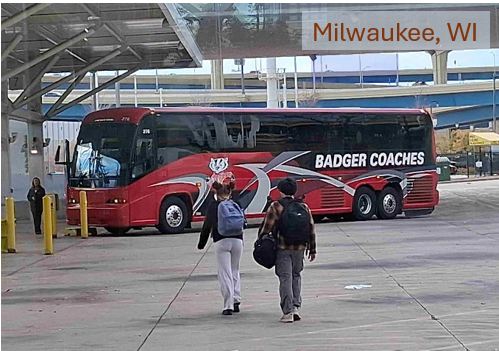
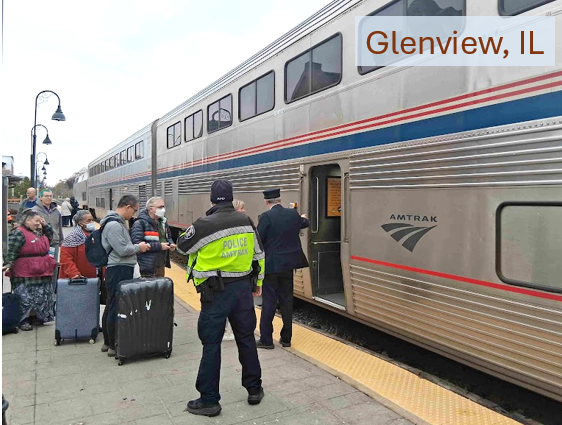
Heightened Amtrak competition on busy corridors. Amtrak’s ridership is at record levels, and we’ve seen signs that the competition is hurting certain bus routes, such as Chicago – St. Louis, Oakland – Sacramento and Portland – Seattle. Amtrak’s on-time performance has improved, and relatively few new bus-to-train connecting routes have recently come online.
-
Steeply discounted airfares. Airline ticket prices are projected to fall this summer, even without inflation adjustments. This creates headwinds for trips of 225 miles or more where buses and planes compete. After absorbing inflation for years, bus lines are gradually increasing fares.
-
A slowdown in new offerings by commercial bus lines. Our frequency analysis shows that service levels have been mostly flat, with some drops in rural areas and the West. Some service rollouts last year filled the voids left by the shutdown of several regional bus lines. FlixBus continues to add routes (see article below), but the industry saw fewer additions last year than in 2024.
-
Growing peaks and valleys. Strong demand during busy seasons and on weekends is accompanied by weaker conditions during low seasons and midweek periods. This phenomenon is more pronounced than it was a few years ago. These swings jeopardize many marginal routes.
| On top of this, a severe oil price shock, beyond that occurring this month, or further unrest stemming from controversial federal immigration policies in big cities, could discourage travel. See the feature on diesel-fuel prices below. | |
What is the cumulative effect of these forces? Anticipating traffic growth roughly mirroring the projected 2.6% GDP growth rate is, in my view, reasonable; but it’s best to avoid making an exact projection. If tariffs are rolled back and fears of a recession ease--which are big "ifs"--consumer spending could strengthen and demand growth should exceed the GDP projection.
All told, expect that intercity buses will carry more passengers than last year, underscoring the sector’s vitality. But brace yourself, it may be a bumpy ride. Join us to discuss this at our free Outlook for Intercity Bus Travel Webinar featuring industry experts on Wednesday, April 22, 12:15 - 1:00 pm CT.
| |
Joseph Schwieterman, PhD
Intercity Bus E-News Editor | Professor and Director, Chaddick Institute at DePaul University
| For Bus Lines and Consumers, it's "Pain at the Pump" | The surge in oil prices has pushed the price of fuel nationwide to around $5.07/gallon, about a $1.40 higher than a month ago and $1.50 higher than a year ago. Filling up a 180-gallon tank on a motorcoach now often tops $800. Motorcoaches achieve roughly 6 - 8 miles per gallon (mpg), so the added cost on a 300-route (based on 7 mpg), is around $64, or $128 roundtrip, versus a year ago. Bus lines have difficulty absorbing this without fare hikes or additional traffic. Unfortunately, the oil-price shock seems likely to reduce the growth in travel as households adjust to higher prices for other goods and services. | |
But there is a silver lining. Motorcoaches are far more fuel-efficient than other modes, delivering an estimated 195 passenger miles per gallon of fuel, several times that of air and diesel rail, and more than eight times that of driving. If the cost of oil stays high, the appeal of intercity bus travel will inevitably grow. This transition will take time while consumers adjust to the “new normal.” I witnessed these adjustments in a big way during 2011-14, when many travelers turned to BoltBus, Greyhound, Megabus, and other lines to avoid the high cost of driving and short-hop flying. Many who previously refused to even consider going by bus gave it a try—and appreciated the savings and experience of trying something new. Expect a similar shift if fuel prices remain stubbornly high, particularly outside the Northeast Corridor, where the “driving culture” is less pronounced. But patience may be required before this happens. -- Joseph Schwieterman, editor
| |
FlixBus has been busy in the Midwest, adding a twice-daily service to St. Cloud, MN, via an extension of its Chicago – Minneapolis route. Services terminate at St. Cloud’s Metro Bus Transit Center, on the opposite side of the Mississippi River from Amtrak’s Empire Builder station. FlixBus also added a once-daily service from Chicago to Bloomington, IL, via Champaign, IL and restored three Chicago – St. Louis trips on peak days after a hiatus. In the East, Flix added a stop in Mount Pocono, PA.
| |
Philadelphia is stepping up efforts to address problems at its intercity bus station. In addition to its planned reopening of the long-shuttered Greyhound Center on Filbert Street on May 1, which will bring service back to Center City, it is working to build an entirely new station. After reviewing 280 locations, the city has narrowed the list to three: (i) a surface parking area on the 700 block of Arch Street, next to the African American Museum; (ii) Philadelphia Gateway garage and an adjacent parking lot on the 1500 block of Vine Street; (iii) a parking lot just north of Amtrak’s 30th Street Station, adjacent to the Cira Centre office tower. If plans proceed, Philadelphia will join Atlanta, Boston, Los Angeles, New York, and Washington, DC, as major cities where local or regional entities have stepped forward to provide attractive downtown bus station facilities near rail transit hubs.
| |
Limousine Express, the New Mexico–based bus line catering to Spanish-speaking travelers in the Southwestern states, has added a daily El Paso – Dallas service. Its network now extends from Los Angeles to central Texas. The company, also called Los Limos, offers reserved seating and has a strong social media presence. Greyhound and Tornado Bus (which targets a similar market to Los Limos) also serve the Dallas route. A traveler can now travel to that Texas city from three different downtown stations in El Paso—Greyhound’s, Tornado’s, and Los Limos’s—all with ticket counters and indoor seating, an arrangement now rare in intercity bus travel. Amtrak’s Sunset Limited passengers use yet another station nearby.
| |
The American Bus Association sent a letter to the US House Transportation & Infrastructure Committee about the upcoming 2026 surface transportation reauthorization. This urges Congress to ensure fuel tax equity for private operators, noting that private motorcoach operators pay into the Highway Trust Fund but receive fewer direct benefits from this than publicly subsidized modes. It also calls for a stronger federal intercity bus program and guarantees reasonable access to federally funded transit and rail facilities. The letter similarly calls for moves to maintain “current insurance standards, ensure equal treatment in congestion and tolling programs, enforce charter bus regulations, establish reasonable idling standards, and evaluate federal subsidies across modes.” We’ll closely follow the Capitol Hill developments.
| |
California has a new Gold Runner bus service that connects with Amtrak’s Gold Runner trains between the Bay Area and Bakersfield. The new twice-daily Amtrak Thruway service links Merced to San Jose’s Diridon Train Station, with stops in Los Banos and Gilroy. This provides a shortcut that saves passengers several hours compared to a train-only itinerary from Merced to San Jose via Oakland. Check out the impressive Gold Runner system map here.
| |
Busbud, the travel website that is widely known among bus travelers, bestowed on Peter Pan Bus Lines its Best U.S. Bus Company award this month. This followed analysis of thousands of customer reviews from travelers who booked trips with Busbud in 2025, including all U.S. bus companies that received a minimum of 100 reviews. Busbud lauded Peter Pan for “pushing the boundaries of passenger comfort” and having cabins with "rigorous safety standards and dependable punctuality." RedCoach was named the winner of its Best Wi-Fi award for its onboard connectivity. Congratulations! The press release is here.
| Schedule Frequency is Slightly Up, but Midweek in Down | |
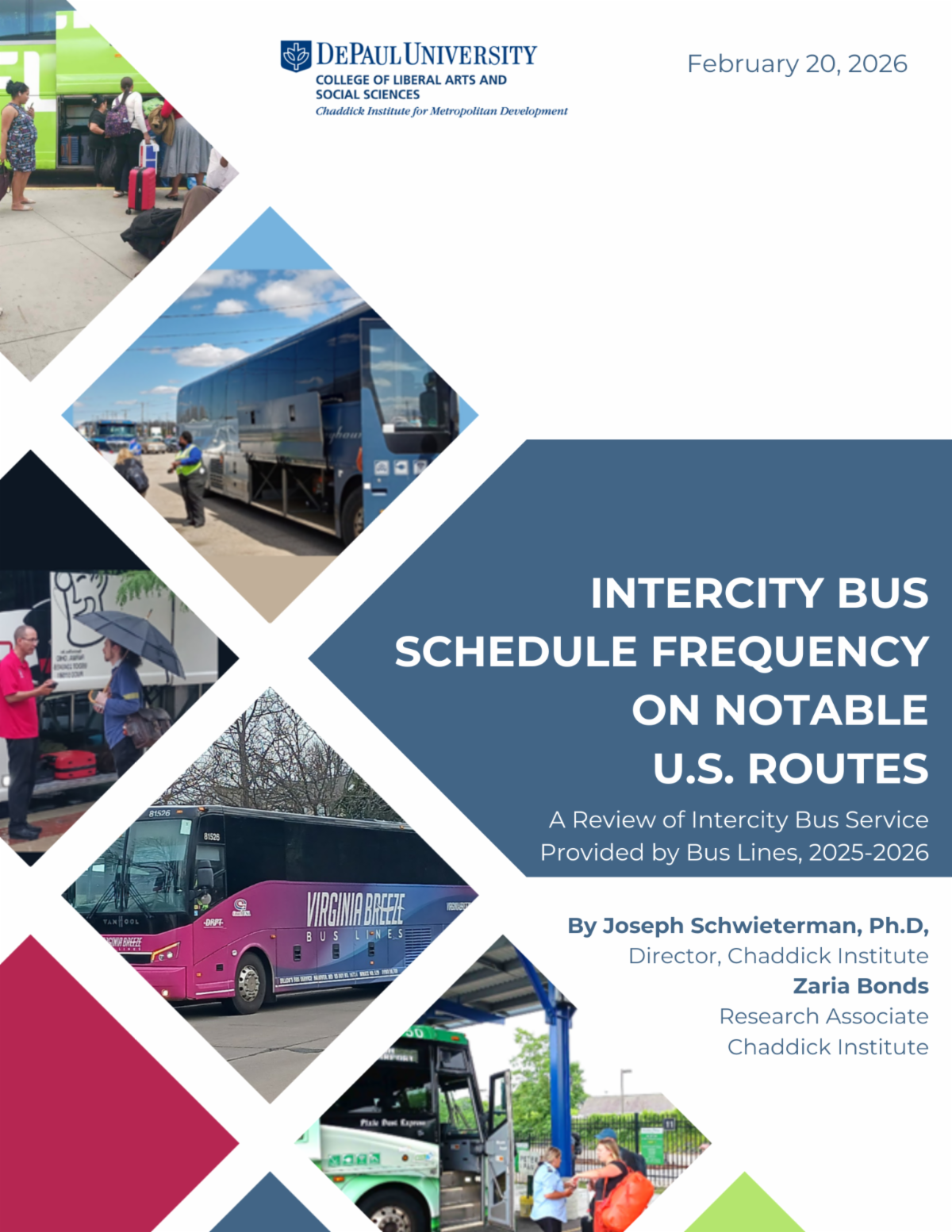
Our Intercity Bus Frequency analysis shows that service levels have mostly been steady since 2025. Across the 67 routes we studied, January activity dipped slightly. On its second Wednesday, for example, departures were down 0.7% versus 2025 compared to a 0.3% drop on the month's second Saturday. Yet, on the last Friday in February, departures rose from 723 in 2025 to 737, or 1.9%. Service levels on this low-season day were down less than expected from the last Friday in August, a busy summer day, being just 5.5% lower. Significant changes include:
-
Expanded Chicago - Indianapolis service by Flix/Greyhound, up to 13 each-way daily, from 11-12.
-
Peter Pan and Flix/Greyhound together having more than 60 trips on peak days between New York and Washington, DC, with four others lines evaluated having 16 more.
-
Restored Boise, ID - Portland, OR service with the entry of Northwestern Stages, provided with state financial support.
What can we expect through the end of 2026? Attend our April 22 mid-day webinar to find out!
| Opportunities for the Chicago Intercity Bus Station | |
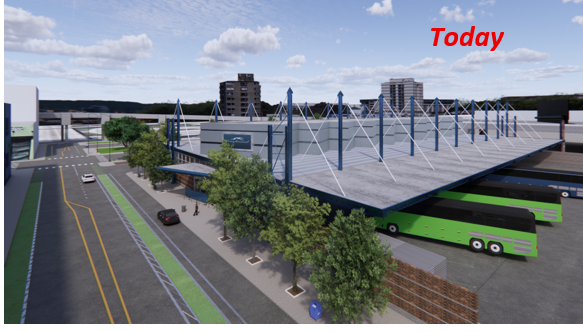
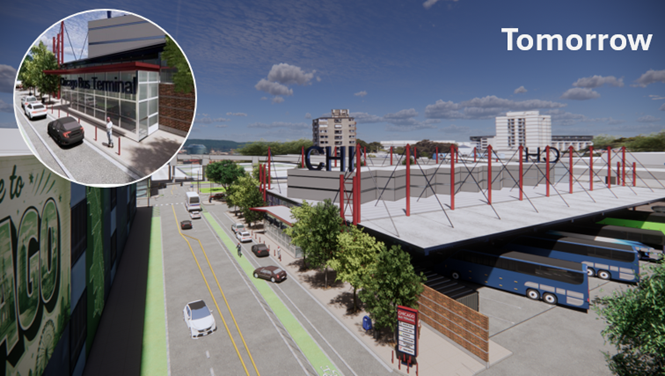
Our Reimagining the Chicago Intercity Bus Station brief showcases the enormous potential of the Windy City’s main bus terminal. The attention garnered, such as Dan Zukowski's recent article here, supports a larger effort to encourage the city of Chicago to acquire the terminal. The outlook is promising—and funding has been identified—but the pace of municipal action has been uneven, and the outcome of a city council–planned vote on funding in mid-May is uncertain.
We sat down with Nathale Nicoletti, an architect from Brazil, who led the Reimagining project.
| |
You feel that the station has a beautiful architectural design. Why?
I’ve always been impressed by how different the structure looks from other buildings in Chicago. It has a suspended roof supported by pillars extending high above, like a cable-stayed bridge. Nagle & Hartray Architecture’s design from the late 1980s is clean and efficient, yet visually strong. Its roof alone creates a recognizable form without additional elements. Although the station is suffering from significant deferred maintenance and is aging, it is a gem.
What are your goals for the other features you added to the new entrance?
Making the station more visible, understandable, and welcoming for travelers was my top priority. The new glass enclosure better defines the entrance and creates a safer, more accessible space for people to reach their buses, while also providing protection from our city’s often-extreme weather for travelers waiting to be picked up. I added digital screens inside the glass entrance that display departure information and nearby transit connections.
| |
How did the station’s visibility from major expressways affect your design?
The fact that so many people see the station from above on the Dan Ryan and Ida B. Wells expressways without realizing it is an important intercity bus terminal is a serious missed opportunity. The large “CHI” letters I added to the roof are playful elements that celebrate the city’s three-letter station code, much as Los Angeles has promoted “LAX” as a key destination. I added clearer signage and features to create a stronger visual identity that makes it easier for people to recognize from afar. The design property conveys that the station is a premier bus-travel hub! For more, click here.
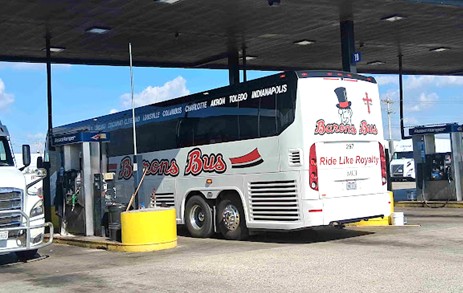
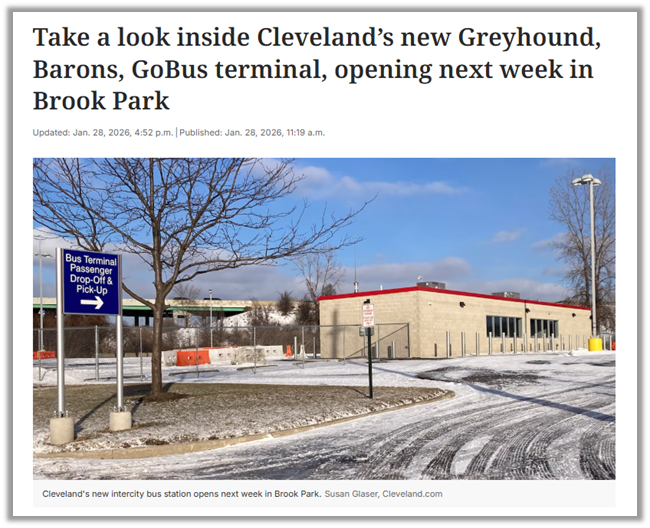
| New Bus Station in Cleveland | A feature article on cleveland.com by Susan Glaser provides an "inside look" at Cleveland's new intercity bus station at Brook Park Rapid Station, a transit hub near Cleveland Hopkins International Airport southwest of downtown. Barons Bus, which manages the station and whose departures include state-supported GoBus services, and Greyhound relocated to the new facility in February. | |
The new facility, while smaller than the old downtown station and Barons’ new Cincinnati station, has 108 indoor seats, a ticket counter, Wi-Fi and charging outlets, and accessible restrooms. Our analysis shows that the station sees around 30 bus movements (arrivals and departures together) on busy days--a number recently booked by GoBus's expansion. Some services make curbside stops in downtown Cleveland. A plan is underway to eventually convert the old Greyhound Station into an entertainment venue for Playhouse Square while preserving its striking Streamline Modern features. Built in 1948, the station was one of the last in transportation use by noted architect William Arrasmith.
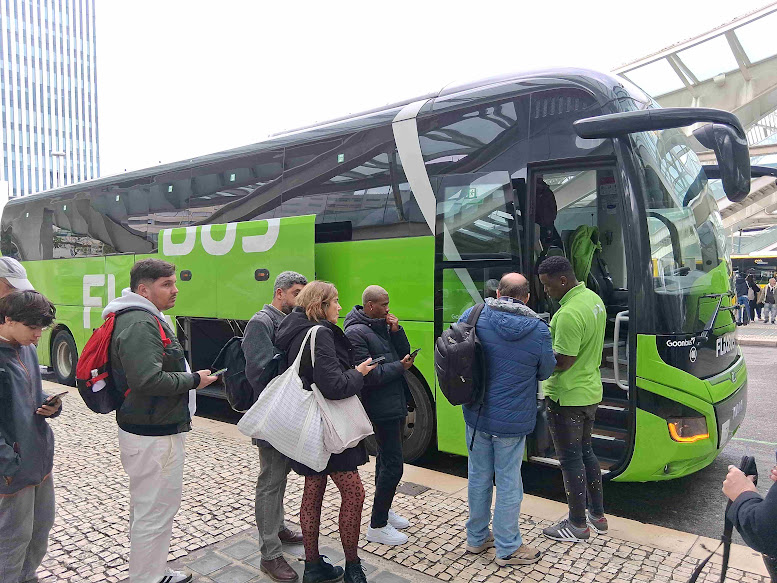
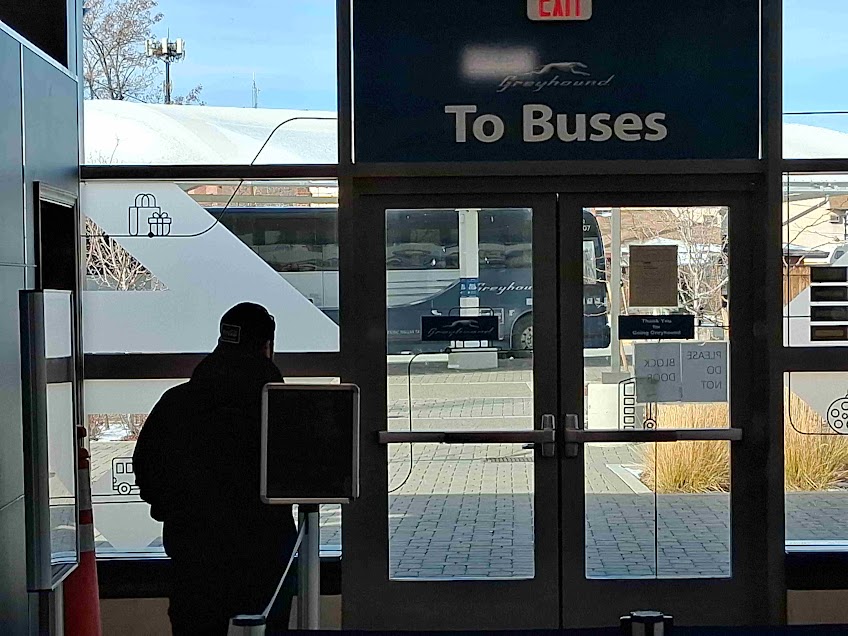
| News Photos from the U.S. and Abroad | Oriente Station, Lisbon, Portugal | A FlixBus for Porto is boarding at Portugal's Lisbon Oriente Station, a massive facility outside of the city's historic downtown district with a large bus plaza, metro stop, and train station--and a design inspired by Spanish architect Santiago Calatrava. The Porto service, which has a stop in Fatima, will soon depart filled to capacity. | Sparks Transit Center, NV | A passenger inside Sparks Transit Center for a Greyhound service for San Francisco waits to board on a chilly morning, Saturday, January 10, 2026. Soon, this passenger and more than 15 others will board. This facility has well-maintained intercity bus waiting room and ticket counter. | | |
Invite others to join Intercity Bus Listserv
For a link to this newsletter, our past newsletters, and reports, click here
Invite your colleagues to join our Intercity Bus Listserv. To become part of our Intercity Bus Listserv and receive 8 – 10 emails per year, email Zaria by replying to this email. No spam. Free. Also, check out our recent studies, briefs, and podcasts below. The Intercity Bus E-News team is Zaria Bonds, Samantha Rouzan, and Joe Schwieterman.
-
Our Outlook for Industry Bus Travel Webinar, Wed., April 22, 2026, 12:15 - 1 pm CT. Free. Click here.
-
For a link to our January Intercity Bus E-News, click here
This independently produced e-newsletter brief has been shared with our Intercity Bus (IB) and Transportation listservs. The Chaddick Institute does not receive funds from transportation companies or related industries.
| | | | |