|
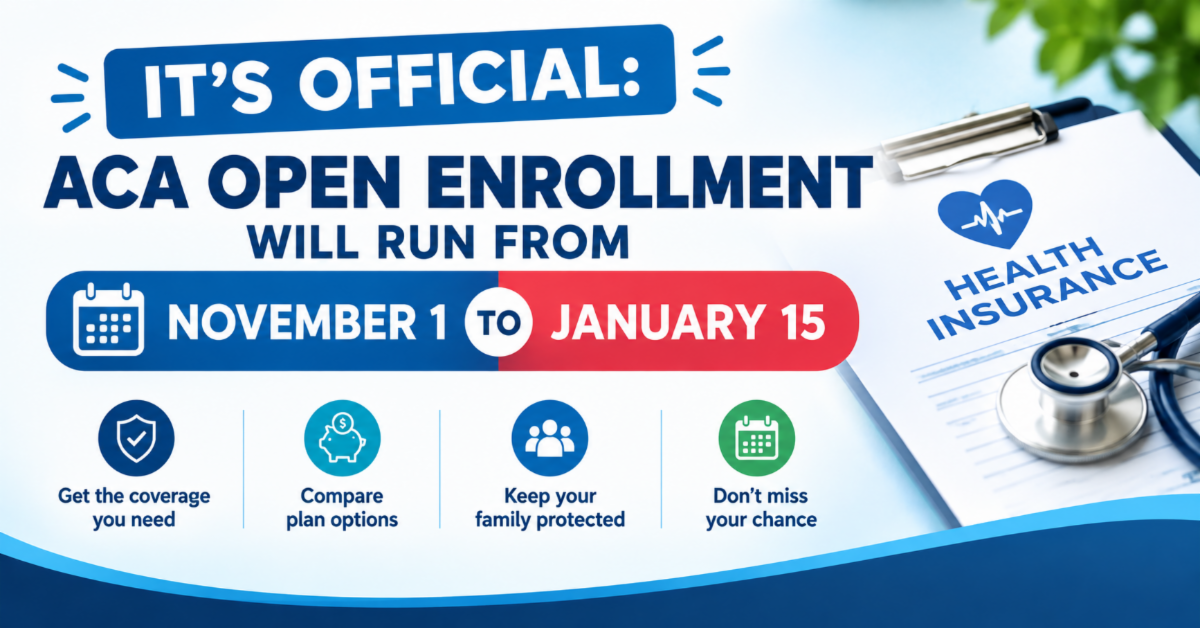
Accurate information on 2027 policies is not yet available. Cigna has already announced they will not offer ACA policies for 2027 — anyone currently enrolled in a Cigna plan should begin planning to switch to a different carrier.
We'll learn much more about 2027 plans later this month and will include an update regarding 2027 plans in the November newsletter.
There will be significantly more emphasis this year on accurate income projections. This is part of the effort to reduce fraud, but is also an attempt to reduce the disparity between projected incomes used for calculating subsidies and reconciliation differences reported on tax returns.
CMS will flag a data matching issue (DMI) whenever a consumer's projected income differs from IRS and other government records by 50% or $12,000 — whichever is less — compared to the prior year.
When a DMI is identified, individuals will have a maximum of 90 days from the date of their eligibility notice to resolve most data matching issues, including income inconsistencies. The former 60-day automatic extension has been eliminated.
Individuals who have changed jobs and are asked to submit proof of income will need to provide pay stubs from the new job — prior years' tax returns will no longer be accepted as proof. Anyone who has recently changed jobs should start saving pay stubs now, in case they're flagged for an income inconsistency.
Given this, anyone planning to apply for an ACA plan during Open Enrollment should start now — both projecting income carefully and gathering proof of income — in case they're flagged with a data matching issue when they apply for a subsidy.
Social Security numbers for all family members applying for subsidies on an application must now be provided, so applicants should begin gathering SSNs for every family member who will be applying for coverage.
We help all our clients actively enroll for new plans each year rather than passively enroll (a process where poliyholders are automatically re-enrolled by healthcare.gov.) Policyholders need to have all Social Security numbers available when we help them actively enroll; active enrollment also helps prevent surprises later, particularly if income projected for 2026 is not accurately projected for 2027.
ONLY U.S. citizens, green card holders, Cuban and Haitian entrants. and Compact of Free Association (COFA) migrants will be eligible to receive tax subsidies for 2027. COFA migrants are from Micronesia, the Marshall Islands, and Palau.
Additional classes of visa holders and legal residents will be permitted to apply for ACA coverage, but except for those listed in the above paragraph they will not be eligible to receive subsidies and must pay the gross premium for coverage. This is a change from prior years: all legal residents and visa holders listed on healthcare.gov's list have previously been eligible BOTH to apply for subsidies and, if qualified financially, to receive subsidies.
An updated listing of immigration status to qualify for the marketlace is expected to be posted on healthcare.gov before the start of open enrollment. (The list posted on the website as of September 25 needs to be updated.)
These major fraud prevention activities will either be instituted or continued for 2027:
1. Enhanced identify proofing requirements are in place for agents completing 2027 registration (certification) training.
2. "High risk" applicants will be required to be identity proofed. "High risk" applicants are those who are new to the marketplace, using a new agent, or paying $30 or less in net premium.
3. On an annual basis, applicants must authorize agents to acess or make changes to a consumer's marketplace application. (Authorization processes to provide annual authorization are still being reviewed and approved by CMS, so procedures probably won't be in place until November 1.)
4. In addition to annual agent authorization, applicants must first sign a consent form authorizing an agent to help them with a marketplace application [the consent form also contains language saying the agent has to protect personally identifiable (PII)] and before the marketplace application is submitted sign an acknowledgement that the applicant has been read all required disclosures and reviewed income and other entries.
5. Agents will also be required to use enhanced direct enrollment (EDE) platforms — such as Health Sherpa — rather than enrolling applicants directly through Healthcare.gov.
These enhanced marketing standards will apply to agents, who are prevented from:
1. Guaranteeing that an applicant will be eligible for a $0 premium;
2. Providing cash or gift cards for enrolling in a plan;
3. Using government logos or claim to be affiliated with the government;
4. Misrepresenting enrollment deadlines or timelines; and/or
5. Making reference to false legislation.
Another requirement new for 2027: any suspected breach of protected information must be reported to Healthcare.gov within one hour.
All these requirements are designed to reduce fraud and improve the accuracy of information submitted during enrollment.
|