|
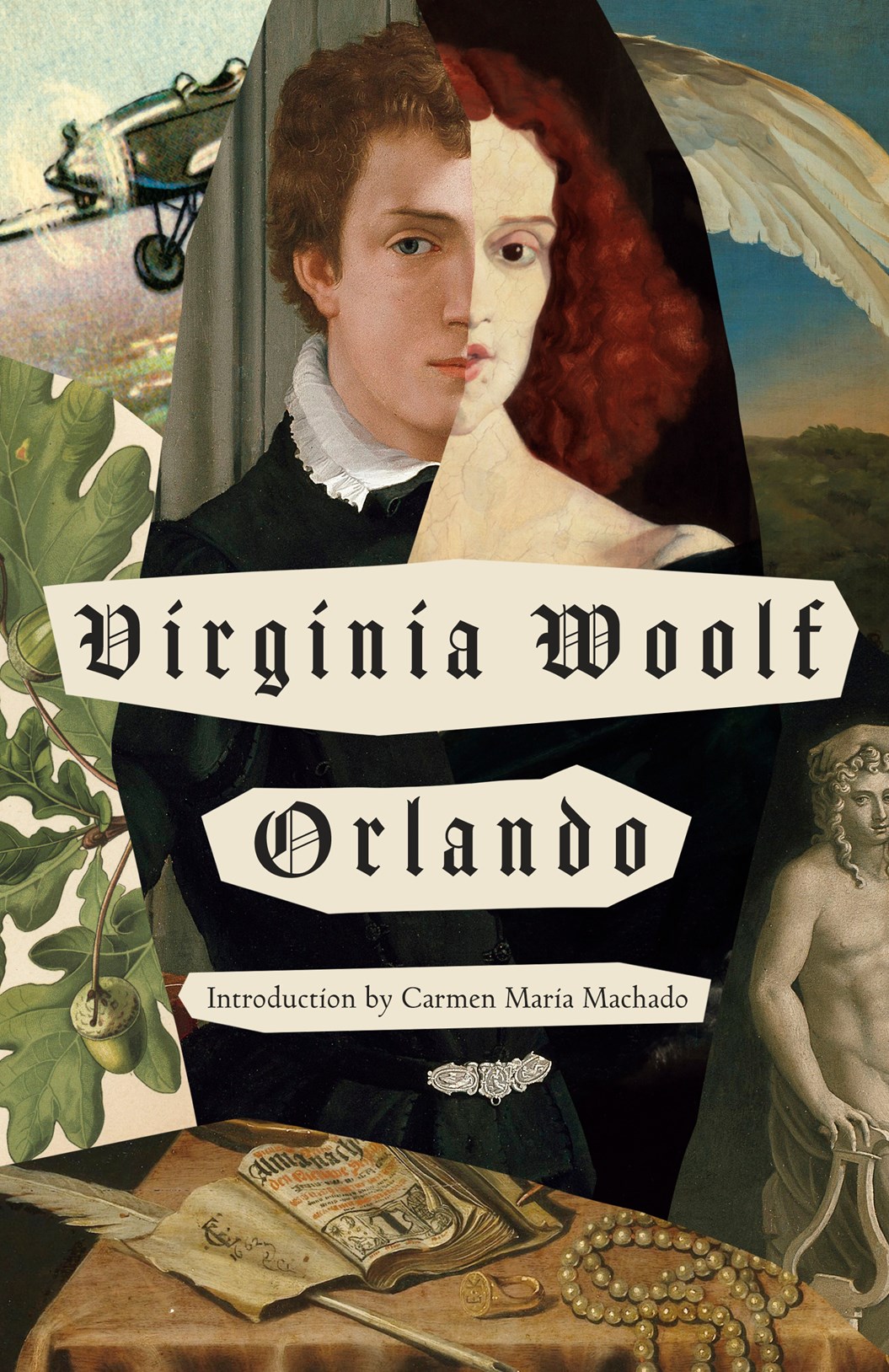
By Virginia Woolf
Vintage
Paperback $12.00
Reviewed by Jami Daines
“I'm sick to death of this particular self. I want another.”
If you know me, you know I don’t play when it comes to Virginia Woolf! Orlando easily takes the cake as my favorite book of all time. It is hilarious, campy, romantic, and deeply moving. The story follows Orlando, a frivolous young poet favored in Queen Elizabeth’s court. One morning, he wakes up having miraculously transformed into a woman… and what of it! From there the story takes off on a 300 year long journey of Orlando’s endless messy relationships, prayers to art and nature, and learning to celebrate life regardless of how things change. You get to become a time traveler, and follow Orlando through their insane, seemingly immortal existence; from the Elizabethan era, to the early 19th century. It is a romp through time, and a love letter to life!
This book is one of the most gorgeous pieces of queer literature ever written– and light years ahead of its time. I’d argue that Woolf had a clearer idea of gender than we do now! Before our modern concepts and terminology for queerness even existed, she effortlessly displayed how meaningless the construct of gender truly is– outside of a patriarchal society. It is written so naturally, Orlando simply goes to sleep a man, wakes up a woman, and continues on as if it was a natural phenomenon that was bound to happen. They aren’t shocked when they catch their reflection, and their house staff hardly notices. Orlando’s life is altered only by society’s traditional limitations and expectations when it comes to their gender.
One of my favorite aspects of this book is that the character of Orlando is based entirely off of Viginia Woolf’s dear friend, and (it is no secret) lover, Vita Sackville-West. Woolf wrote this book intending for it to be a satirical biography, but it resulted in a deeply loving tribute to her and Vita’s relationship. Everything in this book feels so playful and tender, and it isn’t because she set out to write a revolutionary book about queer life and love, she was just writing a long love letter to her dear friend. As you read, you can feel her love for Vita so strongly. I reread the book after learning about their relationship, and it made it feel even more special.
Woolf definitely loves to play with you as the reader in her writing– she is so good at it, it makes me sick. This book is written almost like a riddle, but one that never asks to be solved. You are invited to submit to the fantasy of Orlando’s immortality, and allow yourself to get lost in the poetry of their story. It is a sensory experience, a song, a glorious feast, a romantic walk in moonlight, a dream under an oak tree. Orlando will take you by the hand and pull you through their dance through life, and once you reach the ending you’ll be dizzy with delight.
| | |
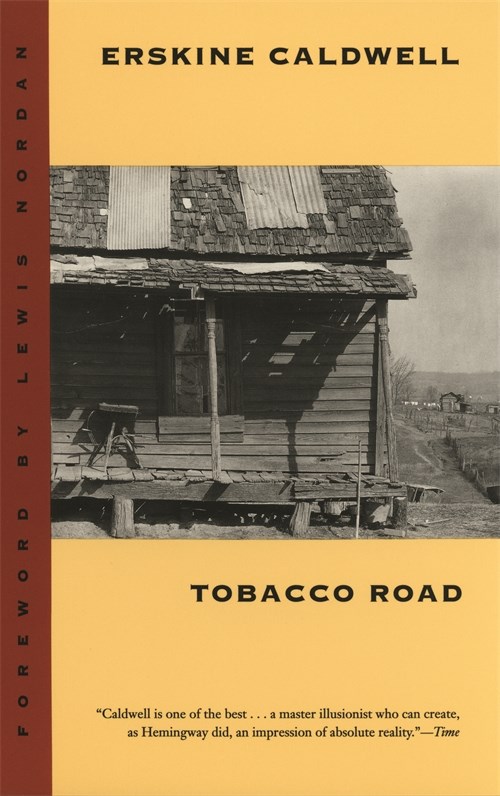
By Erksine Caldwell
University Of Georgia Press
Paperback $20.00
Reviewed by Dylan Parry
Erskine Caldwell was one of America’s best writers of his day, but is sadly forgotten by many today. Often compared to Mark Twain for his uncompromising wit, John Steinbeck for raw style and subject, Caldwell’s storytelling has something about it that still separates him from either, while complimenting both. Nowhere is that more apparent than in Tobacco Road, his most famous and popular novel.
Set in rural Georgia at the height of the Great Depression, we follow the Lester family, led by the lazy patriarch, Jeeter Lester, who is a sharecropper by trade, growing none other than tobacco and other cash crops. Up to their eyeballs in debt, with collectors too worn out anymore to bother doing much of anything about it, Jeeter and his family simply live day by day, without much thought or hope for the future. Far from living comfortably, but somewhere on the edge of absolute ruin and adventure, the Lester family stands with any of America’s great literature families.
One of Caldwell’s greatest attributes as a writer, is that he doesn’t look to romanticize his
characters, instead, much in the way that Steinbeck looked to show the true conditions of those
down and out whom he wrote, Caldwell shows the tenacity of people who in their own way, looking to cut a new path through life by whatever means they can when so many avenues of advancement are cutoff because of economic hardships. In Tobacco Road, this leads to a
kaleidoscope of earthy men and women all along the tobacco road, clashing in ridiculous and often not so rational ways that had me laughing or shrinking from embarrassment for them.
Like Twain, Caldwell doesn’t shy away from the racism of the Depression-era South. In
fact, he leans into it, showing the ignorant side of his characters when faced with equally
troubled and hard-up black neighbors. While their economic factors may be the same, the ugly
face of racism still prevents the Lester family from finding solidarity with their neighbors, when
solidarity is just what they need. In fact, the Lester’s greatest fear in some ways is falling one
rung lower than they already are on the social and economic ladder. But Caldwell does a great
job of showing us how this irrational fear is just that, irrational, as Jeeter and his family couldn’t
fall any lower than when we meet them, other than to become completely homeless.
Tobacco Road is a great novel that will have you questioning Jeeter’s business decisions,
his rambunctious son Dude’s romantic choices, and the awkward and hilarious preacher, Sister
Bessie in her own romantic and religious endeavors. This is a novel that is worth bringing back,
and standing side by side with Steinbeck’s East of Eden, Twain’s Adventures of Huckleberry
Finn, and even William Faulkner’s The Sound and the Fury.
This is truly an American classic not to be forgotten again.
| | |
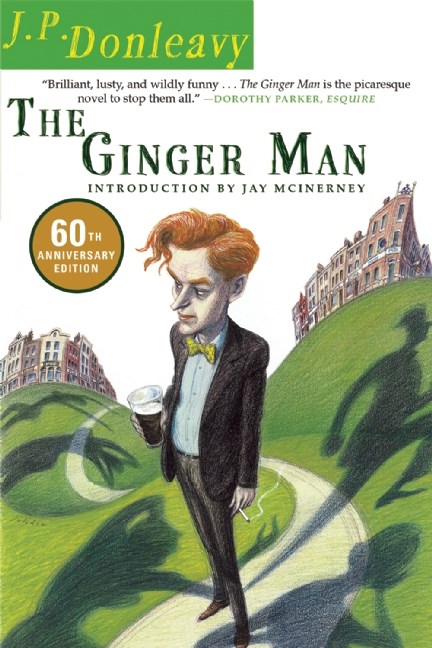
By J.P. Donleavy
Grove Press
Paperback $18.00
Reviewed by Dylan Parry
The Ginger Man is unlike any picaresque novel you’ve likely ever read, while also still being relatable to those familiar with the genre. J. P. Donleavy’s novel is what happens when you blend the wit and humor of Jonathan Swift with the scatological and drunken humor of Francois Rabelais, mixing in post-WW2 Ireland for the setting and Joycean ramblings through the streets of Dublin.
Our rakish protagonist, Sebastian Dangerfield is a young Irish-American, recently married and with a newborn baby girl, who lives off the benefits of the G.I. Bill in Dublin while attending classes at the famous Trinity College. But as all tales set in the beautiful Emerald Isle are keen to contend with, it’s no smooth journey. Sebastian is a drunken womanizer with few moral inhibitions stopping him from falling into one mad adventure after another. What keeps him alive as he destroys his liver with pint after pint of Guinness, is his hilariously sharp mind and equally sharp tongue, that he can wield in a number of different ways, for better or worse, depending on whether it’s a pretty young student walking to class, or his kind but easily abused elderly landlord.
From cover to cover, Donleavy’s novel had me in tears as he wielded his own form of that famous quick Irish wit that still today can be found all across the island, whether in a local pub or just walking down the street. While I can’t say much about it here, the story behind Donleavy’s struggle to get The Ginger Man published is deserving of a book itself. But what a good thing he did, because this novel arguably stands with any of the Irish greats, and if I had to choose just one Irish writer to place Donleavy beside, it would be the great drinker and Irish playwright, Brendan Behan. Both were keen to show the rough and tumble side of an otherwise conservative and Catholic influenced society, and Donleavy pulls no punches.
While perhaps not the politically correct tale that many people today are comfortable with, it is precisely the societal expectations and the pressures that come with it, that Donleavy looks to transgress, and in a way, look to show the absurdity of. While Sebastian isn’t necessarily one to mimic in our own lives, the lack of care for his wife and daughter are definitely a product of the times, our roguish hero does have his brighter side when it comes to striving to be his authentic self, and push back against societal norms that would otherwise chain him in like some circus exhibit.
Throughout the novel Sebastian contends with two ultimate questions: “What is freedom?” and “How do I keep a step ahead of those looking to put me down?” To answer these questions, for better or worse, you’ll just have to pick up for yourself a copy of Donleavy’s wonderful picaresque novel, The Ginger Man.
| | |
By Cannupa Hanska Luger, Contributions by Eden Pearlstein, and Cem Eskinazi
Aora
Paperback $36.95
Reviewed by Claire Corwin
Poetry? Art? Survival guide for the future? All of the above can be said of Cannupa Hanska Luger's work, Surviva: A Future Ancestral Field Guide. This book imagines a future in which colonizers mined the earth to destruction and fled the planet– leaving the poor and indigenous people behind. Those who remain are nomadic people dedicated to the earth. The people of Luger’s imagined future have realigned with Indigenous migration practices and relearned how to follow water and to live in balance with the land by merging future technologies with ancestral wisdom. The book begs the question: Can we find balance once the world has ended?
For years, through a series of projects– including sculpture, regalia, film, photography, poetry, painting, and installation– Luger has been creating a new mythology, calling it, Future Ancestral Technologies. Surviva is just one piece of this sprawling, powerful work. In it, ecopoetic fragments and bold illustrations are overlaid onto a 1970's survival manual. Weaving in and out of the manual’s pictures and text, the narrator makes a passionate cry for art, care, and community in striking red text. There is an urgency to the piece as it builds to a passionate call to action: we must listen to our ancestors in order to move forward.
Even though the book has an almost intimidating quality to it, its message is full of hope and action. Surviva emphasizes the need for humanity to connect in order to be part of something truly sustainable. If we want to bring Earth back from the brink of collapse, the answer is each other. To be able to affect the greater world, we must focus on the small scale of what we can do individually and communally. Together (and only together) we can help maintain the land for our children and their children.
| | |
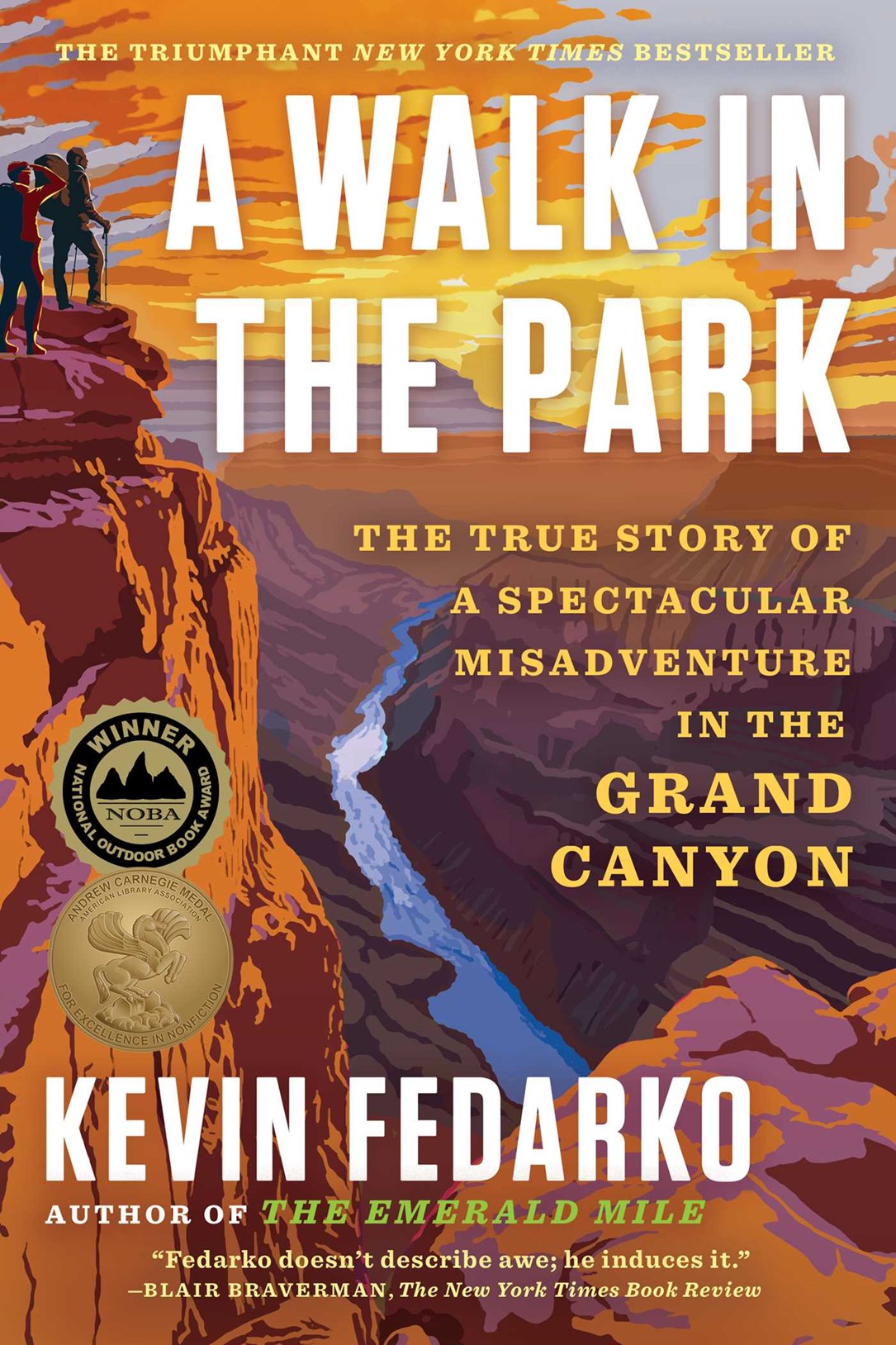
By Kevin Fedarko
Scribner Book Company
Paperback $22.00
Reviewed by Apollo Frenzel
The Grand Canyon is one of the most visited national parks in the United States. Of the millions of visitors every year, only about 5% actually enter into the canyon, and only 1% make it to the Colorado River down below. Interestingly enough, only 63 people have hiked the entire Grand Canyon starting at Lee’s Ferry, and ending at the Grand Wash cliffs. This book is about Kevin and his friend, Pete McBride, doing that exact thing.
The adventure these two have is both amazing and hilariously terrifying. Reading the introduction instantly got me hooked into what horrors and beauty these two witnessed. Fedarko records many different perspectives and histories turning this adventure into a plea for our public lands. For example, Fedarko recounts the attempt to build a full scale resort right on the rim of the canyon, with a gondola going down to one of the most regarded and sacred places in indigenous culture, the Confluence. (The point where the Little Colorado and the main Colorado river meet.) He interweaves indigenous perspective with the fight to prevent that and other outrageous grabs for the canyon and its surrounding land.
He ends the book talking about how he felt and what he saw ascending up the Bright Angel Trail, the most popular hiking path in the park. There, he argues that perhaps you don’t need to go to the most remote part; or visit the deepest slot canyon to appreciate the beauty of the Canyon. Sometimes, just walking right up to the edge is enough to satisfy you. It’s the same for all public lands.
| | RECEIVE 20% OFF WHEN YOU PURCHASE DURING APRIL | | |
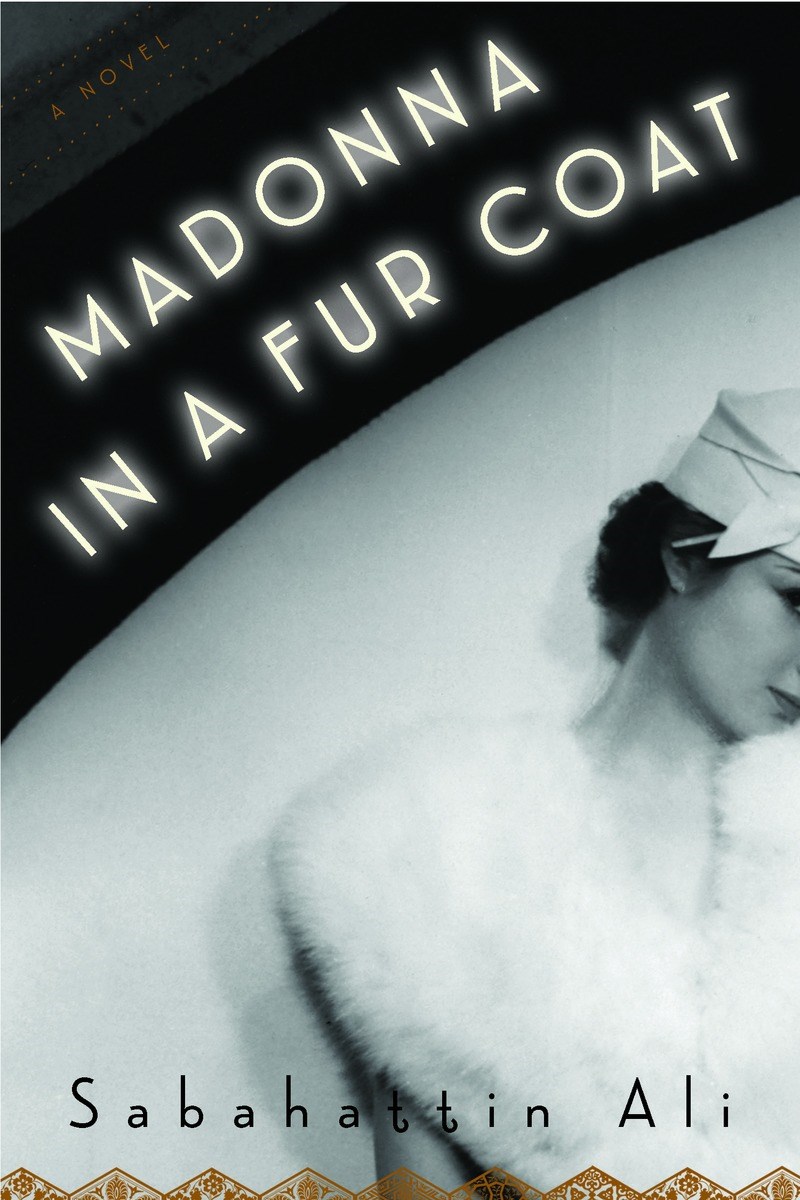
By Sabahattin Ali
Other Press
Paperback $17.99
Best Wellers Price $14.39
Reviewed by Gia Aguilar
If there is one thing generation z understands, it is yearning and rotting.
There has been a resurgence in the consumption of unrequited love stories. Before Sunrise, White Nights (which Madonna in a Fur Coat is a much better take of), and this wonderful book to name a few. Ali's writing is lyrical and packs it all in with a punch.
This book is bitter, but I found myself inspired by it. There is so much beauty to be had in the world, and to let anything diminish it is a shame. I found myself thinking while reading: "this is what not to do!" Though admittedly I have not found a love that would let my life be torn apart by it.
“But soon the house will fill with their shouting and laughter. What does any of it mean to me? When all human ties are severed, what is left? I have not uttered a single true word in ten years. But now, how desperately I need a confidant. What else is there left for me, but to spill out these words and then drown in them?” There are so many lines like that throughout the book. Instances when I connected with them, even though it's not a path I wish for myself. Fleeting thoughts of losing hope, and continuing life dully. Raif is a character full of love and warmth, but one who fails to get past his dreamy idealizations. Ultimately letting his love for Maria ruin him.
The true tragedy doesn’t lie with the unrequited love aspect, but with Raif losing any hope of happiness.
| | |
Click here for our June events newsletter.
And, as always, view our events calendar to see all of our upcoming events.
We host both virtual and in-person events, and we look forward to seeing you soon.
| | |
Come visit us!
SUNDAY 12-5
MONDAY-THURSDAY 10-8
FRIDAY & SATURDAY 10-9
| | |
Can’t make it to the store?
Support your local indie from home!
Order by phone or online, then pick up at the store! We also ship!
| | |
Give us a call at 801-328-2586.
Shop new books on our website.
Browse our entire inventory of new, used and rare books on Biblio.com.
Listen to audiobooks from Libro.fm.
| | This issue of Word From Wellers is edited by Liam Harrison-Stewart | | | | |