|
The SMEAC approach to successful employment outcomes
Editorial by Christian Saint Cyr
National Director / Canadian Job Development Network
.
After more than two-decades of experience in career development, I've come to the opinion that nothing supports a job seeker in achieving the employment outcomes than 'clarity of purpose'.
I believe this is a cornerstone of career development. We can have clients with the perfect experience or unrelated experience; all or few of the qualifications; or an ability to immediately transition into a job or a need for ongoing coaching or mentorship. We get our clients with their unique set of skills and abilities and our job is to help them make the most of them.
When I coach job seekers, I work to ensure their resumes and cover letters are as specific as possible. I also encourage them to speak about their skills and abilities in relation to the job so they can present themselves as professionally as possible. But before all that takes place, we need to take a moment to assess the situation, set a goal and determine how to achieve that goal.
In career development we often call this 'developing an action plan' and for some organizations, this is done even before the individual meets with their job developer.
But what drives action plan development?
An action plan is intended to address a problem. The problem is to find a job, but it's critical for us, and more importantly our clients, to think the problem through, rather than to immediately immerse ourselves in the steps needed to resolve the problem.
If we don't think it through we might not be doing the right things to resolve the problem or even understand the problem itself.
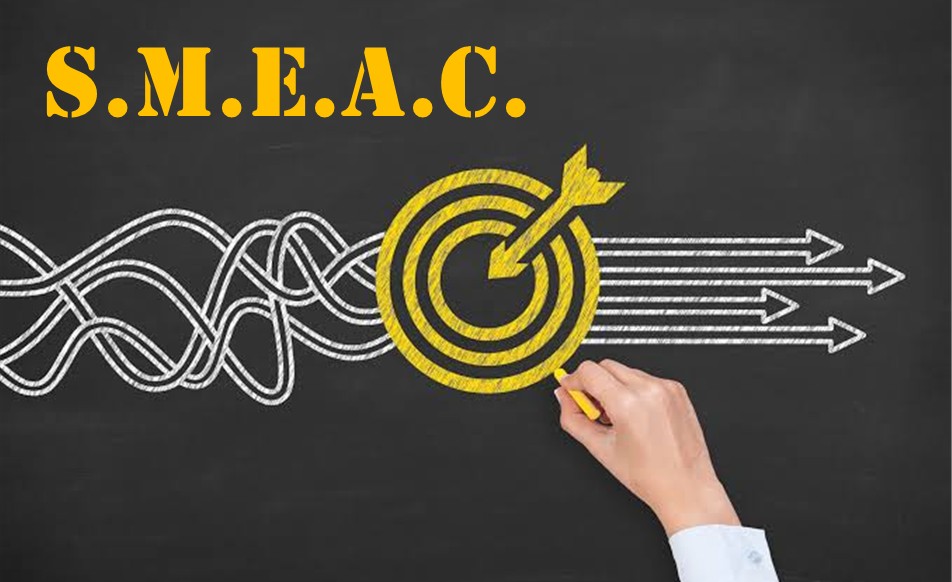
In the Canadian Army, as well as a multiple other military organizations around the world, they've developed an acronym called: SMEAC. Soldiers and units often need to resolve problems independently, often when they can't receive orders, and SMEAC provides a framework for resolving these problems.
SMEAC stands for:
-
Situation: Describe the current environment, terrain, weather, or context.
-
Mission: State the clear, concise goal to be achieved.
-
Execution: Detail the steps to reach the goal.
-
Administration & Logistics: List required equipment, supplies, and funding.
-
Command & Signal: Name who is in charge.
While this is clearly framed to support soldiers in a combat environment, we can draw a great deal of insight for our clients or students.
To better understand this application, let's break it down piece by piece.
Situation
When asked about their situation, the client might simply state, "I need to get back to work," but it's understanding their situation that allows us to make more effective suggestions.
For instance, their situation might be that they're 20 years old and have new worked before. They might be brand new to the country, have limited English language capability and their credentials aren't being recognized. Perhaps they have a physical impairment and it's hard for employers to look past this to consider them for employment.
These are the real barriers holding people back from employment but if we don't talk about them we can't come up with solutions to overcome them.
Mission
Their mission must be articulated as specifically as possible. My goal is to obtain a 'graphic designer role'; with a mid- to large-size company; in the consumer products manufacturing sector; within a 1-hour transit ride from my home.
This level of specificity eliminates a large number of potential employers or job alternatives, but when people open themselves up to more opportunities, they are often diminishing what they can contribute to their ideal employer.
It's not to say they can't consider other opportunities, they just want to be laser focused on their objective.
Execution
Execution is often where we jump in with career development. We start coming up with job search plans, targets and resume styles but without a clear goal, we have difficulty refining this process.
Once your client is clear on their ideal employer, they can then develop a list of employers who meet these criteria, key contact people, websites, social media handles, research and a strategy for cold-calling these employers.
Job search through posted positions, job fairs and networking events are also important parts of execution but they must augment the clearly refined objective, not replace it.
Administration & Logistics
Administration & Logistics detail how the job search is going to be conducted. The equipment may be a professional outfit for job search; a tailored resume; a personalized cover letter template; prepared elevator pitch; list of references; a job search log; and a strategy for follow-up.
It would be helpful for job developers to have an actual checklist you give clients with the tools they need to accomplish their objective.
Logistics can also be the supports career development organizations provide such as funded working gear; short-term training; wage subsidy; job coaching; workplace modifications; grants and bursaries.
Command & Signal
'Command' is simply who is in charge and signal is about communications.
If you immediately think you (the job developer) are in charge, this is going to be a huge challenge. Your client or student has to be in charge. They need to understand they are in charge and they are setting the direction.
Too often, job developers are left at the mercy of clients who are uncommunicative; who fail to follow-through; and seem less than invested.
Setting our clients up to be in-charge doesn't mean we have to work for them, only that we are providing the supports they can't provide for themselves to accomplish their mission.
It's also critical to set up a clear flow of communication. The client needs to be initiating communication. Whether it's with employers or their job developer, the clearest demonstration of commitment to their action plan is the client initiating and following through on communication in a predictable manner.
Communication can be emails, texts, scheduled appointments or social media hits. Requiring this of the individual ensures they continue to be engaged, they follow-through and they own their action plan.
The job market is significantly harder in 2026 and we're not sure where it is going. Achieving employment outcomes requires more points of contact, follow-up and effective employer engagement.
The better we prepare our clients to take ownership of their own job search, reach out to employers and present themselves as professionally as possible, the better their chances will be.
Successfully developing the SMEAC focused Action Plan, is intended to build confidence and help clients present themselves as positively as possible. That is your very best calling card as a job developer.
We’ll be discussing using SMEAC in action plan development at this week's #MotivatingMondays meeting of the Canadian Job Development Network, Monday August 17th at 8:30am Pacific; 9:30am Mountain; 10:30am Central; 11:30am Eastern; 12:30pm Atlantic and at 1pm in Newfoundland.
.
On the morning of Monday August 17th 'Click this Link' to join the session.
.* * *
Staying on top of labour market information...
Canadian Labour Market Reports
The Canadian Labour Market Reports provide a weekly round-up of the major labour market information that most impacts those in
career transition. Click on the relevant
labour market report below.
.
BC Labour Market Report
www.labourmarketonline.com
.
Alberta Labour Market Report
www.jobdevelopment.org/albertalmr
.
Prairie Labour Market Report
www.jobdevelopment.org/prairielmr
.
Ontario Labour Market Online
www.ontariolabourmarketonline.org
.
Atlantic Labour Market Report
www.jobdevelopment.org/atlanticlmr
..
To learn more, send me an email at:
csaintcyr@labourmarketsolutions.ca
|