Tuesday, 25 October, 2022 | |
{Having trouble? VIEW as a webpage.} | |
|
Egypt's COP27: Sustainable Development and the Energy Transition in MENA
Please join the North Africa Initiative of the JHU SAIS Foreign Policy Institute and the SAIS Student MENA Club for a roundtable discussion with subject matter experts and SAIS students on sustainable development and the energy transition in MENA.
When
Tuesday, November 1, 2022
12:30 PM – 1:30 PM EDT
Where
Hybrid: In-Person/Zoom
The Johns Hopkins University: School of Advanced International Studies -
Rome Building, 1619 Massachusetts Avenue Northwest Washington, DC 20036
| |
|
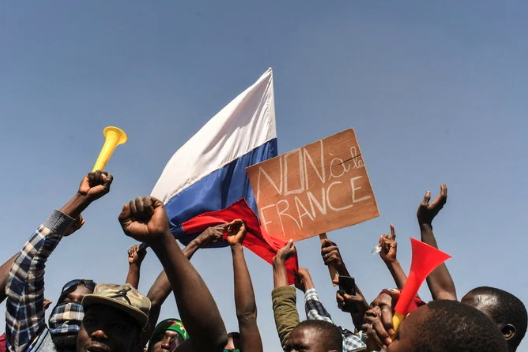
As French Influence Rapidly Declines, Are We Witnessing The End of Françafrique?
Anti-French sentiment has sharply increased in Sahelian and North African countries, driven mostly by enduring animosity toward the contributions of Paris to the destabilization of parts of the Sahel through misguided and ill-fated military interventions. In Algeria and Morocco, French attempts to redefine relations have failed to convince enraged youths in both countries. Meanwhile, foreign-policy failures in Libya, and a woeful miscalculation in Tunisia, are fueling a consensus about the diminished role of France in what was once its jealously guarded sphere of influence.
Read more...
| |
|
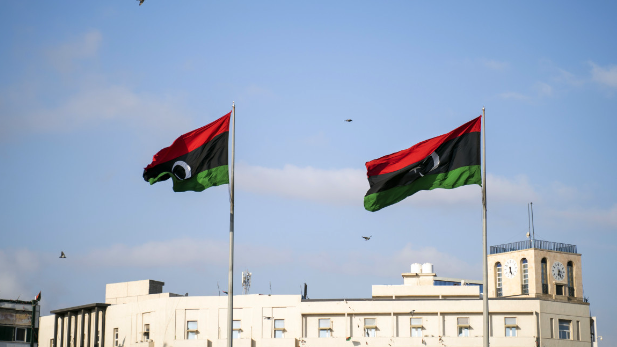
Why The Turkish-Libyan MOU Has Enraged Libyans & Regional Countries
Earlier this month, Tripoli received a high-level Turkish delegation headed by Foreign Minister, Mevlut Cavusoglu, and included Turkey's Energy, Defence and Trade ministers. In a news conference following the talks, it was announced that both sides have signed a Memorandum of Understanding (MOU) giving Ankara the right to prospect for oil and gas in Libya's territorial waters in the Mediterranean Sea. Libya's Foreign Minister, Najala El-Mangoush, standing next to her Turkish counterpart, Cavusoglu, explained that the MOU is not a legally binding "agreement" and can be cancelled within three months if any party decides to withdraw from it for any reason. But that has not calmed suspicious Libyans.
Read more...
| |
|
Egypt's Sisi: Islamists Were Hostile Toward Us, Now Demand Reconciliation
Political Islamists who came to power before being ousted in 2013 are calling for reconciliation after they initiated hostility towards Egypt's authorities, according to President Abdel Fattah Al-Sisi. In April, Sisi said he would hold a national dialogue between all Egypt's political factions, including the opposition but he was reported not to have invited the Muslim Brotherhood to the talks, describing them as a "group linked to violence and terrorism."
Read more...
| |
|
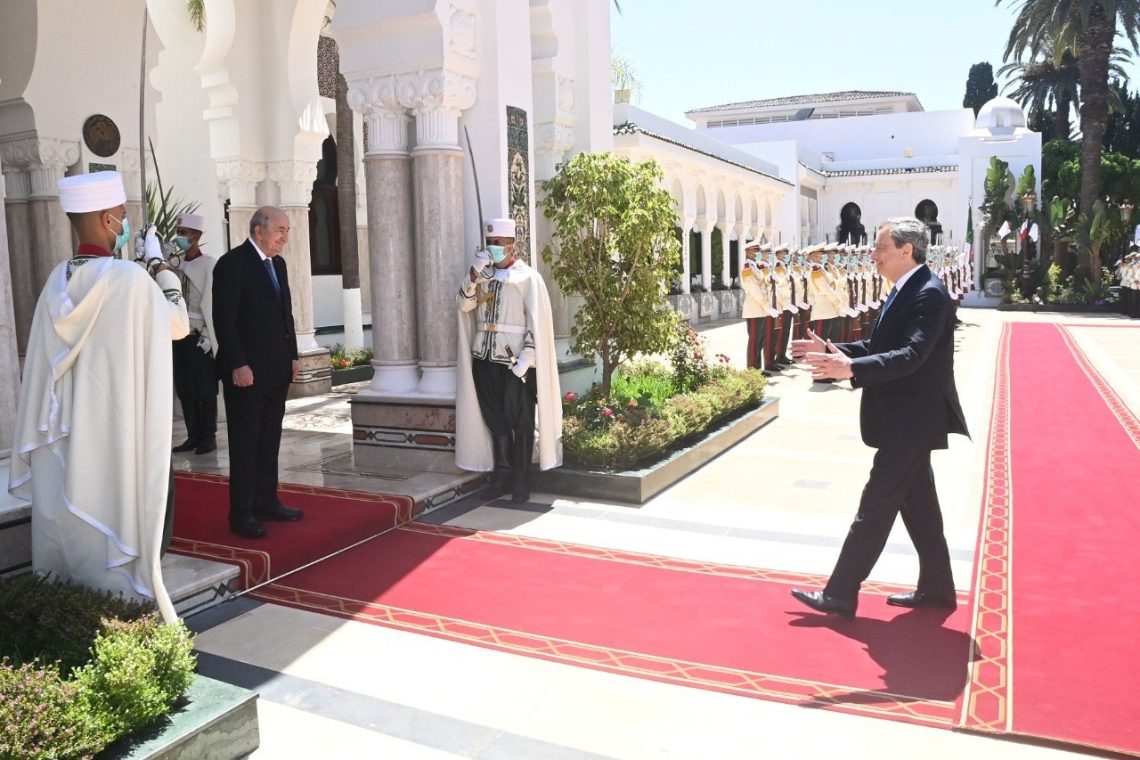
Six Leaders Absent From Upcoming Arab Summit In Algeria
Official sources reported that Saudi Crown Prince Mohammed Bin Salman would not participate in the upcoming Arab League Summit being held in Algeria on 1-2 November. The sources added that the number of expected absent Arab leaders would be "six". Bin Salman's absence was announced during a call with Algerian President Abdelmadjid Tebboune. The Saudi crown prince was reported recently to have been sick, and that doctors had recommended "not to travel for the summit," according to royal sources.
Read more...
| |
|
New UN Libya Envoy Holds Talks With Khalifa Haftar, Angering Rights Advocates
UN's new chief representative in Libya concluded a week of meetings with leaders across the Libyan political divide—including General Khalifa Haftar. News of the meeting with Haftar, the head of the self-styled Libyan National Army (LNA), accused of ordering reckless bombing campaigns, deliberate civilian massacres, and torture of prisoners at various times during Libya's long and bloody civil war has angered many in Libya, including human rights advocates.
Read more...
| |
|
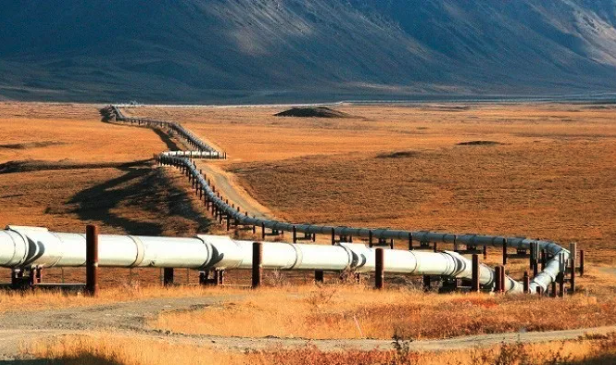
Nigeria-Morocco: Gas Pipeline Will Receive $25 Billion In Investment In 2023
First conceived in 2016, the Nigeria-Morocco gas pipeline has attracted particular attention in the context of the ongoing war in Ukraine, tightening global gas supplies and mounting sanctions against Russia. As a result, the project is increasingly appealing to Europe, as it promises to reduce its dependence on Russian gas, experts say. Discussions on the financing of the $20-25 billion 5,600-kilometre-long offshore pipeline that would cross 11 African countries and eventually reach Europe are still in progress, according to the Nigerian National Petroleum Company (NNPC)
Read more...
| |
|
Algeria Turning To Mineral Resources To Diversify Economy
To achieve its industrial ambitions, Algeria has relaunched several large mining projects. The one at Gara Djebilet in the Sahara is among the most pivotal. The desert landscape is covered by a blackish layer. It's the surface of one of the largest iron ore deposits in the world. With deposits of gold, zinc, copper and phosphates, Algeria has significant mineral resources. Many of them have been left unexploited, but now the country is counting on them to diversify its economy.
Read more...
| |
|
Al-Mishri Talks About Forming A Third Government In Libya
The Head of the High Council of State (HCS), Khalid Al-Mishri, said that the scenario of forming a third government is possible and the is pushing toward this direction, saying that the Speaker of the House of Representatives (HoR) Aqila Saleh and himself have agreed on this scenario. He said there are consultations with the UN mission and international parties on this track.
Read more...
| |
|
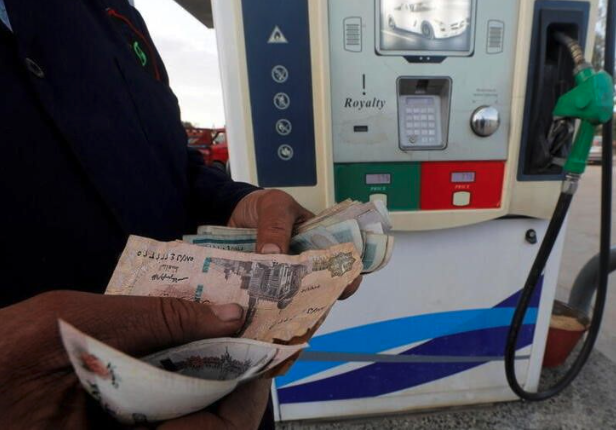
Egypt's Currency Seen Falling Faster Than Previous Projections
Egypt's currency will weaken at a steeper pace than expected, although inflation is likely to decrease over the next few years, a Reuters poll showed. The Egyptian pound is expected to fall to 21.16 to the Dollar by the end of the current fiscal year, and as far as 22.08 by the end of the next. A more flexible exchange rate has been indicated as a condition for new financing that Egypt began seeking this year from the International Monetary Fund, as the Russia-Ukraine war threw its already unsettled finances into further disarray.
Read more...
| |
|
US Senator blocks $75m aid to Egypt over failure to make human rights reform
US Senator Patrick Leahy has blocked $75 million of aid to Egypt over its failure to make progress on human rights reform particularly the release of 60,000 political prisoners. The annual military aid America gives Egypt, $1.3 billion, has come under heavy scrutiny in the last few years as Abdel Fattah Al-Sisi has consolidated control over the country and continued to squeeze the space for free speech...
Read more...
| |
|
Europe Turns To Algeria For Natural Gas
European countries are rushing to sign cooperation agreements with Algeria, but the country’s production capacity is hampered by security, infrastructure and host of structural challenges that could hinder cooperation. Additionally, Algiers is unlikely to cut ties with Moscow to please the West. Although this has been a remarkable year for Algeria, the Tebboune administration—democratically elected in 2019—does not seem up to the task, and not only in terms of international relations like the tensions with Morocco or Spain show. There is ample proof that the Algerian political class remains profoundly corrupt.
Federica Saini Fasanotti
Geopolitical Intelligence Services AG
| |
|
With or Without an IMF Deal, Tunisia Faces a Rough Road to Recovery
The International Monetary Fund (IMF) announced that it had reached a staff-level agreement with Tunisia, but negotiations are yet to be finalized, as Tunisia is facing an economic crisis that has been building up for years given the successive governments’ failure to reform. Clearly, the Tunisian government needs this deal to secure funds in order to mitigate and address its fragile and deteriorating economic situation. Of note, however, the country had already benefited from three other IMF agreements under three different mechanisms since 2011, and still owes the IMF $2.01 billion. An IMF deal, on its own and without proper reform, might not be enough to get Tunisia out of this cycle.
Aymen Bessalah
The Tahrir Institute for Middle East Policy (TIMEP)
| |
|
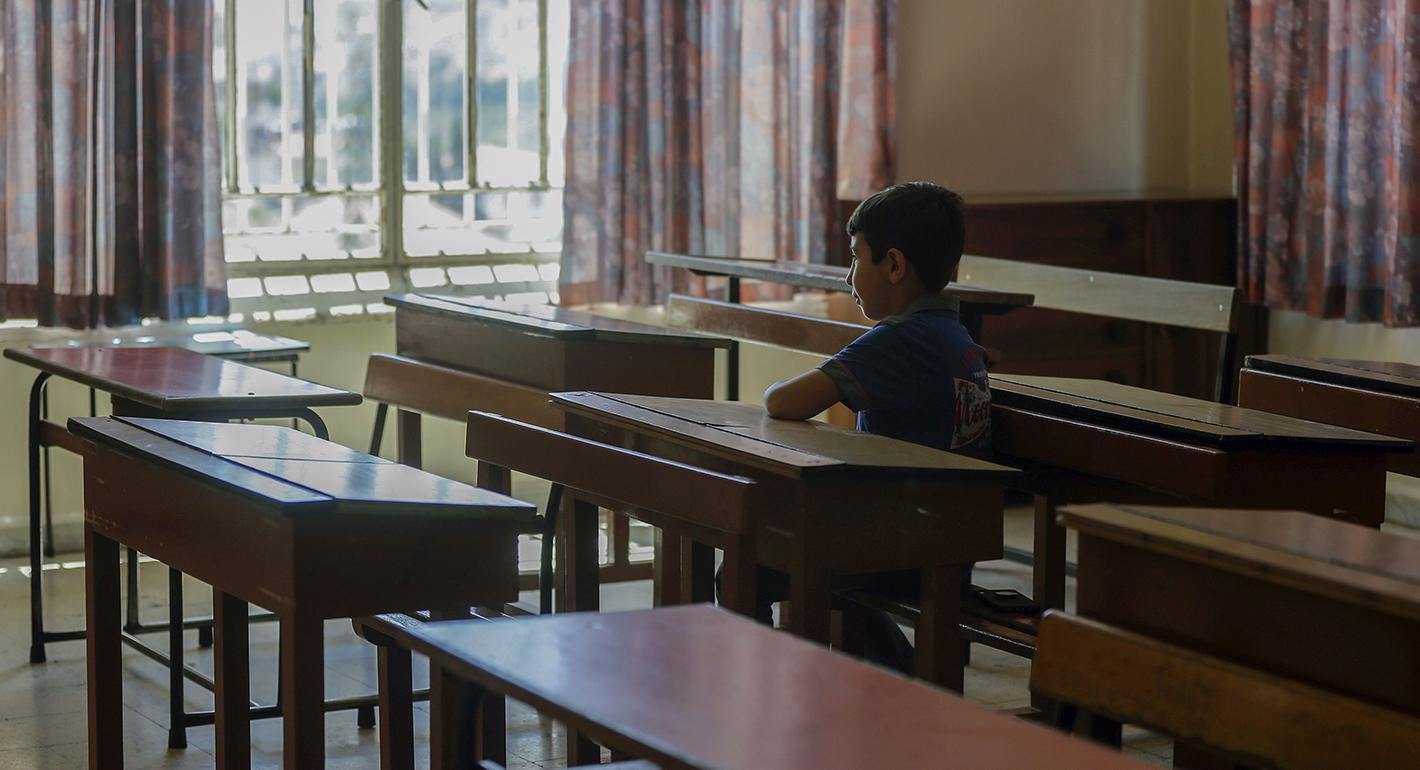
Innovation and New Directions: Searching for Novel Paths in Arab Education Reform
CEIP published a report calling for fundamental educational reform in the Arab world and arguing for the need for that reform to move “from schooling to learning” in order to “serve the needs of pluralistic societies and foster the development of active, responsible citizens who are empowered to deal with complexity and advance constructive change.” In this paper, authors go in further depth. It is evident that Arab governments still see education reform as a top-down effort that continues to perpetuate power relations and authoritarian thinking, sidelining critical and creative thinking among students. The paper highlights several reforms being implemented across the Arab region, many in a bottom-up approach that attempts a collaborative approach with governments but is not held hostage to old authoritarian thinking.
Nathan J. Brown et al.
Carnegie Endowment for International Peace (CEIP)
| |
|
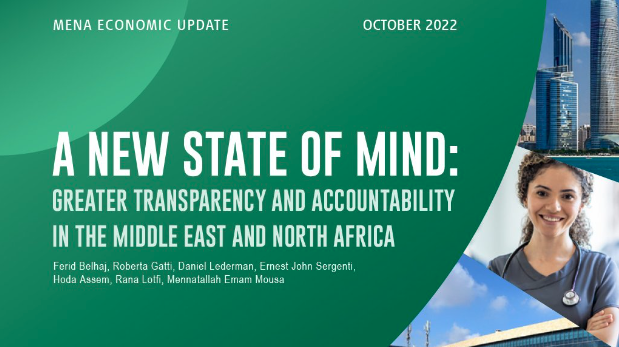
Middle East North Africa Economic Update - October 2022
First the pandemic, then the sudden changes in global economic conditions caused by the war in Ukraine have exposed significant vulnerabilities in countries in the Middle East and North Africa (MENA). Oil-importing countries are especially vulnerable as they must deal with large buildups in public debt, high inflation, increases in poverty, and pressure on their currencies. While heightened by the current shocks, the vulnerabilities trace back to longstanding low growth that has failed to generate the large number of jobs required, especially for the young and growing population in the region. This report was prompted by the observation that a deficit in governance, especially in transparency and accountability, is at the root of that low-productivity equilibrium. This governance deficit feeds the continuing and pervasive fragility in the region.
This links to a 280-page PDF report viewable online.
Ferid Belhaj et al.
World Bank | International Bank for Reconstruction and Development (IBRD)
| |
|
See the latest analyses and posts by FPI Senior Fellow & Executive Director of The North Africa Initiative (NAI), Hafed Al-Ghwell.
Also, catch Hafed's latest and other columns in Arab News.
| |
|
You can contact the North Africa Initiative (NAI) by emailing
Lana Bleik
Senior Research Program Coordinator
lbleik1@jhu.edu
| | | | |