Tuesday, 21 February, 2023 | |
|
Last year, Europe’s “sudden” pivot to North Africa to shore up its energy security and shift its reliance away from Russia have accelerated investments in the sub-region’s oil and gas sector and also re-energized partnerships traditionally dominated by security, migration and lopsided bilateral trade. In this era of convergent shocks both at home and abroad, however, centering North Africa’s energy development around Europe’s short-to-medium term energy needs will only exacerbate existing vulnerabilities, while slowing the transition toward clean energy sources.
| |
|
The Middle East and North Africa tech startup scene is sizzling, fueled by rapid growth, a new crop of cash-rich investors and Egypt’s newest unicorn. There’s a new entrepreneurial energy from Rabat to Riyadh, accelerated by the rise of sovereign wealth funds as major investors and growing smartphone penetration. Startups attracted a record-breaking $3.94 billion in funding in 2022, with the heaviest deal concentration in the UAE, Saudi Arabia, and Egypt.
| |
|
After three devaluations in 2022, the Central Bank of Egypt floated the pound in January to meet an IMF condition for a $3bn loan, the country’s fourth bailout from the fund since 2016. The move, coupled with a foreign currency crunch causing shortages in imported goods, has sent inflation soaring and imposed even greater hardship on millions of poor families.
| |
|
Algeria is keen on boosting economic ties with Saudi Arabia, according to the Algerian Ambassador to the Kingdom, Mohamed Ali Boughazi, who also expressed similarities between the two countries' views on many political and economic issues, as evident from their coordination in international fora such as the Organization of the Petroleum Exporting Countries and OPEC+.
| |
|
Algerian President Abdelmadjid Tebboune said the North African nation will allocate a billion dollars to finance development projects across the continent through the Algerian Agency of International Cooperation for Solidarity and Development.
| |
|
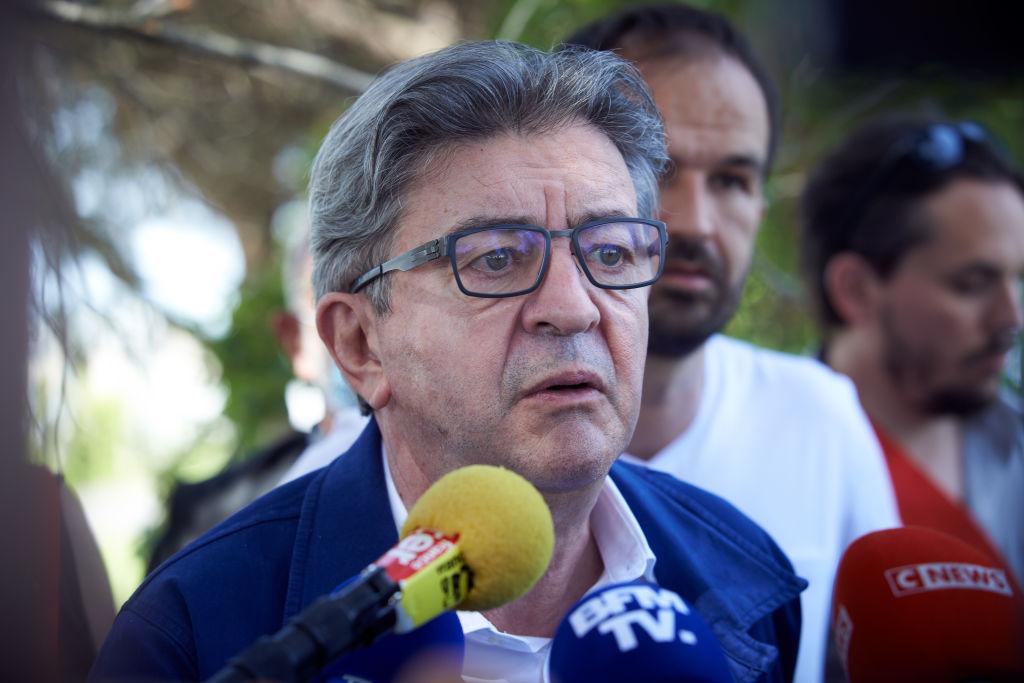
French opposition figure Jean Luc Mélenchon called on Paris to intervene in Tunisia as arrests against opposition figures mount in the North African country. Over the last few days, prosecutions against President Kais Saied's opponents spiked with the targeting of at least five of Saied's critics.
| |
|
Tunisia expelled the head of the European Trade Union Confederation (ETUC) after she took part in an anti-government protest organised by the country's UGTT union, one of Tunisia's leading political forces. According to the Tunisian government, Lynch's participation in the protests and remarks she made were a "blatant interference in Tunisian affairs",
| |
|
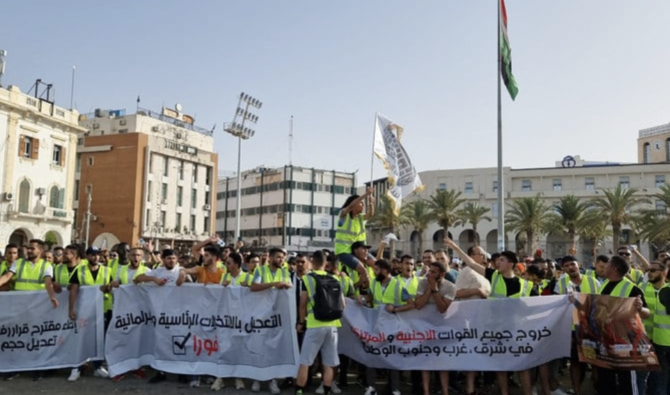
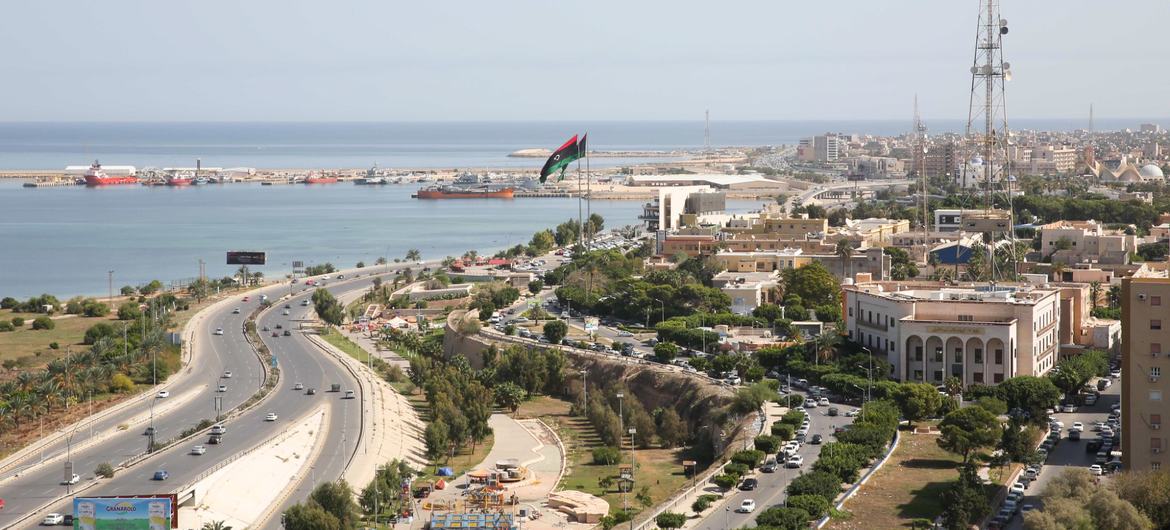
La Transition en Libye est Laborieuse, à Dessein
Les malheurs se succèdent sans fin et les aspirations manquées d’antan ont dégénéré en une impuissance permanente, laissant peu d’espoir quant à la mise en place d’un État stable et pleinement fonctionnel. L’ouverture soudaine à la réconciliation a toutes les caractéristiques d’un stratagème visant à marginaliser l’ONU, qui semble déterminée à relancer la voie électorale présentée comme la seule solution crédible.
THIS ARTICLE IS IN FRENCH.
| |
|
US Migration Policy & Nonstate Groups
Since 2015, European Union countries have directed hundreds of millions of dollars toward Libya to crack down on migrants and asylum-seekers attempting to reach Europe. Analysts and advocates have repeatedly demonstrated that the EU approach has empowered both state and “hybrid” militias to kill and torture migrants with impunity. They are also profiting from both EU aid and the migrants themselves. Furthermore, this approach may not have been effective beyond the short term, as crossings from Libya are rising once again. The parallels between U.S. migration policy and the EU’s experience with Libya are not direct. Yet the effects of EU policy offer many lessons for crafting a U.S. approach to migration in the Americas.
Reva Dhingra
Post-Doctoral Research Fellow, Brookings Foreign Policy Program
| |
|
Although Egypt accounts for only 0.6% of annual global carbon dioxide (CO2) emissions, it is becoming one of the most heavily affected by extreme weather patterns. With the urgent need to translate climate ambitions into action and results, Egypt needs to harness the long-standing experience in the climate-related policy of other countries, including those in the OECD, to seize the opportunities available in the global wave of achieving climate goals.
Hala Abou-Ali; Amira El-Ayouti & Mahmoud Mohieldin
| |
|
Turkey’s tragic earthquake and Egypt’s economic crisis may lead both governments to ease their conflicts over Libya. In addition to assessing the full human toll of the catastrophic February 6 earthquake, it will take some time to determine how the Turkish government’s preoccupation with rescue and relief efforts will affect its policy in Libya. Turkish economic investments in Libya may be curtailed as infrastructure companies begin to focus on post-earthquake reconstruction, but most of Ankara’s strategic interests in maintaining economic and security influence in Libya will likely remain.
Ben Fishman
Senior Fellow, Washington Institute for Near East Policy
| |
|
Since the outbreak of the COVID-19 pandemic and the severe socioeconomic impacts it had worldwide, social policy and the role of the state during crises have been brought to the forefront of the political, legal, and development debates. However, in Algeria, the discussion about the state’s social policy was not solely driven by the pandemic, it was also triggered by the economic crisis which has intensified with the gradual fall in oil prices since 2014.
Nouri Dris; Salah Boukenia; Zineddine Kharchi & Hacene Hamio
| |
|
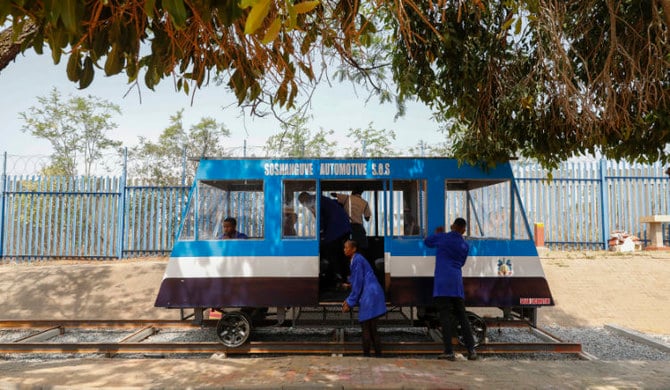
Solar panels in sun-rich North Africa generate up to three times more energy than in Europe. And North Africa has a lot more room for them than densely populated Europe. Result: Europe’s drive to end its reliance on Russian natural gas supplies, triggered by the Ukraine conflict, is resulting in a rush to install giant solar energy farms and lay underwater cables to tap into North Africa’s abundant renewable energy.
Fred Pearce
Author & Journalist
| |
T H E • S A I S • R E V I E W • O F • I N T E R N A T I O N A L • A F F A I R S |  | |
Theorists of consociation argue that [Iraq has] the best kind of democracy a plural society can expect: a power-sharing formula that accommodates leaders representing different segments of the population, thus preventing one group from dominating the others. [...] Consociation promised democracy through proportional representation of Iraq’s main sects and ethnic groups—Kurds, Shia, and Sunnis—addressing opposition groups’ concerns that members of the Sunni community would once again come to dominate national politics. Iraqi politics have evolved otherwise. [...] Over the years, Iraq’s consociation has moved closer to that of Lebanon, in that a few leaders perpetuate rigid ethno-sectarian appointments and quotas they control, fail to deliver representation and good governance, invite foreign interference, and drive the country’s chronic political instability.
Maria Fantappie
Special Advisor
Centre for Humanitarian Dialogue
| |
|
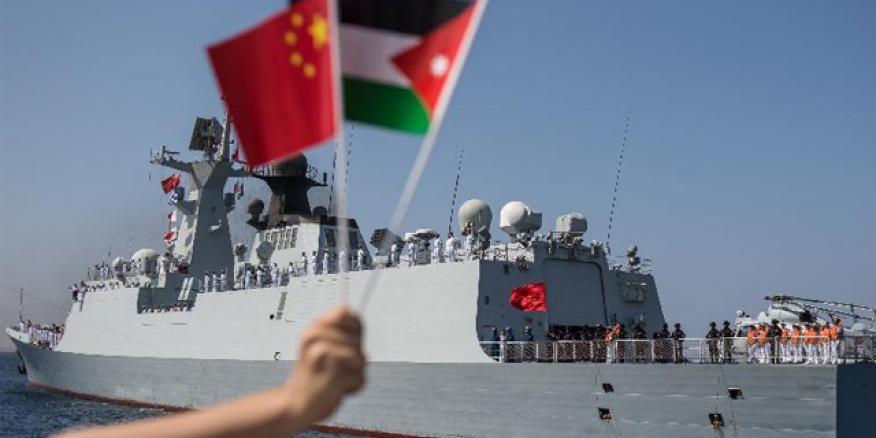
Since sending its first naval escort task force (NETF) to the Gulf of Aden in 2008, China has steadily grown its naval footprint in the Middle East. Although the initial impetus of this presence—countering piracy—has waned, Beijing has put down roots and continues to employ its modernized navy to reinforce its interests in the region. As local ties deepen, the presence of the People’s Liberation Army Navy (PLAN) will probably deepen as well, with increasingly robust basing structure and maturing engagement with various Arab states.
Blake Herzinger & Ben Lefkowitz
| |
|
Libya remains a safe haven for human rights violators in light of the widespread impunity and lack of accountability, as well as the continuing political division that has become entrenched in the presence of two competing governments. The crackdown on civil society and human rights defenders has also escalated. This caused panic among civil society and forced many organizations and activists to curtail their activities for fear of arbitrary arrest and other reprisals.
| |
|
Egypt was well on the path to achieving its demographic dividend at the turn of this century but has gone off track due to a reversal in its earlier fertility decline. But what is the demographic dividend? It reflects the economic benefits when a country undergoes a rapid decline in mortality, then fertility, and the consequent demographic transition. Due to lower fertility and fewer children per household, a growing working-age population increases productivity and per capita income, leading to accumulated savings, investments, and economic growth, underscoring the strong link between demographics and economic growth.
Download the full book here.
| |
Stay informed.
Stay ahead.
| |
|
See the latest analyses and posts by FPI Senior Fellow & Executive Director of The North Africa Initiative (NAI)
Also, catch Hafed's latest and other columns in Arab News.
| |
|
You can contact the North Africa Initiative (NAI) by emailing:
Senior Research Program Coordinator
| | The Maghreb Weekly is produced by the North Africa Initiative of the Johns Hopkins University's School of Advanced International Studies (SAIS) Foreign Policy Institute with a focus on developments that impact the region's dynamics. This weekly digest includes an overview of the latest published research, studies and reports from think tanks and policy centers, covering long-term perspectives and analyses of the North African region's challenges and opportunities. | |
Any views expressed in the articles above, as well as any errors, are solely those of the authors. | | | | |