Tuesday, 28 February, 2023 | |
|
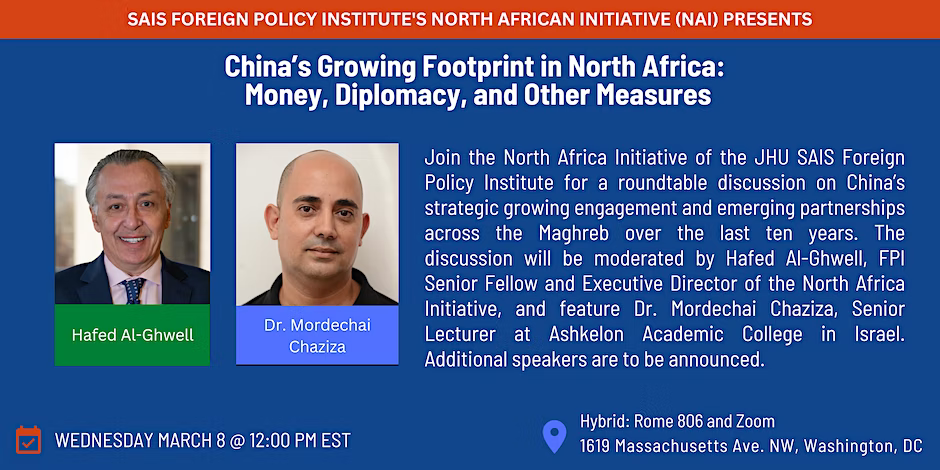
Please join the North Africa Initiative (NAI) of the JHU SAIS Foreign Policy Institute for an examination of China’s strategic growing engagement and emerging partnerships across the Maghreb over the last ten years. Dr. Mordechai Chaziza, Senior Lecturer, Ashelon College (Israel) will also analyze how a growing Chinese presence in the Maghreb can feasibly advance the sub-region's economic development, while also safeguarding China's strategic interests. Hafed Al-Ghwell, FPI Senior Fellow & Executive Director of NAI, will moderate.
WHEN
12:00–01:00 PM
Wednesday 08 March, 2023
WHERE
Room 806, 1619 Massachusetts Ave NW, Washington, D.C
&
Online via ZOOM
Register to Attend In-Person ••• Register to Attend via ZOOM
| |
|
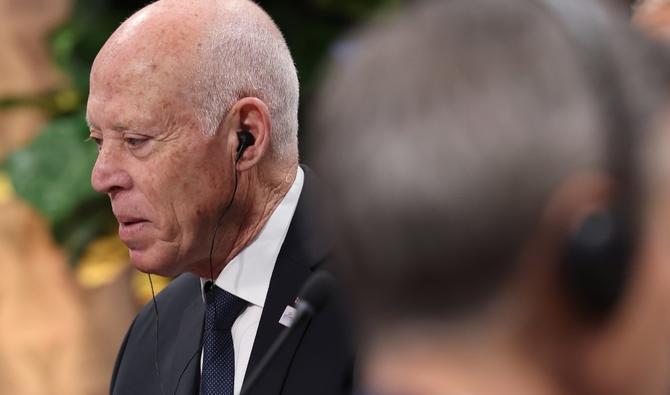
It is unlikely that even the most pessimistic assessments of Tunisia’s democratization could have accurately predicted what has befallen the North African country, or how much worse things might get in its increasingly bleak future.
|
|
|
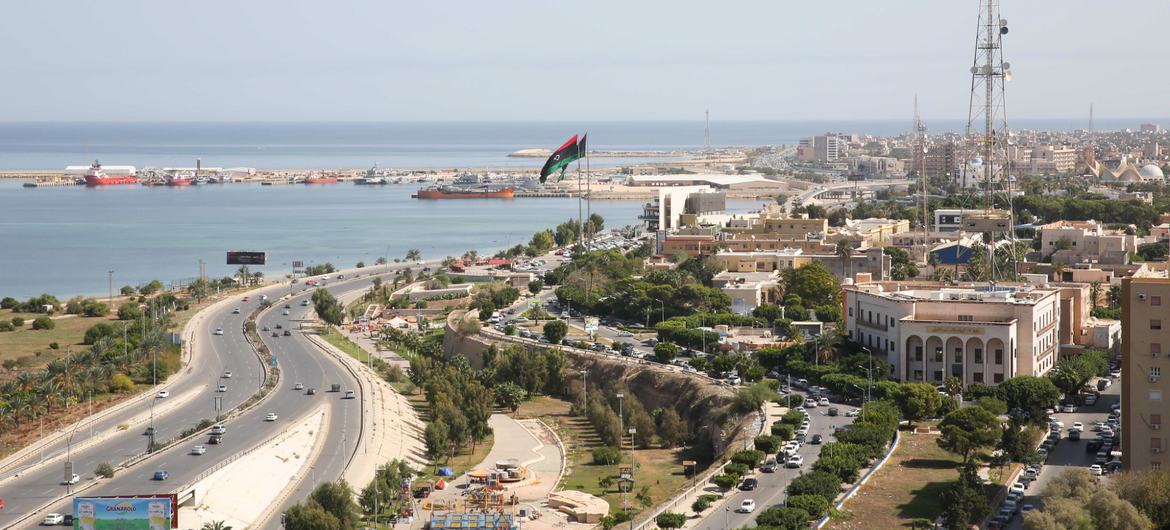
Progress is sorely needed towards holding elections and advancing gains in security, national reconciliation and human rights, UN Secretary-General António Guterres said, adding that the UN continues to be committed to Libyan-owned and Libyan-led solutions.
|
|
|
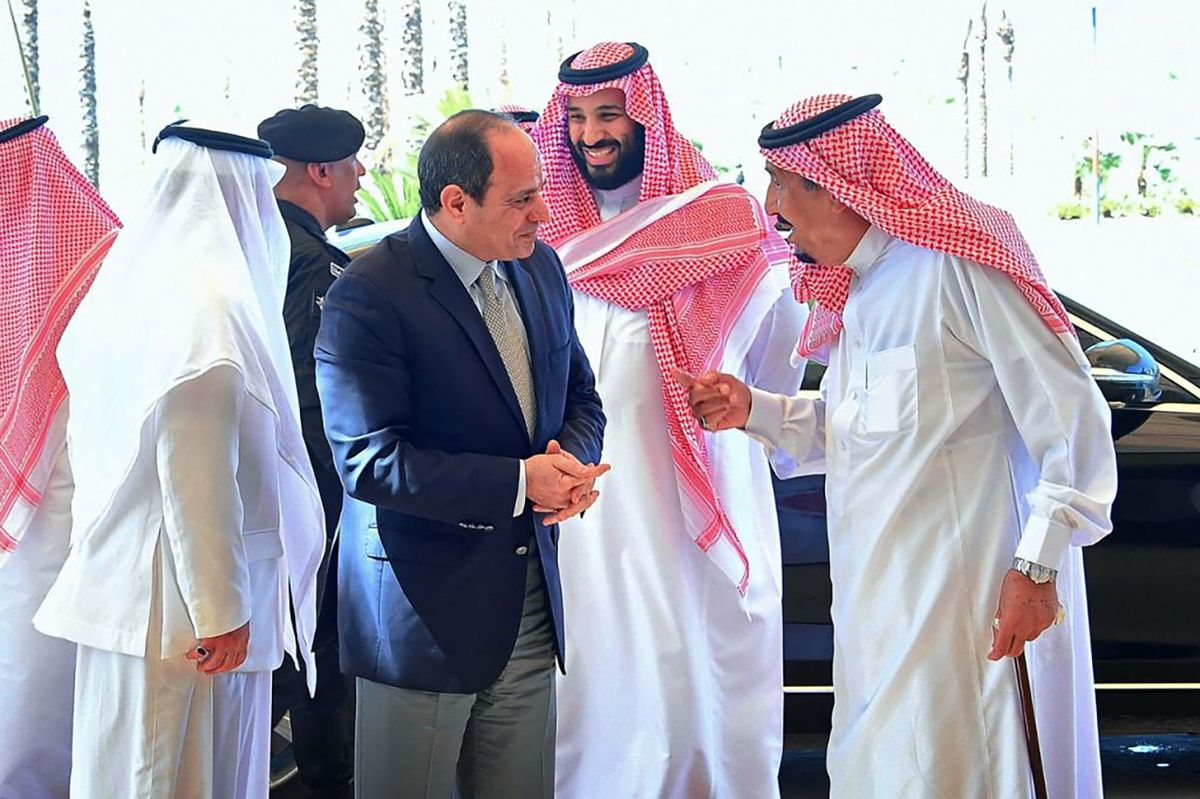
Energy-rich allies including Saudi Arabia and Qatar have earmarked more than $10 billion for the North African country, which is in need of foreign exchange and has put stakes in a string of state-owned companies up for sale. Yet only a fraction of the funding has so far materialized...
|
|
|
Following the Russia-Ukraine war, large scale grain farmers, mill owners and general food importers were called upon to accumulate a three-month stock of food. Libya's annual needs amount to nearly one million tons of wheat—divided between soft and durum wheat. Most of this is currently imported from abroad...
|
|
|
French infrastructure company NGE has signed a contract to help build a 330-kilometer high-speed railway in Egypt. NGE did not disclose the value of the contract. When Orascom and Arab Contractors won the project from the National Authority for Tunnels, the value was given as $4.5 billion.
|
|
 | |
Security Dialogues & Architectures in The Maghreb
Lessons From The Past, Opportunities For The Future
Meaningful security cooperation and the formation of a viable security architecture among the countries of the Maghreb have proven elusive ever since these states obtained independence in the mid 20th century. At first glance, conditions would appear ripe for such a structure. The citizens and regimes of these states are linked by the commonalities of history, religion, language, culture and kinship ties that straddle borders. Each of the Maghreb countries went through a difficult and often violent experience of decolonization that saw varying levels of contact and cooperation among the military and political leaders of independence movements. Geographically, the position of these states along the Mediterranean rim between Europe and sub-Saharan Africa would appear to give them an impetus to forge a common economic and security approach towards their neighbours in the north and the south. They are all similarly exposed to transnational challenges like terrorism, illicit trafficking and irregular migration as well as fallout from the COVID-19 pandemic and the Ukraine war, climate change and shifting patterns in the global demand for hydrocarbons.
Frederic Wehrey
Senior Fellow
Middle East Program
Carnegie Endowment for International Peace
| |
|
Regional Security in The Middle East
The Creative Force of Energy Diplomacy
Energy diplomacy has proven to be highly effective at encouraging cooperation among hostile states and, in turn, enhancing overall regional security. Given the centrality of energy to the well-being of all states, energy diplomacy, when deployed deftly, can leverage common vulnerabilities, and stimulate shared economic interests. Indeed, when deployed creatively, it can make the impossible seem probable. This paper argues that Saudi Arabia should join the East Mediterranean Gas Forum (EMGF). Doing so would not only enhance regional energy cooperation but it could also introduce a fresh dynamic to multilateralism and lead to improved regional security. On paper, it seems most unlikely; however, the precedent for unlikely energy cooperation exists.
Neil Quilliam
Associate Fellow,
Middle East and North Africa Programme,
Chatham House
| |
 | |
Egypt
Political Discourse and Changing Social Assistance Systems
The social assistance systems in Egypt have undergone multiple, but fragmented, efforts. Perhaps the most uncertain part of these efforts is funding. International funding organizations dictate the social protection approach to replace subsidized goods and free education and healthcare in Egypt. The State did not set a complete framework for the social protection systems reform programs as much as it succumbed to increasing pressures by funds providers to move away from universality toward targeted assistance. To transition to a real universal social protection system in Egypt, it is necessary to transition to a general budget that is based on program and performance. It is the only way to reallocate public expenditure according to measurable development goals according to an integrated and just economic vision, focused on true production in agriculture and industry, rather than IMF loans and limited-impact band-aids.
Reem Abdelhaliem
Egyptian Economist
| |
 | |
MENA Countries Stand to Lose the Most If the Ukraine Grain Initiative Falters
When Russia invaded Ukraine and blockaded the country’s Black Sea ports, it stood to prevent the delivery of around 25 million metric tonnes of grain and other food staples to international markets, spurring a global food crisis. Left unchecked, the situation portended social unrest and other pressures in areas such as the MENA region, which is particularly vulnerable to the resultant nexus of rising prices for fuel, food, and other essentials. Russia and Ukraine are responsible for a third of the world’s wheat and barley exports, one-fifth of its corn exports, half of its sunflower oil exports, and much of its fertilizer. MENA countries are especially dependent on these supplies and were already suffering from a spike in cereal prices before the war, mainly due to a combination of drought and global economic shocks resulting from the COVID-19 pandemic. Russia will continue using the Black Sea corridors as leverage, so Western countries and their partners should prepare alternative routes and other assistance as counter-leverage.
Anna Borshchevskaya
Senior Fellow, The Washington Institute
Louis Dugit-Gros
French Diplomat & 2021-2022 Visiting Fellow at The Washington Institute
Sabina Henneberg
2022-23 Soref Fellow, The Washington Institute
| |
|
The Making of Rivals & Strange Bedfellows
Patterns of Turkish & Russian Security Assistance in The Syrian & Libyan Civil Wars
In the Libyan and Syrian civil wars, Russia and Turkey emerged as two principal players providing security assistance to opposing warring parties. While interventions on the part of the two foreign powers have introduced new dynamics into intractable and volatile armed conflicts, the underlying intention was to inject extraneous goals into ongoing conflicts and project power in the southern Mediterranean region. This article investigates security assistance theoretically and empirically.
Abdullah Al-Jabassini
Research Associate
Robert Schuman Centre for Advanced Studies,
European University Institute, Florence, Italy
Emadeddin Badi
Nonresident Senior Fellow
Rafik Hariri Center & Middle East Programs
Atlantic Council
|
|
|
The Changing Strategic Importance of the Middle East and North Africa
This report on The Strengths and Limits of Oil and Gas Wealth, and the Challenge of Climate Change is an updated version of a report on the changing strategic importance of the Middle East and North Africa (MENA) region. It focuses on the energy and other economic aspects of the the region-whose economy and strategic importance is is dominated by its current and future oil and gas exports. Another report addresses the civil development of the region and the challenges its nations face.
Anthony H. Cordesman
Emeritus Chair in Strategy, Center For Strategic & International Studies (CSIS)
| |
Stay informed.
Stay ahead.
| |
|
See the latest analyses and posts by FPI Senior Fellow & Executive Director of The North Africa Initiative (NAI)
Also, catch Hafed's latest and other columns in Arab News.
| |
|
You can contact the North Africa Initiative (NAI) by emailing:
Senior Research Program Coordinator
| | The Maghreb Weekly is produced by the North Africa Initiative of the Johns Hopkins University's School of Advanced International Studies (SAIS) Foreign Policy Institute with a focus on developments that impact the region's dynamics. This weekly digest includes an overview of the latest published research, studies and reports from think tanks and policy centers, covering long-term perspectives and analyses of the North African region's challenges and opportunities. | |
Any views expressed in the articles above, as well as any errors, are solely those of the authors. | | | | |