|
Welcome
The JITI Journal is a bimonthly publication of the Japan International Transport Institute, USA (JITI), in which JITI shares information on transportation developments in Japan and elsewhere, as well as recent JITI programs. As a supplement to our regular events, we hope that the Journal likewise serves as a resource for the transportation community.
We hope this issue finds you well. We apologize for the delayed release date. We had a busy end of May!
In this issue, JITI staff member Hiroki Sakamoto writes a feature on steps taken by the Japanese government to ensure safety through the Transport Safety Management System. In addition, staff member Ryoki Toku writes an article on the island of Miyajima, the location of one Japan's most iconic shrines.
|
|
JITI Events
UPCOMING:
We currently have no upcoming events planned. To stay informed of upcoming events, please check our website.
PAST:
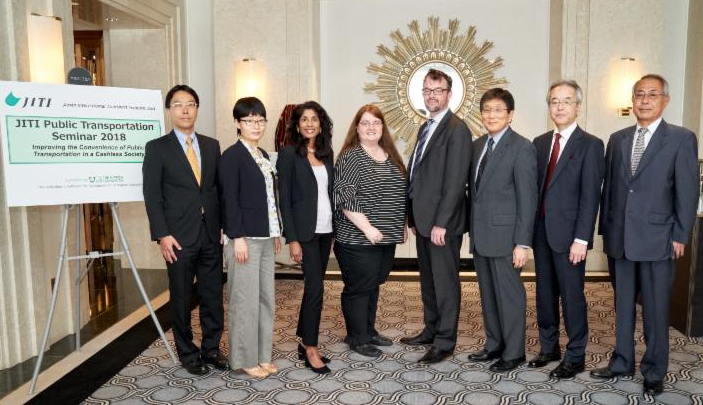
JITI Public Transportation Seminar 2018:Improving the Convenience of Public Transportation in a Cashless Society
With recent advancements in ICT technology we have seen a rapid spread of cashless payments, in which our day-to-day transactions are accomplished through the use of credit cards, smartphones, and contactless payment cards called 'transportation IC cards'.
The growth of cashless societies has been rapid, especially in China. With the popularity of third-party smartphone payment applications operated by internet giants, mobile payment systems have spread widely in the day-to-day transactions of consumers. Based on the system's dominating presence in consumer markets, they are expanding their use to include public transportation, which is regarded as a key sector in enhancing user convenience.
In Japan, the first transportation IC card was introduced in 2001 and, since then, over 130 million contactless payment cards have been issued. The popularity of these transportation IC cards may be attributed to their multi-purpose use. They can be used not only for transit payments, such as railroad and bus travel, but also as electronic payments for shopping at many stores. In addition, these cards can be mutually utilized with multiple Japanese transit companies. Therefore, the use of transportation IC cards is expanding in many parts of Japan.
The United States has also been active in introducing contactless payment systems. The Chicago Transit Authority (CTA) introduced a contactless payment card called 'Ventra Card' in 2013, which promotes mobile payments on subways and buses. Also, the American Public Transportation Association (APTA) signed a collaboration agreement with the NFC Forum to jointly educate the industry on NFC (Near Field Communication) technologies, supporting the needs of public transportation operators. These are just two examples of the many uses of contactless payment cards in the transit industry in the States.
In this rapidly advancing cashless society, JITI USA invited experts on the subject from Japan, the U.S., and China, to discuss the progress so far, especially milestones accomplished, as well as the future path for improving the convenience of public transportation in a cashless society.
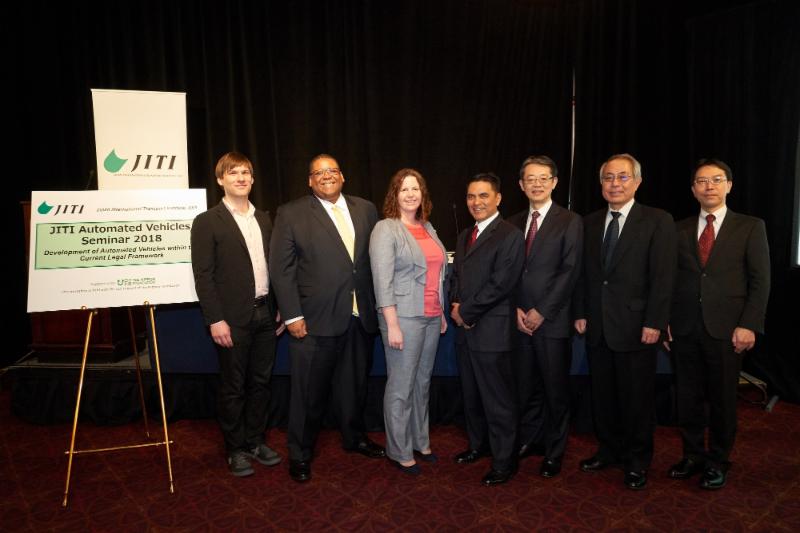
Automated driving has caught the attention of Congress. The House of Representatives passed the "SELF DRIVE Act" in September 2017, and the Senate Commerce Committee advanced the "AV START Act" in October. Both of these would significantly increase the number of vehicles that can be exempted from the Federal Motor Vehicle Safety Standards and encourage developers of highly automated vehicles to provide specific information on the safety of their vehicles.
Anticipation for highly automated vehicles has also been high in Japan. In view of the expected arrival of the automated & connected driving society in 2025, the Japanese government set a goal to commercialize highly automated and connected vehicles (Level 3 and above) and include them in the services market by 2020. Public-Private ITS Initiative/Roadmaps 2017 was released last year, laying out scenarios up to the year 2025 for realizing highly automated and connected driving and focusing on preparing the regulatory system with a view to strengthening and commercializing the technologies.
JITI USA invited experts on the subject, from both Japan and the U.S., who discussed the progress so far (especially milestones accomplished), as well as the future path toward automated vehicles.
|
|
Improving and Strengthening the Transport Safety Management System
|
|
b
y Hiroki Sakamoto
Ensuring safety is a central and fundamental issue in the public transportation sector. When an accident occurs, it not only can cause significant damage, but it can also have an enormous impact on society. Therefore various measures are being undertaken to prevent accidents from occurring.
In October 2006, Ministry of Land, Infrastructure, Transport and Tourism (MLIT) of Japan introduced the 'Transport Safety Management System' in the wake of frequently occurring accidents and other incidents in various transportation sectors, such as railway, automobile, shipping, and airlines. These incidents were primarily those which were caused by human error.
This policy aims to build and strengthen the safety management system, which will be united with the MLIT organization, under the proactive involvement of the top management executive in transport operation. MLIT conducts Transport Safety Management Evaluations, through checks and advice, which is intended to continuously improve the safety management system by using the PDCA (Plan-Do-Check-Action) cycle. In FY2016, 932 transport operators (59 railways, 640 automobiles, 223 shipping and 10 airlines) were subject to Transport Safety Management Evaluation.
The outline of the Transport Safety Management System is as follows (Figure 1). Based on lessons learned from past serious accidents in the transportation field, it is important for each transport operator to spiral upward (with an awareness of the PDCA cycle) using company-wide efforts toward safety, and the establishment of a safety management system under the leadership of the top management executives. For this reason, business laws related to land, marine, and air transport were amended (promulgated in March 2006) and the Transport Safety Management System was introduced. Under this legislation, transport operators are required to appoint a Chief Safety Management Officer (executive class), set out safety management rules, and promote the improvement and establishment of safety management systems through the leadership of top management. Also, preventive safety-type support systems were implemented through interviews and other measures directed at the transport operators' management division, including their top management executives.
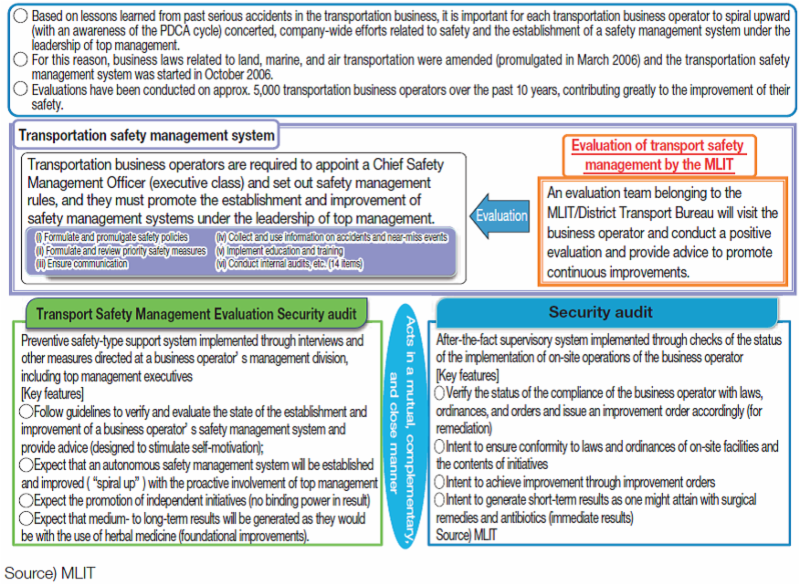
(Figure 1) The outline of the Transport Safety Management System
Transport Safety Management Evaluation teams, belonging to the MLIT and District Transport Bureau, visit transport operators' headquarters to conduct the Transport Safety Management Evaluation on the operators' Top Management and Chief Safety Management Officer (Figure 2).
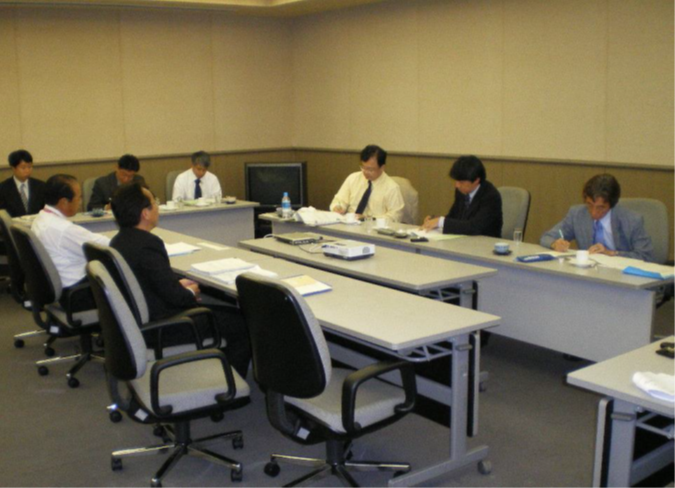
(Figure 2) Transport Safety Management Evaluation on Top Management
The team conducts a positive evaluation and provides advice, to help promote continuous improvements, based on items from the guidelines to the system, some of which are as follows (and in Figure 3).
- Formulate and promulgate safety policies
- Formulate and review priority safety measures
- Ensure communication
- Collect and use information on accidents and near-miss events
- Implement education and training
- Conduct internal audits, etc. (14 items)
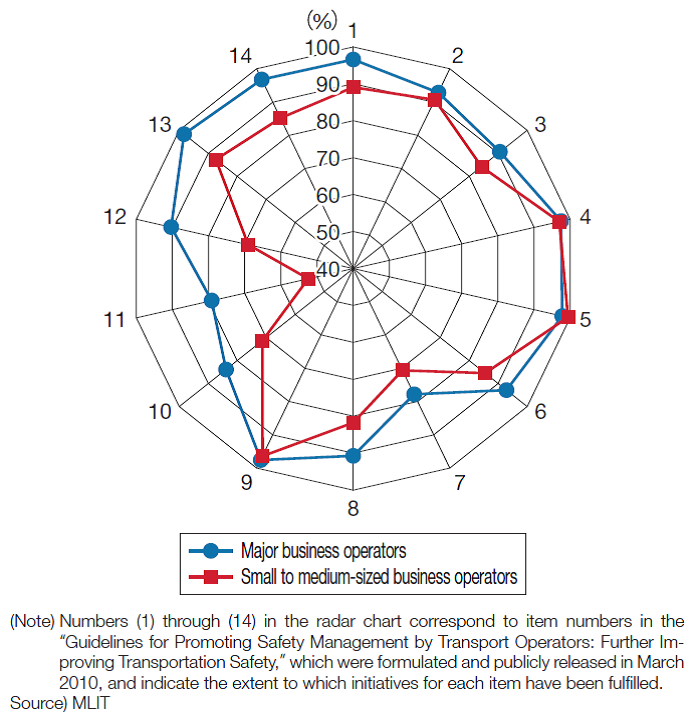
(Figure 3) Evaluation Chart of Transport Safety Management Evaluation
In FY2016, MLIT hosted transport safety management seminars for transport operators in order to deepen understanding of this system, and these seminars were attended by 3,789 people. In FY2015, 7,043 people attended seminars, as part of an accredited seminar program that was established in 2013 for the purpose of further disseminating and shedding light on this system to small and medium-sized transport operators (programs through which transport safety management seminars organized by private-sector organizations are accredited by the MLIT).
October 2016 was designated as the "10 Years of Strengthening Transport Safety Management Month" to mark the 10 years that had passed since the system was introduced. Evaluations by MLIT had been conducted on approx. 7,500 transport operators over the past 10 years at that point, which contributed greatly to the improvement of their safety.
MLIT carried out initiatives to further spread and instill the system, including holding discussions about how the system should work in the future, such as the "2016 Symposium on Safety in the Transport Business: Review of the 10 Years since the Introduction of the Transport Safety Management System and Directions for the Next 10 Years," and the "Transport Safety Management 10th Anniversary Seminar."
Moreover, the system's effects and issues were reviewed and discussions were held by the Transport Council's Task Force on Ensuring Transport Safety, in order to study the future evolution of the system. Based on the report from the Council, MLIT revised the fundamental policy to implement the Transport Safety Management System in 2017. The main revisions were:
prioritizing
the Transport Safety Management Evaluation on
chartered bus operators, promoting the development of safety management of
small to medium-sized
transport operators, and strengthening support for
Chief Safety Management Officers of transport operators. Furthermore, it promoted support for transport operators to cope with the emerging challenges in recent transport sectors such as the shortages of drivers in transport industries, deteriorated transport infrastructures, serious damage to transport facilities from natural disasters and terrorist attacks as well as other issues and challenges.
Strengthening safety measures is the top priority in all transport modes, and continuous and effective efforts by both the private and public sectors through the Transport Safety Management System are keys to establish safe and secure public transport systems.
|
|
|
|
|
by Ryoki Toku
Do you know the three most famous spots in Japan, called "Nihonsankei" ?
They are Matsushima in Miyagi, Amanohashidate in Kyoto, and Miyajima in Hiroshima. For this article, I would like to talk about Miyajima.
Miyajima is an island located in the Seto Inland Sea, just in front of Hiroshima.
It is said that Miyajima has been the object of nature worship from the time immemorial.
The Ituskushima shrine, built in 12 century, is one of the symbols of Miyajima.
The most recognizable characteristic of Itsukushima shrine is that it was built on the sea.
You can walk to the big shrine gate which stand on the off-island side when the tide is low and, during high tide, the surface of the sea reaches just under the floor of shrine.
The Itsukushima shrine took the Shindentsukuri style, and it is said that the aristocracy house of the Heian-era was its motif.
The Itsukushima shrine and the surrounding area have been designated as a world cultural heritage site.
The shrine uses the Seto Inland Sea and makes it resemble a pond, and the dynamic view is a must see.
If you have a chance, while traveling in Japan, why don't you add Miyajima to your list of travel destinations, as it's one of the most famous sites in the country?

|
|
Stay in Touch with JITI
|
Please follow the Japan International Transport Institute Twitter feed at @JITIUSA or check back with our website to get the latest information on workshops and seminars.
|
| Thank you for reading the JITI Journal. Until the next issue, whatever your mode, travel safely! The JITI Team |
|
|
|



