Third K-12 Parent Survey Finds Divided Focus on School Reopening Plans |
|
For the past year, the MassINC Polling Group, has conducted a four-part series of parent surveys, sponsored by the Barr Foundation and produced in collaboration with the Education Trust, to examine the impact of COVID-19 on students and families and the quality of the state’s education system during the pandemic.
|
|
The third wave, conducted between February and March 2021, is based on a statewide survey of 1,528 parents of school-age children in Massachusetts, including oversamples of Black, Latinx and Asian parents. These survey results highlighted the following trends:
- A majority of parents support vaccine requirements for teachers, staff and students.
- The pandemic has taken an academic, mental and emotional toll on students and families.
- Hybrid learning continues to be seen by parents as the worst of both worlds.
COVID-19 Vaccinations
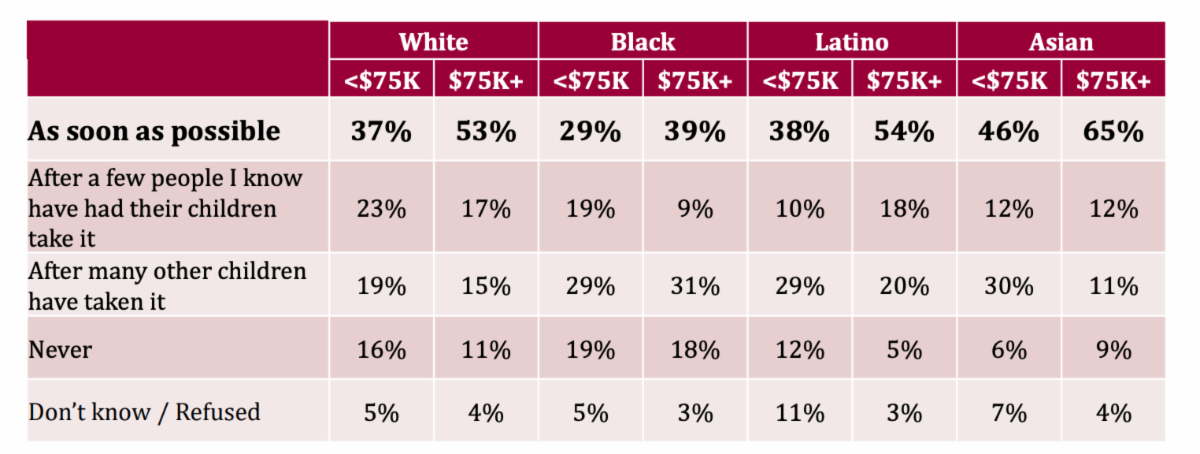
Most parents (45%) would like their own child to be vaccinated as soon as possible and support requiring vaccinations for teachers (71%) school staff/ administrators (71%), and other children (59%). While 17% of parents will have their child vaccinated after many other children have done so, nearly one in five parents will either "never" get their child vaccinated (13%) or are currently unsure (6%)
Across racial and ethnic groups and socioeconomic backgrounds, lower-income parents are less enthusiastic about getting their child vaccinated. While white, Asian and higher-income parents are more likely to seek the vaccine sooner for their child, Black, Latinx and lower-income parents are less likely to do so. This trend suggests a similar dynamic to the rollout of the adult vaccine, which has shown greatest hesitancy among Black, Latinx and lower-income residents.
|
|
Academic, Mental and Emotional Impact
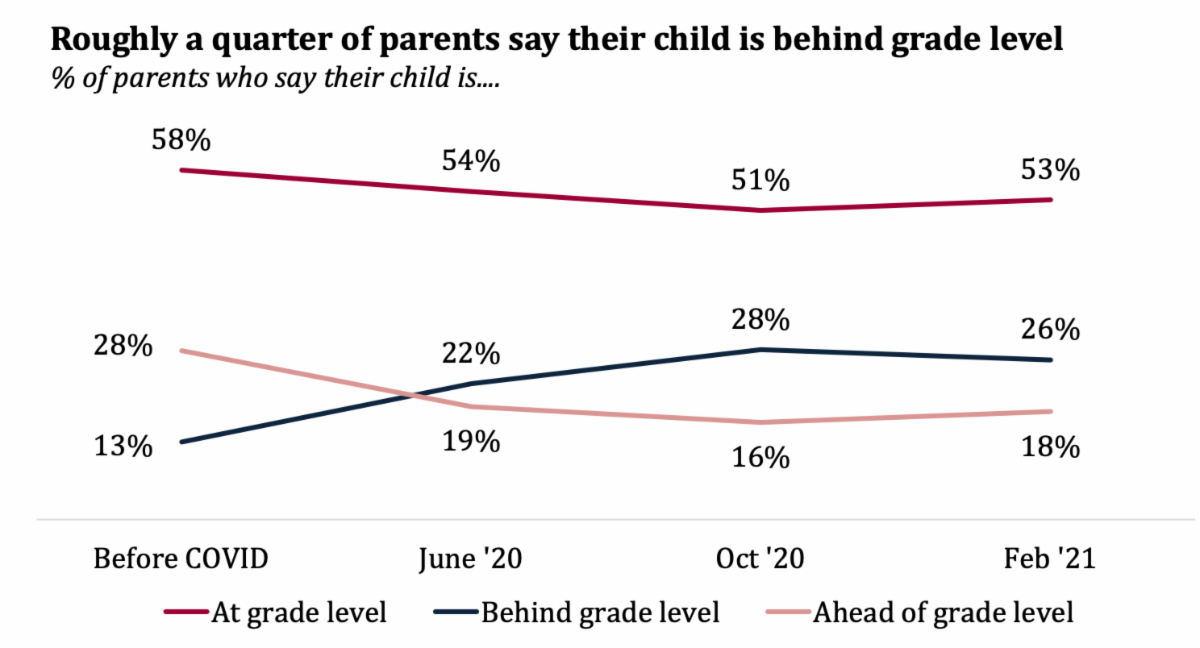
Before the pandemic, 13% of parents reported their child being behind grade level. Since the pandemic began, that number has increased to 22% by June 2020, 28% by October 2020, and plateaued at 26% in February of this year. While the reasons behind these parent perceptions are speculative, a majority of parents (57%) support summer education programs to help make up for lost learning time.
|
|
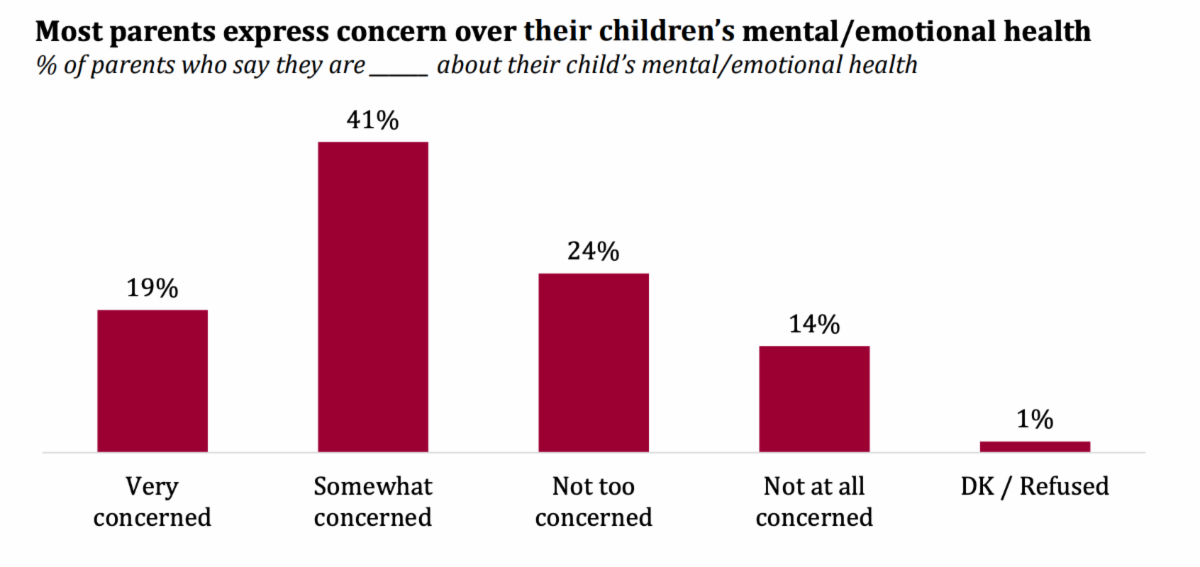
A majority of parents are either very concerned (19%) or somewhat concerned (41%) about their child’s mental and emotional health. Since October, more parents say that this year has had a negative impact on their child's mental/ emotional health and their ability to develop friendships. While 42% of parents prioritize their child’s mental/emotional health and academics equally, a significantly higher percentage of parents (34%) prioritize their child’s mental/emotional health over academics (19%). |
|
Hybrid Learning
While perceptions are based on their child’s current learning style, parents remain divided over whether schools should focus more on bringing students back to the classroom or on improving remote learning. 67% of parents with children in hybrid models said that schools should focus on increasing in-person numbers, while most parents of remote learners (56%) say that the focus should be on improving remote instruction.
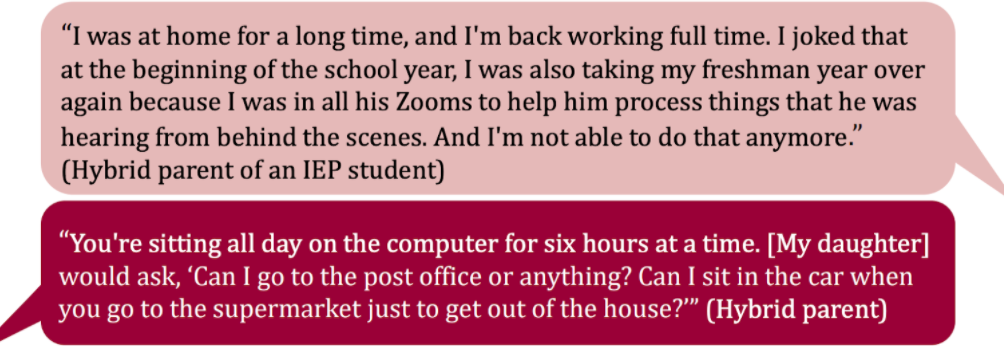
For hybrid parents, balancing work, child care, and home life has been a central challenge throughout the school year. These parents feel the least informed about their child’s academic progress in comparison to other students in their class (49%) and in their grade (56%), leading to hybrid learning continuing to be seen as the worst of both worlds. Hybrid parents also find the balance between home and school to be more difficult. 49% of hybrid parents said that they find it difficult to manage their children’s schedule, which is a difference from in-person parents (32%) and remote learning parents (36%). Hybrid parents (61%) also find it more difficult to find safe activities for their children to do outside of school than in-person (54%) and remote parents (59%).
|
|
Full results from the third wave of MassINC’s survey of K-12 parents and caregivers in Massachusetts are here. For more information on how the pandemic has impacted youth, go to CfJJ’s “Youth Justice in a Pandemic” website here.
|
|
|
|
|
|
|