Sasakawa USA Newsletter January Highlights | | |
Included in this issue of the newsletter:
- Message from Sasakawa USA's Chairman Satohiro Akimoto
January Activities
- Reimagining Indo-Pacific Development Strategies: Research Trip to Tokyo
- Japan US Military Program (JUMP): JUMP Maxwell
- Japan US Military Program (JUMP): JUMP San Diego
- JET Alumni Engagement: JETAADC Mentorship Program
- JET Alumni Engagagement: Career Compass with JETAAFL
Publications
- Commentary & Analysis: "'Just Being Born': Assessing and Countering Foreign Information Manipulation and Interference (FIMI) in Japan” by Amb. Derek Mitchell and Ms. Min Mitchell
External Engagements
- Dr. Satohiro Akimoto Speaks at Japan Commerce Association of Washington DC New Year Luncheon
- Ms. Kaede Ishidate Speaks on Panel on Gender Equity and Women’s Empowerment in Asia Hosted by International Student Conferences
Upcoming Events
- Japan US Military Program (JUMP): 2026 JUMP Annual Dinner
- Japan US Military Program (JUMP): JUMP Virginia Military Institute
- U.S.-Japan Research Exchange: Asia-Pacific Center for Security Studies Research Trip to Japan
Announcement
- Mr. Gregg Rubinstein Joins Sasakawa USA as Senior Fellow (non-resident)
- Sasakawa USA Announces Programs Team Job Opening
| | Message from Sasakawa USA's Chairman Satohiro Akimoto | |
Prime Minister Sanae Takaichi dissolved the House of Representatives on January 23, paving the way for a snap election on February 8, just three months after becoming Japan’s first female prime minister. The opposition has criticized her decision, arguing that Prime Minister Takaishi is taking advantage of her high popularity among Japanese citizens for political convenience. At a January 26 debate at the Japan National Press Club, Ms. Akiko Oishi, the emotional co-leader of the minor opposition party Reiwa Shinsengumi, even pleaded with Prime Minister Takaichi, close to tears, to reverse her decision to call the snap election.
Despite these appeals, the campaign is now in full swing in Japan. Leaders of the major parties are engaging in televised and online debates almost daily, while newspapers and magazines are filled with analysis and predictions of the upcoming snap election. Candidates are busy canvassing their constituencies in pursuit of victory.
Several critical domestic issues are at stake, including how to revitalize the Japanese economy through sound fiscal policy, how best to alleviate the financial burdens faced by citizens, and how to address the rapid increase in the number of foreigners living in Japan. At the same time, the election carries major diplomatic and national security implications for Japan’s future relations with both the United States and China.
On November 7, 2025, just 18 days after she assumed office, Prime Minister Takaichi triggered one of the most tense episodes in recent Sino-Japanese relations. She stated that if China were to send warships and military force against Taiwan, it would constitute a “survival-threatening situation” for Japan. By stating such, Prime Minister Takaichi suggested that this situation could allow the Self-Defense Forces to engage in collective self-defense.
Her statement, delivered during a session of the Lower House Budget Committee, immediately drew the ire of China as it touched upon one of Beijing’s most sensitive political and diplomatic issues. The Chinese government demanded that Prime Minister Takaichi retract her remarks, publicly denounced her, imposed a boycott on citizen’s travel to Japan, and adopted retaliatory economic measures such as restricting exports of rare earths and critical minerals to Japan. The Chinese response was so fierce that it was as if China was trying to bring down or inflict serious political damage on the Takaichi administration.
What is at stake for Prime Minister Takaichi, in terms of strategic relations with the U.S. and China, is whether she can establish herself as a strong leader of Japan with the support of Japanese voters. A strong prime minister of the world’s fourth largest economy and at the helm of a capable Self-Defense Force is not a counterpart either the United States or China can ignore. So far, her unusually high approval ratings have not been significantly eroded by China’s aggressive efforts to discredit her. While domestic economic and social issues dominate the campaign narrative, many Japanese voters are acutely aware that the complicated political and economic relationship with China is a serious factor in their voting decisions.
Prime Minister Takaishi seems to have drawn lessons from the second Abe administration. The foundation of former Prime Minister Abe’s strength was his repeated electoral success with popular support, which allowed him to centralize political power around the leader of the country. Because he consistently led his party to victory as a strong leader, China could not treat him lightly. Many will remember the awkward expression on Chinese President Xi Jinping’s face when he shook hands with Abe in Beijing in 2014. President Xi had no other choice but to shake hands with Abe because of his compelling victory in the Upper House election a year before.
Prime Minister Takaichi has set winning a majority in the upcoming Lower House election as the benchmark for success. She expressed her determination to win by stating that she will resign if the Liberal Democratic Party (LDP) and its ally, Nippon Ishin no Kai (the Japan Innovation Party), fail to secure a majority. The LDP needs 35 seats in addition to its current 198 to reach 233 out of 465 seats in the Lower House. Recent polling by the Yomiuri Shimbun predicts that Prime Minister Takaichi is likely to achieve her goal of a simple majority, while the latest poll by Nihon Keizai Shimbun (Nikkei) also indicates that she has a strong chance of reaching her target.
Even so, the outcome of this snap election remains difficult to predict, given the major political realignments among the leading political parties over the past four months. To begin with, the 26-year coalition between the LDP and Komeito was dissolved a week after Prime Minister Takaichi was elected LDP president on October 10, 2025. Soon afterward, on October 20, the LDP formed a loose partnership with Nippon Ishin no Kai. Furthermore, on January 15, 2026, the Constitutional Democratic Party of Japan (CDP), the largest opposition party, and Komeito, the LDP’s former coalition partner, joined forces to form a major new opposition bloc, the Centrist Reform Alliance (CRA). As a result of these major political realignments, it is estimated that roughly half of voters—an unusually high proportion—have yet to decide how they will vote.
If Prime Minister Takaichi wins the upcoming snap election, she will not have to face another Lower House election until late 2028. She would then be able to build on the good chemistry with President Trump that was evident during his state visit to Japan last October. After all, President Trump prefers strong national leaders with whom he can strike clear deals. Prime Minister Takaichi has taken a political gamble by calling a snap election just three months after taking office, but she now has a chance to visit the White House in March as a firmly established Japanese leader, before President Trump visits President Xi in China the following month.
| | Reimagining Indo-Pacific Development Strategies: Research Trip to Tokyo | | |
In January, Mr. Michael Schiffer, partner at Scalare Advisors and distinguished senior fellow (non-resident) at Sasakawa USA, and Ms. Shanti Shoji, director of programs at Sasakawa USA, conducted a research trip to Tokyo as part of Sasakawa USA’s inaugural project, “Reimagining Indo-Pacific Development Strategies.” Led by Mr. Schiffer, former assistant administrator of the United States Agency for International Development (USAID) Bureau for Asia, the project aims to incubate innovative ideas for the U.S.-Japan alliance and develop cooperative, regionally led, and strategically grounded foreign aid frameworks that strengthen development engagement across the Indo-Pacific.
During their visit, Mr. Schiffer and Ms. Shoji met with experts and practitioners from Japan’s government, parliament, think tanks, and private sector who are engaged in shaping Japan’s international development policy. Mr. Schiffer also spoke with Japanese media about the implications of USAID’s closure and the future of international development. His interviews were featured in Nikkei Asia and The Asahi Shimbun (in Japanese).
Photo (left to right): Mr. Michael Schiffer and Ms. Shanti Shoji
| | Japan US Military Program (JUMP): JUMP Maxwell | | |
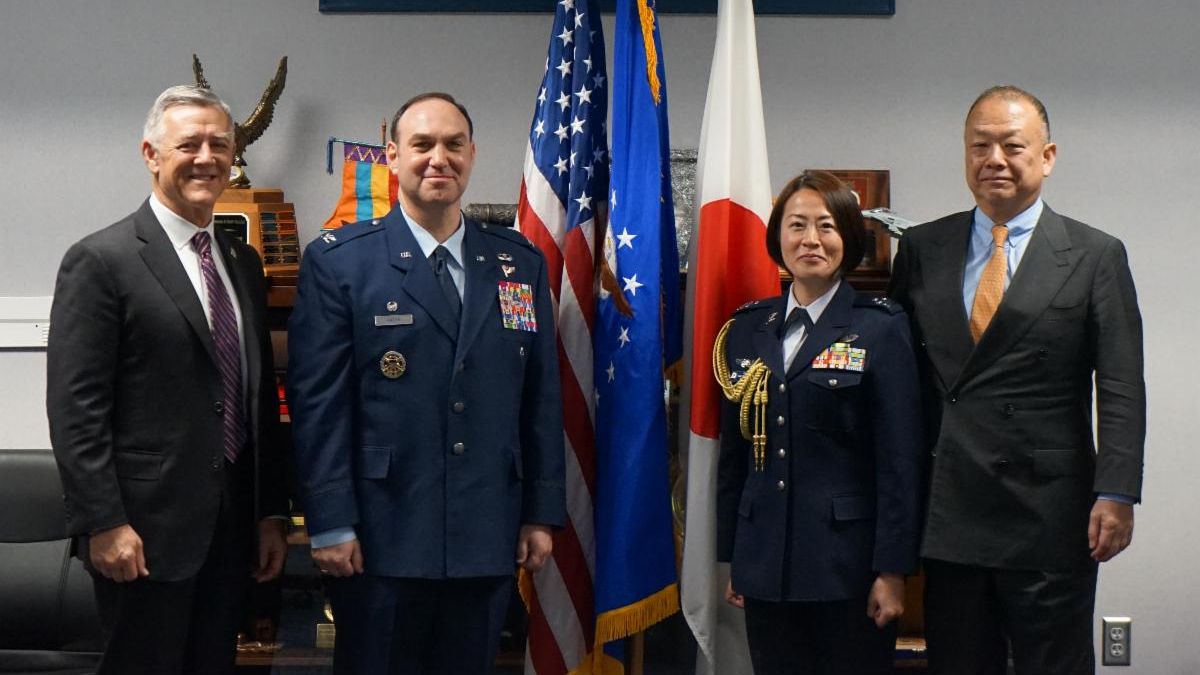
On January 22, Sasakawa USA and the Embassy of Japan held the Japan US Military Program (JUMP) event “Adapting Together: The Evolution of the U.S.-Japan Alliance” in partnership with the Air Command and Staff College at Maxwell Air Force Base in Montgomery, Alabama. The event featured remarks by Lieutenant General Burton Field (USAF, Ret.), former Commander of U.S. Forces Japan and President of the Air & Space Forces Association, who discussed his experience leading the U.S. response to the 2011 earthquake, tsunami, and nuclear disaster in Japan through Operation Tomodachi, and implementing new command and control coordination mechanisms to help the alliance adapt to the need to execute complex joint operations.
The event was held before approximately 500 students of the Air Command and Staff College and included a panel discussion with Lt Gen Field; Colonel Yuka Nakazato (JASDF), Air and Space Attaché, Embassy of Japan; Colonel Benjamin Hatch (USAF), Commandant, Air Command and Staff College; and Dr. Jessica Jordan, Assistant Professor, Regional Studies (Asia), Air Force Culture and Language Center.
The panelists discussed important topics including the transformation of U.S. Forces Japan to a Joint Force Headquarters and the deepening role of the Air Force in the alliance as a part of that transition, Japan’s policy responses to its increasingly dire security environment, managing the future of U.S. bases in Okinawa and throughout Japan, and the important of cultural understanding and personal working relationships as key components of alliance management.
JUMP is made possible by financial support from the Embassy of Japan. This JUMP material is distributed by Sasakawa Peace Foundation USA on behalf of the Embassy of Japan. Additional information is available at the Department of Justice, Washington, DC.
Photo (left to right): Lt Gen Burton Field (USAF, Ret.), Col Benjamin Hatch (USAF), Col Yuka Nakazato (JASDF), Dr. Satohiro Akimoto.
| | Japan US Military Program (JUMP): JUMP San Diego | | |
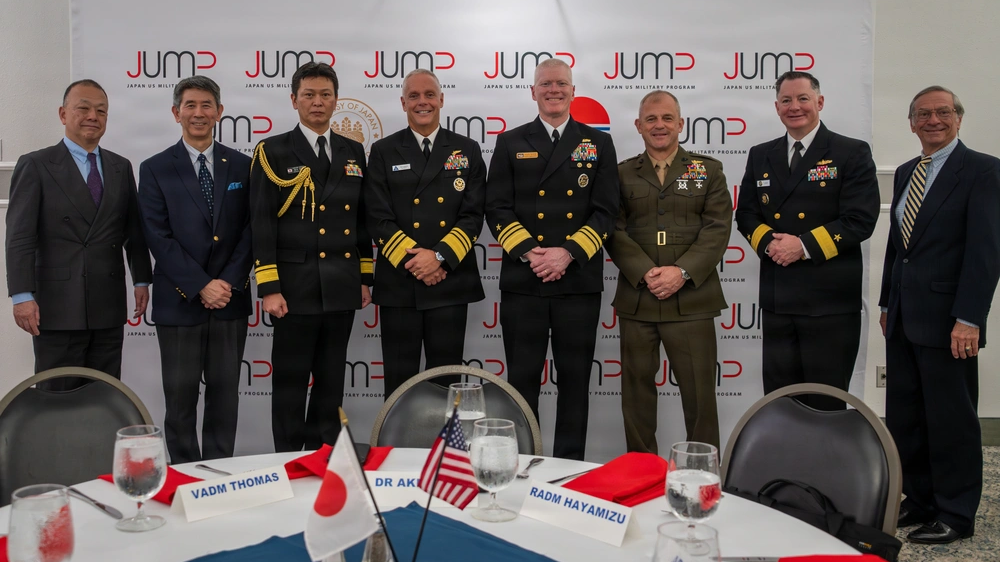
On January 23, Sasakawa USA and the Embassy of Japan held the JUMP event "Strengthening the U.S.-Japan Alliance through People-to-People Exchange" at San Diego Naval Base in California. The event brought ADM Ryo Sakai (JMSDF, Ret.), former Chief of Staff, Japan Maritime Self-Defense Force, back to San Diego and featured his keynote remarks considering his leadership experience and the importance of working to establish lasting personal relationships with international counterparts in order to build better professional cooperation.
The event also included remarks by VADM John Wade (USN), Commander, U.S. Third Fleet about the work to build the U.S.-Japan alliance in his command by hosting Japanese vessels in San Diego and organizing international naval exercises in the Pacific. RADM Takaaki Hayamizu (JMSDF), Defense and Naval Attache, Embassy of Japan joined to discuss his diplomatic role building relationships across the U.S. military and Japan Self-Defense Forces. The event was attended by over 60 people, including U.S. senior leaders and members of the crew of JS Chokai, a JMSDF vessel in San Diego being upgraded to employ the Tomohawk missile system.
JUMP is made possible by financial support from the Embassy of Japan. This JUMP material is distributed by Sasakawa Peace Foundation USA on behalf of the Embassy of Japan. Additional information is available at the Department of Justice, Washington, DC.
Photo (left to right): Dr. Satohiro Akimoto, ADM Ryo Sakai (JMSDF, Ret.), RADM Takaaki Hayamizu (JMSDF), VADM John Wade (USN), and others. (Photo courtesy of U.S. Third Fleet)
| | JET Alumni Engagement: JETAADC Mentorship Program | | |
On January 15, Sasakawa USA hosted an event of the JET Alumni Association of Washington, DC (JETAADC) Mentorship Program, which celebrated the successful conclusion of the mentorship program’s 6th iteration. The mentorship program pairs established JET alumni professionals (mentors) with recent JET returnees (mentees) and aims to give mentees guidance, resources, and opportunities to pursue their professional interests, while allowing mentors to contribute to their communities by sharing professional advice. This program also offers valuable networking opportunities that help JET alumni to better navigate the competitive job market and discover relevant career paths.
JETAADC’s mentorship program is funded by Sasakawa USA through a partnership with USJETAA.
| | JET Alumni Engagement: Career Compass with JETAAFL | | |
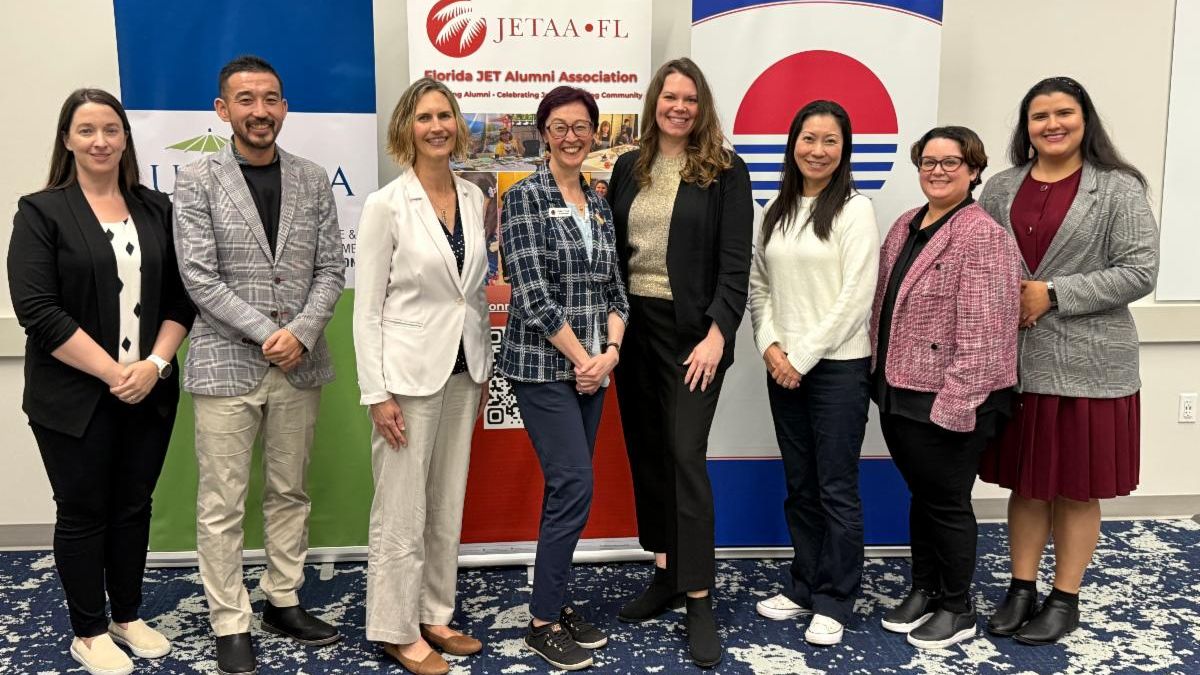
On January 31, Sasakawa USA, in partnership with USJETAA, held “Career Compass: Navigating Towards Japan” with the JET Alumni Association of Florida (JETAAFL) at Florida International University in Miami. The event was a half-day gathering that featured a workshop, jobs industry briefing, panel discussion, and networking reception. Participants were provided with the opportunity to learn tips on writing a compelling resume and how to tackle job interviews, how to navigate the US job market to explore Japan related career paths, and insights on how to leverage an interest in Japan in your career.
Speakers included Ms. Emily Frank, career coach at Career Catalyst; Ms. Cori Hallock, president of JETAAFL; Ms. Jessyca Livingston, executive director at USJETAA; Ms. Shanti Shoji, director of programs at Sasakawa USA; and Mr. Takeshi Yamagishi, senior manager at QUICK USA.
Photo (left to right): Ms. Cori Hallock, Mr. Takeshi Yamagishi, Ms. Jessyca Livingston, Ms. Emily Frank, Ms. Shanti Shoji, Prof. Naoko Komura, Ms. Virginia Montiel, Ms. Paola Torres
| | |
Commentary & Analysis:
"'Just Being Born': Assessing and Countering Foreign Information Manipulation and Interference (FIMI) in Japan" by Amb. Derek Mitchell and Ms. Min Mitchell
| | |
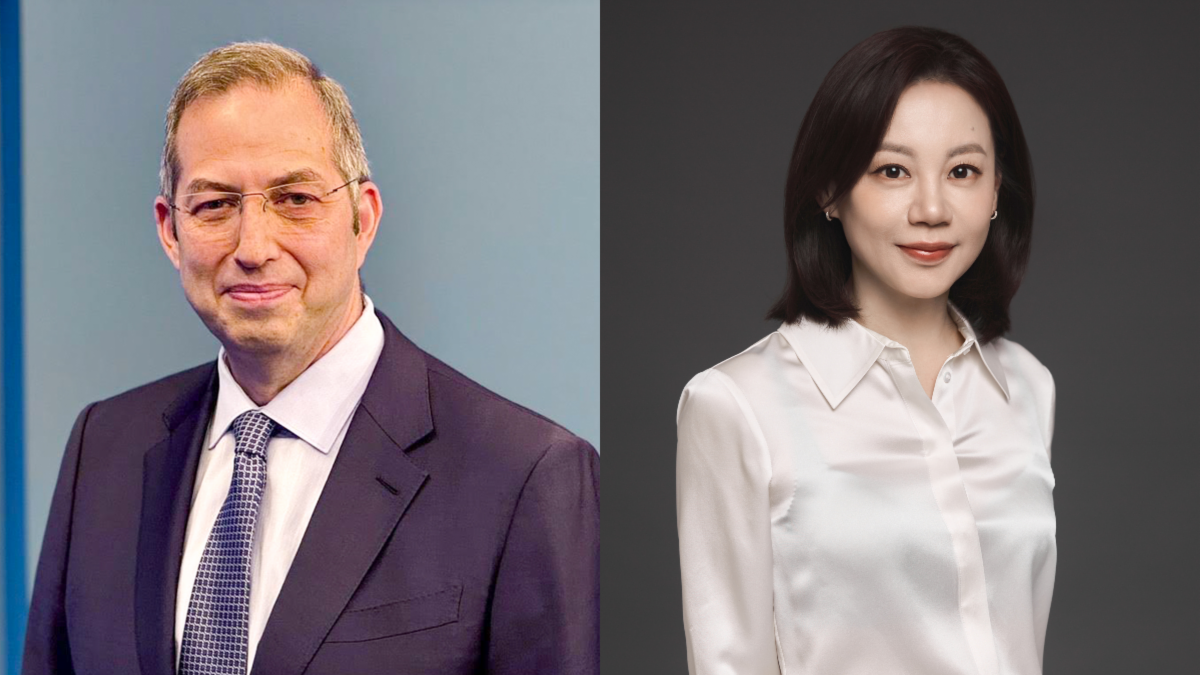
Amb. Derek Mitchell, senior advisor to the President and Asia Program, Center for Strategic and International Studies; distinguished senior fellow (non-resident), Sasakawa USA, and Ms. Min Mitchell, principal and founder, MoDem Advisory; former executive editor, Radio Free Asia, have co-authored a new commentary, “‘Just Being Born’: Assessing and Countering Foreign Information Manipulation and Interference (FIMI) in Japan,” drawing on insights from their participation in Sasakawa USA’s U.S.-Japan Research Exchange program.
During their week-long research trip to Tokyo, Amb. and Ms. Mitchell met with policy practitioners and experts across Japan’s government, non-profit, and private sectors to examine how Japan is responding to the growing challenge of FIMI. Their resulting paper analyzes the current state of FIMI threats in Japan and offers strategic recommendations for the Japanese government and its domestic and international partners to strengthen resilience and coordination against FIMI.
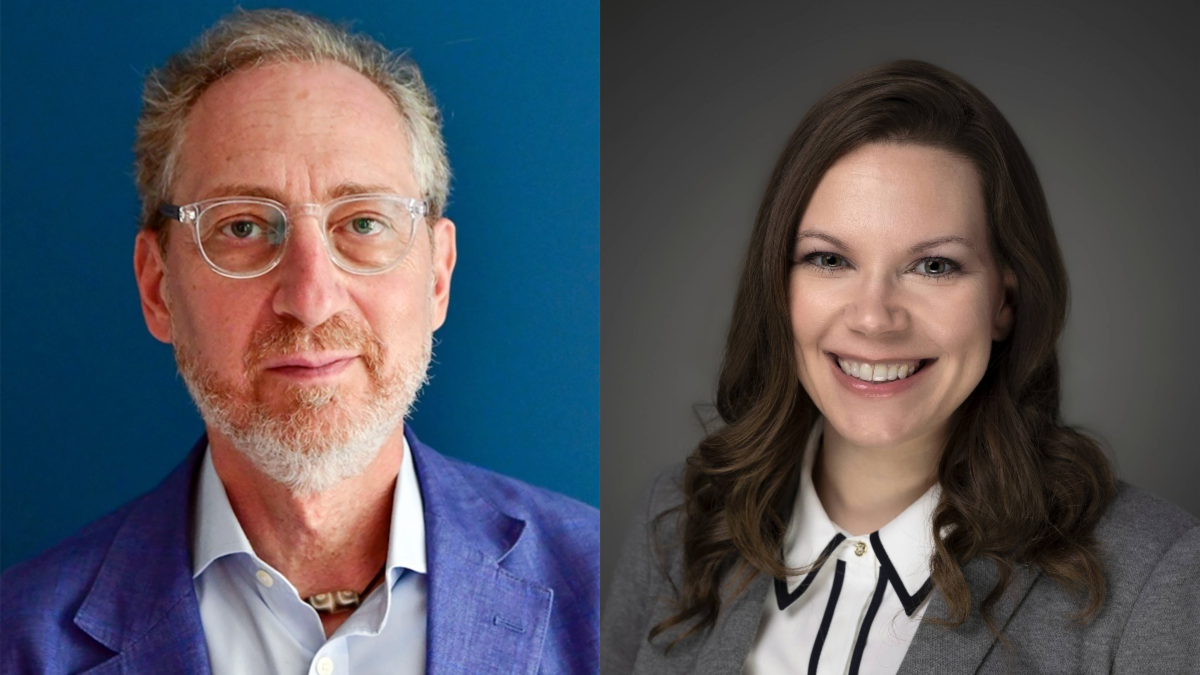
Photo (left to right): Amb. Derek Mitchell and Ms. Min Mitchell
| | Dr. Satohiro Akimoto Speaks at Japan Commerce Association of Washington DC New Year Luncheon | | |
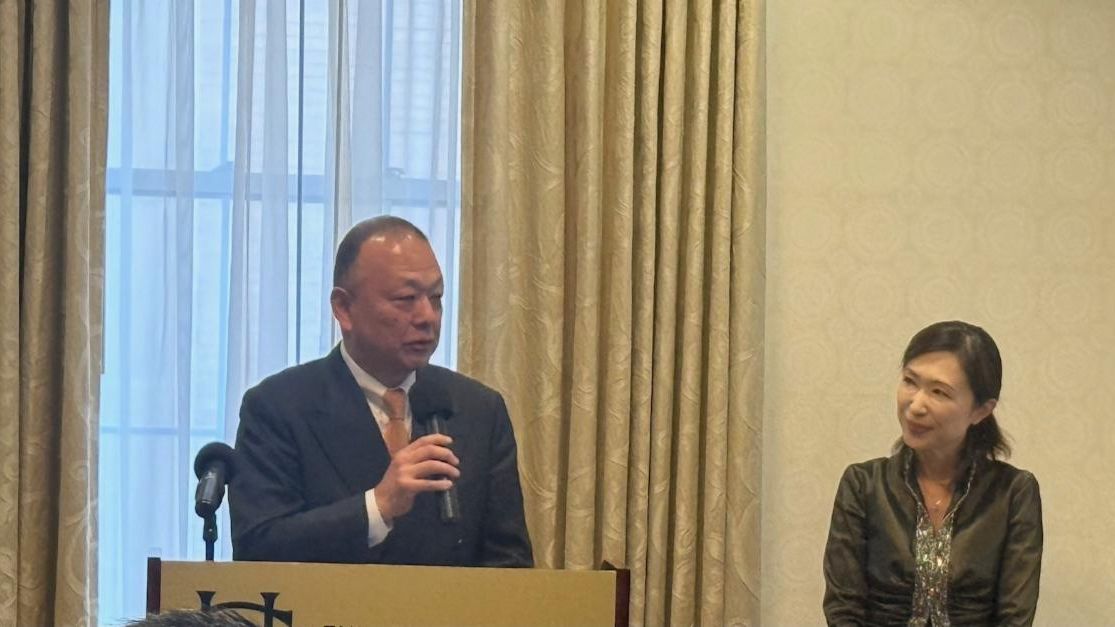
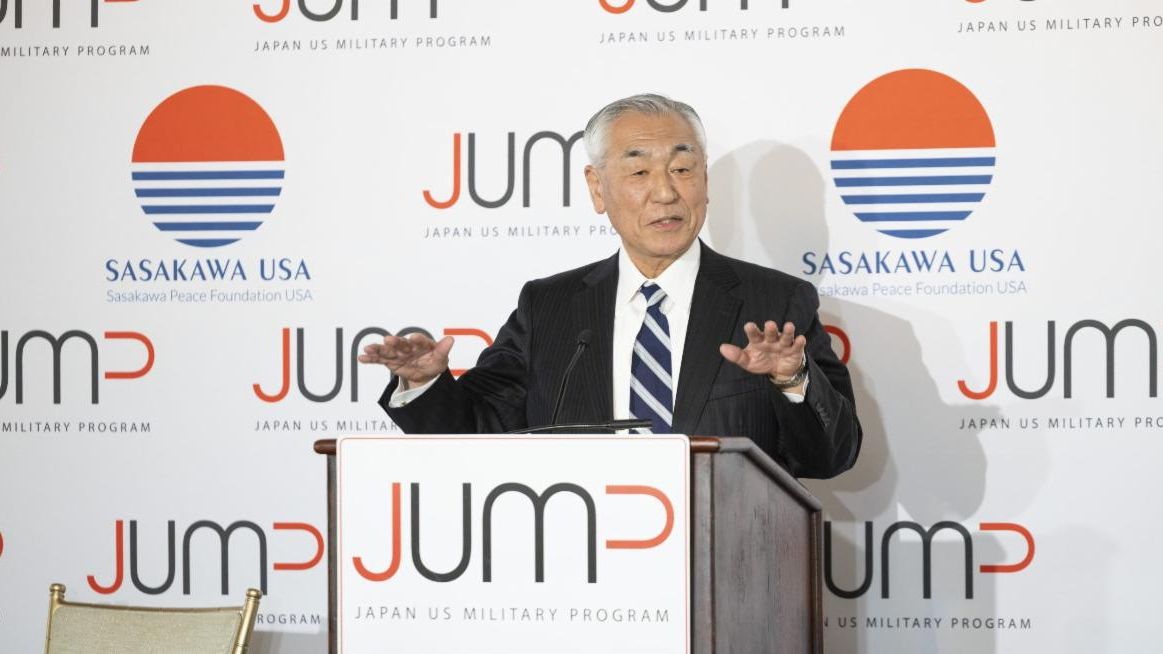
On January 15, Dr. Satohiro Akimoto, chairman and president of Sasakawa USA, delivered remarks at the Japan Commerce Association of Washington, DC’s New Year Luncheon. He reflected on the early 1970s, when Japanese companies began establishing offices in Washington, DC while learning from the experiences of early Japanese business pioneers in Washington, such as Mr. Minoru “Ben” Makihara, who established Mitsubishi Corporation’s Washington office in 1971 at the Watergate complex. Dr. Akimoto noted that Japanese businesses at the time faced significant challenges, including the fixed exchange rate of 360 Japanese yen to the U.S. Dollar. He emphasized how the perseverance and dedication of these early Japanese business pioneers laid the foundation for the eventual establishment of the Japan Commerce Association of Washington in 1988. Dr. Akimoto himself later served as Secretary of the Association, when he was general manager of Mitsubishi International Corporation’s Washington office.
Photo (left to right): Dr. Satohiro Akimoto and Ms. Hiroko Tada, SVP and General Manager of Washington Office, ITOCHU International Inc. and Executive Officer of ITOCHU Corporation, who played the role of the master of ceremonies.
| | |
Ms. Kaede Ishidate Speaks on Panel on Gender Equity and Women’s Empowerment in Asia
Hosted by International Student Conferences
| | |
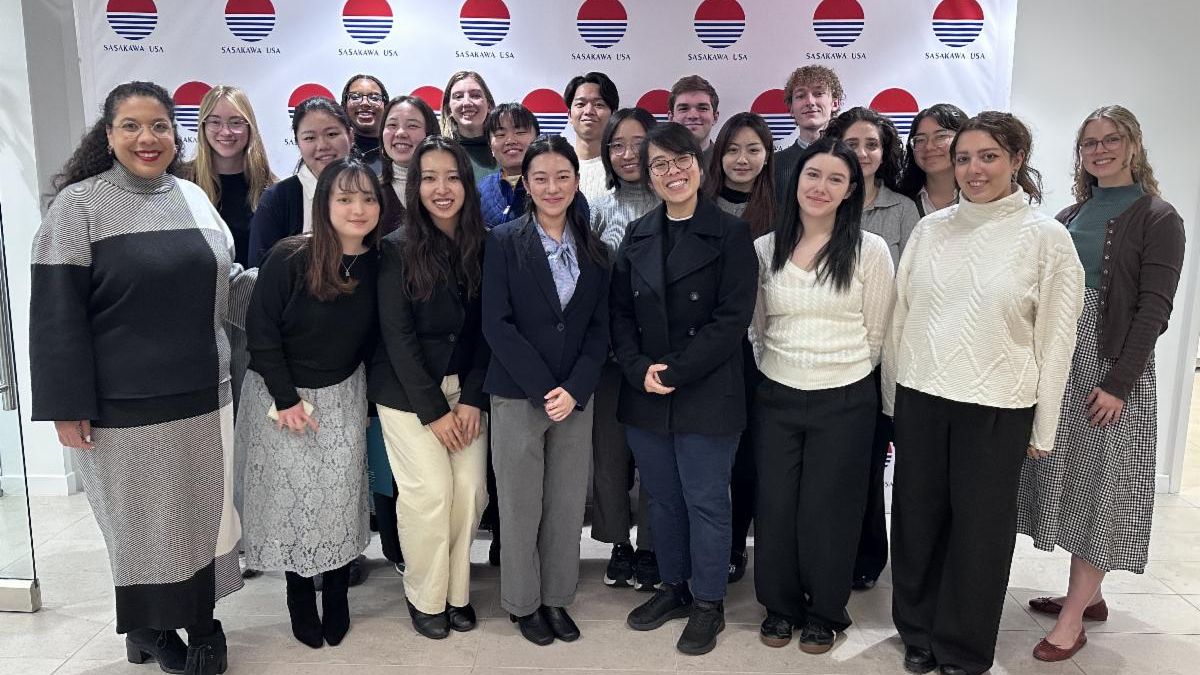
On January 6, senior program officer Kaede Ishidate joined a panel on gender equity and women’s empowerment in Asia hosted by International Student Conferences (ISC). The panel was held as part of the 10th U.S.-Japan-Korea Trilateral Forum, a week-long program that convenes student leaders from ISC’s flagship programs: the Japan-America Student Conference (JASC), the Korea-America Student Conference (KASC), and the China-America Student Conference (ChASC). This year, the Forum was held in Washington, DC and featured a series of lectures, workshops, and panel discussions aimed at fostering productive dialogue between the student leaders and professionals in U.S.-Asia relations. Ms. Ishidate was joined by co-panelist Ms. Ari Lee, director of programs at the Maureen and Mike Mansfield Foundation, and the discussion was moderated by Ms. Britt Robinson, founder and principal of & Daughters.
The panel explored what a gender lens looks like in Asia and how structural and societal factors are translated into policy. As an example of how a gender perspective can be operationalized, Ms. Ishidate discussed the Women, Peace and Security (WPS) agenda, and shared some of Japan’s initiatives to integrate WPS into their domestic and international work. The panelists’ remarks were followed by an engaging Q&A with the students.
Photo: Ms. Britt Robinson, Ms. Kaede Ishidate, and Ms. Ari Lee with the Trilateral Forum participants (photo courtesy of ISC).
| | |
Japan US Military Program (JUMP):
2026 JUMP Annual Dinner
| | |
In February, Sasakawa USA and the Embassy of Japan will hold the 2026 Japan US Military Program (JUMP) Annual Dinner in Washington, DC. The JUMP Annual Dinner, a yearly highlight of the JUMP calendar, brings together prominent leaders from both the United States and Japan to honor those that strengthen the U.S.-Japan alliance. For this year’s dinner, keynote remarks will be provided by Gen Kenneth S. Wilsbach (USAF), chief of staff of the United States Air Force, and ADM Ryo Sakai (JMSDF, Ret.), 35th chief of staff of the Japan Maritime Self Defense Force, will also be in attendance to give remarks. In addition, Amb. Shigeo Yamada, ambassador extraordinary and plenipotentiary of Japan to the United States, will share his greetings while LtGen Lawrence Nicholson (USMC, Ret.), former commander of III Marine Expeditionary Force, will provide a kanpai toast. In addition, RADM Takaaki Hayamizu (JMSDF), defense and naval attache at the Embassy of Japan will provide introductory remarks for several distinguished speakers.
JUMP is made possible by financial support from the Embassy of Japan. This JUMP material is distributed by Sasakawa Peace Foundation USA on behalf of the Embassy of Japan. Additional information is available at the Department of Justice, Washington, DC.
Photo: GEN Ryoichi Oriki (JGSDF, Ret.) gives keynote remarks at the 2025 JUMP Annual Dinner.
| | |
Japan US Military Program (JUMP):
JUMP Virginia Military Institute
| | |
On February 3, Sasakawa USA will hold a Japan US Military Program (JUMP) event at Virginia Military Institute in Lexington, Virginia in partnership with the Embassy of Japan. This event is also made possible with the coordination of VMI’s Center for Leadership & Ethics, as well as VMI’s John. A. Adams ’71 Center for Military History and Strategic Analysis.
The event “The Importance of the U.S.-Japan Alliance in the Indo-Pacific” will include a panel of distinguished speakers, ADM Ryo Sakai (JMSDF, Ret.), 35th chief of staff, JMSDF; LtGen Lawrence Nicholson (USMC, Ret.), former commanding general of II Marine Expeditionary Force in Japan, and distinguished senior fellow (non-resident) at Sasakawa USA; and Col. Satoshi Masaka (JGSDF), military attaché at the Embassy of Japan. Col. David Gray (USA, Ret.), director for the Center for Leadership and Ethics at the Virginia Military Institute, will serve as the master of ceremonies and Dr. Joel Christenson, director of the John. A. Adams ‘71 Center for Military History & Strategic Analysis at Virginia Military Institute will contribute welcome remarks.
This JUMP material is distributed by Sasakawa Peace Foundation USA on behalf of the Embassy of Japan and additional information is available at the Department of Justice, Washington, DC.
| | U.S.-Japan Research Exchange: Asia-Pacific Center for Security Studies Research Trip to Japan | | |
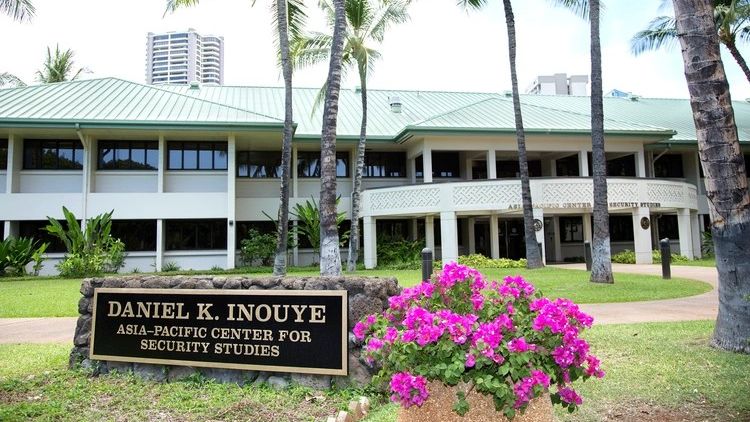
From February 16 to 20, Sasakawa USA will partner with the Daniel K. Inouye Asia-Pacific Center for Security Studies (APCSS) for a trip to Japan with a delegation of APCSS researchers through our U.S.-Japan Research Exchange program. The APCSS delegation, featuring both civilian and military experts, will spend one week in Tokyo meeting with experts from the government, academia, and private sector to research topics critical to the U.S.-Japan alliance such as capability development, defense industrial base, Southwest Island security, and multilateral engagement. The delegation’s research from this trip will form the framework for a joint dialogue to be held later in 2026 that will bring together former USINDOPACOM Commanders and Japanese Chiefs of Staff, Joint Staff. This later dialogue will also be a joint initiative between Sasakawa USA and APCSS.
Photo: Exterior of Daniel K. Inouye Asia-Pacific Center for Security Studies in Honolulu, HI (Photo by Jesse Hall)
| | |
Mr. Gregg Rubinstein Joins Sasakawa USA
as Senior Fellow (non-resident)
| | |
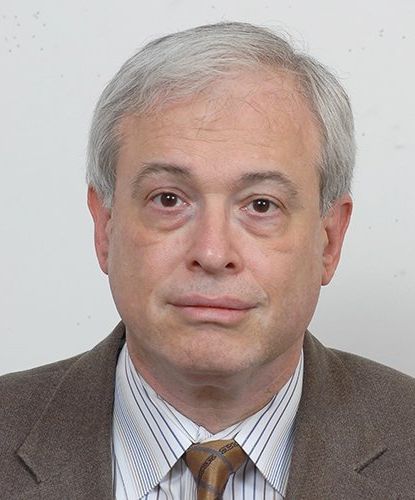
Sasakawa USA is pleased to announce that Mr. Gregg Rubinstein has joined our team as a senior fellow (non-resident).
As a Foreign Service Officer, Mr. Rubinstein worked on defense and trade issues in the U.S. Embassy, Tokyo and the State Department’s Office of Japanese Affairs. At the Department of Defense, he served in the Defense Security Assistance Agency and then the U.S. Embassy’s Mutual Defense Assistance Office.
Since leaving government service, Mr. Rubinstein has been a consultant on defense acquisition and industrial cooperation programs in the Indo-Pacific region and served as an advisor on Japan programs at the Department of Defense. He works with policy research institutes and industry associations in both countries on cooperative acquisition projects and industrial partnerships.
Mr. Rubinstein was educated at the University of Chicago (B.A. 1972) and Columbia University’s School of International and Public Affairs (M.I.A. 1974) and studied at Jochi University, Tokyo. He is a member of the International Institute of Strategic Studies and was an adjunct fellow at the Center for Strategic and International Studies from 2019 to 2025.
At Sasakawa USA, Mr. Rubinstein looks forward to further work on strengthening defense acquisition and industrial cooperation among the U.S., Japan and other regional partners. As part of this effort, he plans to prepare a “lessons learned” record of U.S.-Japan defense programs over the past fifty years.
Photo: Mr. Gregg Rubinstein
| | |
Sasakawa USA Announces
Programs Team Job Opening
| | Sasakawa USA is pleased to announce an opening on our Programs Team for a full-time position. For more information regarding the position and how to apply, please refer to our Careers page. | | |
Sasakawa Peace Foundation USA
1819 L Street, NW, Suite 300
Washington, DC 20036
+1.202.296.6694
| | | | |