Teacher And Pupils Using Wooden Shapes In Montessori School

PRE-K UPDATE

January 10, 2024

Happy New Year!

Share a punny joke:

What was the caterpillar’s

New Year’s resolution? 

To turn over a new leaf.

Registration Open

Math Throughout the Day for Pre-K


This webinar will provide you with practical math strategies to implement throughout the day in your Pre-K classroom. You will learn how to infuse learning in play, exploration, and in everyday experiences while also addressing the New York State Early Learning Guidelines.


The presenter, Joanne Lufrano, is a retired teacher with over 25 years of experience teaching elementary school students and providing math staff development for teachers and administrators. Ms. Lufrano currently serves as an adjunct professor at Hofstra University and continues her many years of work as an educational math

consultant.


Date: Wednesday, February 7, 2024

Time: 7:00pm - 8:00pm

Cost: Free, however registration is required.

Units: 1 CTLE Credit Hour

CLICK HERE TO REGISTER

Spring Registration Now Open!

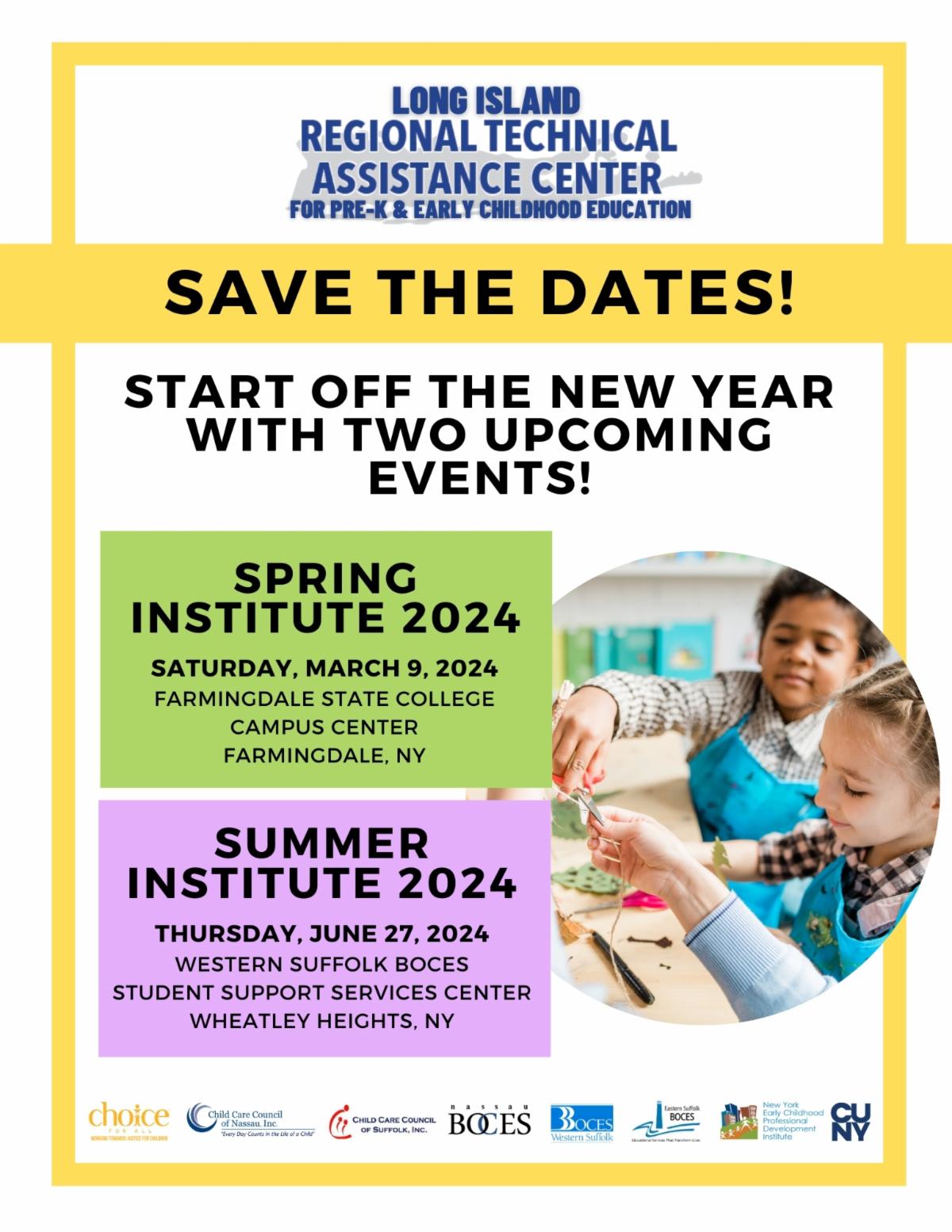
CLICK HERE TO REGISTER FOR THE SPRING INSTITUTE

How to make learning math

physically engaging

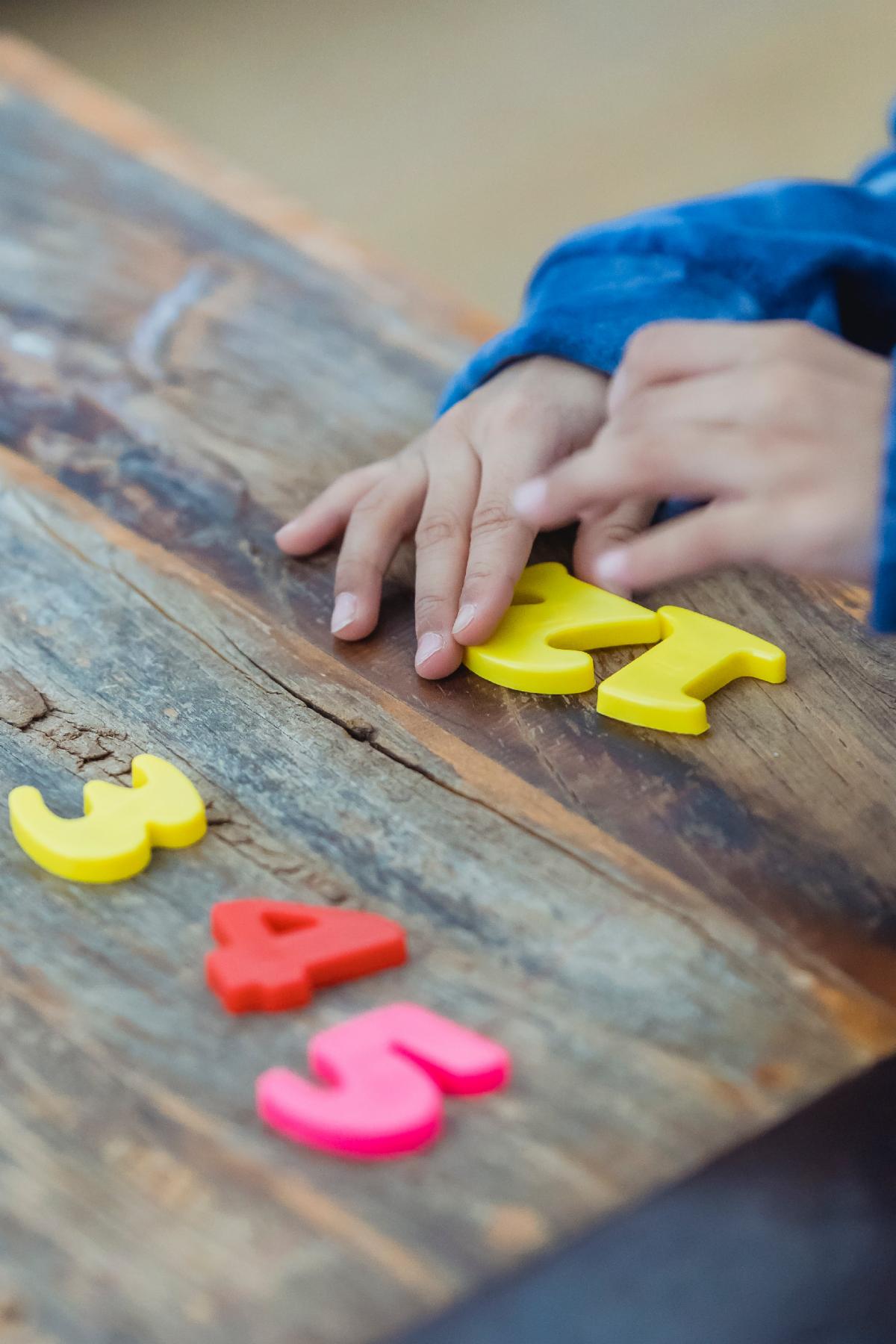
Movement has always been a part of math concepts; after all, we start off moving our fingers to master counting concepts, and we continue to do it when we learn addition and subtraction. According to an article by Andrew Boryga in Edutopia, educators should take movement in math a step further. There’s significant research showing that whole-body movement can “help students deepen math engagement and retention, especially when the movement is integrated into instruction and physically embodies concepts being presented to students.”


Movement throughout math lessons allows children the opportunity to interact and engage with abstract concepts. They are also able to visually demonstrate their comprehension of the skills being taught. Plus, because movement is not often used in math, it offers the brain something outside of the norm, which is always beneficial for learning.


Boryga describes eight teacher-tested ways to include movement in lessons. Here are a few that would be helpful with Pre-K classrooms:


  • Switching movements: An example of this exercise would be teaching children how to count to 20 through directing them to do 10 jumping jacks, and then having them switch to clapping when they get to numbers after 10. Switching allows children to see the connection in that teen numbers are 10 plus ones. You might also try having children do frog jumps or hopping on one foot.


  • Skip movements: Skip-counting fluency helps children learn number patterns, which leads to stronger division and multiplication skills. Educators might assign certain movements to different values. For example, if students are learning to count in even numbers, they might clap when they get to each one. “Two, [clap], four, [clap], six…etc.”


  • Work math into classroom transitions: When it is time to transition to a different room, have children count the number of steps it takes to get from one point to the next. You might also give them an easy math problem to think about as they move from one area to the next. This keeps children engaged in learning and makes forming and managing lines much easier.


  • Use movement to create and analyze student data: Though this exercise is geared more toward older children, it can be utilized with Pre-K classes. Educators might have children engage in timed challenges, such as keeping track of how many jumping jacks they can complete in a given amount of time.


There are many activities that can be modified to help early math learners engage with math physically…while having fun!


Click here to read more about how to include movement in math lessons. 

Fractured fairy tales for all children

What if Cinderella had not lost her glass slipper? What if Sleeping Beauty was awakened by fireworks and set off on a different journey for love? Brightly’s Devon A. Corneal writes of first enjoying fractured fairy tales upon reading

Jon Scieszka’s The True Story of the Three Little Pigs. Corneal actually used the story to help stage a protest with children at a theater group! Here are a few of many titles Corneal recommends for the Pre-K classroom:


  • Ninja Red Riding Hood, by Corey Rosen Schwartz. Schwartz enjoys combining fairy tales with martial arts. In this one, the wolf learns his lesson in surprising ways, while Red Riding Hood and Granny reveal their karate chops.


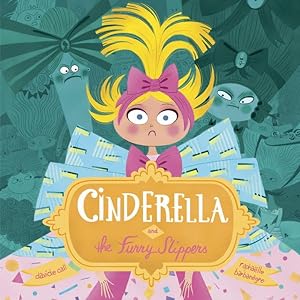
  • Cinderella and the Furry Slippers, by Davide Cali. When her prince doesn’t arrive to save her from serving her evil family, Cinderella takes charge of her own life. However, her fairy godmother, the castle, and the prince are not what she expected.


  • Look Out, Wolf! There’s a Beast in Your Book, by Jude Evans. When you stop being the most frightening animal in the forest, you become the hero. At least, that’s what happens with the big, bad wolf when the three little pigs enlist his help getting rid of a monster.


  • Who Punished Humpty Dumpty? by David Levinthal. Many crimes are being investigated by a frog named Binky, who happens to look like he walked out of a 40s noir film. “In Levinthal’s world, Goldilocks is a serial offender, Hansel and Gretel go free after claiming self-defense, and Humpty Dumpty’s fall is revealed to not have been an accident,” says Corneal. 


Click here to read the complete list of suggested fractured fairy tales.

Visit our Website

71 Clinton Rd. Garden City, NY 11530-9195
For questions or more information, call us at
516-544-0044, or contact us at info@choiceforall.org.