|
Events
2020
March 5-6
MPN Physicians Summit
San Francisco, CA
May
Brisbane, Australia
September
Women & MPN Conference
San Francisco, CA
Dates to Be Determined
Washington, DC
The Carolinas
|
February Issue
Details on the March MPN Physicians Summit
In the Trenches:
Physician Story
Patient Story
|
MPN Support Group Meetings
January 14
Idaho
January 28
Pittsburgh, PA
|
|
Studying the Benefits of Nutrition
MPNs have some unique concerns when considering dietary/nutrition recommendations, including:
Risk of low or high blood counts
Elevated inflammation
Weight gain due to medications
The effects of nutrition on these symptoms is currently being studied, such as the benefits of following a
mediterranean diet. The
hope is that altering the balance of inflammation in the body may help individuals to feel better and ultimately change the course of the disease by reducing the risk of blood clots, abnormal blood counts, and spleen size changes.
|
New Podcast for Blood Cancer
The American Society of Hematology has created a podcast to summarize content recently published in
Blood, (the monthly magazine for ASH).
Click the image below to listen to the recent episode on MPNS
|
|
 |
|
Happy New Year!
Remaining Optimistic for 2020
Since the discovery of the JAK2 gene mutation in 2005, great strides have been made in MPN research and drug development, and a greater understanding of these complex blood cancers has helped all of those affected by MPNs.
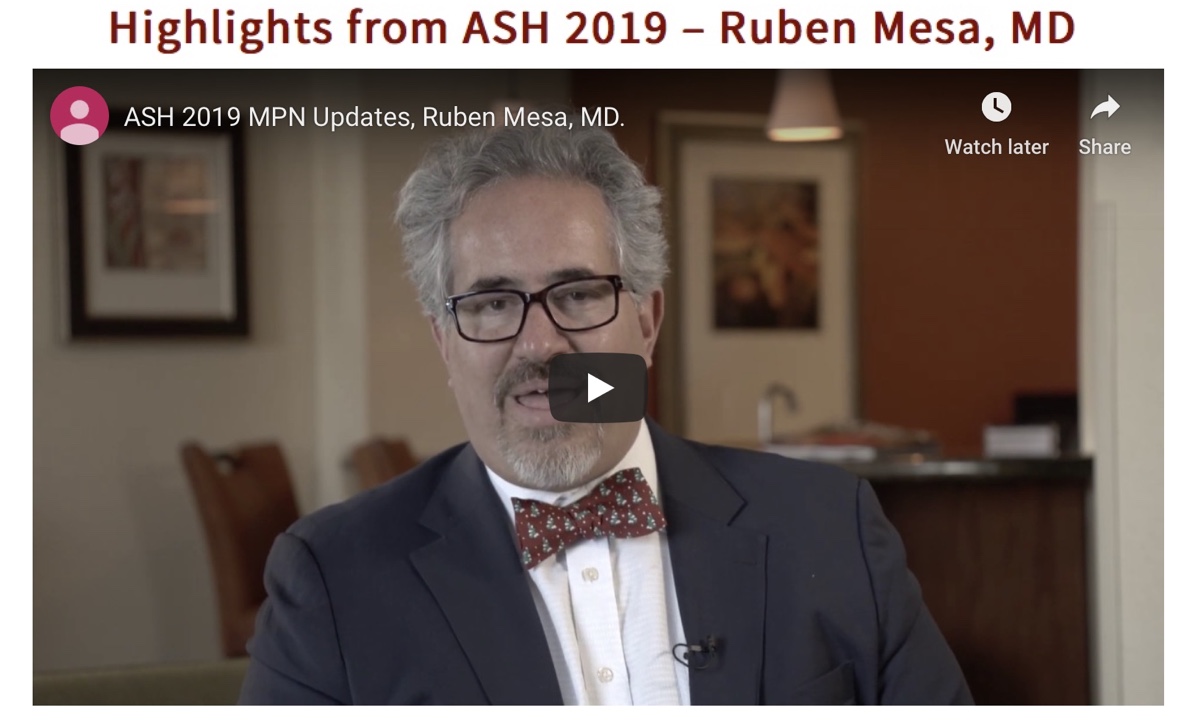
The American Society of Hematology's (ASH) meeting each December, showcases updates and sheds light on what to expect in the future. Take a moment to view our videos from ASH 2019 to learn more.
|
Pediatric MPN Updates from ASH
By Nicole Kucine, MD, MS
Weill Cornell Medicine
Four abstracts focused on pediatric myeloproliferative neoplasms (MPNs) were presented at the annual ASH meeting in December 2019. It may not seem like a lot, but for pediatric MPNs, it's a big deal!
 |
|
|
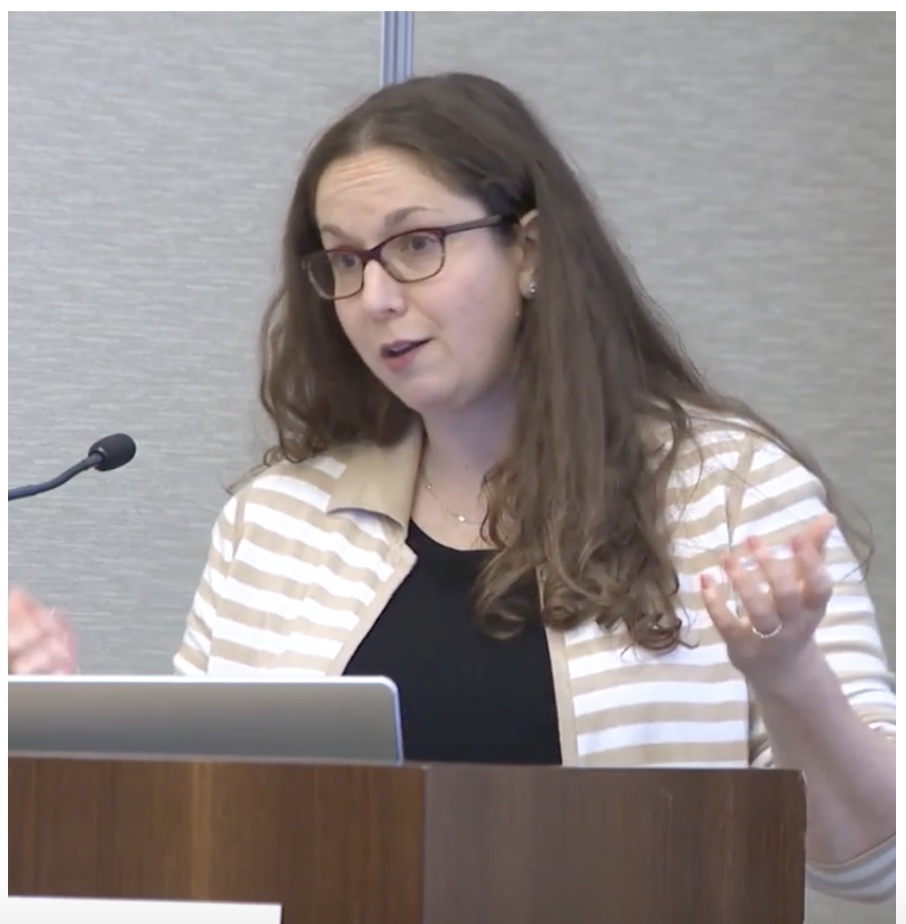
Above, Dr. Kucine presents at MPN A&EI's Pediatric and Young Adult Program,
learn more
|
Our group presented two of those abstracts.The first looked at clinical management and reported a small cohort of 6 children treated with Peginterferon alpha-2a (PEG) with colleagues from other institutions. Currently in pediatric hematology/oncology, the most commonly used medication to lower blood cell counts in children with MPNs is hydroxyurea. While there is no data that this is unsafe for our youngest MPN patients, there is discussion in the adult MPN field of using interferon upfront in younger adult patients and there is very limited data describing its use in pediatric MPN patients.
Read more
|
A Mother's Story: When Your Child is Diagnosed with an MPN
No one can prepare you for a cancer diagnosis of a child. Our daughter was four years old and began to complain about headaches. I assumed it was her eyes and made an appointment with an optometrist. Her sight was perfectly normal. A visit to her pediatrician lasted an hour with little insight, only suggestions to watch her diet, limit TV time and give her lots of water. She rarely watched TV and carried water with her throughout the day. Our diet doesn't include sugar except from fresh fruit and we don't eat boxed or canned food. I wasn't optimistic.
Eventually, her headaches became more severe and on occasion, similar to migraines. We were sent to a neurologist. He requested blood work after she underwent an MRI. Thankfully, the blood work identified the problem. It was ET or essential thrombocythemia. We had never heard of it and had no idea what this meant for the future. A hematologist became our savior. With the proper diagnosis and medication, our daughter began to feel better, albeit a few side effects from the meds.
Read more
|
Prescription Assistance Program: A partnership that has helped many
I am a 57-year-old black man who is in good physical health except for my MPN. I have been receiving treatment for over 15 years. It has been a trying time but with my faith and my hematologist's guidance, I have been able to maintain a normal life and live to the best of my ability. I have received Interferon treatments, blood transfusions, and several other drugs along with other treatments over the years. Currently, I am taking two medications, Jakafi and Uloric once per day to keep things regulated.
There are not many obstacles for me because I was an athlete prior to my diagnosis, however, I have neuropathy in my feet.
I had to retire early because of the side effects from my treatments, but it has not been too much of a burden to me or my family. I found out about the PAN Foundation
(Patient Access Network)
from one of the nurse practitioners in the office where I receive my treatment. PAN has helped me tremendously by covering a portion of the cost of my medication. It has been a blessing because without their assistance I would not be able to afford my medication.
The PAN Foundation offers grants of up to $8,500 to individuals living with MPN (Philadelphia Chromosome Negative MPNs) to help reduce their out-of-pocket prescription costs. For information on
a
pplying for a grant click here or
|
MPN Clinical Trial Updates
Below are links to new studies emerging from the annual ASH meeting as well as clinical trial updates:
|
|
|